



Share the post "Scicon launches the Aeronda, born on the pavé of Roubaix"
Some products are born in R&D offices. Others write their history out on the road first. With the new Aeronda, Scicon Sports takes us back to last April, to the pavé of Paris-Roubaix in the slipstream of a certain Tadej Pogačar. This November 25, 2026, at precisely 10 AM, the embargo lifted by the brand ends and these rather uniquely shaped glasses officially step out of the shadows. Retailing at €170, they introduce a new optical architecture dubbed MasterBlank™. To accompany this launch, we chose to take and rework the press release provided in advance by Scicon, in order to break down its main innovations and present their core features. This is therefore not a review yet, but a first look based on the manufacturer’s information. Because here at 3bikes, we make a point of distinguishing between what a brand claims and what we actually observe in the field. And as it happens, the Aeronda will soon be leaving the pavé of Roubaix to discover the roads of the Val-d’Oise. A full test will follow in the coming weeks, featuring our own observations, sensations, and feedback, entirely independently.
By Jeff Tatard – © Photos: SCICON
In April 2026, during Paris-Roubaix, the most attentive observers may have noticed an unusual detail on Tadej Pogačar’s face. His Scicon glasses featured a distinct shape, notably with an outward-facing lens extension.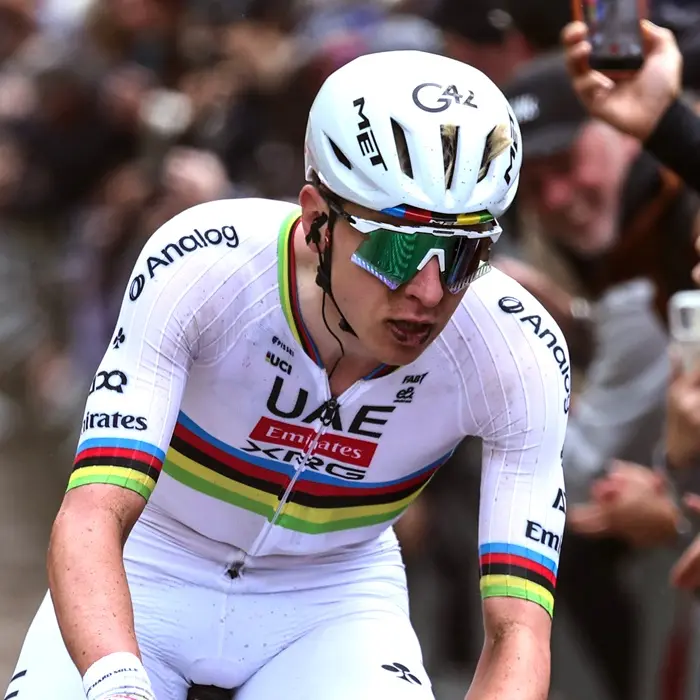
At first glance, one might have seen it as a new aero pursuit, something professional cycling loves. But the goal was broader: to improve facial protection in conditions where dust, mud, debris, and vibrations are part of everyday life.
Because on the pavé of Northern France, glasses are not just for blocking the sun. They also need to preserve visibility, stay perfectly in place despite the shaking, and protect the face as much as possible from what comes off the road.
This is the rationale behind the Aeronda project, officially unveiled by Scicon Sports this November 25, 2026.
And what was then merely a development project tailored to the demands of the highest level now takes the form of a product marketed to the general public.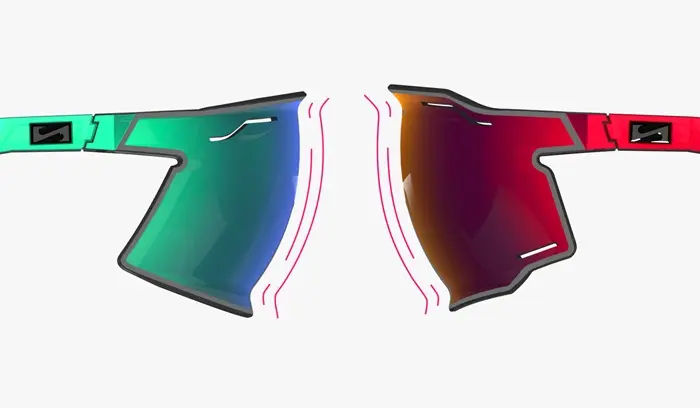
MasterBlank™: when the lens becomes the structure
This is probably the main standout feature of these new Aeronda. Rather than treating the lens as a simple element attached to a frame, Scicon chose to make it the central piece of the entire architecture.
The patented MasterBlank™ technology relies on a base-8 multispheric single lens, with an advertised radius of curvature of around 66 mm. This is a particularly wraparound geometry designed to hug the shape of the face while maintaining an unobstructed lateral field of view. But the true originality lies elsewhere: the temple attachment points, aerodynamic extensions, and protective flaps are integrated directly into the lens. In other words, the lens no longer just filters light. It contributes to the very structure of the glasses.
According to Scicon, this one-piece design notably improves overall stability, even when speeds increase, crosswinds blow, or the road surface deteriorates. The brand also claims a homogeneous vision across the entire lens surface, thanks to its multispheric geometry. Optically, you get UV400 protection along with a water- and oil-repellent coating designed to limit moisture and smudges sticking to it. On paper, the approach is compelling. It remains to be seen how these technical choices translate into real-world riding conditions, especially as hours in the saddle add up.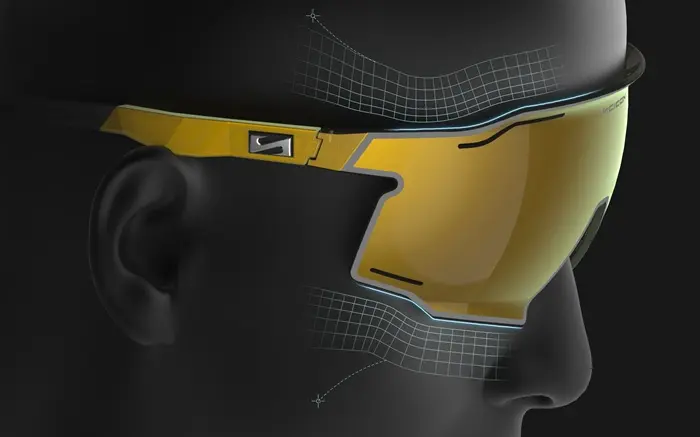
Two flaps, two distinct functions
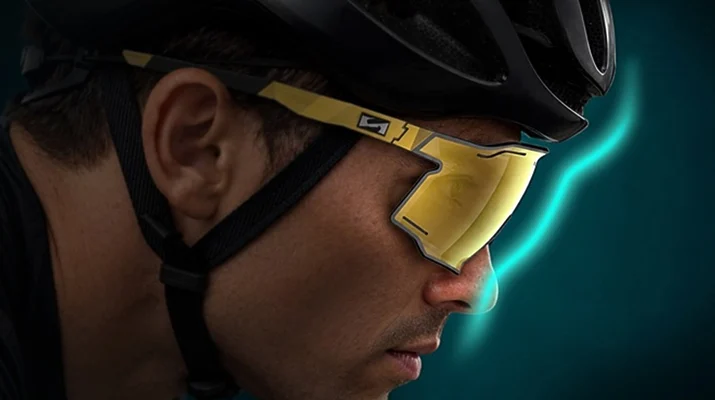
What instantly gives the Aeronda their identity are these two lens extensions that Scicon calls flaps. The first, dubbed the Safety Flap, is located on the lower section. It extends the protective surface toward the lower face, with the goal of limiting exposure to debris and, according to the manufacturer, reducing certain risks of cuts in the event of a crash. The second, the Aero Flap, sits on the upper section, right at the brow line. Its role is to direct airflow toward the helmet to limit turbulence around the face.
Two different functions, then, but the same philosophy: making the lens an active element in protection and air management, rather than a simple barrier between the eyes and the environment. However, comparative data will be needed to precisely assess the aerodynamic benefits of this architecture. And regarding safety, let’s clarify that these are design goals announced by Scicon, not a guarantee of injury protection in a crash.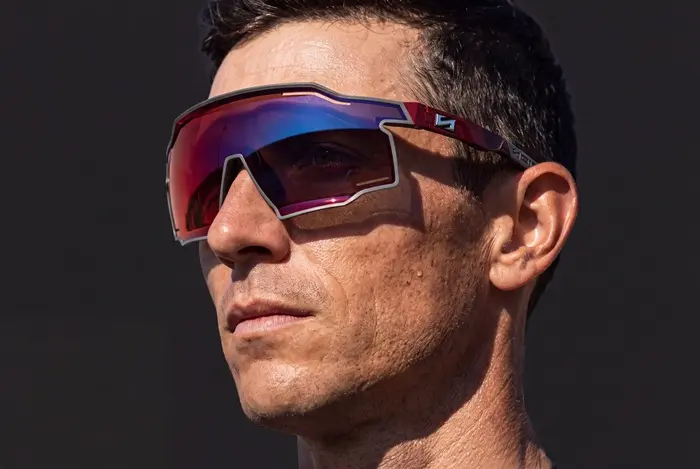
34 grams and a special focus on retention
A pair of glasses can feature endless innovations. If they slide down your nose the moment you sweat or become uncomfortable after two hours, their appeal is naturally limited. Scicon claims a weight of 34 grams here, despite the generous lens surface and its various extensions.
To ensure retention, the Aeronda adopt diamond-structured TactiGrip™ temples. Their tips incorporate an adjustable metal core, allowing their shape to be adapted to the cyclist’s anatomy. The Flexifit™ 2.0 nosepiece is also adjustable, with the idea of offering a quick and personalized fit.




Another interesting detail: the VortexFlow™ ventilation system, designed to promote airflow and limit fogging, especially when speeds drop. This is a point we will pay particularly close attention to during our review. Because between a fast descent, a slow climb, a rainy ride, or a stop at a red light, ventilation conditions change drastically. And those are often the small details that make the difference between glasses you think look cool and glasses you actually enjoy wearing all day long.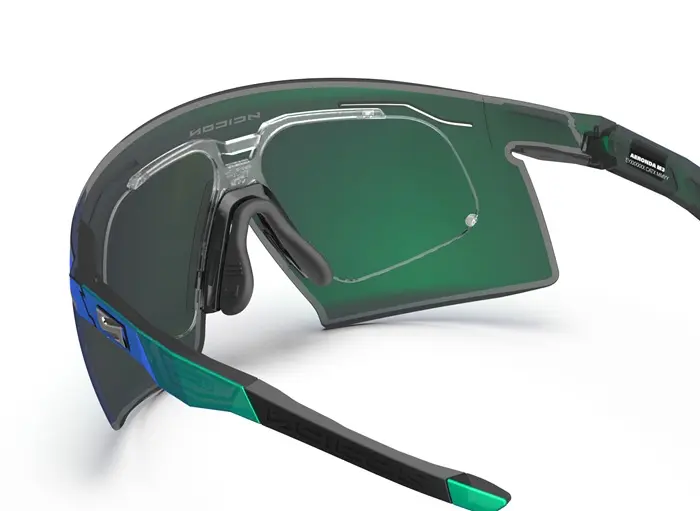
A solution also designed for prescription wearers
This is a topic sometimes forgotten when talking about high-end cycling eyewear: not everyone has perfect vision. Scicon has therefore provided two options for cyclists who need a correction. The first relies on the SlideFit™ optical insert, compatible with single-vision or progressive prescription lenses. The second uses the P.I.L.S. system, which allows the prescription to be integrated directly into the sun lens to form a single unit. An interesting approach, especially for those who want to enjoy a large protective surface without sacrificing vision correction tailored to their eyes.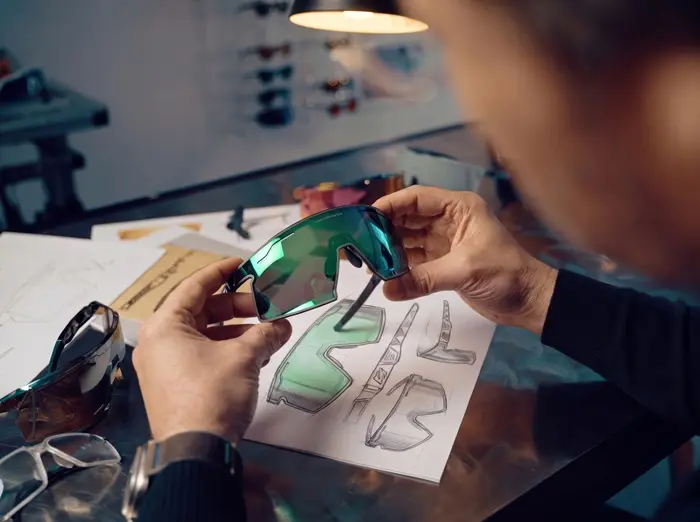
Italian design, bridging technology and real-world experience
Founded in 1980 near Bassano del Grappa, Scicon Sports first made its mark in the cycling world through its bike transport and protection solutions. Since entering the sports eyewear market in 2019, the Italian brand has gradually carved out a spot in the professional peloton, notably through its partnership with UAE Team Emirates. The Aeronda were developed within its Innovation & Design Center in Mussolente, Italy, where designers, engineers, and prototypists work.
The manufacturer explains that it combined ergonomic research, optical technologies, artificial intelligence tools, and feedback from professional athletes to deliver this new platform. A process that illustrates a major underlying trend in the cycling industry: equipment is no longer developed around a single isolated function, but at the intersection of several sometimes contradictory demands.
Aerodynamics, protection, comfort, weight, and aesthetics must now coexist in a single object. And in the case of the Aeronda, Scicon has clearly chosen not to sacrifice design originality to achieve this.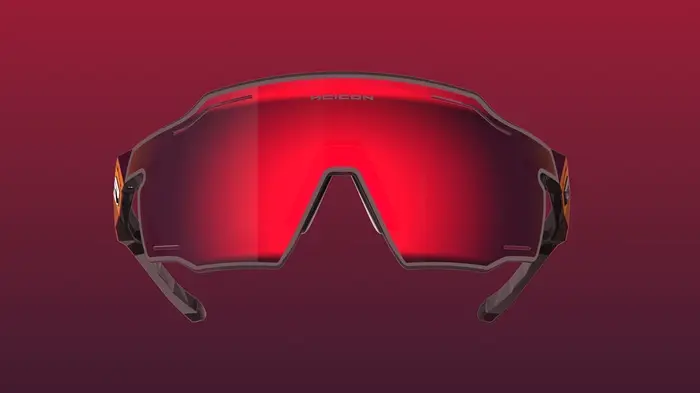
€170: a confident high-end positioning
Available starting November 25, 2026, the new Scicon Aeronda carry a recommended retail price of €170. They will be offered on the official Scicon Sports website as well as through a selection of retailers.
At this price point, you are clearly in the realm of high-end cycling eyewear. A segment where you are no longer just buying sun protection, but also optical quality, finish levels, comfort, and, naturally, a certain aesthetic identity. It remains to be seen whether the Aeronda can justify their positioning beyond just their originality and their backstory tied to the pro peloton. And that is something a press release cannot tell us.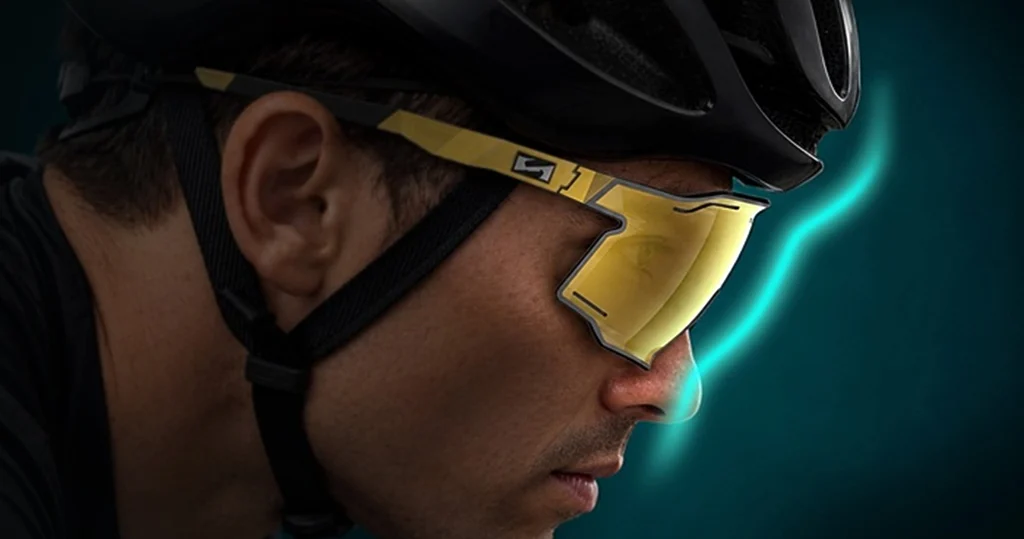
And now, time for the real world!
At 3bikes, we love understanding what goes on behind innovations. But we love verifying what they actually deliver once you’re on the bike even more. Scicon offered us an early look at the Aeronda, and we will therefore have the chance to put them through their paces over the coming weeks.
After the pavé of Paris-Roubaix with Pogačar, they will discover a different playground: the roads of the Val-d’Oise. Granted, the scenery will be a bit less prestigious, but between rough back roads, winter rides, wind, humidity, and changing light conditions, there should be plenty to form a solid opinion. We will look specifically at visual quality, retention, comfort on long rides, fog management, and the actual utility of those famous lens extensions. A full review will therefore follow within a few weeks on 3bikes, featuring our observations and feedback after several rides in real-world conditions.
Because between what a manufacturer promises and what a cyclist feels, there are sometimes a few nuances. And that is precisely what makes reviews interesting. In the meantime, one thing is certain: with the Aeronda, Scicon didn’t just design a new pair of glasses. The brand is offering a different way of conceiving their structure. It remains to be seen whether this difference is only visible on the face or if it can also be felt on the bike. That is what we are going to find out.
Scicon Sports Aeronda – Specs
|
*The technical specs and claimed benefits in this article come from information provided by Scicon Sports. Our independent review, focused on real-world performance and comfort, will be published later on 3bikes. Where to buy?

=> To discover the new Scicon Aeronda glasses, available starting today for €170: Scicon Sports Official Website
=> And to find our full real-world review of the Scicon Aeronda in a few weeks, head over to our 3bikes.fr Tests & Gear section See all our articlesNews
Share the post "Scicon launches the Aeronda, born on the pavé of Roubaix"