Share the post "Saddle pain in cycling: causes and solutions"
After three hours of pedaling, even your most deeply rooted certainties start to waver. Good news: discomfort is neither a price of admission nor an inevitability. It usually has an identifiable cause.
By Guillaume Judas – Photos: depositphotos.com
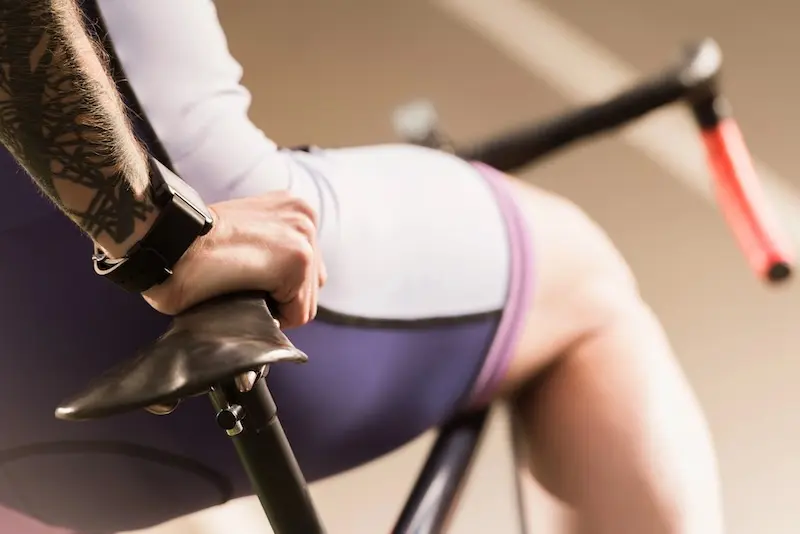
Every cyclist has experienced that moment when the saddle—that modest assembly of foam, rails, and cover sometimes costing more than a wheelset—becomes the sole focus of the ride. You stop looking at the scenery and start negotiating with your pelvis. Yet pain has nothing to do with the laws of physics. In most cases, it stems from one or more poorly adjusted parameters: an ill-fitting saddle, an approximate setup, mediocre bib shorts, or too ambitious a progression. Let’s review them in the order they are best addressed.
First things first: know where it hurts
A cyclist’s weight is supposed to rest primarily on the ischial tuberosities, those two bony protrusions of the pelvis that bear a good portion of the load in a seated position. When the weight slips toward the soft tissues of the perineum, the symptoms change: numbness, tingling, a burning sensation. A dull, bony ache under the sit bones may be linked to an adjustment period, whereas redness and chafing on the inner thighs point more toward an equipment or fit issue. This preliminary diagnosis saves you from changing your saddle three times a year, a sport many cyclists practice diligently.
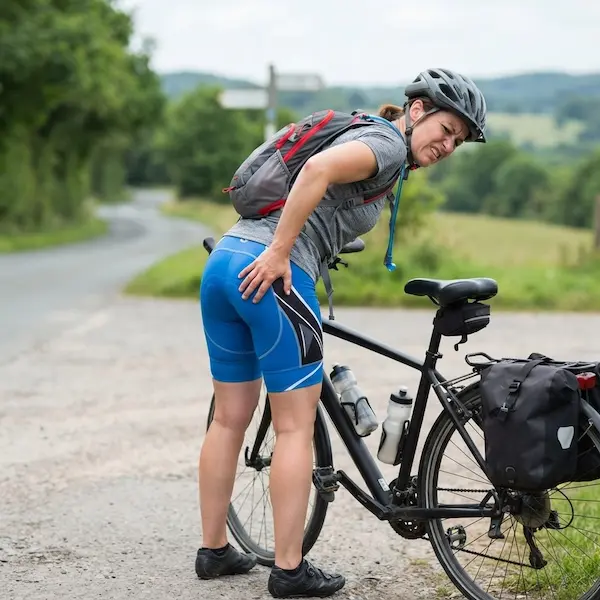
Saddle width: the prime suspect
It is the most underestimated parameter. Personally, it’s the one that made me suffer for over 30 years on a bike. A saddle that is too narrow can force soft tissues to absorb what the bones should be supporting. Conversely, a saddle that is too wide rubs against the thighs with every pedal stroke. The first reference point is the distance between your sit bones, which can be measured by sitting on a surface that retains an imprint (corrugated cardboard, foam) or, more simply, using the measuring tool available in many bike shops and bike-fitting studios. You then add a margin—typically around one to two centimeters for an athletic position, and sometimes more for a more upright position. These values remain indicative: the shape of the saddle and the position adopted on the bike also matter. But it’s the first avenue to explore.
Shape matters just as much as width, anyway. A cutout or central channel can relieve pressure on the perineum, which suits many riders without being a universal solution. The only reliable answer is testing. Many stores lend out saddles for a few days. It’s well worth taking advantage of this before shelling out 300 € for a model praised on a forum or Instagram.
There are also saddles specifically designed for female anatomy, with shapes and widths tailored to morphological differences. Once again, there is no universal model, and testing is always better than buying from a catalog.
Height, setback, tilt: three millimeters, a world of difference
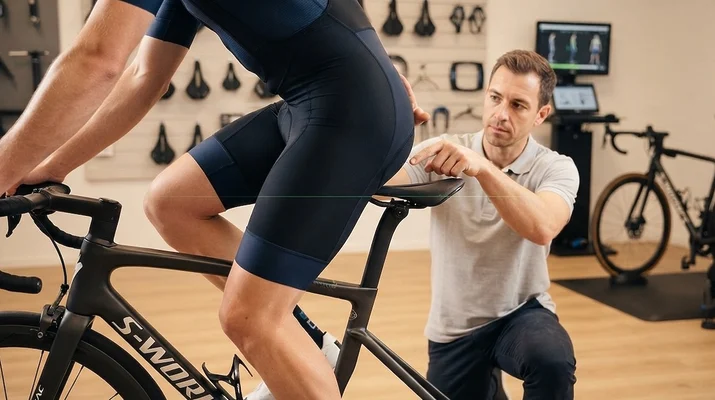
A saddle that is too high causes the pelvis to rock from side to side, which encourages chafing and irritation. Too low, and it can alter the stresses placed on the knees and increase pressure on the front of the pelvis. A classic starting guideline: with your heel on the pedal at the bottom of the stroke, your leg should be straight without your pelvis rocking. When pedaling normally with the ball of your foot on the pedal, your knee will then maintain a slight bend—generally around 25 to 35 degrees depending on the measurement method and position. This is obviously just a starting point, which may be enough for an initial adjustment. To go further, especially in the event of persistent discomfort, a bike fit can provide interesting answers and sometimes change your cycling life.
As for tilt, it should almost always be set dead level (barring exceptions), making sure to choose a reference area suited to the saddle’s profile and the manufacturer’s recommendations. A nose pointing very slightly downward can relieve certain riders, but beyond a few degrees you slide forward and have to hold yourself back with your arms, shifting the problem to your hands and shoulders. Change only one parameter at a time, in small increments, and do a few rides before passing judgment. Tinkering with three adjustments simultaneously is like changing your mind without ever knowing why.
Finally, there is the distance between the saddle and the stem: handlebars that are too far away can accentuate the forward rotation of the pelvis and transfer pressure to places you don’t want it. We’ll say it again, but a professional bike fit (expect to pay anywhere from 100 to 300 € depending on the service) remains one of the best investments you can make in cycling, far above yet another carbon gadget.
You cannot cheat with your bib shorts
Rule number 1: nothing underneath. Underwear seams are the enemy of the chamois pad, which needs to be in direct contact with your skin.
Rule number 2: the size must be right, because bib shorts that are too big will wrinkle, and a fold beneath your pelvis will make its presence known after 40 km. The density and thickness of the chamois must also match the cyclist’s anatomy and the length of the rides. As for seams, flatlock seams placed to minimize chafing are definitely best.
Hygiene follows the same logic. Damp bib shorts left on the skin after riding encourage irritation and can contribute to folliculitis or boils—those “saddle sores” cyclists rarely talk about over dinner. Change clothes as soon as you get home and wash your bib shorts after every ride, without fabric softener, which can damage technical fibers. Never wear bib shorts twice in a row, no matter how attached you are to saving on laundry. Chamois cream can also help reduce chafing, especially on long rides. Some cyclists swear by it, while others never use it: once again, everyone finds what works for them.
Finally, don’t skimp on the quality of your bib shorts. Two good pairs that last are better than five bought from an online discounter running permanent sales, which end up in the trash after about twenty rides. The best bib shorts for you aren’t necessarily the most expensive ones (some models are very specific, designed for ultra-endurance or particular body types). But finding a truly well-designed pair generally means accepting a certain budget.
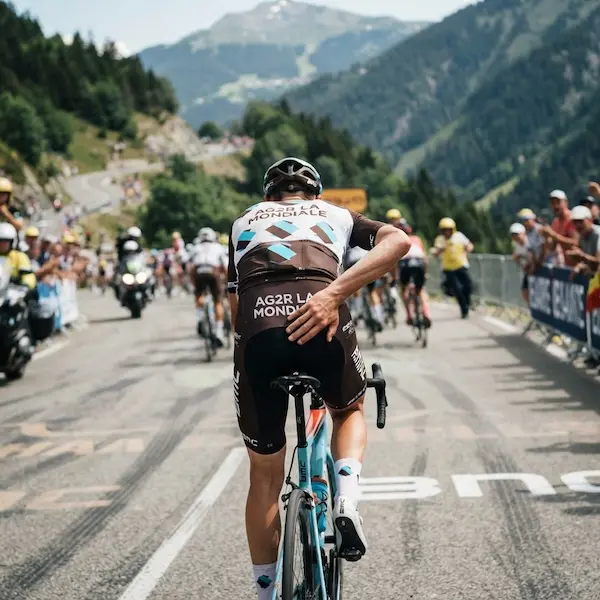
Move around—it’s that simple
Staying locked in one position on the saddle for three hours is the surest way to compress the exact same tissues continuously. Taking the pressure off the saddle for a few seconds every 15 to 20 minutes—either out of the saddle or simply by rising slightly off the pedals—shifts your contact points. Varying your hand positions, maintaining a smoother cadence rather than grinding heavy gears in force (or vice versa!), and keeping your core strong to stabilize your pelvis are habits that can matter more than any memory foam.
And please, pedal down descents, lift yourself slightly off the saddle when you see you’re about to ride over rough asphalt, and stand up as you go over a speed bump. Don’t be passive on the bike, even when you’re easing off the effort. It’s the best way to prevent a lot of saddle pain.
Give your body time to adapt
Skin and tissues can get used to the stresses of the saddle, but not over a single weekend. When getting back on the bike after winter or a long break, some sensitivity around the sit bones is normal. There’s nothing to worry about as long as it remains moderate and gradually fades. On the other hand, severe or persistent pain is not a mandatory stepping stone in the adaptation process. Progressively increasing ride duration remains the best approach. You don’t jump straight from 40 km to a 160 km sportive without paying the price later.
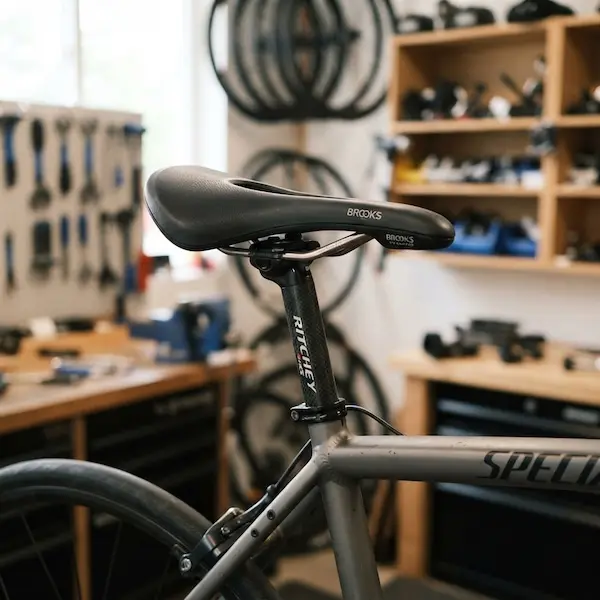
When you need to see a doctor
Discomfort is part of the game; persistent pain is not. Recurring numbness in the genitals, even if it disappears after the ride, warrants a medical opinion. Pain that lingers for several days, a wound that won’t heal, a lump, or an abscess are also warning signs that should not be ignored. A sports doctor, urologist, or gynecologist can help diagnose the issue based on your symptoms. Not all pain experienced on a bike necessarily stems from the saddle, either. Some may have entirely different origins.
No miracles, just a method
Measure, adjust, equip yourself properly, move, and progress. Comfort on a bike doesn’t come down to a single product, but to a cohesive set of adjustments. And if your saddle still feels hostile despite all this, just remember that Tour de France riders complain about their posteriors too. They just do it in better bib shorts.
Share the post "Saddle pain in cycling: causes and solutions"