Share the post "Giro Stylus II Review: The winning gamble for affordable laced shoes"
At a time when the cycling shoe market is locked in a race of skyrocketing prices and technological one-upmanship, finding a well-balanced pair for under €150 can feel like an obstacle course. Yet Giro is taking the opposite approach by revamping its Stylus. With a classic lacing system and a clean upper, the American brand delivers a standout design. And to put it bluntly, it turns out to be a brilliant surprise.
By Guillaume Judas – Photos: ©3bikes.fr
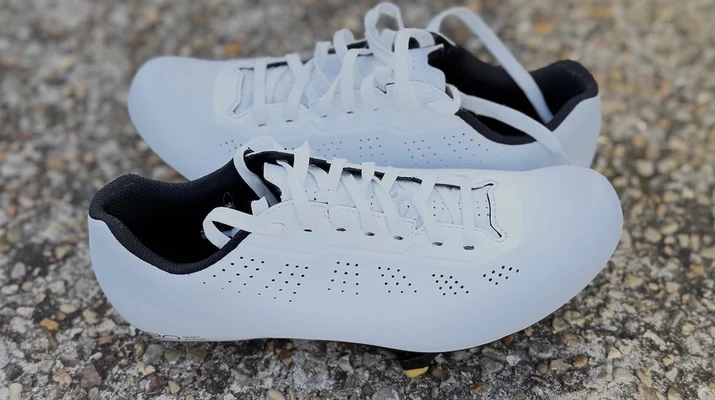
In the Giro catalog, the Stylus II act as the entry-level model, whether in their road version tested here or in their gravel/MTB version. Faced with benchmark models geared towards pure performance like the famous Empire or high-end BOA dial models, they aren’t meant to punch in the same weight class. They are aimed primarily at budget-conscious riders, long-distance enthusiasts who demand comfort, or those who want to look sharp without breaking the bank.
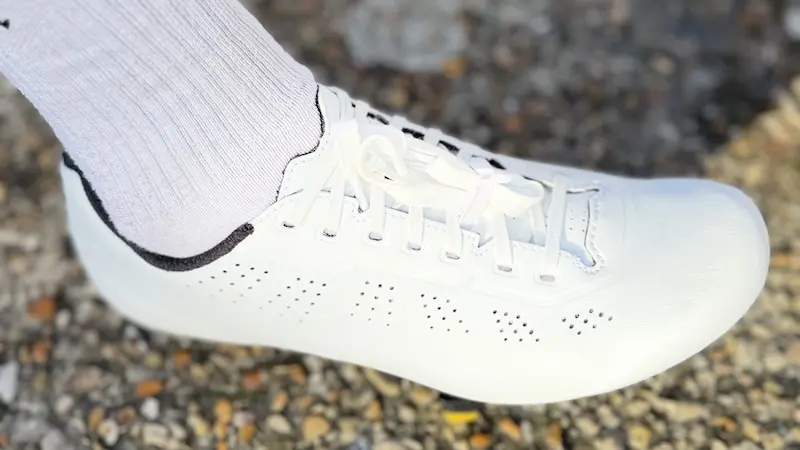
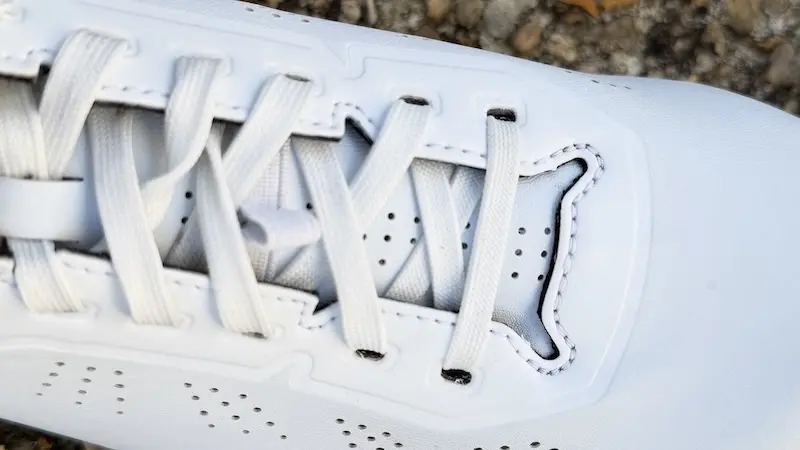
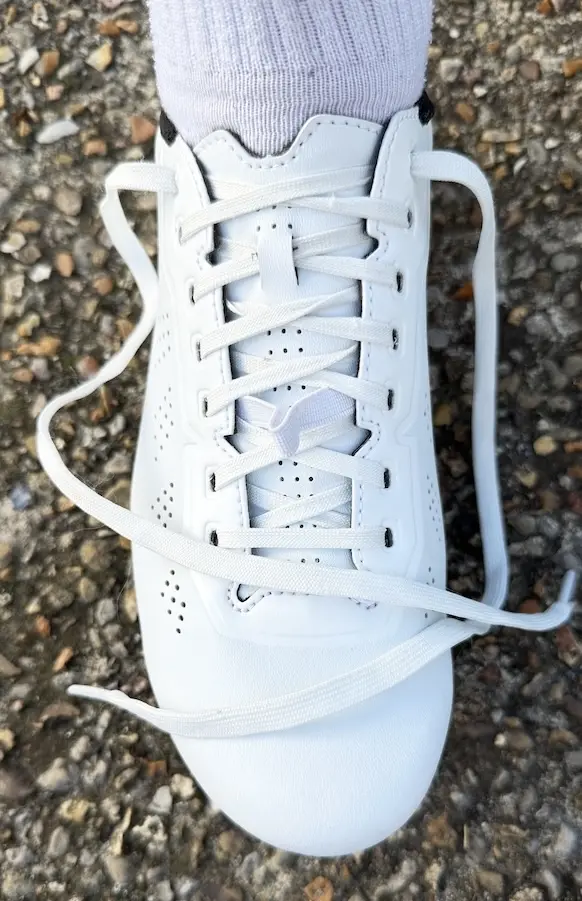
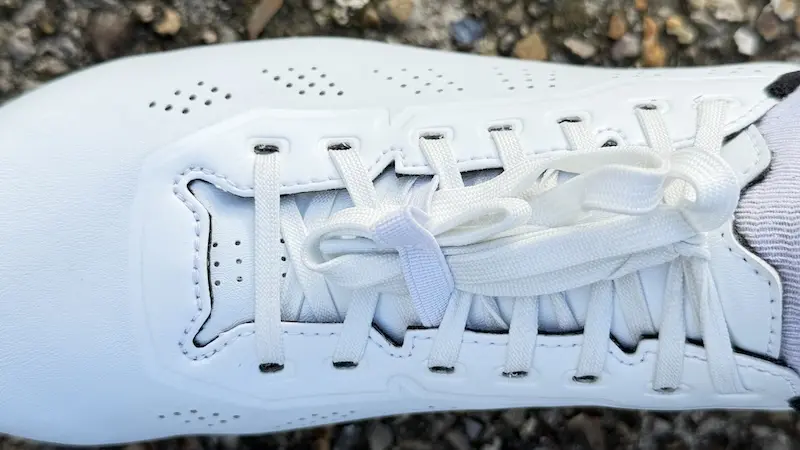
The laces are thin with eyelets that feel built to last. No problem pulling on them to adjust the closure. They hold securely without fraying. The only (minor) drawback on this front: I find them a bit long, even though there is a lace keeper on the tongue to prevent the loops from flapping in the wind or getting caught in the drivetrain.
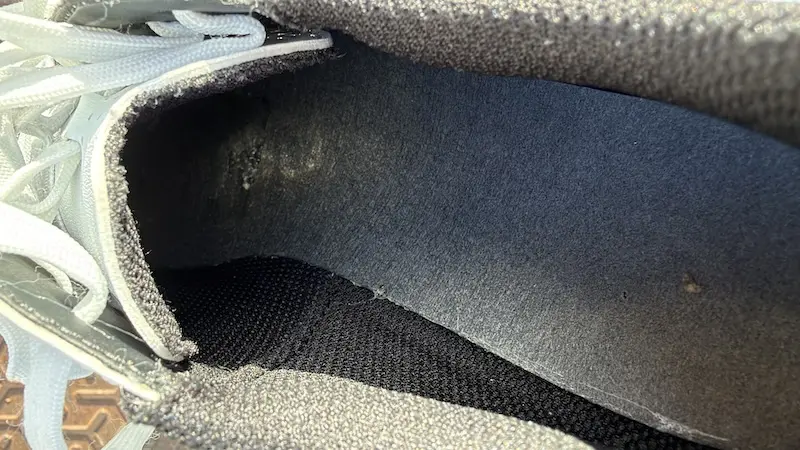
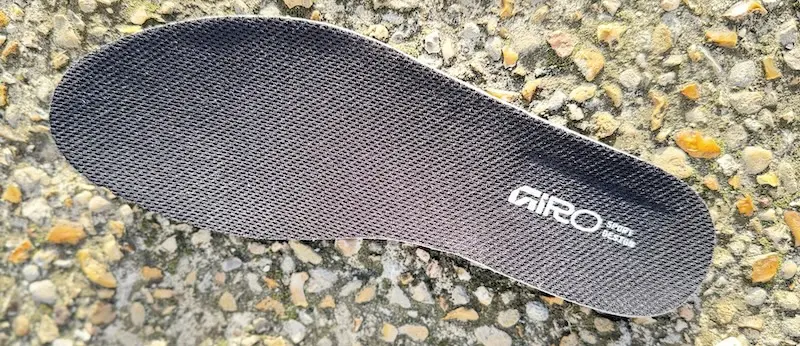
On the flip side, compromises are inevitable to hit this price point. The sockliner is as basic as it gets, far from the sophisticated options featuring adjustable arch support found on the brand’s high-end models. On the outsole side, the three-hole cleat mount offers fairly limited longitudinal adjustment range. This is a detail to watch out for if you have specific positioning habits, and one that requires a bit of extra attention if you use the new Shimano pedals where setback is adjusted directly on the shoe rather than the cleat. Finally, this sole also reflects the accessible positioning of the model, with a composition of 75% Nylon 6, 20% fiberglass, and 5% carbon fiber, and a stiffness that, even on paper, has nothing to do with the brand’s carbon soles.
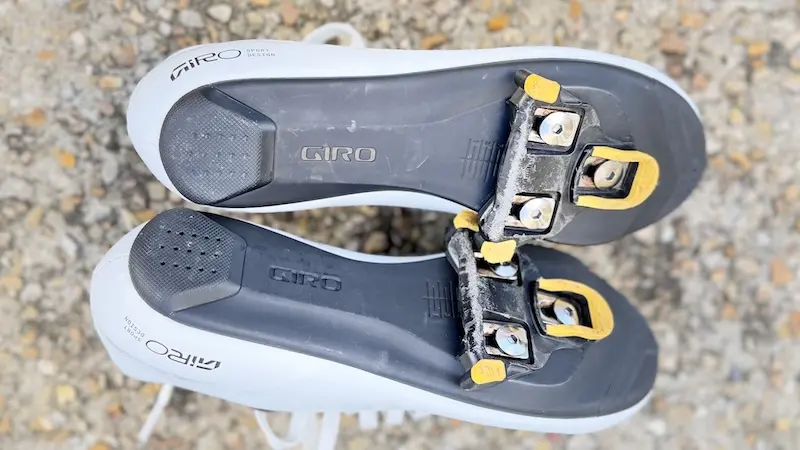
On the weight side, there is also plenty to be surprised by, with a weight of 230 g for a size 40 shoe. For comparison (not entirely relevant given the price difference), the latest Shimano S-Phyre weigh 219 g each in the same size.
On the road: when the upper rules the roost
The test begins on the apartment floor. While walking to grab the bike, the sole immediately reveals its nature: it is simply flexible. You can feel a slight flex around the rear part of the cleat. And keep in mind I am using Shimano SPD-SL cleats, which feature a wide platform. Since the Stylus II are also compatible with thinner SPD cleats, that flexing sensation must be even more pronounced. This is a far cry from high-modulus carbon boards that make your heel click on concrete.
Then comes the road test. On the bike, can you feel this flexibility? Yes, during forceful jumps and heavy, hard efforts, you can feel the sole flexing slightly under your foot pressure. But—and this is the crucial nuance—it is much less pronounced than one might have feared. This highlights the importance of the upper and its closure system: with precise lacing that evenly wraps around the instep, foot retention does not rely solely on sole stiffness. Overall comfort benefits as a result, free from that rigid anvil sensation that sometimes tortures the arch of the foot towards the end of a ride.
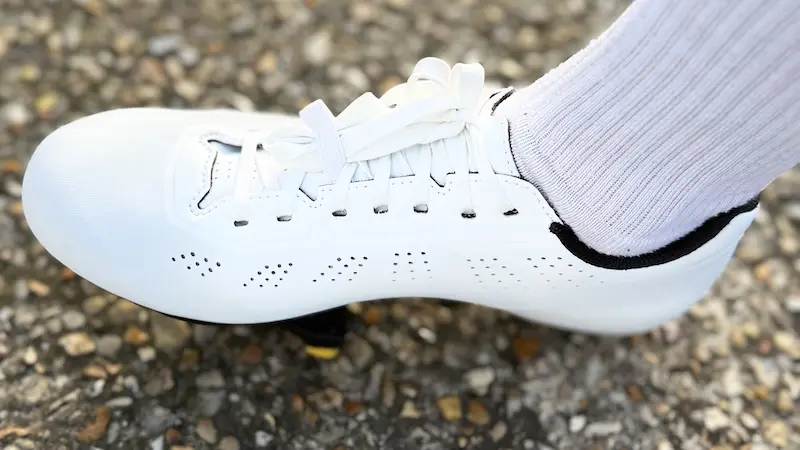
Overall, I cannot definitively say that the Giro Stylus II lack stiffness for regular use, endurance efforts, or even tempo sessions. I even find that when riding out of the saddle, this slight give allows a bit of freedom for foot placement when shifting your weight. It is only during sprints that I feel a slight lack of power underfoot, so to speak. But that is not what these shoes were primarily designed for.
What about the laces then? I am very particular about retention, especially since one of my feet is narrower than the other. Inevitably, I had to stop twice on each of my first three rides to adjust the lacing. Not very practical with shoe covers! But I eventually found a few reference points around the eyelets, helped along by some dirt on the laces. Because yes, while the upper is very easy to maintain to keep that immaculate whiteness looking fresh for a long time, the same cannot quite be said for the laces. But anyway, once they are tied, they do not budge, which is rather good news.
A Real Success
At the final tally, the Giro Stylus II come out with flying colors. These are not shoes tailored for sprints or the pursuit of peak performance, but rather a well-rounded model, exceptionally well finished, and offered at a price point that is hard to fault. For riding long hours in comfort without spending a fortune, they make a very compelling proposition. So much so that we can’t wait to test the gravel version.
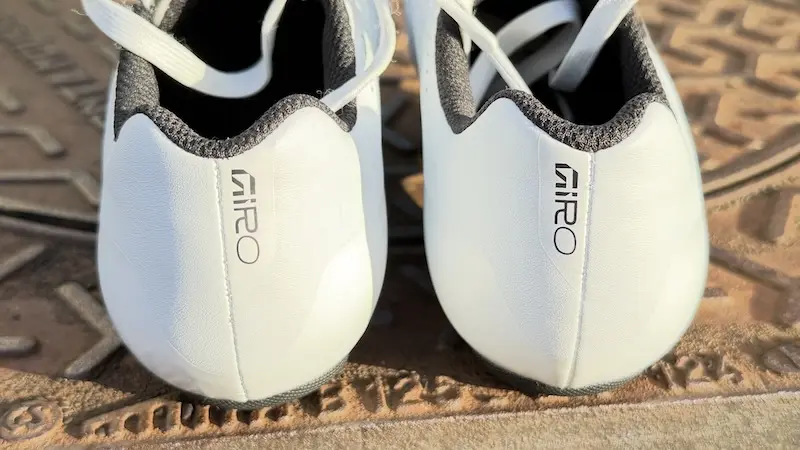
Pros
- Looks
- Finish
- Comfort
- Price
Cons
- Basic insole
TECHNICAL SPECIFICATIONS
| Model | Giro Stylus II |
|---|---|
| Sole | Injection-molded nylon and fiberglass plate |
| Upper | One-piece synthetic upper |
| Heel | Wraparound |
| Closure | Laces with lace cover |
| Insoles | Die-cut EVA insole |
| Adjustment | 3 fixed mounting points / 2 points for SPD |
| Weight | 460 g per pair (size 40) |
| Colors | White, black, sky blue |
| Sizes | From 36 to 50 |
| Price | 125 € |
| Contact | giro.com |
FAQ – Giro Stylus IIWhat is the price of the Giro Stylus II shoes? The Giro Stylus II retail for €125. They sit among the brand’s entry-level models, with a finish and look that suggest much more expensive shoes. Are the Giro Stylus II comfortable for long rides? Yes. Their one-piece upper hugs the foot well, with no annoying interior seams. The lacing also allows for precise adjustment of instep support. Their relatively flexible sole contributes to notable comfort on endurance rides. Are the Giro Stylus II stiff enough for high-intensity riding? For endurance and tempo sessions, their stiffness is sufficient. The sole flexes slightly during heavy efforts, particularly out of the saddle and during hard accelerations. This suppleness becomes more noticeable during sprints, where the shoes show their limits. How do the Giro Stylus II fit? The Stylus II run small. You should plan on sizing up by about half a size compared to your usual shoe size. Trying them on is still best to find the right last shape. What are the main compromises of the Giro Stylus II? Their affordable price tag involves a few trade-offs: an outsole that is less stiff than those on high-end models, a basic sockliner, and rather limited longitudinal cleat adjustment options. Lacing them also takes a bit of patience to find the ideal closure. On the other hand, the quality of the upper and the overall comfort are real strong points. |
Share the post "Giro Stylus II Review: The winning gamble for affordable laced shoes"