Share the post "How to maintain your cycling fitness after 50"
After 50, continuing to improve on the bike, or at least slowing down the decline, often means shaking off a few old training habits. Not that your endurance base evaporates overnight, but certain physical qualities end up withering away if neglected. Pure strength, punch in accelerations, and the ability to withstand very high intensities require dedicated maintenance. Not to mention a game-changing parameter: recovery time. Let’s take a closer look.
By Guillaume Judas – Photos: depositphotos.com
When you’ve been wearing out the padding in your cycling shorts for decades, you generally have a rock-solid endurance foundation. The years spent racking up the kilometers have shaped the aerobic engine, with muscles that expertly know how to optimize oxygen. Mitochondria, those tiny power plants housed at the core of cells, do an extraordinary job.
Add to that routine: weekend rides, weeks that follow more or less the same structure, and moderate paces naturally maintain this foundation. As a result, many fifty-somethings (and older!) can still ride for hours, soak up volume, and keep their endurance top-notch.
The real trap lies elsewhere. As we age, muscle mass slowly melts away, along with explosiveness and nervous system reactivity. And sticking strictly to cycling is no longer enough to counter this phenomenon. Cycling doesn’t recruit everything needed to preserve muscular integrity.
First priority: take up strength training (yes, really)
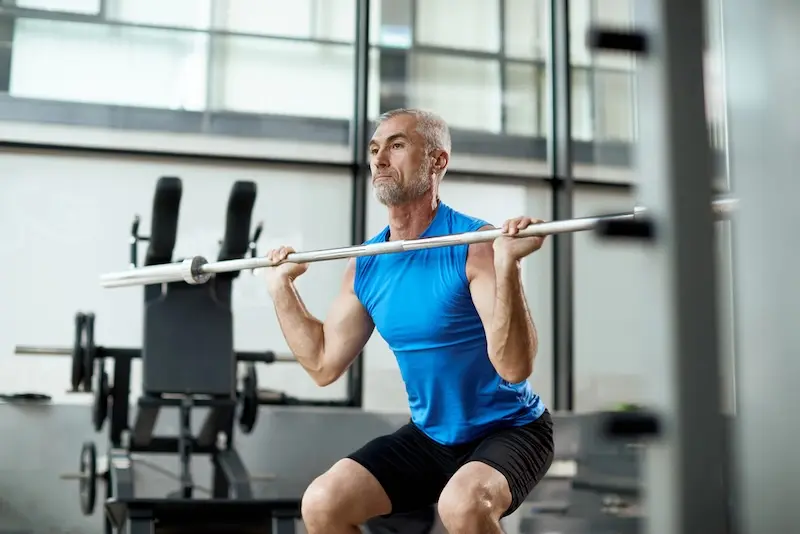
Age-related muscle loss, known as sarcopenia, shows no mercy, even to regular athletes. Without supplementary specific work, a cyclist loses mass and strength over the years. The solution? Fit in two strength-building sessions per week. No question of lifting three pink dumbbells to look pretty: you need real weight, movements that wake up the fibers.
The lower body is obviously the absolute priority: squats, leg press, lunges. The goal is twofold: maintain maximum strength, but also reawaken neuromuscular connection, which is the nervous system’s ability to recruit fibers at the right moment.
Over the years, this work becomes a formidable weapon. It brakes muscle loss, brings back punch on the bike, and, icing on the cake, preserves independence in everyday life. Two solid sessions a week is an ultra-profitable investment, provided you give your muscles time to digest the effort.
Naturally, you don’t start lifting heavy weights from one day to the next. Progression must be tailored to your experience, physical condition, and mastery of the movements.
Second priority: refuse to bury intensity
VO2 max, that famous maximum volume of oxygen the body can consume, inevitably drops with age. Maximum heart rate decreases, cardiovascular mechanics change, it’s purely biological. But be careful not to blame everything on the passage of time. A good part of this decline simply comes from the fact that we end up shying away from hard efforts.
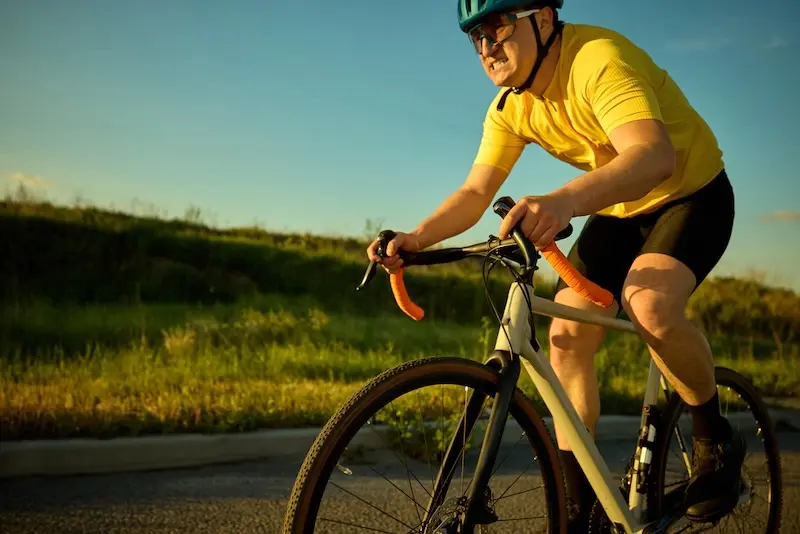
It’s a classic after 50: you ride clean, string together long rides, maintain a bit of tempo, but forbid yourself from making efforts that force you to push your limits. You automatically tell yourself that “that intensity nonsense isn’t for us anymore“. Big mistake. The cardiovascular system needs to be shaken up to stay high-performing. Keeping at least one high-intensity session per week, scheduled according to your current form, remains essential.
A great classic, the good old 30/30: six repetitions of 30 seconds all-out, interspersed with 30 seconds of recovery. It stimulates the heart and maintains your engine without wearing yourself out for hours. The idea isn’t to play WorldTour pros, but to prevent this quality from atrophying through lack of use. Of course, if you’ve stopped, you ease back into it gradually.
Third priority: protect your recovery
This is undoubtedly the point that requires the most letting go. Past a certain threshold, repairing the engine after a big ride or an interval session simply takes more time. And trusting next-day sensations is a trap: you might feel like your legs are fresh while your body is still right in the middle of repair work.
Wanting to train at 50 with the same rhythm as at 30 is the best way to shoot yourself in the foot. Sessions pile up, fatigue sets in deep, and intensities become impossible to hold. It’s the classic vicious circle: you no longer recover, you arrive wasted at key sessions, you can’t go anywhere, so you drop the intensity sessions. As a result, you only do casual leisure rides, precisely when you most need to stimulate your strength and VO2 max.
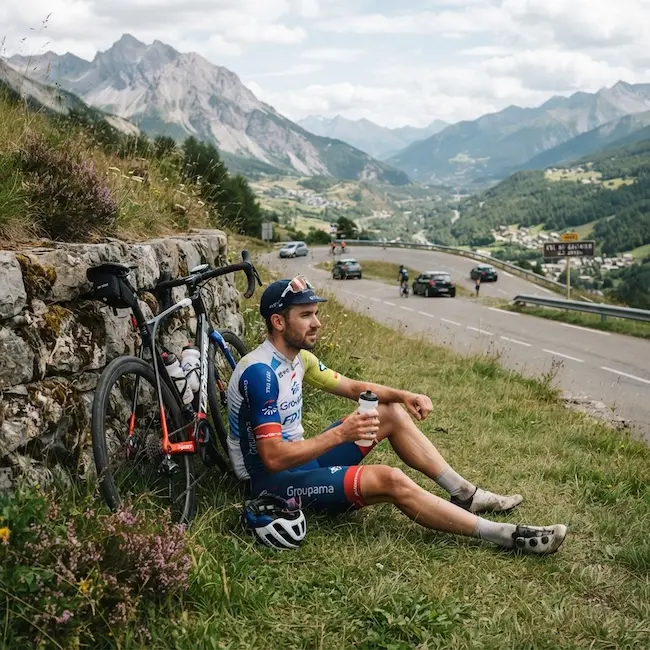
A good benchmark is to count at least two full days of relative rest between two hard sessions or two XXL rides. That doesn’t mean staying sprawled on the couch. A short recovery spin, a bit of walking, or dynamic stretching all have their place. The main thing is not to add stress to a body that is still repairing the previous blow. Recovery isn’t wasted time; it’s the invisible fuel that allows you to nail your next quality session.
In summary: holding onto what you’ve built
At 50 and beyond, time takes its toll, but the rate at which we decline depends largely on our choices. The endurance base, after years of practice, is often very much there. The real task is maintaining what regular rides are no longer quite enough to preserve: strength, explosiveness, and the ability to sustain very high intensities.
This requires shifting your habits a bit, accepting to push iron and suffer on the bike, and, paradoxically, learning to ease off between big efforts. It’s neither about mimicking your twenties nor throwing in the towel: just finding the right balance.
The goal isn’t to shake up your Strava profile on every ride. It’s to keep hammering on the climbs, bantering with mates at the summit, climbing while having fun, and above all, enjoying the fruits of all those years of cycling for as long as possible.
Share the post "How to maintain your cycling fitness after 50"