
Share the post "Long-term test of the Inpeak Powercrank-E power meter"
Power measurement has become widely democratized in cycling, but it still represents a significant investment. With its Powercrank-E, Inpeak offers a compact and relatively affordable solution, integrated directly into the left crank arm of a Shimano crankset. We used this power meter for two months, across numerous rides and in varied conditions, to assess its day-to-day reliability, the consistency of its measurements, its ease of use, and its battery life. Beyond the manufacturer’s stated specifications, this long-term test allows us to verify whether the Powercrank-E is a credible alternative to more expensive power measurement systems.
By Guillaume Judas – Photos: ©3bikes.fr
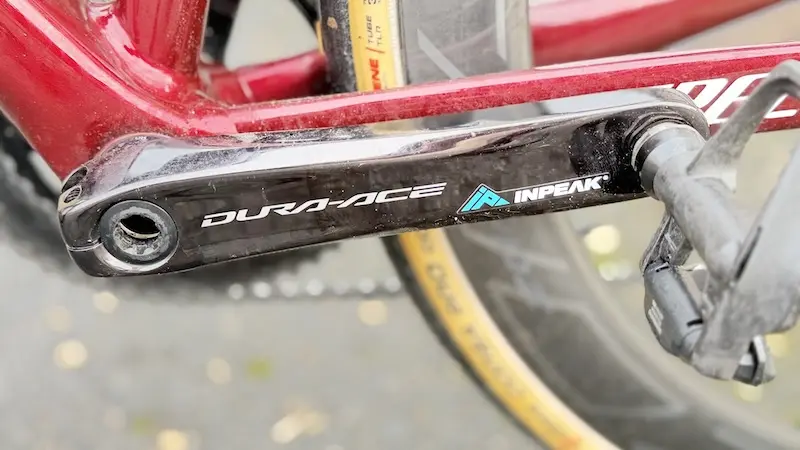
Founded in Poland, Inpeak has specialized in the design of power meters for road cyclists, gravel riders, and mountain bikers. The brand offers several solutions, with power meters integrated directly into the left crank arm of Shimano cranksets, as well as cranksets from the Japanese brand equipped with dual-sided power measurement. For this test, we deliberately chose the simplest and most accessible solution: the Powercrank-E, which makes it possible to add power measurement to an existing crankset without having to replace the entire drivetrain or invest in specific pedals.
The range notably includes the Powercrank, powered by a coin cell battery, and the Powercrank-E, with a built-in rechargeable battery. These crank-based power meters are available for various Shimano crankset families, notably 105, Ultegra, Dura-Ace, and GRX, depending on generations and part numbers. Here, we chose a Dura-Ace R9200 left crank arm, sold at a price of 469 € ready to use. Prices in the range start at 339 € for a 105 crank arm, and even from 249 € if you want to have the Inpeak power meter installed directly onto one of your own Shimano crank arms.
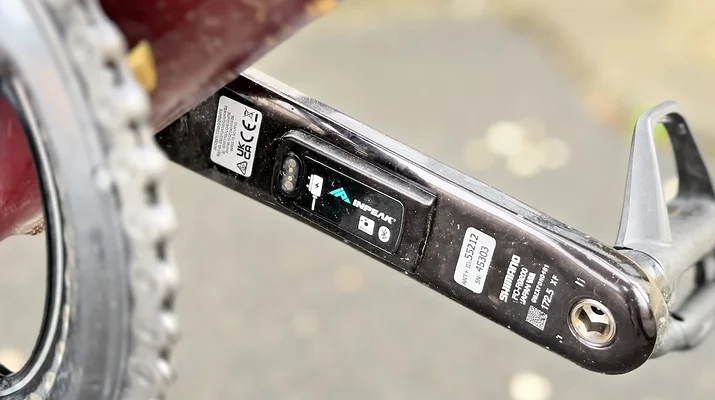
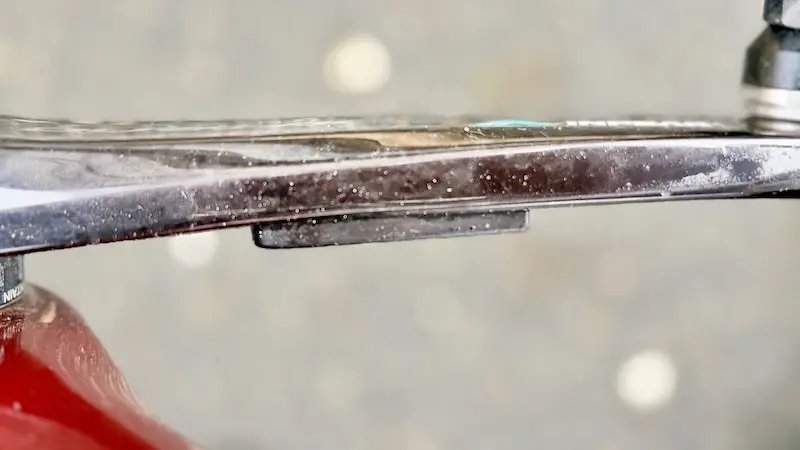
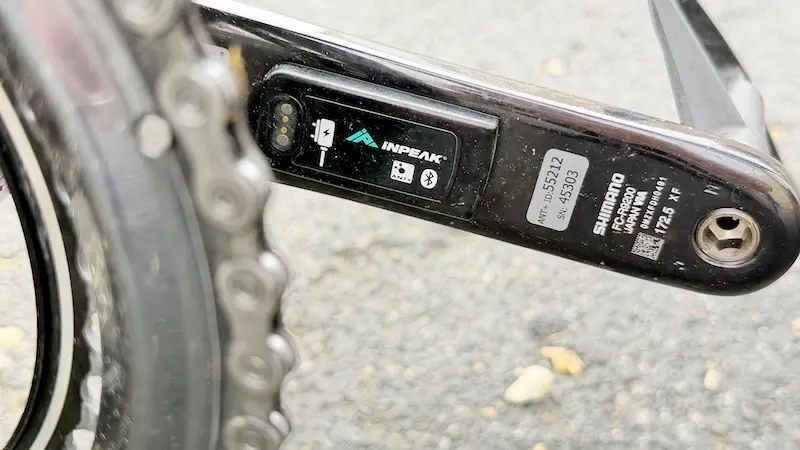
The principle relies on measurement taken solely at the left crank arm. Strain gauges integrated into the power meter record the deformation of the crank arm under effort in order to calculate the power developed by the corresponding leg. To obtain an estimate of total power, the measured value is then multiplied by two. A simple approach that provides the main information needed for training with a particularly discreet and lightweight device, as it adds only 10 g to the crankset, for a housing about 50 mm long and 5 mm thick.
Discreet integration on the left crank arm
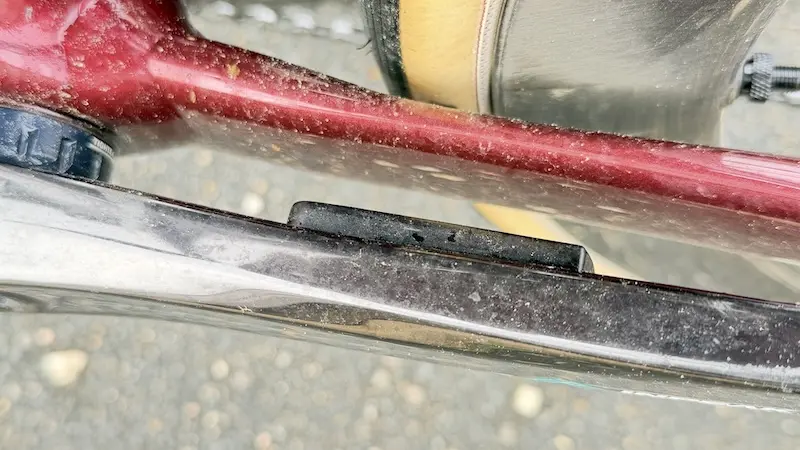
One of the main benefits of the Inpeak system lies in its ease of installation. The power meter is attached to the inner face of the left crank arm without modifying the original crankset. There is therefore no need to replace the chainrings, spindle, or bottom bracket, nor to modify the drivetrain adjustments. Installation is truly Plug and Play and takes only two to three minutes. You thus keep the essentials of your equipment, with a very discreet addition that practically does not alter the bike’s appearance.
However, before installation, you must check that the available space between the electronic housing, located on the inside of the crank arm, and the left chainstay of the frame is sufficient. This check is particularly important on certain frames with bulky chainstays or a very compact design.
The power meter is then recognized by the GPS bike computer or compatible device via an ANT+ or Bluetooth connection. After initial pairing and calibration, it is ready to transmit power and cadence data during rides.
Technical specifications and features
The Powercrank-E features compact electronics, with measurement accuracy claimed at ± 2% by the manufacturer. It covers a power range from 20 to 2,000 watts and a cadence between 20 and 200 rpm. The system also includes automatic temperature compensation, intended to maintain measurement consistency when outdoor conditions change during a ride. However, this thermal compensation does not eliminate the need to regularly perform a zero-offset calibration with the bike computer. This is a procedure that I personally carry out at the start of every ride and which takes only a few seconds.
The E version differs from the classic version by its rechargeable power source. Its 110 mAh Li-Po battery offers a claimed battery life of up to 90 hours, for a recharging time of about two hours. Connection is made using a magnetic USB cable supplied with the power meter. An automatic sleep mode helps preserve battery life when the bike is not in use. From what I have observed, the claimed battery life is largely in line with my experience. And the fact that the battery is rechargeable, without requiring battery replacement, more than makes up for the model’s extra 20 € cost compared to the coin-cell version, in my opinion. The housing also benefits from IP67 certification, which guarantees protection against dust and temporary immersion.
For data transmission, Inpeak has chosen ANT+ and Bluetooth Low Energy protocols, ensuring compatibility with the vast majority of GPS bike computers and training apps. The power meter communicates power and cadence data in particular. It is also compatible with Zwift.
Note that the software allows you to modify the Scale Factor, meaning you can apply a proportional correction to the transmitted power values. This capability can be useful for adjusting data if a systematic discrepancy is observed with another reference power meter. However, it does not alter the physical measurement performed by the sensor.
In the field: reliable and consistent measurements
Before talking about accuracy, it is perhaps worth remembering that it is sometimes unnecessary to be overly demanding with the figures displayed by a power meter. Inpeak claims a margin of error of ± 2%. Concretely, for a power actually produced of 300 watts, the computer can therefore display a value between 294 and 306 watts. This may seem significant when looking at data down to the exact watt, but it remains perfectly acceptable for the vast majority of training, especially among amateur cyclists. Especially when you know how difficult it is to maintain a perfectly constant power output during a session. The key is to have a consistent, reproducible, and stable measurement over time, which allows you to track your intensities and compare your sessions.
On these various aspects, the Powercrank-E gave me complete satisfaction during the two-month test. I encountered no connection or data transmission issues with my Wahoo bike computer. Pairing with the Inpeak smartphone app also goes smoothly. The latter allows you to check the battery level, perform a zero-offset calibration, or carry out power meter updates. While riding, cadence detection always proved fluid and reliable, with no dropouts or aberrant values observed.
Regarding power, the recorded values proved consistent across all my rides, in comparison with several other measurement systems: a Quarq power meter, Garmin Rally pedals, and, to a lesser extent, a Coospo power meter. I also carried out more specific comparisons with a Wahoo KICKR smart trainer. At low intensity, I noted a slight discrepancy, with the Inpeak displaying values slightly more optimistic than those of my other power meters. This difference narrows noticeably as intensity increases.
The finding is similar on the road when comparing the Powercrank-E with the Garmin Rally pedals. At a sustained intensity, around 250 watts, the observed variations generally do not exceed 2 to 3 watts. These are very small discrepancies, which remain below the margin of error claimed for each of the two systems.
Sprints constitute another interesting exercise to evaluate a power meter’s behavior. During peak power efforts, the Inpeak seemed particularly close to the Quarq’s values, more so than the Garmin Rally pedals and especially the Coospo, which tended, in my comparisons, to underestimate the power developed under these conditions.
However, my own power distribution between the two legs must be taken into account. Naturally, I display a slight imbalance in favor of the left leg, on the order of 51/49, or even 52/48 at low intensity. However, this distribution changes when the effort increases: with the Quarq or the Garmin pedals, I then find a balance much closer to 50/50. This partly explains the small differences observed between the systems, particularly at low intensity, and can slightly influence the average power values recorded by the single-sided Inpeak power meter. In practice, this peculiarity does not change much regarding the use of data for my training sessions: the values remain sufficiently consistent to train at targeted intensities and track progression.
Finally, I observed no particular drift in measurements over the course of sessions. The Powercrank-E maintains regular behavior. I perform a calibration at the start of every ride out of habit and precaution, but I haven’t had to intervene on the power meter due to a measurement issue. This is probably one of its best arguments in use: once installed and paired with the computer, you can simply focus on your training.
Single-sided measurement: what are the limitations in practice?
The principle of a power meter like the Inpeak Powercrank-E is simple: measure the power developed by the left leg, then multiply this value by two to obtain an estimate of total power. This method obviously presents a limitation compared to a dual-sided system, which can independently measure the power developed by each leg. If you produce 52% of your power on the left and 48% on the right, the Inpeak power meter extrapolates a total power slightly higher than reality. Conversely, an imbalance in favor of the right leg results in an underestimate.
Furthermore, this distribution is not necessarily fixed. It can evolve with fatigue, cadence, position, or effort intensity. This is notably what I was able to observe during my own comparisons: my slight natural advantage on the left at low intensity tends to disappear when I push harder. The result displayed by the Inpeak can therefore present a slight offset depending on the conditions, without calling into question the consistency of its measurements.
Above all, this limitation must be put into the context of usage. To define your training zones, perform intervals at FTP or MAP, manage your effort on a climb, or track changes in your training load, a reliable single-sided power meter fulfills its role perfectly in the vast majority of situations. It simply does not allow for a fine analysis of each leg’s contribution or precise tracking of changes in any left/right imbalance.
For a rider who does not exhibit significant asymmetry and who is primarily looking for a reliable reference to structure their training, this limitation is therefore not necessarily an obstacle. Dual-sided measurement provides additional information, but it is not essential for everyone.
A reliable and accessible power meter for serious training
After two months of use, the review of the Inpeak Powercrank-E is very positive. Discreet, lightweight, and simple to use, it fulfills its mission perfectly. It does not claim to compete with the most sophisticated measurement systems on the market, but it offers essential features to structure your training.
The Powercrank-E is therefore aimed first and foremost at those who wish to access power measurement without investing in a complete crankset or specific pedals. Its main trade-off is obviously the lack of independent measurement for both legs, but this limitation should not be a deterrent for most riders. The Powercrank-E emerges as a serious, well-designed solution that is sufficiently reliable to support serious training. Provided you are not looking for a precise analysis of pedaling distribution, it is a reasonable investment to take the plunge into power measurement.
PROS
- Quick and simple installation
- Discretion and low weight
- Good measurement consistency with other tested power meters
- Cadence measurement reliability
- Battery life in line with expectations
- Rechargeable battery and IP67 waterproof rating
- Excellent value for features and price
CONS
- Measurement on the left leg only
- Can show a slight discrepancy in case of a left/right leg imbalance
- Frame compatibility check required prior to installation
SPECIFICATIONS
| Model | Inpeak Powercrank-E |
| Type | Left crank arm power meter |
| Options | Shimano 105, Ultegra, Dura-Ace, GRX, XT, XTR crank arm |
| Attachment | On Shimano spindle |
| Crank arm lengths | 160, 165, 167.5, 170, 172.5, 175, 177.5 mm |
| Power range | 20 to 2000 W |
| Power accuracy | ±2% |
| Cadence range | 20 to 200 rpm |
| Measured data | Power, cadence |
| Calibration | Manual, active temperature compensation |
| Wireless protocol | ANT+, Bluetooth BLE |
| Waterproof rating | IP67 |
| Operating temp. | – 5 to 50 °C |
| Battery life | 90 hours |
| Recharging | Magnetic |
| Weight | 10 g (in addition to the crank arm) |
| Price | 469 € (Dura-Ace crank arm), from 349 € (105) |
| Contact | alternativsport.com |
FAQ: Inpeak Powercrank-EIs the Inpeak Powercrank-E power meter compatible with all Shimano cranksets? No. The Powercrank-E is available for several Shimano crankset families, notably 105, Ultegra, Dura-Ace, and GRX. However, compatibility depends on the generation and part number of the crank arm. It is therefore best to check exact compatibility before purchasing. What is the accuracy of the Inpeak Powercrank-E power meter? Inpeak claims an accuracy of ± 2%. The power meter uses strain gauges integrated into the left crank arm and features automatic temperature compensation. During our two-month test, the measurements proved consistent with those of several other systems, notably Quarq and Garmin Rally. What is the battery life of the Inpeak Powercrank-E power meter? The Powercrank-E features a 110 mAh rechargeable Li-Po battery. Inpeak claims up to 90 hours of battery life and about two hours for a full charge. The power meter is recharged using a magnetic USB cable. Can the Inpeak Powercrank-E power meter be used with a Garmin or Wahoo bike computer? Yes. The power meter is compatible with ANT+ and Bluetooth Low Energy protocols. It can therefore communicate with the vast majority of Garmin, Wahoo, and Hammerhead GPS bike computers, as well as with compatible training apps, notably Zwift. Is a single-sided power meter sufficient for cycling training? Yes, for the vast majority of cyclists. A single-sided power meter like the Inpeak Powercrank-E measures the power produced by the left leg, then multiplies this value by two to estimate total power. This method can lead to a slight discrepancy in the presence of a left/right leg imbalance, but it remains perfectly suited for defining training zones, working at FTP or MAP, and managing your effort on the road. A dual-sided system becomes interesting primarily for analyzing the work of each leg separately. |
Share the post "Long-term test of the Inpeak Powercrank-E power meter"


