Share the post "Robert Gorgos, The Man Who Wants to Make Nutrition Smarter"
Behind MNSTRY, there is much more than a range of gels, drinks, and energy bars. There is a conviction, almost an obsession: performance is not just about what you consume during exercise, but is also built on everything that precedes and follows it. Behind this philosophy is a man, Robert Gorgos, who advocates an approach to sports nutrition that is as scientific as it is pragmatic. Because the real challenge is not only to perform today, but to be able to do it again tomorrow. And the day after tomorrow. Without ever forgetting that the body that produces performance is also the one that must last.
By Jeff Tatard – Photos: © MNSTRY
There are brands you test. And then there are brands that, through sheer consistency, make you want to trace them back to the person who conceived them. With MNSTRY, that’s exactly what happened.
We had already recounted, on 3bikes, what this German nutrition had revealed during three weeks of intensive training in Portugal, and then what it had confirmed when racing replaced training, and performance ceased to be a promise to become a requirement. But as the kilometers accumulated, another question arose: who is really the man behind this philosophy of sports nutrition?
Because very quickly, something about MNSTRY stands out. Of course, there are the products. Their digestibility. Their consistency. Their ability to support effort without making the digestive system feel like the price to pay for performance. But there’s also everything else. The shaker. The measuring spoon. Its case. The design. The overall feeling that nothing here has really been left to chance. And when a brand seems so meticulously thought out, it’s often the people behind it who become the real subject.
On the phone, from Germany, Robert Gorgos doesn’t sound like a man reciting a sales pitch. His voice is calm, composed, precise. You quickly sense that the exchange interests him more than the demonstration. And that’s probably the first thing to understand about him: Robert is not a nutrition salesman. He is a man of the field, of science, and of endurance. A nutritionist trained at the Technical University of Munich, a cycling coach, long confronted with the highest level, particularly in the world of professional cycling, and co-founder of MNSTRY after meeting Peter Höschl in 2019.
But even before talking about products, carbohydrate ratios, or bicarbonate, we had to start at the beginning: his background.
From science to the road, and from the road to science
What is striking about Robert Gorgos is that he never talks about nutrition as an abstract field. For him, science is not separate from practice. On the contrary, it seems constantly brought back to a single question: what really happens when an athlete rides, runs, trains, accumulates fatigue, digests more or less well, recovers… or doesn’t recover? This way of approaching nutrition is far from anecdotal. It says a lot about the MNSTRY project.
Behind the brand, there is obviously scientific knowledge. But there is also dissatisfaction. That of a man who knew the sports nutrition market perfectly and was never completely satisfied with it. Not because nothing existed. But because between what the products announced and what the body actually experienced, something often remained unfinished. This is undoubtedly where the deepest starting point of MNSTRY lies: no longer thinking about nutrition only in terms of intake, but in terms of actual use by the body.
In other words: it’s not enough to write 80, 100, or 120 g of carbohydrates per hour on a nutritional strategy. The body must still be able to absorb all of that, tolerate it, use it, and continue to function after four or five hours of effort, sometimes several days in a row. It is precisely this tension between theory and reality that Robert Gorgos seems to have wanted to resolve.

True sophistication is not always where you imagine it
In a world where many brands talk about innovation as a marketing argument, Robert Gorgos often brings things back to something almost less spectacular, but much more interesting: the basics. This applies to training, recovery… and nutrition.
When asked what he believes is the biggest mistake still made by amateurs today, his answer came without hesitation. “The one advice I would give, with our products or without our products, doesn’t matter, is: feed your training.” In other words: fuel your workouts.
Behind this seemingly simple phrase lies a very strong critique of an entire endurance culture. That of old reflexes, of the idea that training with little or no energy would almost be a virtue, a way to become more efficient, “tougher,” more resistant. Robert Gorgos does not say that there is no place for certain occasional manipulations of intensity or energy availability. But he reminds us that, in the real life of an endurance athlete, especially when training almost every day, properly fueling training changes a lot of things: the quality of the work, recovery, dietary choices after exercise, sleep, and, ultimately, performance.
This was undoubtedly one of the most interesting moments of our exchange. Because it reminds us of a truth we sometimes forget: nutrition is not just about sustaining effort. It’s about being able to live well through everything around it.
Robert says it in his own way. When you fuel your sessions correctly, you recover better. When you recover better, you often eat better afterwards. When you eat better, you sleep better. And when you sleep better, the next day’s session already looks quite different. In other words: good nutrition rarely acts only where you expect it to.

The myth of permanent revolution
We live in an era fascinated by revolutions. The new product that changes everything. The formulation that redefines standards. The protocol no one saw coming. Sports science, too, does not escape this staging of innovation. It is precisely on this point that Robert Gorgos proved particularly interesting.
When asked what he thought the next big revolution in sports nutrition might be, his answer did not take the most “marketable” path. “I don’t think there’s one single thing that will revolutionize everything. It’s just doing the basic things correctly.” The phrase is worth pausing on. For Robert Gorgos, the next revolution may not be one. It may simply be about doing the basics better.
Train well. Really recover. Sleep well. Eat correctly. Adapt intake to the actual workload. Accept that in endurance, it is often the fundamentals that separate good performance from very high performance. “Train easy, go easy. Train hard, go hard. Fuel your training well. Sleep a lot. These are all the differences.”
The most interesting thing is that such an answer is not a rejection of science. On the contrary. It seems to say that science is only valuable if it helps to better execute essential things, not if it serves to mask their absence. Fundamentally, Robert Gorgos defends a very modern idea: performance is not a collection of tricks. It is a discipline of consistency.
Who is Robert Gorgos?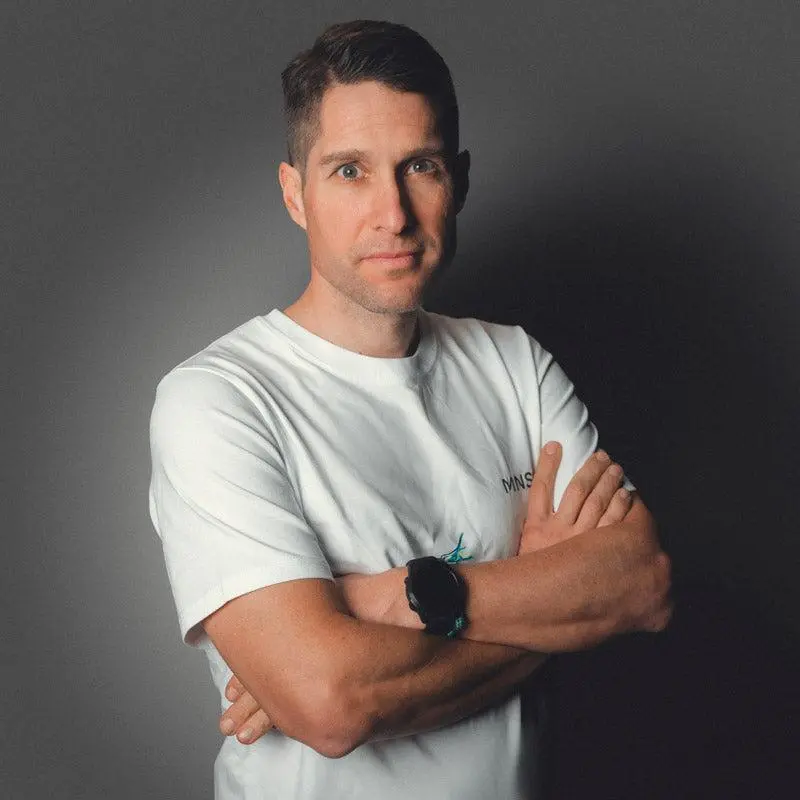
|
When nutrition stops being theoretical
This concern for reality is not just a principle of discourse. It seems to constitute the very core of his way of working.
Throughout the conversation, Robert mentions, for example, the interest of very simple nutritional strategies rigorously applied in other endurance sports, particularly in extremely demanding training environments. His observation is clear: in many athletes, the potential is already there. What is sometimes missing is not the will, nor even raw physical ability. It is simply the fact of finally having implemented a consistent enough nutrition to no longer unintentionally sabotage the work done.
In some cases, the difference is not spectacular to the naked eye. You don’t immediately see the “revolution.” But the consequences are profound: you stop losing unnecessary weight during big training blocks, you tolerate the load better, you recover faster, you maintain work quality better, and all of this ultimately produces results. Nutrition, in this vision, is not a supplement to performance. It is a condition of its stability.
This is also what makes his discourse credible. Robert doesn’t speak like someone trying to convince you that his products are miraculous. He speaks like someone who knows that, in practice, it is often simple adjustments, repeated with discipline, that produce the greatest effects.
Bicarbonate, carbohydrates and fatigue: the other frontier
One of the most fascinating topics of the interview obviously concerned bicarbonate, around which MNSTRY is preparing a new campaign with its BICARB GEL 40.
The theme is not new in high-level sport. Bicarbonate has long been known for its potential role in managing acidosis and its ability to delay certain forms of fatigue, particularly during intense efforts. What becomes more interesting here is the link established with carbohydrates and long efforts.
Robert explains that there is a particularly stimulating field of exploration here. The idea is not only to reason about short, violent, spectacular efforts, but also about what this carbohydrate + bicarbonate co-ingestion could bring in prolonged contexts, when energy expenditure becomes massive and resistance to fatigue in the final often makes all the difference. The subject is still under construction. He speaks about it cautiously, mentioning in particular the work of Dr. Julien Louis and ongoing developments, including in the world of running.
We then understand what interests him: not simply knowing if a molecule “works,” but at what moment, for what profile, under what effort conditions, and with what real benefit in the world as experienced by athletes. It is a way of thinking about nutrition less as a sum of products than as an intelligence of context.
Anti-Cramp, Leuven and that moment when the field speaks again
It was impossible, in this conversation, not to return to Leuven. A week earlier, on the muddy roads of Leuven, several doses of MNSTRY’s ANTI-CRAMP had found their way into the pockets of a jersey, at the start of the Belgian round of the UCI Gravel World Series. An almost insignificant detail amidst 122 kilometers of racing. Until these small vials suddenly became particularly interesting.
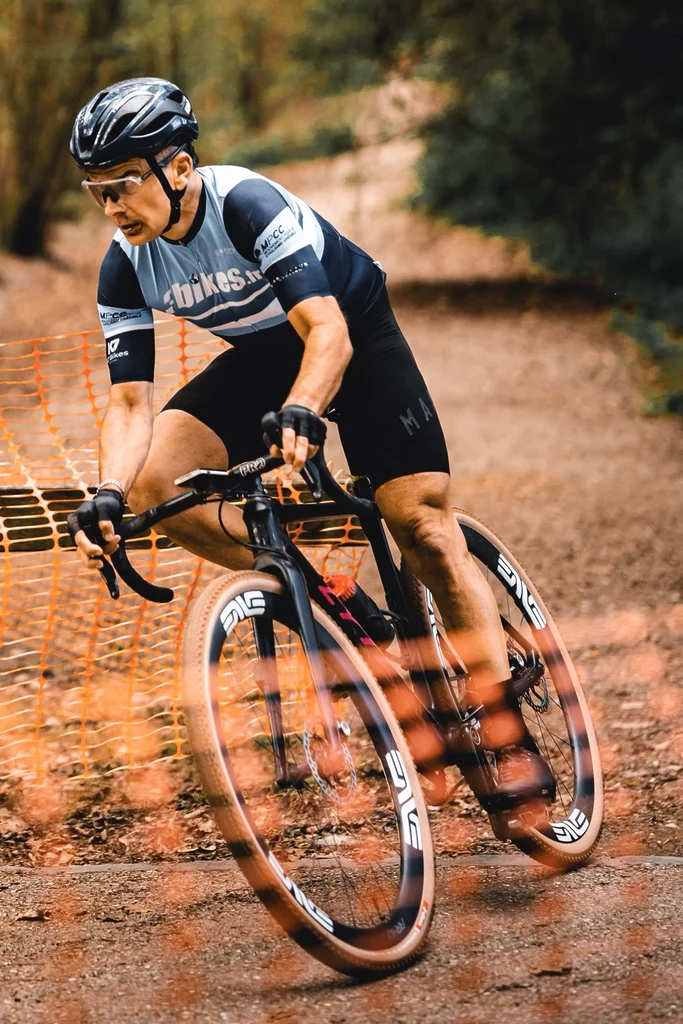
Reported to Robert Gorgos, this experience raised a question almost more intriguing than the speed of relief: what if the product’s particularly strong taste was not just a detail, but one of the keys to its function? Behind this immediate sensory stimulation lies a fascinating scientific avenue, that of an interaction between mouth receptors, the nervous system, and muscle response. A hypothesis that obviously deserves more than two field observations to be confirmed.
This is obviously a subject that requires caution. Two field experiences do not constitute scientific proof. Robert is perfectly aware of this. But this is precisely where the exchange becomes interesting. Because we leave the caricature of the “all-solving” electrolyte to enter something more subtle, more neurological, more sensory too: the possible role of certain taste stimulations, certain receptors, certain reflex responses, in modulating the perception or appearance of cramps. In other words, one of MNSTRY’s most stimulating ideas may also be one of the least intuitive: sometimes, performance is not only about what is supplied to the muscle, but also about how the body perceives the signal.
It is to Robert Gorgos’ credit that he does not reduce this complex subject to a simplistic explanation. On the contrary, one senses in him a taste for areas still incompletely understood, for promising mechanisms that need to be explored seriously. In this, his way of talking about science is quite similar to his way of thinking about nutrition: ambitious, but never triumphalist.
Luxury is not a question of packaging, but of consistency
One of the initial intuitions of this interview was the following: at MNSTRY, high-end is not just about price, nor even perceived quality. It is above all about consistency.
When you interview Robert Gorgos, you understand that this consistency does not stop at formulations. It concerns the totality of the experience. The product, of course. But also its use. Its digestibility. Its simplicity of implementation. Its integration into a broader strategy. And yes, also, the peripheral details that silently say something about the level of demand of those who designed the whole. True premium is not what is flashy. It is what seems to have been thought out by someone who truly knows the field and respects the athlete enough not to waste their time. Robert did not utter this sentence as such. But it could almost summarize the feeling left by the interview.
Because the further the conversation progressed, the less the subject was a brand and the more it became a way of seeing sport. A very German way perhaps, in the noble sense of the term: rigorous, structured, precise. But also profoundly pragmatic. What interests Robert Gorgos is not the abstract idea of performance. It is what, in the real life of the athlete, allows this performance to exist.

What he is most proud of
At the end of a conversation dedicated to science, performance, and innovation, a final question allows us to return to the essential: what is Robert Gorgos truly most proud of today? The answer lies neither in a number, nor in a technological feat, nor even in a development strategy. It tells something deeper about this man’s relationship with his profession and with the athletes to whom he dedicates his work.
What seems to touch him most is seeing that an idea born almost artisanally has grown without losing its meaning. To observe that the products initially designed in an office, with very high standards, now live in the reality of athletes. And above all, that they work. Not just on paper. Not just in a brand’s storytelling. But in the daily reality of the field, among professionals as well as highly committed amateurs.
There is something quite beautiful in this pride, because it probably says the essential. Robert Gorgos does not seem proud of having “created a brand” in the marketing sense of the term. He seems proud of having succeeded in circulating a certain idea of nutrition. An idea that does not separate performance from respect for the body. That does not sacrifice recovery for effort. And that does not oppose scientific sophistication to common sense.
Perhaps that is also why the interview leaves a lasting impression. Because fundamentally, Robert Gorgos is not just talking about nutrition. He is talking about a certain way of taking care of performance.
Behind the products, a man who primarily seeks to make sport fairer
This portrait was not intended to be a third article about gels, bars, or powders. We had already done that. And we would do it again if the field required it. What we wanted to understand this time was the man behind the method. The one who helped make MNSTRY something more than a product catalog. The one who, clearly, did not want to add another brand to a crowded market, but tried to provide a more intelligent answer to a question that many athletes know intimately: how to fuel effort without degrading everything around it?
At the end of this conversation, one thing becomes clear. Robert Gorgos does not belong to that category of experts who complicate everything to impress more. He belongs rather to that much rarer category of those who seek to understand things deeply enough to then be able to simplify them without betraying them. And in a world where sports nutrition sometimes hesitates between marketing promises and technical one-upmanship, that is no small compliment. It took kilometers to judge the products. It took a conversation to understand the man. And from that point of view, the detour was well worth it.
=> Discover the products of the MNSTRY brand
=> Reread the first part: MNSTRY Test: Remco Evenepoel’s nutrition put to the test
=> Then the second: MNSTRY products test number 2: Remco’s nutrition, this time tested in a race
See all our articlesProfilesShare the post "Robert Gorgos, The Man Who Wants to Make Nutrition Smarter"