Share the post "Eagle Nutrition bar test: fruit takes flight"
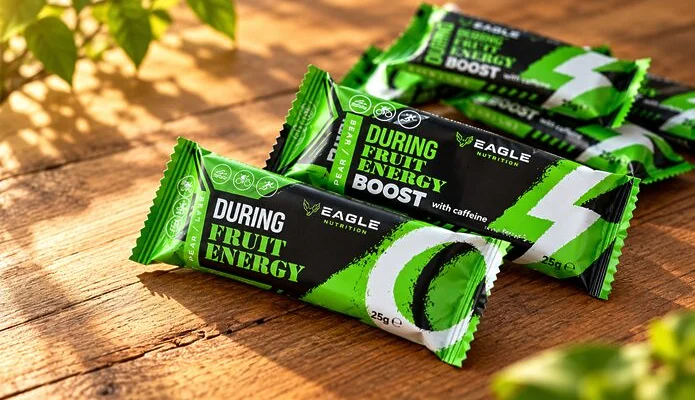
Autumn is that season when rides sometimes grow as long as the shadows, when temperatures drop, and yet fueling continues to play an essential role in performance. In early October, we discovered two energy bars from the Belgian brand Eagle Nutrition: Fruit Energy and Fruit Energy BOOST. Two 25-gram products, in a pear-lime flavor, sharing the same 20 grams of carbohydrates but not quite the same purpose. With its 50 milligrams of additional caffeine, the latter promises to support those moments when the effort becomes more demanding. Plenty to spark our interest in a nutritional philosophy that seeks to put fruit, enjoyment, and above all proper timing back at the heart of our bike rides.
By Jeff Tatard – Photos: All rights reserved
Autumn changes the colors, not the needs
There is something special about rides in early autumn. Departures can be chilly, roads stay damp longer, and gravel paths begin to regain that texture that makes bike handling as engaging as it is demanding.

Summer racing gradually gives way to a different way of riding. We take more time to build our sessions, return to long endurance blocks, and occasionally slip in a few intensity efforts in a schedule less dictated by the race calendar.
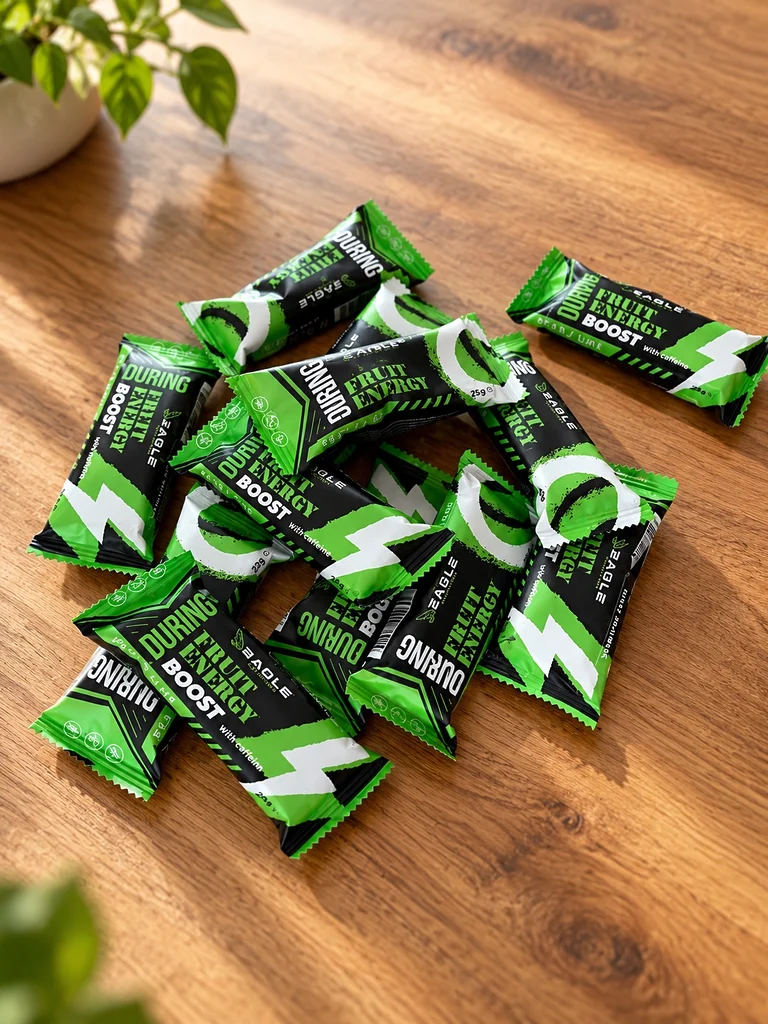
Yet one thing never changes: whether it’s 30 degrees in August or 12 degrees on an October morning, muscles continue to burn energy. And they ultimately care very little about the season. It was in this context that we received twelve small Eagle Nutrition bars: six classic Fruit Energy and six Fruit Energy BOOST. Two products that are almost identical visually, but designed to support different moments of the effort.
Following our experiences with MNSTRY, where we explored nutrition from the angle of training and then racing, this new discovery piqued our interest for another reason: can we continue to simplify our sports nutrition without sacrificing nutritional precision? Because we are now convinced: the best strategy is not necessarily the most sophisticated one. It is the one you manage to execute naturally, even when your legs start demanding your full attention.
Eagle Nutrition: a philosophy that starts with fruit
Behind Eagle Nutrition is a Belgian brand founded by Lode T Kindt, who chose to develop sports nutrition built around fruit-based products. His starting idea is compelling: why should endurance fueling always look and feel like something you would never eat off the bike?
Fruit Energy bars aim to answer that very question. The manufacturer highlights a formulation containing 51% fruit pulp, 80% carbohydrates, and no artificial colors, flavors, or preservatives.
The bars are produced in Belgium, following a plant-based, gluten-free, and lactose-free recipe. Naturally, the concept of “natural” should always be kept in perspective. An endurance product remains a food formulated to deliver quick energy. And the presence of fruit does not fundamentally alter the function of the sugar it contains. Yet we like this approach. Because beyond performance, there is another parameter too often overlooked: the appetite to eat. On a three- or four-hour ride, this detail can end up mattering just as much as the nutritional facts printed on the wrapper.
Two near-twin bars, yet two distinct functions
At first glance, Fruit Energy and Fruit Energy BOOST look like two versions of the exact same recipe. And that is precisely what they are. Each bar weighs 25 grams and provides 81 kilocalories, including 20 grams of carbohydrates. The flavor is identical: pear-lime. The advertised texture relies on a fruit base set with pectin. The difference lies in the BOOST version, which adds 50 milligrams of caffeine. The classic Fruit Energy is designed for regular fueling throughout the effort. The BOOST retains that energetic role, while adding a stimulant that can be beneficial when fatigue sets in. This distinction seems particularly well-suited to how we structure our autumn rides.
On a relatively steady endurance session, the goal is simply to ensure sufficient carbohydrate intake. On a punchier ride featuring threshold work or repeated power surges, managing energy and fatigue takes on a whole new dimension. That doesn’t mean caffeine becomes mandatory as soon as the pace picks up. Rather, these two products make it easy to separate the fuel your muscles need from the extra lift you might occasionally seek for your central nervous system.
Twenty grams of carbs: a small bar that knows its job
The first key figure lies in the energy density. With 20 grams of carbohydrates packed into just 25 grams of product, Eagle Fruit Energy bars are 80% carbs. In other words, they are composed almost entirely of fuel ready to be burned during exercise. Key ingredients include apple pulp, sugar, glucose syrup, and pectin, alongside aromatic notes of pear, lime, ginger, and cardamom. Apple forms the fruit base, even though the highlighted flavor is different.
What interests us most, however, is the 2:1 glucose-to-fructose ratio. Without turning this into a biochemistry lecture, this combination utilizes multiple intestinal transport pathways, allowing the body to absorb larger amounts of carbohydrates more efficiently than with a single glucose source. We previously covered this principle during our MNSTRY tests, where some products were formulated with a 1:0.8 ratio to support even higher intake strategies. The 2:1 ratio remains a sound, proven solution for targeting roughly 60 to 90 grams of carbohydrates per hour, depending on duration, intensity, and gut tolerance.
Two Eagle bars thus supply 40 grams of carbohydrates. Paired with an energy drink containing an equivalent amount, you easily hit 80 grams per hour. On paper, the math is child’s play. On the bike, things can sometimes prove trickier.
The classic Fruit Energy: for racking up the miles
One of the main appeals of these small bars lies in their compact format. At just 25 grams, they slip effortlessly into the pockets of a jersey or light jacket—especially handy when autumn clothing layers offer multiple storage options. But their real standout feature comes down to design. Unlike traditional cereal bars, which can require considerable chewing, Eagle Nutrition offers a fruit texture very similar to a classic fruit paste (pâte de fruits). This is an appealing approach for long rides when you want to vary taste and mouthfeel without overloading on products high in fiber, fat, or protein. Because there is one type of fatigue rarely discussed: flavor fatigue.
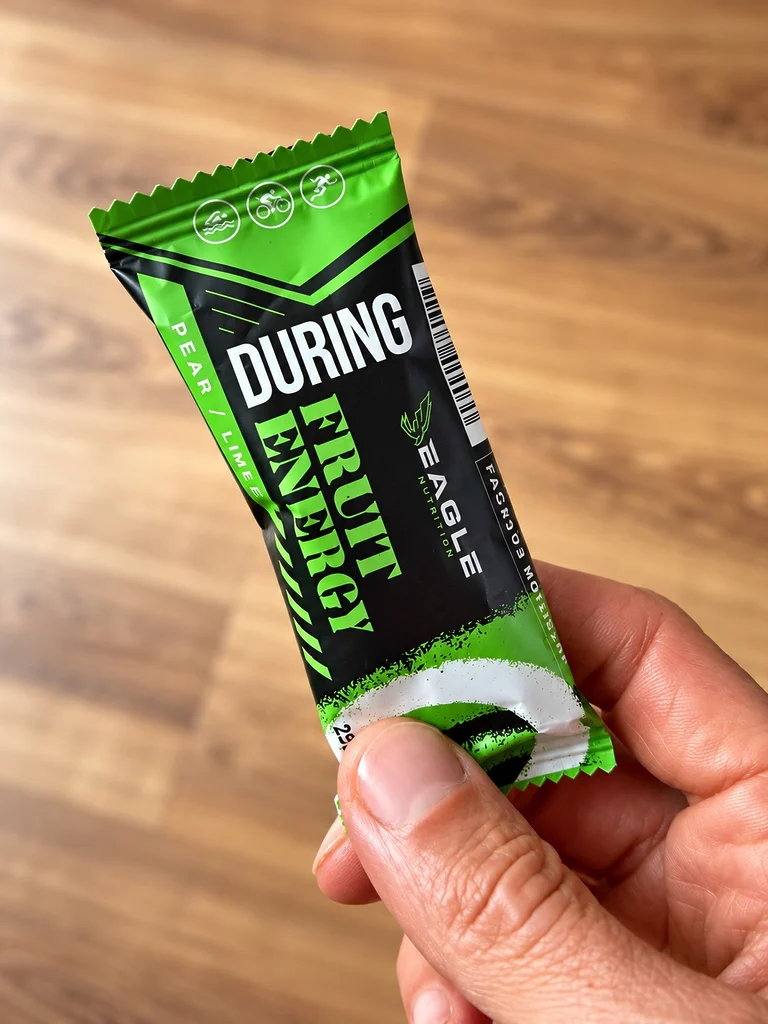
After several hours, the endless repetition of the same gels and sugary drink mixes can lead to genuine palate fatigue. That is precisely what we want to monitor with these Fruit Energy bars: their ability to remain palatable and enjoyable as the miles tick by, especially as the mercury drops. The pear-lime pairing, complemented by ginger and cardamom, sounds like an original recipe on paper. It remains to be seen how it feels in the mouth, how easy the wrapper is to open, and above all, how digestible it proves over multiple rides. Because a bar that packs 20 grams of carbohydrates, but that you can no longer stomach eating, ultimately delivers exactly zero grams.
The BOOST: when caffeine enters the equation
The Fruit Energy BOOST shares the identical nutritional profile, with the addition of 50 milligrams of caffeine. It is a relatively moderate amount, but one that warrants proper context.
Caffeine primarily acts on the central nervous system. It can enhance alertness, alter the perception of effort, and contribute to endurance performance gains. Scientific studies frequently employ doses between 3 and 6 milligrams per kilogram of body weight, although lower amounts can also produce noticeable effects.
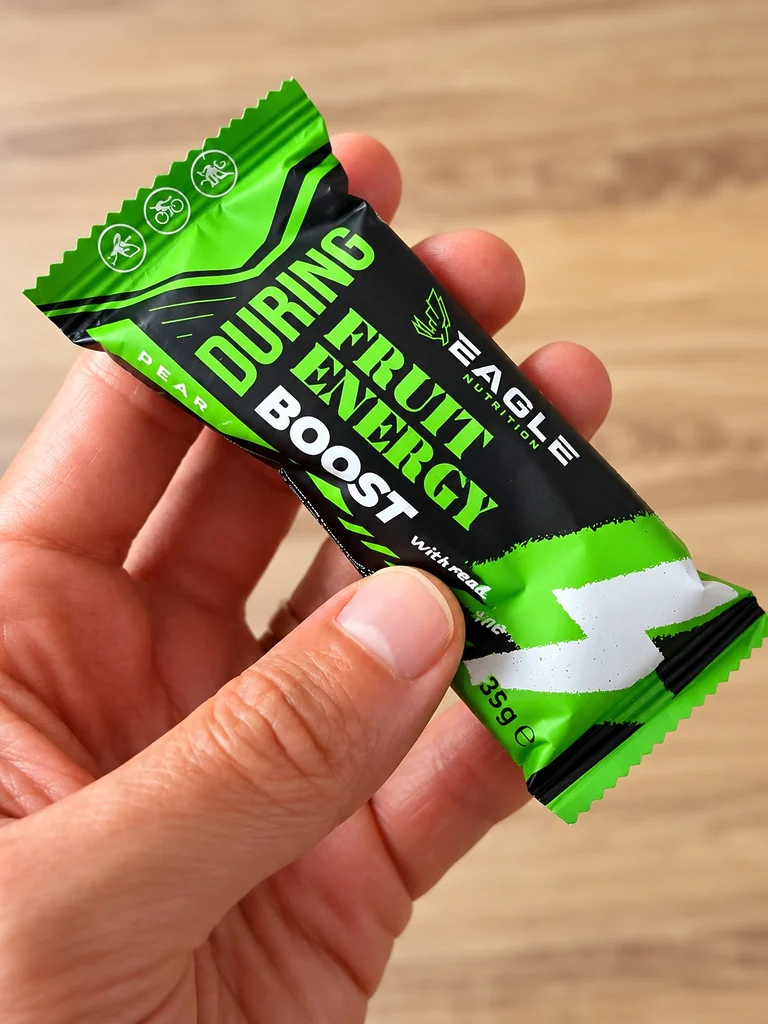
For a 68-kilogram cyclist, the 50 milligrams in a BOOST bar equal roughly 0.74 mg/kg. We are therefore far from a massive dose. And that is precisely what makes this version appealing for a progressive, tailored approach.
In autumn, certain training sessions still include demanding intervals, sharp accelerations, or hard efforts tackled when overall fatigue is already settling in. But beware of confusing their respective roles. Caffeine is no substitute for carbohydrates. It does not replenish glycogen stores and cannot fix poor pre-ride fueling. It can act on certain fatigue pathways, with varying efficacy from one athlete to another. The BOOST should therefore not be treated as a magic bullet. It is simply a solid energy bar backed by an extra physiological tool. And that tool requires a bit of planning: its effects are not instantaneous, and its consumption must be accounted for within your total daily caffeine intake.
On the road as on gravel, timing matters as much as the product
This is probably where both products make the most sense in our riding. On the road, relatively steady endurance sections often provide plenty of opportunities to eat. You can anticipate a feeding window, wait for a smooth stretch of tarmac, and spend a few seconds chewing.
In gravel riding, the story is often quite different. A rutted path, a technical descent, or a series of punchy climbs can quickly disrupt the exact moment you planned to eat. You can program your nutrition alerts on your bike computer. You cannot program the terrain to smooth out just when you decide to unwrap a bar. This is why we value having multiple nutritional formats at our disposal.
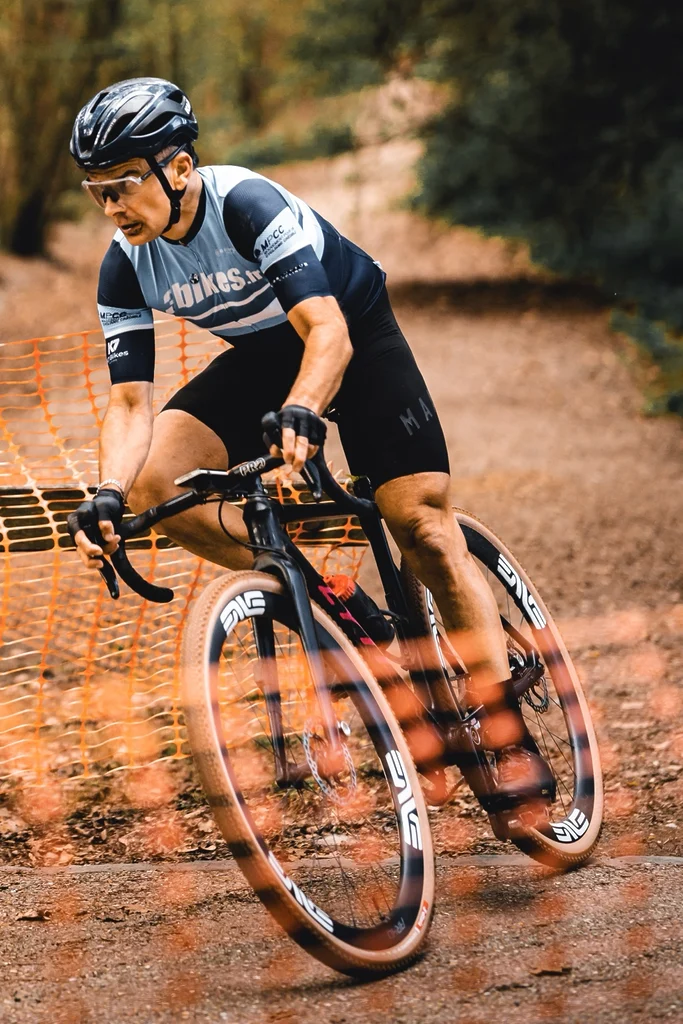
Gels remain unmatched when the pace is flat-out. Drink mixes ensure steady, continuous fueling. And fruit bars naturally find their place on smoother sections where chewing remains effortless. The classic version could thus serve as your nutritional baseline, while the BOOST is saved for a strategically pre-planned moment. That said, we prefer not to declare definitive verdicts on these two products until we have logged plenty of miles with them. The goal of our testing throughout early autumn will primarily be to see whether their promised simplicity holds up against the reality of real-world riding.
A coherent formula, with a few limitations to keep in mind
Despite their strengths, Eagle Fruit Energy bars are not a one-size-fits-all solution. At 20 grams of carbs per bar, you need to eat multiple units to hit high hourly intake targets. And unlike a gel, they require chewing.
Another detail to consider: their sodium content is very low, with just 0.013 grams of salt per bar. Consequently, they cannot replace an electrolyte and hydration strategy tailored to your riding conditions.
Lastly, even in autumn, the temperature alone does not dictate your hydration needs: ride duration, intensity, clothing choices, and sweat rate remain decisive factors. These bars provide a source of carbohydrates, not a self-sufficient, all-in-one nutritional solution.
With three classic bars required to hit 60 grams of carbohydrates, the cost comes out to €5.25. A price point that encourages riders to value more than just the cost per gram of carbs: format, texture, palate variety, and, above all, ease of use must be weighed in the balance.
Our take: autumn as a learning ground
What we take away from this first look is less the 50 milligrams of caffeine and more the overarching philosophy behind these two bars. Nutrition is not just about feeding energy to the body. It is about delivering that energy in a form the body readily accepts, right when it needs it.
With Fruit Energy and BOOST, Eagle Nutrition delivers two straightforward takes on the same core idea. One supports the steady accumulation of miles. The other adds an extra dimension when fatigue begins to bite. It is now up to us to rack up enough rides to determine whether the taste, texture, and digestive tolerance live up to that promise.
And perhaps that is what we appreciate most about early autumn: getting the time back to observe, compare, and understand, without demanding a race-day performance from every single ride. Because a great season isn’t built solely in the moments when you try to go as fast as possible. It is also forged during the times when you learn how to do things better. And sometimes, that progress simply starts with what you slip into your jersey pocket before heading out the door.
Eagle Nutrition Fruit Energy Specifications
| Specifications | Fruit Energy | BOOST |
|---|---|---|
| Weight | 25 g | 25 g |
| Energy | 81 kcal | 81 kcal |
| Carbohydrates | 20 g | 20 g |
| Of which sugars | 18.5 g | 18.5 g |
| Glucose-fructose ratio | 2:1 | 2:1 |
| Fruit pulp | 51% | 51% |
| Fiber | 0.33 g | 0.33 g |
| Caffeine | 0 mg | 50 mg |
| Flavor | Pear-lime | Pear-lime |
| Country of manufacture | Belgium | Belgium |
| Retail price | €1.75 | €1.95 |
| Find out more | Eagle Nutrition Fruit Energy | Eagle Nutrition BOOST. |
FAQ: five questions to better understand Eagle Nutrition barsWhat is the difference between Eagle Nutrition Fruit Energy and Fruit Energy BOOST? Both bars deliver exactly 20 grams of carbohydrates per 25-gram bar, with a fruit-based recipe and a 2:1 glucose-to-fructose ratio. Their only functional difference lies in the 50 milligrams of caffeine added to the BOOST. The classic version focuses purely on carbohydrate intake, whereas the caffeinated version can be beneficial when focus, alertness, and perceived exertion become decisive factors. How many Eagle Nutrition bars should you consume during a bike ride? It all depends on duration, intensity, and personal digestive habits. To target 60 grams of carbohydrates per hour, three bars are theoretically enough. However, they can also be combined with an energy drink or gels. The key is to design a fueling strategy suited to your needs, rather than multiplying intake without considering your gut tolerance. Are fruit bars easier to digest than energy gels? Not necessarily. Their low-fat, low-fiber formulation helps promote good gastric tolerance, but digestibility remains highly individual. Gels offer the benefit of being swallowed without any chewing, while fruit bars provide a solid texture that can be very welcome on long endurance rides. The best approach remains testing both formats in training. When should you take a caffeinated Eagle Nutrition BOOST? The brand suggests using it during the final stretch of your effort. Since caffeine is not absorbed instantly, taking it roughly 30 to 60 minutes in advance can be optimal, depending on individual sensitivity. Also, keep track of total caffeine consumed from pre-ride coffees, gels, or energy drinks. More is not necessarily better. Are these bars well-suited for autumn rides? Absolutely, because energy requirements do not vanish when the temperatures drop. On the road as on gravel, the body continues to burn carbohydrates to sustain effort. The compact format of Fruit Energy bars makes them easy to carry, while their fruit-paste texture provides a welcome alternative to gels. Just make sure they remain easy to chew when the weather turns colder, and never overlook proper hydration. |
Share the post "Eagle Nutrition bar test: fruit takes flight"