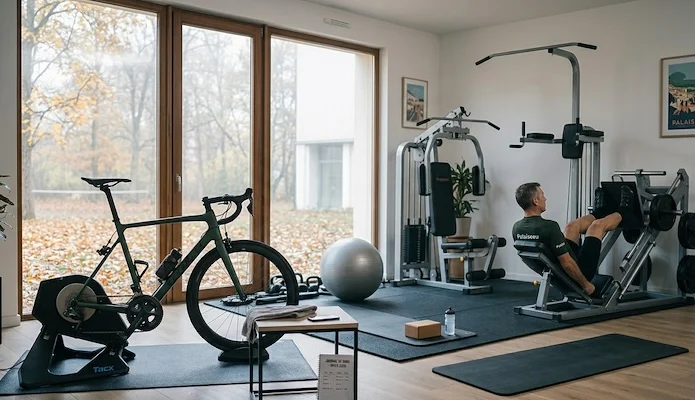
Share the post "Strength training and cycling: how to nail your first gym sessions this winter"
November arrives, the days are getting shorter, and the home trainer is back in service in the garage. It is also the time when gym membership cards come back out. Some are reuniting with the leg press after nine months of neglect, while others show up in the weights room with a beginner’s enthusiasm… and the bad idea of loading the bar like the regulars. Stop! In strength training, your FTP or your Zwift level gives you no special privileges. Winter strengthening is a tremendous asset for cyclists. But on one condition: don’t mistake your first workout for an ego contest.
By Guillaume Judas – Photos: depositphotos.com
On the bike, you have your reference points: watts, heart rate, cadence. At the gym? A blank slate. Holding 300 watts at threshold provides zero protection for your hamstrings during a properly executed set of squats.
Eccentric work (when the muscle brakes the load) is unforgiving. Without building a habit, crippling soreness is guaranteed the next day. The goal of the first two weeks is therefore very simple: learn movement paths, adjust the machines to your morphology, and reacclimate your tendons. You’ll have all winter to load up the weight.
Which machines to target to start with?
There is no need to tour the entire gym. Focus on the essentials:
- Leg press: the ideal tool to push heavy safely, without risking lower back strain.
- Leg curl (seated or lying): essential for balancing the back of the thighs, which is often neglected by pedaling.
- Horizontal and vertical rows/pull-downs: because the upper body works too! A strong back and braced shoulders are key to holding the drops for three hours without suffering.
- Core stability and glute bridges: to stabilize the pelvis and transfer power efficiently to the pedals.
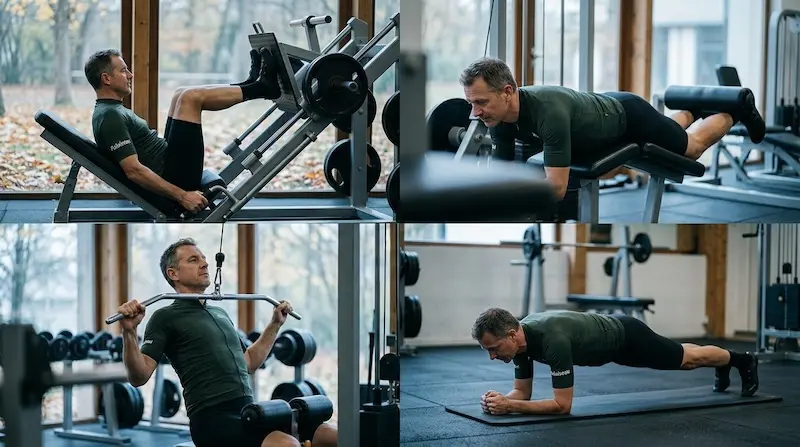
A word of advice: prioritize selectorized/cable-guided machines first. They forgive positioning errors. Take two minutes to adjust the seat height and range of motion, and don’t hesitate to ask a gym coach if you’re unsure about an adjustment.
Dosing: forget training to failure
The classic trap? Going too heavy, degrading technique, and compensating with the lower back. To start, aim for ease:
- Choose a light to moderate load.
- Aim for 1 to 2 sets of 10 to 15 reps per exercise.
- Always keep 3 or 4 reps “in reserve”. You should finish the set feeling that you could have kept going.
- Control the movement, especially the lowering phase. Exhale on exertion, don’t hold your breath. And take a 1’30” to 2-minute break between sets.
Soreness: how to avoid the “stairs” syndrome?
Let’s not kid ourselves: you are going to be sore. The question is whether you’ll still be able to climb the stairs on Tuesday morning. To limit the damage:
- Don’t aim for the muscle “burn”.
- Never test your one-rep max during the first month.
- Stay hydrated and get enough sleep.
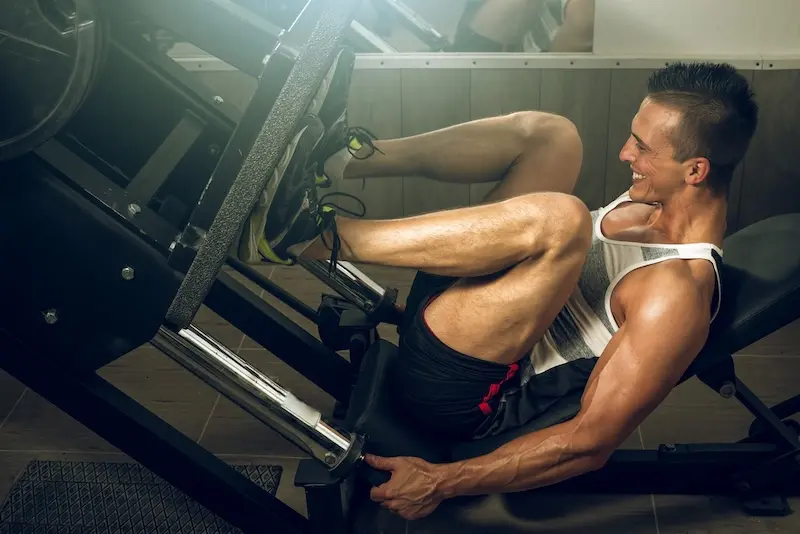
And above all, look at your cycling and running schedule! Scheduling a heavy hamstring session the day before a 4-hour endurance ride or a running workout is the best way to make you hate the gym. Leave at least a 48-hour buffer at first.
The 5 mistakes to avoid
- Copying the person next to you: the guy beside you has been squatting 120 kg for five years. You haven’t.
- Only training legs: cycling requires a strong core, not just big quads.
- Chasing exhaustion: staggering out of the gym isn’t a badge of honor; it’s simply the sign of a poorly dosed session.
- Increasing weight too fast: as soon as the movement gets tense or strained, it’s too heavy.
- Stacking workouts without planning: strength training is an addition to your week; it should replace an active recovery session or integrate intelligently, not be forced upon an already fatigued body.
Example of a first workout (30 to 40 min max)
- Warm-up: 10 min of easy spinning on an indoor bike.
- Leg press: 2 x 12 reps (very easy load).
- Leg curl: 2 x 12 reps.
- Lat pulldown: 2 x 12 reps.
- Plank: 3 x 30 seconds.
One to two sessions per week are more than enough to lay the foundation.
When should you increase the difficulty?
Wait until the routine is established. If after two weeks you no longer feel debilitating soreness and your technique is smooth, add a set or bump up the pin by one notch on the machine. One variable at a time.
Keep the end goal in mind: you are not prepping for a bodybuilding contest on the beach; you are building a stronger, more resilient body to raise your arms in victory come springtime. And that starts with going back to the gym next week with confidence.
Share the post "Strength training and cycling: how to nail your first gym sessions this winter"