Share the post "Long-Term Test of Vittoria Terreno Pro T50 Tires"
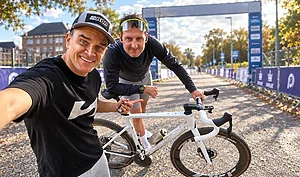
We could sum up this test with a fairly simple sentence: the more we rode with the Vittoria Terreno Pro T50, the less we thought about it. And for a gravel tire designed for racing, that’s probably one of the best compliments you can give. We used it in training, on a short, fast-paced race like the Gravel Crit Series in Meudon, and then over 122 km in Leuven as part of a UCI Gravel World Series event, where the hours, impacts, changes in terrain, and fatigue ultimately matter just as much as the watts. Each time, the same impression comes through: the T50 doesn’t try to be the most spectacular tire. Above all, it tries never to be the wrong choice. Fast when you need to ride, grippy enough when you need to stop thinking, comfortable without losing precision… and in this Natural Brown finish that we have to admit we love almost as much after a few hundred kilometers as we did the day it came out of the box.
By Jeff Tatard – Photos: ©3bikes.fr
We wanted a tire for racing, not just a fast tire
It’s a distinction that makes more and more sense the more you race on gravel. A fast tire isn’t necessarily a tire you’ll have a good race with.
Because between the start and the finish, you’ll rarely find nothing but a beautiful, perfectly packed trail. There will also be changes in surface, misplaced rocks, braking moves taken a little too late, turns entered too fast, and sometimes that line you’d never have chosen during training.
The stopwatch, however, makes no distinctions. It adds up efficiency, grip, comfort, hesitations, braking, and the energy expended to stay in control on the bike.
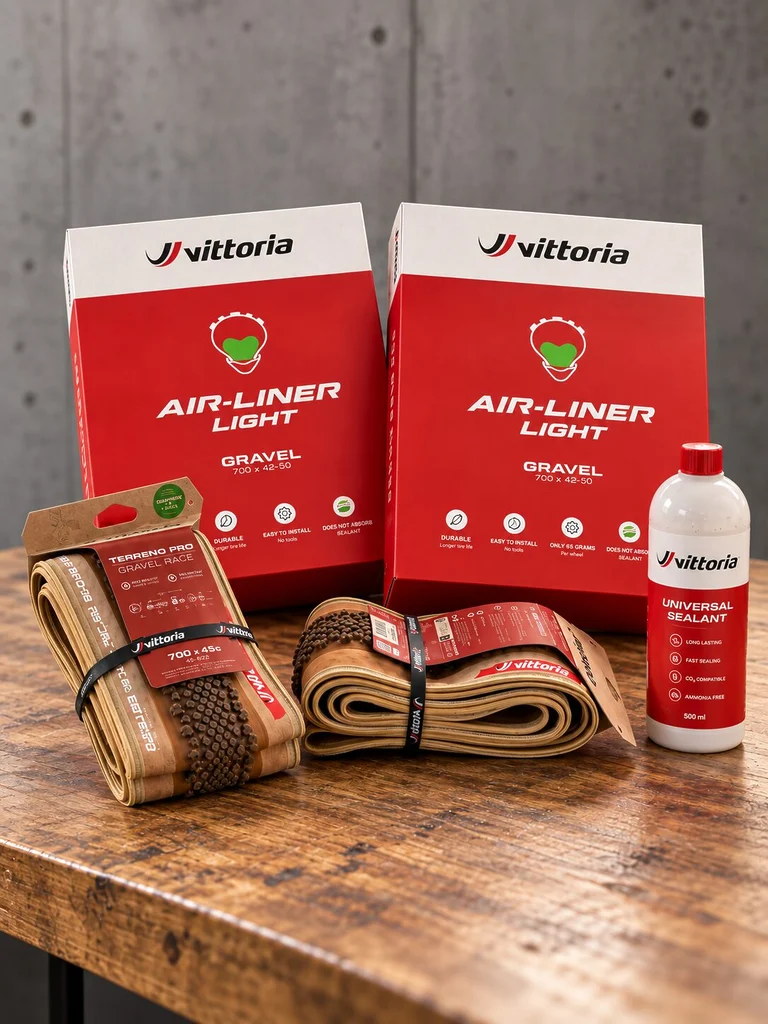
That’s exactly why we chose the Terreno Pro T50 Mixed Gravel Race in 700x45C. Within the Vittoria PRO lineup, we could have gone with something even more focused on pure performance: the T10, for example, features a slick center tread and is clearly designed for compact, fast surfaces. The T30 is better suited for fine, dry gravel. The T50, on the other hand, features deeper tread and is designed for a wider range of terrain. On paper, this might seem like a small compromise. In practice, however, we found it to be a reliable safeguard against hesitation.
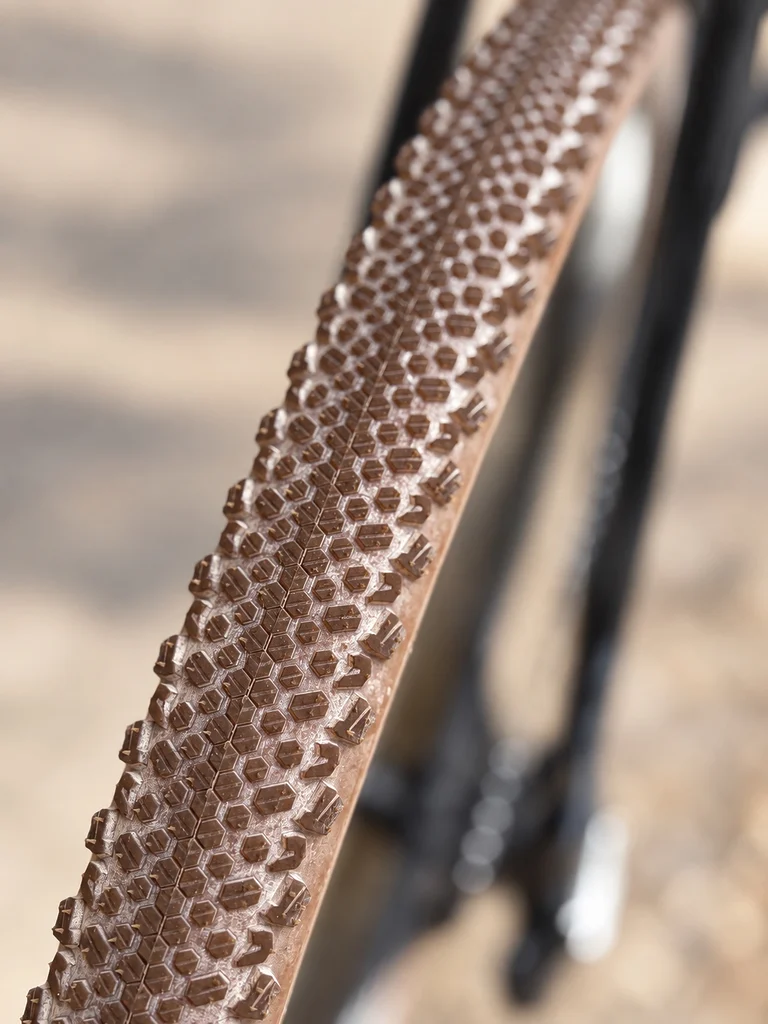
T50: Enough tread blocks so you don’t have to think about them
The tread pattern almost immediately reveals the tire’s character. In the center, the lugs are close enough together to ensure a smooth, continuous ride. Then the pattern gradually becomes more pronounced as it moves toward the shoulders.
There’s no abrupt contrast between an ultra-fast center strip and large side knobs that would suddenly appear when the bike leans into a turn. Everything happens gradually.
And that’s exactly how it feels. On a fast trail, the T50 never feels like it’s dragging its entire tread pattern behind it. In turns, on the contrary, you feel that something continues to support the lean angle even when the line becomes less clean.
Vittoria positions it specifically for terrain ranging from hardpack to mixed conditions, with a center tread designed to maintain speed and stability and shoulder knobs tasked with providing more control when the terrain gets technical. We probably could have gained a little more of that pure speed sensation with a more minimalist tread pattern. But we would have lost something we’ve come to appreciate immensely: the freedom to not always have to choose the perfect line.
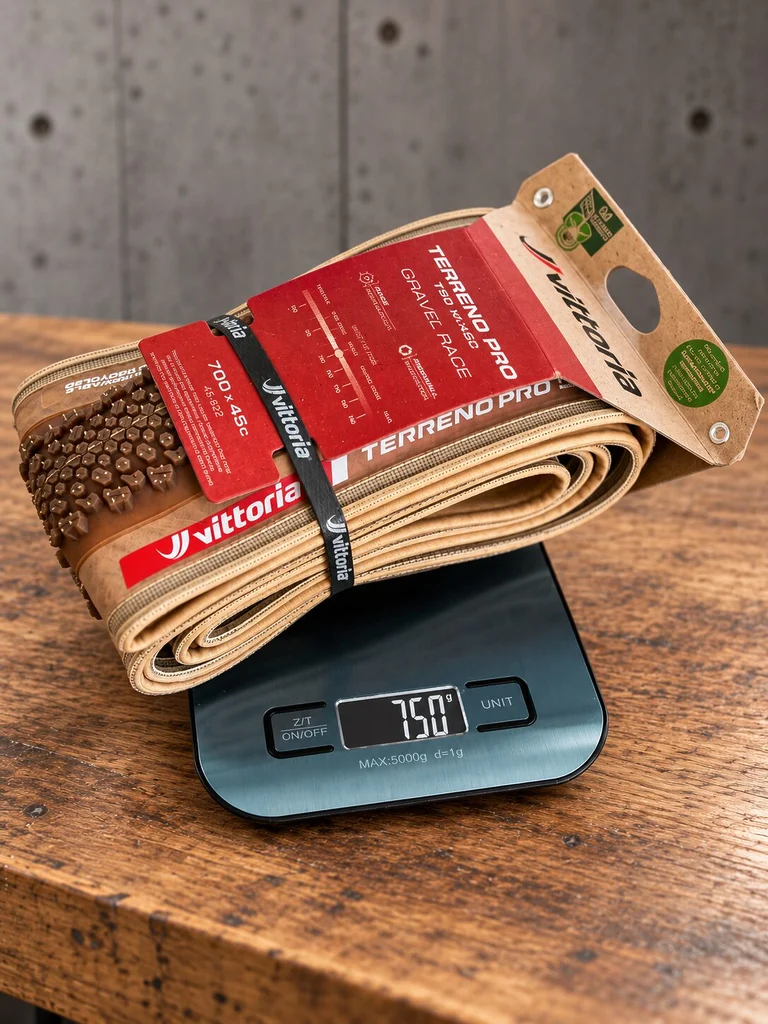
670 grams—so what?
The Terreno Pro T50 700x45C is listed at 670 g. Our initial weigh-in showed 750 g, but we’d left about 70 g of packaging on the scale. Once we removed the packaging, our sample weighed in at around 680 g—very close to the advertised weight.
That’s not particularly light for a tire with “Race” in its name. And ultimately, that’s a good thing.
Because this figure forces us to break away from an old cycling mindset: the idea that a lighter component is necessarily better performing.
The Terreno Pro features a 290 TPI multi-layer organic cotton casing, reinforced with natural latex, a Seawastex recycled nylon puncture-resistant belt, and additional sidewall protection. Vittoria also reports that 92% of the materials used in the PRO construction are renewable or recycled. None of these figures alone makes a bike go any faster. But what they enable the casing to do—that does.

On a short course: the tire must withstand the rigors
The Meudon Gravel Crit Series gave us a very different experience from that of a long ride. In this type of race, there’s practically no downtime. Accelerations are sharp. Braking comes faster. Corners are taken with greater commitment.
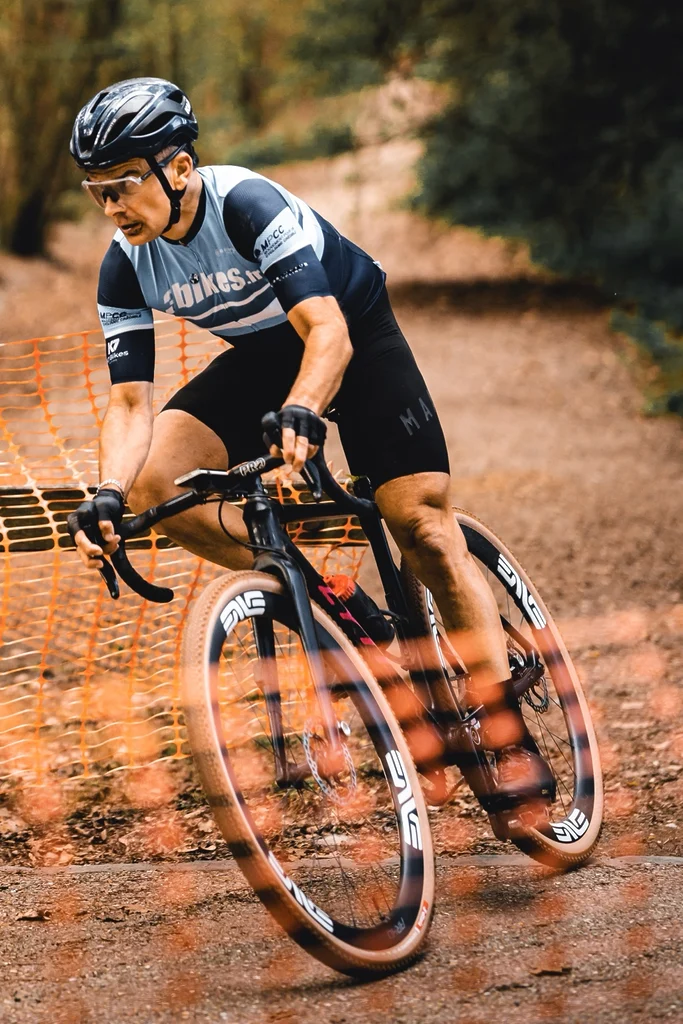
And the tire is required to switch very quickly from one load condition to another. This is precisely where we might have criticized the T50 for its large volume or relatively deep tread pattern.
We didn’t. The 45 mm tire doesn’t feel like it needs to be “woken up” with every acceleration. It remains responsive enough for the bike to handle correctly, and, above all, its cornering behavior is extremely predictable.
You can really push it. The casing does its job. The tire leans into the turn. But it doesn’t give that unpleasant sensation of a big balloon starting to shift sideways under the rim. On a short-profile tire, this precision matters a great deal. Because it’s not just about going fast. We want to do it again right away.
Over the long haul: what you don’t feel becomes essential
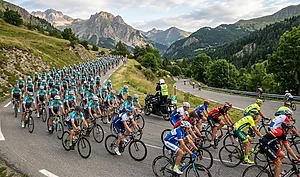
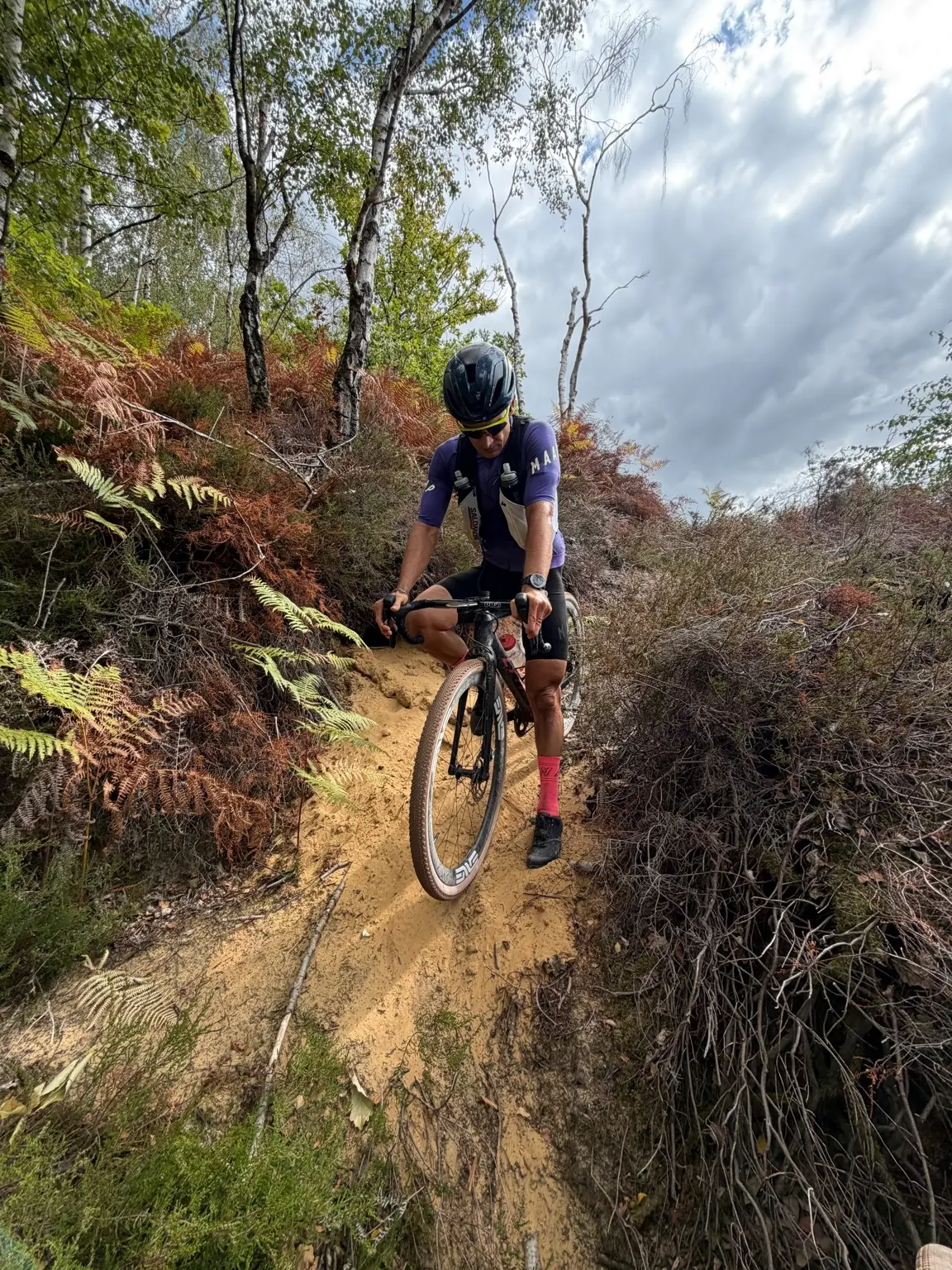
Meudon had shown us that the T50 could handle the acceleration bursts, late braking, and shifts in grip typical of a short, fast-paced race. The 122 kilometers of Leuven would put it to a whole different test: staying fast, reassuring, and efficient for over four hours on terrain that became much more demanding than expected.
Because in a round of the UCI Gravel World Series, a tire’s performance is no longer limited to how it performs over the first few kilometers. It’s also measured by its ability to absorb bumps, maintain traction, and—above all—allow the rider to stay confident when fatigue begins to cloud their judgment.
On paper, Leuven looked like it would be an extremely fast course. But the rain that fell overnight had drastically changed the conditions we’d encountered during our reconnaissance the day before. The farm roads, which had initially been fairly fast-rolling, had become significantly more technical. Between the deep ruts left by tractors, strips of soggy grass, and patches of thick mud, we now had to navigate terrain where the best line wasn’t always the one we could take.
And it was precisely under these circumstances that we realized the full value of choosing the T50. In competition, it’s not enough to have a tire capable of going fast. You also need to be able to veer off your line without losing confidence. When we needed to pass lagging competitors, leaving a relatively clean rutted track to join the one next to it—sometimes crossing a strip of wet grass or a patch of thick mud—the Vittoria’s tread blocks really came into their own. Their grip allowed for changing lines with greater confidence, where a more minimalist tread pattern would likely have required us to be more cautious.
That said, Leuven hadn’t become an exclusively technical course. Quite the contrary. Some sections remained particularly fast, with speeds regularly exceeding 40 km/h and peaks approaching 50 km/h. And that’s perhaps where the T50 surprised us most pleasantly. Despite its 45 mm width, its generous tread pattern, and the Air-Liner Light Gravel tires on both wheels, its performance remained excellent. There was no sensation of dragging a tire with too much grip, nor any feeling of sacrificing speed for the sake of safety. With an average speed of 30.7 km/h over the 122 kilometers—despite two crashes and particularly grueling conditions—this versatility really came into its own.
Tire pressure also played an important role. During the recce we conducted the day before with our race companions, we had identified the course characteristics and set our initial tire pressure settings, relying in particular on the Vittoria calculator. But between what we’d discovered on Saturday and the conditions awaiting us on Sunday morning, the rain had changed the game.
When we saw that the trails had become significantly muddier, we decided to adjust our strategy. At the last minute, we lowered the pressure by 0.1 bar on each wheel to prioritize grip and traction without sacrificing efficiency on the many fast sections. A tenth of a bar may seem insignificant. Yet, on a 45-mm tire, this small adjustment directly contributes to the balance between comfort, control, and efficiency. In gravel riding, the right tire pressure isn’t just the one you calculate. It’s also the one you know how to adapt to the terrain.

And then there’s what you discover after crossing the finish line. After more than four hours of effort, 122 kilometers of trails sometimes battered by the weather, constant changes in direction, and two crashes that didn’t help matters, both T50s were in impeccable condition. No flat tires, no significant damage to report. Just two tires that had perfectly fulfilled their purpose, without ever becoming an additional concern on a day that already had enough of them.
This experience ultimately reinforced our belief: the best competition tire isn’t necessarily the one that delivers the highest performance under ideal conditions. It’s the one that continues to perform when the terrain, the weather, and the race decide to stop cooperating.
In Meudon, we appreciated the T50’s responsiveness and precision. In Leuven, we discovered the full value of its versatility. Capable of nearing 50 km/h on fast sections as well as maintaining traction in the muddy ruts of farm roads, it never gave us the impression that we’d made the wrong compromise.
And ultimately, that might be the greatest compliment we can pay it: in Leuven, we sometimes regretted our lines, but never our choice of tires.
During training, its versatility may be its greatest strength
Yet it’s during much more ordinary rides that you really understand whether a tire is easy to handle. Because during training, you don’t always choose your route based on the tire. You hit the road. A farm track. A rough path. A bit of sand. A forest trail. Then another ten kilometers of asphalt on the way back. And the T50 handles it all with remarkable ease.
On the road, you obviously hear its tread pattern more than you would with a semi-slick. But the ride quality remains good enough that you’ll never feel the need to change tires before a fast ride.
On compact terrain, it easily maintains its speed. And when the ground gets rougher, you realize why we welcomed a few extra studs. Maybe that’s exactly what makes it such a success: you no longer have to set up the bike based on the terrain. You just hop on.
No unpleasant surprises in the corners
One of our favorite qualities is its progressive response. Grip doesn’t kick in abruptly when the outer lugs finally make contact. It builds gradually.
On dry or slightly loose terrain, this makes the bike particularly easy to read. You can feel the tire working. You understand what it can handle. And you can gradually increase your input without feeling like you’re searching for an invisible limit. The T50 is obviously not a mud tire.
On deeply muddy or very loose terrain, there are more suitable tread patterns, including some from Vittoria. And that’s just fine. A truly good tire doesn’t need to pretend to be perfect everywhere.
Tire pressure remains the most important setting
With a 45-mm tire, even a few tenths of a bar make a big difference. If the pressure is too high, you lose some of the comfort and grip that you’re specifically looking for with this tire size. If it’s too low, the tire starts to wobble, steering becomes less precise, and performance eventually deteriorates.
So we used the Vittoria pressure calculator instead of relying on a number chosen out of habit.
=> Vittoria tire pressure calculator
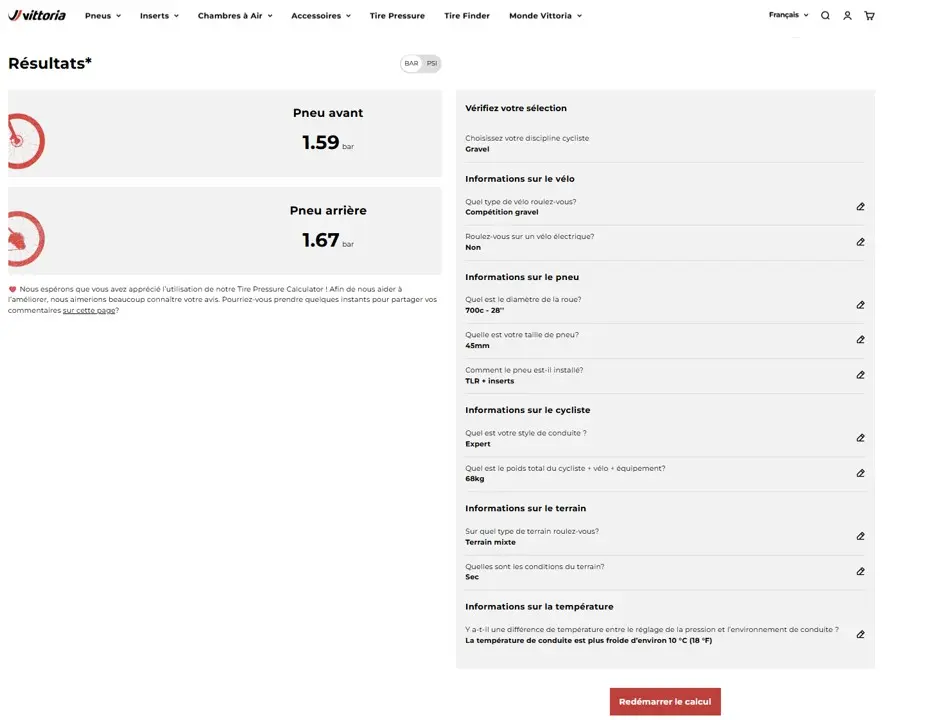
After entering our complete setup, the type of terrain, the conditions, and the desired performance level, the tool suggested 1.59 bar in the front and 1.67 bar in the rear as a starting point for mixed, dry terrain.
Then, we did what the terrain always demands: adjust.
A little more for a very fast ride. A little less when the ground became more uneven or required more traction. Without ever seeking the lowest pressure just for the sake of it.
The right tire pressure isn’t the one that looks impressive on paper. It’s the one that lets you completely forget you even chose it.

And what about the Air-Liners in all this?
A few weeks earlier, we’d actually devoted an entire article to the Vittoria Air-Liner Light Gravel. And if you’re interested in the topic, you should definitely go back and read it, because we don’t want to repeat the review here.
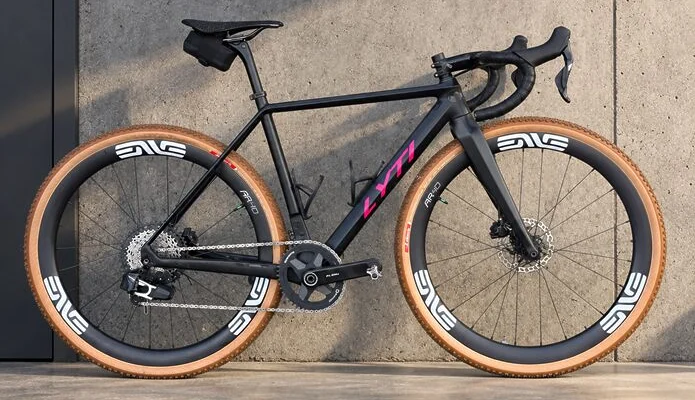
Our conclusion was pretty straightforward. In our size, the Air-Liner adds only 45 g per wheel. It provides support when you lower the tire pressure, extra rim protection, and the run-flat capability advertised by Vittoria. Our experience convinced us most of all of one thing: peace of mind. We worry less about impacts, let the tire do more of the work, and didn’t experience any truly bothersome loss of performance. Vittoria recommends the 700c x 42–50 mm model for rims with an internal width of 23 to 28 mm—exactly within the range of our ENVE rims.
Dany, who was apprehensive about the installation, also found it much simpler and more intuitive than he’d imagined. Here, let’s just remember one thing: the Air-Liner makes the system safer. As for the Terreno T50, it still needs to be a good tire without us having to think about what’s inside it. And it is.
Natural Brown: Yes, we’re totally sold on it
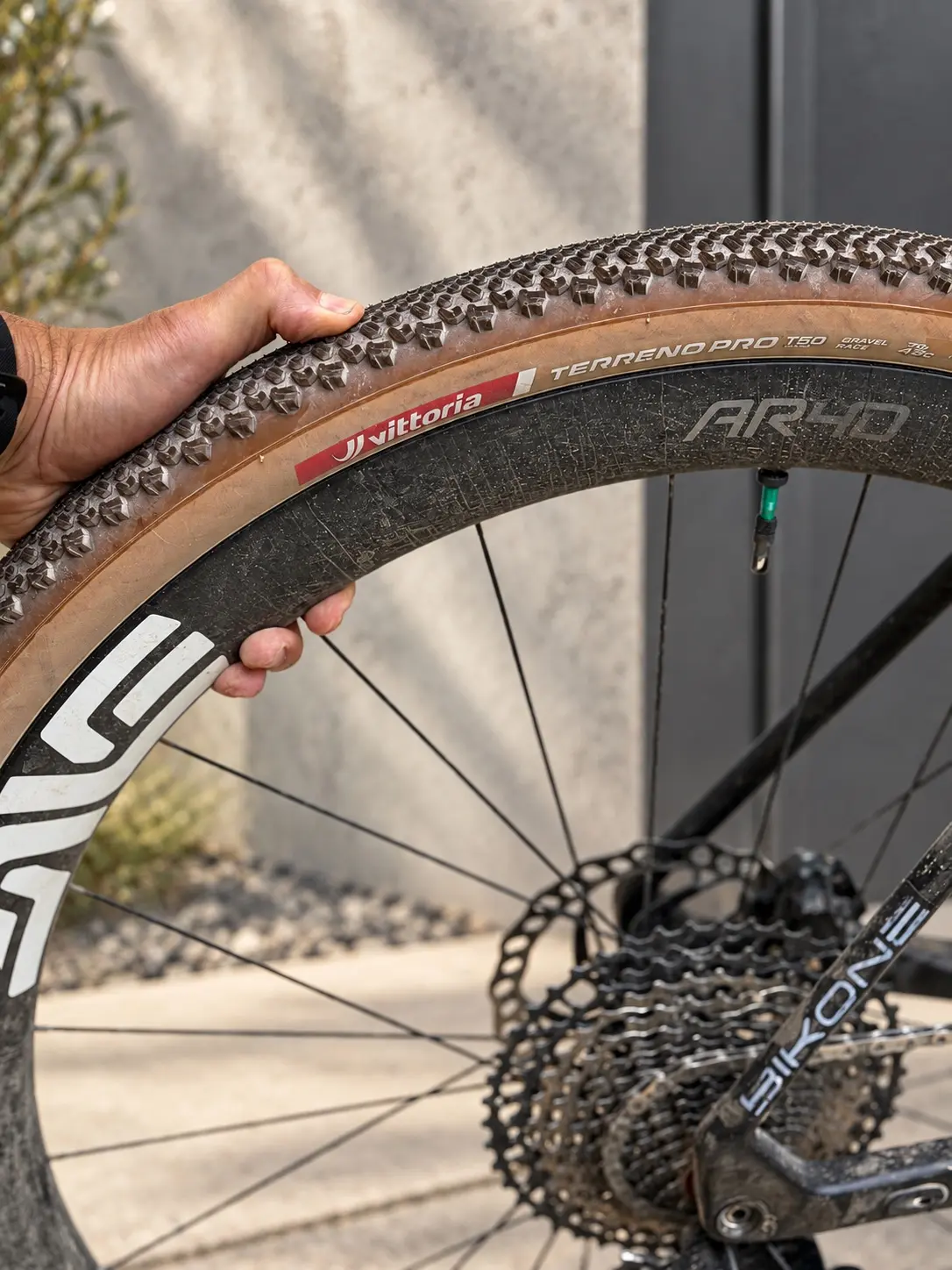
We also have to talk about the color. Because pretending it doesn’t matter would be a bit hypocritical. We love Natural Brown.
It’s not just the sidewalls: practically the entire tire takes on this rather unusual natural hue, largely due to the use of natural materials in its construction. Vittoria notes, in fact, that slight variations in color or appearance may exist from one tire to another.
When new, the tire is almost too beautiful to take out on the trails. A few weeks later, covered in dust, marked by rides, and with that brown hue now less uniform, it looks even better.
Of course, this doesn’t save a single watt. But a bike you love to look at always makes you want to ride a little more. And no one has yet managed to measure that in a lab test.
What about flats?
We certainly aren’t going to turn the absence of problems into scientific proof. We rode fast—on short rides in Meudon, during training, and especially during the 122 km World Series race in Leuven—on terrain varied enough that this goes far beyond a simple test consisting of just a few rides. No tire-related incidents disrupted this testing period.
That doesn’t mean the Terreno Pro T50 is puncture-proof. No tire is. It simply means that at the end of this testing period, we didn’t identify any particular weaknesses in the casing or construction. And ultimately, that’s exactly what we expect from a competition tire: that it stops being an issue.
Compared to the Continental Terra Speed: a different approach to speed
We really liked the Continental Terra Speed ProTection 45. So a comparison was inevitable. The Continental has an extremely smooth way of riding fast. It sometimes gives the impression of bringing gravel closer to the road.
The Vittoria T50 tells a slightly different story. It’s more accepting of gravel staying true to its nature. A bit more tread pattern. A bit more presence under the bike. But also greater peace of mind when the terrain gets rougher. We wouldn’t try to pick an absolute winner.
On very fast, smooth terrain, we fully understand the appeal of a more minimalist tread pattern. But as soon as the route starts mixing up surfaces, we really love the T50’s ability to never make us regret choosing it.
Verdict
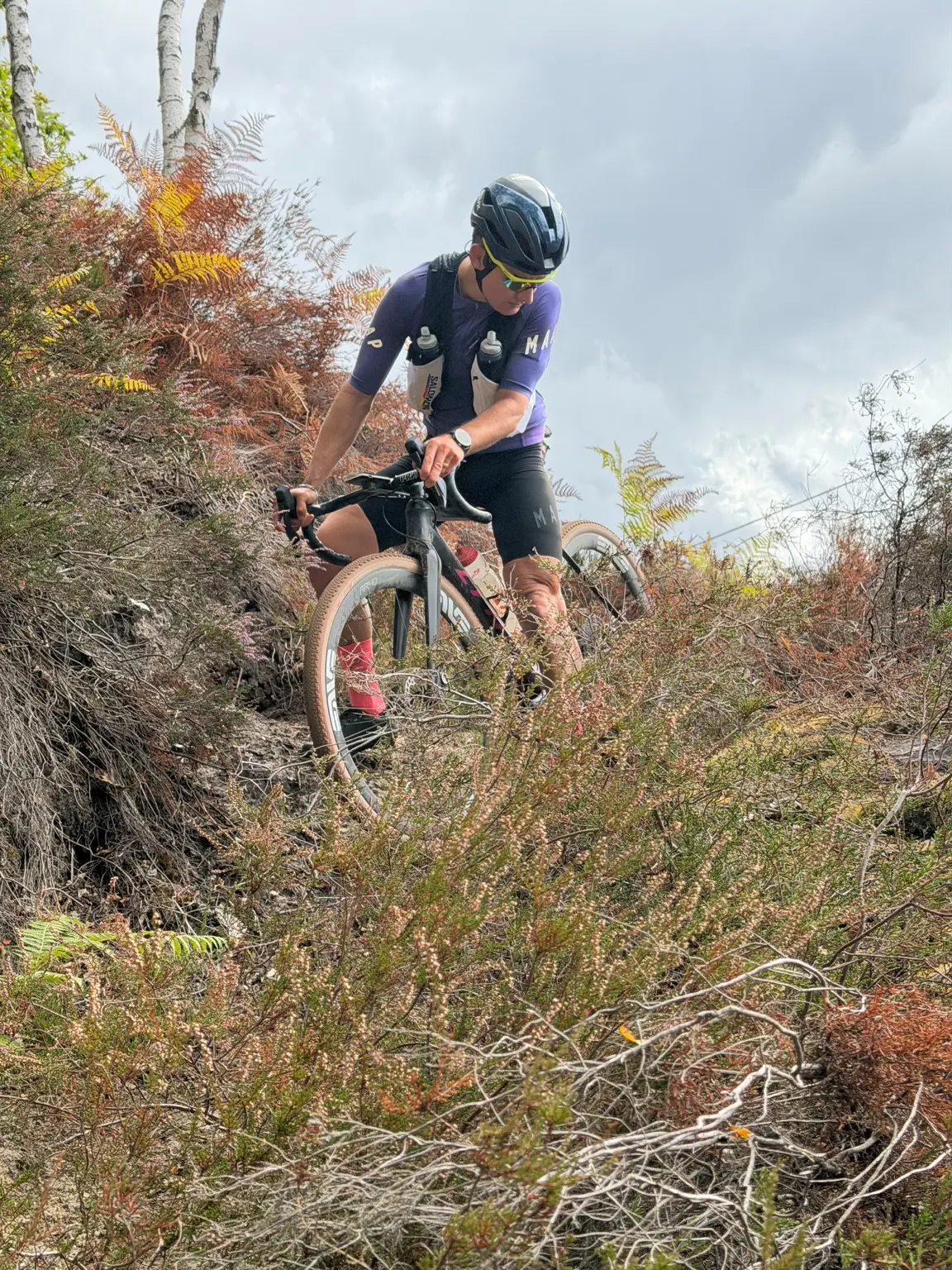
We really liked this tire. And probably even more so after Leuven than when we first mounted it. Between training sessions, the relentless surges of a Gravel Crit, and the particularly demanding 122 kilometers of a UCI Gravel World Series, the Terreno Pro T50 had more than enough opportunities to make us want to choose something else. It never did.
It’s not the lightest. It’s not the smoothest. Nor is it the most radical. But it possesses that blend of efficiency, traction, comfort, and precision that truly comes into its own when you’re trying to ride fast on terrain where you never fully control the conditions. Of course, we might prefer a T10 on a purely fast course, or a much more aggressive tread pattern in deep mud. But between those two extremes, the T50 convinced us that a versatile tire isn’t necessarily a compromise.
And that may be its greatest achievement. We began this test looking for a tire capable of saving us time. We’re finishing it convinced that we’ve found a tire that, above all, prevents us from losing time. Fast when the terrain allows it, reassuring when things get tricky, and unobtrusive enough to let us focus on the race rather than the gear. And then there’s that Natural Brown color. We’ll admit it outright: we love it.
Pros
- Excellent balance of performance, grip, and control
- Very reassuring when the terrain gets rough
- Progressive and predictable handling in corners
- Comfort that really pays off over long rides
- Fast enough for short, fast-paced matches
- Highly versatile for training
- Absolutely superb Natural Brown
Cons
- 670 g listed for the 700x45C: gram-counters will look elsewhere
- Less aggressive than a T10 on ultra-fast courses
- Not designed for deeply muddy terrain
- High price
Technical Specifications
| Features | Vittoria Terreno Pro T50 Mixed Gravel Race |
|---|---|
| Usage | Gravel Race – hardpack to mixed terrain |
| Tested Size | 700x45C |
| ETRTO | 45-622 |
| Color | Natural Brown |
| Installation | Tubeless Ready |
| Listed Weight | 670 g |
| Casing | 290 TPI multi-layer organic cotton |
| Compound | Eco Race Formulation |
| Protection | Seawastex recycled nylon + sidewall protection |
| Test Wheels | ENVE AR40 – 25 mm inner width |
| Tire used | Vittoria Air-Liner Light Gravel |
| Recommended pressures (Vittoria calculator) | 1.59 bar front / 1.67 bar rear |
| Price | €92.95 each |
| Contact | Vittoria |
The 700x35C, 700x40C, and 700x45C sizes are available in Natural Brown, weighing 540, 595, and 670 g, respectively. Vittoria’s current list price is €92.95.
FAQ – Vittoria Terreno Pro T50Is the Vittoria Terreno Pro T50 really fast despite its knobs? Yes. There are more minimalist tread patterns that are probably better suited if the goal is solely to ride on very fast hardpack. But in the field, the T50 never gave us the impression that its tread pattern was holding it back. Its real advantage is maintaining that performance when the terrain gets rougher. Does the 45 mm width hinder acceleration? Much less than you might think. On a fast-paced race like the Gravel Crit Series in Meudon, we never felt like the tire was too heavy or clunky to accelerate out of a stop. Its volume really comes into its own when impacts and ground pressure increase. What tire pressure should you use? There’s no one-size-fits-all pressure. For our setup, the Vittoria calculator gave us 1.59 bar in the front and 1.67 bar in the rear as a starting point. We then adjusted based on the terrain, duration, and intensity of the ride. The Vittoria calculator is available directly on the brand’s website. Why choose the T50 over a faster-rolling T10? For the versatility. The T10 has a slick center tread and is geared more toward fast, hard-packed terrain. The T50 features a more pronounced tread pattern to handle a much wider range of terrain. We’re happy to accept this small theoretical trade-off in performance because its lugs give us tremendous confidence when a race becomes less predictable. Is this a tire we’d buy again? Yes. Without hesitation for a gravel bike intended for racing on varied courses. After training—a very fast-paced race in Meudon and the 122-km World Series race in Leuven—we especially don’t want to have to choose between going fast and feeling secure when the terrain changes. The T50 does a remarkable job of delivering both. |
Share the post "Long-Term Test of Vittoria Terreno Pro T50 Tires"