Share the post "Gravel Race: €10,000 to go play in the mud!"
We thought gravel riding would free us from the conventions of road cycling. It would offer us adventure, freedom, a few panniers, and maybe even a night under the stars. Four years later, here we are in Leuven, surrounded by five-figure bikes, outrageously expensive carbon wheels, and electronic drivetrains. All of this just to end up covered in mud. Something tells us that gravel riding has changed. And the worst part is, we love it.
By Jeff Tatard – 3bikes.fr
In Leuven, we looked for an aluminum rim. No luck.
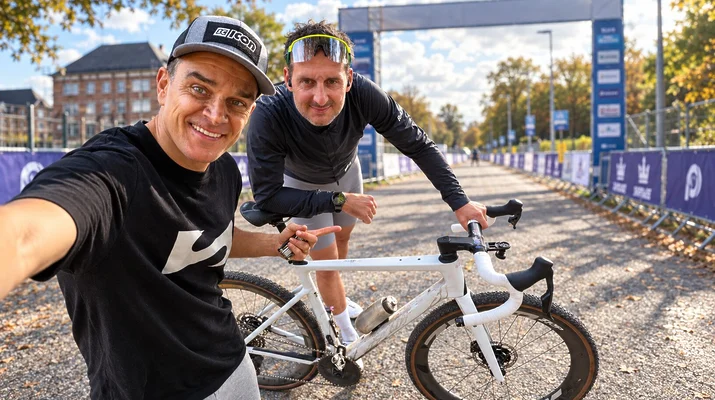
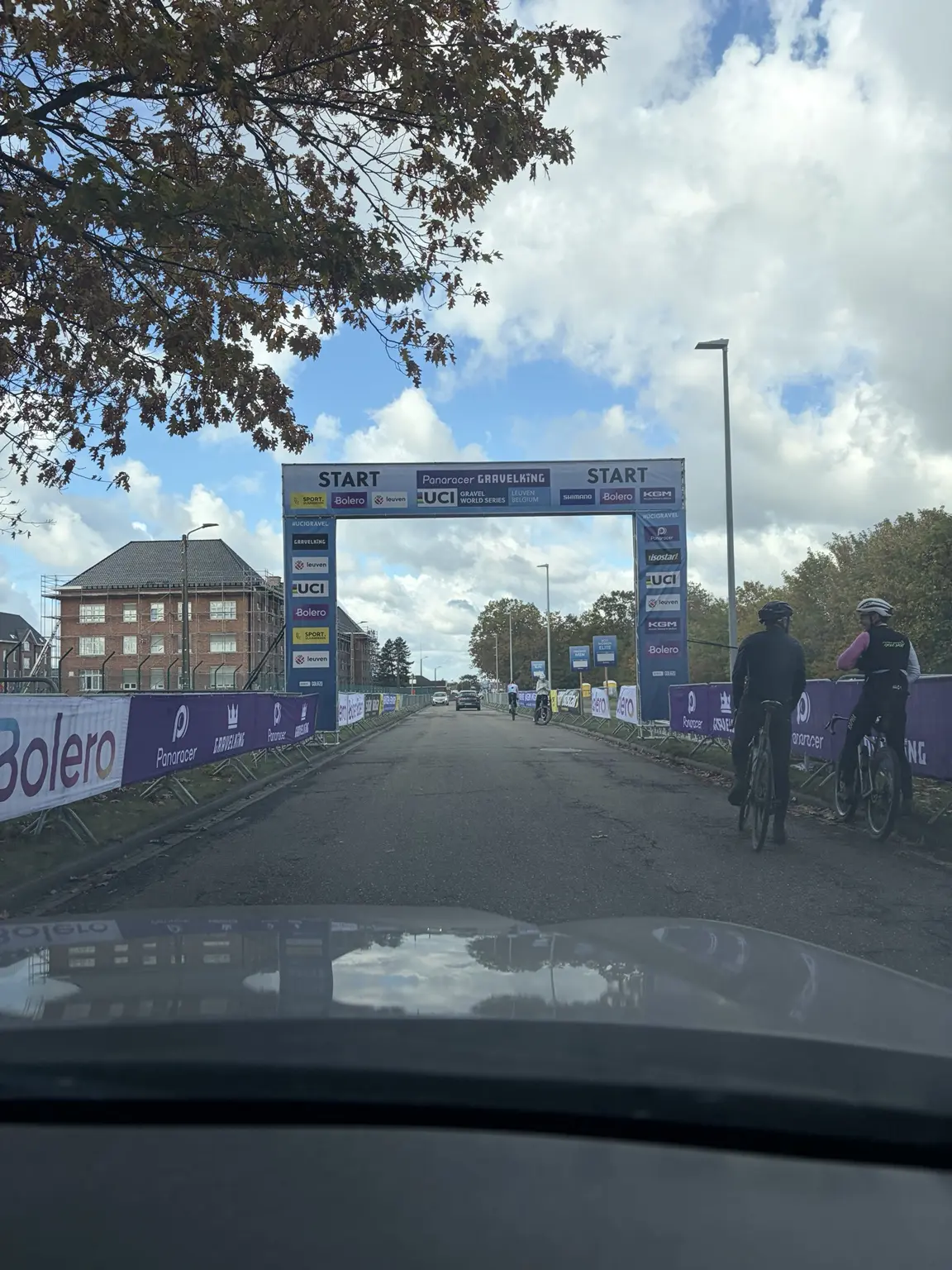
Sunday, October 18, 2026. Leuven, Belgium. A round of the UCI Gravel World Series, 2,140 registered riders from 38 countries, soggy trails, cobblestones, mud, and a few sections where you seriously wonder why you didn’t choose tennis instead. We came back with 122 kilometers under our belts, two nasty crashes, four hours of racing, and one conviction: gravel racing has become incredibly serious.
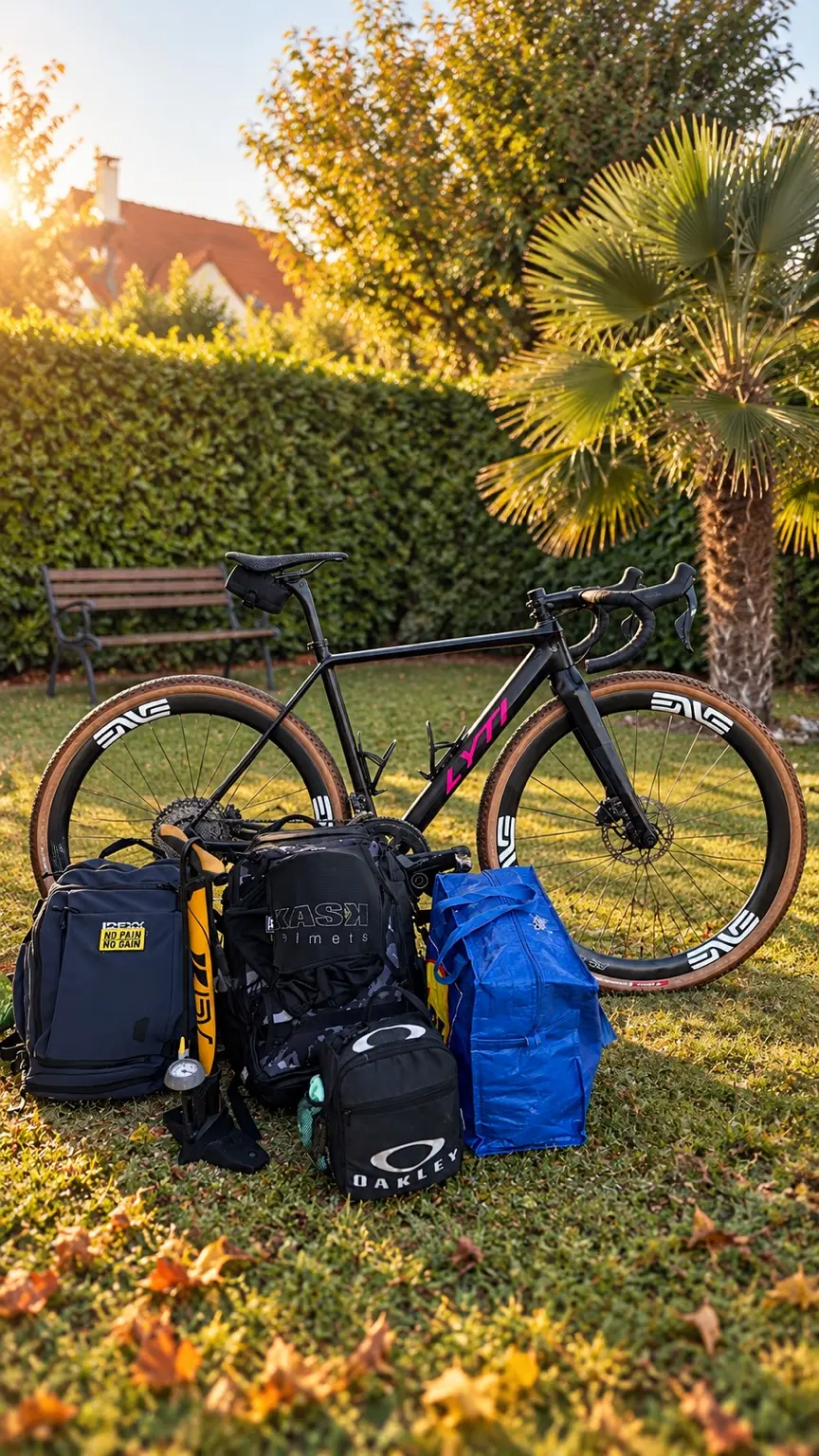
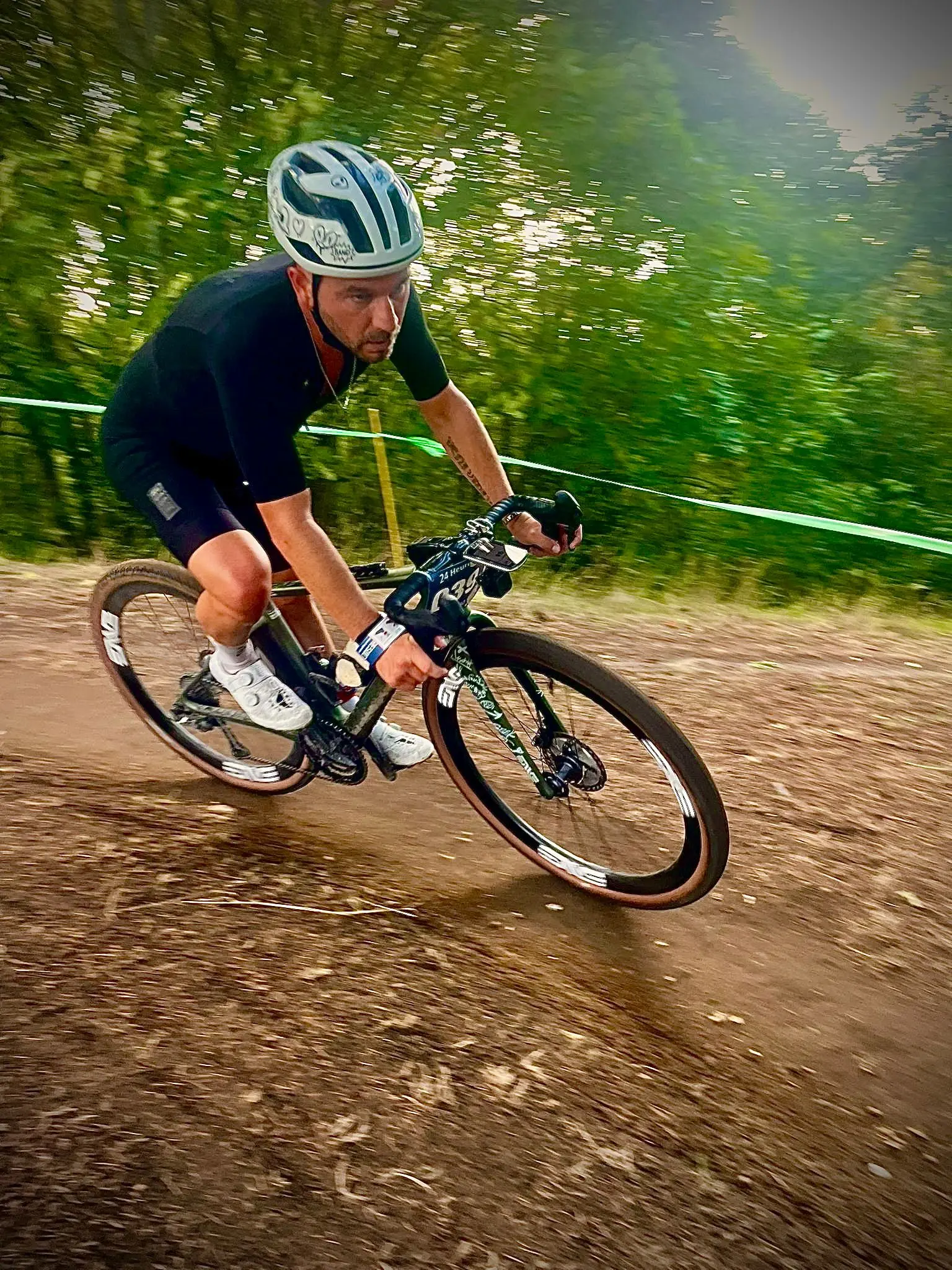
But even before we hit the starting line, something had struck us: the bikes. Carbon everywhere. Carbon frames, carbon handlebars, carbon wheels. Rims costing 1,000, 2,000 euros—sometimes even more. Electronic drivetrains across the board. Power meters and setups so meticulously assembled that we almost wanted to take off our shoes before getting close to them. We looked hard for a pair of aluminum rims. We didn’t find any. They probably existed somewhere, hidden between two Cervelos and three Specializeds, but they were hard to spot.
Keep in mind, this isn’t a scientific study. It’s simply what we observed. And of course, a qualifying event for the World Championships attracts enthusiasts of competition and high-end gear. But still. In Leuven, we didn’t feel like we were attending a leisurely country ride. More like a gathering of Formula 1 car owners who’d decided to drive through a beet field.
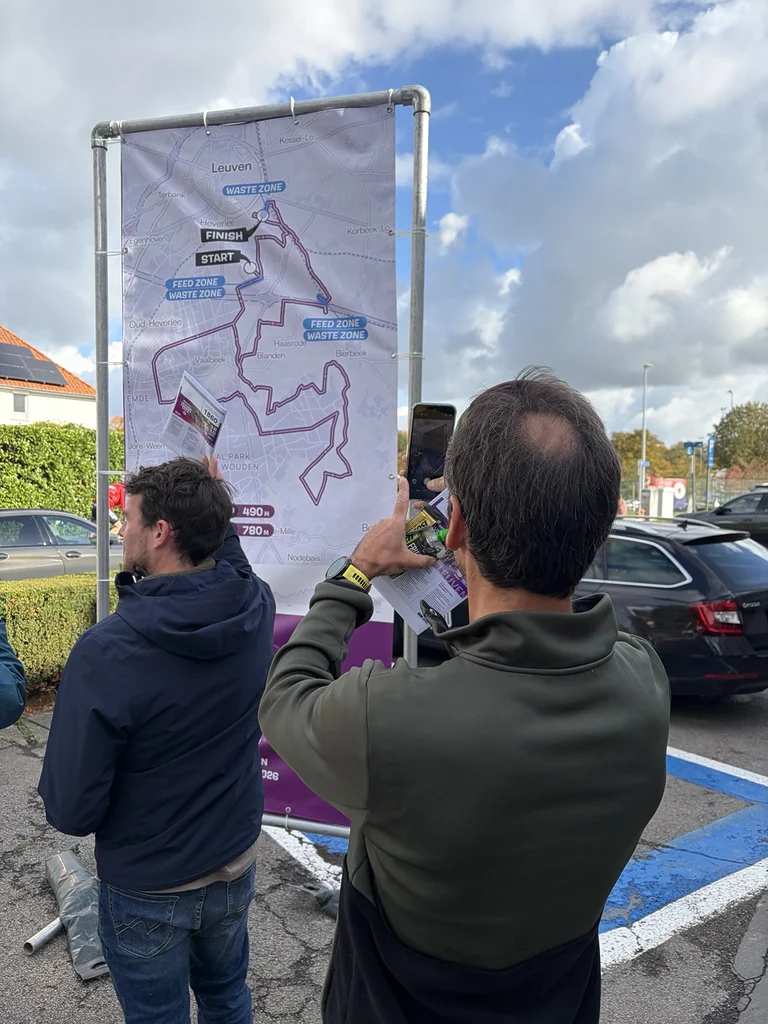
The third bike has sometimes become the most expensive
That’s probably what amuses us most about this story. For many cyclists, the gravel bike remains the second—or even third—bike in the garage. There’s the road bike for serious rides. The mountain bike for Sundays in the woods. And the gravel bike, originally bought for a change of pace, to discover new trails, and to ride differently.
Except that the “new kid on the block” has grown up. It’s been asking for carbon wheels, an electronic groupset, an integrated cockpit, ceramic bearings, and a custom paint job. The result: the bike we bought to ride without worrying about anything sometimes costs more than the other two combined. We think that’s wonderful.
Well, except when we have to explain it to our banker. And there’s more. For a long time, gravel biking was sold to us as a philosophy: adventure, travel, panniers, camping, and that wonderful promise of never having to look at your odometer again. Today, we pay more attention to watts than to the scenery. We no longer ask where the next campground is. We’re looking for the next Strava segment. Welcome to modern gravel.

Our Bike Checks had warned us, though
Looking back, the last three months of our Bike Check column tell the story of this transformation quite well. Take David Hamou and his Cervélo Áspero-5. A magnificent build, featuring SRAM Red XPLR, Zipp 303s soon to be replaced by ENVE Pro Gravel wheels, matching details, and an unapologetic obsession with aesthetics. David explained it to us: above all, his bike had to appeal to him. And honestly, how can you argue with that?
A few days later, Hugo Foulon showed us his Cinelli King Zydeco II. Twelve thousand euros. 7.9 kg. Shimano Dura-Ace Di2, a 52/36 double chainring, and a 38 cm cockpit. Excuse me? A 52/36 on a gravel bike? At this point, it’s no longer an adventure bike. It’s a road bike that’s decided to venture onto rough trails.
And then there’s Dany Maffeïs and his Berria Naii. SRAM Red XPLR, ENVE G 6.7 Pro, an aggressive cockpit, and a gold chain to remind us that good taste remains a thoroughly personal matter.
Three personalities. Three different approaches. But one obvious thing in common: a gravel bike is no longer just a bike that lets you go anywhere. It’s a machine that makes you want to go everywhere—and fast.
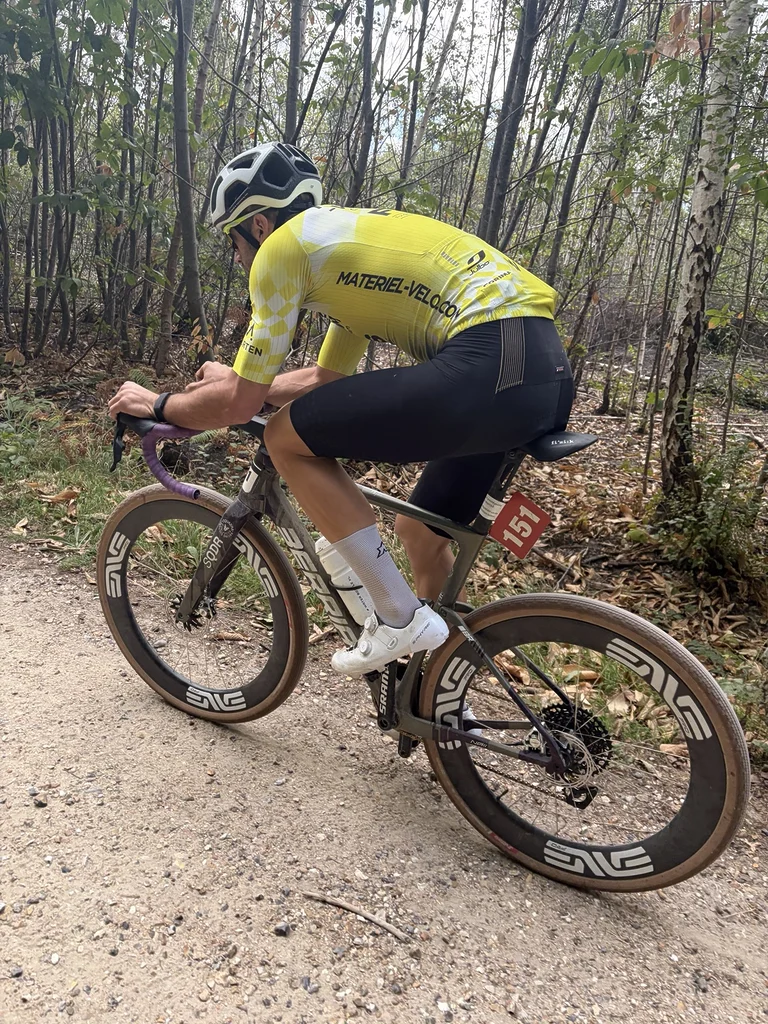
But what exactly is a gravel race?
Excellent question. Because between a road bike fitted with fat tires, a modernized cyclocross bike, and an adventure gravel bike stripped of its panniers, the lines get pretty blurry. At 3bikes, we have a rather personal definition.
A gravel race bike is one that handles rough trails but won’t accept lame excuses. A bike designed to maintain speed on terrain where a road bike would start thinking about retirement. It needs efficiency, stiffness where it counts, stability, and above all, tires capable of truly working with the terrain. Because that’s perhaps where it all comes down to. Modern gravel riding no longer necessarily aims to ride with the thinnest possible tires. It aims to ride fast with the most effective tires possible. And that’s not the same thing at all.
45 mm, 50 mm, sometimes even wider. Lower tire pressures, better traction, more grip, and the ability to maintain speed when the terrain gets really rough. Gravel racing, then, isn’t just about carbon or aerodynamics. It’s a quest for overall efficiency.
And above all, it’s a matter of compromise. In Leuven, when the mud decides to take control of your line, a few grams saved on a wheel suddenly become much less important than a tire that’s willing to turn where you want it to.
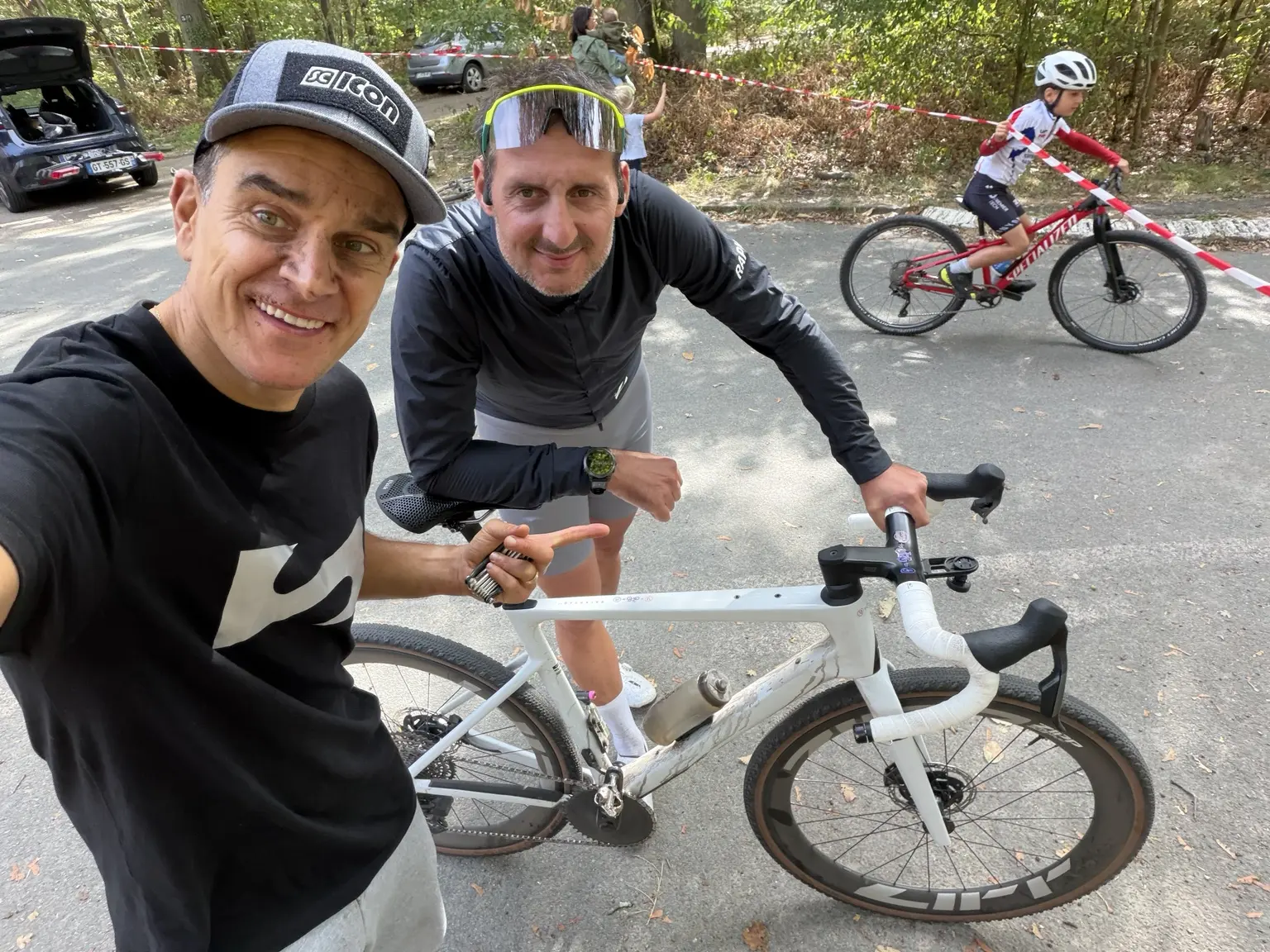
The bigger the tires, the better the bikes look
We’re now going to put forward a theory with absolutely no scientific basis. A bike with big knobby tires is objectively more beautiful. There. We said it. You can argue with it, but we’ve already decided we’re right.
Take a look at a modern gravel bike. Its sculpted tubes, its integrated cockpit, its carbon wheels—and then those massive tires that fill out the frame perfectly. It has something more muscular, more beastly, almost more defiant about it than a road bike. A road bike tells you it loves speed. A gravel race bike tells you it loves speed, but it’s not afraid to get dirty. And frankly, that changes everything. As much as we appreciate the most sophisticated machines in the pro peloton, we have to admit that a beautiful gravel bike fitted with wide tires has a pretty extraordinary personality these days.
Besides, let’s face it: we sometimes spend more time admiring our bikes than cleaning them. And we’d rather not know how many of us are in that boat.
Has bikepacking become old-fashioned?
Three or four years ago, the big gravel trend seemed to revolve more around adventure and ultra-distance riding. Today, our impression is different. The bikes that capture the imagination in the paddocks of major races are no longer necessarily the ones that can carry three days’ worth of supplies and a tent. They’re the ones that can shave three minutes off a 120-kilometer course.
Panniers have given way to aerodynamic water bottles. Handlebars have gotten narrower. Gear ratios have gotten higher. And the talk of freedom has gradually been enriched with discussions of watts, tires, and average speed. So, has bikepacking gone out of style? Of course not. It still has its following, its races, its magnificent stories, and that sense of adventure that remains essential to the identity of gravel riding. But the most spectacular spotlight in gravel riding today seems to be on racing. And we find it hard to ignore this shift in focus.
Gravel hasn’t abandoned adventure. It has simply discovered that you can also experience an extraordinary adventure by going all out for four hours. We can attest to that.
In the end, gravel riding may have become the most desirable form of cycling
We could, of course, end this article by condemning the outrageous prices and this constant race for gear. But that would be a bit hypocritical. We love beautiful bikes. We love beautiful wheels, sophisticated drivetrains, meticulously crafted frames, and fat tires that transform a racing machine into a true object of desire. We also love what gravel brings to competition: uncertainty, skillful riding, lines to be invented, and that delightful feeling that anything can still happen after three hours of racing.
That said, no one needs a 10,000-euro bike to experience these sensations. A good set of aluminum wheels and a mechanical drivetrain can do the job perfectly well. And let’s not forget the obvious: carbon still can’t replace your legs. Fortunately, by the way. So yes, we’ll admit to being a bit disingenuous.
We believe that gravel race bikes are among the most beautiful bikes on the market today. Their chunky knobby tires give them an unmistakable look. And that this new generation of fast, aggressive, and sometimes outrageously expensive machines is redefining our idea of a sports bike.
Four hours of racing in Leuven, two crashes, and enough mud to make us consider repainting the bathroom have convinced us of one thing. Gravel riding may never have been taken more seriously. But it’s probably never been this much fun. And if you ask us which bike we’d like to have in our garage tomorrow, we’ll obviously say we don’t need another one.
Well… except maybe a gravel race bike. With carbon wheels. And 50 tires. Because you’ve got to stay reasonable, after all.
=> And if you want to check out the schedule for the Qualifying Rounds for the 2027 season
Share the post "Gravel Race: €10,000 to go play in the mud!"