Share the post "Review of the New Shimano Dura-Ace PD-R9300 Pedals and the SPD-SLR System"
With the Dura-Ace PD-R9300, Shimano is introducing the SPD-SLR system, a new set of pedals and cleats designed to replace the SPD-SL, the industry standard for road cycling for nearly 25 years. This change is already causing some friction, particularly due to the incompatibility between the two standards. We put these new pedals to the test on the road. Despite the challenges posed by this change, our initial impressions are very positive.
By Guillaume Judas – Photos: ©3bikes.fr
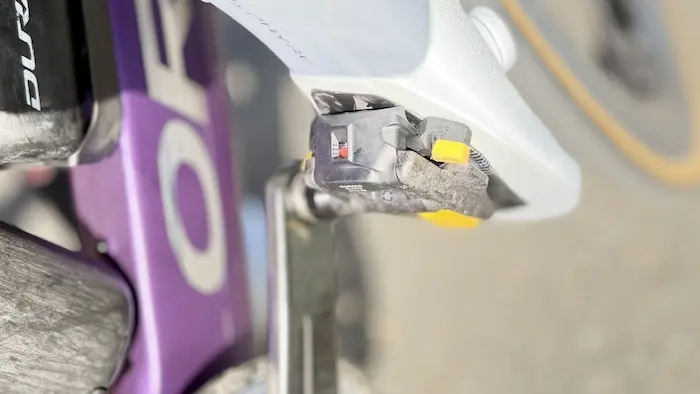
Since its introduction in 2003, the SPD-SL system has established itself as one of the industry standards in the market for clipless pedals for road bikes. Its wide plastic cleat—available in three versions offering different degrees of angular freedom—along with its locking mechanism and stable platform, are found on millions of bicycles worldwide. The system is, in fact, used far beyond Shimano groupsets alone. It has long since transcended the brand’s user base and has become a staple among cyclists of all skill levels. Even some professional teams equipped with groupsets from other manufacturers continue to use it.
It is therefore significant that the Japanese manufacturer is thoroughly revamping this interface after more than two decades of loyal service. With the SPD-SLR, Shimano isn’t just tweaking a few details on its high-end pedals. The brand is introducing a new system that combines pedals and cleats, along with shoes specifically designed to take full advantage of its capabilities. The goal is to improve the connection between the foot and the pedal, while also evolving the interface between the two.
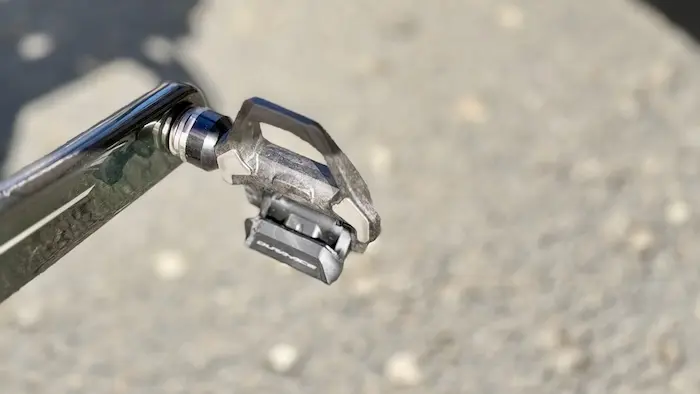
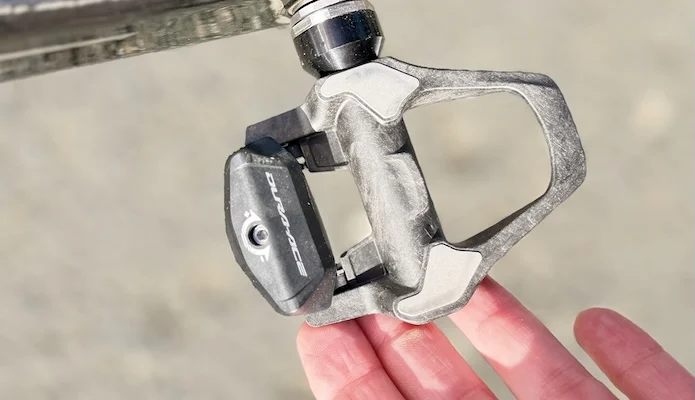
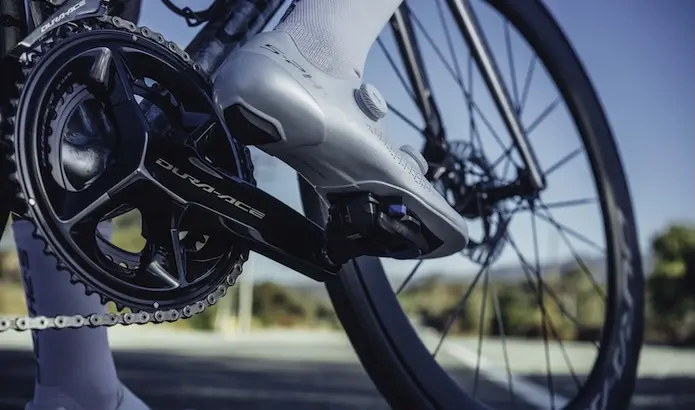
The new Dura-Ace PD-R9300 is the flagship model of this generation, alongside the Ultegra PD-R8200. The design remains that of a single-sided clip-in road pedal, but the platform and cleat have been redesigned. The goal was specifically to reduce the height between the shoe and the pedal axle, while minimizing unwanted movement at the interface.
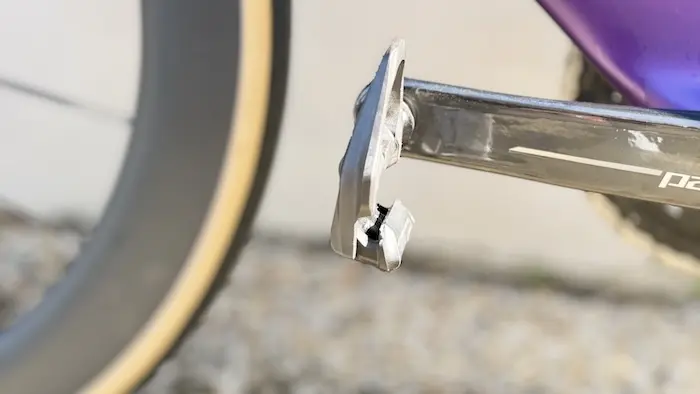
Shimano has announced a pedal height of 12.5 mm for the Dura-Ace PD-R9300, as well as a 2.3 mm reduction in the height of the pedal-cleat assembly compared to the previous generation. The brand has also redesigned the contact area and the engagement mechanism, with the goal of achieving a more direct and stable connection, particularly when pedaling forces increase.
On paper, this change may seem logical. But it has a major consequence: the SPD-SLR system is not compatible with SPD-SL. Older cleats cannot be used with the new pedals, and the new cleats do not work with the older pedals. For the many cyclists already equipped with Shimano gear, switching to this new generation therefore means replacing at least the cleats—or even a larger portion of their equipment.
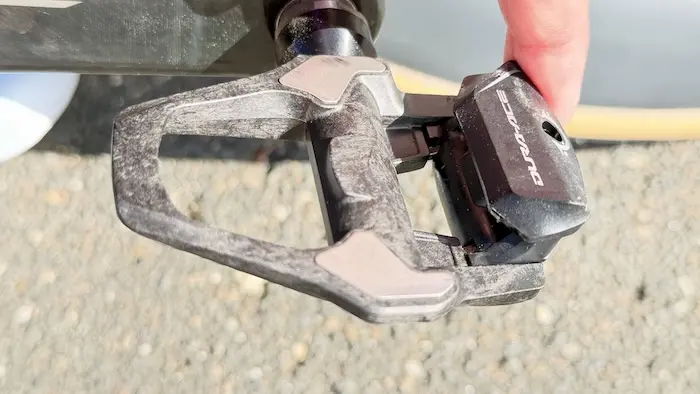
Compatibility: Be Careful When Choosing Shoes
This is the main sticking point with the new SPD-SLR system. The new pedals are not compatible with older SPD-SL cleats. However, the new SPD-SLR cleats can be mounted on many shoes equipped with a three-screw attachment system. So it’s not always necessary to replace your shoes, even though the system is optimized for the brand’s own models. This is particularly true of the new S-Phyre RC910s, which we received along with the Dura-Ace pedals and which we’ll be testing in a future review.
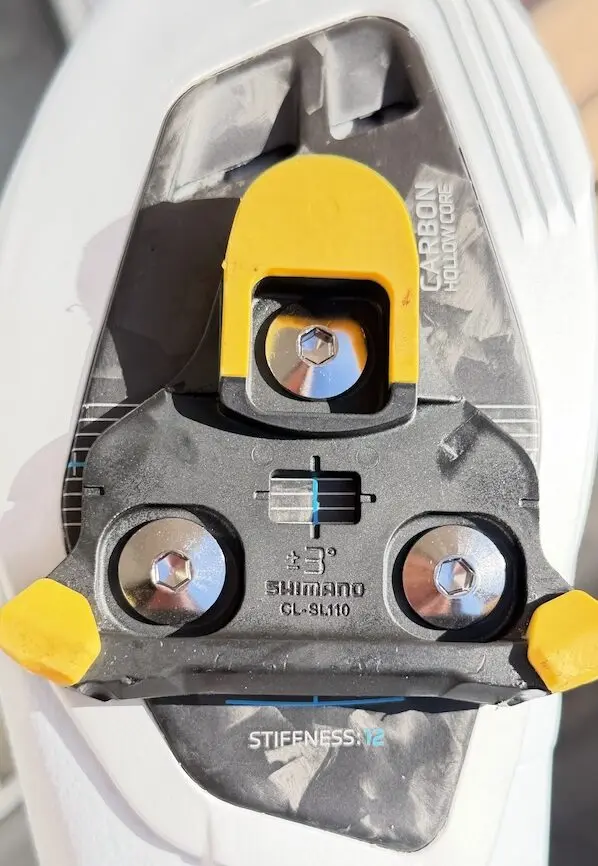
However, we need to look beyond this basic compatibility. Shimano designed its new S-Phyre RC910 and RC810 shoes (the version paired with the Ultegra line) around this system. Their soles and the options for adjusting cleat position have been redesigned to take full advantage of the system’s features. While the new interface reduces the overall height of the assembly, it also shifts some of the longitudinal adjustment capabilities to the shoe itself. In other words, with shoes that have three fixed attachment points, it may become impossible to achieve the desired longitudinal position of the cleat.
Not all shoes offer the same freedom of adjustment in this area. And to my knowledge, no model has an adjustment range in the sole itself as wide as that of the latest Shimano shoes. It can therefore become difficult, if not impossible, to find your exact usual cleat position. This is something worth checking before purchasing, especially for riders who have spent time fine-tuning their position or who use a cleat set very far back.
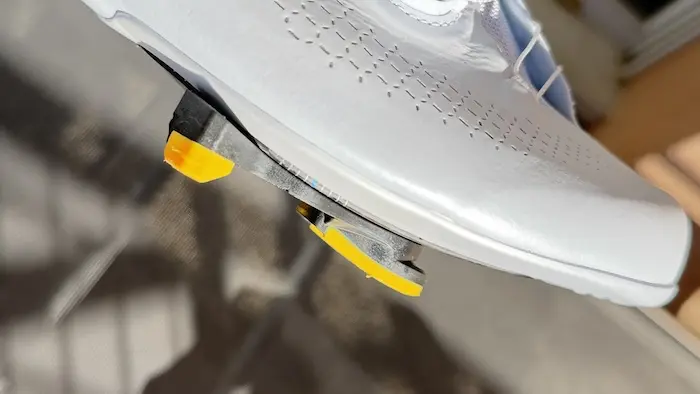
Among the various pairs of shoes I have in my closet, some aren’t compatible with the forefoot adjustment I need. They either have three fixed mounting holes or three holes mounted on a slider with an insufficient adjustment range. With high-end Specialized shoes, mid- to high-end Giro models, the latest generation of Nimbl Ultimate (but not earlier versions), and the S-Phyre RC903, I should still be able to make do with shoes other than the RC910. My adjustments aren’t extreme, even though I tend to pedal with the cleats set back.
It’s worth noting, however, that Shimano offers several cleat models, including a CL-SL130 version designed to provide more adjustment options with shoes that have three fixed holes. This solution can help you find a more suitable position, but it reduces the desired benefit in terms of axle height. The choice of cleat should therefore not be limited to the desired degree of angular freedom. Compatibility with the sole and the ability to maintain your usual position are just as important.
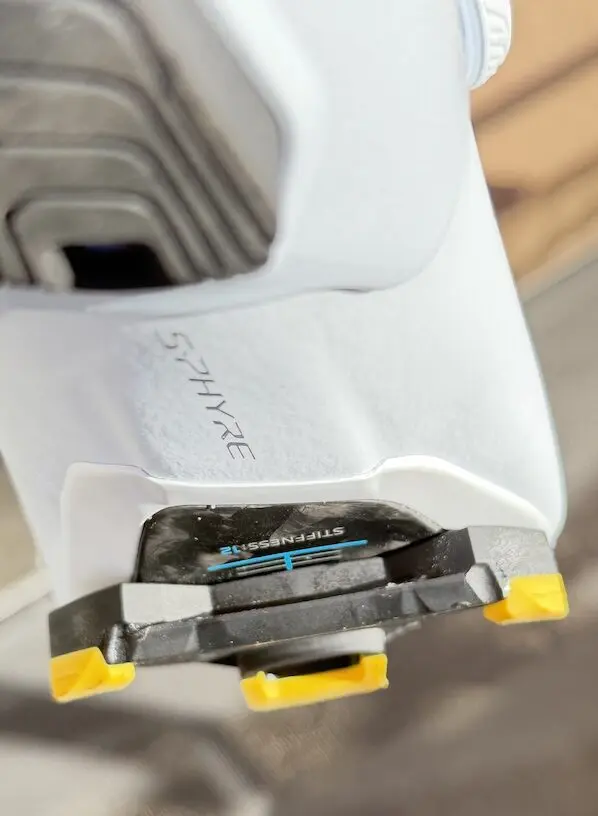
The SPD-SLR system thus represents a technical advancement that goes beyond simply purchasing a new pair of pedals. Before you can enjoy its potential benefits, you must ensure that the cleats you choose and the shoes you use work together as a cohesive system.
How much do the new Dura-Ace pedals weigh?
Weight remains an important factor for pedals positioned at the top of the road bike range. The Dura-Ace PD-R9300 weigh 228 g per pair in their standard-axle version. With the cleats and their screws, the total weight reaches 282 g—an additional 54 g for this part of the setup.
These figures allow us to compare Shimano’s pedals with the leading models on the market, notably the Look Keo Blade (between 260 and 300 g depending on the model), the Wahoo Speedplay (over 300 g), and other high-end road pedals.
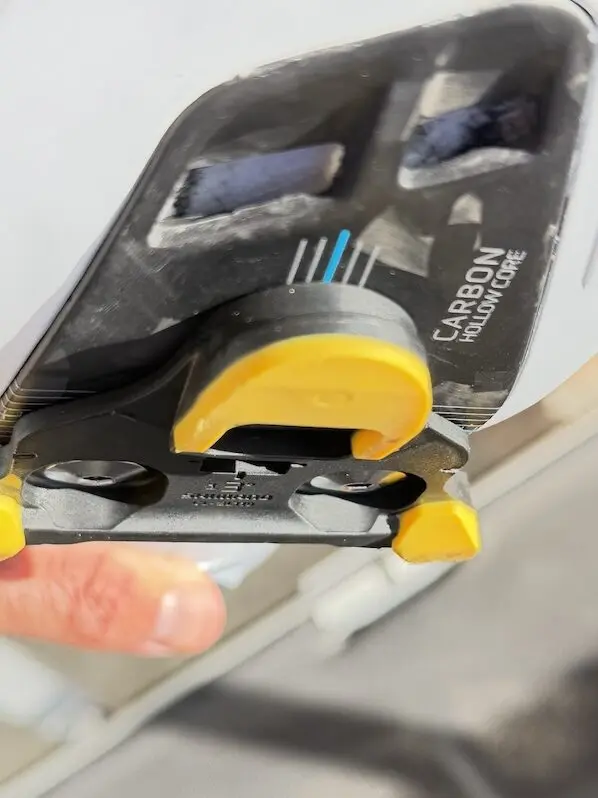
Beyond weight, Shimano emphasizes the low profile of the interface and the quality of contact between the cleat and the pedal. The brand claims a 2.3 mm reduction in the overall height compared to the previous system, but again, the height of the complete system must be taken into account. For example, with the SPD-SLR (12.5 mm axle height) and S-Phyre shoes (5.5 mm sole thickness), I’m still slightly taller than when using Nimbl shoes (which have the thinnest sole on the market, at 2 mm) and Dura-Ace SPD-SL pedals (14.8 mm axle height). It is these factors—rather than a few grams gained or lost—that should allow us to assess the true value of this new generation.
Four Types of Cleats
With the SPD-SLR system, Shimano offers four types of cleats. The yellow ones (CL-SL110) provide 6° of angular freedom—3° on each side—around a central pivot point. These are the ones included as standard with the pedals. The blue cleats (CL-SL120) offer 2° of freedom—1° on each side—with a pivot point located at the front of the cleat. The red cleats (CL-SL100) are fixed and offer no angular freedom. Finally, the gray cleats (CL-SL130) have the same angular freedom as the yellow ones but are designed for shoes with three fixed attachment points.
On paper, these characteristics are identical to those of the yellow, blue, and red cleats in the SPD-SL system. The main innovation lies in the improved contact between the cleat and the pedal platform. This change slightly alters the pedaling feel, even though the previous interface already offered a very high level of performance.
Easier engagement and a more secure interface
For once, it only took me four rides to get a pretty good idea of the new Shimano SPD-SLR pedals. I’ve actually been using the SPD-SL system since 2015. So I’m very familiar with the reliability of Shimano pedals—especially the Dura-Ace versions—whether it’s the axles or the platform. I currently use several pairs of pedals: a 2017 model that’s only just starting to develop a bit of play after nearly 100,000 km, a 2023 model that’s still in perfect condition, and a pair of Garmin pedals that use the same SPD-SL interface for some of my tests.
I didn’t encounter any particular issues fitting the new yellow cleats onto the S-Phyre RC910 shoes, thanks to the handy and comprehensive markings on the sole. When tightening them, I noticed that the carbon soles were a perfect fit for the cleats. Regardless of the mounting angle, I didn’t notice any deformation of the cleat when tightening—a problem that sometimes occurred with older cleats on certain shoe models. However, as explained above, I didn’t adjust my saddle height when switching from my Nimbl shoes to the Shimano ones. The difference in height between the cleats of the two systems partially compensates for the difference in sole thickness.
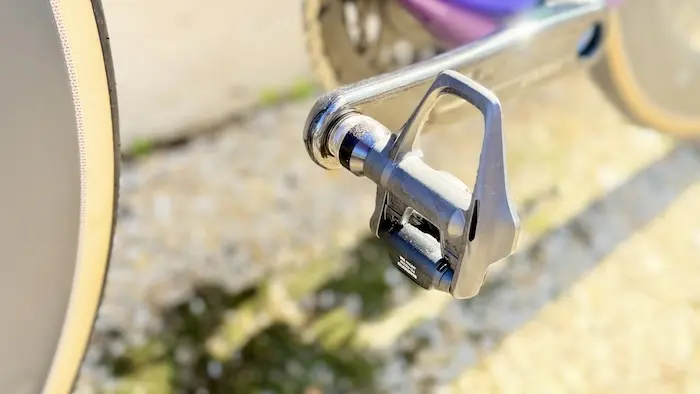
From the very first few pedal strokes, I was surprised by how easily I could clip into the pedals. With over 40 years of experience, I rarely miss the pedal when clipping in, except sometimes on gravel rides with single-sided automatic cleats. But here, the new pedal angle—specified by Shimano as 10.5°, compared to 15° for the previous system—truly makes it easier for the front of the cleat to make contact with the pedal platform. Clipping in thus becomes more intuitive—a difference I noticed immediately as I set off from home.
On the bike, the improvement in the interface is also noticeable, giving the impression of an even larger contact surface than it actually is. There is absolutely no play between the pedal platform and the cleat. Power transfer feels complete, both during the push phase and when pulling hard on the pedal, whether seated or out of the saddle. And all this with relatively light spring tension, since I don’t like pedals that are too hard to unclip.
I finally noticed a remarkable difference in angular freedom compared to the SPD-SL, even though the yellow cleats used have the same theoretical specifications. With the SPD-SLR system, your feet can move without that spring-back effect toward the cleat’s neutral angle. This phenomenon seems less pronounced to me than with my previous pedals. The sensation is somewhat reminiscent of the old Time pedals, particularly the models from the mid-2000s, for those who are familiar with them. The angular freedom is really pleasant in terms of comfort, without giving that impression of pedaling on ice that you can feel with Speedplay pedals. I particularly appreciated this sense of freedom and feel, which, in my case, allows my feet to position themselves wherever they want depending on the different phases of effort.
A New Benchmark in the Making?
The quality of the interface is the main strength of these new Dura-Ace PD-R9300 pedals. The connection is solid, with no perceptible play, giving the sensation of truly becoming one with the pedals. But this new standard requires a shift in habits, as it’s completely incompatible with the SPD-SL system and comes with certain compatibility limitations regarding shoes. I’ll be revisiting this last point soon with a review of the Shimano S-Phyre RC910 shoes.
It remains to be seen whether the improvements made will be enough to convince cyclists to abandon a system they’ve sometimes been using for years. After these first few rides, the experience has been very positive, particularly in terms of stability, ease of engagement, and angular freedom. In practice, these new pedals are living up to their initial promises. Their adoption will also depend on Shimano’s ability to gain acceptance for this change in standard.
Pros
- Quality of the interface
- Ease of engagement
- Very smooth angular freedom while pedaling
- Weight savings
- Highly durable bearings
Cons
- Limited compatibility with shoes other than the new Shimano models
TECHNICAL SPECIFICATIONS
| Model | Shimano Dura-Ace PD-R9300 |
| Type | SPD-SLR |
| Clip-in System | Single-sided |
| Body | Carbon, adjustable engagement/release tension |
| Weight | 228 g per pair, 54 g for the pair of cleats |
| Price | €249 |
| Contact | bike.shimano.com |
FAQ: Shimano Dura-Ace PD-R9300 SPD-SLRAre the Shimano Dura-Ace PD-R9300 pedals compatible with SPD-SL cleats? No. The new Dura-Ace PD-R9300 pedals use the SPD-SLR system, which is incompatible with older SPD-SL cleats. You’ll need to switch to the new cleats to use these pedals. Do I need to change my shoes to use the new SPD-SLR pedals? Not necessarily. The new cleats can be mounted on many road shoes equipped with a three-screw mounting system. However, you should check that the fore-aft adjustment range allows you to set your cleats to your usual position. How much do the Shimano Dura-Ace PD-R9300 pedals weigh? The measured weight is 228 g per pair with standard axles. With the cleats and their screws, the total weight is 282 g. What are the differences between the Shimano SPD-SLR cleats? Shimano offers four versions: the yellow ones, with 6° of angular freedom; the blue ones, with 2°; the red ones, with no angular freedom; and the gray ones, with 6° of angular freedom, designed specifically for shoes with fixed attachment points. What are the advantages of the Shimano Dura-Ace PD-R9300 pedals in real-world use? Early rides highlight easy engagement, a very stable interface with no noticeable play, and a comfortable range of motion. However, these positive experiences come with a major drawback: incompatibility with the older SPD-SL system, which requires replacing the cleats. |
Share the post "Review of the New Shimano Dura-Ace PD-R9300 Pedals and the SPD-SLR System"