Share the post "Review of the Castelli Transition Collection: Fall Finally Has Its Own Outfit"
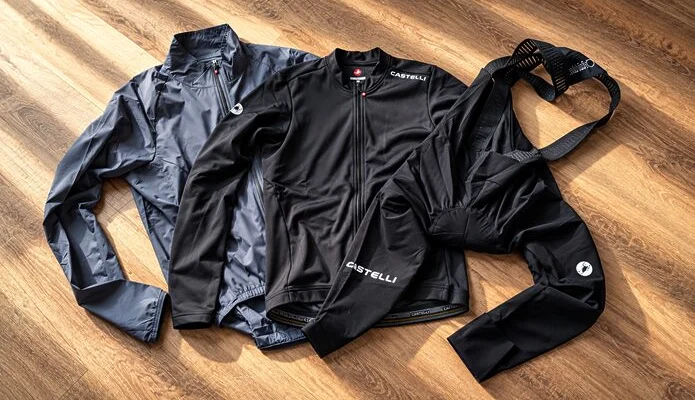
There are times when choosing what to wear for a bike ride becomes almost more complicated than choosing a route. Too warm to ride in summer clothes, but not cold enough to break out the winter gear. With its new Transition collection, Castelli aims to address precisely this in-between season that all cyclists are familiar with. We’ve selected three pieces to illustrate this philosophy: the Espresso Thermal 2 jersey, the Transition Air jacket, and the Espresso TRNSTN long-leg bib shorts. Three garments, one shared promise: to keep riding when the temperatures are as indecisive as we are when standing in front of our closets.
By Jeff Tatard – Photos: ©3bikes.fr
There’s something rather paradoxical about fall. It’s probably one of the most beautiful times of year to ride a bike, and yet it’s also one of the trickiest when it comes to choosing what to wear. The roads are quieter. The forests are changing colors. The trails sometimes take on that dampness that gives them a whole new character. And the light, when it decides to make an appearance, has a quality that summer simply can’t replicate.
But there’s a problem… At 9 a.m., it’s 8 °C. At 11 a.m., the thermometer reads 14 °C. And when you get back after three hours of gravel riding, you might have felt the cold on the descents, the heat on the climbs, and that unpleasant sensation of being damp inside your clothes even though it hasn’t rained for a single minute.
The cyclist then becomes an expert at making compromises. You set out with a jacket that you end up taking off. You add arm warmers that you don’t know where to stash. You waver between shorts and tights. And sometimes you find yourself carrying half your wardrobe in three back pockets. It’s precisely this issue that Castelli has decided to tackle with its new Transition collection.
The idea immediately caught our interest. Not because we were short on clothes in our closets, but because we spend enough hours outdoors to know that the perfect outfit isn’t necessarily the one that keeps you the warmest. It’s the one that lets you stop thinking about the temperature.
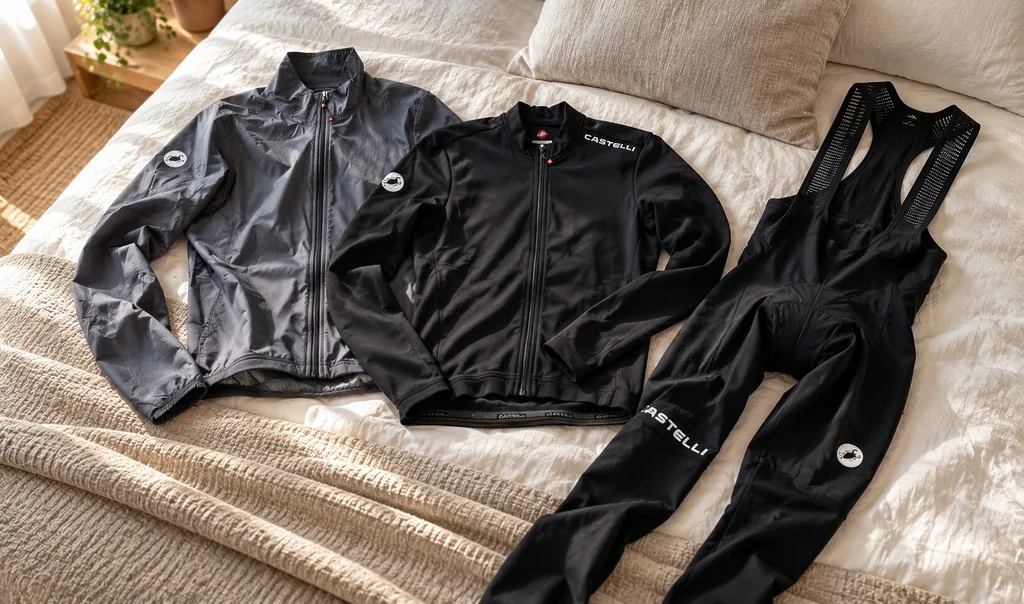
Transition: A Collection Rather Than Just a Collection of Clothes
When Castelli invited us to check out this new line last July, we were still a long way from fall temperatures. At the time, we were preparing for our upcoming gravel events, including long endurance rides, specific training sessions, and races. The conditions seemed ideal for putting a collection—designed to accompany the change of seasons—to the test.
In the end, the clothing arrived in early fall. The timing worked out almost better than expected. Because what interests us here isn’t simply whether a jersey keeps you warm or whether a jacket protects you from the wind. Above all, we want to understand how these garments work together.
Castelli specifies three temperature ranges: 12 to 18 °C for the Espresso Thermal 2 jersey, 10 to 18 °C for the Transition Air jacket, and 8 to 16 °C for the Espresso TRNSTN tights. These figures are obviously not absolute limits. A cyclist riding at a leisurely 150 watts doesn’t generate the same amount of heat as another who’s tackling hills at 300 watts. And between a damp, windless morning and an exposed descent at 35 km/h, the same temperature can feel radically different. That’s precisely the challenge. A temperature alone never tells you exactly how to dress.
Espresso Thermal 2: The Jersey That Strikes the Right Balance
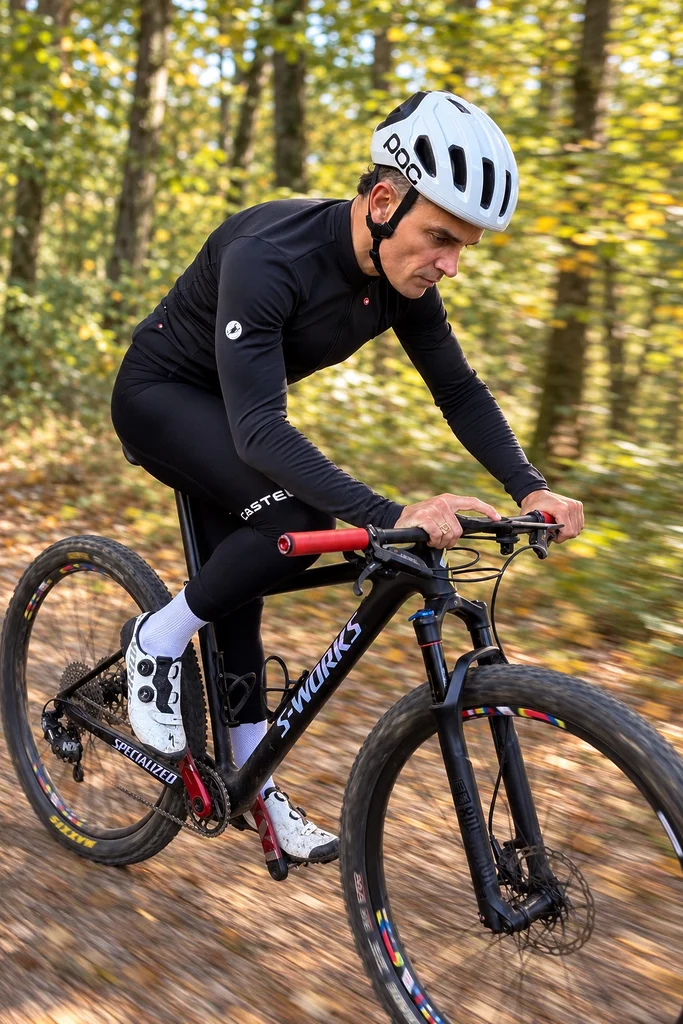
Let’s start with the piece that forms the heart of our outfit: the Espresso Thermal 2 Jersey. Visually, Castelli hasn’t set out to revolutionize the cycling jersey. And that’s probably a good thing. Our black version, discreetly marked with the brand name on the shoulder, embraces a minimalist aesthetic. No clash of colors, no flashy graphics. A slim fit, a full-length zipper, and the signature silhouette found throughout the Espresso line.
The real standout feature is on the inside. Castelli uses a stretch fabric with a soft, brushed inner surface, designed to retain some heat while allowing moisture to wick away. It sounds simple. Yet that’s precisely where much of the comfort comes from. A thermal jersey that’s too insulating can quickly become uncomfortable as the intensity increases. Conversely, a highly breathable model may prove insufficient as soon as speed increases or effort decreases. The Espresso Thermal 2 therefore strives to strike this balance between insulation and ventilation.
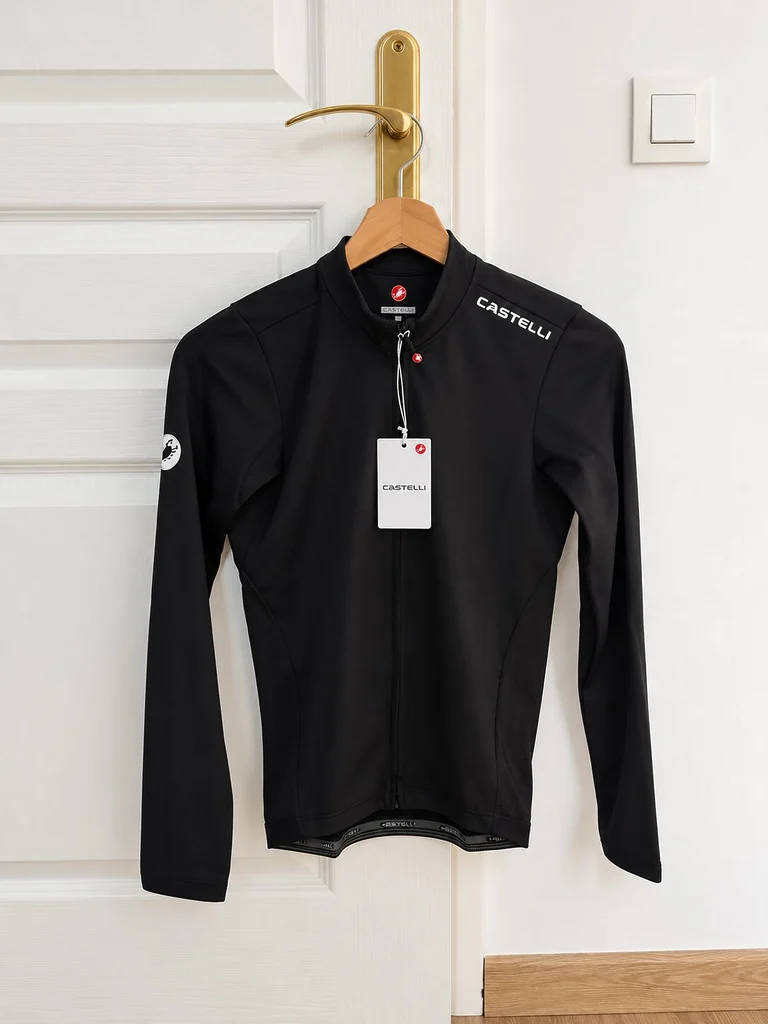
The spec sheet reveals several interesting features. The jersey has three classic rear pockets, plus a fourth zippered pocket. The latter isn’t anything spectacular, but anyone who’s ever spent several minutes searching for a key or a credit card at the bottom of a pocket will immediately understand its value. The full-length YKK Vislon zipper and the silicone-coated elastic waistband round out the design.
For gravel riding, these details matter. The pockets get more use, position changes are frequent, and vibrations can make a garment that moves too much a nuisance. A pocket that jiggles around for three hours isn’t a disaster. But it’s the kind of detail you eventually notice with every pedal stroke. At a claimed weight of 256 g and a price of 160 €, this jersey clearly falls into the premium category.
One key question remains: to what extent can its thermal fabric handle increased intensity without causing an uncomfortable buildup of heat? It’s on this point—more than just the soft feel—that we have high expectations for our long rides.
The true luxury of a jersey is not even noticing you’re wearing it
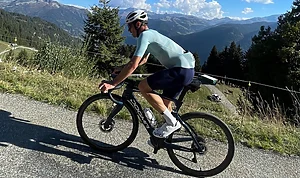
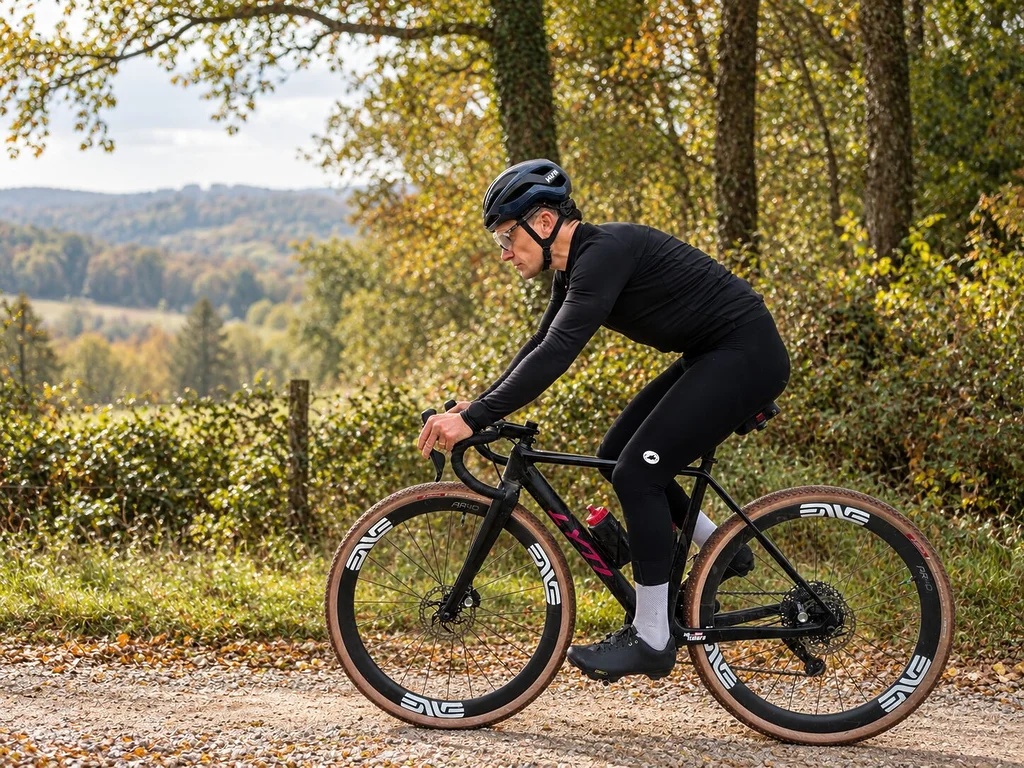
In the photos showing the rider in a pedaling position, the jersey has a fitted and relatively streamlined silhouette. But a nice cut isn’t enough to reach a verdict. We also need to consider what happens when you move. When your torso leans forward over the handlebars. When you sit up on a hill. When your arms are working harder on an uneven trail.
A jersey may look perfect in front of a mirror but become less convincing once the cyclist is on the bike. So we’ll pay close attention to how the waist fits, how much freedom the shoulders have, and whether the bottom of the jersey rides up when the riding position becomes more aggressive. And above all, we’ll look at moisture management. Because in the fall, it’s not always the cold that’s the problem. Sometimes it’s the sweat you worked up ten minutes earlier.
=> Find the Castelli Espresso 2 Thermal jersey on Alltricks and order directly here
Transition Air Jacket: 104 g to tackle the wind
The second piece follows a significantly different philosophy. With the Transition Air Jacket, Castelli isn’t trying to offer a miniature winter jacket. It’s a lightweight layer whose primary purpose is to limit the wind’s effect. The manufacturer lists the weight at just 104 g and uses a 20-denier microfiber nylon fabric. The 20-denier figure refers to the fineness of the yarn used in the fabric. While this figure alone isn’t enough to define a jacket’s qualities, it helps explain the pursuit of lightness behind its design.
Castelli claims the fabric is virtually windproof while maintaining a certain degree of breathability, in line with its Ristretto technology. In other words, the brand isn’t simply trying to keep the air out. It also wants to prevent the moisture produced by the cyclist from becoming trapped inside. That’s the subtlety of it. Because a jacket that can block the wind but can’t manage sweat sometimes ends up creating exactly the problem it was meant to solve.
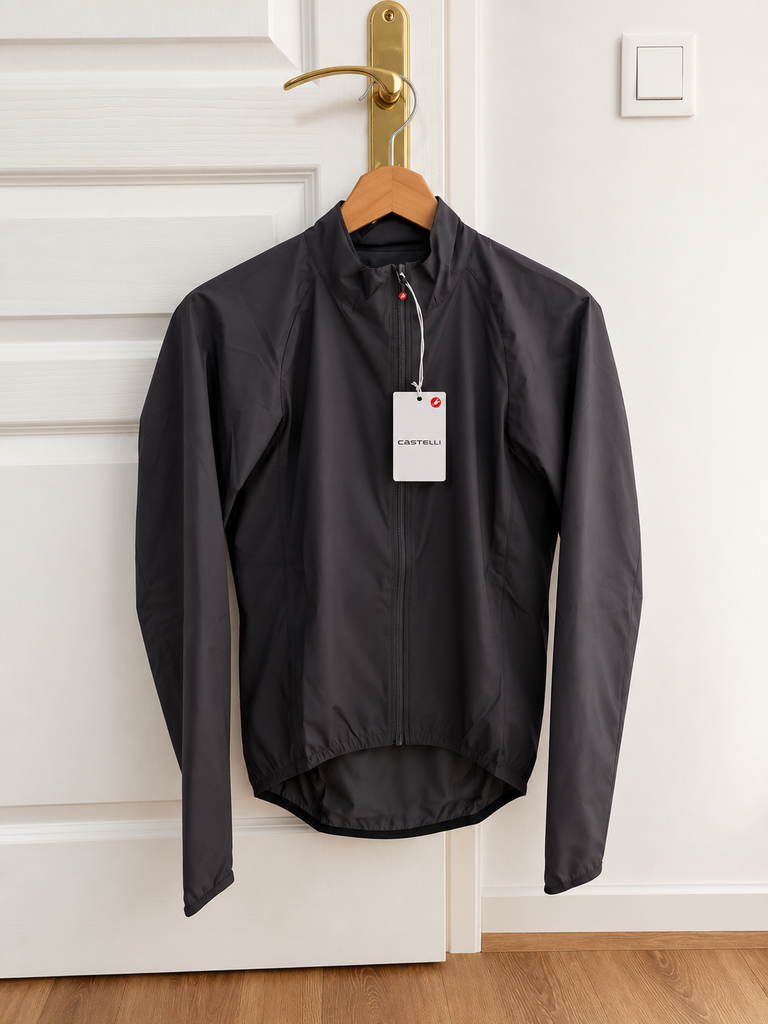
Our anthracite gray model features an ergonomic cut, a high collar, elasticated cuffs, and a fitted waist. The asymmetrical double-opening zipper is a more interesting detail than it appears at first glance.
Being able to open a jacket from the bottom can facilitate ventilation without having to completely expose your torso. It can also improve access to the pockets of the jersey worn underneath. On a climb, when heat begins to build up, this feature deserves special attention. The jacket also features reflective elements on the back, which are useful as light fades.
However, it’s important to avoid a major misunderstanding: the Transition Air is not a waterproof jacket designed to withstand prolonged rain. In its press release, Castelli mentions a water-repellent finish with no added PFAS. This does not mean that the garment has the characteristics of a true rain jacket. And this distinction is worth emphasizing. This is a lightweight piece of protection designed for changing conditions, not an absolute barrier against the elements. At €100, its value will depend largely on its actual versatility.
A jacket should also be able to disappear
There’s a fairly simple rule when it comes to choosing mid-season gear. A piece of clothing that you carry solely as a precaution must be light and compact enough not to become a burden. On a gravel ride lasting several hours, the temperature can rise by five or six degrees. You might start out wearing a jacket and finish without it. As a result, how easily it can be taken off, folded up, and stowed in a pocket becomes almost as important as its wind protection. The Transition Air is designed precisely for this purpose. But we’ll still hold it to high standards.
We’ll want to check how much space it actually takes up when folded, how it performs at high speeds, and how it handles moisture when the effort becomes intense. Because 104 g is a remarkably low weight on paper. But those grams still need to do their job properly.
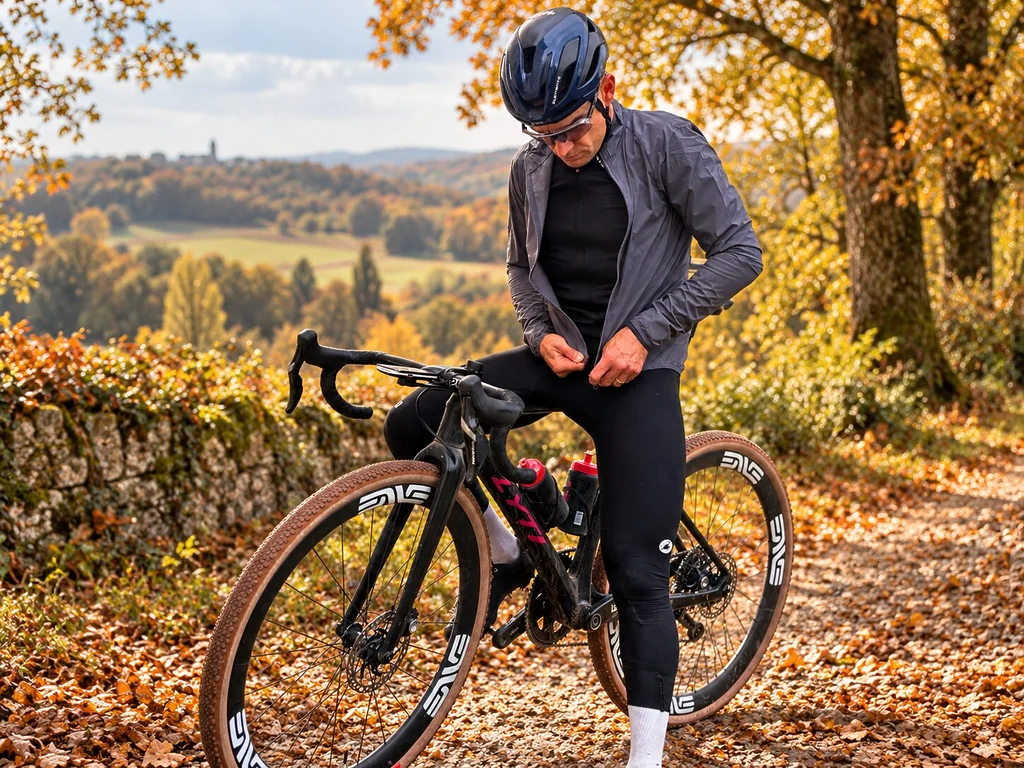
=> Find Castelli jackets and windbreakers on Alltricks and discover the models available for your mid-season rides.
Espresso TRNSTN Bibtight: the bib tights that refuse to be winter bib tights
This is probably the most unique piece in this selection. With the Espresso TRNSTN Bibtight, Castelli has chosen to build on the design of its Espresso short-cut bib shorts and extend the fabric all the way to the ankles. It almost seems obvious. But most long tights are designed with a strong emphasis on thermal insulation. Their primary purpose is to protect against the cold. Yet there’s a time of year when you simply want to cover your legs without necessarily needing heavy insulation. That’s exactly what the TRNSTN offers.
The Espresso Doppio fabric, derived from the summer bib shorts line, prioritizes stretch and comfort over a thick fleece lining. This is an appealing option for cyclists who don’t like leg warmers. Leg warmers are, of course, still practical. They allow you to quickly transform a pair of short cycling shorts into mid-season gear. But they also have a few drawbacks: a layer of fabric overlapping at the thighs, sometimes additional compression, and the risk of them slipping if they don’t stay in place properly. With a lightweight long-leg tights, Castelli offers a different approach: a single piece, a continuous line, and fewer questions to ask yourself before you set out.
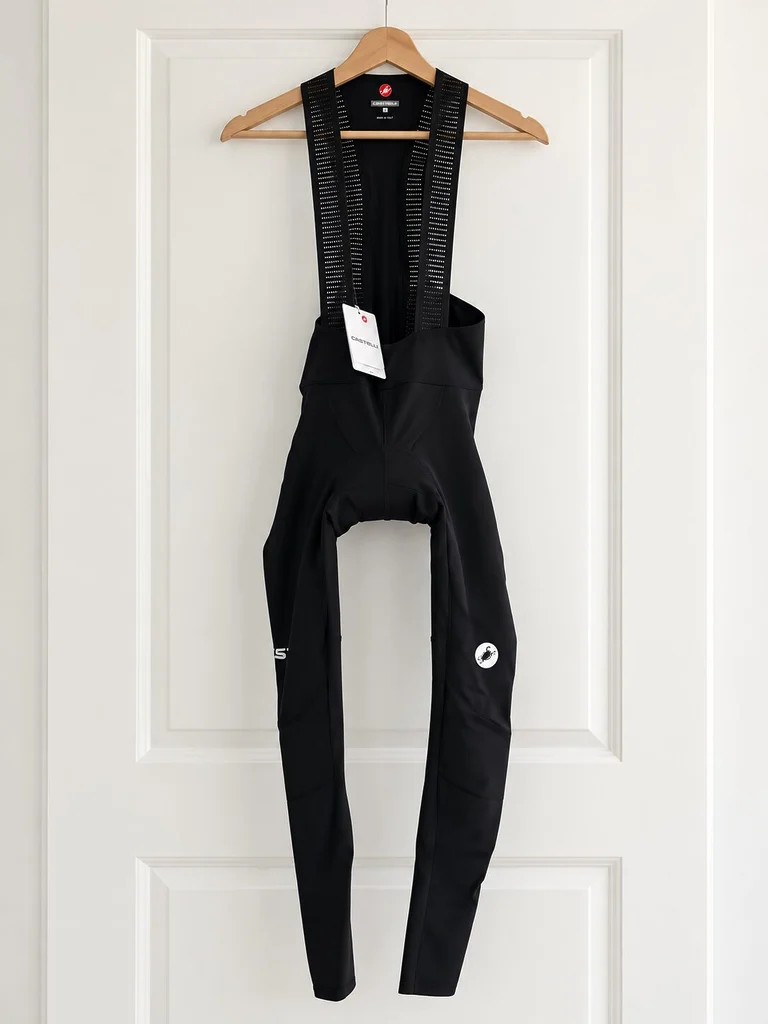
Several features stand out. The stretch mesh straps are designed to promote ventilation. The leg hems feature raw-edge construction for a clean finish. A rear pocket provides storage space, while reflective details enhance visibility. But the real game-changer is the chamois. Castelli has opted for its Progetto X2 Air Seamless, a solution designed to provide comfort over long distances. This is likely one of the most important decisions in the entire design process.
Because a pair of cycling shorts—whether short or long—can have all the thermal qualities in the world. If the chamois becomes uncomfortable after two hours, the rest doesn’t matter much anymore. We’ve all experienced that feeling. At first, everything’s fine. Then you start to shift your position slightly. Then you sit up even more. And at a certain point, you’re no longer really thinking about the scenery. You’re thinking about your cycling shorts. For our gravel riding, where vibrations, position changes, and extended rides are part of everyday life, this issue will be central. Weighing in at 212 g and priced at €180, the Espresso TRNSTN doesn’t just offer a practical alternative to leg warmers. It also has to prove itself over the long haul.
Three pieces of clothing, but above all, a single concept
It’s ultimately when you look at the three pieces together that Castelli’s offering becomes interesting. The jersey provides basic insulation. The jacket offers additional protection against the wind. The tights cover the legs without requiring a thick winter construction. There’s therefore a logic of complementarity.
Between 12 and 16 °C, the temperature ranges recommended by Castelli overlap for all three garments. But that doesn’t mean you have to wear them together at this temperature every time. It all depends on the intensity of the ride, the wind, and your personal sensitivity to the cold. In fact, it’s a fairly common mistake to treat a brand’s temperature rating as a universal recommendation. A jersey might be perfectly suitable at 12 °C during a leisurely ride but become too warm at 15 °C during a particularly intense workout.
Similarly, a jacket that’s very comfortable on a descent may become unnecessary as soon as the road starts to climb again. The right gear isn’t the one that offers the most protection. It’s the one that offers just enough. In our view, this is the whole point of the Transition collection.
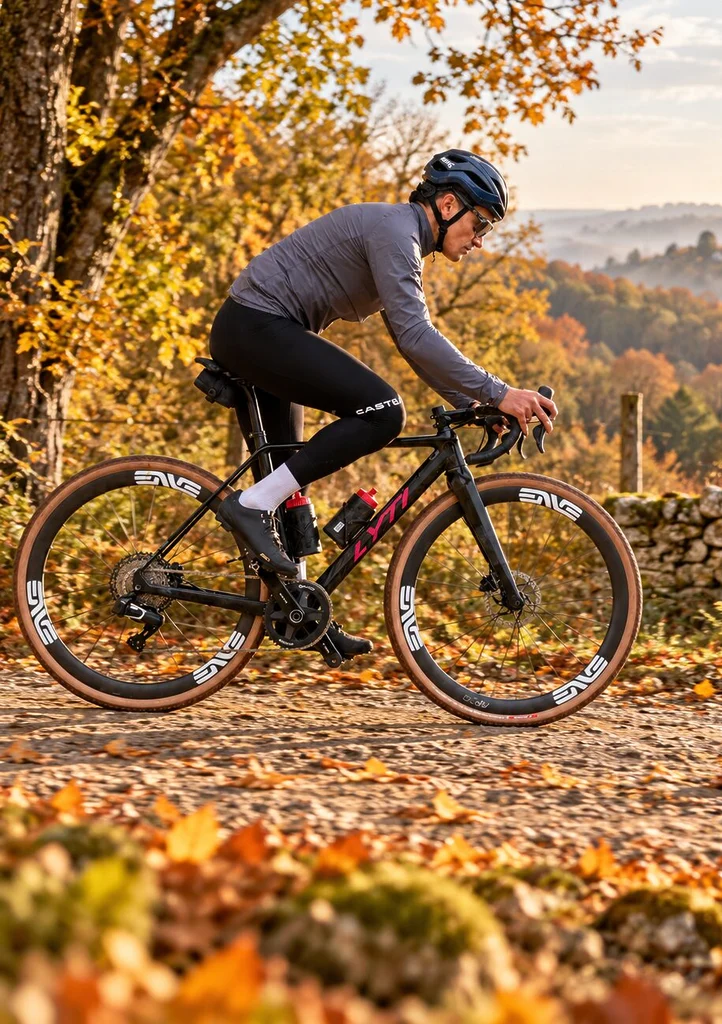
=> Find the Castelli Espresso TRNSTN long-leg cycling shorts on Alltricks and order directly here
€440 for a kit: the price of versatility?
Now we need to address a topic far less romantic than paths lined with fallen leaves: the price. Our outfit totals 440 €: 160 € for the jersey, 100 € for the jacket, and 180 € for the tights. That’s no small matter. At this price point, you’re no longer just buying an outfit for a few occasional rides when the weather permits. You expect real benefits: quality craftsmanship, long-lasting comfort, and clothing that can withstand repeated washings. And above all, enough versatility to justify the investment.
The question is all the more relevant given that a cyclist who’s already equipped likely owns some of the necessary pieces: a long-sleeve jersey, a windbreaker, short cycling shorts, and leg warmers. Transition must therefore offer more than just a change in design. Its value will depend on its ability to make these outfits more comfortable, more practical, or more cohesive. The interesting point is that the three pieces can also be worn separately. The jersey can be paired with classic cycling shorts. The jacket can be combined with a summer outfit. The tights can be worn with a lighter top. This is perhaps where the investment becomes easier to justify. Not in the automatic purchase of all three items, but in their ability to integrate into an existing wardrobe.
What Spec Sheets Can’t Tell You
We can go into detail about the materials, temperature ranges, closures, or weight of each garment. But we don’t want to confuse a promising spec sheet with a thorough test. At this stage, the three pieces have been examined and put to the test on our gravel trails. The initial photos document their design and fit. However, what truly matters remains to be determined: how they perform over several hours, their ability to handle varying intensities, and their comfort as fatigue sets in. In particular, we have high expectations for the balance between insulation and breathability. Because the pitfall of fall is always the same.
You try to avoid getting cold at the start, and sometimes end up getting much too hot afterward. We’ll also need to check whether the tights remain comfortable as the temperature rises, whether the jacket fits easily into a pocket, and whether the jersey stays comfortable as the effort intensifies. These are questions that no press release can answer for us.
Our first impressions: a compelling philosophy, a verdict still to be reached
What we like about this collection—even before considering how it performs over time—is that it addresses a real problem cyclists face. Castelli isn’t simply offering a warmer version of its summer products. The brand is trying to fill that very specific gap between seasons, when you need a little more protection without having to put up with all the drawbacks of winter clothing. The Espresso Thermal 2 jersey provides a thermal base layer. The Transition Air adds a lightweight wind barrier. And the TRNSTN tights offer full leg coverage without the construction of a heavy-duty cold-weather model.
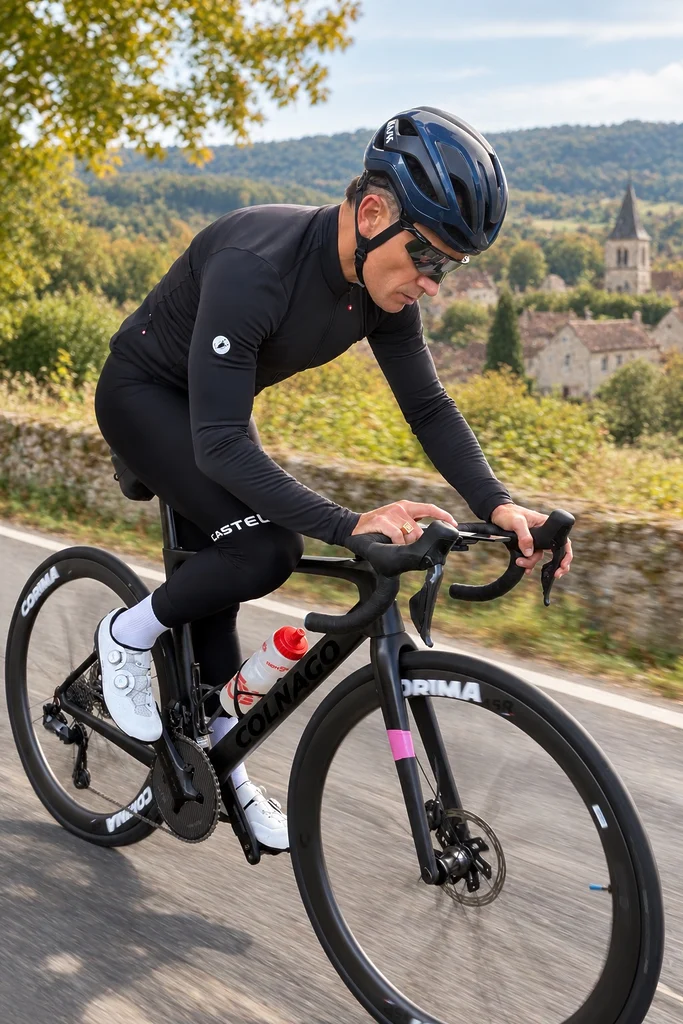
In theory, the outfit seems particularly well-rounded. But a good concept isn’t enough. The breathability still needs to live up to its ambitions, the fit must remain comfortable after several hours, and each piece must prove its value compared to the options already in our closets. We’re therefore deliberately keeping an open mind on these points. Because a technical garment doesn’t become excellent the moment you discover its features. It becomes excellent when you ride in it and eventually forget you’re even wearing it. And ultimately, that’s perhaps the greatest compliment you can pay to a cycling outfit: no longer thinking about what you’re wearing. Simply enjoying the place where you’re riding.
Pros
- Only 45 g per wheel
- A real extra safety net
- Better tire support at low pressure
- Greater comfort on rough terrain
- Enhanced grip and traction
- Greater confidence on technical sections
- No noticeable performance penalty
- Simple and intuitive installation
Cons
- Higher cost compared to a standard tubeless tire
- Adds 90 g to the complete bike
- Removal is inevitably more complicated than with a single tire
- Field repairs still to be tested
- Potentially complicated to handle with an insert and a puncture-proof liner while on the side of a trail
- In the rain, the process could quickly become much less pleasant
TECHNICAL SPECIFICATIONS
| Features | Espresso Thermal 2 | Transition Air Jacket | Espresso TRNSTN |
|---|---|---|---|
| Type | Thermal Jersey | Lightweight Jacket | Long cycling shorts |
| Product Code | 4526510 | 4526507 | 4526519 |
| Recommended temperature | 12–18 °C | 10–18 °C | 8–16 °C |
| Listed weight | 256 g | 104 g | 212 g |
| Size received | M | M | M |
| Special Feature | Soft thermal lining | 20-denier nylon | Espresso Doppio |
| Retail price | 160 € | €100 | €180 |
Weight and temperature ranges provided by Castelli; these do not correspond to independent measurements by 3bikes.
Total price for all three items: 440 €.
=> Check out the Castelli Espresso line on Alltricks and order directly here
FAQ – Castelli Transition: Five Questions to Ask Before Buying What’s the difference between the Transition collection and a Castelli winter outfit?Transition was designed for moderate temperatures. The goal isn’t to provide maximum insulation, but to offer protection suited to conditions that are still relatively mild. The TRNSTN tights, for example, use a fabric derived from summer cycling shorts rather than a thermal winter construction. For very cold rides, other gear will be more appropriate. Can you wear all three pieces together?Yes, that’s actually one of the collection’s key concepts. The jersey provides basic insulation, the jacket offers additional wind protection, and the tights cover the legs. But wearing them all at once isn’t always necessary. Between 12 and 16 °C, depending on the intensity of the ride and the weather, the set may be suitable or, conversely, too warm for some cyclists. Does the Transition Air Jacket protect against rain?It features a PFAS-free water-repellent treatment, but it should not be considered a waterproof jacket. Its primary function is wind protection, combined with lightweight construction and some breathability. For a ride expected to involve prolonged rain, a true rain jacket is still preferable. Can the Espresso TRNSTN tights replace cycling shorts with leg warmers?Yes, that’s exactly what they’re designed for. They provide full-length coverage in a relatively lightweight fabric, without any bulk around the thighs. Leg warmers do, however, have one major advantage: they can be removed during the ride. The choice will therefore depend on temperature fluctuations and individual preferences. Do you have to buy the entire three-piece set?No. That’s precisely one of the benefits of this collection. The garments are designed to be mixed and matched, but each piece can also complement your existing gear. For a cyclist who already owns good thermal jerseys, the lightweight jacket or mid-layer tights may be enough. The key is to invest in what truly enhances your riding experience. |
Share the post "Review of the Castelli Transition Collection: Fall Finally Has Its Own Outfit"