Share the post "What Fans Can Learn from Brandon McNulty"
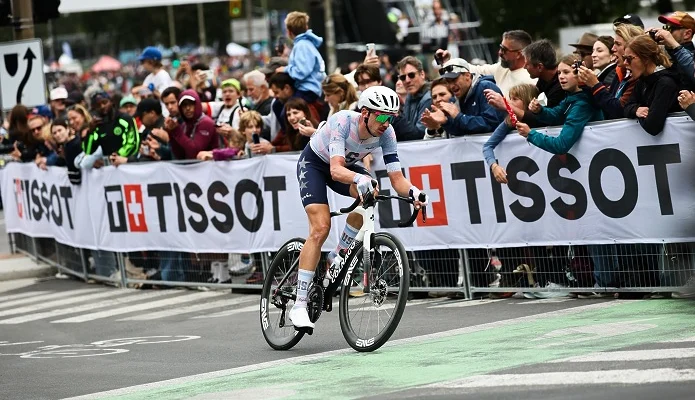
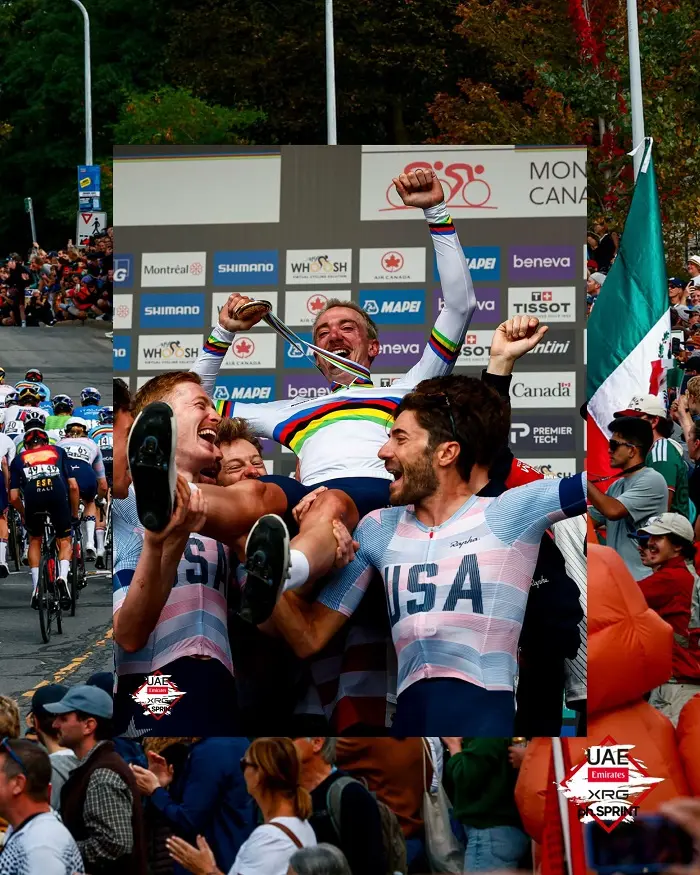
Brandon Mc Nulty pulled off a surprise victory by winning the 2026 world title on the challenging Montreal circuit. Not only did he become the first American to win in over 30 years, but he did so with a training approach that goes almost against the grain in today’s context, as if he had revived certain “old-school” methods: no high-altitude training camps and a focus on intensity rather than volume. In addition, he emphasized heat acclimatization (heat training), which is a more recent approach. Beyond his specific case—a prime example of top-level competition—his preparation between the Tour de France and the World Championships also offers valuable lessons for amateur cyclists.
Text: Olivier Dulaurent – Images: UCI, Facebook UAE Team Emirates
A Complete Reset After the Tour: 10 Days Off, Then a Gradual Return
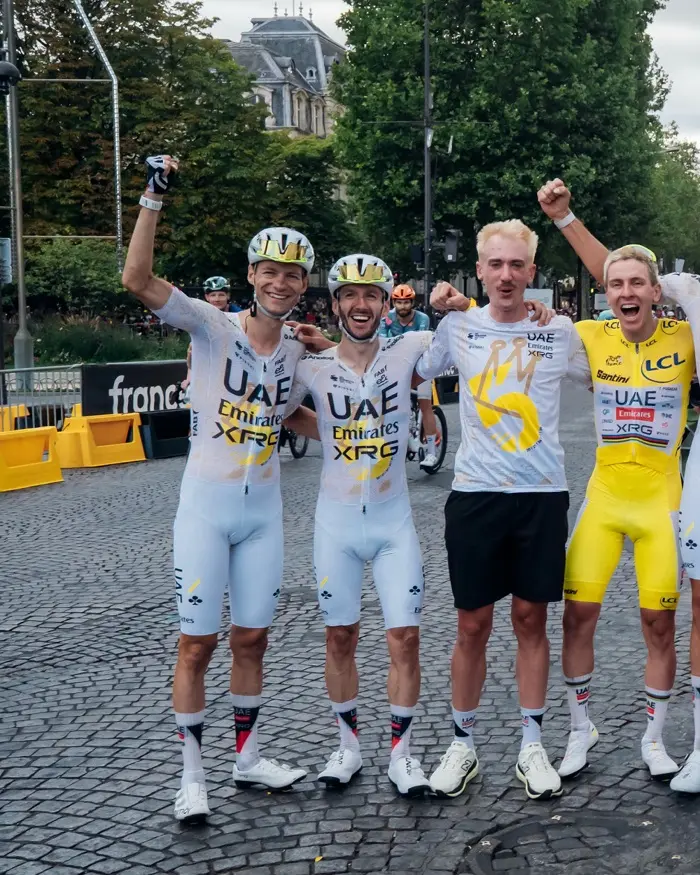
McNulty had abandoned the Tour de France on July 23, three days before the finish, but he was present on the Champs-Élysées in “civilian clothes” to celebrate Tadej Pogacar’s victory.
At that point, he had 66 days left to first recover and then prepare for the World Championships. In late July, he made his first decision: 10 days off the bike—a rare choice in the middle of the season—but one that allowed him to start fresh, both physically and mentally. He then went on to do five very easy rides, lasting 2 to 3 hours in Zones 1–2. No massive volume, no intensity—just hours in the saddle, though fewer than usual, to get his engine running again.
The first building blocks: strength, long-distance pace, and a gradual increase in workload
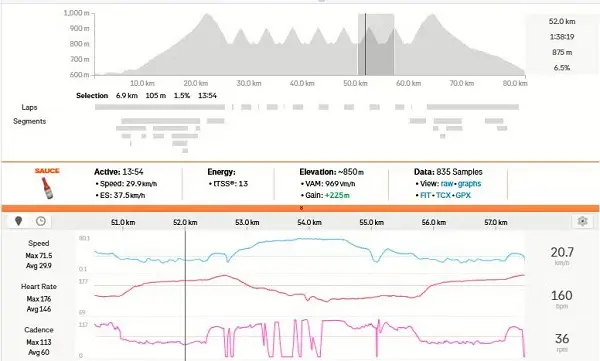
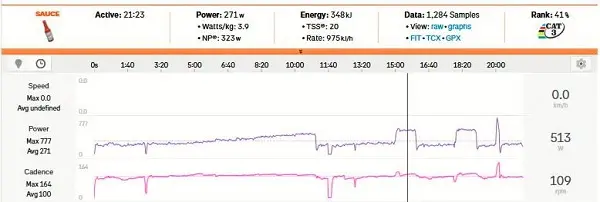
Starting with the first serious week, McNulty kicked things off with a UAE Team Emirates classic: 7 × 4 min of low cadence at 45 rpm in the upper part of Zone 4—that is, at the anaerobic threshold (approximately 450 W)—with a heart rate climbing to 170 bpm. These strength efforts at a low cadence are a cornerstone of his training.
The next day, he completes 3 × 30 min at a tempo pace (Zone 3) at 85–88% of his anaerobic threshold (~380–400 W). These are long, steady blocks designed to improve his ability to ride fast for extended periods.
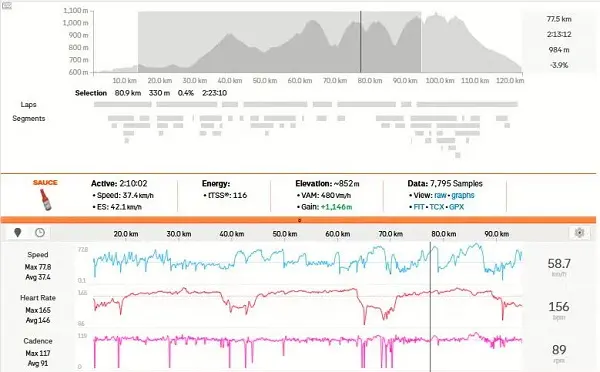
The following week, he increased the workload: longer tempo rides (3 × 35 min) and more challenging low-cadence intervals (8 × 4 min + 30-second sprints), but always with the same goal of controlled progression.
Heat as a Substitute for Altitude
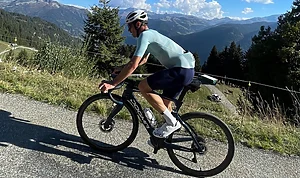
McNulty doesn’t do any altitude training. Instead, he relies on heat, spending time in Arizona in August, where temperatures regularly range between 35 and 40°C, even when he sets out to ride early (as early as 7 a.m.). In addition, he does 1-hour sessions on a home trainer immediately after a ride, with his heart rate “naturally” climbing from 130 to 170 bpm for a similar level of effort.
This repeated exposure to heat stress improves the ability to withstand intense effort under difficult conditions—a crucial advantage for long, explosive races. This type of training, known as “Heat Training,” was the subject of a previous article on 3bikes.fr.
Then the intensity increases: 30/30, over/under, VO2 max, and sprints
As the World Championships approach, Mc Nulty reduces tempo sessions and increases short, intense efforts.
Key sessions:
– 3 × 10 min of 30-30 intervals above 100% of the anaerobic threshold and at the start of Zone 5 (the PMA or VO2 max zone), i.e., around 470 W. Note that while Mc Nulty could potentially perform such a session at an even higher power level, within the context of a training program, not every session should involve riding at maximum effort. This obviously applies to all cyclists.
– 2 × 20 min of over/under: 1 min at VO2 max + 4 min just below the anaerobic threshold. This type of training is widely used at the professional level today and has been widely adopted by many coaches to adapt these sessions for amateur athletes. It involves alternating periods above (Over) the anaerobic threshold with periods below (Under) the anaerobic threshold.
– 6 × 4 min VO₂ max + 6 × 30 s sprints: a typical session for developing fatigue resistance. It leads to a state of significant exhaustion, but this is necessary to achieve the goal.
– A few 40-20 intervals at 700 W, meaning 40 seconds at 700 W followed by 20 seconds of recovery. Given the power output and the very short recovery time, this is an extreme workout designed to be the final piece of the puzzle just before reaching the goal, while also serving as a gauge of your current fitness level.
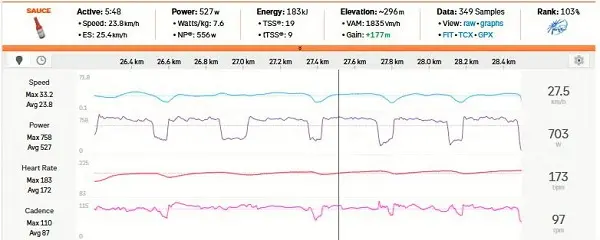
These sessions are designed to simulate the sudden changes in pace typical of WorldTour races in general and the World Championships in particular, and to accustom the body to producing high watts even at the end of a race.
The Home Stretch: Low Volume, Lots of Targeted Sessions
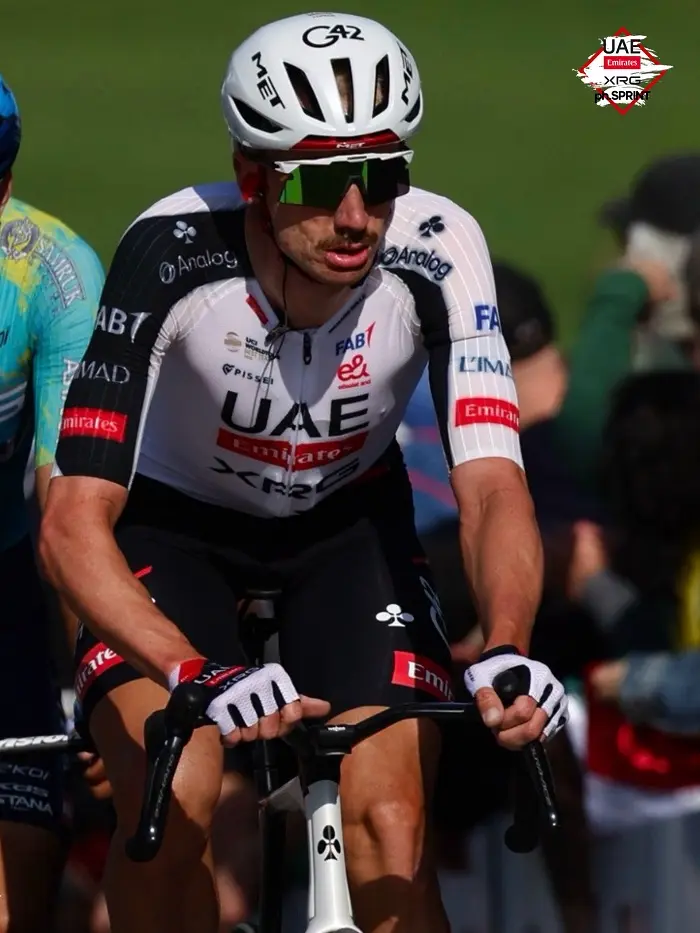
During the week of the time trial, Mc Nulty reduces his training volume to 13 hours, down from the usual 20. Then, before the road race, he does 4 × 4 min VO2 max + sprints, 3 × 2 min VO2, 2 × 3 min 40-20, and 10 min tempo. This is a fairly high training load so close to the race, but it’s perfectly suited to his profile because, over the course of his career, Mc Nulty has realized that he achieves his goals more successfully with a controlled level of fatigue rather than when he’s completely fresh. This is where the experience of a runner who knows himself comes into play; in consultation with his coaching staff, he can choose the final approach leading up to a priority goal.
What an amateur cyclist can actually apply
It’s clear that, given Brandon Mc Nulty’s level, many elements cannot be directly applied to an amateur cyclist. However, several points are extremely useful for improving physical fitness or preparing for a race.
1. Progression Above All Else
Indeed, it’s essential to increase gradually: the duration of intervals, the number of repetitions, or the intensity. This is the foundation of effective training, regardless of skill level.
2. Workouts That Work for Everyone
Here are McNulty’s workouts that can be adapted for recreational cyclists:
4 min at a low cadence of 45 rpm at 90–100% of the anaerobic threshold
3 × 20/30 min at tempo pace at 80–88% of the anaerobic threshold
30-30: 30 seconds at 105% of the anaerobic threshold – 30 seconds at 80%
40-20: 40 seconds at 120–130% of the anaerobic threshold – 20 seconds at an easy pace
Over/under: 1 min at 110% – 4 min at 95% or 2 min at 105% – 2 min at 90–95%
These formats are proven, effective, and can be easily incorporated into a weekly training schedule.
3. Specificity: the closer you get to your goal, the higher the intensity must be
McNulty had reduced his tempo runs and increased short, intense efforts. An amateur can do the same: three weeks before a race → more VO2 max training, more sprints, fewer tempo runs.
4. Heat as a tool (use with caution)
Riding in the heat or simulating it by layering clothing—indoors (on a home trainer) or outdoors (on the road)—can improve performance, but only if the following principles are followed: strict hydration, limited duration, and moderate intensity at the start.
An extreme method, but universal principles
McNulty didn’t do anything magical; he improved week after week, used simple but effective workouts, and focused on heat rather than altitude. This helped him build exceptional fitness through perfectly calibrated intensity.
For an amateur, the point isn’t to copy his wattage or training volume, but to draw inspiration from his training structure, his progression, and the specificity of his training.
Share the post "What Fans Can Learn from Brandon McNulty"