Share the post "Éric Ramos, the man who refuses to let his cycling career fade away"
There are men who love cycling for what it has become. And then there are those who continue to love it for what it risks losing. Éric Ramos probably belongs to both worlds. The world of today’s riders, budget constraints, agents, and a sport that has become considerably more professional. But also the world of post-Tour criteriums, backfiring derny bikes, Bordeaux-Paris, Daniel Mangeas on the microphone, and Bernard Thévenet, who can make even a mayor feel like a little girl again for a few minutes. For the past ten years, with the Crito’Star, Éric has been trying to bring these two eras together. Not out of nostalgia. But to pass on the legacy. Because behind the organizer lies a young man—the son of a Spanish refugee, a former cyclist, an entrepreneur at 18, and above all, a man who says he began organizing events to “give back” to cycling. This summer, when asked to close his eyes and hold onto a single image of the 2026 Crito’Star, he chooses neither a champion, nor a victory, nor even his own event. He sees a friend returning. And in the end, the whole of Éric Ramos was already there.
By Jeff Tatard – Photos: © Crito’Star / Éric Ramos / Cyrbas Photographie / Sophie Deliquaire Photographe / Sébastien Gallwa Photographe
Close your eyes, Éric
Let’s start this way. Not with a date. Not with the founding of the Crito’Star. Not with a list of past champions at Choisy-le-Roi. And certainly not with the number of laps completed behind a derny bike. Let’s simply ask Éric Ramos to close his eyes.
It’s a few weeks after the 2026 race. The event is over. The barriers have been taken down, the riders have left, the volunteers have cleaned up what was left to clean up, and Choisy-le-Roi has returned to its normal routine.
Just one image, Éric. The first one. He hardly has to think about it. Daniel Mangeas. Or rather: the return of Daniel Mangeas.
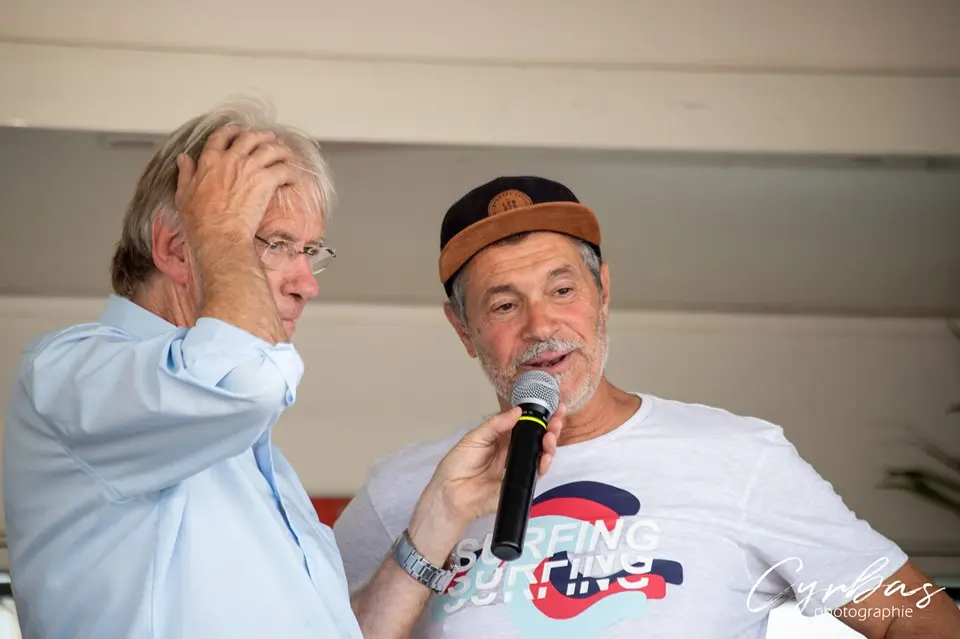
To understand why this image comes to mind before all the others, we have to go back several years. Éric met the man who would become one of the most recognizable voices in French cycling at a race they were both competing in. He then floated an idea: one day, he’d like Daniel to come and commentate on one of his races.
Mangeas replied that he was very busy, but made him a promise: once he retired, he’d come. The following year, he kept his word. He provided commentary for a VéloStar, one of the cyclosportives organized by Éric. The professional relationship gradually evolved into something else: a friendship.
When the Crito’Star was launched shortly after, having Daniel Mangeas on the microphone seemed almost inevitable. Then life forced a hiatus. Daniel had to step away. Steve Chainel was there, as was Gilles Busto. The race went on. But Daniel was missed.
So when Éric learns that Daniel will be able to return in 2026, it means far more than just an organizer’s satisfaction at regaining a prestigious voice. “We were truly very happy to see him again in good health.” ” That’s why Éric Ramos doesn’t see, at first, the show he’s created. He sees someone he loves coming back. And to understand the man, you probably had to start there.
Before the organizer, the son
Little Éric isn’t yet the man capable of rallying some thirty volunteers, champions, elected officials, and partners around him. He is first and foremost, in his own words, a “good student.” Not just in school. In life. “I’ve always done what I was asked to do.”
Above all, there is one figure who looms large over him: his father. The Ramos family is of Spanish origin. His father arrived in France at the age of eight as a Spanish refugee. He had to make a life for himself here. Work. Move forward. Find his place. Éric watched. And very early on, an idea took root: to try to do as well as his father.
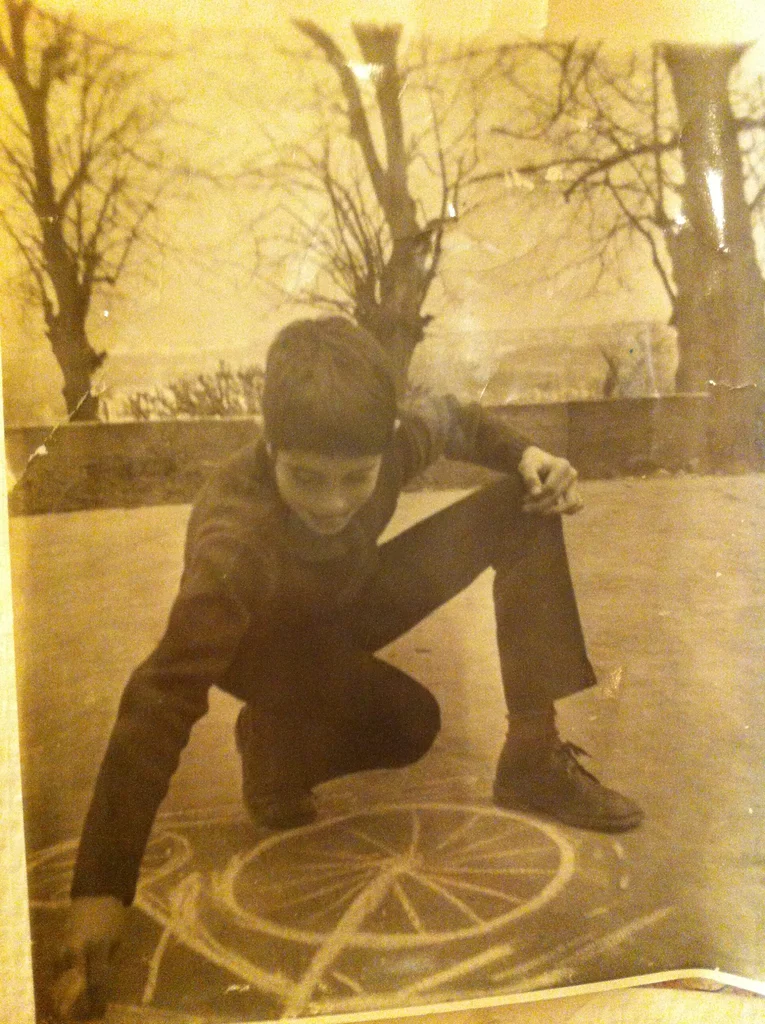
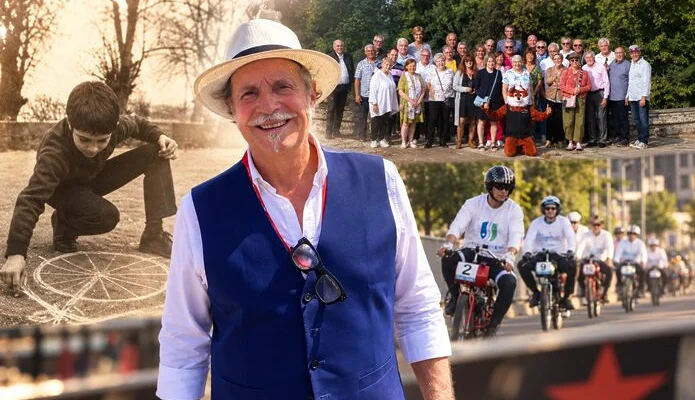
Éric draws a lot. For a while, he even imagined making it his career. So his path could have taken him in a different direction. But then cycling came along. He joined the Savigny Cycling Club, near his home—a club he still describes today as an excellent training ground. There he found friends, talented riders, but above all, men he didn’t yet realize he would keep in his life—sometimes for the rest of his life. “Cycling, I believe, is one of life’s greatest schools.” For Éric Ramos, this school would soon give rise to another passion: the desire to build.
Entrepreneur at 18
At 18, when many are just beginning to imagine their professional lives, Éric started his own business. The project was bold: opening bike shops in shopping malls in the Paris region. The brand was called VéloStar. The venture would last nearly twenty years.
When one professional chapter came to an end, another idea emerged. Éric had been racing. He’d participated in others’ events, benefiting from their organization, their volunteers, the start lines set up before his arrival, and the finish lines taken down after his departure.
Then a simple phrase came to mind. And it would ultimately sum up almost everything else: “I told myself I was going to try to return the favor.” To organize, in turn.
Returning the favor
Perhaps that, at its core, is the story of Éric Ramos: receiving something from cycling, then looking for a way to give it back.
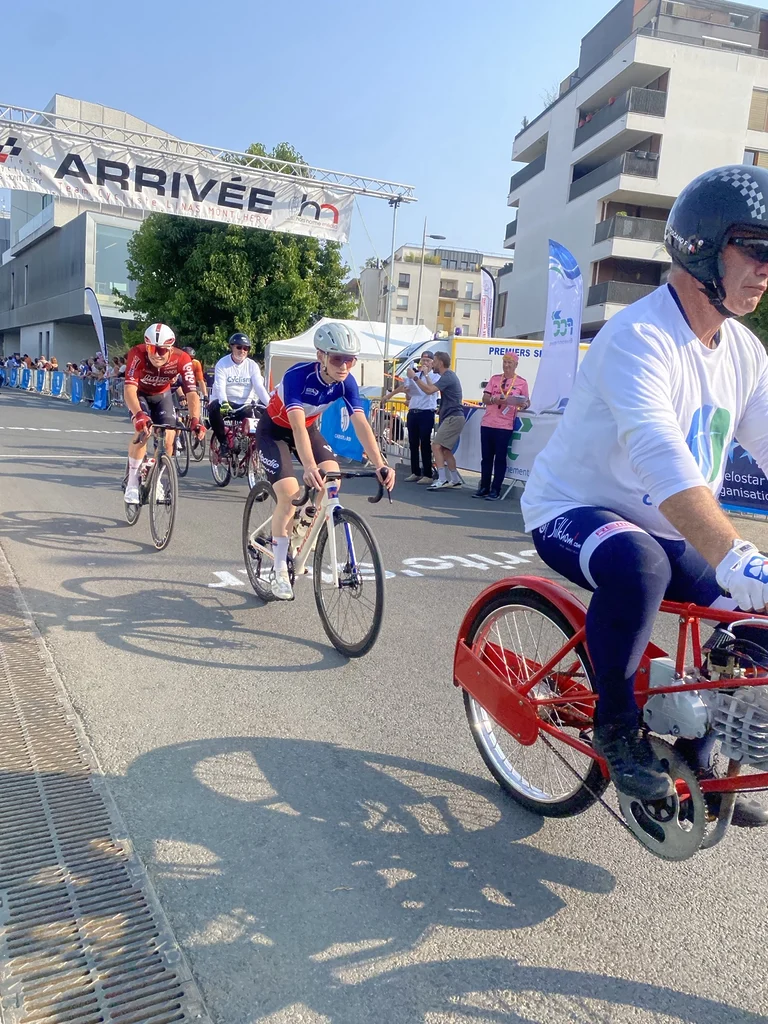
Éric started out organizing cyclosportives. Then Francis Cantournet, president of Critériums de France, suggested he consider organizing a criterium in the Paris region. Samuel Dumoulin then gave him a decisive idea: if he was going to create a criterium, he might as well give it something that others didn’t have. Derny bikes.
The format exists in Belgium and the Netherlands. Much less so in France. Éric was immediately hooked. Marc Pacheco opened the door to this world for him. Next, they needed a city. Longjumeau stood out. Éric knew the town and had already worked there on a Tour de France stage start in 2010. The first criterium took place in 2016, followed by a second in 2017. The heart of the city, the riders, the noise, the speed, the derny bikes: the concept works.
Since 2018, the Crito’Star has been based in Choisy-le-Roi. And what began with just three men has turned into a quirky family.
There were three of them
Today, depending on the event, there are about thirty of them. Sometimes thirty-five. The number matters less than what it represents. Many are people Éric met when he was racing. Others joined later. Éric uses a simple phrase: “It’s my second family.”
Within this family, some hold a special place. Notably, there’s Fanfan, his right-hand woman and devoted secretary. The entire administrative side of the organization relies heavily on her: files, paperwork, communications—that vast amount of behind-the-scenes work without which no race could truly exist. An event is visible on D-Day. It’s built up over months behind the scenes.
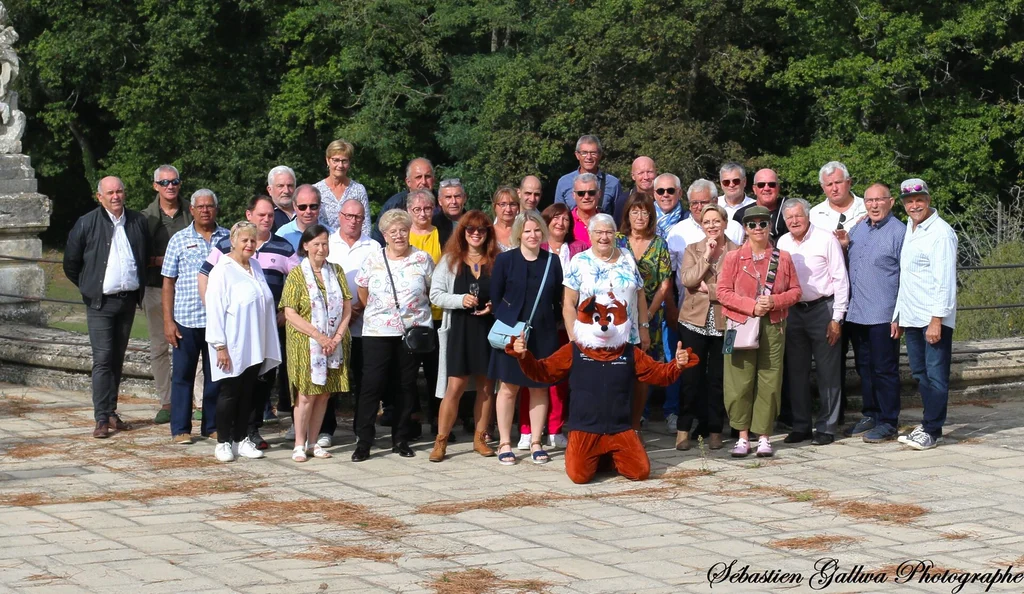
He regularly asks them the same question: “The day you think it’s time to stop, just let me know.” So far, no one has asked him that. So they keep going.
And when Éric explains what still drives him, he often talks about their joy in meeting the champions—their smiles—and that handshake with Bernard Hinault, Bernard Thévenet, or a rider he’s admired for years. The organizer’s joy comes from the joy he manages to bring to others.
“When I was a kid, I was a fan of Bernard Thévenet”
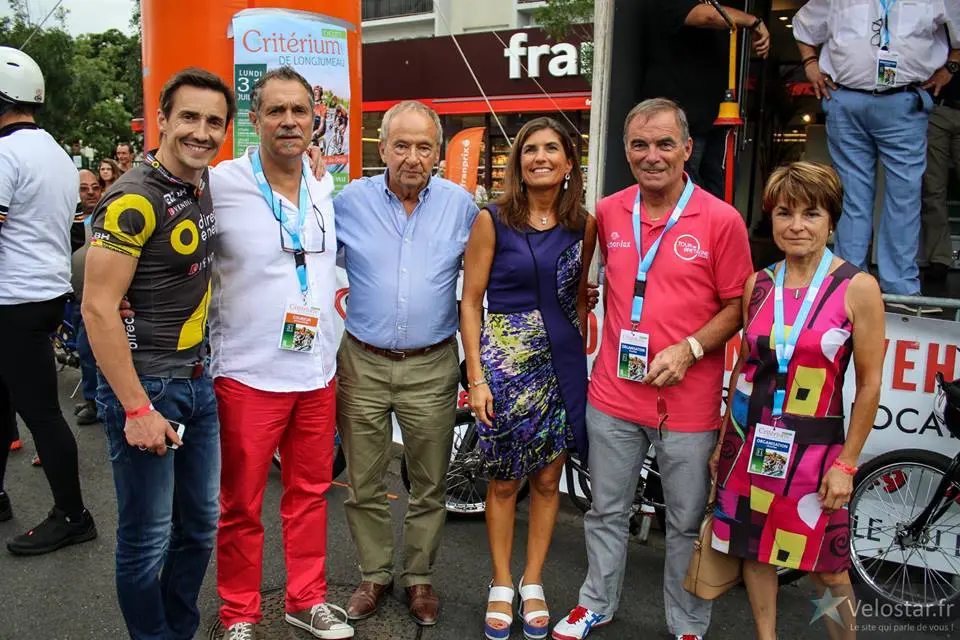
One day in Longjumeau, Sandrine Gelot confided something to him. As a child, she had adored Bernard Thévenet. She told him that if he could get him to come, she’d probably be the happiest woman alive. Éric made it happen.
Decades after her childhood, Bernard Thévenet was there. Éric remembers that encounter not because a two-time Tour de France winner was on his poster, but because he’d managed to make someone happy. “You organize events to make people happy.”
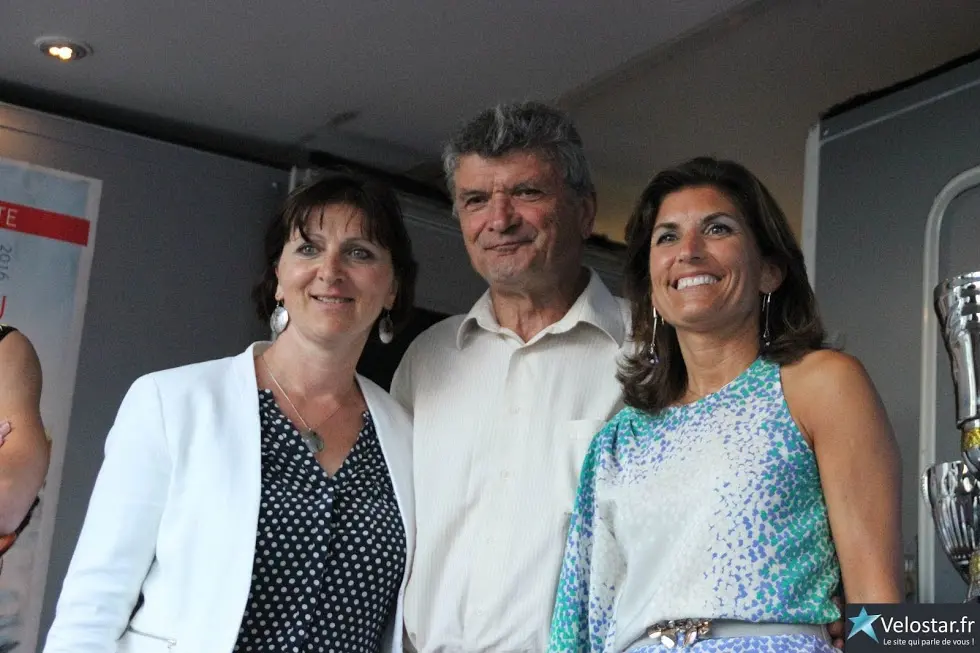
Champions then become more than just names. They become bridges—between generations, between the past and the present.
A Champion at Child’s Eye Level
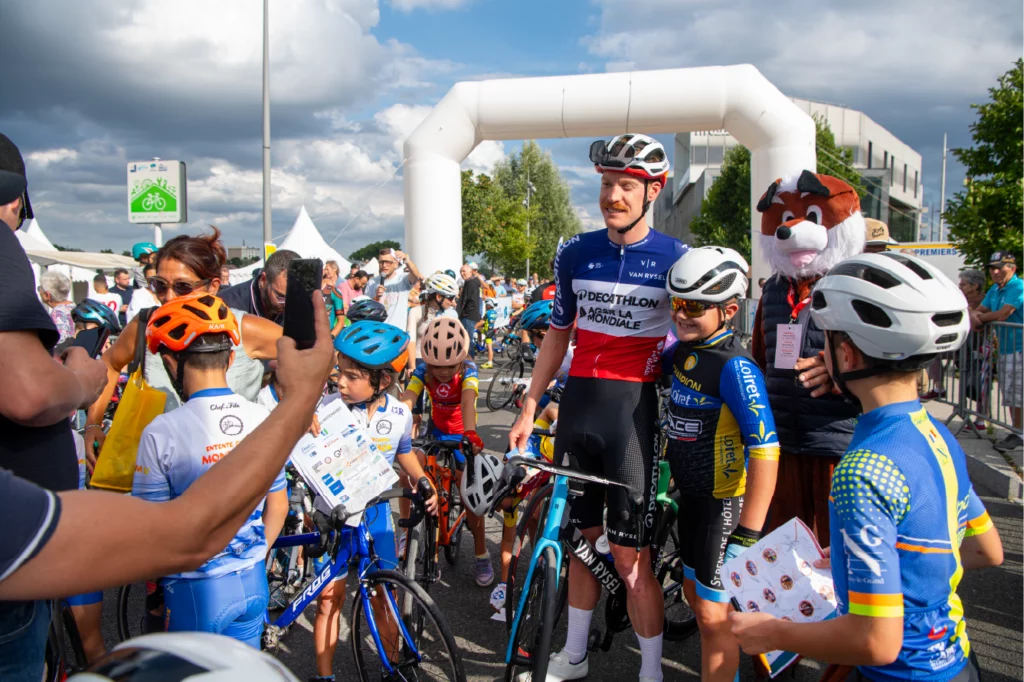
This past summer, once again, about fifty children participated alongside the professionals. The idea is deliberate: to offer a young club member something they rarely get elsewhere—the chance to simply get up close to the people they usually watch on TV. Here, the distance disappears.

Éric also remembers Jimmy Turgis’s little girl, still tiny, on her balance bike. A ride alongside a pro. An almost insignificant moment in an entire day. But he’d seen her eyes. Something had happened. A spark, perhaps.
Decades after being that kid captivated by cycling himself, Éric is now creating these memories for other people’s children. Paying it forward. Again.
The Crito’Star Paradox
Yet there is one source of frustration for Éric: the audience. Or more precisely, the one that isn’t there.
He’s tried events, big names, former champions, kids, derny bikes—even bringing in a few vehicles from the Tour de France’s promotional caravan. Some residents didn’t even come down. “We don’t have enough of an audience.”
Yet Éric knows places where a race is more than just an event. Guadeloupe. Réunion. The Breton criteriums. These are places where the passage of a peloton is the event of the day.
There, people don’t just come to watch a race. They come to reconnect with something that belongs to them.
The Crito’Star may never have reached that level of popularity. Éric doesn’t pretend otherwise. Yet he keeps going. For those who come. For the children. For the volunteers. For the connections.
Davide
Among all those who have participated in his events, one name stands out: Davide Rebellin.
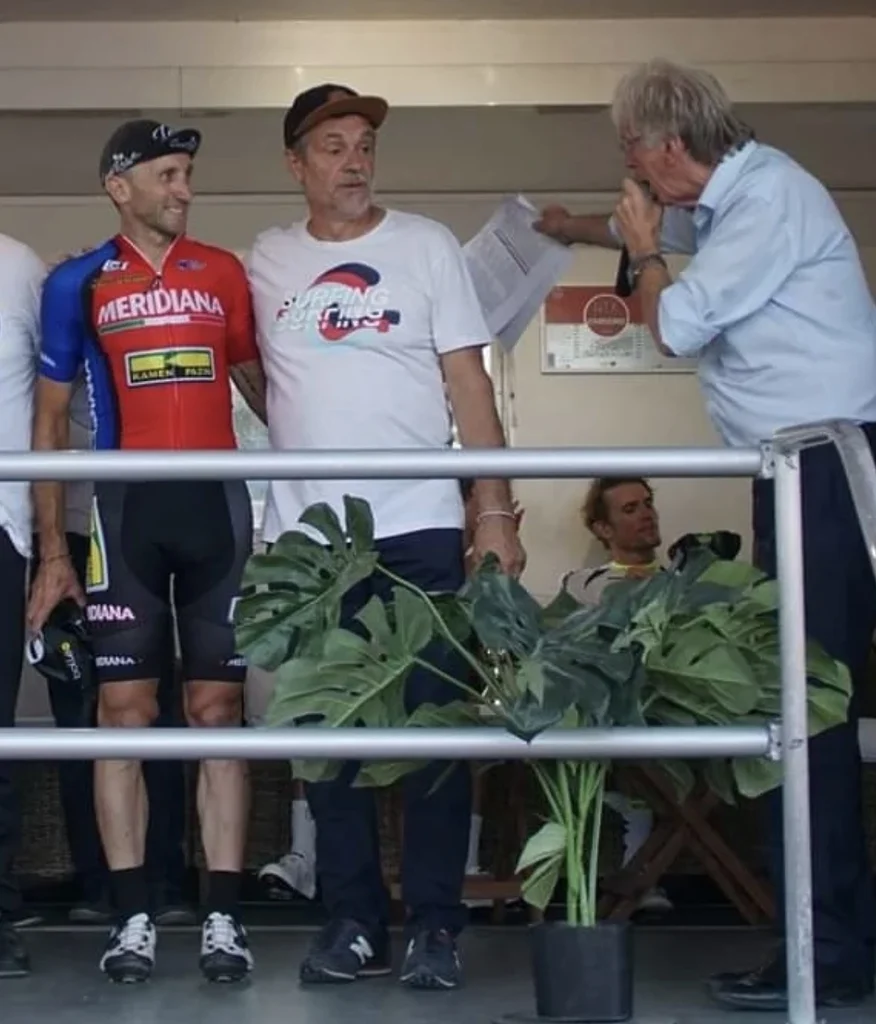
Éric had invited him back as far back as the Longjumeau years. Rebellin was getting older, and some organizers were already showing less interest in him. Éric, however, knew the name well. Rebellin came. Then he came back. Again.
Beyond his list of victories, Éric discovered above all a man whose kindness left a deep impression on him. But he also observed the rider. “He was the one who stuck his front wheel right to the derny.”
A mastery of the bike, a closeness to the machine, and above all, what Éric still calls today a majestic pedal stroke.
When Davide Rebellin passed away suddenly in November 2022, it wasn’t just a cycling legend who was gone. It was someone who used to come to their home.
The following year, the Crito’Star paid tribute to him. His partner, Françoise, was there. And when Éric had to choose the rider who had impressed him the most, he chose Davide. For his pedaling style. And for his kindness.
“On a personal level, nothing”
What do you have to sacrifice to build all this? Éric answers almost immediately: “On a personal level, nothing. It’s nothing but pleasure.” It’s a beautiful answer. And a few minutes later, it becomes more painful.
Because while Éric doesn’t feel like he’s sacrificed anything for the Crito’Star, time has begun to take its toll. Marlène Dujacquier, who handled their cyclosportive registrations, among other things, has left. Then Lionel Sanciaux.
This time, Éric’s tone changes. Lionel wasn’t just a volunteer. They’d started cycling together when they were fifteen. “He never left me. I never left him.” Lionel died of pancreatic cancer in August 2026. And suddenly, everything that this “second family” means becomes much more real.
84 years old and fifty laps to go
Among those who remain is Jean-Paul. 84 years old. Éric is eager to talk about him. Once again this year, Jean-Paul kept track of the laps throughout the criterium. Fifty laps, one after another, at 84 years old.
There are more spectacular images in cycling. A pro racing behind a derny will always make for a better photo.
But if we’re looking for what truly keeps these events alive, perhaps we need to look elsewhere.
Toward this 84-year-old man who counts fifty laps simply because he decided that his place, that afternoon, was right there.
Jean-Paul, Fanfan, and the others remind us of one essential thing: Éric Ramos is the face of the Crito’Star. But the Crito’Star isn’t just Éric Ramos.
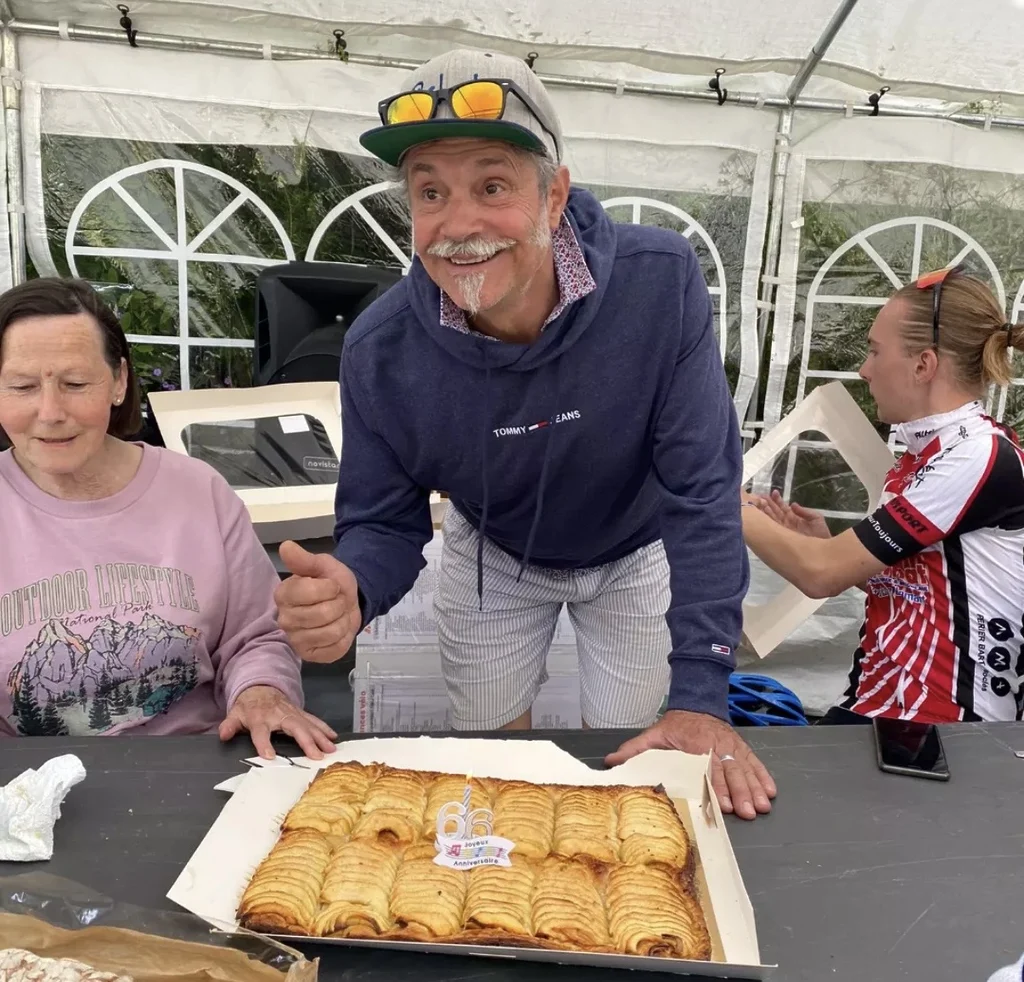
In the evening, Éric is often one of the last to leave. But he’s never completely alone. “I always have three or four people around me.” They pack up. They tidy up. They close up shop. Then they’ll start all over again.
The Bottom Line
Because passion alone isn’t enough. A criterium costs money—a lot of it. Budgets are tightening. Sponsors need to be convinced, as do local governments. And professional cycling has changed.
In the past, post-Tour criteriums really improved the riders’ day-to-day financial situation. Today, fortunately, salaries have gone up. Agents have emerged. So have fees. Éric can’t just buy any name. So he relies on what no Excel spreadsheet can measure: personal connections.
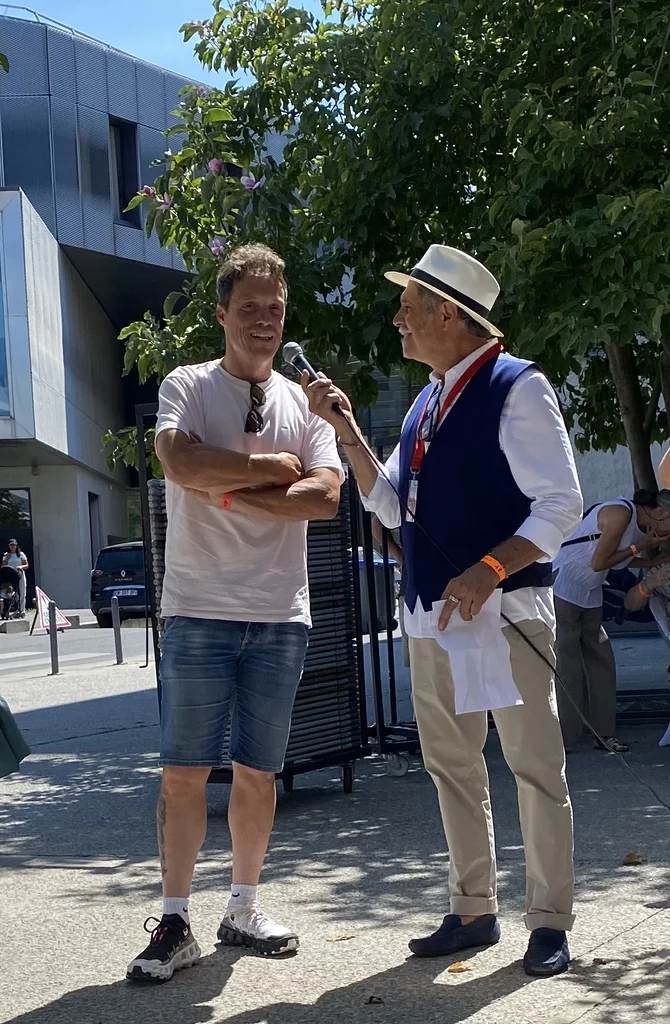
The years spent in cycling, the connections made, the trust built—and sometimes the friendships formed—explain why certain champions come. And why they keep coming back.
Old-School Cycling
Then Éric utters a phrase that sheds light on almost everything. “I’m passionate about old-school cycling.” Not the kind you find in a museum. Not a sport stuck in the past. Old-school cycling.
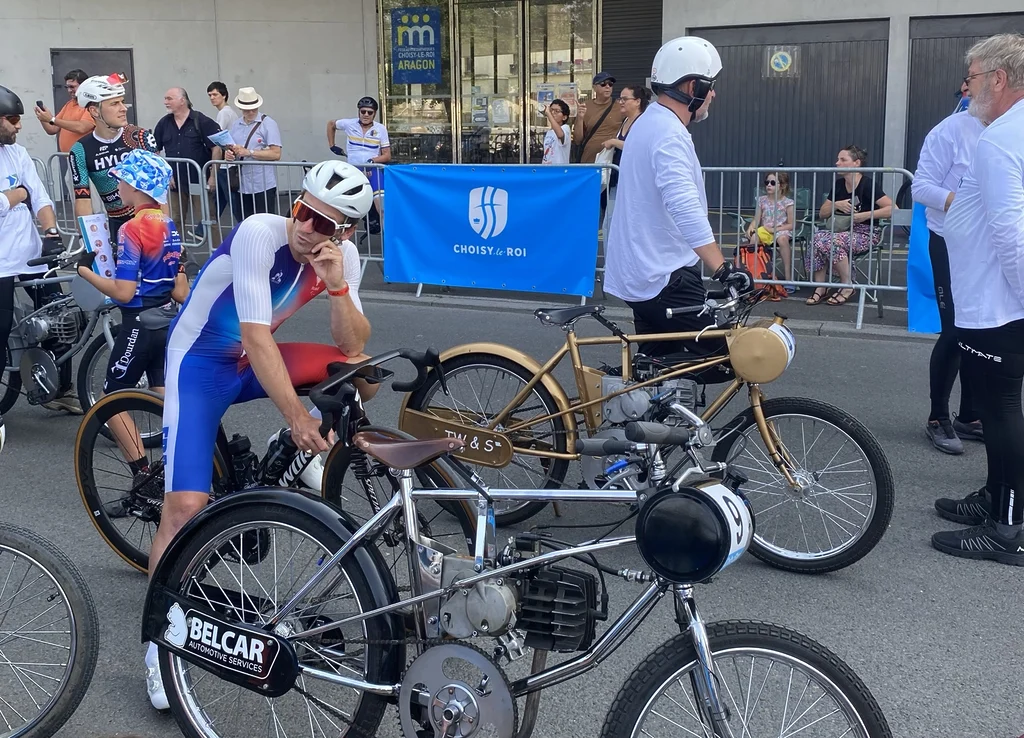
The kind where champions are close enough to be approached. The kind of post-Tour criteriums. The kind where Daniel Mangeas calls the race over the microphone. The kind where a derny bike smokes, makes noise, and sometimes breaks down. “It smokes, it breaks down… it’s still something.”
Imperfection is almost part of the show. Sylvain Chavanel himself describes it as something that “goes haywire in every direction.” Éric isn’t fighting against modern cycling. He simply wants to preserve a little of this magnificent chaos. Then he utters two words: Bordeaux-Paris.
The dream that eludes him
Bordeaux-Paris belongs almost to another era. An immense distance. A legendary race. And the famous derny bikes. Éric wanted to bring it back to life. To organize it.
The project, scheduled for October 2024, required two years of work. Nearly 600 kilometers to organize, secure, and mark. The paperwork with the Federation, the League, and the UCI. Then the race didn’t earn the points he’d hoped for.
Without them, not enough professional teams will show up. With just one month to go before the start, it had to be canceled. Two years of work—wiped out in a matter of days. Éric could have seen this as the end. But he’s already figuring out how to start over.
Pierre Rolland and the idea that never died
Pierre Rolland recently rode the Bordeaux-Paris route in a different form. When he talks about the historic version, one element immediately comes to mind: the derny bikes.

Éric and Pierre have discussed it. How can it be done? Incorporate professional riders into an existing race? Come up with something else? The answer doesn’t exist yet. But the idea itself has never died.
Can a race outlive its organizer?
Then comes the simplest question. What happens after you’re gone? Éric’s answer sounds almost like a joke: “That he’s found a successor.” Who will call the riders? Who will secure the funding? Who will negotiate with the cities? Who will bring thirty people together? Who will stay when everyone else has left? Who will start over?
Éric isn’t even looking for someone like himself. “I hope it’s someone who’s even more capable than I am.” That’s perhaps the healthiest definition of a legacy: not wanting to be irreplaceable. Wanting to have built something solid enough to be replaced.
The Final Lap
Let’s return to our first image. Choisy-le-Roi. July 2026. The derny bikes are circling. The children are watching. The volunteers are working. Daniel Mangeas has returned.
Éric closes his eyes. This is the image he holds onto. I think I understand why. The Crito’Star was never really about dernys. Nor was it about champions. It’s a story of connections. Of people who come. Of people who return. And of those who, sadly, will one day never return. Marlène. Lionel. Davide.
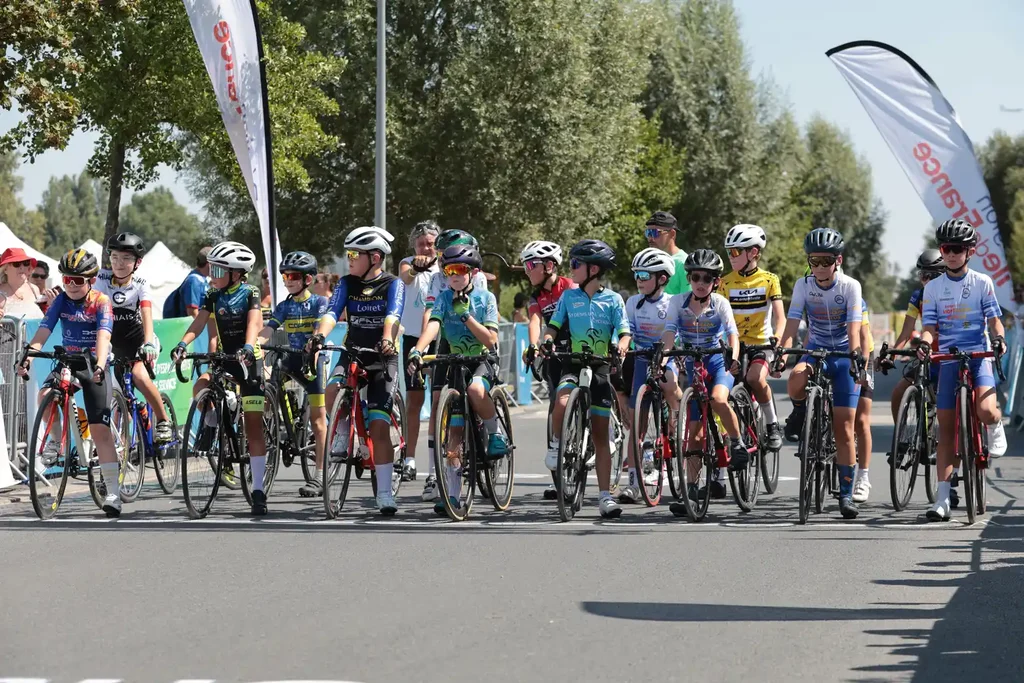
Time marches on. Champions grow older. Children become adults. Volunteers gain a few more years. And in the midst of it all, Éric carries on.
Perhaps because his father taught him how to build things. Perhaps because the Savigny Cycling Club taught him life lessons. Perhaps because, even at 18, waiting for others to do things for him just wasn’t his style.
Or maybe simply because one day he’d found the right words: “pay it forward.”
So he gives back. Time. Memories. Encounters. A microphone for Daniel Mangeas. A tribute to Davide Rebellin. A reason for Jean-Paul to complete fifty laps at age 84. A place for Fanfan and this second family. A few meters on a bike for a child. And perhaps, one day, Bordeaux-Paris.
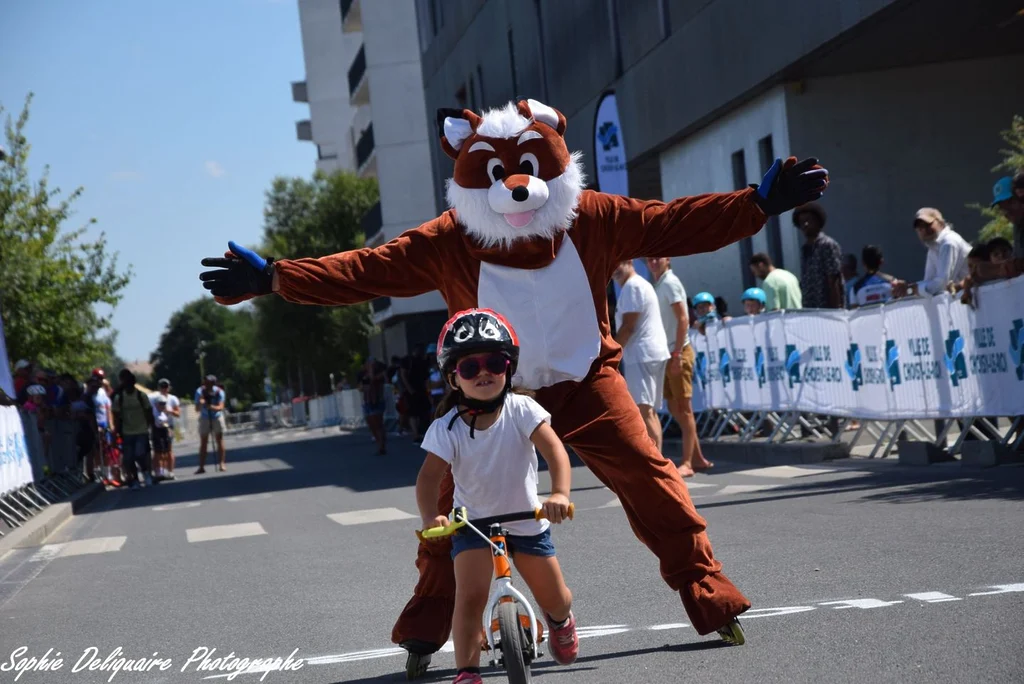
In twenty years, if a child stumbles upon an old photo of the Crito’Star and asks who that man in the middle was, we could tell them that Éric Ramos was an organizer. That would be true. But terribly incomplete.
We’ll have to explain that he belonged to that rarer breed of enthusiasts who aren’t content just to love something. They take care of it. They protect it. They pass it on. Even if it smokes. Even if it sometimes breaks down. Even if not everyone comes out of their homes to watch. Because deep down, Éric Ramos never organized events just to fill the sidewalks. He organizes them so that something continues to move along them.
=> Criterium Le Crito’Star 2026 Edition
=> And here, if you’d like to explore all our other profiles: All Our “Portraits” Articles
Share the post "Éric Ramos, the man who refuses to let his cycling career fade away"