Share the post "Garmin Stamina: Does It Really Know How Much You Have Left?"
You’ve been riding for three hours. Your legs are starting to feel a little heavier, the climbs seem a bit longer, and your Garmin still shows 37% Stamina. Does that mean you have exactly 37% of your energy left? Of course not. Yet behind this little gauge lies a tool that’s much more interesting than it seems. Provided you understand what it actually measures, what it estimates… and, above all, what it can never know for you.
By Jeff Tatard – Photos: DR
A gas gauge… without an actual tank
Garmin’s idea is appealing: to estimate in real time how much capacity you have left to perform at a high level. The reading changes from 100% to 0% during your ride and depends largely on your level of effort. The harder you push, the faster it can drop. Slow down, and it may, under certain circumstances, recover partially.
But watch out for the first pitfall: Stamina doesn’t directly measure your body’s energy reserves. No Garmin sensor monitors how much glycogen remains in your muscles or has a tiny camera trained on your mitochondria. It’s an algorithmic estimate, based on your physiological data and training history.
In particular, Garmin takes into account your estimated fitness level, your recent and past activities, their durations, the distances covered, your training load, and your personal tolerance for aerobic and anaerobic exertion. In cycling, the accuracy of the estimate also benefits from a consistent history of power data. The more Garmin knows about you, the more data its model has to work with to understand you.
Stamina and Potential Stamina: The Key Difference
This is probably where the feature really gets interesting. Garmin actually displays two different reserves: Stamina and Potential Stamina.
The first represents your available capacity given the intensity at which you’re currently riding. Push hard, attack a climb above your FTP, or make frequent changes in pace, and it can drop quickly. Then return to a reasonable pace, and it can gradually rise again.
Potential Stamina, on the other hand, represents more of your long-term limit. It takes into account more sustained factors associated with general fatigue, among which Garmin specifically cites glycogen depletion, central nervous system fatigue, and muscle damage. It therefore gradually decreases during a prolonged effort and doesn’t rebound simply because you stopped pedaling for thirty seconds on a descent. An analogy helps illustrate this: Stamina represents what you can expend right now; Potential Stamina represents what remains in your total “budget.”
Why does a sprint cause the gauge to drop?
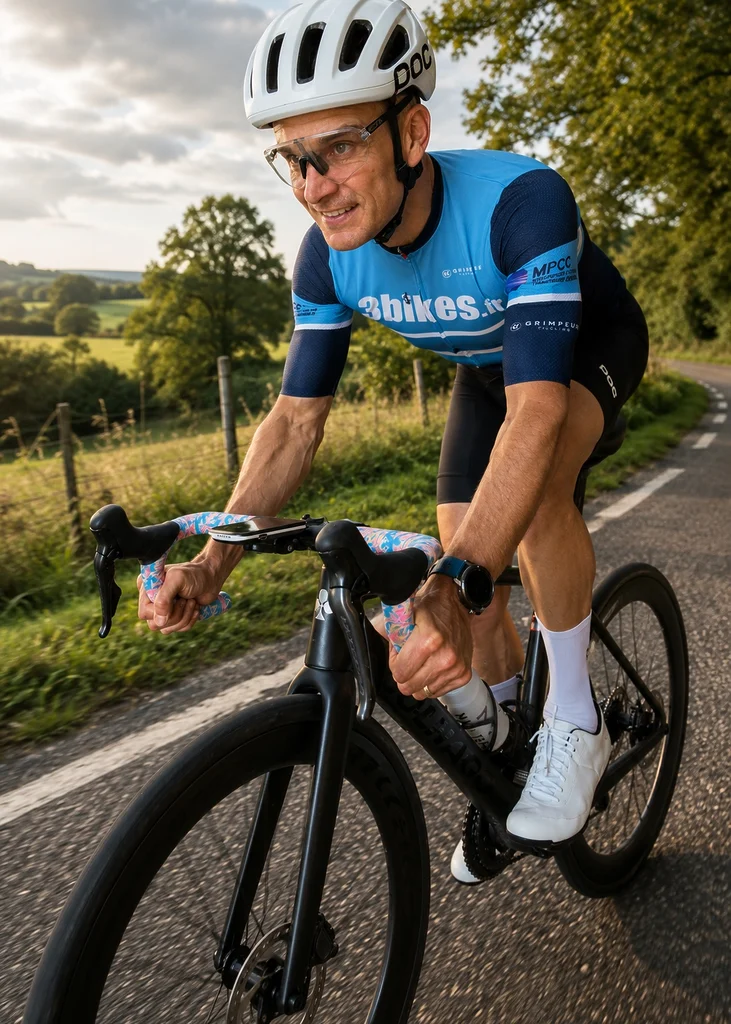
That’s exactly where the tool becomes educational. On a steady, moderate-intensity ride, Stamina and Potential tend to stay relatively close. But go well above your FTP, and Stamina can drop off much more quickly.
Your Garmin doesn’t necessarily tell you, “You’re done.” Instead, it indicates that the current intensity isn’t sustainable for very long.
Ease up on the effort, and some of that capacity may return. That’s why monitoring Stamina after a surge, a long climb, or a few particularly intense intervals can be instructive: you immediately see the approximate physiological cost of a change in pace.
Can you really trust it?
Yes… but certainly not blindly. Garmin itself explains that the accuracy of Stamina depends on the quality of the available data. An incorrect maximum heart rate can affect several physiological estimates that are calculated in sequence. In cycling, Garmin recommends—for the best results—that you regularly log rides with a power meter over several weeks, varying the duration and intensity.
And then there’s the fact that an algorithm doesn’t experience your day. Heat, hydration, nutrition, sleep, stress, digestive issues, or unusual fatigue can all alter what you’re actually capable of. A meter showing 40% is therefore never a scientific green light to attack, just as a 5% reading doesn’t necessarily mean you’ll have to get off the bike in 800 meters. Your body retains the final say.
Where Stamina Really Comes Into Its Own
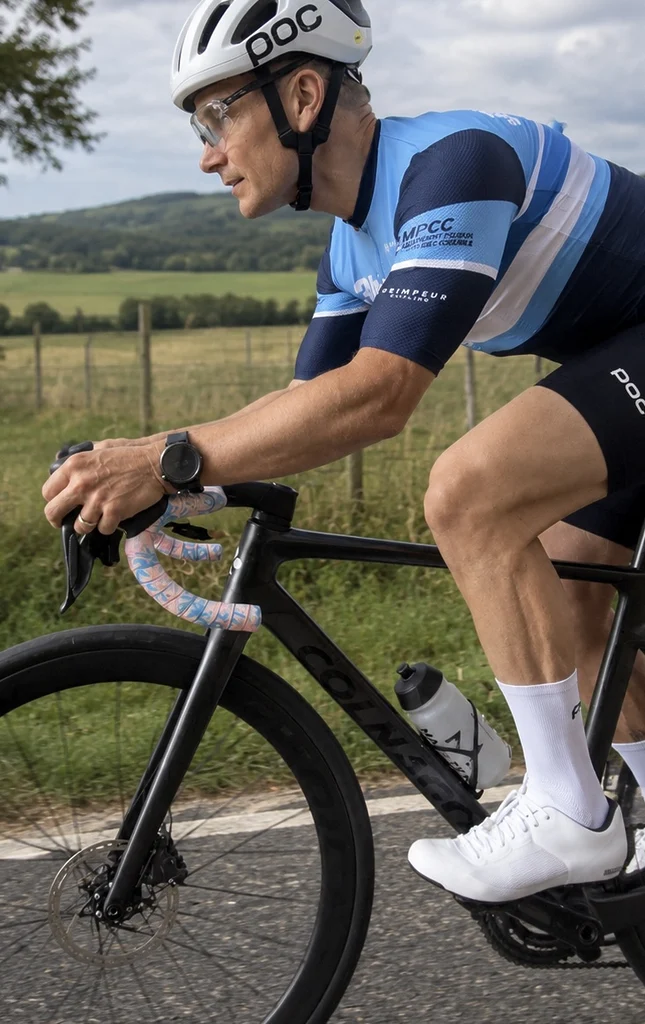
On a long ride, a cyclosportive, or a gravel race, the point may not ultimately be to know the exact number, but to observe the trend. You’ve been riding for forty minutes and your Stamina is already plummeting? Maybe you’re simply paying too high a price for your initial enthusiasm.
Conversely, entering the final hour with a relatively high potential Stamina reading may suggest that you’ve managed your effort conservatively and that there may still be room to gradually increase the intensity. That’s probably how you should use this feature: as an advisor, never as a sports director. Because your Garmin will never know exactly how much is left in your legs. But after tracking you for enough kilometers, it can become good enough to show you what you’re asking of them. And in the end, that might be much more useful.
Share the post "Garmin Stamina: Does It Really Know How Much You Have Left?"