Share the post "Tour de France: does recovery start on the plate?"
After discovering who Nina Voit is, understanding why the gut often constitutes the weakest link in performance, and then exploring what truly distinguishes an energy gel from a banana or a rice cake, this fourth and final installment naturally concludes our series dedicated to the invisible body of the Tour de France. Because once the finish line is crossed, another stage begins. Invisible, silent, but perhaps even more decisive: the one where the body tries to repair, rebuild, and prepare for the next day’s effort. What if true performance ultimately depended much more on recovery than on the race itself?
By Jeff Tatard – Photos: © Du Bon Sens dans Mon Assiette
When the stage ends, the real work begins
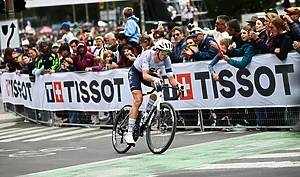
For a few minutes, everything seems to stop. Riders catch their breath, answer initial interviews, head to their bus, and begin to find some calm after several hours of effort. For spectators, the story is over. Yet, for the body, it’s just beginning.
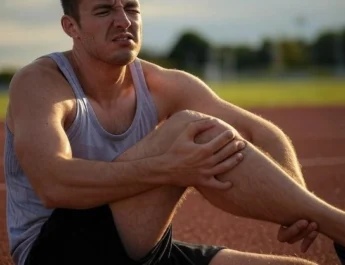
Under a jersey still soaked with sweat, the body immediately enters a new phase. Muscles have largely depleted their glycogen reserves, thousands of muscle fibers show tiny lesions caused by repeated contractions, several liters of water have sometimes been lost, and the digestive system, already heavily stressed during the stage, must also return to normal functioning. Nothing is repaired yet. Everything remains to be rebuilt.
This is precisely what makes recovery so fascinating. Contrary to a widespread belief, it’s not simply about making fatigue disappear. Its true objective is to allow the body to regain the balance essential to start again the next day with an organism capable of producing a new effort. In a one-day classic, imperfect recovery can sometimes go unnoticed. Over the three weeks of the Tour de France, it almost always takes its toll.

Proteins alone don’t build champions
When it comes to recovery, proteins often steal the spotlight. The shelves of specialized stores overflow with powders, drinks, or bars promising faster muscle reconstruction, as if they alone held the secret to performance. However, the physiological reality is much more nuanced. Proteins obviously play an essential role, but they are only one link in a much larger chain.
After a stage of the Tour de France, muscle fibers have undergone thousands of contractions that caused tiny lesions. Nothing abnormal: this phenomenon is precisely what will then allow the muscle to adapt. To initiate this repair, the body needs amino acids, the building blocks supplied by dietary proteins. But these can only accomplish their mission if the rest of the environment is favorable.
Without enough energy, the body will use some of these proteins as fuel rather than as building material. Without proper hydration, cellular exchanges will be less efficient. Without quality sleep, a large part of the hormonal mechanisms involved in muscle repair will operate at a slower pace.
For Nina Voit, this global vision is fundamental. “Proteins are important, but they never work alone. The body doesn’t think in isolated nutrients. It functions as a whole where each element influences the others.”
This remark perfectly summarizes the limitations of an approach that would seek a miracle food. No shaker, however complete, will ever replace an organism given time to recover under good conditions.

Rehydrating isn’t just about drinking
When a rider crosses the finish line in the middle of July, their first reflex is often to grab a water bottle. The gesture seems obvious. Yet, behind this simple sip of water lies a process much more complex than one might imagine.
During several hours of effort, the body has lost not only water but also electrolytes such as sodium, potassium, and magnesium. These minerals play an essential role in muscle contraction, nerve impulse transmission, and maintaining fluid balance between cells. Therefore, drinking only water is not always enough to return to an optimal state.
The speed of rehydration also depends on many factors: external temperature, intensity of the stage, each rider’s perspiration level, and the quality of the food accompanying the drinks.
Here again, Nina Voit advises against automatic responses. “The best indicator often remains the body itself. The sensation of thirst, the color of urine, unusual fatigue, or headaches are all signals that one must learn to listen to rather than systematically following an imposed quantity.”
This approach may seem surprising in an era where everything seems to have to be calculated to the nearest milliliter. Yet, it reminds us of an obvious truth: two organisms never react in exactly the same way.
The gut also needs to recover
In the second part of this series, we discovered how the gut could become the weakest link in performance when heat, effort intensity, and blood flow redistribution disrupt its functioning. But this story doesn’t end at the finish line.
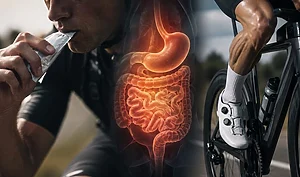
Once the effort is over, the digestive system must also gradually regain its balance. Blood circulation slowly returns to normal, intestinal cells continue to renew themselves, and the microbiota, this immense ecosystem composed of billions of microorganisms, gradually finds more favorable conditions.

This digestive recovery is often underestimated. Yet, a gut that remains irritated or disturbed will assimilate the nutrients necessary for the body’s reconstruction less efficiently. In other words, recovering is not just about repairing muscles. It also means allowing the digestive system to become fully functional again.
This is why Nina Voit always favors a varied diet, rich in minimally processed foods when the context allows. Fruits, vegetables, whole grains, legumes, and naturally fermented foods each contribute, in their own way, to nourishing the microbiota and gradually restoring a favorable digestive environment.
This vision aligns with a principle that runs through this entire series: performance never depends on an isolated organ. It arises from the body’s ability to function in harmony.
This is probably one of the best passages in the article: the last sentence entirely in bold gives it a lot of strength and perfectly echoes the three previous parts.
Sleep remains the most powerful recovery tool
Yet, there is a recovery tool that we sometimes forget because it is not sold, not packaged in a sachet, and promises no spectacular effects. This tool, everyone already possesses it.
Sleep. It is during the night that the body orchestrates much of its reconstruction work. Damaged tissues continue to repair, certain hormones essential for recovery are secreted in greater quantities, the immune system remains particularly active, and the brain consolidates learning acquired during the day.
Nutrition prepares this recovery. Sleep truly allows it to be accomplished. For Tour de France riders, this dimension has become an absolute priority. Professional teams now pay considerable attention to the quality of rest, whether it’s limiting unnecessary travel, managing schedules, or creating an environment conducive to sleep.
For Nina Voit, this hierarchy deserves to be reiterated. “Many people look for the perfect dietary supplement when they still neglect one of the most powerful recovery factors: getting enough sleep.“
A remark full of common sense, but one that perfectly summarizes the current evolution of scientific knowledge. The more researchers explore the mechanisms of recovery, the more they find that the fundamentals often remain the most effective.

The biggest mistake is wanting to recover faster than your body
By constantly seeking to optimize every detail, it is sometimes tempting to view recovery as a new performance. Some multiply dietary supplements, specialized drinks, complex protocols, or cutting-edge gadgets in the hope of gaining a few hours. This permanent quest for optimization is understandable, especially in a world where every detail can seem decisive.
However, Nina Voit invites us to take a step back. “The body already possesses extraordinary repair mechanisms. Our role is not to replace them, but to provide them with the best conditions to function.”
This sentence ultimately summarizes her entire philosophy. Recovery is not about forcing the body to go faster. It’s about providing it with what it needs, at the right time, and then giving it time to do its work.
This idea seems almost too simple in a world where performance is often associated with sophistication. Yet, the more research progresses, the more it confirms that the fundamentals remain the pillars of recovery: an adapted diet, sufficient hydration, quality sleep, and a consistent training load.
In other words, true progress is not always about adding something. It is sometimes about stopping complicating what physiology already knows how to do.
Ultimately, recovery begins long before the finish line
We often imagine that recovery begins once the bike is put away. In reality, it is anticipated from the very first kilometers of the race. A well-constructed nutritional strategy, regular hydration, and adequate energy intake limit the extent of imbalances that the body will then have to correct.
This is also one of the common threads connecting the four parts of this series. We discovered that the gut could become the limiting factor in performance, that carbohydrates were only truly useful if properly digested and assimilated, and that the body constantly sought to maintain its balance. Recovery is no exception to this logic: the more the body is respected during effort, the less damage it will have to repair once the effort is over.
This vision profoundly changes the way we approach sports nutrition. It is no longer about opposing performance and health, nor about seeking the miracle product capable of solving all problems. It is about understanding that every meal, every water bottle, and every hour of sleep contribute to the same story: that of an organism that tries, day after day, to maintain its balance despite extraordinary constraints.
Listening to the body before the numbers
Throughout our discussions with Nina Voit, one conviction returned almost systematically, regardless of the subject discussed. Behind the scientific recommendations, the grams of carbohydrates, proteins, the microbiota, or muscle recovery, there is an even more fundamental rule: learning to listen to your own body.
In an era where smartwatches, power meters, and apps measure practically everything, it’s easy to believe that sensations have become secondary. They never have been. Data helps to better understand the effort, but it will never replace the messages sent by the organism.
Hunger, thirst, unusual fatigue, digestive problems, or sleep quality also tell a story. A story sometimes more valuable than a table of numbers. The best athletes don’t succeed because they ignore these signals. They often succeed because they have learned to recognize them before they become problems.
For Nina Voit, nutrition is therefore not about applying a universal method. It is about building a relationship of trust with one’s own body, understanding its reactions, and gradually adapting one’s habits. It is a less spectacular approach than the promises of certain trendy strategies. But it is probably also the most sustainable.

Conclusion – Performance is ultimately just a consequence
As we close this fourth and final installment, an obvious truth almost naturally emerges. Since our meeting with Nina Voit, it has never really been about gels, bananas, proteins, or recovery taken separately. All these subjects told the same story: that of an organism constantly seeking to maintain its balance in the face of extraordinary effort.
The Tour de France pushes the human body to its limits like few other disciplines can. Yet, the mechanisms that allow riders to complete twenty-one stages remain the same as those that accompany any cyclist or any athlete. Properly nourishing one’s body, respecting one’s digestive system, recovering sufficiently, and accepting that certain adaptations take time are not principles reserved for champions. These are the foundations of any sustainable practice.
This is undoubtedly the most beautiful message Nina Voit leaves us with. Behind the protocols, the numbers, and the scientific knowledge, she reminds us that the body is never an enemy to be dominated, but a partner to be understood.
And perhaps that is the greatest paradox of the Tour de France. In one of the most demanding competitions on the planet, victory does not only go to the one who produces the most power. It also rewards the one who, day after day, manages to listen to their body, respect it, and provide it with the necessary conditions to start again. Because recovery is not the end of performance. It is, very often, its true beginning.
The Invisible Body of the Tour de FranceOur exclusive 4-part series with Nina VoitPart 1/4 (July 17) Part 2/4 (July 20) Part 3/4 (July 24) Part 4/4 (July 31) |
=> To better understand Nina Voit’s world: DU BONS SENS DANS MON ASSIETTE
=> And to discover all our features: Coaching – Nutrition
Share the post "Tour de France: does recovery start on the plate?"