Share the post "Why Cycling Is Going Faster and Faster"
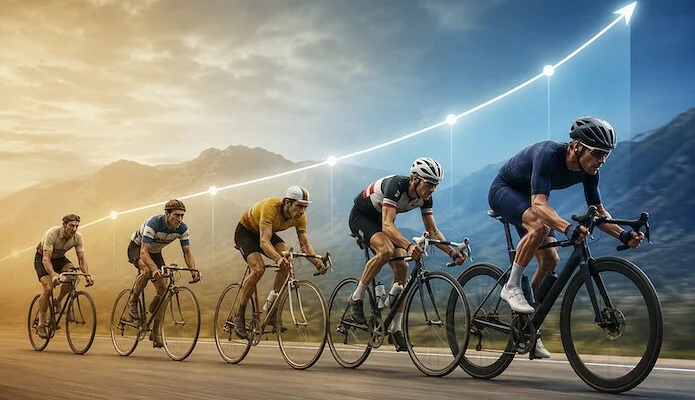
Performance levels are reaching unprecedented heights. But contrary to popular belief, this acceleration cannot be attributed to a single breakthrough. It is the result of a profound transformation in professional cycling—one that is also affecting amateur riders.
By Guillaume Judas – Photos: depositphotos.com, DR
The Tour de France has never been faster. Year after year, average speeds are increasing, to the point where some flat stages now regularly exceed an average of 50 km/h, despite routes that are rarely any easier than they used to be. Over the past decade or so, several editions have reached or approached an overall average of 42 km/h—a level that still seemed unimaginable in the early 2000s. And all signs point to the 2026 edition setting a new all-time record, not far from… 44 km/h.

This trend isn’t limited to raw numbers. It’s also evident in the power output of the top climbers. In a recent interview with L’Équipe, Warren Barguil gave a particularly telling example. In 2017, when he won the prestigious Izoard stage, he estimated that he produced about 5.9 W/kg during the final climb. Today, he says, a rider would need to produce nearly one additional watt per kilogram—around 6.8 to 6.9 W/kg—to have any hope of winning a similar finish against the world’s best riders. This is a considerable increase, especially when you consider that at this level, just a few tenths of a watt per kilogram are already enough to make the difference between a winner and a mere contender.
This escalation in performance inevitably raises questions. Comparisons with cycling’s darkest years regularly resurface in public debate, fueled by power figures and climbs completed at speeds sometimes comparable to—or even exceeding—those of the EPO era. However, reducing this evolution to a single explanation would be simplistic. Modern cycling is probably the endurance sport that has undergone the most profound transformation over the past fifteen years.

Globalized recruitment, the extreme professionalization of teams, a nutritional revolution, advances in equipment, sophisticated training methods, constant data analysis, and tactical optimization…. all these factors have combined to produce a spectacular rise in performance. Moreover, this phenomenon extends far beyond the WorldTour alone: it can be observed in amateur categories, among recreational cyclists, and even on platforms like Strava or Zwift.
A global talent pool that naturally raises the bar
For much of the 20th century, professional cycling remained essentially European. The best riders came mainly from France, Italy, Belgium, Spain, or the Netherlands. There were, of course, a few exceptions, but recruitment remained relatively limited geographically. Those days are now gone.
Today, WorldTour teams have scouting networks spanning multiple continents. Talented riders now come from Australia, New Zealand, South America, North America, Africa, and Asia. National federations have become more professional, development academies have proliferated, and young prospects have access to the resources needed to reach the highest level much earlier. This globalization is profoundly changing the competitive landscape.
In statistics, this is known as the sample size effect: the larger the number of candidates, the greater the probability of exceptionally talented individuals emerging. Cycling is no exception. When millions more cyclists become potentially discoverable, natural selection becomes much more rigorous.
Teams now recruit riders with extremely specific profiles. Some have the ideal physique for major mountain passes, others develop remarkable absolute power on the flats, while the best classics specialists combine explosiveness, endurance, and technical skills rarely seen together before.
This global competition is also pushing young riders to reach an exceptional level much earlier. Whereas some leaders used to build their careers gradually until the age of 27 or 28, Grand Tour winners are now capable of dominating as early as 22 or 23 after several years of extremely structured training.
Professionalization Taken to the Extreme
Modern cycling no longer really resembles what it was twenty years ago. Today, the major teams operate like true high-tech companies. Whereas a sports director, a doctor, and a few mechanics used to suffice, the most ambitious teams now employ dozens of specialists. Fitness trainers, personal trainers, nutritionists, physiologists, biomechanists, sports psychologists, sleep specialists, recovery physicians, aerodynamics experts, data analysts, software engineers: rarely has an endurance sport integrated performance science to such an extent. Budgets are following the same trend. The biggest teams now have tens of millions of euros per season at their disposal, allowing them to invest in sophisticated equipment but, above all, in human expertise.
Rarely has an endurance sport integrated performance science to such an extent
This evolution does not stem solely from cycling itself. Many experts have been recruited from other high-level disciplines: rowing, triathlon, swimming, Nordic skiing, track and field, and Olympic sports. These specialists often bring a scientific approach free from the sometimes very conservative traditions that historically characterized the peloton. This openness has profoundly changed working methods.
Today, every training session generates thousands of data points: power output, heart rate, cadence, heart rate variability, sleep quality, neuromuscular fatigue, blood glucose levels, body temperature, and cumulative load. This information is analyzed daily to adjust the rider’s program almost in real time.
The result is a significant reduction in training errors. Periods of excessive overload are better identified, injuries are anticipated more effectively, and peaks in fitness are scheduled with a precision that would have seemed unimaginable just twenty years ago. The best athletes aren’t just more talented—they also make much better use of their physiological potential.
Timeline of Major Performance Revolutions
|
The Silent Revolution in Nutrition
If asked to name the most spectacular transformation in modern cycling, many physiologists would answer without hesitation: nutrition. For a long time, riders made do with a few water bottles, relatively rudimentary energy bars, and a diet that was often haphazard during races. Those infamous hunger pangs were an integral part of the job. Today, such situations have become rare.
Research conducted over the past fifteen years has completely transformed nutritional strategies. Top riders now consume between 90 and 120 g of carbohydrates per hour, with some even occasionally exceeding this amount thanks to modern blends combining different types of sugars. Just a few years ago, such an amount would have been considered impossible to digest. Improvements in the formulations of energy drinks, gels, and sports nutrition products now make it possible to deliver a considerable amount of fuel while minimizing digestive issues. The benefits are immense.
The body conserves its muscle glycogen stores more effectively, maintains more stable blood sugar levels, and significantly delays the onset of central fatigue. As a result, the runner is able to sustain high power output for much longer, even after four or five hours of exertion. This revolution goes far beyond simple in-race nutrition.
Teams now conduct metabolic tests to determine individual carbohydrate utilization capabilities, precisely tailor carb-loading strategies before major stages, sometimes analyze sweat composition to personalize electrolyte intake, and are even exploring the role of gut microbiota in performance. Nutrition is thus becoming an integral part of training. A rider who manages to conserve a few dozen grams of glycogen during a mountain stage often has the resources needed to maintain several dozen additional watts during the final climb. The impact on average race speeds is considerable.
There are also tactical implications. Teams can maintain a very high pace for hours without fear of the collective collapse that once characterized certain particularly demanding stages. Long mountain stages are thus becoming increasingly fast races, where recovery periods are rare and the field often thins out earlier.
The Equipment Revolution
If there is one area where cycling has experienced a true technological breakthrough over the past decade, it is undoubtedly equipment. While each innovation taken in isolation may seem marginal, their cumulative effect now produces measurable gains that directly translate into higher average race speeds.
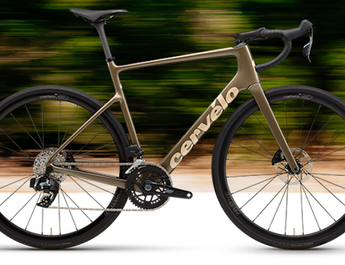
The real turning point came in 2018–2019. Manufacturers are no longer content with simply building lighter bikes; they are now seeking to reduce every watt lost to air resistance. Advances in computational fluid dynamics (CFD), wind tunnel testing, and track testing have made it possible to optimize the entire system comprising the rider and their bike. The frame is now just one component of a much larger whole. Wheels with optimized profiles, integrated handlebars, one-piece cockpits, fully integrated cables, redesigned forks, and even streamlined seatposts all contribute to reducing aerodynamic drag. At the dawn of this new era, some teams enjoyed a clear advantage over others thanks to equipment manufacturers who were far ahead of their competitors. But today, virtually all WorldTour teams benefit from state-of-the-art equipment.
These advancements aren’t limited to bikes. Helmets have evolved significantly, as have jerseys, socks, gloves, shoe covers, and even the shoes themselves. Every seam, every fabric texture, and every surface detail is engineered to better channel airflow. In some cases, riders even opt for lace-up shoes to save weight and minimize the aerodynamic disturbances caused by modern closure systems.
Tires also represent a revolution that is often underestimated. The development of tubeless road tires, combined with wider tires operating at lower pressures, has significantly reduced rolling resistance while improving comfort and traction. On rough roads, a properly inflated 28- or 30-mm tire is now faster than an old, overinflated 23-mm tubular tire.

Added to this are higher-performance bearings, optimized chains, low-friction lubricants, and drivetrains whose efficiency now exceeds 97%. Again, each improvement may seem minor, but the sum of all these gains translates to several tens of watts saved at high speeds.
UCI regulations have also kept pace with this evolution. While the minimum regulatory weight for a bike remains set at 6.8 kg, manufacturers have been able to further exploit the possibilities offered by composite materials and new tube shapes. Modern bikes are stiffer, more comfortable, and significantly more aerodynamic than those used fifteen years ago.
The rider’s position has also taken on a whole new dimension. Biomechanical studies now make it possible to achieve extremely efficient riding positions that balance power, comfort, and aerodynamic efficiency. Bike fitting sessions now rely on motion sensors, 3D video analysis, and sometimes even wind tunnel testing.
Physical Training Enters the Scientific Era
Cycling has long been based on a relatively simple philosophy: racking up kilometers, logging hours in the saddle, and gradually building endurance. This approach still exists, but it is now complemented by a much more precise scientific training regimen. The advent of power meters has profoundly changed training methods. Relying on how you feel is no longer enough. Every effort is quantified, recorded, and then analyzed. Coaches now have extremely reliable metrics to measure training load, track an athlete’s progress, or detect the first signs of fatigue. Concepts such as critical power, TSS (Training Stress Score), TRIMP, chronic load, and heart rate variability have become part of the everyday vocabulary of coaches. The goal is no longer simply to train more, but above all to train smarter.
The goal is no longer simply to train more, but above all to train smarter.
Altitude is another major driver of progress. Training camps in the mountains have become more common, sometimes supplemented by hypoxic chambers or tents that simulate low oxygen levels. Improving oxygen-carrying capacity then allows athletes to sustain higher intensities during major competitions.
Strength training, long viewed with suspicion in cycling, has become indispensable. The best riders now focus on maximum strength, power, core stability, injury prevention, and explosiveness—even in the middle of the season.
Recovery, too, has become a field of research in its own right. Sleep, cryotherapy, compression boots, massages, hormonal monitoring, and inflammation management: every measure is taken to enable riders to sustain their efforts day after day throughout the three weeks of a Grand Tour.
Finally, planning begins much earlier than it used to. Young talents often benefit from scientific monitoring starting in the junior categories. They arrive on the WorldTour with several years of experience using modern training tools.
A Completely Redesigned Racing Strategy
Cycling races haven’t changed just because the riders are stronger. They’ve also changed because teams have become much more effective as a collective. In the past, a significant part of the race still relied on the instincts of the sports directors and decisions made in the heat of the moment. Today, preparation begins several weeks before the start. The courses are analyzed down to the smallest detail. Teams have access to GPS profiles, weather data, wind maps, estimated split times, and computer simulations that allow them to anticipate the most likely scenarios. During the race, information is constantly relayed via onboard sensors. Team directors know the power output and the reserves of their leaders and adapt their strategy almost in real time. The famous paceline formations used by certain teams allow them to maintain a very high pace for dozens of kilometers. Teammates take turns at precisely defined power levels to maximize collective efficiency.
Even in mountain stages, attacks now occur at much higher speeds. Before a favorite launches an attack, several teammates have often been riding at near-maximum intensity for several minutes in order to gradually eliminate opponents.

This evolution directly contributes to higher average speeds. There are fewer lulls, periods of uncertainty are gradually disappearing, and every team seeks to optimize every single kilometer. This constant intensification also makes races more physically and mentally demanding. Tactical errors immediately prove very costly, while opportunities to recover are becoming increasingly rare. Contemporary cycling has thus become a sport where team performance sometimes carries as much weight as the individual qualities of the champion himself.
Rising Budgets That Further Accelerate Progress
The professionalization of cycling would not have been possible without a significant increase in the financial resources of the major teams. Even though the WorldTour remains far behind the budgets of Formula 1 or soccer, the top teams now have resources that bear little resemblance to those of twenty years ago. The wealthiest teams now invest tens of millions of euros per season. These budgets obviously make it possible to recruit the best riders, but above all to build an environment entirely dedicated to performance. Training centers are being modernized, support vehicles have become veritable mobile laboratories, team buses offer sophisticated recovery areas, and logistics are optimized down to the smallest detail. Travel itineraries are designed to minimize fatigue, hotels are selected based on specific criteria, and meals are prepared by chefs specializing in sports nutrition.
Investments also extend to research and development. Partnerships between teams, bicycle manufacturers, equipment suppliers, university laboratories, and companies specializing in composite materials enable the rapid testing of new solutions. Feedback from the field then informs the development of subsequent generations of equipment. This virtuous cycle is particularly evident in the field of aerodynamics. Tests conducted for professional riders subsequently benefit models marketed to the general public, who, a few years later, gain access to technologies previously reserved for the elite.
Budgets also make it possible to attract the best performance specialists. Whereas teams once made do with a single coach, they can now recruit international experts in every field. This accumulation of expertise produces a multiplier effect far greater than the sum of individual advances.
A trend that extends far beyond the WorldTour
One of the most interesting points when analyzing performance gains is that they aren’t limited to the top professionals. For several years now, organizers of cyclosportives have observed a steady increase in average speeds. Records are also being broken on many regional courses, in criteriums, amateur races, and national competitions.
One of the most interesting points when analyzing performance trends is that they aren’t limited to just the top professionals.
Platforms like Strava perfectly illustrate this trend. While weather conditions or the growing number of cyclists may explain some of the new records, they do not fully account for the entire phenomenon. A great many historic segments are regularly broken by particularly well-trained amateur cyclists.
The rise of online coaches, training platforms such as Zwift, TrainerRoad, and TrainingPeaks, as well as the widespread dissemination of scientific knowledge via the Internet, have profoundly democratized the methods once used exclusively by professionals. Today, a motivated amateur can own a relatively affordable power meter, follow a personalized training program, measure their heart rate variability, optimize their nutrition, use an interactive indoor trainer, and benefit from technical advice that was still reserved for professional teams just fifteen years ago.
Professional-grade equipment itself has become much more widespread. All of this explains why performance is improving at every level of the sport. Professionals are riding faster, but so is the entire cycling community.
The Issue of Doping: An Unavoidable Debate
It’s impossible to discuss the spectacular rise in performance without addressing the issue of doping. The history of cycling explains this vigilance. The Festina, Puerto, and Armstrong scandals—as well as the numerous scandals of the 1990s and 2000s—have deeply tarnished the sport’s image. Whenever speeds increase or climbs are tackled at levels close to those of that era, suspicions resurface. These questions are understandable. Power data published or estimated by certain observers show that today’s top climbers are reaching extremely high levels. This is precisely what Warren Barguil highlighted when comparing his 2017 victory on the Izoard with the current demands of top-level competition. In his view, what was sufficient back then to win a major mountain stage would likely no longer be enough to prevail today.
However, drawing a direct link between this progress and doping would be a conclusion not based on any verifiable evidence. Anti-doping testing has never been more widespread or sophisticated. The biological passport, gradually introduced starting in the late 2000s, makes it possible to monitor changes in blood parameters over several years and makes it much more difficult to engage in certain practices that were widespread twenty-five years ago. Analytical techniques have also advanced. Substances that were once undetectable can now be identified several years after the fact, while methods for targeting tests have become more refined.
This obviously does not mean that all forms of doping have disappeared. As in many elite sports, it would be naive to claim that there are no longer any attempts at cheating. On the other hand, there is currently no evidence to suggest that doping is the primary explanation for the increase in performance observed over the past decade. The many factors mentioned earlier (nutrition, equipment, training, professionalization, data science, and the globalization of recruitment) are already sufficient to explain a large portion of the performance gains observed.
https://www.3bikes.fr/2026/03/15/what-if-modern-cycling-were-simply-faster/
Warren Barguil also draws attention to another consequence of this constant pursuit of performance: the pressure placed on younger generations. Future professionals are reaching extremely high levels of training at an increasingly early age, with physiological, nutritional, and psychological demands that were once reserved for the most experienced riders. This intensification raises a different, but equally important, question: the risk of burnout, mental fatigue, or overtraining. As performance continues to rise, the human cost of this quest for excellence is also becoming a major issue.
How far will this progress go?
The progress made over the past fifteen years is not the result of a single revolution, but rather the accumulation of mutually reinforcing innovations. One key question remains: is there a limit? Physiologically speaking, the margins for improvement naturally narrow as we approach the limits of human capability. Future gains will likely be less spectacular than those seen over the past decade, barring a major technological breakthrough or a significant regulatory change. The UCI will also need to continue striking a balance between innovation and sportsmanship. Discussions surrounding aerodynamics, extreme riding positions, component dimensions, maximum gear ratios, and even bike weight show that regulations now play a significant role in the evolution of performance.

Riders’ health will also be a major concern. The constant acceleration of races increases physical and psychological strain. The risks of chronic fatigue, burnout, or crashes linked to ever-higher speeds on the road will need to be closely monitored.
One thing is certain, however: modern cycling has never been more demanding. Today’s champions compete in an environment where every detail is optimized, measured, and analyzed. They benefit from unprecedented scientific knowledge, but in return must meet constantly high standards.
This makes the spectacle on the roads of the Tour de France all the more impressive. Behind speeds that regularly break records lies, above all, a sport that has become more global, more scientific, and more professional than ever before. This evolution will likely continue to fuel debate as long as performances keep pushing the limits that, just a few years ago, were thought to be insurmountable.
Share the post "Why Cycling Is Going Faster and Faster"