Share the post "The Most Effective Workout"
Many amateur cyclists hold an almost intuitive belief: to improve, you have to come home from every ride with your legs on fire. The more you suffer, the stronger you become. However, research conducted over several decades on top endurance athletes tells a very different story. The workout that transforms an athlete most profoundly isn’t necessarily the most intense or the most spectacular. It’s often a long ride at a moderate pace. Behind this apparent simplicity lies a series of physiological adaptations that strengthen the heart, develop mitochondria, improve fat utilization, and make all other workouts more effective. In short, this workout builds your engine. Here’s why you should never neglect it.
By Guillaume Judas – Photos: ©Gruber Images, depositphotos.com
You only need to look at the training data of many amateur cyclists to see the same pattern. Rides are frequent, the volume is sometimes substantial, but the intensity is almost always a bit too high. Group rides turn into informal competitions; every hill is attacked at full speed, and every slight incline becomes a battleground for chasing personal bests on Strava. By the end of the week, fatigue is very much present. Progress, however, is slow to come.
This approach to training is based on an idea deeply rooted in our sports culture: the harder a session is, the more effective it is. For decades, the famous saying “no pain, no gain” has permeated the minds of athletes. If you don’t come home exhausted, it means you haven’t worked hard enough.

Physiology, however, tells a very different story. The body doesn’t reward the most painful effort. It simply responds to the signal we send it. And not all signals produce the same adaptations. A sprint session teaches the body to quickly recruit muscle fibers. A VO₂ max session improves the ability to transport and use large amounts of oxygen. Threshold training increases the power you can sustain for several tens of minutes. But when it comes to building a body capable of riding fast for several hours, a different approach is needed. You have to develop your aerobic system. That is precisely the purpose of a basic endurance ride.
Are you really doing basic endurance training?The most common mistake is riding… a little too fast. In basic endurance training, the goal isn’t to set a record for average speed. The goal is to maintain an intensity low enough to stimulate the development of the aerobic system for an extended period without causing excessive fatigue. How can you tell if you’re in the right zone? The first indicator is the simplest: you should be able to hold a normal conversation. If talking becomes difficult or if you have to catch your breath every other sentence, you’re probably already above the desired intensity. If you’re using a power meter, this generally corresponds to 55–75% of your FTP. The fittest cyclists can sometimes go a little higher, but the goal remains the same: to maintain a comfortable, sustainable effort. With a heart rate monitor, you’ll generally be between 65 and 80% of your maximum heart rate, or around 70 to 80% of your heart rate reserve. Perceived exertion is also an excellent indicator. On a scale of 1 to 10, basic endurance corresponds to a 2 or 3 out of 10. Your legs are working, but it still feels comfortable. Finally, monitor your heart rate throughout the ride. If it rises sharply while your power output remains stable (a phenomenon known as heart rate drift), this is often a sign that you’re riding a little too fast, that you’re not hydrated enough, or that your aerobic endurance still has room to improve. The best test is actually very simple: at the end of the ride, you should feel like you could have kept going for another hour. |
A cyclist’s “engine” isn’t what you might think
When watching a mountain stage of the Tour de France, you might think it’s all about the sprints. Attacks come one after another, faces tense up, and the watts skyrocket. However, this image is misleading. Even during a highly competitive, high-intensity climb, the vast majority of the energy produced comes from aerobic metabolism. Spectacular bursts of speed account for only a small portion of the total effort. What allows the best climbers to repeat these changes in pace is, above all, their ability to sustainably produce energy using the available oxygen.
In other words, a cyclist’s driving force is not their ability to produce a violent burst of effort for a few seconds. It is their ability to generate a tremendous amount of energy… over a long period of time. This idea must completely guide how training is designed. The goal is not merely to learn to endure pain. It is to build a body capable of producing more energy while consuming fewer resources. To understand how this is possible, we need to look beyond the power meter and examine what’s happening inside the muscle.
Mitochondria: The True Power Plants
For a long time, athletes mainly talked about the heart, legs, or lungs. Physiologists, on the other hand, now talk about mitochondria. These tiny structures found in each of our muscle fibers play an essential role. They use the oxygen carried by the blood to convert carbohydrates and fats into ATP, the molecule that directly supplies the energy needed for muscle contraction. In a sense, mitochondria are the power plants of the muscle. The more there are, the more energy they can produce. The more efficient they are, the more effectively they do so.
The 4 Mistakes That Ruin an Endurance RunThe first mistake is turning every ride into a race. All it takes is a rider pulling away or a sign at the entrance to a town to make you completely forget the purpose of the session. An endurance ride is not a race in disguise. The second mistake is to systematically finish the last thirty minutes at full speed. Many cyclists think this is how they’ll get the most out of their ride. In reality, they completely alter the intended physiological stimulus and unnecessarily increase their fatigue. The third mistake is setting out without drinking or eating enough. Riding for a long time with insufficient reserves does not further develop the body’s ability to burn fat. Above all, it increases the body’s stress, degrades the quality of the workout, and slows recovery. An endurance ride is a training session, not a deprivation strategy. Finally, many people continue to judge their performance based on average speed. This is undoubtedly the least relevant indicator there is. Wind, terrain, temperature, and road conditions influence speed far more than the quality of your training. Two rides with exactly the same average speed can produce completely different physiological adaptations. |
Contrary to popular belief, mitochondria do not develop primarily during the most intense workouts. They respond first and foremost to duration. During several hours spent doing basic endurance training, the muscle receives a continuous metabolic signal. This signal triggers a whole cascade of biological reactions that gradually lead to the production of new mitochondria and the improvement of existing ones.
Researchers refer to this as mitochondrial biogenesis. The term itself doesn’t matter. What’s important to remember is that the muscle gradually increases its capacity to produce energy. This adaptation isn’t visible after a single ride. Nor can it be measured after just one week. It happens silently. But after several months of regular training, it profoundly changes how the body functions. The cyclist can maintain a higher power output. They tire less quickly. They recover more quickly.
All the invisible adaptations
The benefits of a long ride obviously don’t stop there. As the weeks go by, the heart becomes more efficient. Its stroke volume increases, meaning it pumps more blood with each beat. The muscles gradually develop a denser capillary network, improving oxygen delivery even to the most heavily worked muscle fibers. The enzymes responsible for fat metabolism become more active, helping to conserve glycogen stores. Plasma volume also increases, which facilitates oxygen transport, thermoregulation, and recovery.
Even the act of pedaling evolves. As the hours spent on the bike add up, the nervous system learns to eliminate unnecessary muscle contractions. The movement becomes smoother and more efficient. For the same power output, the cyclist expends slightly less energy than before.
The body doesn’t reward the most painful effort. It responds to the signals we send it.
None of these adaptations is spectacular on its own. None will skyrocket your FTP in fifteen days. But their cumulative effect, week after week, gradually transforms an ordinary cyclist into a much higher-performing athlete. This is precisely why some people seem to make progress with almost no apparent effort. They don’t necessarily work harder than others. They’ve simply spent more time building their physical conditioning.

Why Champions Ride So Slowly So Often
In the middle of winter, as the season’s first goals approach, it’s not uncommon to see pros riding at less than 30 km/h on flat terrain. At that pace, many amateurs feel they can keep up with them. Of course, the illusion doesn’t last long. What’s fascinating isn’t their speed on any given day. It’s how they distribute their effort over the course of the entire season.
For the past twenty years or so, Norwegian physiologist Stephen Seiler has been analyzing the training logs of top endurance athletes. Whether they’re cross-country skiers, rowers, runners, or cyclists, he invariably finds the same pattern: about 80% of training time is spent at low intensity. The remaining 20% is devoted to the most demanding sessions. In other words, the world’s best athletes spend most of their time… not going fast.
This observation is deeply counterintuitive. How can athletes capable of generating more than 450 watts for several minutes at a time devote so much time to workouts that seem almost easy? The answer is surprisingly simple. They aren’t trying to win the sprint to the sign or finish first on every training climb. They’re focused on having a successful season. They know that an endurance session builds their aerobic base with relatively low fatigue, while a very intense session develops specific skills but at the cost of much greater physiological stress. Each session therefore has a well-defined purpose. The mistake is trying to develop everything at once.
The Trap of the Gray Zone
Between a truly easy ride and a genuinely difficult session lies an intermediate zone that coaches often call the “gray zone.” It’s not a useless zone—far from it. It corresponds, in particular, to threshold paces, which are essential during certain phases of training. The problem arises when you spend most of your time there. This is precisely what happens to many amateur cyclists. They almost always ride a little too hard. Fast enough to accumulate a lot of fatigue. Not fast enough to effectively stimulate their VO₂ max or anaerobic capacity. And too fast to fully benefit from the adaptations provided by basic endurance.
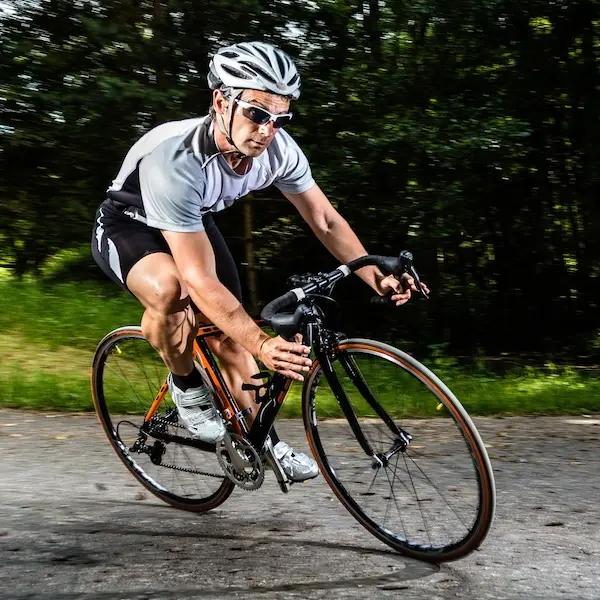
Over the weeks, they end up living in a state of chronic, low-intensity fatigue. Their legs often feel heavy. They don’t recover well. How they feel fluctuates from one workout to the next. Yet they continue to train seriously, convinced that all they need to do is add a little more intensity. In reality, it’s not intensity they’re lacking. It’s contrast. The best training plans deliberately alternate between very easy days and very hard days. Moderate days are actually quite few and far between. It’s this alternation that allows the body to receive clear signals and adapt effectively.
The Main Challenge of an Endurance Ride
The challenge of a basic endurance ride isn’t physiological. It’s psychological. It forces you to accept that another cyclist will pass you. To resist the temptation to match a surge in speed. To watch your average speed drop without feeling like you’re regressing. In fact, it forces you to put your ego aside.
We naturally tend to associate fatigue with effectiveness. The more exhausted a ride leaves us, the more we feel we’ve worked hard. This perception is reinforced by social media and training platforms, which place far greater value on records, segments, and maximum power output than on the hours spent patiently building an aerobic base. Yet a successful endurance ride often ends with the opposite feeling. We get off the bike tired, of course. But we could almost keep going for another hour. For many of us, this feeling is confusing. We feel like we haven’t worked hard enough. Often, it’s quite the opposite. This relative freshness is precisely what will allow us to follow up with another high-quality session a few days later.
Why Endurance Rides Make Harder Workouts More Effective
This is undoubtedly the most misunderstood aspect of a basic endurance ride. Many cyclists think it serves only to improve long-distance performance. They’re wrong. It benefits every aspect of an athlete’s performance.
During a VO₂ max session, a strong endurance base allows you to recover more quickly between intervals. Your heart rate drops back down faster, the metabolites produced by the effort are eliminated more efficiently, and your energy reserves are replenished more quickly. The result is immediate: you’re able to perform more repetitions or maintain a higher power output during the final ones.
The benefits are also evident during threshold training. A body that is better aerobically trained produces less lactate for the same power output and improves its ability to reuse it as fuel. The effort feels easier. Sustainable power output gradually increases.
Even recovery between training days improves. You arrive at the next session feeling fresher. You’re able to handle a greater training load over several weeks. In reality, endurance rides do not replace high-intensity sessions. They enhance their value. Without a solid aerobic base, hard sessions come at a high cost for limited benefit. With a well-structured training program, they become infinitely more productive.
Build Rather Than Burn
For a cyclist who has about ten hours of training per week, regularly dedicating a 3.5- to 4-hour ride to basic endurance is probably one of the most worthwhile investments you can make. This session is not intended to replace specific training. It won’t win you a sprint, nor will it, on its own, prepare you for a mountain cyclosportive. However, it will help you perform better in all your other sessions. This is a crucial distinction.
Training isn’t about accumulating fatigue. It’s about accumulating adaptations. Yet the most profound adaptations are often the least visible. They don’t translate into a record on Strava. They don’t cause your FTP to skyrocket in two weeks. Instead, they slowly build a body capable of handling more work, recovering faster, and sustaining high power output for longer. That’s why the best coaches talk about building an engine. You don’t build an engine by running it at maximum RPM every day. You build it patiently, piece by piece, ride by ride. And that’s exactly what a long endurance ride at the right intensity does.
The Most Rewarding Workout
Cycling rarely rewards those who seek to impress their friends at every training session. It rewards those who know why they’re training. The fundamental endurance ride isn’t the most rewarding. No one will congratulate you on your average speed. You probably won’t break any personal records, and your power log won’t impress anyone. Yet it’s during these long hours spent at a controlled pace that you’ll make real, deep progress.
After a few weeks, the changes are subtle. After a few months, they become obvious. The hills seem shorter. You handle intervals better. Recovery times are faster. And the watts eventually come, almost as a natural consequence.
What Science Really SaysFor a long time, endurance training relied heavily on coaches’ experience. Over the past thirty years or so, scientific research has confirmed many of their intuitions. The Norwegian Stephen Seiler is undoubtedly the person who has contributed the most to popularizing the concept of polarized training. By analyzing the training habits of top endurance athletes, he showed that they generally devoted nearly 80% of their time to low-intensity training, reserving the remaining 20% for the most demanding sessions. Australian researcher John Hawley played a major role in demonstrating how endurance training alters muscle function, particularly through the development of mitochondria and the enhancement of enzymes involved in energy production. British researcher Asker Jeukendrup, a world-renowned specialist in exercise metabolism, has shown how a trained body gradually becomes more efficient at using fats as fuel, thereby conserving precious glycogen stores. More recently, Iñigo San Millán has brought mitochondria back to the forefront of endurance athletes’ training by emphasizing the importance of long sessions performed in Zone 2 to improve their function. These researchers aren’t saying you should always ride slowly. They’re simply showing that no amount of intense training can replace the patient process of building a solid aerobic base. |
TRUE OR FALSE?
“If I ride slowly, I’ll lose my fitness.”
False. It is precisely by riding for long periods at low intensity that you develop most of the adaptations that will improve your endurance.
“Professionals almost always ride fast.”
False. They spend about 80% of their training time at low intensity.
“An endurance ride should leave your legs completely drained.”
False. A good endurance ride often ends with the feeling that you could have kept going a little longer.
“The more hard workouts I do, the more I improve.”
False. Hard workouts are essential, but only if they’re spaced far enough apart to be performed while you’re fresh.
“An endurance ride also improves my interval workouts.” ”
True. By building your aerobic capacity, it improves your recovery, your ability to sustain high power outputs, and your capacity to handle a greater training load.
Share the post "The Most Effective Workout"