Share the post "Tour de France: Why Ride on the Rest Day?"
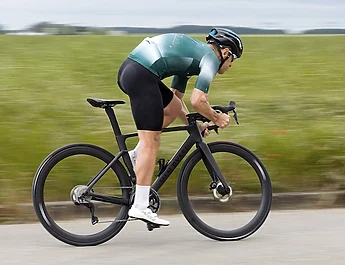
On paper, the rest day should be the easiest part of the Tour de France. Get more sleep, stay in bed, enjoy the air conditioning, and—above all—don’t touch the bike. In reality, almost all the riders get back in the saddle. Even after a grueling first week, even as the heat sets in, and even when their bodies are crying out for rest, the pros usually go out for a ride lasting between one and one and a half hours. It’s a short, very easy ride, without any real intensity, but it remains an important part of their recovery. This may seem paradoxical. Yet for a rider engaged in such an exceptional daily effort, complete rest isn’t always the best way to recover.
Since the start of the Tour, the riders’ bodies have been operating on a very specific rhythm. Several hours of cycling each day, thousands of calories burned, intense cardiovascular strain, and muscles working almost continuously. As Laurent Jalabert regularly explains on France Télévisions, as the stages progress, the body eventually gets used to pedaling every day. Heart rate, blood circulation, the mobilization of energy reserves, and recovery mechanisms eventually synchronize with the sequence of stages.
In this context, abruptly switching from a day of five hours of cycling to near-total inactivity can have the opposite effect of what is intended. The legs can feel heavy, the muscles may temporarily lose their tone, and performance may suffer when competition resumes. This is precisely why, as the France Télévisions consultant often points out, a rest day is almost never a day without cycling. A short ride serves to keep the body in its usual rhythm without imposing additional fatigue.

Keeping the blood flowing, without getting tired
“The human body doesn’t just like exertion. Above all, it likes consistency,” Thomas Voekler points out. So, the main goal isn’t to train. It’s simply to get the body moving again. At low intensity, muscle contractions promote blood circulation. Blood delivers oxygen and nutrients to the muscles, while also helping to remove various byproducts associated with exercise and inflammatory processes.
Contrary to a still-widespread misconception, it’s not really about “eliminating lactic acid.” The lactate produced during exercise is recycled within a few tens of minutes. The soreness and fatigue felt the next day are mainly related to microtears in the muscles, inflammation, dehydration, and the general buildup of fatigue. Gentle pedaling, therefore, acts less as a “cleansing” and more as a way to restore circulation. It helps the legs regain fluidity and reduces the stiffness one might feel after a completely inactive day.
Maintaining neuromuscular Sensations
There is also a neurological aspect. The nervous system constantly controls movement coordination and the recruitment of muscle fibers. A very light ride helps maintain these sensations. Runners maintain their cadence, joint mobility, and coordination without depleting their reserves.
Some even incorporate a few very short bursts of speed. The goal isn’t to push yourself, but simply to “wake up” the muscles before resuming your run.

What about during a heat wave?
When temperatures are high, this ride obviously needs to be adjusted. Teams generally opt for the coolest hours of the day, often in the morning. The duration can be shortened, the intensity remains very low, and hydration becomes the top priority.
Riding gently for an hour and a half doesn’t put the body under the same thermal stress as a stage race contested at full intensity. The motion of the bike also creates a flow of air that helps cool the body, provided this ride is never turned into a full-fledged training session.
This practice is so deeply ingrained in the peloton that it has become second nature to the riders. At the end of the stage on July 12, won by Mathieu van der Poel, the Dutch rider explained to Vélo Club that, despite the rest day the following day, he would still go for a short ride with the team. A remark that might seem almost trivial to the general public, but one that reveals how the top riders approach recovery. For them, a rest day isn’t a day without a bike. The bike is no longer just a tool for performance; it becomes a tool for recovery.
Testimonials from former riders also show that this need can vary greatly from one person to another. Philippe Gilbert explained that a rest day never meant a day spent completely inactive: after several days of racing, the body is so attuned to its rhythm that it’s better to keep moving with it rather than stopping abruptly. Jacky Durand took it even further, recounting that he could gain up to two kilos—mainly due to water retention—during a completely inactive day. For him, two hours on the bike was therefore almost a minimum. This is a very concrete way of reminding us that, on a Grand Tour, rest isn’t measured solely by the time spent lying down, but above all by the body’s ability to regain its balance. Some recover by taking a break. Others need to keep the machine running to prevent it from seizing up.
A Lesson for Amateur Cyclists
This logic can also apply to amateur cyclists. After a long ride, a cyclosportive, or a busy weekend, 45 to 60 minutes of very easy cycling is often more beneficial than a completely inactive day. But it all depends on your overall condition. In the event of unusual pain, severe dehydration, or marked exhaustion, complete rest remains the best solution. Active recovery is therefore not a requirement. It’s a tool.
In the Tour de France, riders don’t ride on their rest days because they don’t know how to stop. They ride precisely because they know how to recover. Champions don’t win just because they know how to endure pain. They also win because they know how to recover.
Share the post "Tour de France: Why Ride on the Rest Day?"