Share the post "First Test Ride of the All-New 2027 Cervélo Soloist"
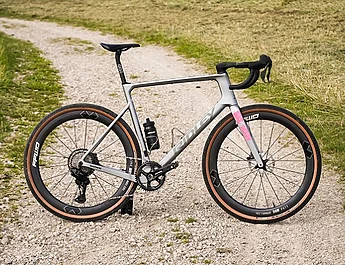
With the latest Soloist, Cervélo is reviving a well-known name from its road bike lineup, giving it a targeted technical update without straying from its core philosophy. Positioned as a versatile race bike that bridges the gap between the extremes represented by the S5 and R5, this model retains its DNA as a fast and accessible machine for competition, while making slight improvements in weight and aerodynamic efficiency. We’ll break it down before sharing our impressions from our first few road rides. By Guillaume Judas – Photos: ©Gruber Images / 3bikes.fr
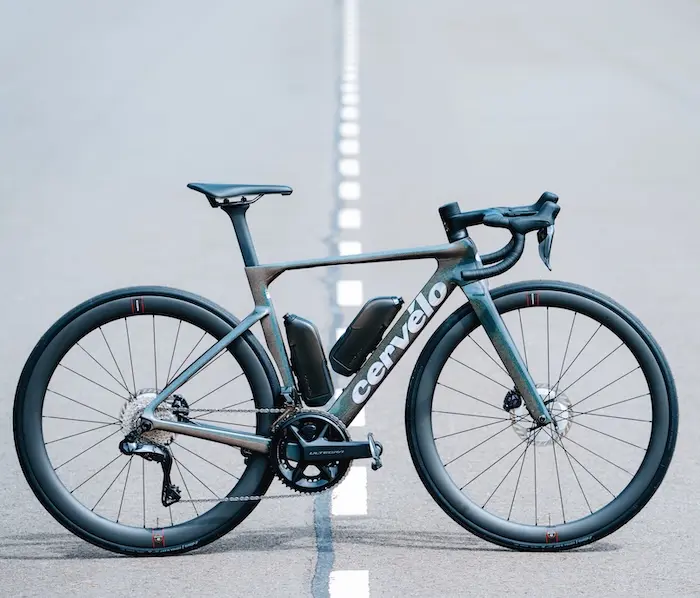
This latest version of the Soloist isn’t strictly speaking a new model. Rather, it’s a logical evolution of a model that was already repositioned a few years ago (more specifically in 2022) within the brand’s road bike lineup. But for many connoisseurs, the name Soloist primarily evokes the first bike with aerodynamic tubes from the Canadian brand Cervélo, launched in the early 2000s and popularized by the famous CSC team led by Bjarne Riis, featuring star riders such as Tyler Hamilton, Carlos Sastre and Fränck Schleck as its star riders. 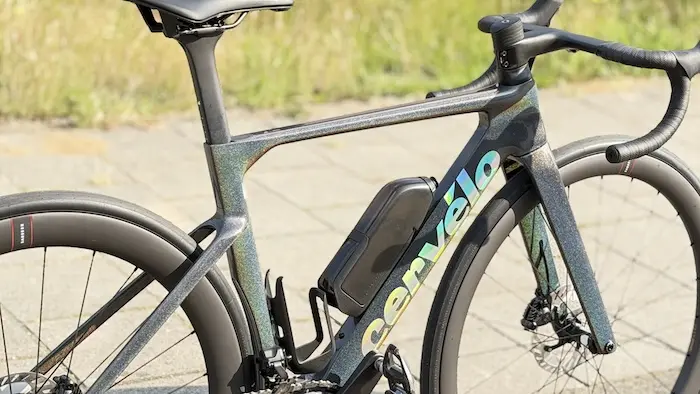 Cervélo, a brand that has been based in California for several years now, currently structures its road bike lineup around four clearly defined pillars: the S5 for pure aerodynamics, the R5 for mountain riding and light weight, the Caledonia for comfort and affordability, and the Soloist for a blend of all three approaches. Within this range, the Soloist occupies a confident middle ground, designed for riders who want a fast bike without going to extremes.
This brand-new model doesn’t disrupt that positioning. It simply refines its contours. The bike remains true to its original purpose: a versatile racing machine, capable of handling all terrains without specializing or claiming to be ultra-high-end, but with a clear focus on performance.
A subtle yet real evolution compared to the previous generation
Compared to the Soloist introduced in 2022, this new version isn’t a radical departure but rather an optimization. The figures announced by the brand reflect this evolution: 8.6 watts of aerodynamic gains in the wind tunnel and approximately 267 g lighter across the entire system (frame, fork, seatpost, cockpit, and small hardware). The claimed total weight is now 6.85 kg with SRAM Red AXS, just above the symbolic UCI weight limit. In more practical terms, the complete bike (including pedals and bottle cages) weighs around 7.5 kg when equipped with Shimano Ultegra Di2. That’s acceptable and in line with market standards for this price point—€7,499 for our test bike.
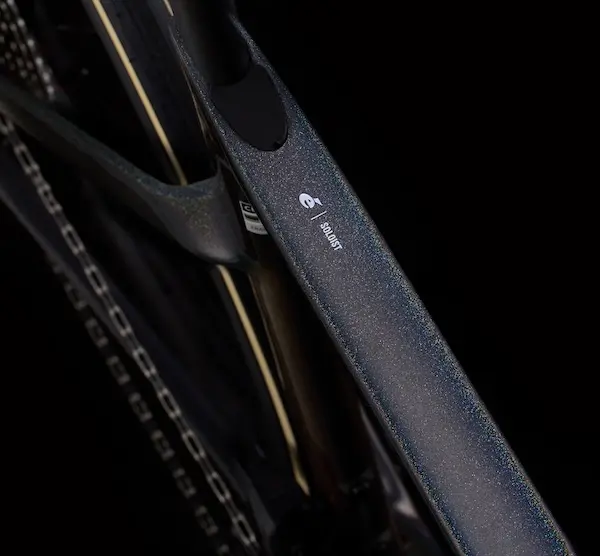
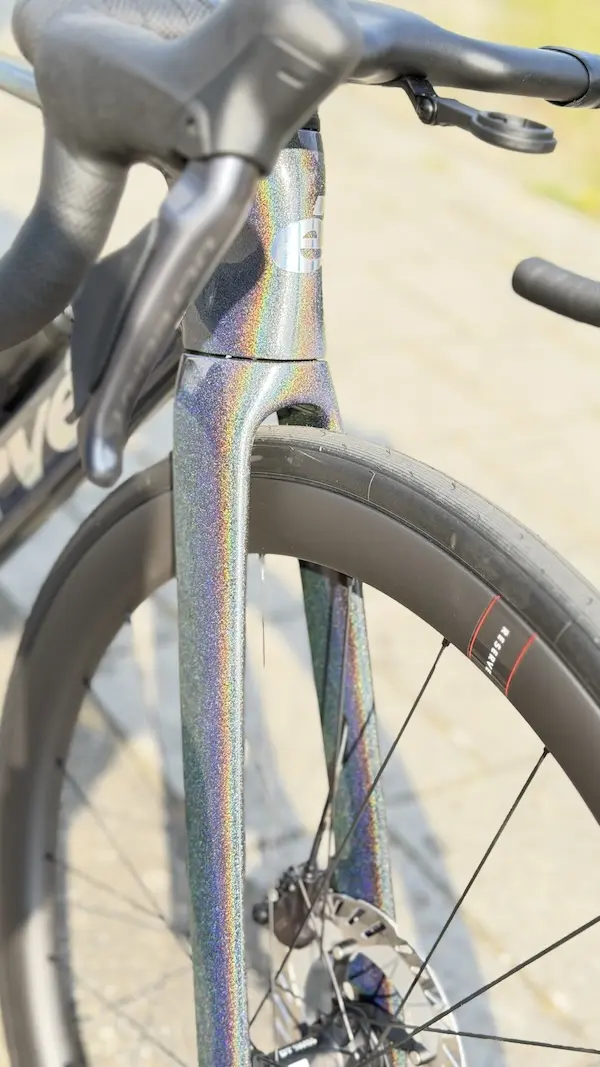
In terms of aerodynamics, the gains come from targeted work on areas of the frame that were already critical. The head tube is deeper, the fork has been redesigned, and the bottom bracket/rear wheel junction has been optimized to improve airflow management. The goal isn’t to reinvent the bike, but to make the existing model more efficient. As with the previous iteration of the Soloist, the lines remain fluid and sleek, perfectly in tune with current trends. Yes, some will choose the Soloist first and foremost because it’s beautiful, before considering any technical aspects. 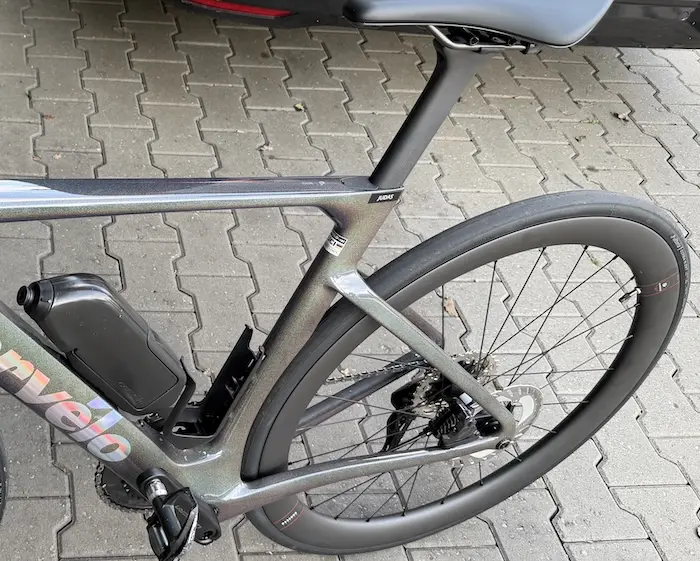
This optimisation approach is confirmed by a two-step validation process: CFD followed by wind-tunnel testing, on complete configurations including wheels and cockpit. In practice, this new Soloist represents a deliberate evolution, with a marginal but real gain in efficiency. As a result, this new version is estimated to produce approximately 8 watts less aerodynamic drag than the previous version, while still trailing the S5—which remains the most aerodynamic model in the lineup—by 11 watts.
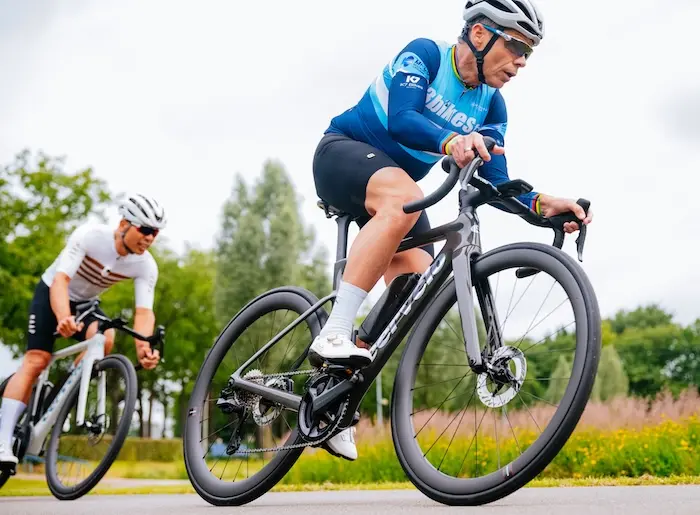
The components follow the same design philosophy: an integrated one-piece cockpit (borrowed from the latest R5), carbon wheels, and a power meter now standard on all builds. All of this reinforces the image of a bike that’s already equipped for competition without requiring any special adjustments—beyond, perhaps, the crank length. To our knowledge, Cervélo was the first brand (later followed by major market players such as Giant and Specialized) to shorten the crank lengths on its production bikes to follow a trend set by professional riders.
A Consistent, System-Oriented Technical Approach
From a technical standpoint, the Soloist remains true to a philosophy that views the bike as a complete system. Frame stiffness has been slightly increased around the bottom bracket, while the steering is a bit more forgiving than before, without losing the brand’s signature direct feel. It remains consistent with the S5 and R5, particularly in terms of the overall feel of precision and handling. 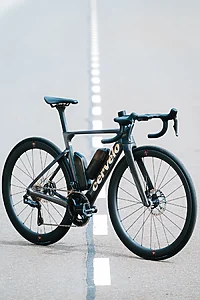 The geometry has evolved to provide greater consistency across sizes, with specific tuning applied to each frame, similar to the R5. The bottom bracket is slightly lowered to better accommodate wider tires—now up to 36 mm—which brings the bike in line with current peloton standards.
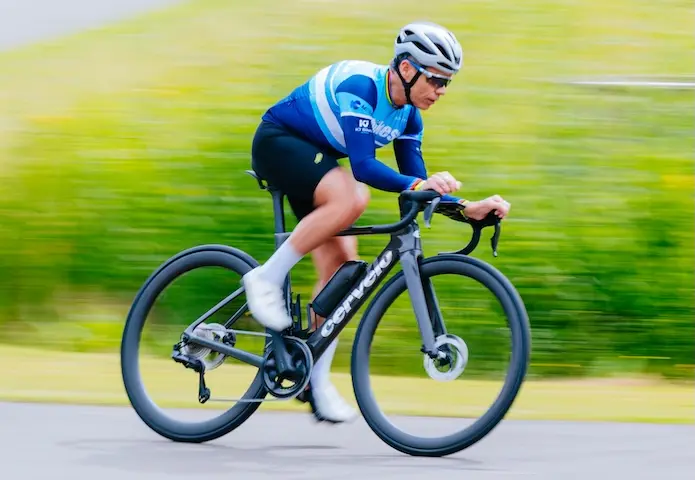
Finally, several integration details have been revised: refined cable routing at the head tube, new front brake mounts, and optimization of the one-piece handlebar assembly, which alone accounts for 134 g of the 267 g weight savings compared to the previous Soloist. The overall design remains cohesive, without unnecessary technological excess.
With this new Soloist, Cervélo is also launching a new set of aerodynamic bottles and bottle cages, which the brand claims will yield an additional 4-watt savings. These accessories are compatible with other bikes and will be sold as individual parts.
First Road Test
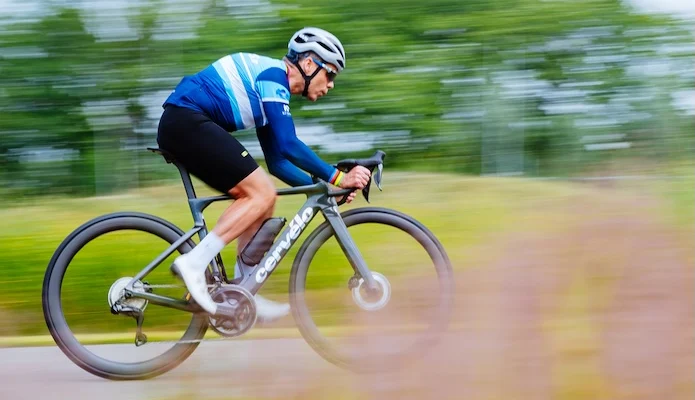
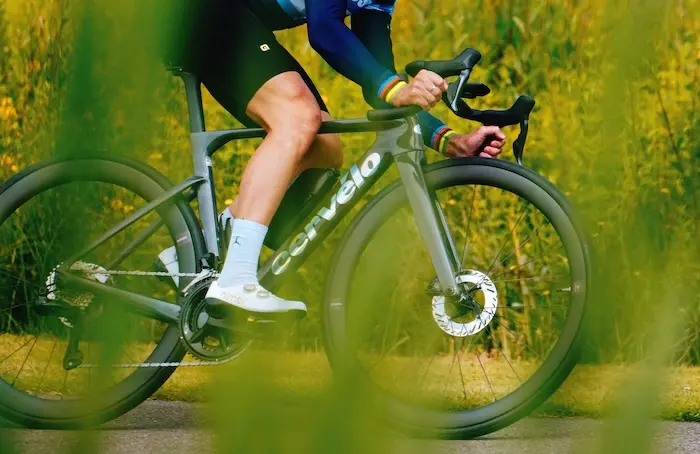
From the very first kilometers, the Soloist confirms its distinctly performance-oriented character. The frame is particularly stiff, much like the S5 and R5, with immediate power transfer. Accelerations are crisp, with no sensation of flex, and the bike responds instantly to inputs.

This stiffness is accompanied by remarkable stability at high speeds. On fast sections, the bike remains perfectly locked in, with very stable handling, even as speed increases. Here we see a philosophy similar to that of the S5: a bike that prioritizes stability and efficiency on straightaways over playfulness.
Conversely, the Soloist is clearly less responsive than an R5. Where the latter feels light and agile during changes in pace, the Soloist remains more composed, with a character better suited to maintaining a steady, moderate pace. When riding at a slower pace—whether heading out of the city or weaving through traffic—the steering even feels a bit heavy, requiring perfect coordination between the upper and lower body when standing on the pedals to get some power out of the bike.
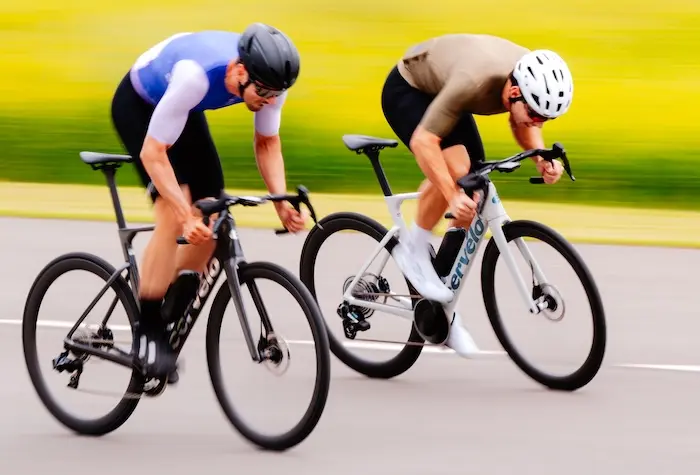 Comfort is average, not bad but not great. On these first rides, the bike was equipped with mid-range wheels, featuring Vittoria Corsa Next tubeless tires mounted with inner tubes—a setup that isn’t ideal for optimizing vibration absorption. The overall ride feel is therefore decent, but it doesn’t really filter out road irregularities.
One aspect also requires a bit of adjustment: getting used to the aerodynamic bottle cages. Their design calls for a slightly different motion than conventional systems and takes a few rides to feel completely natural during dynamic riding.
Ultimately, this new Soloist comes across as a fairly demanding bike, one that doesn’t seek to pamper the rider but rather to optimize performance. It’s aimed primarily at riders already involved in competitive cycling, or at cyclists looking to maintain a high average speed on all types of routes. It’s a bike designed for efficiency rather than thrills. 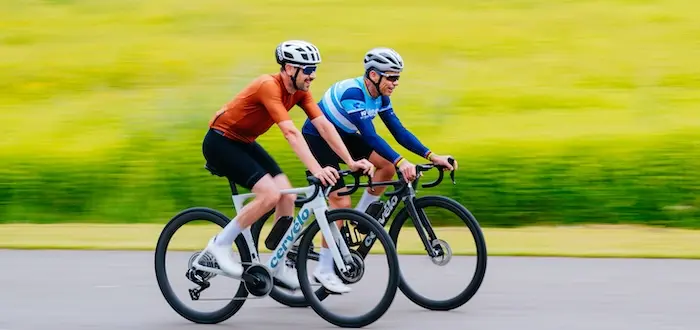
A Gradual Evolution
This new Cervélo Soloist thus represents an evolution rather than a transformation. The brand isn’t seeking to redefine the model, but rather to refine its already established qualities: a versatile, fast, and immediately responsive race bike, whose handling remains focused on efficiency and consistency at high speeds.
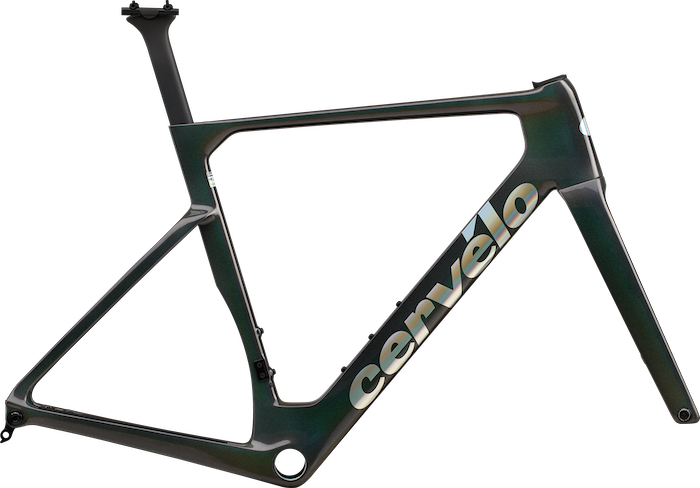
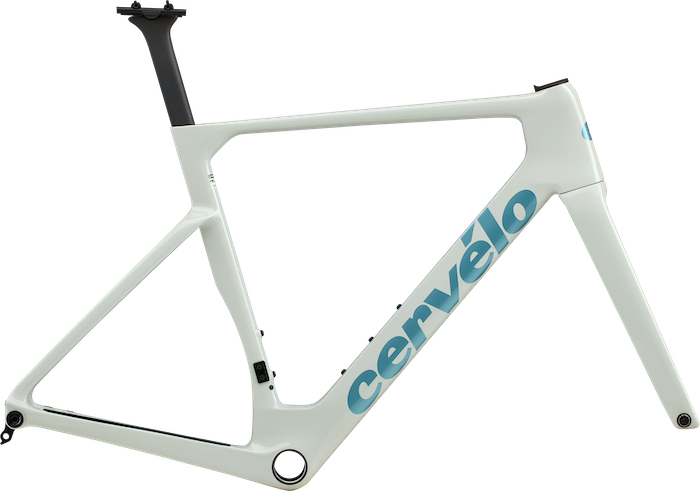
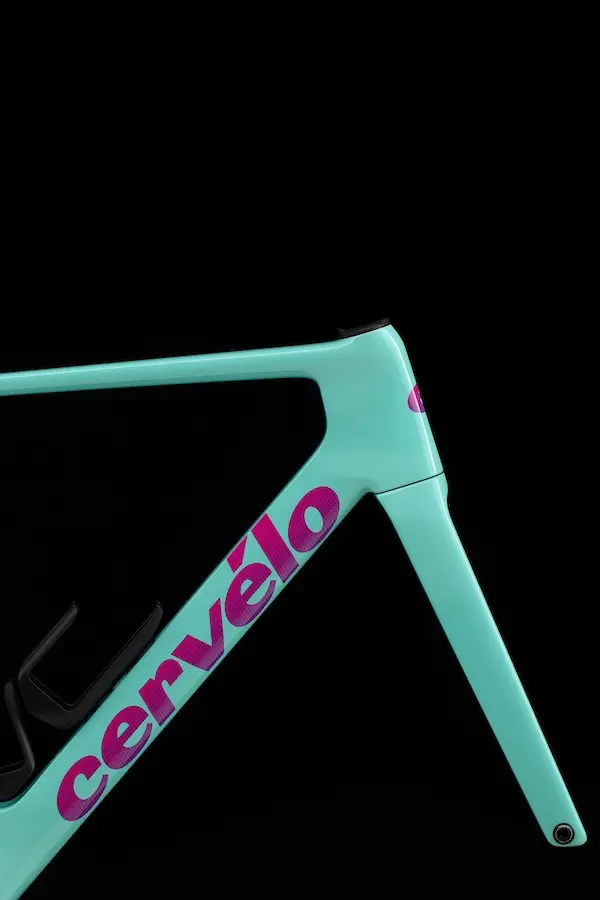 On the road, this focus translates into a very balanced, stiff, and stable bike that clearly prioritizes cruising speed and maintaining a steady pace over playfulness or instinctive handling. In terms of overall handling, it’s closer to the DNA of an S5 than that of an R5, particularly in the way the bike stays locked in as soon as the pace picks up. The downside of this unapologetic efficiency is a more demanding character. The Soloist demands a certain level of commitment to be fully utilised and makes no attempt to hide its intentions. Comfort is adequate without being a strong point, especially since the test setup wasn’t optimal in this regard, which accentuates a ride feel that’s already quite direct.
In this context, this new Soloist is quite clearly aimed at an audience of competitive cyclists or performance-oriented recreational riders, for whom average speed and consistency take precedence over “fun” versatility. It’s a bike designed to go fast, for long distances, and with unwavering focus—true to its mid-range position in the lineup, but with an even stronger emphasis on pure performance.
The CERVÉLO SOLOIST at a glance…Pros: stiffness, stability, race-oriented bike Cons: comfort is slightly lacking Frame: Cervélo New Soloist, monocoque carbon – Fork: Cervélo Soloist All-Carbon – Handlebar: Cervélo HB18 Carbon – Brakes: Shimano Ultegra – Front Derailleur: Shimano Ultegra Di2 12-speed – Rear Derailleur: Shimano Ultegra Di2 12-speed Shifters: Shimano Ultegra Di2 12-speed – Cassette: Shimano Ultegra 12-speed Chain: Shimano Ultegra 12-speed; Crankset: Shimano Ultegra 52/36, 4iiii Precision Pro, GEN3+ Dual Sided 12-speed – Wheelset: Reserve 42/49 – Tires: Vittoria Tubeless Corsa N.EXT TLR G2.0 700×30 – Saddle: Fizik Arione – Seatpost: Cervélo Carbon – Sizes available: 6 – Weight: 7.13 kg without pedals or bottle cages – Price: €7,499 (frame kit: €3,799)
Contact: https://www.cervelo.com/fr-FR |
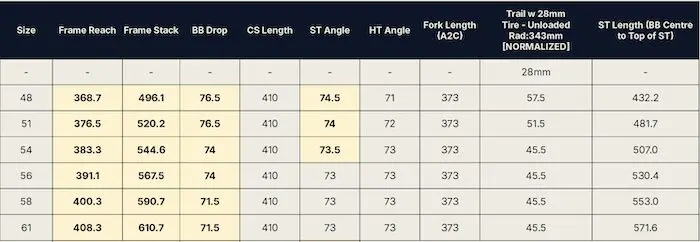 The lineup:
Share the post "First Test Ride of the All-New 2027 Cervélo Soloist"