Share the post "Review of the Giro Empire: What if Progress Meant Taking Something Away?"
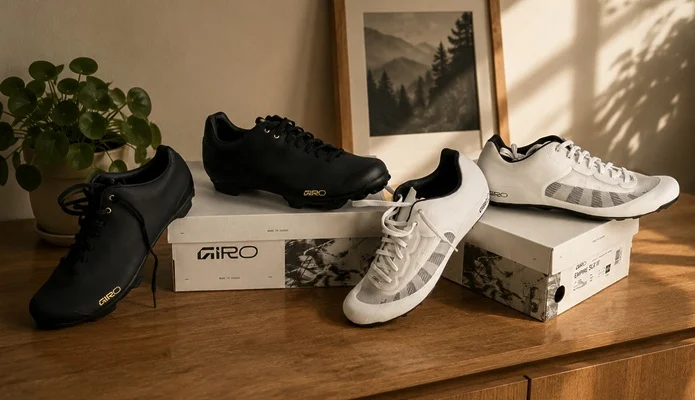
We had planned to test two pairs of shoes: one road shoe and one gravel shoe—two high-end models from an almost legendary line at Giro. But then, kilometer after kilometer, the test began to slip away from us. Because, deep down, it wasn’t really about weight, stiffness, or even performance anymore. Another question gradually came to the fore—one that seems almost paradoxical in an era when everything seems to be getting more complex, more sophisticated, and more customizable: Why are some of the highest-performing shoes on the market today returning to one of the oldest technologies ever invented? Behind the Giro Empire SLX II and Empire XC may lie something deeper than a simple choice of closure system. A different way of thinking about performance. A different way of thinking about the foot. And perhaps even a different way of thinking about modern cycling.
By Jeff Tatard – Photos: © Jeff Tatard
Some tests begin with a spec sheet
Some reviews start with a spec sheet. A weight. A stiffness rating. A marketing promise. And then there are those that take an unexpected turn. The ones that, almost in spite of themselves, end up shifting the question itself. This one clearly belongs to that second category.
Because at first, everything seemed simple. Two pairs. A white Empire SLX II designed for the road. A black Empire XC geared toward gravel and cross-country. Two shoes that, despite their nearly iconic status, now seem almost anachronistic. In a world dominated by dual BOA dials, micro-adjustments, and ever-more-sophisticated designs, they continue to display—with an almost provocative calm—seven eyelets and a pair of laces. Nothing more. And yet. The more we rode in them, the more a strange feeling took hold. Not a spectacular effect. Not an immediate revelation. Rather, a subtle sensation. A persistent one. Something that lingered. Until it gave rise to a question far broader than that of the product itself. What if sophistication isn’t always synonymous with progress?
It all started with a minor annoyance
The idea didn’t originate at Giro, though. A few weeks earlier, during our test of the Sidi Aeron, we’d already noticed something. Not a pain. Not a defect. Not even a criticism. More of a sensation. A point of friction that kept recurring. Subtle enough to go unnoticed. Noticeable enough to warrant further investigation. Then a second instance arose. And suddenly, the question began to take on a whole new dimension.
Could it be that, in their pursuit of sophistication, certain current designs are reaching their own limits? Not in terms of stiffness. Not in terms of efficiency. But in terms of biomechanics. Because, at the end of the day, a shoe is nothing more than an intermediary. It doesn’t produce a single watt. It doesn’t replace the cyclist’s legs or their power. Its role is more subtle. To disrupt nothing. To add nothing. To take nothing away. Simply to allow the foot to forget it’s there. That’s precisely when we called Raphaël Dalle.
Raphaël Dalle: the man who spends his life listening to feet
There are probably few people more qualified to speak on the subject. The man who now leads the development of Giro shoes. The man who worked at Adidas on Lionel Messi’s signature models. The man who has worked in Asian factories, at Decathlon and Ekoï, and has experience in soccer, running, and finally cycling. The man who, over the course of our months-long conversations, had already shared a phrase that has become almost a guiding principle: “A millimeter can change everything.”
His answer immediately surprised us. No ideological battles. No marketing spiel. No absolute truths. Just reality. “Both have advantages and disadvantages.” Then he adds: “There are ways to minimize the disadvantages.” In XC, some brands intentionally position the BOA straps higher on the shoe to reduce the risk of contact with branches or snagging at the start. In bikepacking or on very long distances, the BOA system regains a huge advantage: its ability to be adjusted while riding. And already, the nature of the discussion shifts. Because it’s no longer about pitting two systems against each other. It’s about uses. It’s about compromises. It’s about understanding. And Raphaël Dalle probably sums up this nuance better than anyone: “It’s not a black-and-white issue.”
Even professionals disagree
And that’s perhaps what’s most fascinating. We often imagine that the very highest level validates a definitive truth—that once you reach the top, everyone ends up choosing the same solution. The reality is exactly the opposite. Biniam Girmay rides exclusively in BOA shoes. He doesn’t even own a pair with laces. Paul Double, with Jayco-AlUla, switches it up. Laces for the big stages. Time trials. Important race days. BOA shoes for training and easier stages. Pierre Rolland, on the other hand, prefers BOA shoes in his current ultra-distance racing. Mainly for their practicality.
And suddenly, something becomes fascinating. Even the world’s best don’t agree. Because deep down, the issue may not be about technology. It’s deeply human. Every foot is different. Every riding style is different. Every priority is different. And that’s precisely what makes this story so fascinating. Because there’s probably no single truth. There are truths.
The Giro Empire: Almost Anachronistic Objects
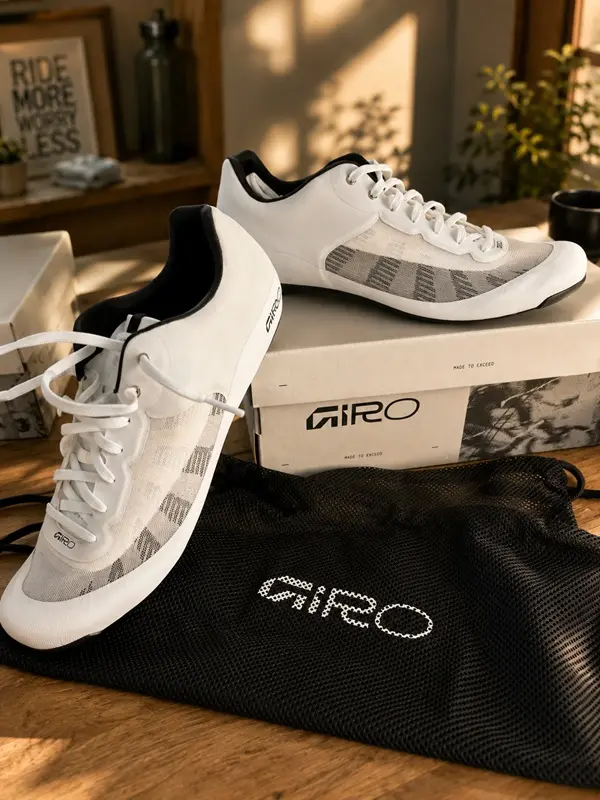
Then come the shoes. The white Empire SLX II. The black Empire XC. And immediately, something strikes you. The calm. These shoes don’t try to impress. No flashy dials. No exuberance. No technological showmanship. Everything seems almost silent. As if Giro were finally applying to its shoes the exact same philosophy we’d already seen in some of their helmets. Discreet performance. Performance that doesn’t seek to be seen. Performance that simply seeks to be felt.
And the more we look at them, the more a quote from Raphaël Dalle comes to mind: “To make the highest-performing products possible with the most classic design possible.” Perhaps Giro’s entire philosophy is encapsulated in that sentence. Because, deep down, the Empire shoes aren’t retro. They aren’t nostalgic. They don’t seek to revive the past. On the contrary, they’re surprisingly modern. But they remind us of something that contemporary cycling sometimes forgets. Progress isn’t always about adding more. Sometimes, progress simply means removing everything that isn’t essential.
In Hand: The Silence of Confident Objects
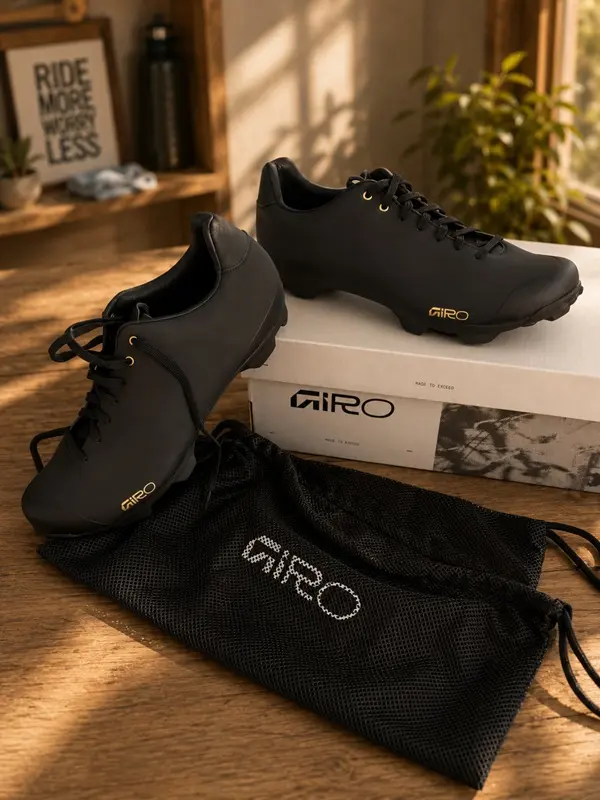
Even before the first pedal stroke, there’s always that moment. The moment when you observe. When you handle them. When you try to understand what you really have in your hands. And very quickly, one thing becomes clear: the Giro Empire doesn’t set out to impress. In an era when some shoes almost resemble timepieces—with their dual dials, exposed cables, visible reinforcements, and ever-more-complex designs—the Empire exudes a different kind of confidence. A quiet confidence. As if they no longer have anything to prove.
It takes almost a moment to figure out what’s unsettling. Because deep down, what strikes you most is precisely what’s missing. No BOA. No cables. No mechanisms. No spectacular effects. Just an extraordinarily pure line. Almost timeless. And that’s when something interesting emerges. Because the more you look at them, the more they give the impression of having been designed in defiance of current trends. As if Giro had chosen to set aside some of the visible sophistication to focus on something harder to achieve: coherence. Every panel seems to serve a purpose. Every seam appears justified. Nothing sticks out. Nothing tries to draw the eye. The beauty of the Empire isn’t ostentatious. It’s understated. And perhaps that’s precisely what Raphaël Dalle was referring to when he explained to us: “To create the highest-performing products possible with the most classic design possible.” ” The more time we spend with them, the more that statement makes sense. Because, deep down, the Empire shoes don’t look like vintage shoes. They look like shoes that have stood the test of time. And that’s not quite the same thing.
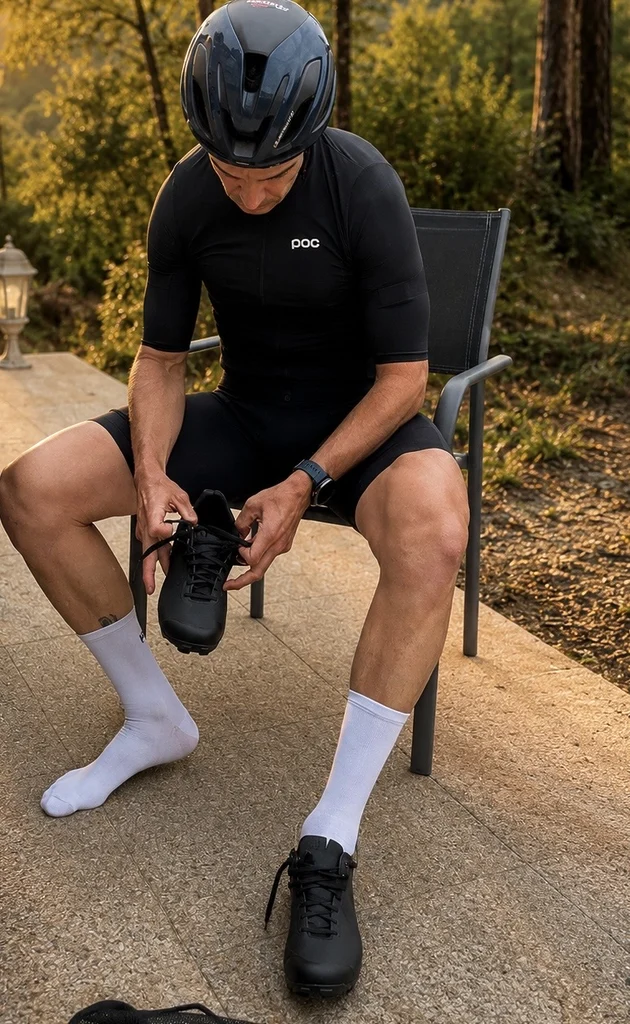
Shoelaces: the oldest technology in the world… and perhaps the smartest
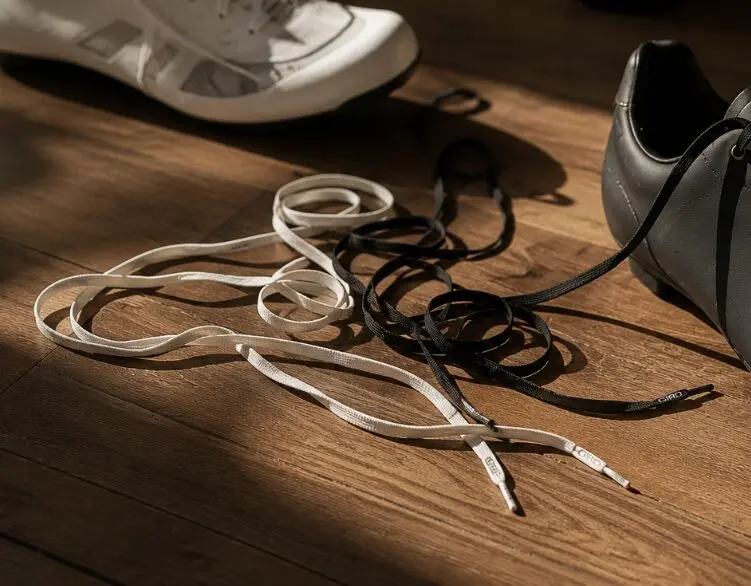
During our conversation, Raphaël Dalle had shared something with us that immediately came to mind. When we asked him which product he was most proud of, his answer almost surprised us. Not a €400 model. Not a technological showcase. Not a futuristic shoe. A lace-up shoe. Simple. Accessible. Almost ordinary in appearance. Because deep down, for him, lacing has never been a solution of the past. It’s simply another answer. Another philosophy. Another way to wrap around the foot.
For behind its apparent simplicity lies something remarkably sophisticated: the distribution of pressure. A BOA system acts on a few specific points. A lace acts everywhere. Gradually. Naturally. Almost organically. It doesn’t pull. It wraps around. It doesn’t lock. It distributes. And the more time passes, the more noticeable this difference becomes. Because, deep down, a foot isn’t a mechanical part. It’s a living organism. It swells. It changes shape. It works. It evolves as the hours go by. And that’s precisely where lacing reveals something quite fascinating: its ability to support rather than constrain. A form of passive intelligence. Without moving parts. Without mechanisms. Without electronics. Simply thanks to a few centimeters of fabric. Which is actually quite extraordinary when you think about it.
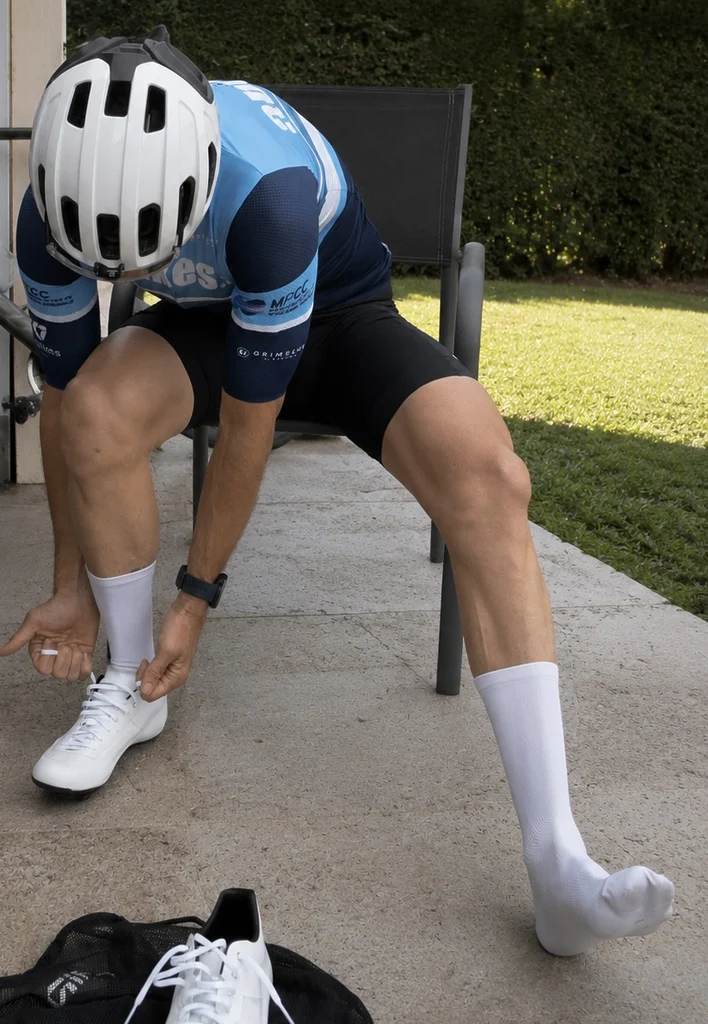
Empire SLX II: When the Foot Disappears
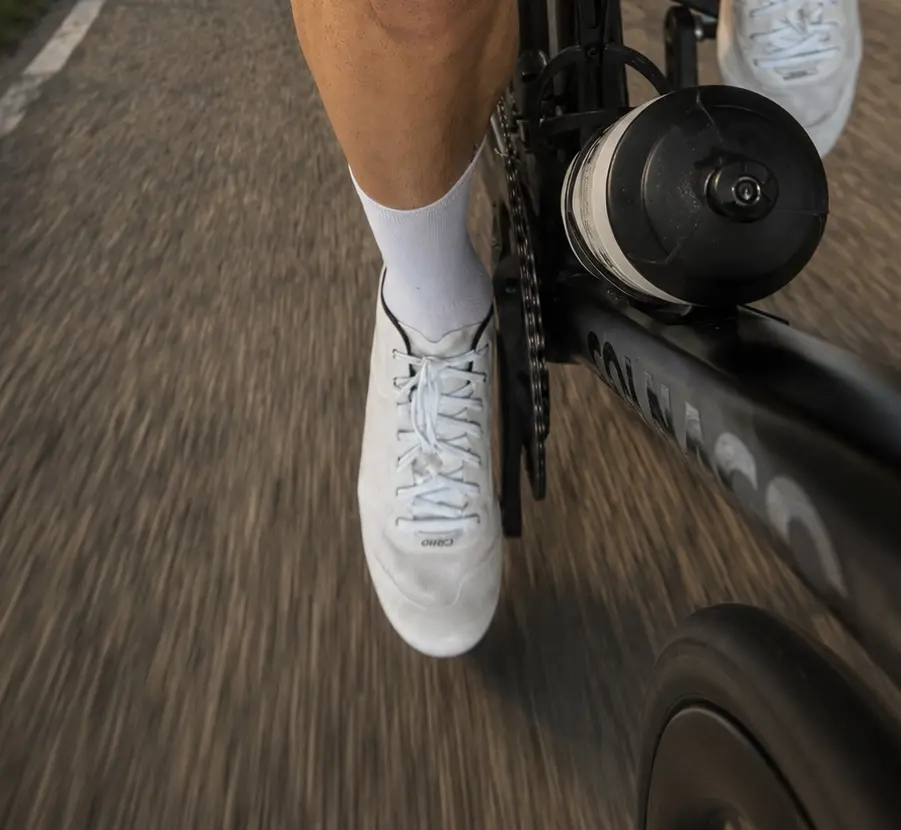
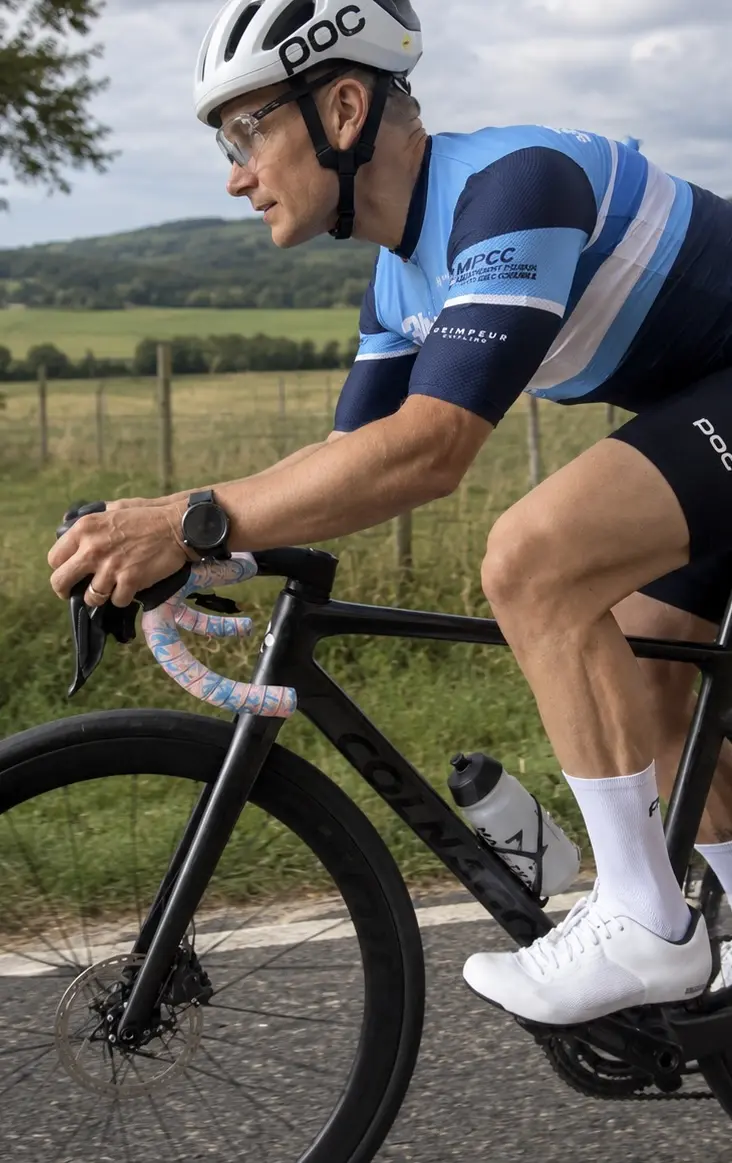
And then comes the ride. The first few kilometers. The first accelerations. The first long stretches. And a strange sensation begins to set in—one that’s almost hard to describe. Because in reality… nothing is happening. No discomfort. No pressure points. No need to adjust them. No need to think about it. Your foot disappears. Or more precisely, the shoe disappears. Which, deep down, is perhaps the greatest compliment you can pay a shoe. Because a great shoe isn’t the one you notice. It’s the one that eventually fades into the background.
With the Empire SLX II, support is never achieved through constraint. There’s none of that almost mechanical locking sensation you sometimes find in other shoes. The foot is supported. Perfectly. But without ever feeling trapped. And that’s perhaps where the magic of this design lies. Because it doesn’t seek to control the foot. It seeks to work with it. After two hours. Then three. Then four. Something becomes clear. We’ve never even wondered if we were comfortable in our shoes. And when that question no longer arises, it’s often a sign that part of the work has already been remarkably accomplished.
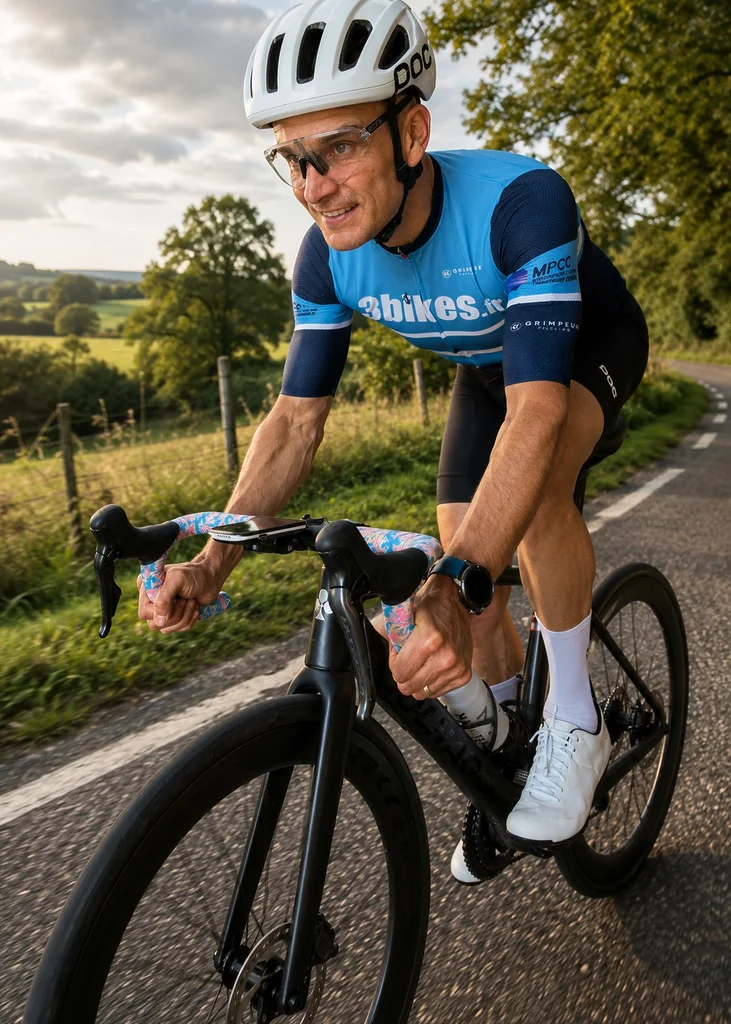
The Paradox of Micro-Adjustment
On paper, however, the BOA system has an undeniable advantage: micro-adjustment. A few clicks. A few millimeters. An instant adjustment. While riding. There’s no denying its appeal. Pierre Rolland himself, in his current ultra-distance racing, particularly appreciates this practical feature. And Raphaël Dalle had confirmed this to us: on long adventures or bikepacking trips, the BOA has real merits. But the more we thought about it, the more another question arose. Why do we need to micro-adjust a shoe? Because it adapts to changes in the foot? Or because it has, in fact, created the need to be readjusted regularly?
It’s a question worth asking. Because as the kilometers piled up with the Empire, one detail became almost unsettling. We never felt the need to adjust them. Never. Not once. As if the balance we found at the start remained just right for the entire ride. And suddenly, what seemed like a weakness becomes almost a strength. Because by removing the possibility of adjustment, Giro essentially forces the shoe to be just right from the start. An almost radical approach. But extraordinarily consistent.
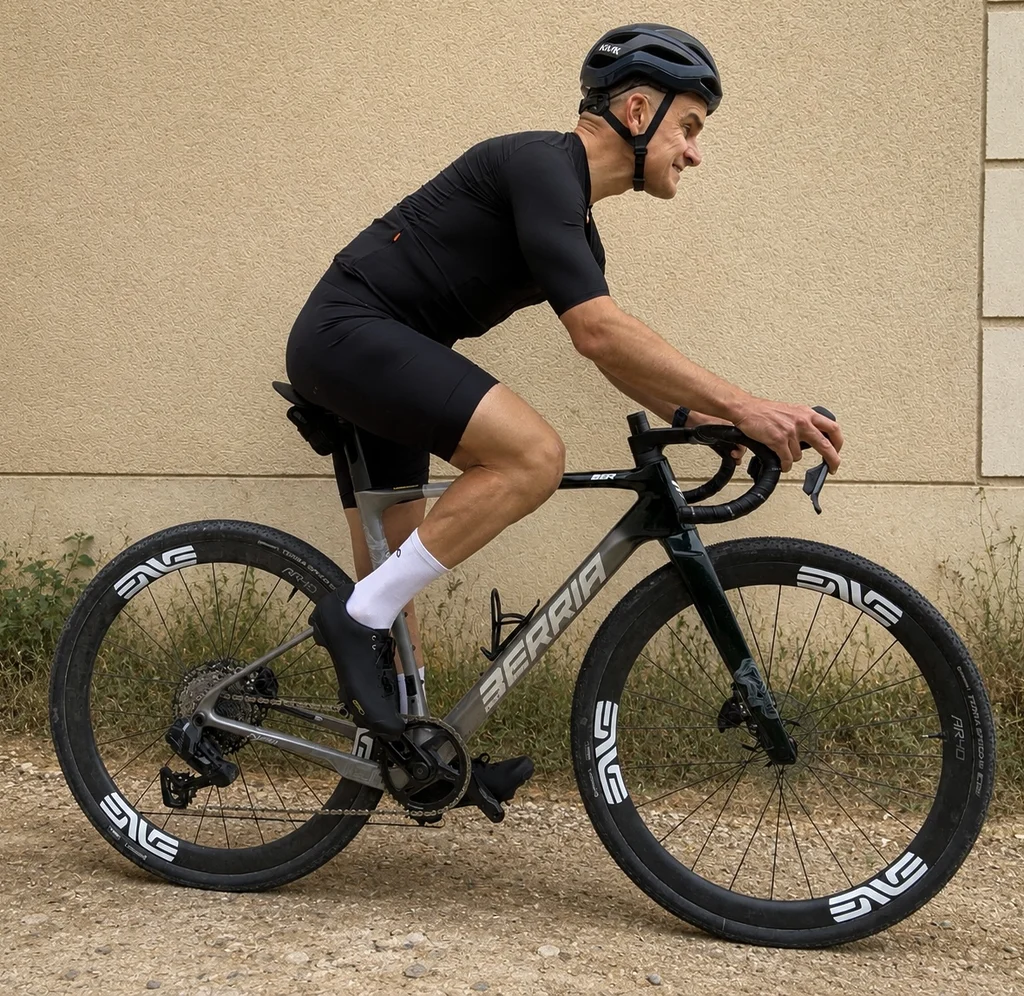
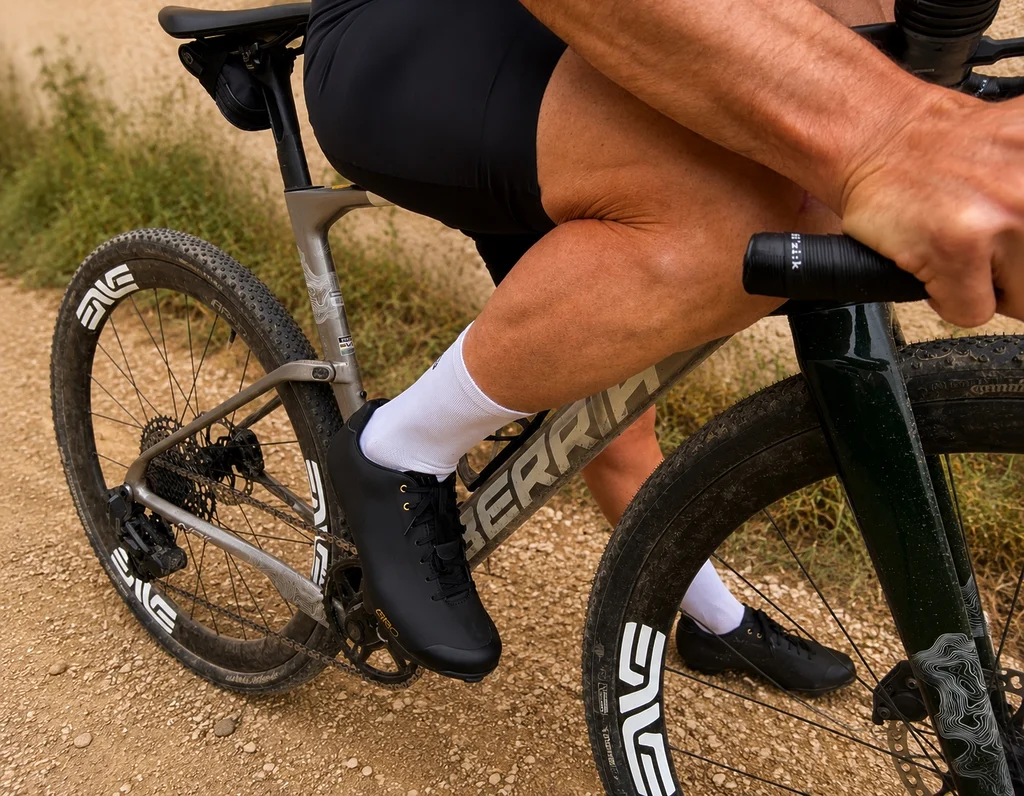
Empire XC: Gravel as a Revealer
Perhaps the real surprise came from there—from the Empire XC. Because, deep down, it’s probably on gravel that this philosophy truly comes into its own. Modern gravel has changed. For a long time, it was associated with adventure. With freedom. With a certain laid-back attitude. But gradually, something is changing. Speeds are increasing. Races are becoming more professional. Gaps are narrowing. Gear is becoming more specialized. And with this evolution, another requirement is reemerging: precision, performance, and stability.
And that is precisely what the Empire XC offers. Not a watered-down approach to mountain biking. Not a shoe that seeks to smooth out the sensations. On the contrary. It delivers a very direct feel. Very connected. Very precise. And paradoxically, this demand finds an absolutely fascinating outlet in modern gravel riding. It’s as if this discipline—which initially sought to break free from traditional norms—is now rediscovering certain values of competitive cycling.
What These Shoes Tell Us About Modern Cycling
Ultimately, this article has very little to say about laces. And even less about nostalgia. It’s about an era. About a cycling culture that sometimes tends to confuse progress with accumulation. Always more technology. Always more adjustments. Always more sophistication. As if performance necessarily required greater complexity. The Giro Empire tells us exactly the opposite. They remind us that innovation isn’t always about adding something. Sometimes, innovation means taking away. Simplifying. Refining. Keeping only the essentials.
And this strangely echoes what Raphaël Dalle told us a few months earlier: “If the product is right, it doesn’t need to overdo it. ” Perhaps the entire philosophy behind the Empire is encapsulated in that sentence. Because, at its core, these shoes aren’t trying to impress. They simply aim to fade into the background. And the more kilometers you cover, the more you end up wondering if the best technology isn’t, after all, the kind that knows how to step back.
So what now?
We could wrap things up here. Close the case. Declare a winner. Pick a side. Laces or BOA. Past or future. Tradition or modernity. But that would betray everything we’ve learned throughout this investigation. Because the more we talked with Raphaël Dalle, The more we spoke with the athletes. The more we rode. The less straightforward the answers became. One thing, however, became absolutely clear. The Giro Empire aren’t shoes for the nostalgic. They don’t look back. They simply remind us of a truth that modern cycling sometimes forgets: sophistication isn’t always synonymous with intelligence.
And that, in the end, the best technology may not be the one that catches the eye. But rather the one that, quietly, simply allows the body to do what it already knows how to do. Ride.
Why Giro Might Be the Last Major Brand Still Believing in Laces
Deep down, the further we delved into this investigation, the more one question kept coming up. Why continue to champion laces in 2026? Why stick with this design when the entire market seems to have chosen a different direction? Why persist when the double BOA has become, in the collective imagination, almost synonymous with high-end? And the more we reflected on our conversation with Raphaël Dalle, the more obvious it became. At Giro, laces aren’t a legacy preserved out of nostalgia. They’re a conviction. A philosophy. Almost a way of understanding the relationship between the foot and the shoe.
Because behind the product lies a much deeper culture—one that rejects the idea that performance is necessarily tied to visible sophistication. A culture that believes adding technology isn’t always the answer. Sometimes, the real challenge lies precisely in not adding more. In resisting. In keeping only what truly adds value. And the more we think about it, the more the Empire models seem like a kind of silent manifesto. A way of reminding us that a great shoe isn’t one that piles on features. It’s one that solves problems. And sometimes, the smartest solution is also the oldest.
A story that begins long before cycling
Because, ultimately, the story of the Empire may never have truly begun at Giro. It begins much further back. At Adidas. At Babolat. At Decathlon. In Chinese factories. In Vietnam. In soccer cleats. In Lionel Messi’s signature models. In those millions of pairs produced each year that shaped Raphaël Dalle’s mental library. Because after working on tennis, soccer, running, rugby, and even cycling, one truth eventually emerges: principles travel. So do solutions.
And when Raphaël told us how he once drilled a hole in a shoe designed for another sport himself in order to attach cleats—simply to test an intuition—we understood something essential. For him, innovation is never confined to categories. It travels. It observes. It borrows. It adapts. It challenges. “Everything is transferable, if you truly understand the need.” That phrase resonates with us today with particular force. Because, at its core, the Empire line embodies exactly that. An old idea. Reinterpreted. Modernized. Refined. Without ever betraying its original simplicity.
The elite as a testing ground… but not as an end in itself
The other mistake would be to believe that the Empire is a shoe for romantics. Or a shoe for collectors. Again, that would be a misunderstanding of Giro. Because Giro doesn’t develop products for the sake of nostalgia. Giro develops them for riding. To win. To perform. Raphaël Dalle explained it to us very clearly: “The pros help us go faster. But we develop for our customers.” That sentence changes everything. Because it puts athletes in their rightful place—not as marketing showcases, but as catalysts for truth.
Paul Seixas. Biniam Girmay. The WorldTour riders. They all ride enough to reveal in a matter of days what an amateur might sometimes take months to discover. They act as a kind of microscope. And that’s precisely what makes Empire’s very existence so fascinating. Because at a time when the elite seems to have shifted overwhelmingly toward BOA, Giro continues to champion a different perspective. Not against BOA. But alongside BOA. As if the brand refused to accept the idea that there can be only one truth. And that probably takes more courage than it seems.
The Dictatorship of Progress
The cycling world loves to tell simple stories. Lighter. Stiffer. More aerodynamic. Faster. More high-tech. Always more. As if evolution were necessarily linear. As if progress consisted solely of adding. Adding layers. Adding solutions. Adding mechanisms. Adding complexity. Yet the history of industrial design often tells a different story. The most beautiful objects aren’t the ones that pile things on. They’re the ones that strip things away.
The Leica. The Porsche 911. The Opinel knife. The Rolex Submariner. All have evolved—tremendously. But without ever betraying their fundamental architecture. Because when an idea is right, it doesn’t need to be replaced. It simply needs to be perfected. And the more we look at the Empire models, the more they seem to belong to this family of objects. Objects that defy passing trends. Objects that stand the test of time. Objects that don’t strive to be modern. Because they are already timeless.
The Giro Paradox
And perhaps that’s the most fascinating part. Because no one is more aware of the benefits of the BOA system than Giro itself. Raphaël Dalle explained it to us. He rides with them. He works on them. He consults with the world’s top athletes. He knows exactly what micro-adjustment makes possible. He knows the system’s benefits. He understands its logic. And yet… the Empire still exists.
Not because Giro is behind the times. Not because Giro is nostalgic. But precisely because Giro knows both worlds well enough to realize that no single system holds a monopoly on the truth. Deep down, keeping the Empire in the lineup is perhaps the brand’s most modern move. Because in an era obsessed with certainties, Giro embraces nuance. And nuance has become rare.
A shoe that tells a story of something greater
As we delved deeper into this feature, another impression took hold. We weren’t really talking about shoes anymore. We were talking about philosophy. We were talking about legacy. We were talking about innovation. We were talking about simplicity. We were even, in a way, talking about our relationship with progress. Because the Empire raises an infinitely broader question: at what point do we add complexity simply because we no longer know how to do things any other way?
And this question goes far beyond cycling. It concerns our objects. Our cars. Our watches. Our phones. Our lives. Because sometimes, the hardest part isn’t inventing something new. The hardest part is knowing what to preserve. And that’s probably what makes the Giro Empire so endearing. They aren’t perfect. No shoe is. They aren’t one-size-fits-all. They don’t even try to be. But they remind us of an idea that modern cycling sometimes forgets: not everything old is outdated. And not everything new is necessarily better.
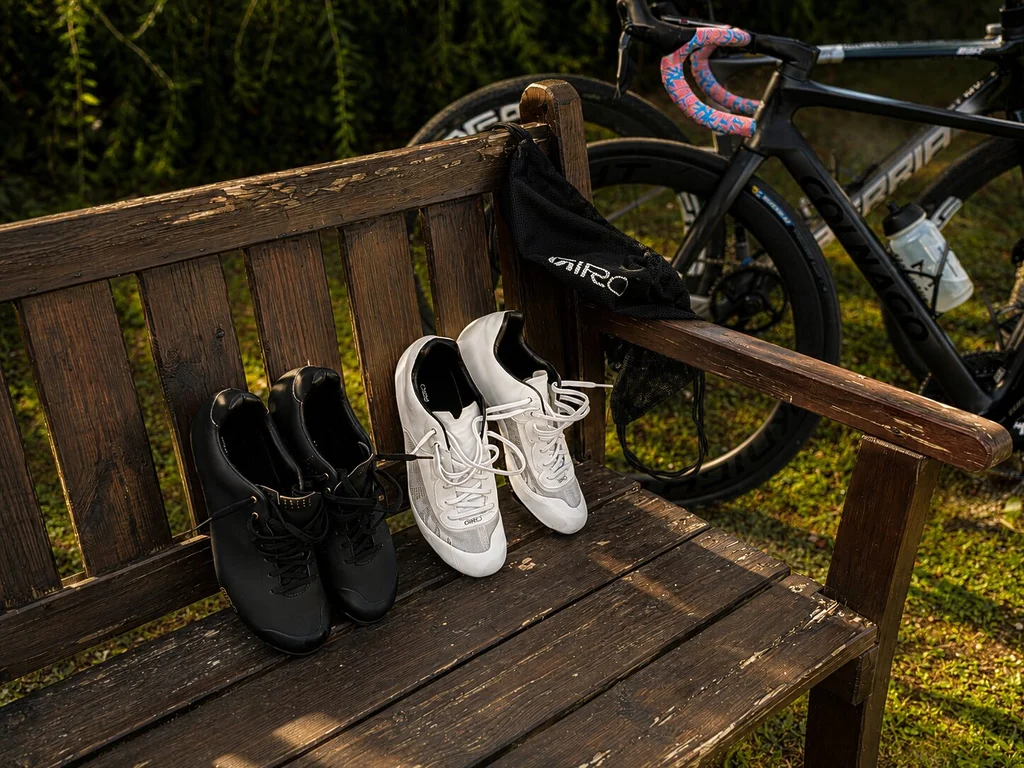
Deep down, the Empire’s greatest strength may not be that they’re lace-up shoes. Their greatest strength is likely that they dare to exist in a world that no longer truly believes in nuances. And perhaps that is precisely why they deserved this feature. Because they don’t just represent another way to lace up a shoe. They represent another way of thinking about performance—a quieter way. More patient. More timeless. A way that, in the end, bears a striking resemblance to Giro. And to that engineer based in the Var region who, between building prototypes and covering a few thousand kilometers each year, continues to believe that a good idea doesn’t need to overdo it.
Because at the end of the day, as Raphaël Dalle told us at the end of our first meeting: “If the product is right, it doesn’t need to overdo it.” And perhaps the entire story of the Giro Empire can be summed up in that single sentence.
Share the post "Review of the Giro Empire: What if Progress Meant Taking Something Away?"