Share the post "Jeff Zell: Behind PANARACER Tires Lies a Vision for Cycling"
We thought we were going to talk about tires. Instead, we mostly talked about bikes. Mountain biking, Japanese culture, gravel, performance, confidence, pressure, tubeless, fun, and that strange way modern cycling sometimes has of returning to very simple truths after having complicated things for so long. For over thirty years, Jeff Zell has been at the heart of this story. A story that begins with the explosion of mountain biking in the late 1980s, passes through the legendary Smoke and Dart, accompanies the birth of the GravelKing, and today sheds light on Panaracer’s very unique place in the imagination of enthusiasts. As our conversation unfolded, one thing became clear: behind a tire, there is never just rubber. There is a culture, an era, choices, compromises, and sometimes even a certain vision of cycling.
By Jeff Tatard – Photos: Panaracer / DR
Sometimes you have to open Google Meet to understand a brand
It’s 5 p.m. when the Google Meet cameras turn on. On the other end of the line is Ben Chapman, whom we already know from several conversations about innovation, equipment, and the topics that interest us at 3bikes because they always go beyond the product itself. His British accent, his usual enthusiasm, his way of building bridges between people. Then a second window appears. Jeff Zell. A Panaracer cap firmly on his head. A GravelKing T-shirt on his shoulders. An American accent. Direct gaze. And immediately that rather rare feeling: some people give the impression of working for a brand; others give the sense of embodying a part of its history.
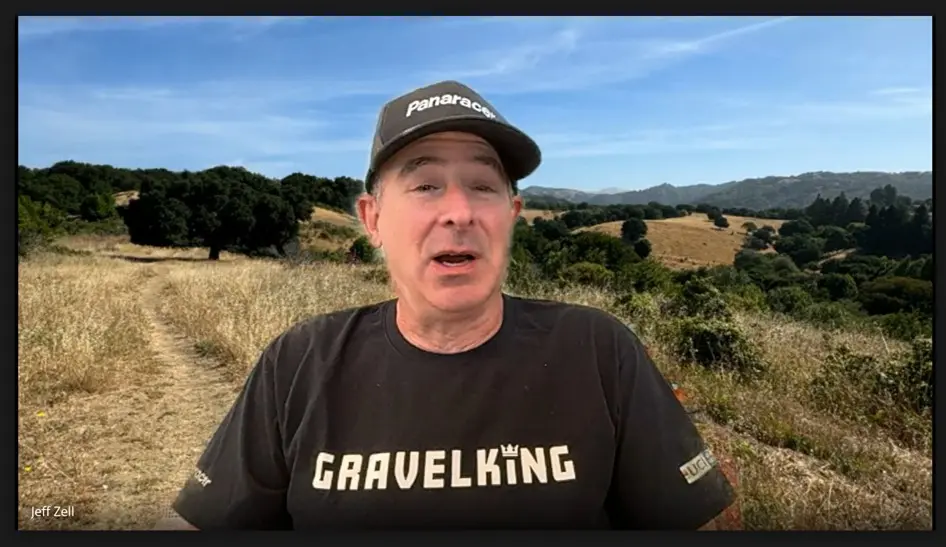
This sartorial detail might seem trivial. It isn’t really. Because even before Jeff Zell begins to answer, something has already been conveyed. The GravelKing T-shirt doesn’t look like a marketing prop. The Panaracer cap doesn’t look like a prop. We don’t see a marketing manager appear to recite a product sheet or promote a new product. What we see is a man who seems to literally inhabit the world he’s about to talk about. And that’s probably what will give this hour-long conversation its unique flavor. We thought we were entering a technical discussion. Instead, we were about to meet a privileged witness to over thirty years of the modern tire’s evolution.
Because Jeff Zell doesn’t speak like someone who discovered gravel just as the market became profitable. He speaks like someone who was already there when mountain biking became the great cycling revolution in the United States. Like someone who lived through the era when tires weren’t yet the subject of endless debates about watts, pressure, or casings. Like someone who has seen the industry shift from a relatively simple world to one where every component is now designed, measured, modeled, and discussed. And from the very first minutes, one thing becomes clear. To understand Panaracer, you shouldn’t start with the latest tire. You have to go back to the 1990s.
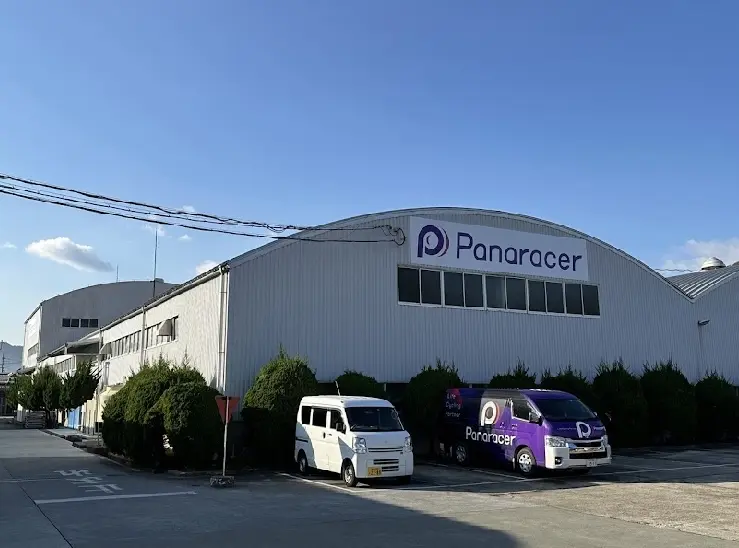
Before the GravelKing, there were Anza, Smoke, and Dart
Nothing, however, necessarily predestined Jeff Zell to become one of Panaracer’s most recognizable faces outside of Japan. His story begins in the late 1980s, at a time when mountain biking was becoming what he himself calls “the next great cycling revolution.” Jeff then joined an American company called Anza, one of the firms riding the wave of the burgeoning mountain bike boom. At the time, Anza was particularly known for popularizing the famous bar ends—those handlebar extensions that are rarely seen today but were then an essential accessory. Above all, Anza collaborated with Panaracer on marketing and part of the product design to help the Japanese brand understand what the American—and sometimes European—market really expected from mountain bikes.
It was in this context that the Smoke and Dart were born, two tires that have become legendary in the world of mountain biking. We must remember what this meant back then: the idea of designing a front tire and a rear tire with distinct functions was not yet a given. Today, this kind of thinking seems natural. At the time, it helped propel the tire into a new dimension. Jeff Zell emphasizes this point not out of nostalgia, but because this period helps us understand what came next. Panaracer isn’t just now discovering that a tire can transform a bike. The brand has been working on this idea for a long time.
As Anza gradually faded from the scene, coinciding with the end of the first major growth cycle for mountain bikes, Jeff Zell stepped away from Panaracer for a time. But the Japanese brand wanted to maintain a presence in the United States. So they reached out to him again. Not to offer him a purely sales role, but rather a liaison position. They needed someone capable of helping the Japanese understand the evolution of the Western market, the expectations of distributors, the desires of riders, and the sometimes stark cultural differences between countries. Jeff thus became a bridge. And that bridge, more than thirty years later, still stands.
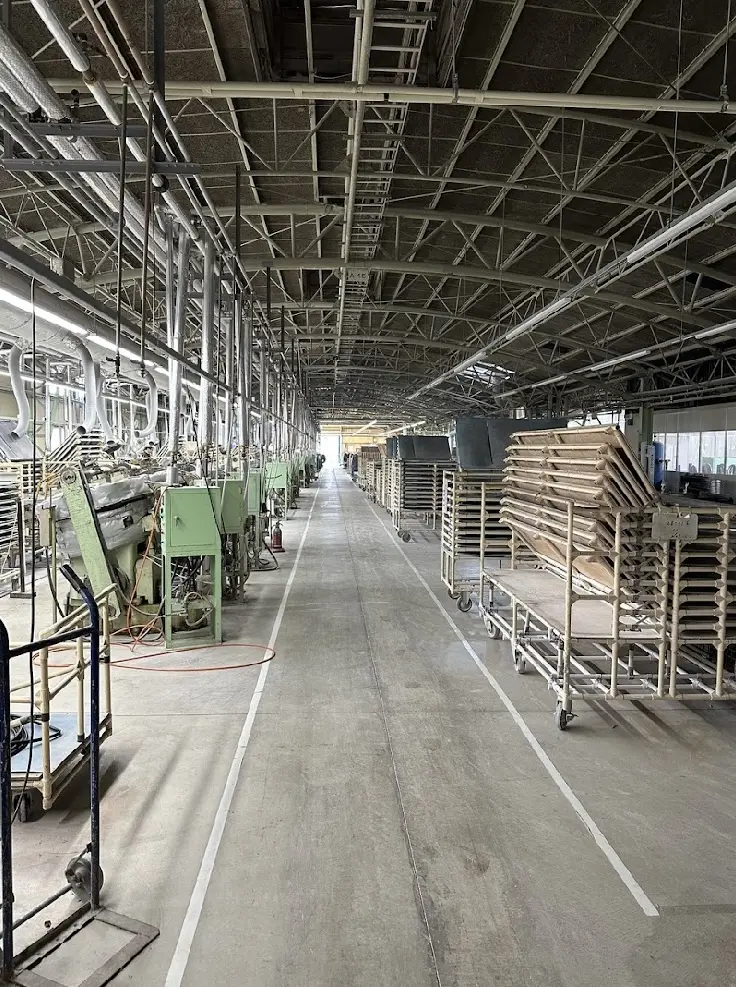
The “Global Go-To Guy”
When asked where his work really begins and where it ends, Jeff Zell smiles. His official title, he says, sums it all up: “Global Go-To Guy.” It’s hard to translate the expression perfectly. The man everyone turns to. The one you call when something needs to be understood, explained, presented, anticipated, or resolved. Not strictly a product manager, nor solely in marketing, nor simply a salesperson, nor just an ambassador. A bit of all of those at once. And above all, a deeply human role: that of a bridge between cultures.
Jeff Zell is the only non-Japanese person at Panaracer. This detail is essential. For over three decades, he has served as an interface between Japan, North America, Europe, and international distributors. He works on product development, sales forecasts, presentations in English, market analysis, feedback from the field, and maintaining the brand’s identity while ensuring it remains relevant across vastly different environments. “When the company needed something, they’d come to me, and I’d try to address it as best I could.” This statement says a lot about his role. It also speaks to an era when certain careers don’t fit neatly into boxes.
Listening to him, you realize that his job isn’t just about selling tires. It’s about translating expectations. To explain why an American rider doesn’t necessarily think like a Japanese cyclist, why a European market doesn’t react like the North American market, why an innovation might be obvious to an engineer but misunderstood by a user. In modern cycling, we often talk about technology, data, and laboratories. But we sometimes forget that performance also depends on this very simple ability: listening to the people who ride.
Who is Jeff Zell?
Jeff Zell has been working with Panaracer for over thirty years. His career began in the late 1980s in the mountain bike world at Anza, an American company that was then collaborating with Panaracer on marketing and product development. He played a key role in the development of the Smoke and Dart tires, two major MTB staples of the 1990s. After Anza went out of business, Panaracer gradually entrusted him with the role of liaison between Japan, the United States, Europe, and international distributors. As the only non-Japanese employee at the company, he now describes himself with a title as original as it is revealing: “Global Go-To Guy.” His role is to bridge the gap between the brand’s Japanese culture, the expectations of Western markets, the needs of riders, and the technical advancements of modern bicycles.
|

Why Panaracer never wanted to be the loudest brand
There are brands that build their image through spectacular launches, bold promises, and constant visibility. Panaracer has never really played that game. And according to Jeff Zell, that’s no accident. “We never had the ambition to be the loudest, most visible, or most spectacular brand. ” This sentence is perhaps one of the most important in the interview. Because it explains why Panaracer holds such a unique place. The brand didn’t seek to be the loudest. It sought to be consistent.
This discretion also stems from Japanese culture. Jeff speaks of patience, industrial responsibility, and pride in a job well done. He mentions this approach of taking one’s time—sometimes frustrating in an industry obsessed with novelty, but often rewarded in the long run. “We aren’t always the first.” The phrase could almost become a motto. Not always being first, but striving to be right. Not necessarily chasing every trend, but understanding what truly deserves to be developed. Not promising the impossible, but delivering a product that works.
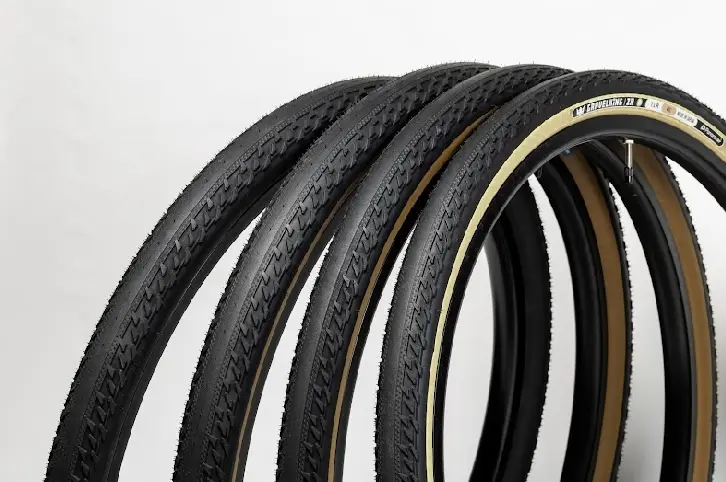
Panaracer’s almost cult-like reputation likely stems from this. Jeff Zell puts it simply: “The product does what it promises.” In a world saturated with empty rhetoric, this statement has an almost radical quality. The product does what it says. Nothing more. No less. And this kind of honesty ultimately builds trust. “Honesty transcends all languages and all cultures.” It’s evident in use. It’s proven in the field. It isn’t decreed. It’s earned.
When the tire ceased to be a mere consumable
For a long time, the tire was viewed as a consumable. You put it on, you wore it out, you replaced it. It was part of the bike, of course, but rarely the focus of conversations about performance. Today, everything has changed. The tire has become one of the most important components of the modern bicycle. It determines performance, comfort, safety, confidence, fatigue, the ability to maintain speed, and sometimes even the joy of riding. For Jeff Zell, this shift took place primarily in the early 2010s, when modeling tools, computer-aided design, and testing technologies became more accessible to tire development.
But this revolution doesn’t just affect professional riders. That’s one of the most interesting points of his analysis. Advances originating at the very highest level eventually trickle down to all cyclists. Aerodynamics, frame design, materials, understanding of airflow, component improvements: all of this ultimately transforms the experience of the average cyclist. Jeff puts it very well when he explains that bikes have become more comfortable, less taxing, and easier to ride for long periods. People spend more time on their bikes because they come home less exhausted.
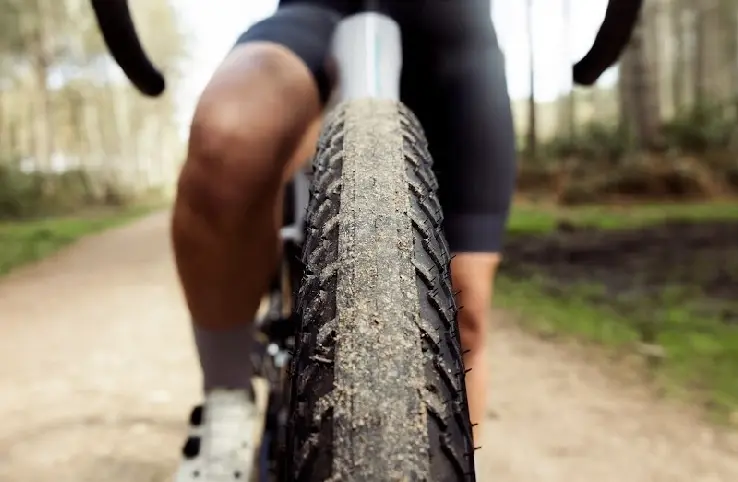
And then there’s this phrase, almost childlike, yet profoundly true: “The joy of cycling—that smile you feel when you get on your bike—is what takes us back to when we were children. " Ultimately, all technology should serve this purpose. To bring back that smile. That primal sensation. That small, immediate joy that washes over us the moment the bike starts moving. Watts, tests, models, and materials only make sense if they add something to the human experience.
Wider, more comfortable, sometimes faster
Just a few years ago, many cyclists believed that a fast tire had to be narrow, highly inflated, and almost as hard as wood. The higher the pressure, the more responsive the bike felt. And because it felt responsive, people thought it was fast. Jeff Zell acknowledges that this belief wasn’t absurd given the knowledge, materials, and technologies available at the time. But cycling has evolved. Testing has advanced. Our understanding of performance has advanced. And we’ve come to realize that speed isn’t just about that initial impression of responsiveness.
A wider tire often allows you to ride at a lower pressure, which means better absorption of bumps, reduced energy loss, maintained speed, and less struggle against the terrain. Jeff places a lot of emphasis on the concept of momentum. “Maintaining momentum really helps keep rolling resistance low.” On rough roads, trails, gravel, or mountain bikes, the goal isn’t just to accelerate hard. It’s also to avoid slowing down unnecessarily. Every bump, every vibration, every loss of traction costs energy. A modern tire can help the cyclist ride more smoothly, more fluidly, and with less tension.
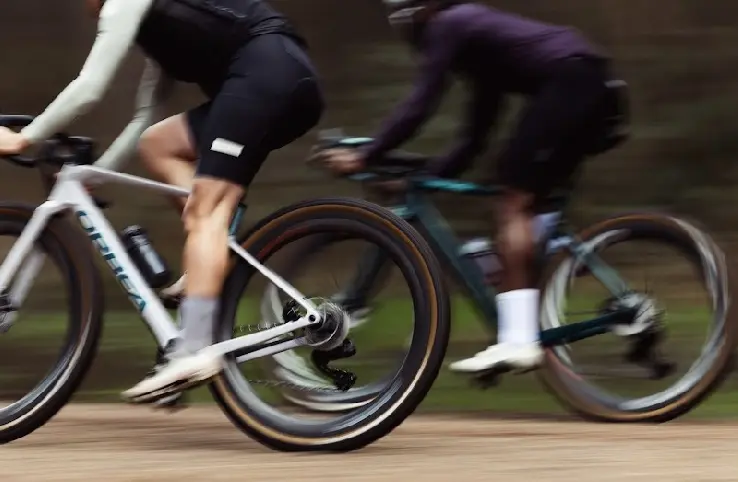
He also mentions this common reaction among road cyclists who switch from a traditional 28 mm setup to true modern tires in 32 or 35 mm. At first, the bike sometimes feels slower. You have to adapt. The sensation of responsiveness changes. The brain has to accept a different kind of speed. Then the cyclist realizes that they aren’t riding any slower, that they often finish feeling fresher, and that they’ve had to fight less against their bike. There’s an important lesson here. In cycling, the immediate sensation isn’t always the true measure of performance.
Watts don’t tell the whole story
Modern cycling loves numbers. Watts, aerodynamic coefficients, optimized pressures, rolling resistance tests, graphs, tables, marginal gains. This culture has brought about tremendous progress. But it has also sometimes reduced performance to a narrow-minded interpretation. When I ask Jeff Zell if cyclists sometimes underestimate concepts like control, fatigue, confidence, or stability, he first rephrases the question, then answers with great clarity. “I think that, in most cases, watts are overrated for the majority of cyclists.”
He isn’t saying that watts are useless. He’s saying they aren’t enough. For a rider aiming to achieve a specific goal, power training remains fundamental. But for most cyclists—and even in some segments of competitive gravel riding—watts are only part of the picture. Because without control, your watts drop. Without stability, your watts drop. Without confidence, the cyclist brakes, tenses up, loses their rhythm, and tires faster. “Without control, your watts drop. Without stability, your watts drop.”
This sentence is crucial. It reconciles performance and feel. It reminds us that a tire isn’t just an object that rolls. It’s an object that allows you to trust the bike. On rough terrain, on a descent, on a tricky section, on cobblestones, or in a race like Paris-Roubaix, performance isn’t measured solely by rolling resistance. It’s also measured by the ability to stay relaxed, engaged, and focused. Not to be at the mercy of your bike. To keep moving forward without wondering if your equipment will let you down.
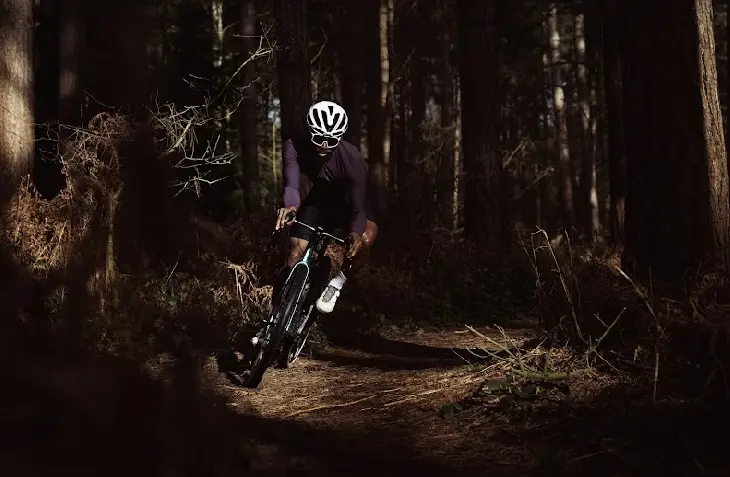
Gravel isn’t really a terrain anymore
When the conversation turns to gravel, Jeff Zell smiles. Is defining gravel difficult today? For him, it was already nearly impossible fifteen years ago. “Gravel was already impossible to define fifteen years ago. ” The word doesn’t mean the same thing everywhere. In the United States, people think of the Midwest, Unbound, long fast trails, and the famous “champagne gravel” of certain regions. In Europe, the term becomes even more vague. In the UK, Jeff says that ten years ago, some people told him they didn’t have gravel. His response was simple: given the condition of some British roads, almost anything could already be considered gravel.
But it is precisely this impossibility of defining gravel that makes it interesting. Gravel is no longer just a surface. It’s a way of riding. An invitation to step outside traditional categories. To take roads you wouldn’t have taken on a classic road bike. To get closer to nature. To move away from the constraints of urban cycling or traffic. “People have gradually stopped trying to figure out exactly what gravel is. They’ve started embracing what gravel represents.” This sentence perhaps sums up the evolution of the discipline better than any other.
Gravel has become an experience. A way to rediscover freedom. To ride farther, differently, sometimes slower, but with a new kind of intensity. And this aspect largely explains its success. Not all riders are looking for performance. Some seek exploration, community, friendship, nature, and silence. Jeff talks about this connection with the environment and with oneself. “Gravel has allowed many people to reconnect more deeply with nature and with themselves.” Here again, we move away from the product to touch on something deeper.
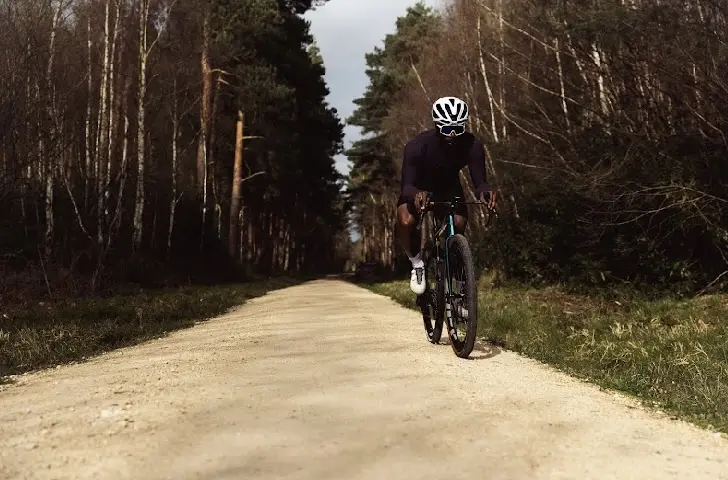
Can gravel lose its soul?
The question inevitably arises. As gravel becomes more professional, faster, more publicized, and more competitive, does it risk becoming what road racing became before it? More aggressive, more structured, more obsessed with performance? Jeff Zell doesn’t deny this evolution. He sees it. He even accepts it. In his view, gravel now has a true professional scene, with riders from road racing who can bring their skills to this new competitive arena. He applauds this evolution, even though he knows some purists regret it.
But he rejects the idea that competition necessarily destroys the spirit of gravel. The two worlds can coexist. At major events, not everyone comes to win. Even at Unbound, there aren’t 5,000 riders battling for victory. Many come to ride, explore, share, have a beer after the finish, talk about tires, flats, single-chainrings, double-chainrings, tough sections, and gear choices. That conversation—very simple, very human—is at the heart of gravel. It hasn’t disappeared just because the pros have arrived.
Jeff then paints a very powerful picture. He talks about those who cover 35 kilometers in three hours because they’re in no hurry, because they’re riding with friends, because they’re enjoying themselves. “That, ultimately, is the spirit of cycling. And it’s certainly the spirit of gravel, too.” This sentence deserves to be remembered. Because it reminds us that cycling is never just about those who go the fastest. It also belongs to those who ride slowly, to those who are discovering it, to those who come home with mud on their shoes and a huge smile. Competition can inspire. It can drive equipment forward. But it doesn’t own cycling.
Designing a tire that does it all without compromise
This is probably one of the toughest questions for a manufacturer: how do you design a tire that’s fast on asphalt, effective on dirt, and reliable on technical terrain, without becoming mediocre everywhere? Jeff Zell doesn’t try to sidestep the challenge. “That’s probably the hardest part of developing a tire.” In his view, any honest designer would say the same thing. The perfect tire doesn’t exist. And anyone who claims otherwise isn’t telling the truth. “It’s impossible to make a tire that does everything perfectly. Anyone who claims otherwise isn’t telling the truth.”
That honesty is valuable. Gravel has blurred the lines between categories because many riders now use their bikes as all-around machines. They ride on roads, commute to work, head out on trails, and sign up for mixed-terrain events where the course might alternate between 40% asphalt and 60% gravel. Components must therefore meet much broader demands than before. Yet a tire remains a series of compromises. Grip, efficiency, weight, durability, comfort, transition between surfaces, cornering performance, puncture resistance: every quality comes at a cost somewhere.
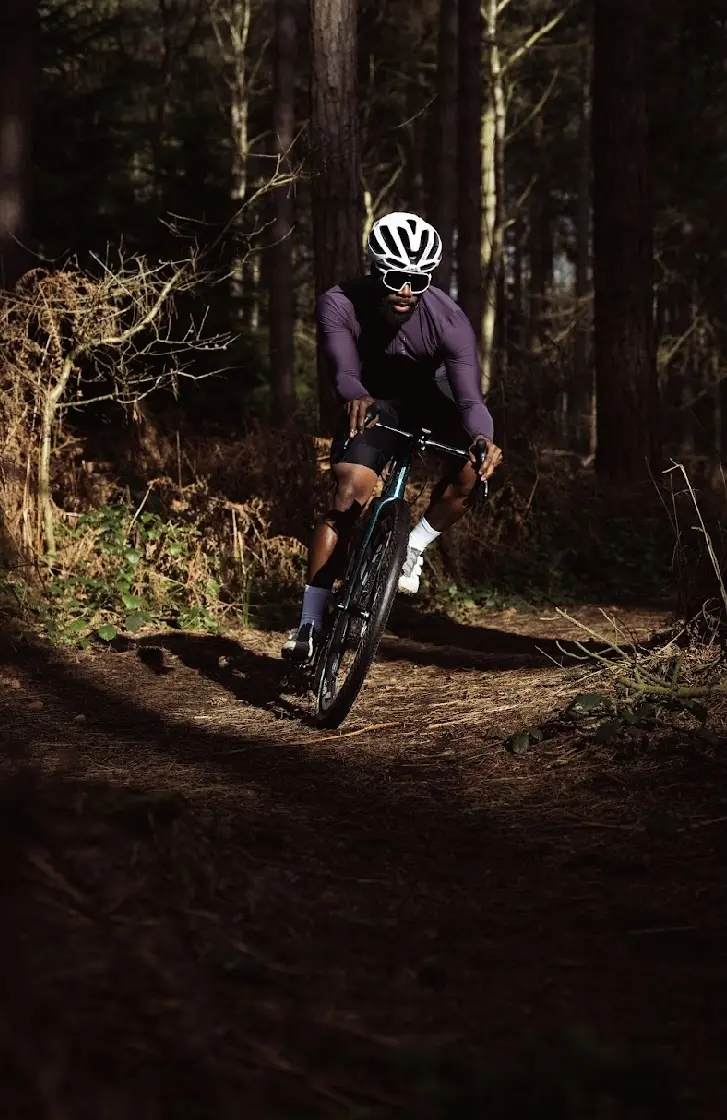
The difference today comes from advances in rubber compounds, casings, and tread patterns. It is now possible to create more versatile tires, with a smoother-rolling center, more pronounced side lugs, and more gradual transitions. A tire can roll efficiently on asphalt while still offering grip when the terrain gets rough. But Jeff insists: you have to clearly explain what each product is for. A tire that performs very well in dry or slightly wet conditions won’t be excellent in mud. And that’s not a flaw. It’s the reality of cycling.
The best tire is the one you don’t even think about
Amid this technical discussion, Jeff Zell offers one of the most beautiful possible definitions of good equipment. For him, the goal of a component is to disappear beneath the rider. It shouldn’t demand attention. It shouldn’t cause doubt. It must not force the rider to think about it. “The product must disappear beneath you.” This phrase could apply to many items in cycling, but it takes on particular significance when it comes to tires. Because a tire often reminds us of itself when something is wrong. When it slips. When it punctures. When it bounces. When it wears out. When it makes its presence felt.
Jeff continues with an even stronger image. “If I ask someone if they liked their tires and they reply, ‘I didn’t even think about them,’ then I know we’ve done a very good job.” This is perhaps Panaracer’s most elegant philosophy. The right tire isn’t necessarily the one you talk about the whole ride. Sometimes it’s the one you completely forget about. The one that lets the cyclist experience their effort, the scenery, their path, their joy, their fatigue, their friends—without ever becoming a problem.
In a world where every brand seeks to make its products visible, this idea is almost counterintuitive. To make a product that disappears. To make an object that fades into the background. To make silence a virtue. This is perhaps where we best see the Japanese influence mentioned earlier. Excellence doesn’t always need to make a noise. Sometimes, it simply consists of doing exactly what is expected, when it is needed.
Road or gravel: where does the real challenge lie?
When asked what is more difficult today—designing an excellent road tire or a great modern gravel tire—Jeff chooses gravel. Not because road tires are simple. They aren’t. But because the scope of work is much narrower. Road technology is mature and highly advanced, and gains are becoming harder to achieve. Manufacturers operate within an extremely narrow performance window, where every improvement requires significant effort for what is sometimes a limited benefit.
Gravel, on the other hand, remains a more open field. More complex, but also more dynamic. The variables are countless. Terrains change. Uses blend together. Expectations vary by country, region, and riding style. A gravel tire must sometimes be fast, comfortable, sturdy, grippy, durable, reassuring, lightweight, and versatile enough to transition from a smooth road to a rough trail in a matter of seconds. This complexity makes development more difficult, but also more exciting. There is still room for innovation.
It is in this context that the birth of the GravelKing must be understood. Jeff says the idea began to take shape around 2011–2012. In the world of gravel, that was already a different era. The market wasn’t yet established. There was no real evidence that this category was about to explode. Panaracer, a rather conservative company, had to take a risk. Yet Jeff sensed something was coming. Mountain biking had become specialized. Road cycling had suffered, particularly in the United States, from the collapse of the myth surrounding Lance Armstrong. Many cyclists were looking for something else. Less pressure. Less danger. Fewer rules. More freedom. Gravel arrived at exactly that moment.
GravelKing, or the right tire at the right time
Jeff Zell doesn’t claim to have predicted everything with certainty. He speaks instead of an intuition. A moment. An alignment. Riders tell him they no longer necessarily identify with modern mountain biking, which has become heavier, more specialized, and more focused on downhill or trail riding. Others no longer feel truly drawn to road cycling, which is too competitive, too dangerous, and too marked by certain disappointments. Then there are those trails, those forgotten roads, those rides with friends, that chance to come home for a beer after having had a friendly battle on a remote trail. Something is coming back. A smile.
He repeats it several times, and it’s no small thing. Cycling should put a smile on your face. Gravel fits the bill. It gives some cyclists back a sense of freedom they couldn’t find anywhere else. GravelKing was born in this moment. Not as a product artificially created to invent a category, but as a response to a practice already taking shape out in the field. That’s the key point. Major developments in cycling don’t always originate in offices. They often emerge among the riders themselves. Attentive brands are simply those that hear the signal before the others.
In hindsight, the GravelKing’s success seems almost obvious. It wasn’t at all. We had to convince a cautious Japanese company to believe in a category that was still difficult to quantify. We had to accept that the market didn’t yet have solid figures. We had to rely on gut feelings, conversations, and subtle signals. And perhaps that’s why the story works. Because it’s not just the story of a product. It’s the story of a moment when a brand listened to what cyclists were beginning to seek.
Tubeless: The Promise, the Fear, and the Learning
It’s impossible to talk about modern tires without mentioning tubeless. The technology has become almost ubiquitous in the high-end market, but it continues to spark debate. Installation, sealant, maintenance, compatibility, reliability: many enthusiasts have encountered difficulties. Jeff Zell readily admits that there was a marketing hype around tubeless, especially in the beginning. “There was a marketing hype around tubeless, especially at the start.” But he also points out that this technology has matured significantly. What seemed intimidating at first has become much more accessible for those willing to learn.
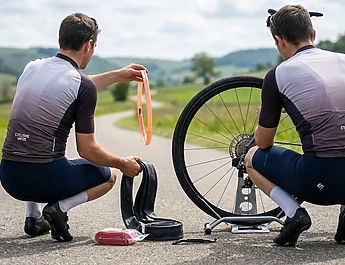
Above all, he emphasizes a very valid point: in cycling, you sometimes have to accept that you won’t know how to do things right away. Changing an inner tube, mounting a tubeless tire, handling sealant, understanding why a setup works or doesn’t: all of this takes a little time. “You have to accept that you won’t be excellent right away, that you won’t do things as quickly as a bike mechanic.” This statement goes beyond just tubeless tires. It says something about our modern relationship with technology. We want everything to be simple, immediate, perfect. But some learning processes still require patience.
Jeff also talks about his own experience. All his bikes are tubeless. He wouldn’t go back. Not because he’s an exceptional mechanic—he describes himself as an average one—but because with experience, the system becomes simple and reliable. He loves coming home to find that a tire has sealed itself without him even realizing it. That’s probably the best definition of a successful tubeless system: not a spectacular promise, but a technology that eliminates some of the problems.

The lab never tells the whole story
When you test a tire in the lab, you get numbers. Rolling resistance, wear, performance on a drum, sometimes reaction to water or certain controlled parameters. These measurements are useful. Jeff doesn’t dismiss them. Panaracer uses them too. But he points out that these tests only tell part of the story. A roller doesn’t replicate a real road. It doesn’t replicate the cyclist’s actual weight in all situations, the riding lines, braking, mistakes, changes in surface, storage conditions, or riding style.
That’s why he’s wary of jumping to conclusions. A tire can score very well in a test and still not be suitable for your riding style. Conversely, a tire that looks less impressive on paper might perform much more consistently on your terrain, with your weight, your bike, your tire pressure, and your riding habits. “Rolling resistance tests are just one indicator. You shouldn’t base your judgment solely on a score.” This remark applies to many other components as well. In cycling, numbers are valuable. But they’re never the whole truth.
Jeff also mentions the subjectivity of user feedback. Some claim a tire lasted only 500 kilometers. Others say they rode 6,500 kilometers on the same model. Both could be true. It all depends on the terrain, the rider, the tire pressure, maintenance, the weather, storage, and riding style. A tire is a technical object, but its use remains deeply human. That’s why you should read reviews, listen to feedback, but always relate the information to your own riding experience.
Tire pressure: the debate that could bring down nations
When I ask him which aspect of a tire’s behavior is still the most misunderstood today, Jeff Zell hardly has to think. His answer is immediate: tire pressure. PSI, bar—it doesn’t matter which unit. For him, it’s probably the most misunderstood topic in modern tires. And he puts it with a touch of humor: “This debate could bring down countries. Countries could go to war over what the right tire pressure is.”
Behind the joke lies a real truth. There is no such thing as an absolute ideal pressure. It depends on the rider’s weight, tire width, rim, terrain, speed, riding style, weather, risk of a flat, desired comfort, and desired handling. Yet, people are still often searching for a definitive answer. A magic number. A universal truth. That is precisely what makes the subject so passionate.
And it also shows just how central the tire has become. No one argues so fiercely over a simple consumable. If tire pressure sparks so much discussion, it’s because everyone senses that it transforms the bike. Too high, it causes fatigue, makes the bike bounce, and sometimes reduces grip and confidence. Too low, it can make the bike feel unstable, increase the risk of pinch flats or burps, and affect efficiency. Between the two, there is a balance. And that balance is up to each individual.
What will change in the next five years
What will the tire of tomorrow look like? Jeff Zell doesn’t promise a spectacular revolution. Instead, he speaks of continuous refinement. According to him, the major challenge in the coming years will be the balance between weight and performance. For a long time, things seemed simple. A heavy tire lasted longer. A tire with high grip wore out faster. A hard tire handled better. A light tire was often more fragile. These principles haven’t completely disappeared, but they are becoming less and less absolute.
Modern materials now make it possible to combine qualities that were once incompatible. We can produce lighter tires with low rolling resistance while maintaining durability. That is where part of the future lies—not necessarily in a sudden breakthrough, but in this ability to gradually reduce compromises. “Today, we can have a lighter tire with lower rolling resistance while maintaining durability, thanks to the materials now available to manufacturers.”
He also points out that these advancements aren’t just for the elite. Beginner and intermediate cyclists eventually benefit from these innovations as well. Some don’t need a €70 or €80 tire just to get from point A to point B. And Jeff makes that very clear. But for those looking to improve, ride better, and understand what their equipment can offer them, these technologies are gradually trickling down the product line. As is always the case in cycling, what seems reserved for the top tier often ends up benefiting the entire base.
Not all tires are created equal
The last misconception Jeff Zell would like to see disappear is simple: the belief that all tires are the same. Despite the wealth of available information, despite the tests, user feedback, and industrial advancements, some cyclists still think that a tire is just a tire. Jeff partly understands this skepticism. He knows that marketing can sometimes exaggerate. He knows that certain promises deserve to be questioned. But he refuses to let this skepticism lead to denying the real progress made by the industry.
A modern tire is a sophisticated component. It has a casing, a rubber compound, a tread pattern, a shape, and a purpose. It is designed for a specific use. It involves trade-offs. It reflects choices. And these choices truly change the cyclist’s experience. “One of the big misconceptions that still exists is the belief that all tires are the same.” This seemingly simple statement ultimately sums up the entire interview. If all tires were the same, we wouldn’t have been talking for nearly an hour. We wouldn’t have talked about culture, gravel, pressure, confidence, the lab, enjoyment, and compromise.
And yet, what makes this conversation interesting isn’t just the technical aspects. It’s the way Jeff Zell always connects the technical to the practical. The tire is never isolated. It exists beneath a cyclist, on a terrain, within a practice, with an intention. Perhaps this is what modern cycling sometimes tends to forget. In its quest for universal truths, it forgets that cycling remains a deeply personal experience.
We thought we were talking about tires
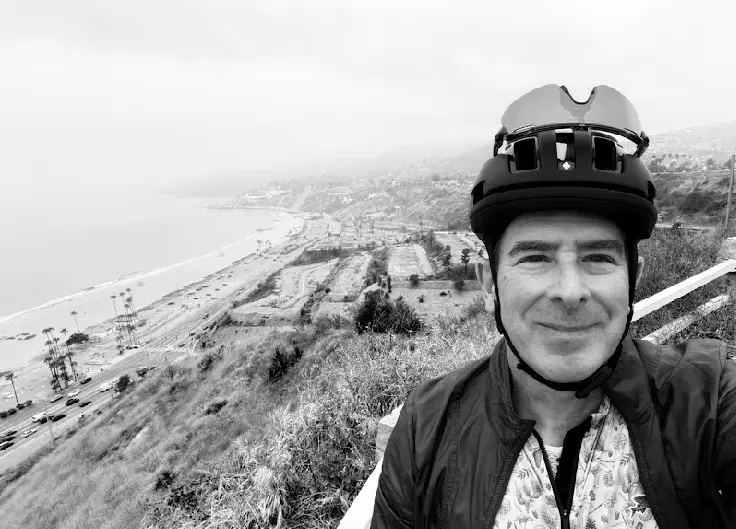
At the end of our conversation, Jeff Zell asks me an almost unexpected question. He asks if what he’s told me was interesting. The answer seems obvious to me. Yes. Because, as is often the case, it’s not just the products that interest us. It’s the people behind the products. The stories. The journeys. The convictions. The contradictions. The hesitations. The cultures. The ways of thinking about cycling.
That day, we talked about tires, of course. But above all, we talked about what tires reveal about modern cycling. We talked about a Japanese brand that has never sought to be the loudest. About an American who became a bridge between several worlds. About a tire that sometimes has to disappear beneath the rider to prove it’s a success. About a gravel bike that’s no longer defined just by a surface, but by a way of riding. About a tubeless tire that takes some getting used to. About a tire pressure capable of sparking heated debates. And about that simple idea—almost too simple—that cycling should keep making us smile.
So yes, that Thursday, at 5 p.m., when the Google Meet cameras turned on, when Ben Chapman appeared on screen, and then when Jeff Zell joined the conversation in his Panaracer cap, his GravelKing T-shirt, and his American accent, we thought we were talking about tires. We ended up talking about cycling. And maybe that was exactly the same thing.
=> To better understand the Panaracer range: PANARACER WEBSITE
=> And here, if you want to discover all our other profiles: All our Portraits articles
Share the post "Jeff Zell: Behind PANARACER Tires Lies a Vision for Cycling"