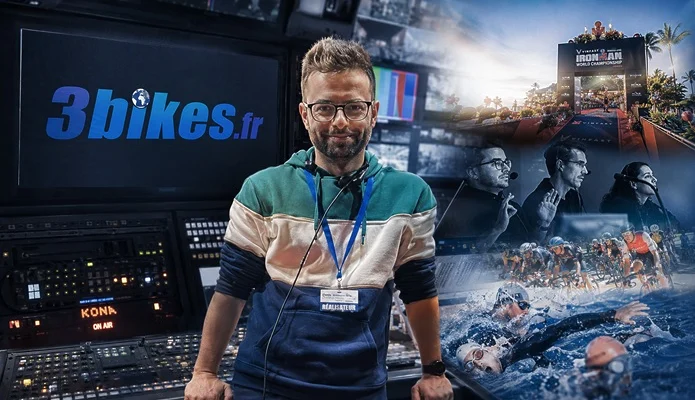
Share the post "How Romain François tells the stories of sports heroes"
We thought we were talking about television. Instead, we discovered a whole new world. A world of camera bikes, helicopters, flight plans, missed shots, silences, moments captured on instinct, and decisions made in a matter of seconds. A world where covering an Ironman, an Olympic marathon, or a stage of the Tour de France is as much about cinema as it is about sports. For over twenty years, Romain François has lived at the heart of this invisible machinery. And as our conversation unfolded, one thing became clear: before a feat becomes a memory, someone must first succeed in telling its story.
By Jeff Tatard – Photos: Romain François / DR
Sometimes you have to step inside the broadcast truck to understand sports
We often believe that the emotion of a great sporting moment originates with the athletes. In an attack. In a sprint. In a victory cry. In the tears of an Olympic or world champion. Yet, between what athletes experience and what we feel in front of our screens, there is another world. A world that the general public almost never sees.
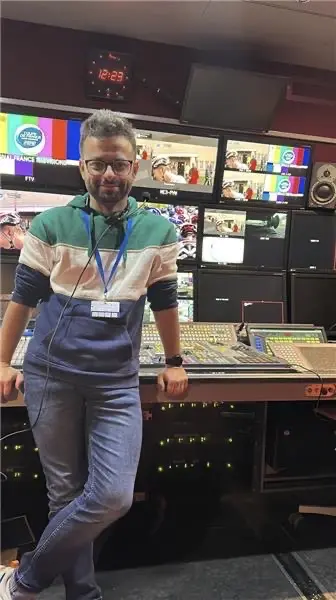
For over twenty years, Romain François has been working precisely in this invisible realm. As the director of the Ironman World Championships in Kona since 2019, the triathlon and para-triathlon competitions at the Paris 2024 Paralympic Games, the Paralympic marathon, the Paris 2024 Test Event with World Triathlon, the Paris Marathon, the Tours Marathon, the Riyadh Marathon, the Road Cycling World Championships, and even the Tour de France, he is one of those men whose name remains in the shadows but whose images already belong to the emotional heritage of modern sport.
Because when Alexis Hanquinquant became a Paralympic champion in front of his home crowd in Paris, those images weren’t just for France Télévisions. They were images shared with the whole world. The ones that every international network would broadcast. A few seconds later, they no longer belonged to a broadcast control room, but to history.
Before sports, there was cinema
Nothing, however, really predestined Romain François to become one of the most renowned directors in endurance sports. After earning a high school diploma in literature, he chose to study film. Storytelling before technique. Narrative before image. The desire to tell a story before the desire to produce. As is often the case in this profession, what followed was a series of encounters, opportunities, and a confluence of circumstances.
As an intern at the Tour de France, he discovered something that would leave a deep impression on him. For in his eyes, the Tour is not a race. The Tour is a series. Long before Netflix. Long before our modern addiction to seasons and episodes.
For three weeks, every day has its heroes, its supporting characters, its dramas, its comebacks, and its turning points. A yellow jersey wavers. A teammate makes the ultimate sacrifice. An underdog emerges. A breakaway is reborn. And in a way, this structure resembles a twenty-one-episode film more than a simple sporting event.
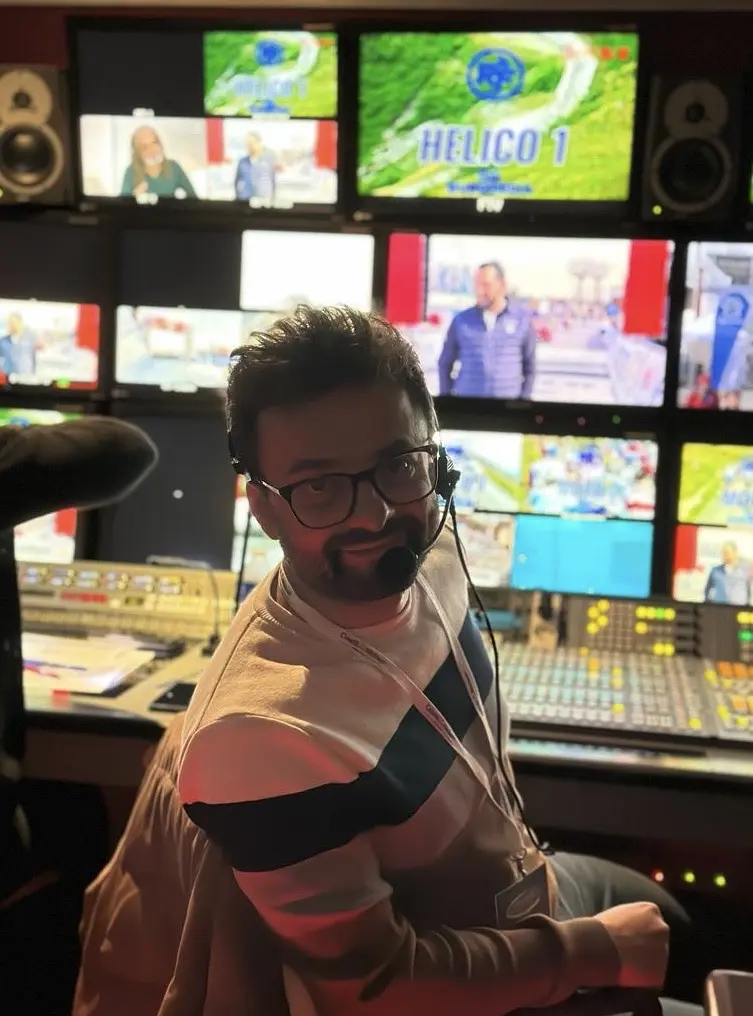
The audience watches sports. Romain François, however, already sees the film.
Romain François doesn’t film the performance. He captures the effort. The difference seems slight. It is immense. Because a great image isn’t necessarily a spectacular one. It isn’t necessarily a sprint. It isn’t necessarily a victory. Sometimes, a great image is a glance. A hesitation. A moment of solitude. A moment of distress. The duration of a shot. The time allowed for an emotion to exist. Like in a book. Like in a movie. Like in a series.
Creating dramatic tension over six, eight, or ten hours of live coverage ultimately follows the same rules as storytelling. You can’t stay at the peak of intensity all the time. Otherwise, the emotion runs dry. You need breathing room. Silences. Calmer moments that, in reality, are never truly empty. They set the stage. They build. They foreshadow. They allow the next emotion to exist. And this approach likely requires a rare quality: empathy. Not the overused kind everyone talks about today. The real thing. The ability to understand what another person is going through. To anticipate an emotion before it even arises. To sense that a face tells a story more than a ranking ever could. And it is precisely this ability to tell people’s stories that, a few years later, would lead him to discover another world. Kona. The volcanoes. Queen K. Ali'i Drive. And that strange feeling that certain places have a soul.
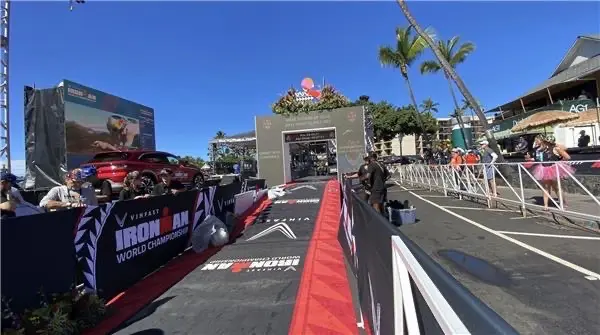
Kona, or when places themselves become characters.
Not all events are alike. Nor are all courses. And as the years go by, Romain François becomes more and more convinced of one thing: certain races have a soul. A personality. An atmosphere almost impossible to explain to those who have never experienced it. Kona is one of those places. Like Paris-Roubaix in cycling. Like Wimbledon in tennis. Like Le Mans in motorsports.
In Hawaii, everything seems to tell a story. The Queen Ka’ahumanu Highway, which everyone simply calls Queen K. Ali’i Drive. The volcanoes. The light. The ocean. The wind. The heat. The solitude. Faces contorted by exertion. The bodies staggering. The lost gazes. Ultimately, Kona isn’t just a race. It’s a setting. And in a film, the setting is also a character.
The director’s role, then, is to convey that atmosphere. To make the viewer understand that they aren’t just watching athletes run, cycle, or swim. They’re watching something greater. A story. A place. A culture. A sort of modern pilgrimage where the greatest long-distance specialists gather every year. Because some places have a soul. And that soul, too, deserves to be told.
Lucy Charles-Barclay, or when sports transcend cinema
Through years of storytelling, Romain François has learned one fundamental thing: sports sometimes produce scenarios that Hollywood wouldn’t even dare to write. Among the images that have left a lasting impression on him is that of Lucy Charles-Barclay. The British athlete is alone in the lead at the Ironman World Championships. Victory seems assured. The world title is within her grasp. Only a few kilometers remain. And then everything changes. The race changes. The story changes. The script changes. The withdrawal. Brutal. Unexpected. Cruel.
Because that’s how sports can be sometimes. It produces dramas and twists that no screenwriter would dare to write, for fear they might seem unrealistic. In moments like these, the director doesn’t need to overact. He doesn’t need to exaggerate. He simply has to understand. To feel. To accompany. To tell the story. Without betraying it. Because, deep down, suffering in endurance sports cannot be caricatured. It must be respected. And it must be filmed with restraint.
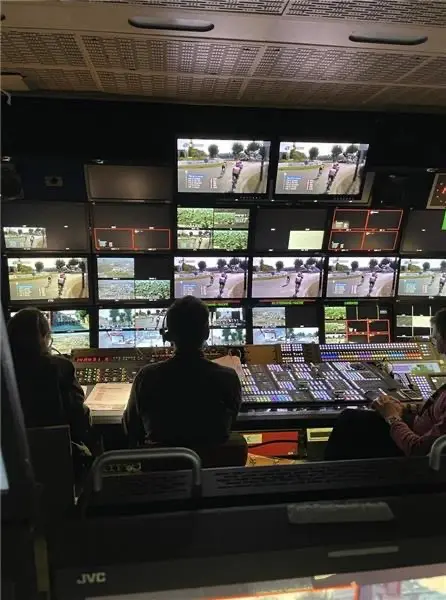
The Invisible Brain
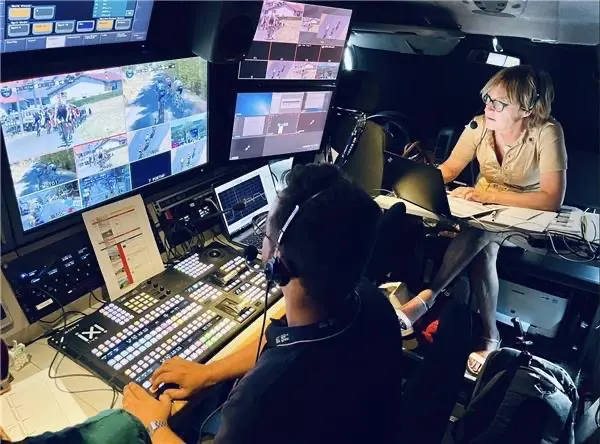
To the general public, a production truck looks like a room full of screens. The reality is infinitely more complex. The production truck is more like a brain. A living organism. A beehive. A place where dozens of pieces of information circulate simultaneously. Images. Communications. Assistants. Slow-motion operators. Satellite links. Engineers. Motorcycles. Helicopters. Drones. Alternative scenarios. And above all, a constant obsession: choosing.
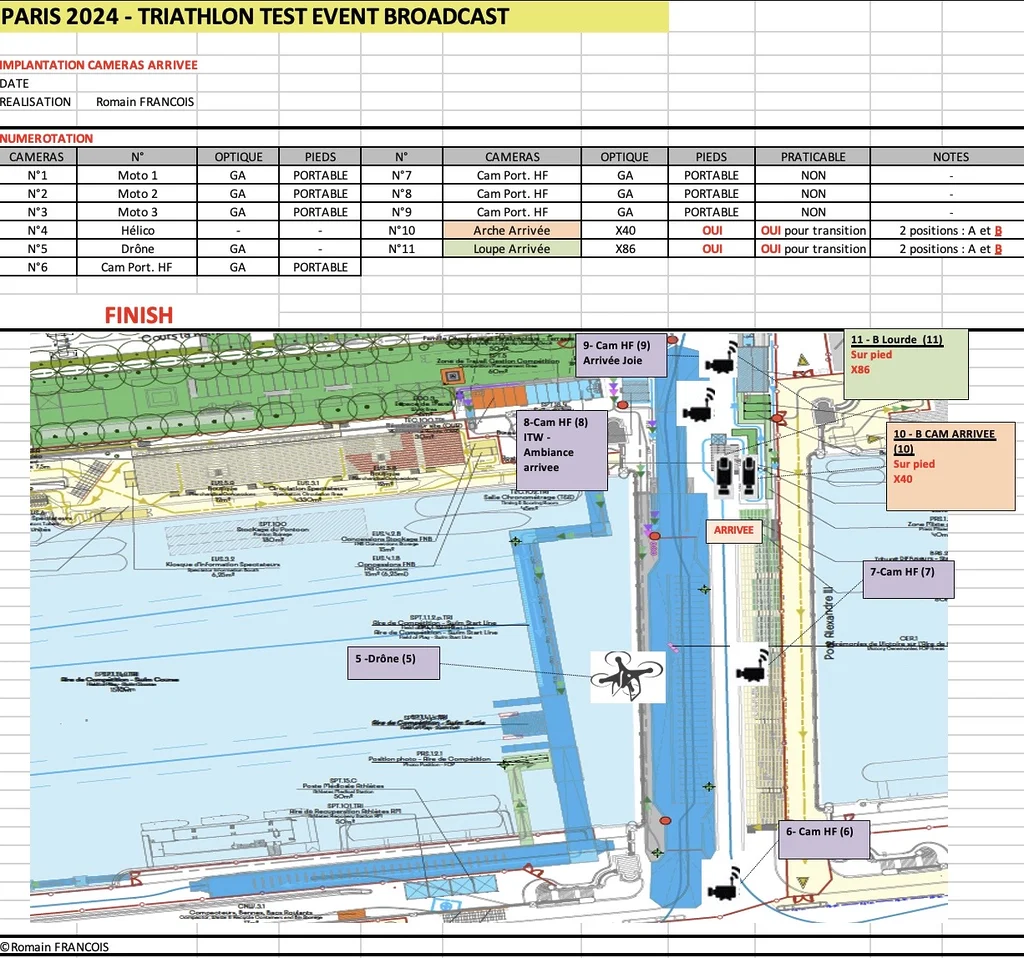
Because directing means making sacrifices. At the Tour de France, despite massive resources, the director has at best five motorcycles and two helicopters at his disposal. That seems like a lot. In reality, it’s extraordinarily few. Because a race simultaneously produces an infinite number of stories. An attack. A favorite cracking under pressure. A breakaway. A crash. A smile. An emotion. A spectator. A detail. And sometimes, certain magnificent images slip past the director. Not because he made a mistake. Simply because he can’t be everywhere. Choosing one image means giving up all the others. And perhaps that is the most painful part of the job.
When the weather wipes out the world
Sometimes, the adversary isn’t even the sport anymore. It’s nature. Romain François recalls, in particular, a stage of the Tour of Hungary. The weather takes a sudden turn for the worse. The images disappear. Nothing left. Blackness. Emptiness. The absolute nightmare. Because unlike in movies, live broadcasts can’t be paused. You have to keep going. Improvise. Reassemble. Find solutions. Keep telling the story no matter what. Because there are millions of viewers. Because the story itself keeps moving forward.
This situation is reminiscent of certain legendary episodes of the Tour de France, when weather conditions made live coverage impossible and plunged viewers into several minutes of uncertainty. And in those moments, you have to trust your experience. Tell the story differently. Do things differently. But keep going. Always. Because live TV waits for no one.
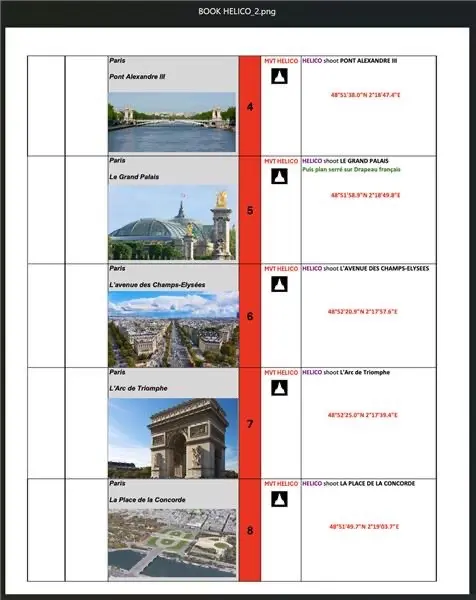
Filming is also about telling the story of geography
For a long time, the general public viewed images of landscapes or monuments as mere interludes in the race. Romain François sees things differently.
For him, geography is part of the story. It is even one of the characters. And in this approach, his exchanges with Franck Ferrand take on their full meaning.
Because telling the story of the Tour de France isn’t just about the riders. It’s about a region. A culture. A history. Villages. Castles. Legends. France. Franck Ferrand tells the story of history. But the images tell the story of geography. And together, they create something that goes far beyond sports.
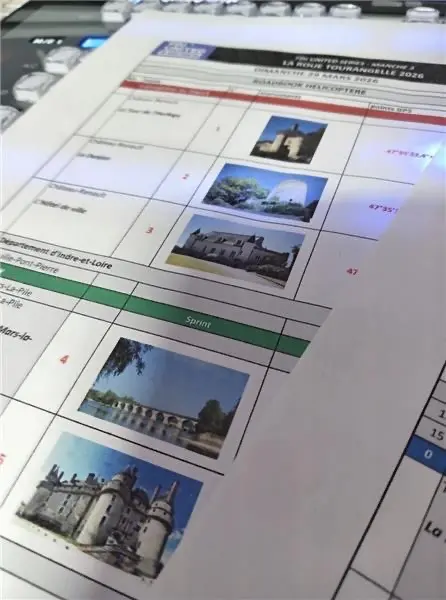
The Sleeping Beauty Castle
Among the memories that make him smile is that of the Château d’Ussé, in Indre-et-Loire. The castle that inspired Charles Perrault to write Sleeping Beauty. Long before the riders arrive, Romain François already knows what he wants to capture. He knows the helicopter’s movements. The angles. The trajectories. And almost the music. In his head, he already hears the Disney universe. He already sees the film. Because he isn’t simply filming a monument. He’s filming an imaginary world. A story. A fairy tale. And that is probably what fascinates most about him. This ability to anticipate. To imagine. To tell the story even before the images exist.
In a few days, when he directs the 2026 French Road Cycling Championships in the Vals du Dauphiné, this work will already have begun. The landscapes. The locations. The stories. The scenarios. All of this will already exist in his mind. Because a director doesn’t discover his film. He prepares it
He ended up becoming part of his own film
There is probably something quite fascinating about Romain François’s journey. For over twenty years, he has chronicled the exploits of others. He has filmed marathon runners. Triathletes. World champions. Olympic medalists. Bodies on the verge of collapse. The smiles at the finish line. The silent suffering. The moments of grace.
And then, almost without realizing it, something changed. By watching these men and women experience extraordinary emotions, he eventually wanted to understand what they were really feeling. Not from the production truck. Not behind the screens. From the inside.
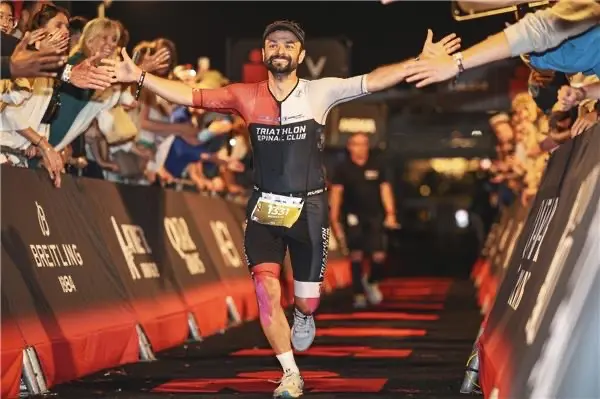
His partner, herself a triathlete with the Triathlon Épinal Club, played a decisive role. Little by little, she introduced him to this world that he already knew perfectly well from a visual standpoint but had never physically experienced. So he started running. Then he took up triathlon. Then he discovered what endurance really means.
Of course, it’s not a matter of comparing his experience to that of a Sam Laidlow or a Lucy Charles-Barclay. He is perfectly aware of that. But this change offers him something precious: a different understanding. A more intimate understanding. A deeper one. A more human one.
And there is something almost poetic about the fact that the man who had spent his life telling other people’s stories has ultimately become one of the characters in the story himself.
Last year, he ran the Paris Marathon. A few months later, he found himself covering it for television. As if the roles had been reversed. As if, after observing heroes for years, he had finally stepped into his own movie.
The Olympic Games, or the weight of a billion eyes
If there are events that change a career, the Olympic and Paralympic Games clearly belong in this category. Because suddenly, the scale changes. The director knows he is no longer working just for a few enthusiasts. He is working for the world.
When the triathlon and para-triathlon events of the Paris 2024 Paralympic Games are broadcast, the footage produced by Romain François and his team is not intended solely for French viewers. These are the images that will be used by television networks across the globe.
When Alexis Hanquinquant becomes a Paralympic champion on home soil before going on to become the flag-bearer for the French delegation a few days later, what American, Japanese, Australian, or British viewers see is exactly what the French audience sees.
The same images. The same narrative. The same emotions. The same story. It is both dizzying and magnificent. Because, ultimately, an image becomes universal. It no longer belongs to a broadcaster. It belongs to everyone.
Marathon, Ironman, or cycling: three different narratives
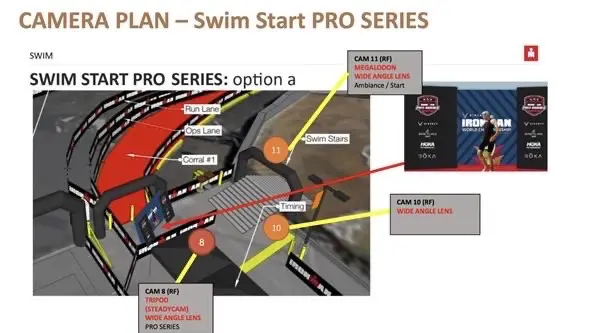
At first glance, one might think that covering a marathon, an Ironman, or a cycling race is all the same. In reality, the dynamics are different. In cycling, the roles are clearer. There are leaders. Teammates. Strategies. Collective scenarios. A team riding for a favorite. A lieutenant who sacrifices himself. Alliances. Rivalries. This drama comes almost naturally.
In a marathon or an Ironman, the narrative is different. More intimate. More solitary. The struggle often takes place within the athletes themselves. Suffering becomes a character. Fatigue, too. And yet, despite these differences, the logic remains the same. Build a story. Create characters. Build tension. Setting up turning points. Because endurance sports, like cinema, always rely on the same emotional drivers.
The images we don’t film
There is another kind of pain the public doesn’t even suspect exists: that of missed images. Because in a live broadcast, not everything can be captured. Not everything can be shown. And some magnificent scenes inevitably slip away.
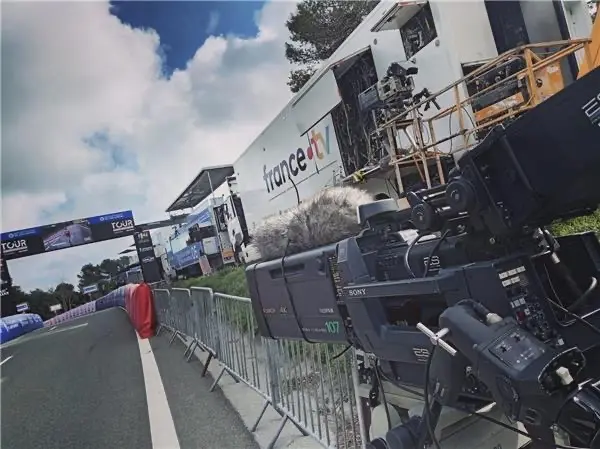
With five motorcycles and two helicopters covering the Tour de France, you might think anything is possible. In reality, these resources are limited in the face of the complexity of reality. And that is probably where the cruelty of the job lies.
Because unlike in cinema, there is no second take. Sports never start over. What is lost is lost. Forever.
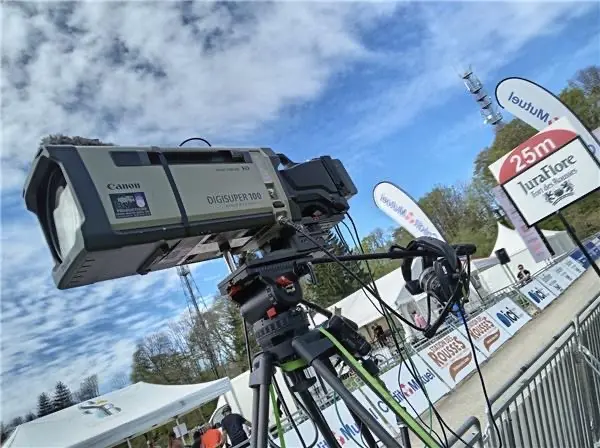
Instinct
But conversely, certain images arise precisely from that element of the unexpected. From an instinct. From an intuition. From an emotion felt even before it occurs.
Romain François speaks of filmmaking as a form of writing. Just as a novelist speeds up or slows down his narrative. Just as a director chooses the duration of a shot. Just as a musician plays with silences. You have to feel. Anticipate. Understand. And sometimes, instinct pays off. Because certain images become magical precisely because they weren’t planned.
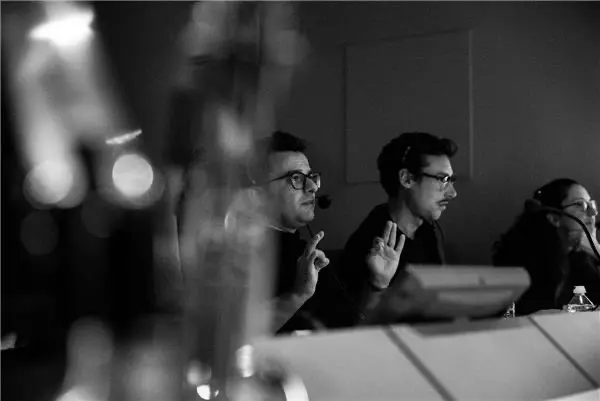
The audience looks at the cake. He knows the recipe.
During our conversation, one image comes up often. That of Romain’s son. Passionate about cinema from a very young age, he’s capable of pausing a film every few minutes to analyze a shot, understand a camera movement, or dissect the direction. An approach that amuses his father. Because deep down, most people don’t want to know the recipe. They simply want to enjoy the cake. And that is probably where the true beauty of the craft lies.
The audience watches sports. The director, however, sees the mechanics, the shots, the pauses, the storylines, the characters, and the silences. He sees the film. But his job is precisely to make all that mechanics fade into the background, to render it invisible so that emotion can take center stage.
Because, deep down, who really creates the emotion of a great sporting moment? As our conversation unfolded, an answer emerged. Perhaps no one. And perhaps everyone at once. Because emotion is a collective effort.
And perhaps that, ultimately, is Romain François’s craft. Understanding what deserves to be shown so that, a few seconds later, millions of people can simply feel.
=> To better understand Romain François’s world and his relationship to sports, imagery, and history: “There’s a passion-reason aspect”: Sanchéen native Romain François blends sports and history through images
=> And here, if you’d like to explore all our other profiles: All our Portraits articles
Share the post "How Romain François tells the stories of sports heroes"