Share the post "Van Rysel RCR Pro Review: The Best Value for the Money?"
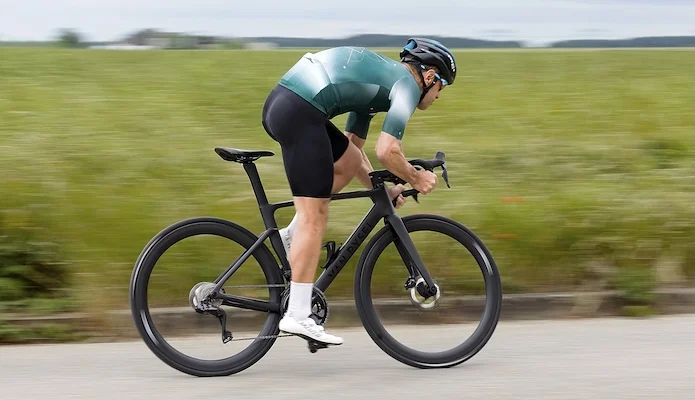
Long considered an underdog compared to more traditional road bike brands, Van Rysel has gradually stepped up its game. With the RCR Pro, the French brand offers a road bike designed without compromise, directly inspired by its collaboration with the Decathlon AG2R La Mondiale team, now known as the Decathlon CMA CGN team. Lightweight, aerodynamic, and equipped with top-of-the-line components, this model, priced at €5,499, is positioned in a particularly competitive segment. Facing well-established models like the Specialized Tarmac, Canyon Ultimate, and Trek Madone, does the RCR Pro have what it takes to stand out? We took the time to evaluate it on all types of terrain.
By Guillaume Judas – Photos: ©Vincent Lyky
For several years now, Van Rysel’s strategy has been to offer bikes capable of competing with market leaders while maintaining an aggressive price point. This strategy is made possible by the strength of the Decathlon network in France and around the world, and by the quality of the design teams behind the Van Rysel, Rockrider, B'Twin, Elops, and Riverside brands, all part of the northern French retailer.
With the Van Rysel RCR Pro, the brand isn’t aiming to break records in any specific category. The goal is to design a bike capable of excelling everywhere—a bit of a contrast to the RCR-F we tested last summer, the aerodynamic and fast bike in the lineup, a true beast on the road. To achieve this, Van Rysel collaborated with ONERA (the French National Office for Aerospace Studies and Research) to refine the frame’s geometry and evaluate its performance under various riding conditions.
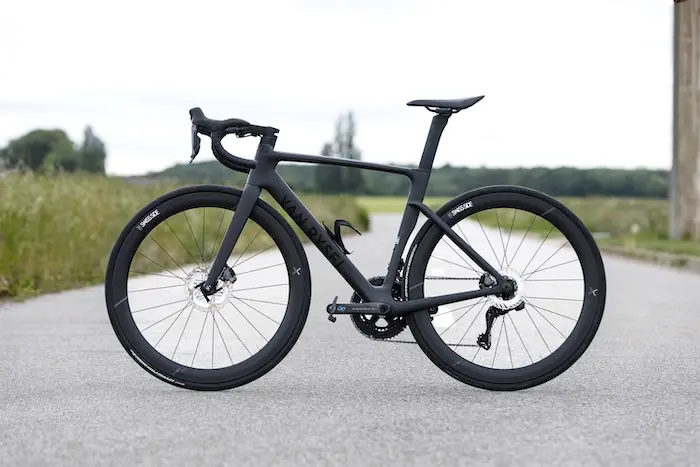
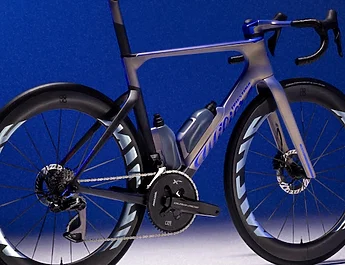
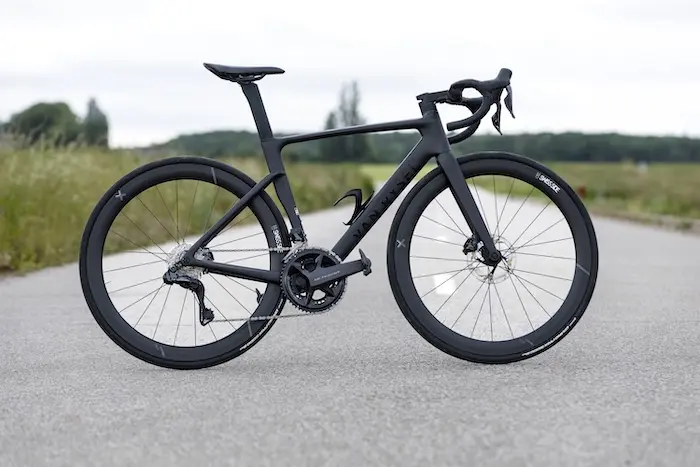
At first glance, the RCR Pro exudes a sense of simplicity and efficiency. The tube profiles are refined but remain relatively understated compared to the purely aerodynamic bikes on the market. The cable routing is almost completely integrated, and the lines are particularly clean.
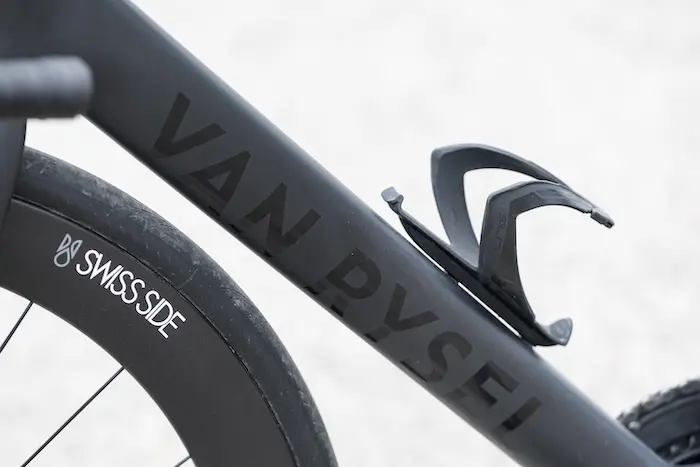
But overall, in this matte black finish, the bike is a bit of a letdown aesthetically. Some people like this overly understated color scheme, but I don’t. The matte finish is prone to showing dirt and is susceptible to micro-scratches. This impression is amplified by the fact that the bike we received for testing has clearly seen some use. In short, the RCR Pro is also available in glossy Abyss Green, Midnight Blue, or Celestial Green/Black—colors we find more appealing.
Designed for overall performance
The frame is made from Super High Modulus carbon fiber and features meticulous work on the orientation of the layers to balance stiffness, lightness, and vibration damping. With a claimed weight of 790 g for a size M frame alone, the RCR Pro ranks among the lightest models in its category.
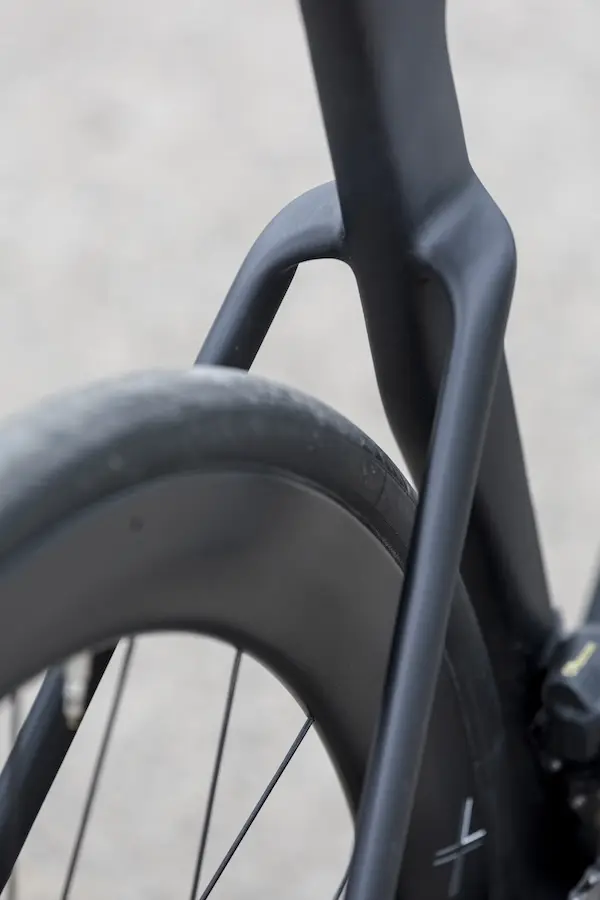
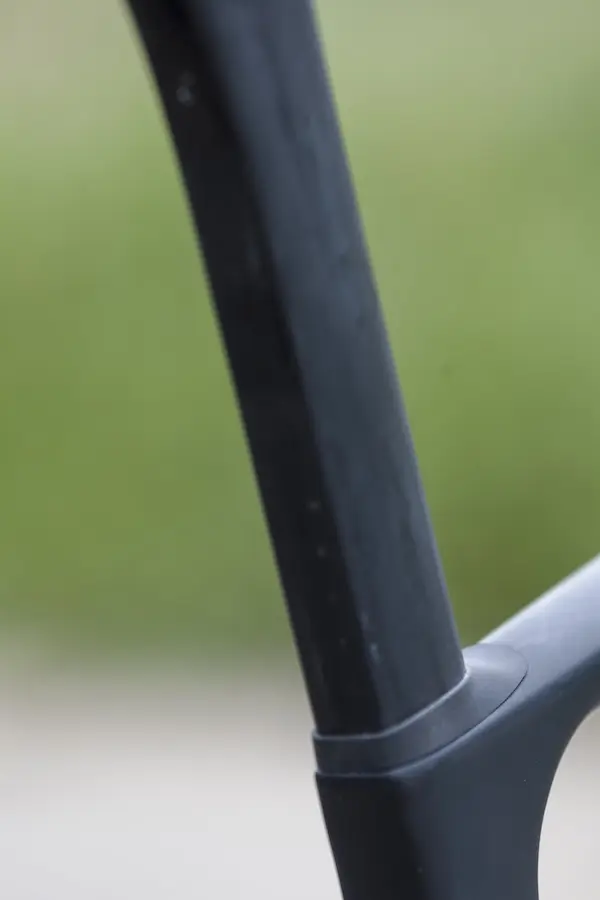
The tube sections feature profiles inspired by the latest research in aerodynamics, with a widened down tube, a contoured seat tube, and semi-integrated cables at the handlebar-stem assembly. The fork has also been designed to reduce turbulence around the front wheel.
The geometry follows the design principles of today’s competition bikes: compact in height but fairly elongated, with an optimized wheelbase to maintain both stability and responsiveness. The goal is to achieve precise handling at high speeds while maintaining a certain ease of handling.
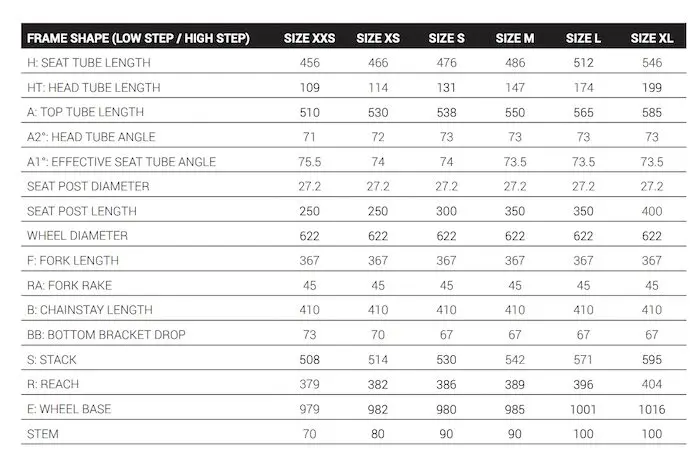
The RCR Pro is available in six sizes, which should allow most riders to find a comfortable fit on the bike. Be careful, however, with the network of retailers, as they may not necessarily be authorized or trained to adjust certain positioning elements such as crank length or stem height. This is a challenge you generally don’t encounter at a traditional bike shop when purchasing a high-end bike.
Equipment worthy of the high-end
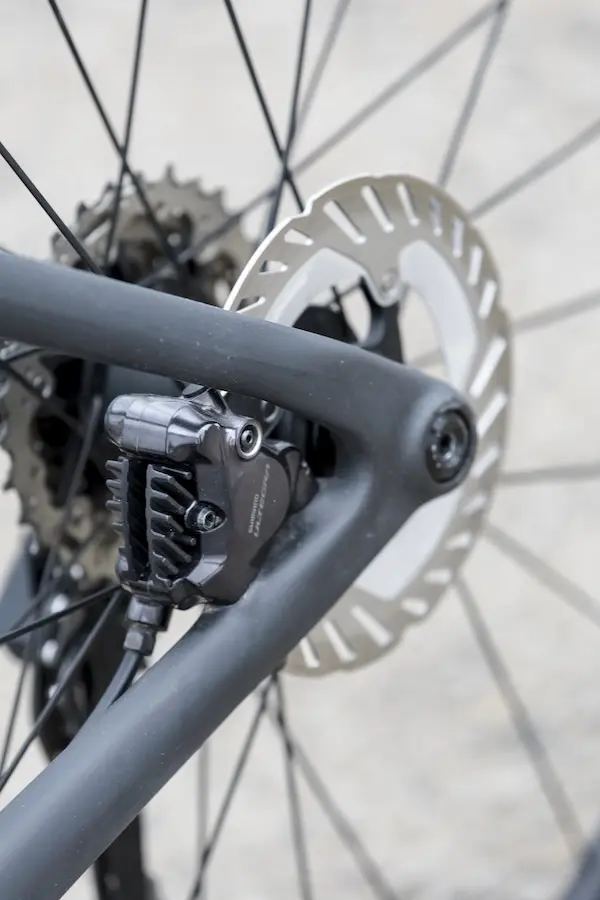
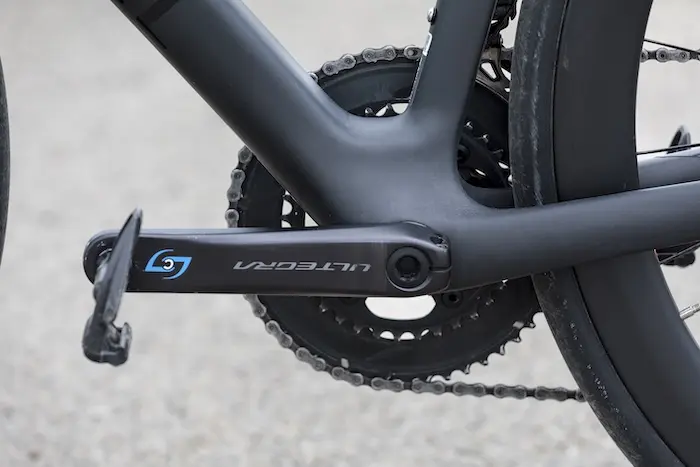
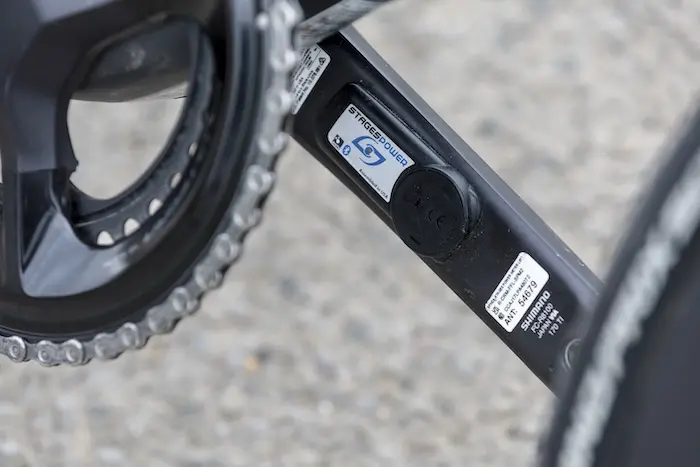
The version tested features the Shimano Ultegra Di2 R8170 groupset in its full 2×12-speed configuration. This electronic drivetrain incorporates most of the technologies found in the Dura-Ace groupset, including wireless communication between the shifters and the rear derailleur, extremely fast shifting, and particularly powerful hydraulic braking. The crankset comes in a 52-36 tooth configuration paired with an 11-34 cassette, a well-balanced setup for versatile athletic use. Note the inclusion of an Inpeak power meter on the left crank, a feature not commonly found at this price point, and one that’s particularly appealing for riders looking to make real progress in their cycling.
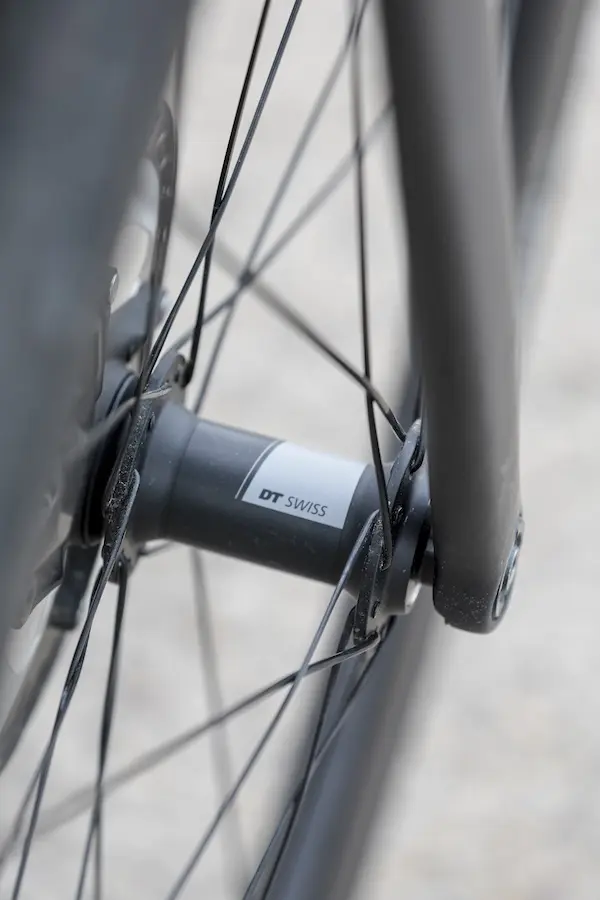
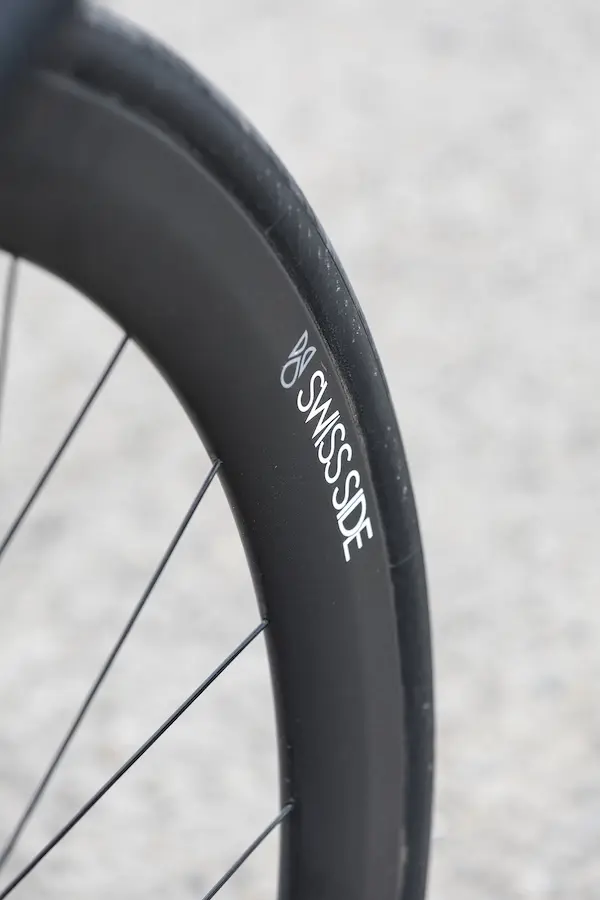
The Swiss Side Hadron Classic 500 wheels are one of the most valuable components of this setup. Developed by the Swiss company specializing in aerodynamics, they feature a 50 mm profile and an internal width suited for modern tires. Their performance effectively combines efficiency, stability, and inertia. Van Rysel pairs them with 28 mm Continental GP 5000 S TR tires. These tires are among the market leaders for their low rolling resistance, grip, and versatility.
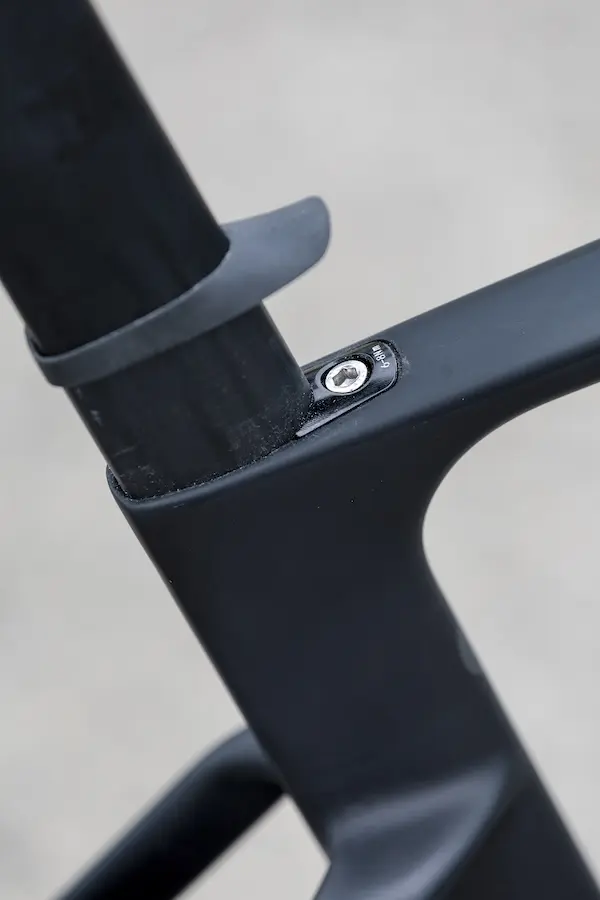
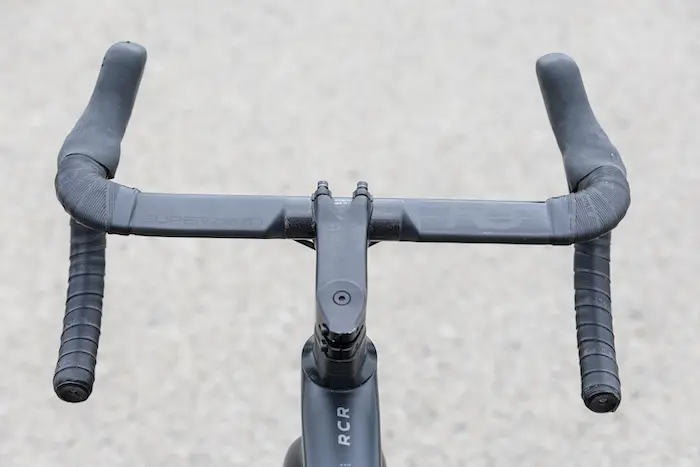
The 7.660 kg setup (without pedals) in size S is rounded out by a cockpit consisting of a Deda x Van Rysel Super Box Evo stem and a Deda Superzero RS carbon handlebar that almost completely integrates the cables, an aerodynamically profiled seatpost, and a Fizik Argo Vento R5 saddle.
On the road: a bike that feels right from the start
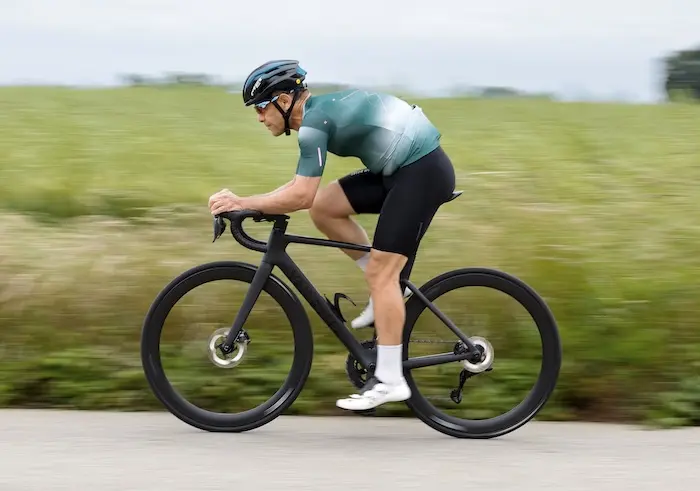
Regardless of the terrain, the RCR Pro stands out for its overall balance. Unlike some highly specialized bikes that require a period of adjustment, this one immediately inspires confidence. The riding position remains sporty but never extreme. The frame offers excellent stiffness while maintaining precise handling. But overall, the bike is easy to handle despite its large-diameter tubes: it’s accessible to a wide range of riders, from near-beginners to competitive cyclists tackling steep climbs.
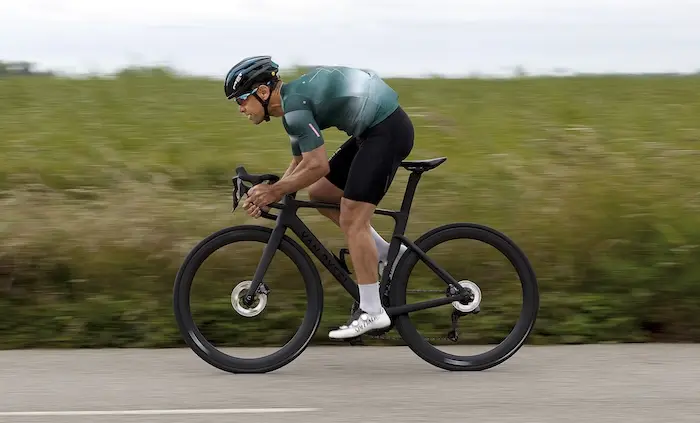
On climbs, the bike’s performance impresses with its ease, despite the slightly heavy wheels. Accelerations are sharp, changes in pace are effortless, and the stiffness of the bottom bracket effectively transfers power without requiring excessive effort to overcome changes in gradient. You only feel a slight inertia due to the weight of the wheels, which are 300 g heavier than some competing models with a similar profile. The RCR Pro delivers that sought-after feeling of a responsive bike that reacts immediately to inputs without ever becoming physically demanding.
When compared to established benchmarks, the Van Rysel holds its own.
With a relatively low weight and excellent lateral stiffness, the RCR Pro really shines on long climbs. Changes in pace feel natural, and the front end remains perfectly stable even when standing up to pedal. Compared to established industry leaders, the Van Rysel holds its own. It offers comparable performance at a significantly lower price point.
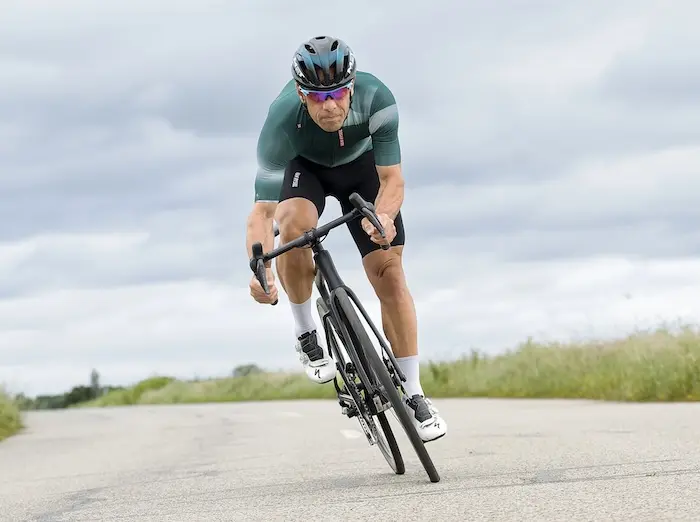
On flat terrain and at high speeds, the bike easily maintains its speed, this time benefiting from the excellent efficiency and aerodynamics of the wheels. On rolling sections, it proves very efficient, and the Swiss Side tires clearly help maintain momentum. Of course, we don’t see the same level of efficiency as the RCR-F in this area, but the bike’s aerodynamic profile is noticeable without its character becoming a liability in crosswinds—a flaw sometimes found on more radical models.
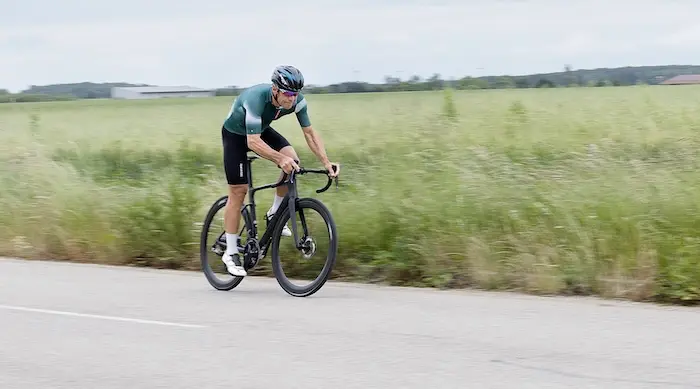
Despite its sporty orientation, the RCR Pro offers a higher level of comfort than one might expect. Vibrations are effectively dampened, and the frame avoids the overly stiff feel sometimes found on race bikes. On rides lasting more than four hours, the bike remains responsive and muscle fatigue is kept to a minimum. This is an important point for recreational cyclists, who make up a large portion of the target customer base.
Unbeatable value for money
This is probably where the RCR Pro scores the highest. With comparable specs, its main competitors generally range in price from €6,500 to over €8,000. Van Rysel’s offering therefore stands out as particularly competitive. To find something just as good and slightly cheaper, you’d have to look at Chinese brands like Winspace or brands that use open-mold frames—which ultimately offer a bit less originality and R&D than this Van Rysel.
Of course, the prestige of certain historic brands remains a selling point for many buyers. But in terms of pure performance, the RCR Pro now has little to envy from the most popular bikes on the market.
Understated but effective
The Van Rysel RCR Pro Shimano Ultegra Di2 marks an important milestone in the French brand’s evolution. More than just a bike with an aggressive price tag, it is now a machine capable of competing—both on the road and in terms of riding feel—with several established leaders in the segment.
Versatile, strong on climbs, efficient on the flats, and comfortable enough for long rides, it successfully pulls off the tricky feat of being an all-rounder with no real weaknesses. Its very understated aesthetic in this matte black version and certain limitations related to Decathlon’s distribution network may deter some buyers, but these reservations ultimately carry little weight compared to the bike’s overall consistency. At €5,499, it’s hard to find a bike today that’s as complete, as well-rounded, and as high-performing. The RCR Pro is no longer just an alternative to the big brands: it has now established itself as one of the most compelling options in its category.
The VAN RYSEL RCR PRO at a glance…Pros: accessible and consistent handling, versatility, value for money Frame: Super High Modulus Carbon – Fork: SHM Carbon – Stem: Van Rysel by Deda Super Box Evo – Handlebar: Deda Superzero RS – Wheels: Swiss Side Hadron² Classic 500 – Tires: Continental GP5000 S TR, 28 mm – Crankset: Shimano Ultegra 12-speed 52-36 (with Inpeak power meter) – Derailleurs: Shimano Ultegra Di2 12-speed – Shifters: Shimano Ultegra Di2 12-speed – Brakes: Shimano Ultegra – Cassette: Shimano Ultegra 12-speed 11-34 – Saddle: Fizik Vento Argo R5 – Seatpost: Carbon RCR Pro – Number of sizes: 6 – Total weight: 7.660 kg (size S, without pedals). Price: €5,499 – Contact: vanryselcycling.com
|
Share the post "Van Rysel RCR Pro Review: The Best Value for the Money?"