Share the post "Review of the ENVE AR40 Gravel Wheels: The Road Goes On"
And yes, some tests come to an end. And then there are those that evolve. Products that we carefully take apart after a few weeks before returning them to the store. And others that we start to see in a different light just as the “official” testing protocol seems to have ended. As if there were still something left to be said. That’s exactly what happened with the ENVE AR40s. After a month of riding them on the road with 30 mm Continental GP5000 TT TR tires—in an article that had already made us deeply question what a modern wheel had become—we returned to Mohawk’s with a fairly simple idea: what if this pair hadn’t yet revealed its true nature?
By Jeff Tatard – Photos: ©3bikes.fr
Not a marketing gimmick. Not an Instagram “gravel build” designed to look good between a pair of leather panniers and a pour-over coffee. A real conversion. The same wheels. The same DNA. But this time mounted on our test bike from the Rotor UNO Gravel electronic groupset, with 160 mm rotors front and rear, and Continental Terra Speed ProTection 700x45C tires sent to the editorial office for another test protocol. And suddenly, it all made perfect sense. This setup doesn’t feel like adapting a road wheel for gravel. Instead, it feels like revealing what this wheel already had within it.
When a road wheel stops being a road wheel
This is probably the mistake we keep making in modern high-end cycling: believing that a wheel still belongs to a specific category. Road. Gravel. All-road. Performance. Adventure. As if the distinctions were still as rigid as they were in 2018. In reality, from our very first road test of the AR40s, something already went beyond the simple “road performance” logic. The 25 mm internal width told a different story. So did the handling. That sensation of a stable platform, of intelligent shock absorption, of a bike that stops bouncing nervously on the road and finally starts reading it cleanly. In fact, these wheels already seemed to think like fast gravel wheels… without even leaving the asphalt.
So, naturally, returning to Mohawk’s felt less like a change and more like a continuation. We weren’t looking for a gravel “disguise” for a road wheel. We came to fully realize a promise already present in the first test: that of a modern wheel capable of performing based on the tire, the surface, the line, and actual speed—rather than on a simple spec sheet or a marketing segment.
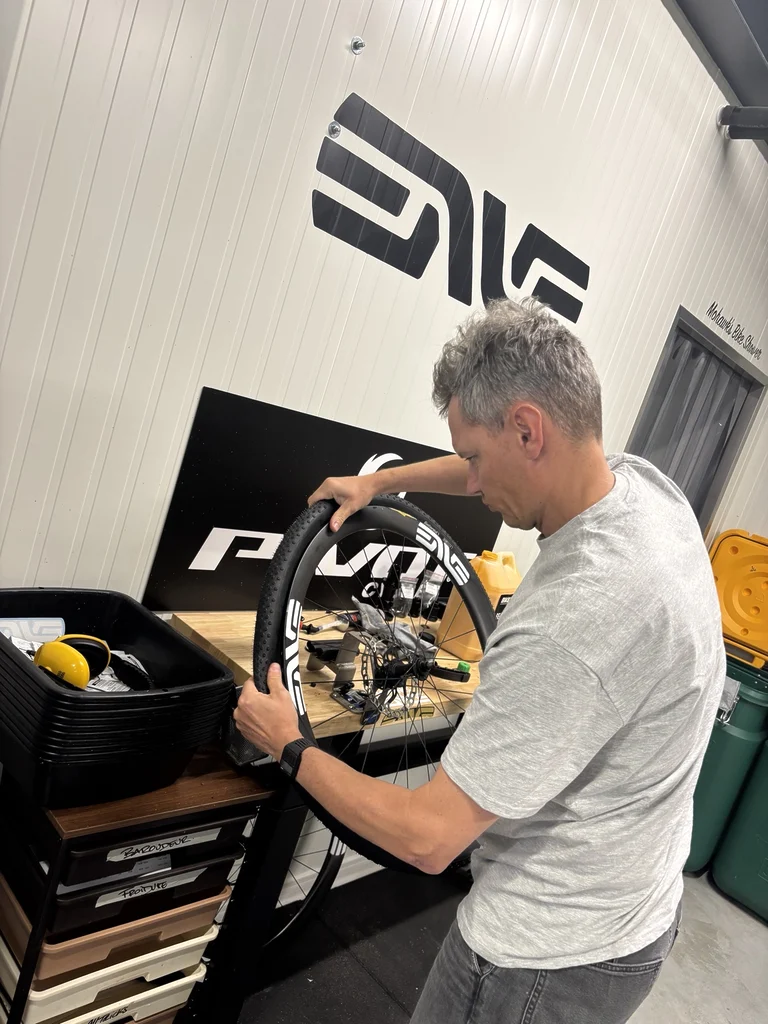
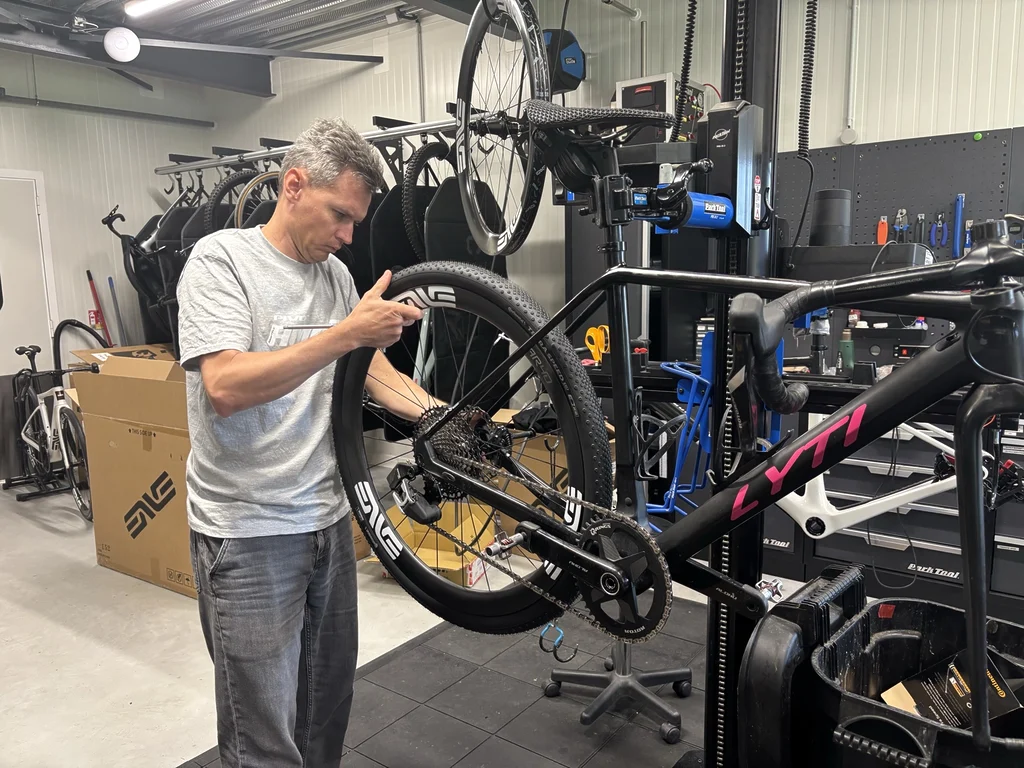
At Mohawk’s, Étienne starts from scratch
Once again, Étienne is handling the tire installation in the workshop. And honestly, there’s something fascinating about watching someone work when they have a perfect grasp of a product’s logic. Because a good modern gravel setup is no longer simply about “putting on big tires”. Everything changes: tire pressures, interfaces, tire behavior, the relationship between inner width and tire stability, how the casing performs under load, and the bike’s overall balance. Fast gravel riding doesn’t forgive sloppy setups—it amplifies everything, both the good and the bad.
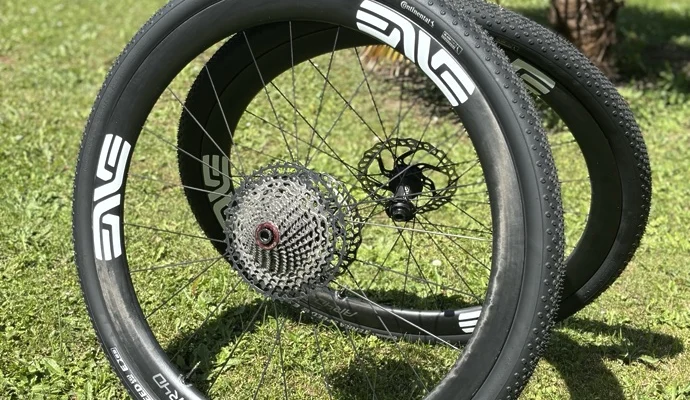
In the case of the AR40s, switching to 45 mm Terra Speed ProTection tires seems almost obvious once you see the bare wheel in front of you. The proportions immediately make sense. The rim finally seems perfectly “scaled” to the tire. And that’s probably where this wheel gets exciting. Because with a 25 mm internal width, the AR40s aren’t road wheels that just happen to work on gravel. They may simply be modern wheels that refuse to be bound by old boundaries.
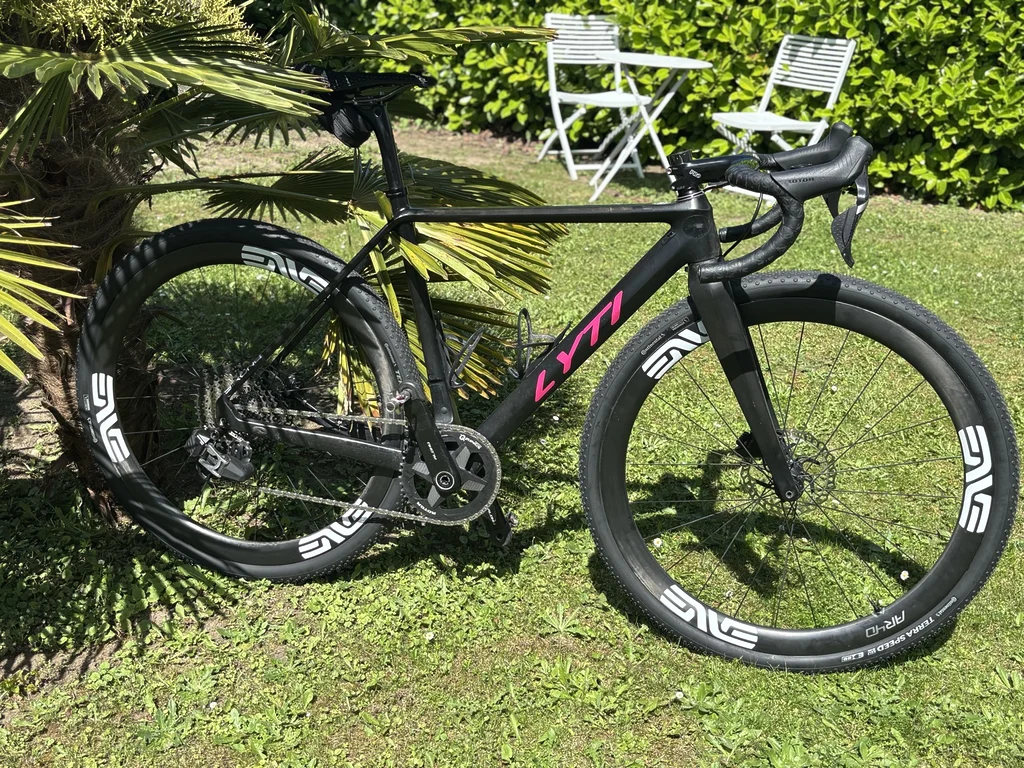
The Rotor UNO Gravel: a bike that perfectly complements this type of wheel
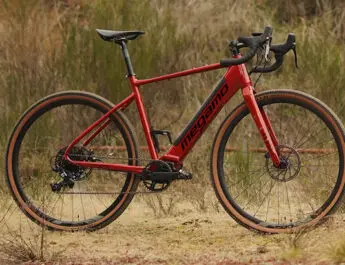
The bike used for this second phase of testing is, of course, anything but ordinary. Our build centered around the Rotor UNO Gravel electronic groupset already embodied a certain vision of gravel riding: fast, demanding, almost road-like in its approach to efficiency, yet without sacrificing the ability to leave the pavement as soon as the terrain gets interesting. An aggressive frame, an engaged riding position, a drivetrain designed for speed, and 160 mm front/rear brakes to maintain consistency as speeds increase and the trails become less predictable. This is no leisurely gravel bike. It’s a gravel bike that retains some of the road bike’s character in its handling.
And precisely in this context, the ENVE AR40s take on an extremely interesting dimension. Because they bring something to gravel riding that’s rarely found: composure at high speeds. They don’t try to turn the bike into an all-terrain sofa. They don’t slow down your ability to read the terrain. They don’t give that sometimes frustrating impression of a very comfortable but slightly detached ride. On the contrary, they add calm without sacrificing precision. They make the bike less twitchy, but no less lively.
ENVE AR40 Gravel – Test SetupWheels: ENVE Foundation AR40 carbon – Height: 40 mm – Internal width: 25 mm – Technology: tubeless hookless – Spoke pattern: 24 spokes – Hubs: ENVE Innerdrive – Brakes: Centerlock discs – Discs used: 160 mm front / 160 mm rear – Axles: 12×100 front / 12×142 rear – Tires: Continental Terra Speed ProTection 28” 700x45C / 28×1.70 / 45-622 – Drivetrain: Rotor UNO Gravel electronic groupset – Cassette: SRAM Force XPLR 13-speed 11-46 (346 g) – Gears: 11 – 12 – 13 – 14 – 15 – 17 – 19 – 21 – 24 – 28 – 32 – 38 – 46 – Bike: performance-oriented gravel build for fast gravel riding / aggressive all-road riding – Test conditions: fast-rolling trails, fast forest trails, rough sections, and long performance gravel rides – Build completed at Mohawk’s by Étienne. |
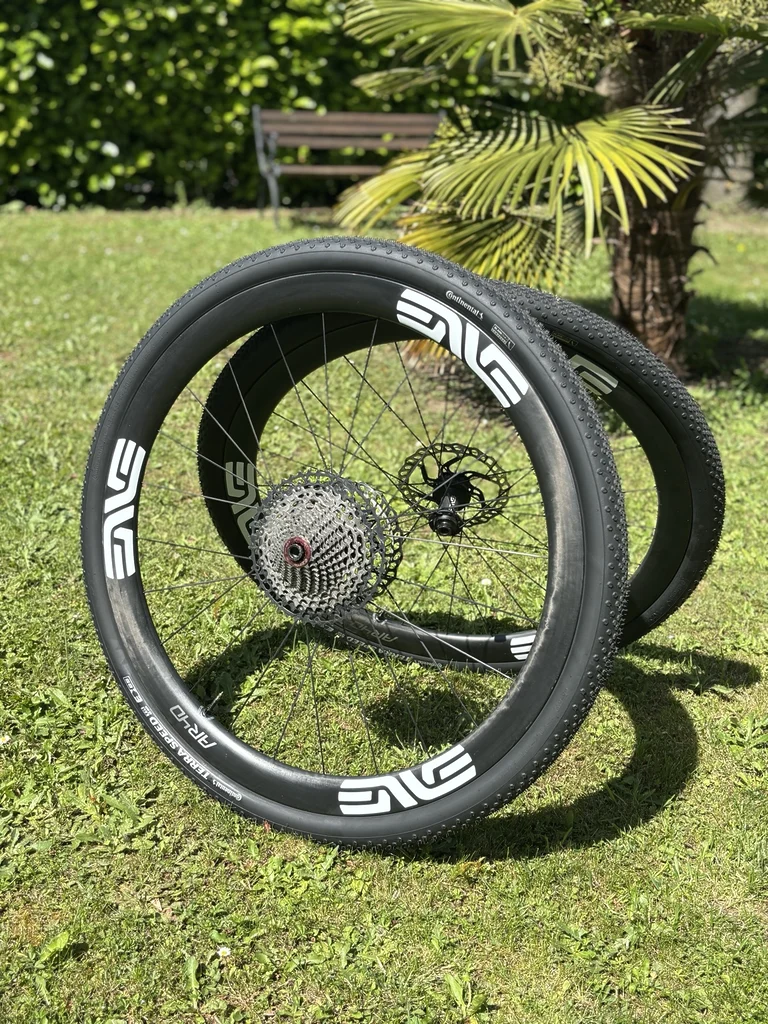
The Terra Speed in 45: the tire that truly brings out the wheel’s potential
We also need to talk about the tires. Because the 700x45C Continental Terra Speed ProTection tires aren’t “comfort” gravel tires. They’re speed tires. Modern tires representing the most interesting developments in modern gravel: wide profiles capable of riding extremely fast without turning the bike into a mushy machine. And on the AR40s, the result is stunning. The 25 mm internal width gives the Terra Speed incredible stability. The tire performs cleanly. The casing remains stable. The tire never floats under load. We find exactly what we loved about the 30 mm GP5000 TT tires on the road: that feeling that the wheel works with the tire instead of against it.
But this time, it’s on gravel trails. And there, something changes profoundly. On the road, this consistency provided a sense of fast comfort, stability, and sustained efficiency. On gravel, it becomes almost a matter of riding technique. The tire is no longer simply a performance component: it becomes the sensor that reads the terrain. And when it’s held securely by the rim—when it can do its job without being squashed or twisted—the bike becomes much more predictable. Speed no longer comes solely from what rides smoothly, but from what remains predictable when the terrain gets tricky.
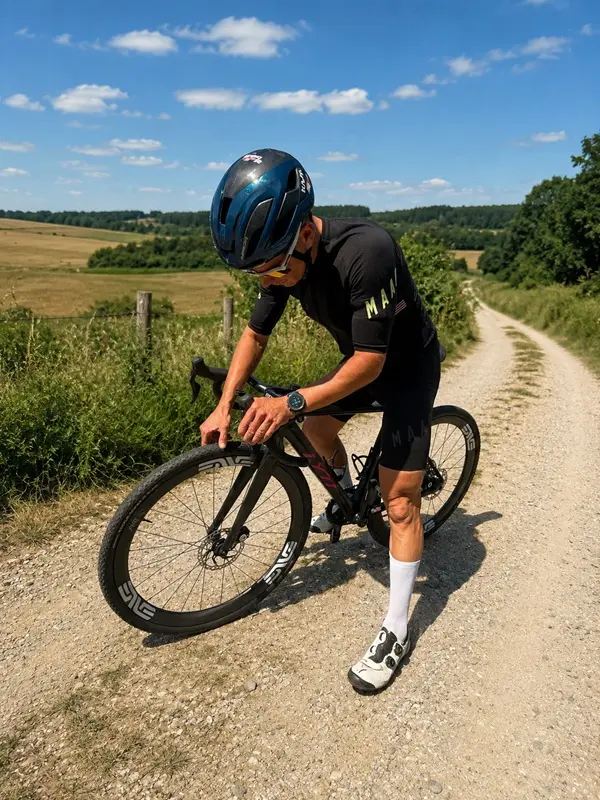
This isn’t a “fun” gravel bike. It’s a fast gravel bike
Many modern gravel setups feel a bit vague as soon as the pace really picks up. You gain in shock absorption, forgiveness, and comfort. But sometimes at the cost of losing some feel for the terrain, a lack of precision, and the sensation of riding “on” the bike rather than with it. Here, that’s never the case. The AR40 retains that extremely precise handling we discovered on the road: a calm, composed, responsive bike—but never sluggish. On fast sections of dirt roads, this is particularly striking. The bike remains stable at high speeds in an almost disconcerting way. Tracking the line becomes effortless. Your brain has to work less. There are fewer distracting micro-corrections. Less mental fatigue. And that’s probably what true modern performance is all about today.
It’s not just about going fast for three minutes. It’s about managing to maintain a high speed for a long time without the bike wearing you out mentally. That’s exactly where the AR40s make a difference. They don’t produce an immediate “wow” effect—like that of an ultra-stiff wheel that snaps into place with every acceleration. They produce something deeper: an overall efficiency. A reduction in tension, in course corrections, in mental focus, and in wasted energy. They don’t just make you want to accelerate. They make you want to stay fast longer.
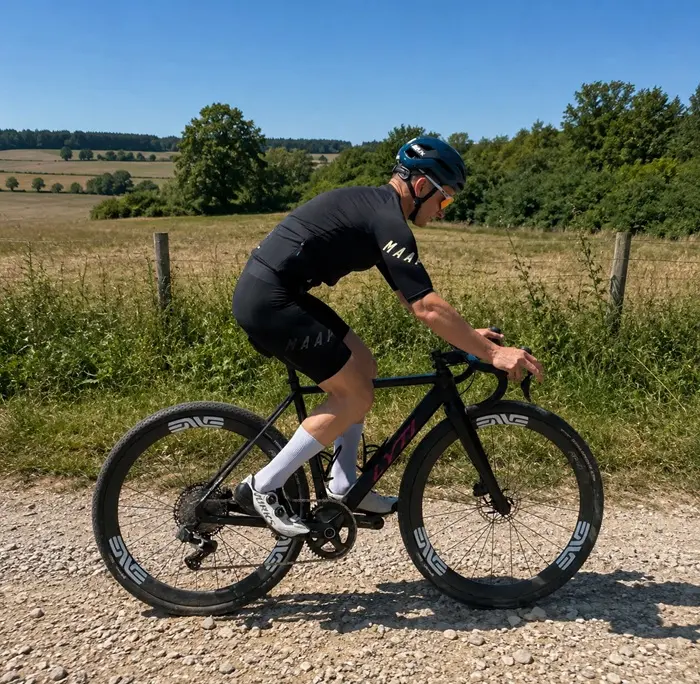
The ENVE paradox: the rougher the terrain, the more logical the wheel becomes
It’s almost counterintuitive. On paper, a 40-mm carbon wheel might seem daunting on gravel. You might imagine something too stiff, too rigid, too “road-oriented.” And yet, the rougher the terrain gets, the more the AR40s seem to make sense. Why? Because their entire modern philosophy—already evident on the road—makes even more sense here: significant internal width, large air volume, tire stability, smooth ride without added inertia, tracking stability, and the ability to keep the bike under control without sacrificing efficiency. In reality, the AR40s never set out to make the terrain feel spectacular. They aim to reduce the chaos.
And on a fast gravel bike, that changes everything. On rough sections, you don’t feel that vertical harshness sometimes associated with carbon wheels. Instead, you feel a sense of control. The wheel doesn’t disappear, but it doesn’t jolt either. It transmits just what you need to control the bike, without feeding back everything that could cause unnecessary fatigue. It’s subtle. But over time, it makes a huge difference. Comfort here isn’t about softness—it’s a smarter way to maintain speed.
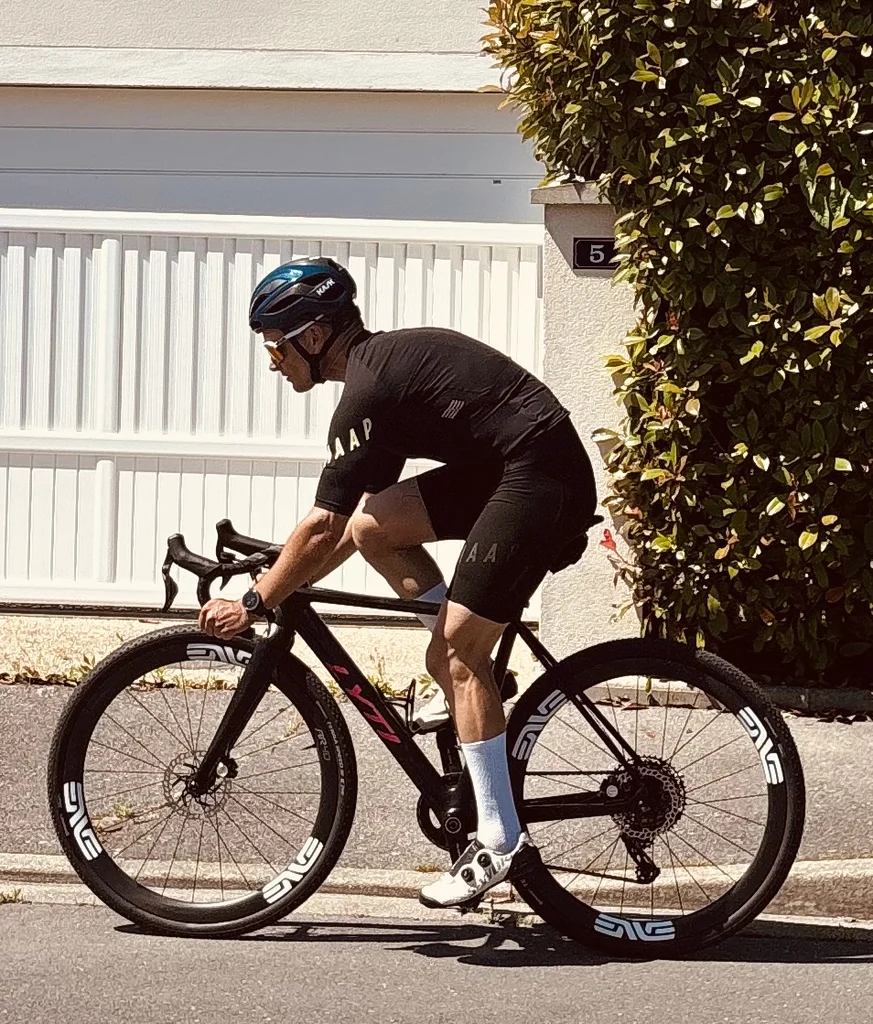
A wheel that defies gravel stereotypes
There’s also something quite interesting from a cultural perspective about this setup. Because we still often associate gravel with a certain “slow adventure” aesthetic: panniers, bikepacking, contemplative forest trails, and remote cafés. That’s not what this setup is about. Here, we’re talking about speed, accelerations, intensity, and long, fast stretches where the bike keeps moving at high speed despite vibrations and changes in road surface. The Terra Speed isn’t here to look pretty. Neither is the Rotor UNO. And the AR40s even less so. This setup tells the story of a new generation of gravel riding: one that draws on modern road bike performance and now refuses to slow down just because the pavement ends.
Perhaps that’s what makes this setup so appealing. It doesn’t try to play the “gravel for show” card. It doesn’t force the adventure narrative. Instead, it speaks to those who love to ride hard, for a long time, cleanly, with that very special feeling of a bike that stays composed when the surface changes. A bike that doesn’t make you choose between fun, performance, and commitment. Here, gravel isn’t an escape from performance. It’s another way to extend it.
Hookless, modern width, and overall consistency
The topic remains a sensitive one in France, of course. Hookless rims continue to divide opinion. But quite honestly, on a platform like this, it’s hard to see it as merely a marketing choice. With 45-mm tire sections and appropriate tire pressures, the wheel’s entire behavior seems built around this concept of a wide tire-to-rim interface. And most importantly: it works. The bike feels extremely consistent. The contact points remain crisp. The ride feel never becomes muddled despite the large tire volume. Once again, it all comes down to one word: consistency.
What’s interesting is that this consistency doesn’t rely on a single spectacular component. It’s not “the rim.” It’s not “the tire.” It’s not “the carbon.” It’s not “the hookless design.” It’s the whole package. The way the internal width supports the tire. The way the air volume absorbs shock. The way the wheel maintains precision. The way the bike remains responsive. A good modern wheel is no longer judged on its own. It’s judged by the system it helps build.
A modernity that transcends categories
Perhaps this is the true nature of the AR40s? Deep down, this second life on gravel might reveal something very important about the ENVE AR40s. On the road, they already felt like modern wheels. On gravel, they above all give the impression of being wheels that understood—long before many others—where cycling was truly headed: toward more volume, more stability, more sustainable speed, less unnecessary nervousness, less harshness, and less unnecessary fatigue. And perhaps also toward the end of the rigid boundaries between fast road riding and fast gravel riding. Because after several weeks with this pair in two very different worlds, one thing becomes hard to ignore: the best modern wheels are no longer the ones that choose a side.
They’re the ones that understand the overall direction of contemporary cycling. And the ENVE AR40s understand this remarkably well. They aren’t the most spectacular. They don’t seek to impress with superficial radicalism. They don’t turn every ride into a technical showcase. They do something rarer: they make the bike more cohesive. Calmer. Easier to ride fast. More predictable in its responses. More enjoyable when the terrain stops being perfect. And in modern gravel riding, this kind of intelligence is sometimes worth more than ten grams saved or ten millimeters of extra tread depth.
The ENVE AR40 Gravel at a glance…Pros: exceptional stability at high speeds, excellent compatibility with modern wide gravel tires, a very strong sense of security, remarkable shock absorption without sacrificing performance, extremely clean handling on fast trails, very reassuring terrain read, a true modern road/gravel platform, excellent pairing with the 45 mm Continental Terra Speed ProTection tires, ability to calm the bike without making it feel sluggish. Cons: less showy than an ultra-responsive wheel, a hookless standard that will continue to spark debate, premium price, a character better suited to fast gravel riding than to ultra-technical or very rough terrain, truly worthwhile only if you’re willing to consider the wheel/tire/pressure/bike system as a whole. Observed price: approximately €1,649 per pair, depending on the retailer. Contact: Mohawk’s Cycles / Enve.com / Mohawk’s Cycles, 19 Avenue Roland Moreno, 95740 Frépillon. |
Share the post "Review of the ENVE AR40 Gravel Wheels: The Road Goes On"