Share the post "First Heat Wave: How to Keep Driving Safely"
The first heat waves often disrupt how you feel while cycling. A higher heart rate, heavier legs, and unusual fatigue: your body has to learn to handle the effort differently. To keep riding efficiently without suffering from summer temperatures, a few simple adjustments can make all the difference. Here’s how.
By Guillaume Judas – Photos: depositphotos.com
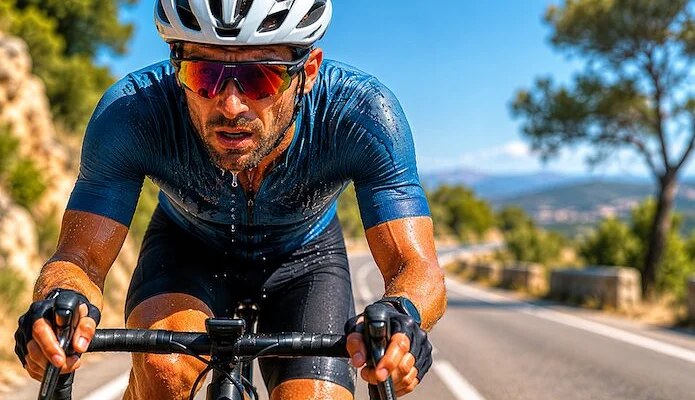
Every year, it’s the same story. The first real heat arrives, your riding experience changes abruptly, and that usual ride that seemed easy in the spring suddenly becomes much more demanding. Your heart rate climbs faster, your legs don’t respond as well, and you immediately feel like you’ve lost your fitness. Yet, most of the time, the problem isn’t your fitness level. It’s simply your body trying to adapt to a new environment.
After all, there’s a big difference between riding at 14 degrees under overcast skies and covering kilometers at 28 degrees in the sun—the physiological demands are already quite different. The body must maintain a stable internal temperature, increase blood flow to the skin, and produce more sweat to cool down. All of this requires energy. As a result, at the same intensity, the effort often feels much harder. The problem is that the ego rarely catches on as quickly as the body does.

Heat Is Not Your Enemy
Contrary to popular belief, heat isn’t necessarily a cyclist’s enemy. It can even become an excellent tool for adaptation when exposure is gradual and well-managed. After several days, the body learns to sweat more effectively, limit certain heart rate fluctuations, and improve its tolerance to high temperatures. But this adaptation doesn’t happen in a single ride. It often takes one to two weeks to feel normal again during exercise in the heat.
During this phase, trying to maintain exactly the same intensity levels as in the spring is often counterproductive. Yet many of you continue to cling to your usual wattage or average speeds, as if the conditions hadn’t changed. This is usually the best way to turn a productive ride into a survival session.
Accepting That You Need to Slow Down to Keep Going
In the heat, slowing down a bit is by no means an admission of weakness. It’s often the smartest choice. The first few weeks of summer should be used to regain comfort, let your body adapt, and avoid building up unnecessary fatigue. This sometimes means slightly reducing the intensity, shortening certain challenging segments, or simply accepting that an endurance ride will be slower than it was in April.
The Pitfall of Midday Rides
The classic pitfall often arises during midday rides. With longer days, many of you take advantage of a break to go for a ride between noon and 2 p.m. On paper, the idea seems practical. In reality, this is often when the ground temperature becomes the hardest to bear. The pavement radiates heat, exposed sections become stifling, and natural cooling doesn’t work as well.
For demanding workouts, it’s generally better to ride in the morning or late in the day. Temperatures are more stable, your body handles the effort better, and recovery is easier. Endurance rides can still be done in the heat, but only if you keep the intensity reasonable and pay attention to your body’s signals.
Drink Before You Get Thirsty
Hydration also becomes a key factor as soon as temperatures start to rise. Many people continue to drink according to their springtime habits, even as fluid loss increases sharply. Some people can easily lose a liter of water per hour when the temperature exceeds 25 degrees. And by the time you feel thirsty, dehydration has often already begun.
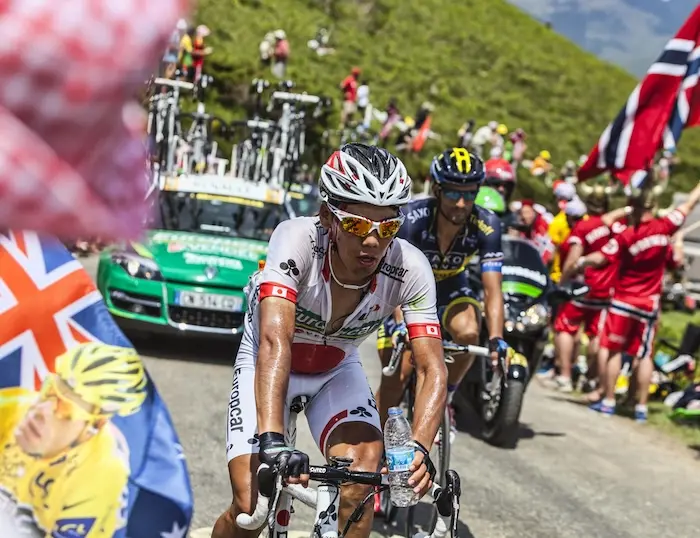
Drinking regularly, even before you feel thirsty, is therefore essential. Frequent small sips are generally much more effective than large, infrequent drinks. On long runs, adding electrolytes can also help better compensate for losses due to sweating and limit certain unusual feelings of fatigue toward the end of the run.
Eating also becomes more challenging
Heat also changes the way the body tolerates food. Many people have a harder time tolerating very sugary foods or overly concentrated drinks when temperatures rise. Energy gels become cloying, some bars are hard to swallow, and nutrition is sometimes neglected without you even realizing it.
This is often a subtle but significant mistake. Because a drop in energy in the heat can quickly feel like a general slump. You might think you’re out of shape when in fact you’ve simply been dehydrated or lacking energy for the past hour. The most effective solutions are often the simplest: easily digestible foods, smaller but more frequent meals, and less concentrated beverages.
The Real Danger: Accumulation
The real danger of the heat isn’t always immediate. A ride that’s a bit too intense may seem to go well at the time but can leave you with unusual fatigue for several days. Sleep becomes less restorative, your legs feel heavy, and your desire to ride gradually diminishes. Many then try to compensate by pushing themselves harder, which often only makes the problem worse.
Summer already adds extra stress to training. The body expends more energy to cool itself down, sometimes recovers less effectively, and has a harder time handling the accumulation of tough workouts. Those who get through this period best are rarely the ones who train the hardest. They’re often the ones who know how to adjust their training with clear-headedness.
Having the right gear really makes a difference
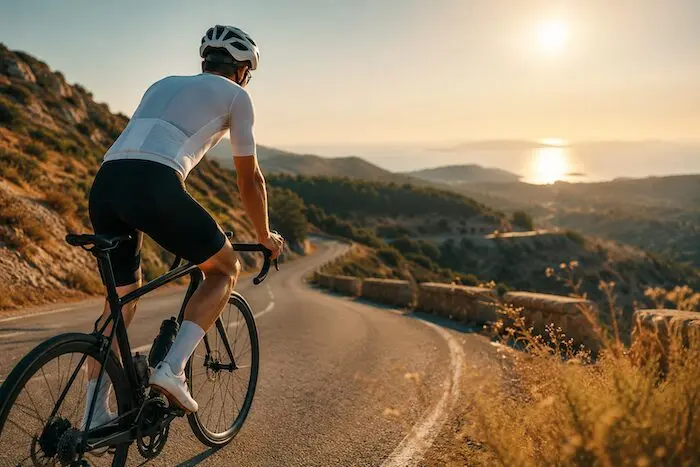
Equipment also plays a much more important role than people realize. A breathable jersey, light-colored clothing, a well-ventilated helmet, or the right sunscreen can significantly improve thermal comfort for several hours. When the body has to work less to combat the heat, performance becomes more consistent and recovery is often better.
Ride smart, not hard
In amateur cycling, there’s still a tendency to glorify pushing through the pain, as if enduring the heat were part of the game. However, the most consistent cyclists are generally those who know how to adapt their effort to the conditions rather than trying to power through them.
When temperatures rise, it’s not about riding less. It’s mainly about riding smarter. Accepting different sensations, adjusting your intensity, staying better hydrated, and listening to your body’s signals often allow you to keep making progress all summer long without turning every ride into an endurance test. Because when the heat first sets in, top performance rarely goes to the most reckless riders. It goes above all to those who know how to manage their efforts.
Share the post "First Heat Wave: How to Keep Driving Safely"