Share the post "Long-Term Test of the Q36.5 SRM X-Power Pedals"
In an industry that ultimately has only a few major players, SRM and Q36.5 have teamed up to launch an innovative and specialized pedal-shoe system. It’s specialized in the sense that this pedal model can only be paired with one specific model (the Unique Pro) from the Q36.5 brand, which has already been tested on 3bikes.fr but, in this case, requires the sole to be drilled to accommodate cleats designed specifically for these pedals. Here’s our review after already covering more than 3,000 km.
Text: Olivier Dulaurent
It’s worth noting that Q36.5, in collaboration with SRM, has developed a new system designed to deliver greater comfort, aerodynamics, and overall efficiency. According to the two brands behind the product, these benefits are achieved through a reduced stack height and an optimized contact surface. This solution combines SRM’s X-Power Direct pedal with Q36.5’s Unique Pro 4.0 shoe, designed to work in synergy.
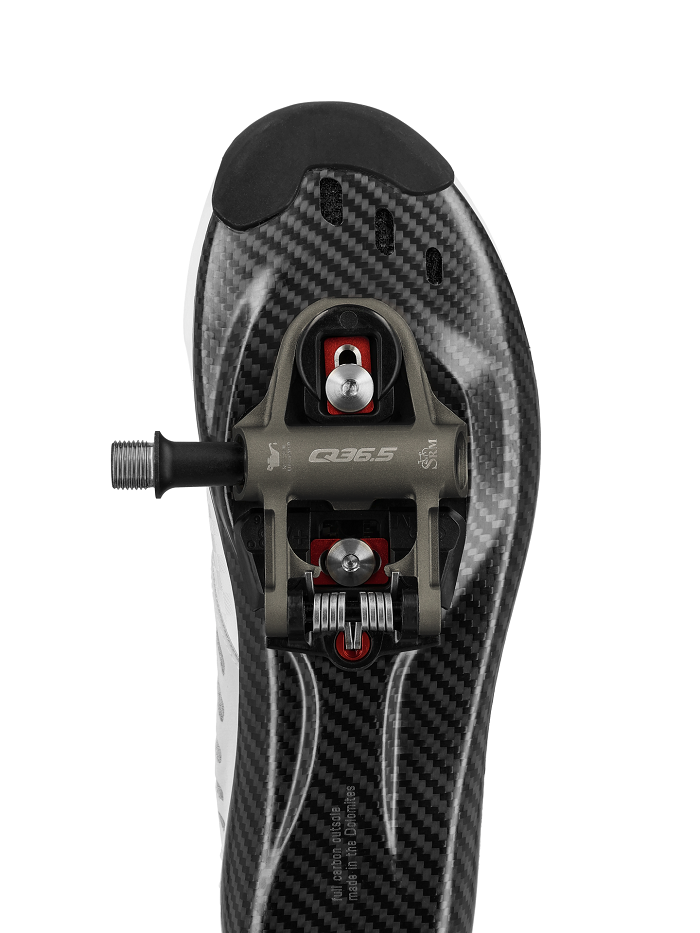
The goal is to improve pedaling efficiency and power transfer by significantly reducing the stack height by approximately 6 mm compared to the average of traditional systems. The intended result is a more direct (more “straightforward”) push, a more aerodynamic position (by lowering the saddle height and reducing the shoe’s circumference around the axis of rotation), and better bike control with increased stability—especially when paired with short cranks, as is the current trend.
Another goal was to increase the contact area between the shoe and the pedal, resulting in more consistent power transfer and a smoother pedaling motion.
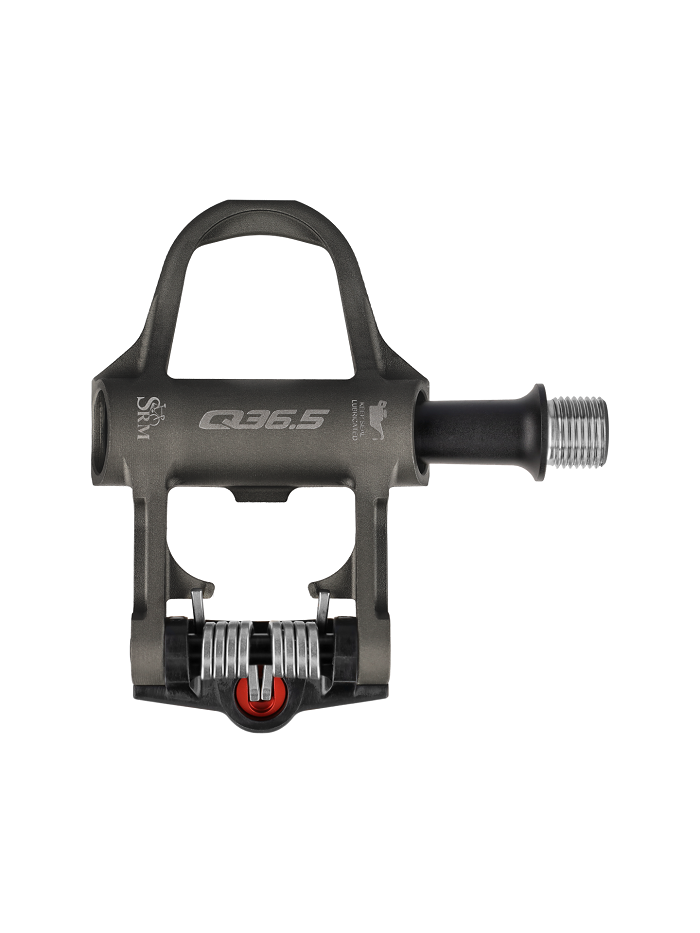
The Pedal
The SRM X-Power Direct pedal is made of die-cast aluminum and then anodized. It weighs 253 grams (verified) per pair and 312 g (verified) with cleats and screws included. Special attention was paid to the geometry: the cleat engagement mechanism was moved backward and positioned behind the point of contact between the shoe and the pedal. This has reduced the distance between the shoe sole and the center of the pedal axle by 6 mm, improving biomechanical efficiency and increasing the contact area (1,653 mm²), with benefits in terms of stability and power transfer.
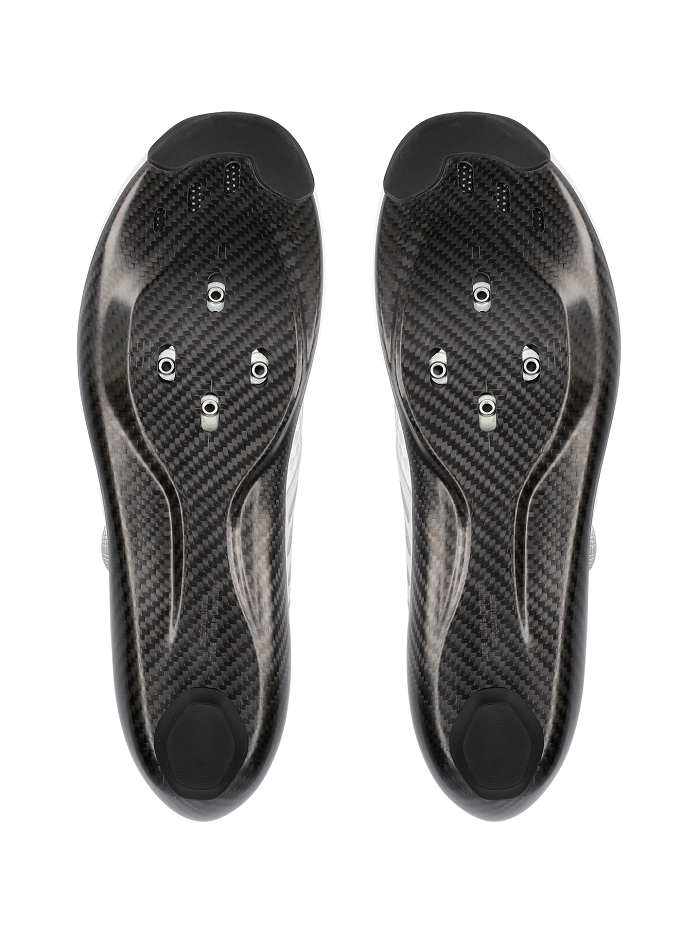
This system requires a specific cleat with an additional hole in the shoe sole, currently available only on Q36.5’s Unique Pro shoes. At this time, there is no information regarding an expansion of the Q36.5 shoe lineup to include a hole pattern specifically designed for SRM pedals. Similarly, it’s possible that if these pedals sell well, other shoe manufacturers will offer models compatible with them in the future.
The Shoe
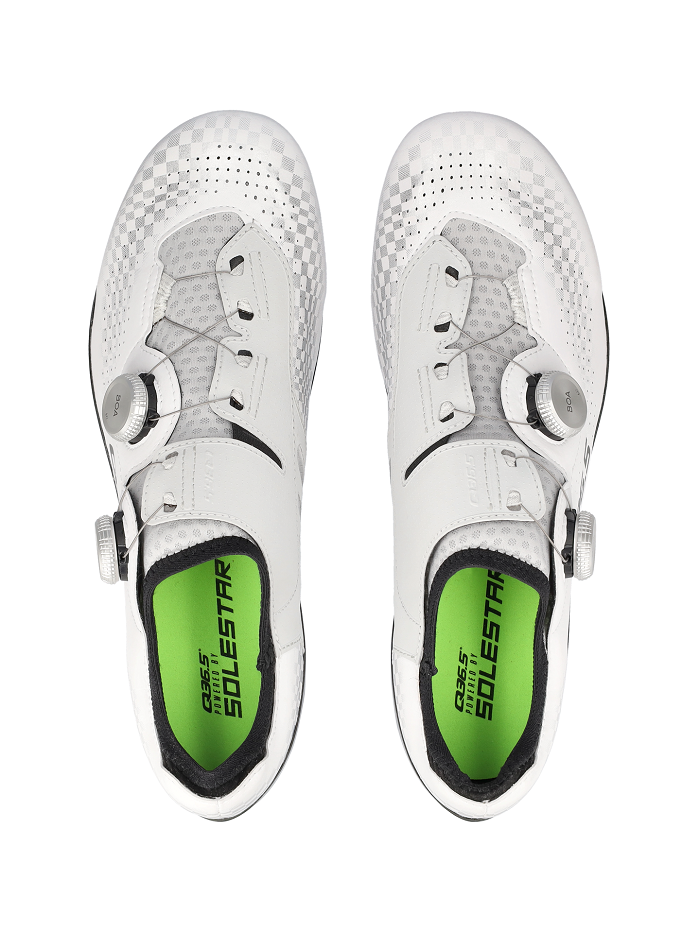
As mentioned above, the Q36.5 Unique Pro shoes have already been reviewed HERE on 3bikes.fr. Aside from their very high price, these high-end shoes have lived up to all their promises, and now, with nearly 10,000 km under their belt, they continue to be my go-to choice for daily rides in all conditions. Thermoregulation, comfort, heel support, lightness, fit, power transfer, and a thin sole are the key qualities we look for in a pair of shoes in this category, and in this case, they meet all the requirements perfectly.
The Benefits of the System
According to SRM and Q36.5, reducing the stack height brings the foot closer to the pedal’s axis of rotation, thereby decreasing the distance between the shoe’s sole and the center of movement. This adjustment increases biomechanical efficiency, making pedaling smoother and more stable, with benefits during high-force phases as well as when using short cranks. The integration between the shoe and the pedal also allows for a more even distribution of pressure, utilizing the entire contact surface and enabling the rider to push down with the entire sole of the foot, thereby reducing dead spots in the pedaling motion and ensuring continuous power transfer. From a postural standpoint, the lower center of gravity optimizes balance and promotes a more aerodynamic riding position, while also improving upper body alignment and pedaling control even under load.
In addition to the joint efforts by SRM and Q36.5, Guillaume wrote an article on the subject, which can be found at the following link: Foot-to-Pedal Height: A Real Performance Booster?
He had also referenced the research mentioned above regarding the potential gain of up to 1% in power output for every millimeter of reduced stack height, but concluded that while this figure is difficult to verify, it is consistent with the fundamental principles of biomechanics.
Beyond pure efficiency, a reduced stack height offers other advantages. The weight savings, though minimal, are amplified by the position of the pedals—rotating components located at the ends of the cranks. The biomechanical impact is also significant. While the current trend favors shorter cranks—which implies a higher saddle height—reducing the pedal-to-shoe height helps partially offset this effect and limit aerodynamic drag. Finally, a reduction in frontal area marginally improves air penetration—a detail that can make a difference at the highest levels.
According to data covering all pedals on the market, it appears that for the pedal-and-cleat assembly, the stack height of the Q36.5 x SRM is around 9.7 mm (both brands list 11.9 mm for the assembly, including the 4.4 mm from the shoes but excluding the cleats). By comparison, this value is slightly less favorable than the Ekoï PW8 (about 8 mm) and Wahoo Speedplay 4-hole (8.5 mm) on their own, but much better than the Shimano Dura-Ace (14.6 mm), the Look Keo Blade (14.8 mm), or the Favero Assioma Duo (16.8 mm).
In addition to these measurements, there are differences in sole height between shoes. In fact, most high-end shoes on the market offer a height between the cleat and the foot of about 6 to 7 mm. This is the case with models from Specialized S-Works, Lake, Giro, and Fizik. With a height of 5.5 to 6 mm, the Shimano S-Phyre models are slightly lower. In this case, Q36.5 claims 4.4 mm, while Bont and Nimbl do even better at 3.6 and 2 mm, respectively.
But ultimately, it’s important to reiterate that what really matters is the height of the entire system consisting of the pedal, cleat, and shoe sole. Specifically, a Shimano Dura-Ace system paired with S-Phyre shoes measures approximately 20.5 mm in height above the axle. A Q36.5 x SRM system with Q36.5 shoes measures 14.1 mm, which is just over 6 mm less in total height.
However, the current theoretical conclusion is that while the technical advantages are undeniable, their actual impact remains difficult to quantify in real-world conditions. Variations in power meter readings, combined with the small gains, make it difficult to draw any definitive conclusions. For cyclists seeking absolute performance, every detail counts. But for the majority of riders, reducing stack height seems more like a niche optimization than a priority.
On the road
While SRM first made a name for itself over 25 years ago as a pioneer in power meters, it’s important to note right away that the Q36.5 SRM X‑Power does not measure power. At the very high asking price of €550, this is a shame, especially when models like the Assioma Favero, for example, include power measurement at virtually the same price. On the other hand, it’s true that the Assioma doesn’t offer the same features or the same research in terms of contact surface and stack height.
However, to continue on the financial aspect—and given that they’re compatible only with Q36.5 Unique Pro shoes, which cost €550 per pair—the total investment required to truly benefit from the SRM X-Power pedals is closer to €1,100. But at least users can take comfort in knowing they’re getting one of the best pairs of shoes on the market.

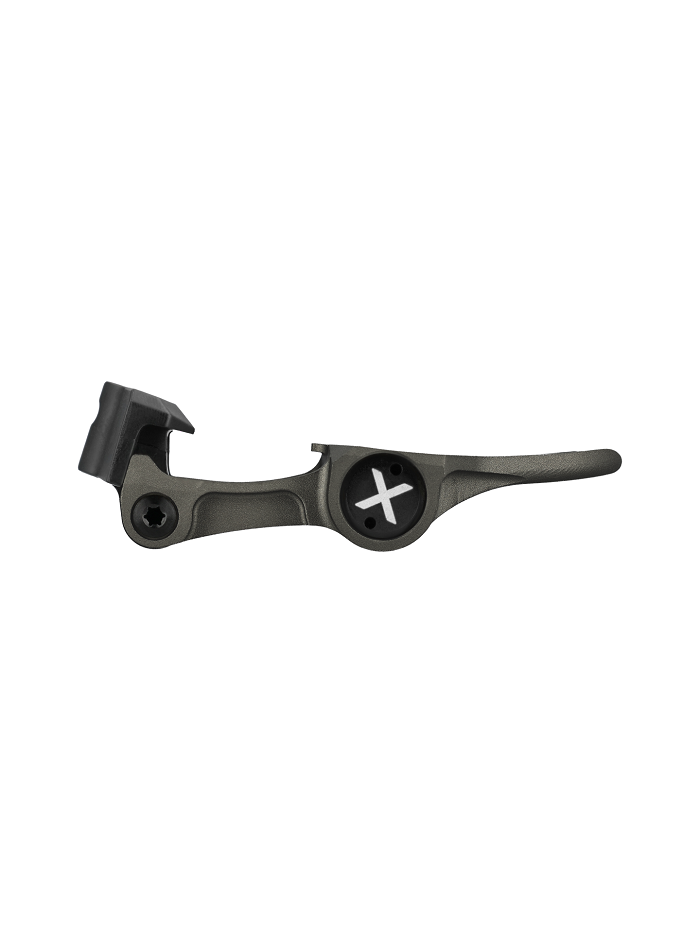
Upon unboxing, the attention to detail is appreciated: a high-quality storage bag is included, and the pedals’ appearance itself inspires confidence—the body is forged and machined, while the finish appears to be of excellent quality. Installing the pedals is a breeze with just an 8 mm Allen wrench. In use, however, engaging the clip-in mechanism feels a bit stiff, and even with the supposed familiarity that comes from long-term use, I still often have to fiddle with it before I can clip in. On my first few rides, I experienced a few unintended releases, but this was resolved once the tension of the corresponding screw was adjusted.


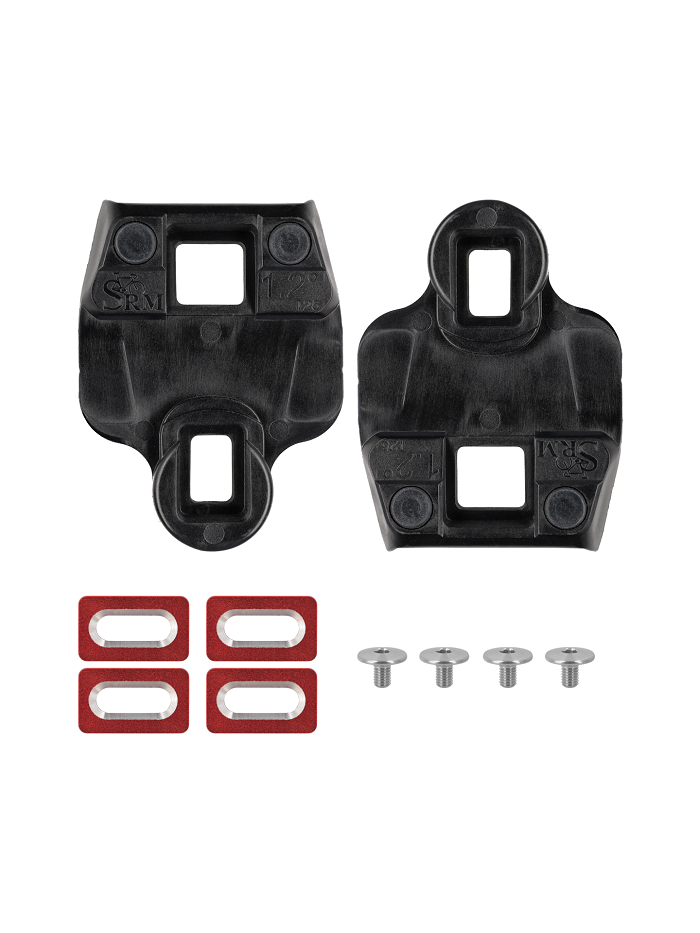
The included cleats offer 1.2° of angular freedom, which is somewhat less than the competition, but this didn’t cause me any problems. Of course, under these conditions, it will be necessary to precisely adjust the cleat angle to avoid any joint issues, particularly in the knee. Other 3° and 0° cleats are available, but as of the time of this article’s publication, replacement cleats are not available on the Q36.5 website. Let’s hope this gets sorted out soon. Speaking of cleats, and still regarding their use at the time of writing, it’s worth noting significant and therefore excessive wear on the protective pads. This is despite the fact that I’m particularly careful to avoid walking in the shoes, especially on abrasive surfaces… such as asphalt, for example. It’s also worth noting the high cost (€40) of replacing the cleats.


The key feature of these pedals remains their low stack height. In practice, Q36.5 actually recommends lowering the saddle by 6 mm when switching from Shimano or Look pedals. Having alternated rides with Look Keo Blade pedals and even Q36.5 Unique Pro shoes, I personally lowered my saddle by 4 to 5 mm. When using the shoes and pedals together, the large contact surface provides very good stability and excellent power transfer, whether during short, intense efforts or on long rides. Power transfer is immediate and very rigid. It’s also worth noting that the system is quiet, with no creaking. Compared to Speedplay pedals, which I also use regularly, this system feels more stable.
What’s noticeable is the smoothness and comfort of the pedal stroke provided by the Q36.5 x SRM system, with sensations similar to those experienced when using shorter cranks.

As things stand, and aside from power tests that are difficult to set up, it’s impossible to quantify the actual aerodynamic gain from lowering the saddle by a few millimeters. However, the improvement must be noticeable when you consider the significance—a gain of several watts—of wearing form-fitting clothing or of lowering your head and tucking your elbows in.
However, what is noticeable is the smoothness and comfort of the pedaling stroke provided by the Q36.5 x SRM system, with sensations similar to those experienced when using shorter cranks. The impression is that you’re “in the bike” rather than “on top of the bike,” and this is especially noticeable when passing through the top and bottom dead centers.
For demanding—and… affluent—cyclists
While the complete system offered by SRM and Q36.5 isn’t for everyone—given a total price exceeding €1,000 without even offering power measurement—it’s aimed at perfectionist cyclists seeking to optimize every last bit of efficiency. And that inevitably comes down to those famous marginal gains. In this regard, the reduced stack height offered by the tested setup provides both an aerodynamic advantage and a smoother pedaling motion thanks to a more direct connection that remains “stiff” (due to the shoes as well).
The Q36.5 SRM X-Power pedals at a glance…Pros: reduced stack height, weight, finish, stability, efficiency, smooth and comfortable pedaling motion Pedal body: machined and die-cast aluminum – Contact area: 1.653 mm² – Q Factor: 54 mm – Stack height according to SRM: 8.7 mm (pedal only) and 9.7 mm (pedal and cleat) – Verified weight: 253 g per pair of pedals only and 312 g with cleats + hardware – Price: €550 – Contact: Q36.5 |
Share the post "Long-Term Test of the Q36.5 SRM X-Power Pedals"