Share the post "Nurway: The Generation That Refuses to Wait"
By Jeff Tatard – Photos: Nurway
On June 14, there will certainly be time trials, European qualifying standards—perhaps even world qualifying standards—to aim for, and heats run at full speed. But above all, there will be a generation that refuses to wait for others to build its future for it.
And at the heart of this movement, one name keeps coming up: Nurway.
It only takes a few minutes of conversation with Bilal Safadi to realize that this is not just a “simple group of athletes.” The project runs much deeper. It’s more ambitious. More modern, too. At first glance, however, the story seems almost classic: a group of talented young runners, passionate about middle-distance running, who start training together, going on training camps, sharing workouts, struggles, and dreams of qualifying standards and championships. Except that they very quickly realized something: today, competing at the highest level is no longer enough. Or rather, it’s no longer enough just to exist.
THE TURNING POINT
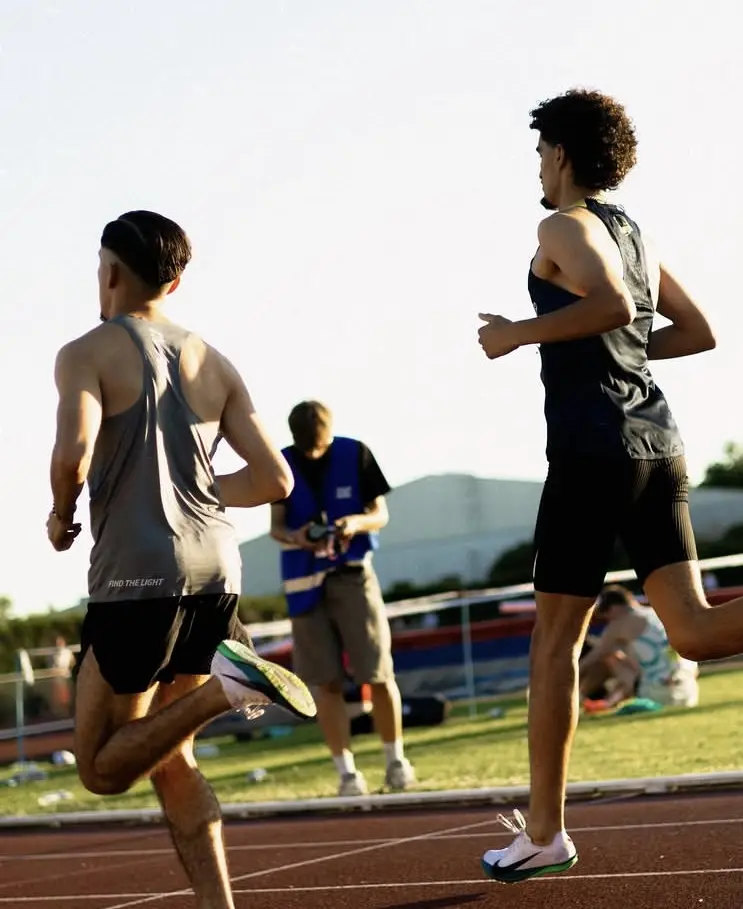
There were four of them at the project’s inception. Among them: Bilal Safadi and Wanis Adjaoud, two of the biggest current prospects in French 1,500-meter running, members of the EFCVO and CA Montreuil, respectively. The initial idea? To create something powerful. Something that goes far beyond the simple framework of a training group. “We didn’t just want to form a team. These days, a team doesn’t really mean much anymore.”
So they thought it over. At length. They lived together at training camps in Font-Romeu and Ifrane, getting to know each other for real. Not through Instagram. Not through Stories or filmed workouts. But in the brutal day-to-day reality of elite-level competition: fatigue, double sessions, meals, injuries, travel, and the moments when the masks come off.
And that’s precisely where Nurway truly comes to life.
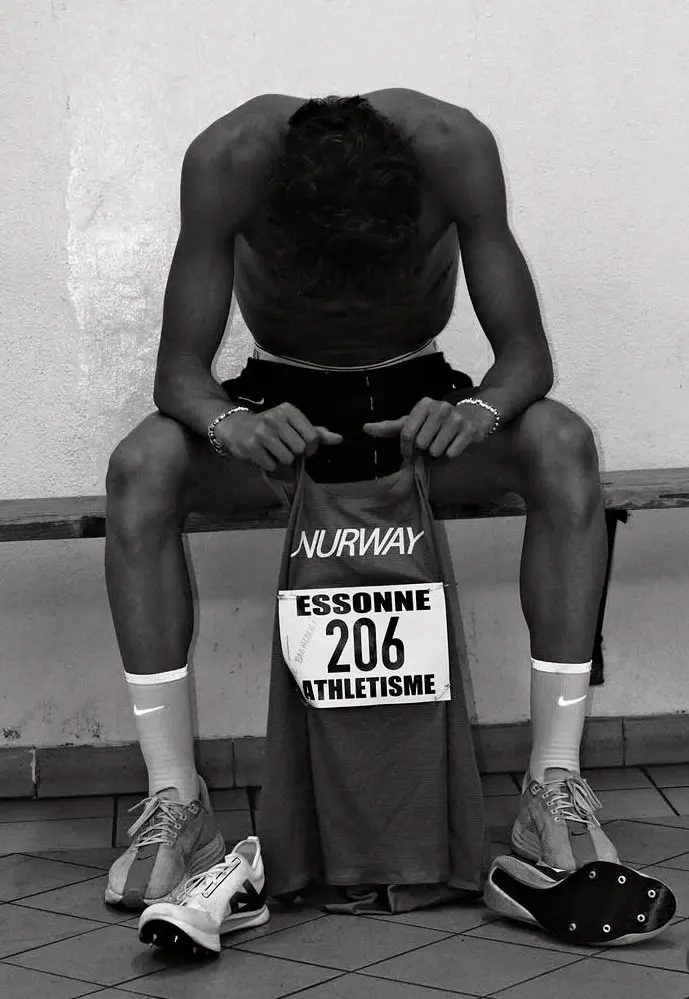
“Three weeks of training with someone is not the same as seeing them from a distance.”
That’s when they realize who they can build something with. And above all: who they want to go far with.
The name itself already tells part of the story. “Nurway.” At first glance, the word sounds almost like an established brand—something that’s been in the works for years. Yet, originally, it was just an idea tossed around by four young athletes during a training camp. They searched for a long time. Changed direction several times. Racked their brains over names. Until they stumbled upon this one.
“Nur,” normally written with an accent or a line over the “u” in its Arabic form, means “light.” A concept that is far from trivial in their thinking. Because, deep down, the idea wasn’t just to create yet another team in the French middle-distance running scene. The goal was almost to chart a course. A trajectory. A way to move forward together.
And behind the word “way” lies precisely this idea of a path, a shared journey, a collective movement—an identity capable of bringing athletes together, an aesthetic, and a modern vision of sports and middle-distance running.
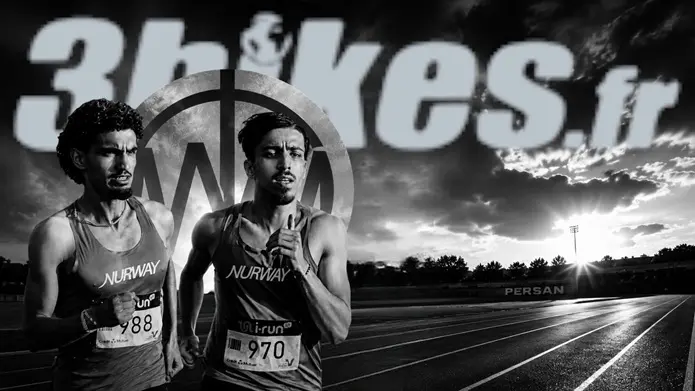
Looking back, perhaps the most impressive thing is this: having managed to make this name instantly recognizable in just a few months. Today, when the black and white logo appears on a flyer, in a video, or at a starting line, many people already subconsciously associate it with them.
MORE THAN A TEAM: AN IDENTITY
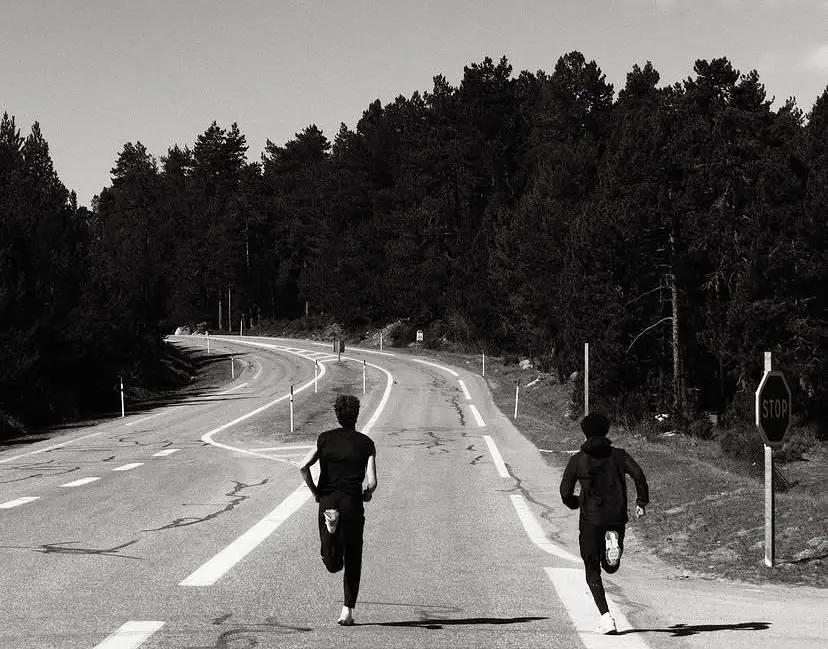
The most fascinating thing about the Nurway project is probably that it was never built as a traditional business plan. There wasn’t a group of consultants locked in a room brainstorming a “target audience,” “positioning,” or a brand strategy tailored to appeal to social media. On the contrary, everything seems to have come about almost instinctively. A logo. Colors. Instantly recognizable black-and-white outfits. A minimalist yet highly distinctive aesthetic. A way of filming, communicating, and occupying space. And above all: an extremely strong collective image.
Bilal Safadi says it himself, almost with surprise: “Sometimes it clicks… sometimes it doesn’t.”
But in this case, it’s working. Very quickly, in fact. Because there’s something about them that many brands try to buy with massive marketing budgets without ever managing to create it: a collective authenticity. Nothing seems forced. Nothing seems artificial. And that’s probably exactly why people are immediately drawn to them.
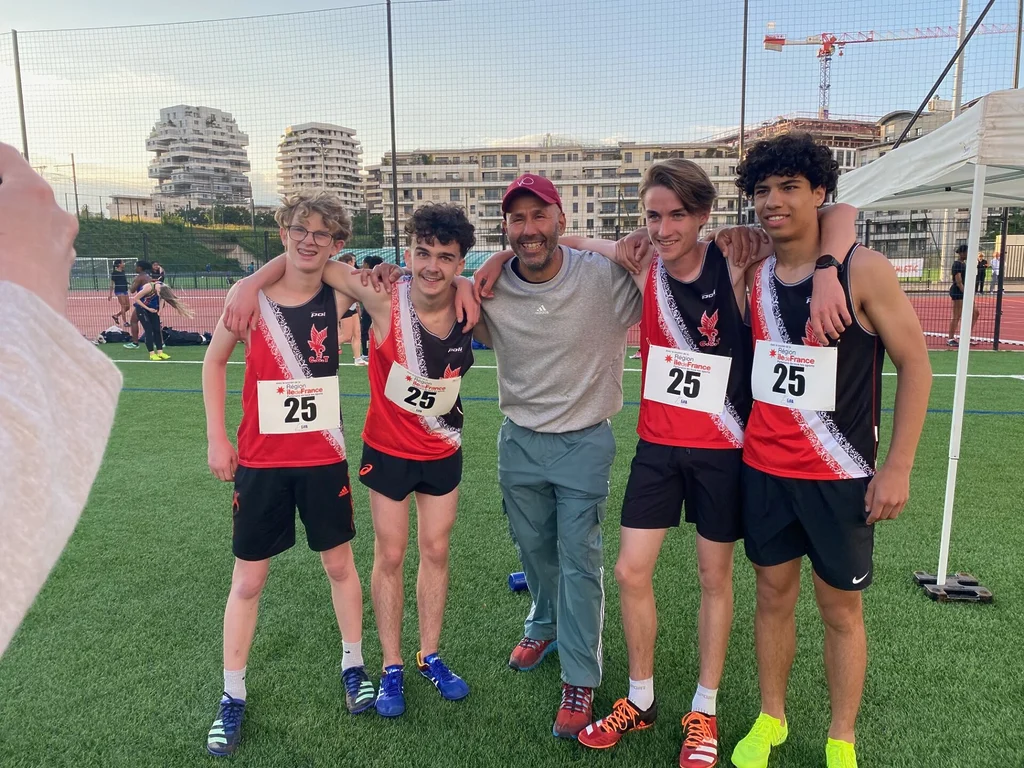
When Nurway shows up at a meet, the effect is instantaneous. You had to be on the track at Taverny in June 2025 during the collective’s unofficial launch to understand what was happening. About fifteen athletes lined up in single file. All dressed the same. All in top form. All united by the same energy. At that moment, French middle-distance running almost took on the appearance of an American professional team—something structured, modern, visually powerful, and, above all, completely new to the French sports scene.
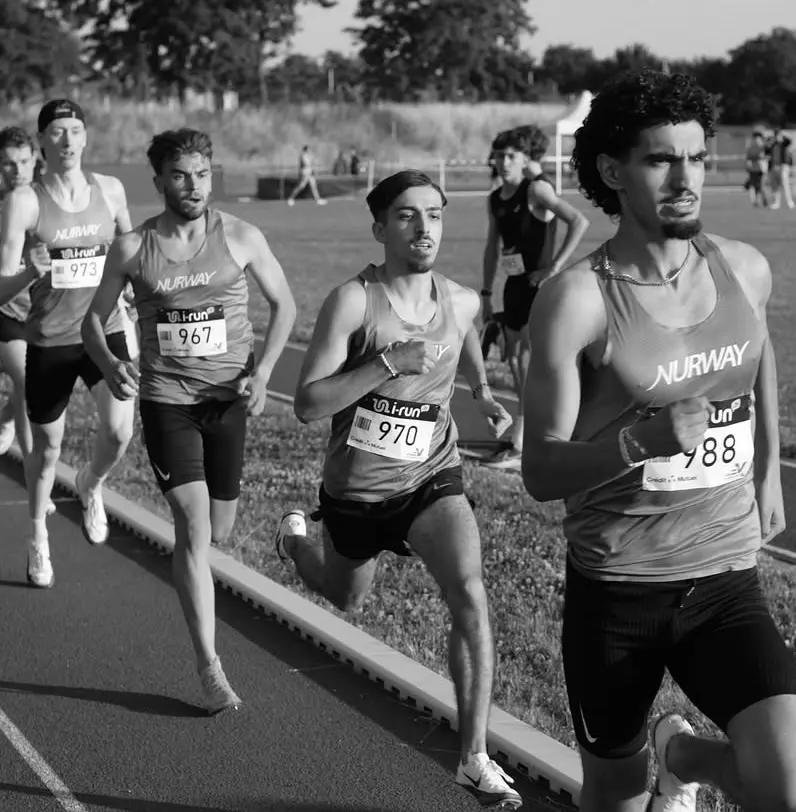
That evening, times were shattered left and right. The last runner in the series set a new 1,500-meter track record with a time of 3’58’’. Thirteen athletes left Taverny with personal bests. And at the front, Bilal Safadi won in 3’42’’. But paradoxically, that may not even be what people remember most about that evening.
What stuck with people was that sense of collective speed. That almost cinematic image of a black-and-white pack racing down the track in single file. A powerful image. Distinctive. Modern. The kind of image that leaves a mark on the collective unconscious. Because, deep down, people often forget the split times at the 1,000-meter mark. But they never forget a powerful visual experience.
MODERN SPORTS HAVE CHANGED
What Nurway understood before many other French organizations is that the modern athlete can no longer be just a competitor. Today, they must be high-performing, recognizable, visible, newsworthy, media-friendly… almost a cultural phenomenon. Major brands no longer look solely at a stopwatch time. They look for the ability to create a story.
Bilal Safadi himself cites the Adidas photo shoots done with certain members of the group, the connections forged through content, and the opportunities opened up not just by performance… but by the image built around it. And behind this line of thinking lies an almost brutal economic clarity.
Because elite middle-distance running remains a world where many survive rather than truly live. Training camps in Morocco costing 700 euros. Constant travel. Equipment. Recovery. Nutrition. Injuries. Meanwhile, some marathons generate tens of millions of euros in revenue. “The New York Marathon—for several days, the entire city revolves around the marathon.”
The observation is made without anger. But with tremendous clarity. The business exists. Money flows. It’s just that it doesn’t always trickle down to the runners. So they’ve decided they won’t wait any longer.
JUNE 14: MORE THAN JUST A MEETING
And that is precisely why the Persan track meet is so important. Because it’s not just about organizing races. It’s about creating a whole world.
On June 14, starting at 5 p.m., Persan will come alive to the rhythm of middle-distance running. Eleven booths are planned. A full-scale production is being discussed with city hall. Photographers. Videos. Maybe even drones. A visual identity that’s everywhere. Bilal wants people to immediately associate this meet with Nurway.
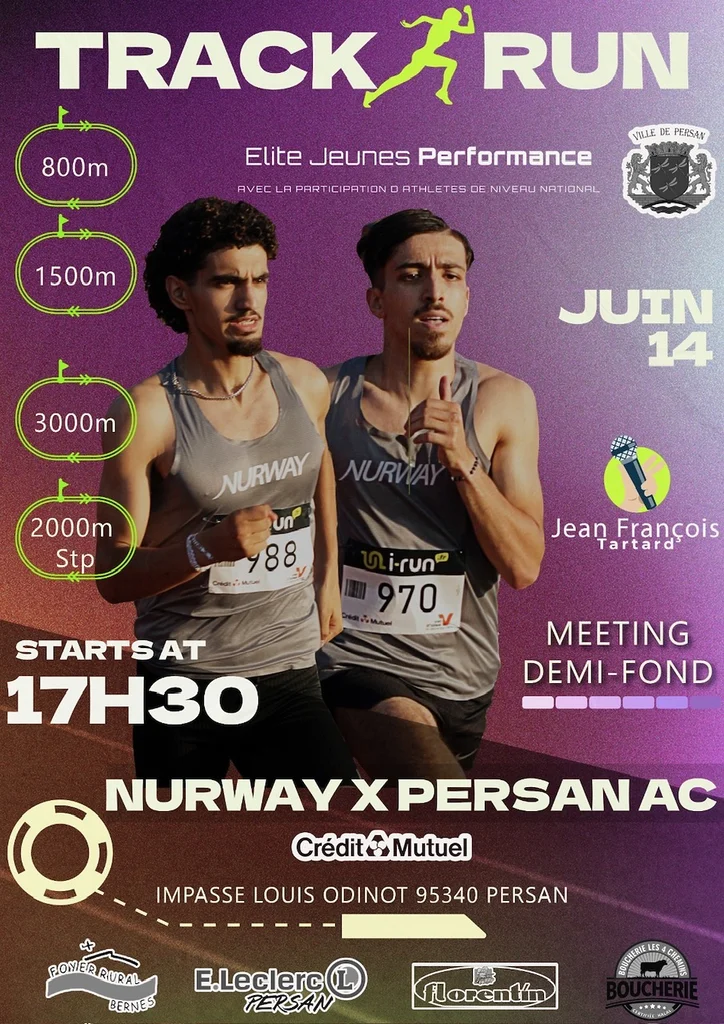
=> Race info and registration for the Persan meet: TRACK RUN NURWAY X – PERSAN AC
Everywhere, there will be black and white, banners, graphic elements, visuals, and storytelling. The meet then becomes much more than just a competition. It becomes a showcase. A statement of intent.
Share the post "Nurway: The Generation That Refuses to Wait"