Share the post "4iiii PRECISION 3+ or the no-frills watt"
Long reserved for obsessive cyclists and lab bikes, the power meter has become one of the most useful tools for understanding exactly how much power you’re generating. With its PRECISION 3+ Ride Ready, 4iiii offers a way to enter the world of watts without complications or exorbitant prices: a simple Shimano left crank—lightweight, discreet, connected, and precise enough to turn a ride into a real training session. Perhaps not the absolute truth. But a reliable benchmark. And sometimes, that’s exactly what turns a cyclist who just rides into a cyclist who makes progress.
By Jeff Tatard – Photos: DR
Just a few years ago, riding with a power meter was almost a social statement. It wasn’t just about saying, “I’m training.” You were also saying, somewhat despite yourself: “I’m well-equipped, I’m organized, I’ve entered the serious world.” Today, watts have left the lab, the pro teams, and the €12,000 bikes. They’ve come down to real life. The real life of the cyclist who rides before work, the triathlete who squeezes in workouts between meetings, the amateur racer who wants to understand why he hits the wall on the final climb, and the curious rider who’d rather know than guess.
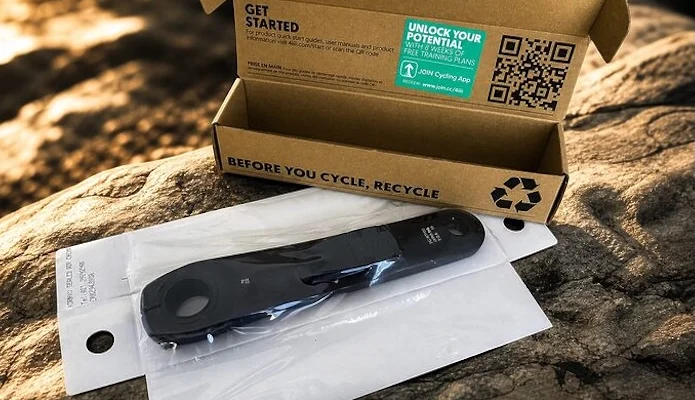
That’s exactly where the 4iiii PRECISION 3+ Ride Ready comes in, shown here in its Shimano 105 R7100 version with a 172.5 mm crankset. A ready-to-install left crank arm, already equipped with the sensor, priced around €350 depending on the retailer, and distributed in France via WAAT Distribution. In other words: no need to replace the entire crankset, no complicated DIY work, and no major financial commitment. You remove the original left crank, install this one, pair it with the power meter, calibrate it, and ride.
The promise is simple: to make power-based training accessible, without turning your bike into a permanent test bench. And that’s perhaps where this 4iiii is most interesting. Not because it claims to replace a dual-sided power meter costing over €1,000, but because it raises a valid question: how much precision do we really need to improve?
SEE ALSO => Buy the 4iiii PRECISION 3+ power meter starting at €323
4iiii: The Watt from Canada
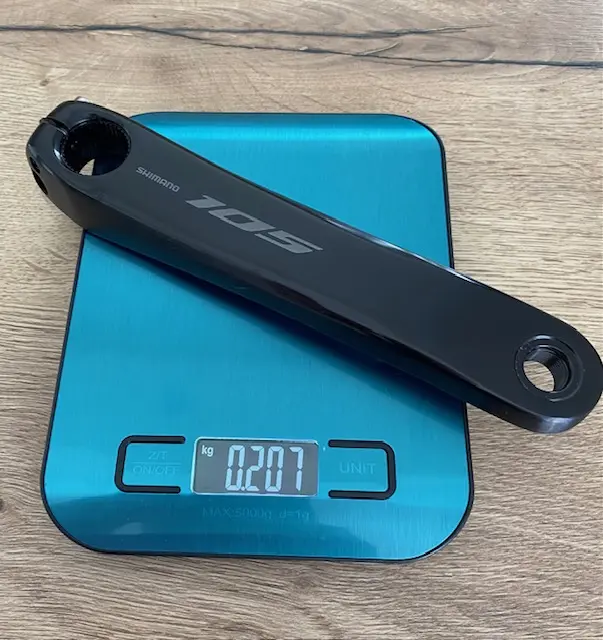
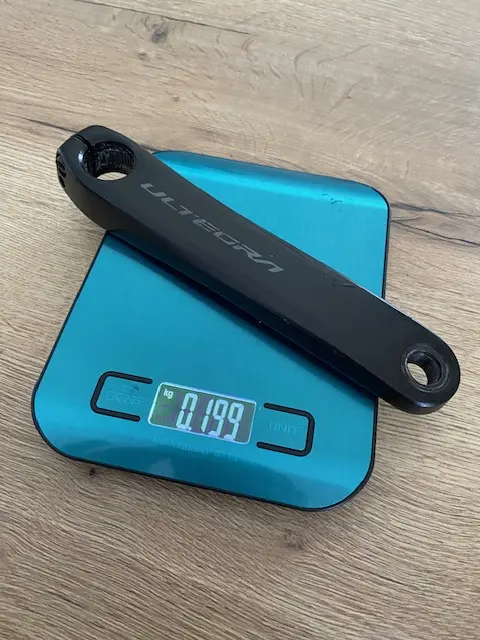
4iiii is a Canadian company specializing in power meters and onboard technologies for cycling. The brand has made a name for itself by offering compact, lightweight, and relatively affordable solutions, with a clear vision: to make data accessible to everyone without adding unnecessary bulk. The PRECISION 3+ boasts an additional weight of just 8 g (we double-checked, don’t worry…), a claimed accuracy of ±1%, ANT+ and Bluetooth compatibility, a CR2032 battery, IPX7 water resistance, and Apple Find My integration, which lets you locate your bike via the Apple ecosystem. 4iiii also claims up to 800 hours of battery life in some official specifications, while certain retailer listings mention 550 hours depending on the version or configuration; in any case, the battery life is more than sufficient to let you forget about the battery for many months.
In France, the brand is distributed by WAAT Distribution, a company founded by triathlon enthusiasts and already associated with several performance-oriented brands such as HUUB, HED, OTSO, Sporcks, AGU, Bioracer, and Neversecond. WAAT positions itself less as a mere retailer and more as a bridge between brands that are still sometimes too obscure in France and athletes seeking equipment that is effective, well-designed, and not just flashy.
Ride Ready: Common Sense Over Sophistication
The term “Ride Ready” sums up the product quite well. The sensor comes factory-installed on a Shimano crank. Here, a 105 FC-R7100, compatible with the corresponding series’ 12-speed groupsets. The principle is therefore that of a single-sided sensor: power is measured on the left leg, then doubled to obtain an estimate of total power.
On paper, this seems less sophisticated than a dual-sided power meter. And technically, it is. But in real life, that’s not necessarily a problem. As Guillaume Judas explained in his guide to using a power meter published on 3bikes, power data is only valuable if it’s understood, calibrated, repeatable, and put into context. A power meter isn’t divine truth. It’s a tool. And the most useful tool isn’t always the most complex one, but the one you use correctly—and consistently.
That’s exactly what makes the 4iiii so valuable. It doesn’t promise to become your personal biomechanical lab. It provides a stable, readable, and actionable reading. And for most cyclists, that’s already a huge benefit.
Installation: Simple, but Not to Be Overlooked
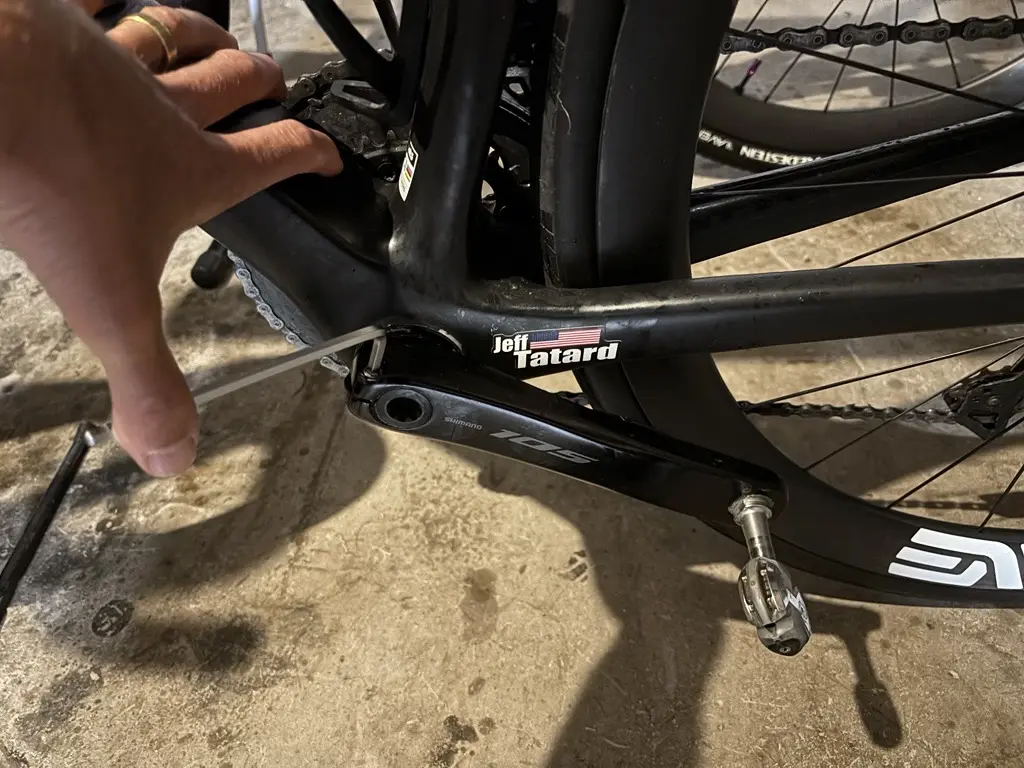
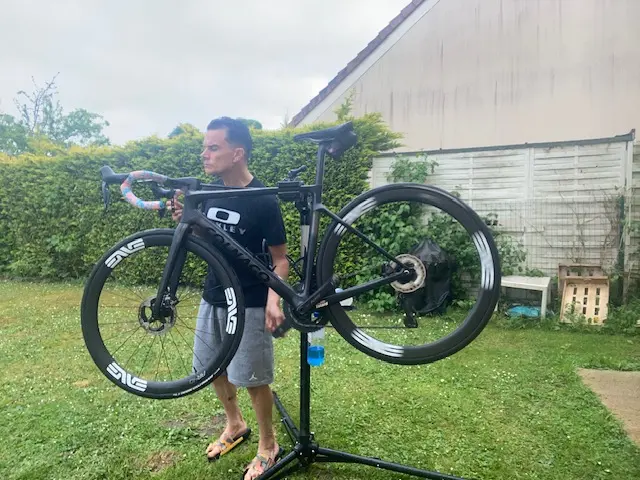
Installation is relatively simple for anyone with even a basic understanding of Shimano Hollowtech II cranksets. You remove the original left crank arm, install the new one, follow the torque specifications, check for play, and then pair the sensor with your bike computer. Those who aren’t used to this will obviously want to visit a bike shop, which is still the best way to avoid turning a simple task into a source of unnecessary headaches.
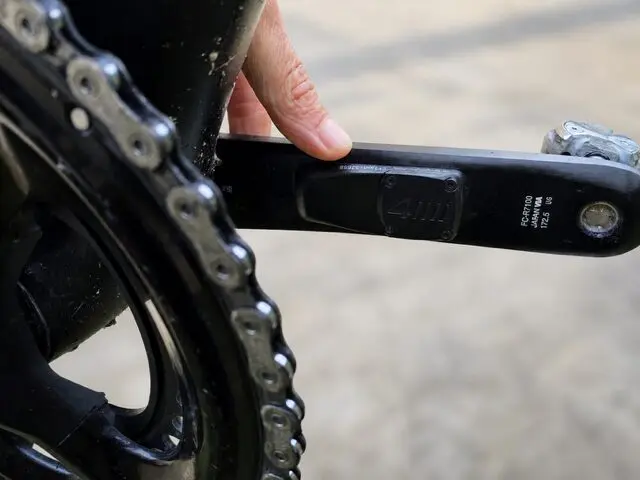
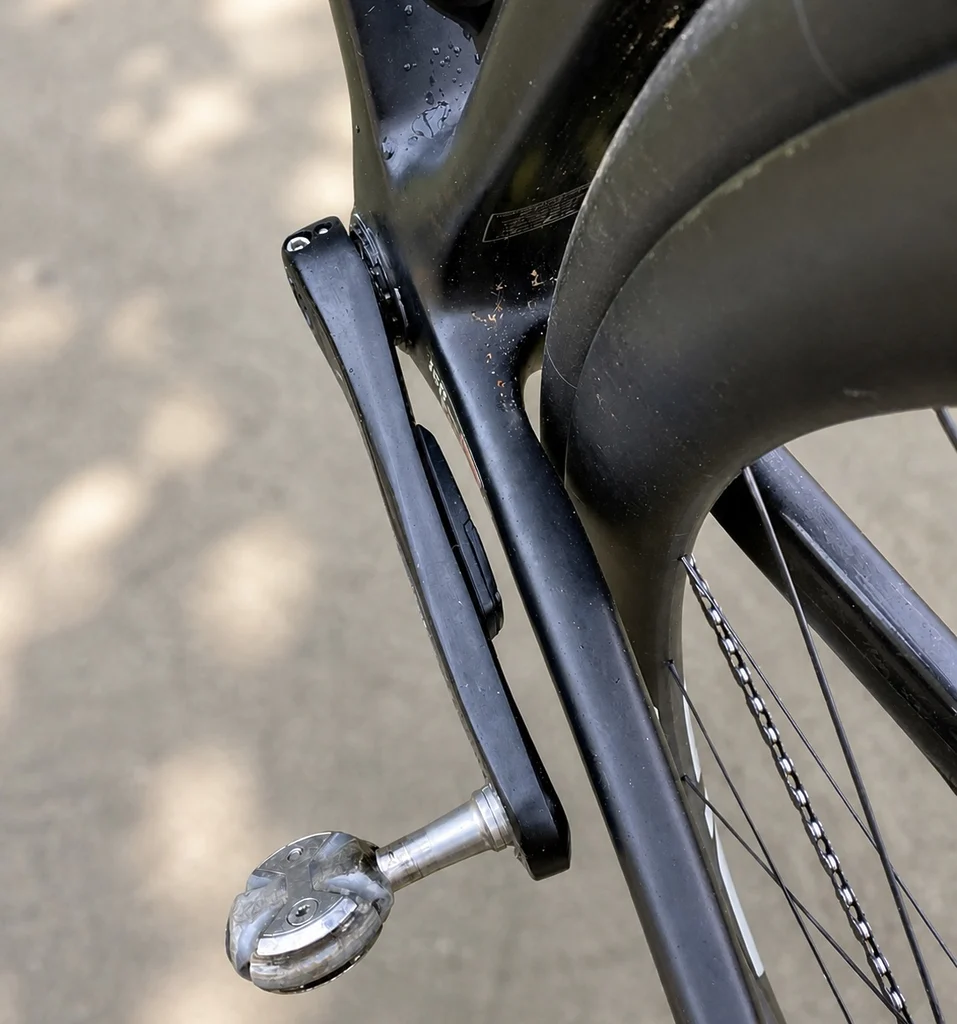
The sensor is discreet. It mounts on the inner side of the crank, frame-side. You simply need to check the available space between the sensor and the rear dropout. On some very compact or intricately designed frames, compatibility may require prior verification. This isn’t specific to 4iiii, but applies to all sensors that are glued or integrated onto a crank arm.
Once installed, pairing with a Garmin is a breeze. Whether via ANT+ or Bluetooth, the sensor is recognized quickly. The 4iiii app lets you check the battery status, perform updates, calibrate the sensor, and manage certain settings. As always with power meters, calibrating before each ride is a good habit to get into. It takes just a few seconds, and it saves you from spending two hours debating whether the wattage is accurate, off, too high, too low, or simply set up incorrectly.
On the road: the numbers put the fantasy to rest
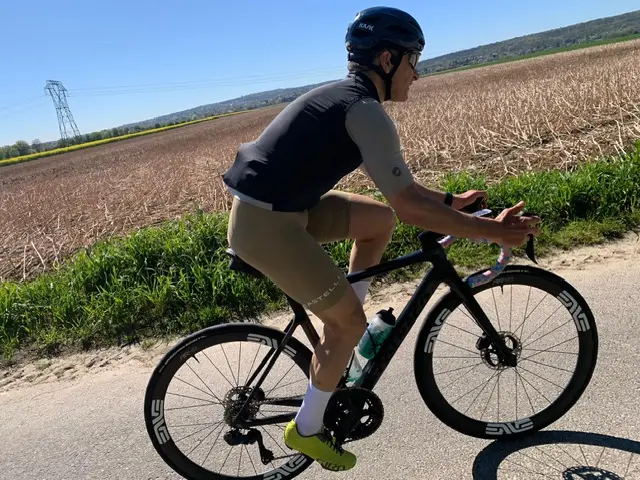
Riding based on power changes how you understand the effort. Heart rate tells you what your body is going through. Speed tells you what the wind, the grade, the tires, your position, and the road surface are willing to give you. Power, on the other hand, tells you what you’re producing.
That’s why it’s so valuable. On a hill, it keeps you from starting out too enthusiastically. In a headwind, it keeps you from thinking you’re terrible just because the speedometer isn’t moving. In a group, it sometimes reveals that you’re pushing much harder than you realize. On a stationary bike, it lets you precisely calibrate your intensity zones. And in training, it transforms a vague session into a structured one.
With this 4iiii, the data is clean, stable, and easy to read. During steady efforts around the threshold, there’s no erratic behavior. Cadence rises correctly. Changes in intensity are detected accurately. During short bursts of effort—as is always the case with single-sided sensors—you need to take the readings with a grain of salt: depending on your dominant leg, your fatigue level, or how you sprint or accelerate, the number may vary slightly compared to a dual-sided system or reference pedals.
Key Features: What You Really Need to KnowUse: road / training / amateur SEE ALSO => Buy the 4iiii PRECISION 3+ power meter starting at €323 On paper, it has it all. But as is often the case with power meters, what really matters isn’t found in the spec sheet… it’s in how it performs once you’re on the bike. |
In our case, the 4iiii proved to be slightly on the high side compared to our usual readings: about 5 to 10 watts more around 270 watts—our reference FTP, equivalent here to 3.85 W/kg. Relative to this intensity, the deviation remains very modest: around 1.5 to 3.7%, depending on whether you consider a 5- or 10-watt difference, which is still very acceptable for a single-sided sensor in this price range. And above all, the key point is elsewhere: the deviation appears consistent. However, as Guillaume pointed out in his guide, repeatability is often more important than an obsession with the absolute wattage. If your sensor always gives you the same reference value, it becomes useful. If it changes its mind every two weeks, it becomes nothing more than a decoration.
Single-leg: the limitation, but also the price of intelligence
Let’s be honest: a single-leg sensor can’t offer the same precision as a dual-leg sensor. It doesn’t actually measure total power. It measures the left leg, then extrapolates. If you’re pedaling perfectly 50/50, everything’s fine. If you’re at 48/52 or 52/48—as is the case for us—the discrepancy starts to show. If you’re coming back from an injury, if you have significant asymmetry, or if you’re looking for a detailed analysis of your left/right balance, then you’ll need to aim higher.
But for many cyclists, this limit isn’t a deal-breaker. Because they don’t need to know if their right leg produced 136 watts and the left 134. They need to know whether they’re riding at endurance pace, tempo, threshold, maximum average power (MAP), or too hard too soon. They need to repeat different intensities, compare workouts, manage a climb, and not confuse the feeling of ease with true freshness.
And that’s where this 4iiii does the job perfectly.
Apple Find My: Just a Gimmick? Not Quite
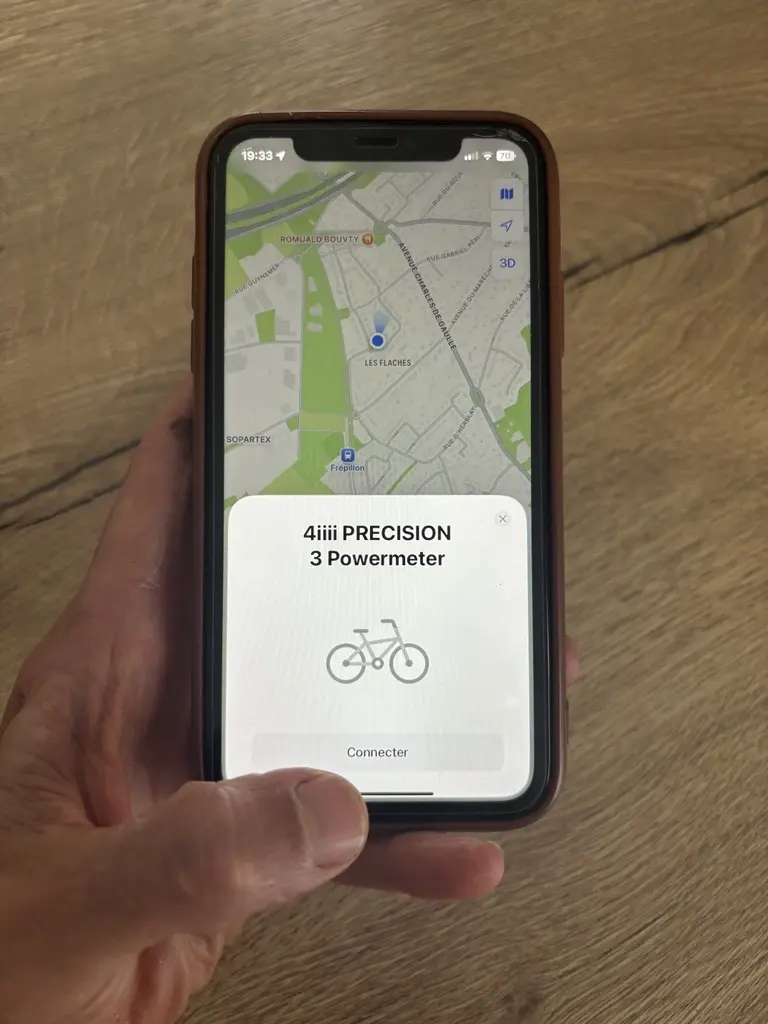
The Apple Find My integration might seem like a marketing gimmick. In reality, it makes sense. In an era when bikes are getting more and more expensive, when traveling by train or plane puts your gear at risk, and when theft remains a constant concern, being able to track your bike through the Apple ecosystem provides a little extra peace of mind.
It’s not an anti-theft device. It’s not insurance. It’s not a promise that you’ll find a missing bike within a minute. But it’s a smart feature, built into a component that’s already on the bike, so there’s no need for an extra accessory to hide under the saddle or in the frame. For Android users, however, this feature obviously loses its appeal.
APPLE FIND MY: HOW TO ENABLE LOCATION TRACKING
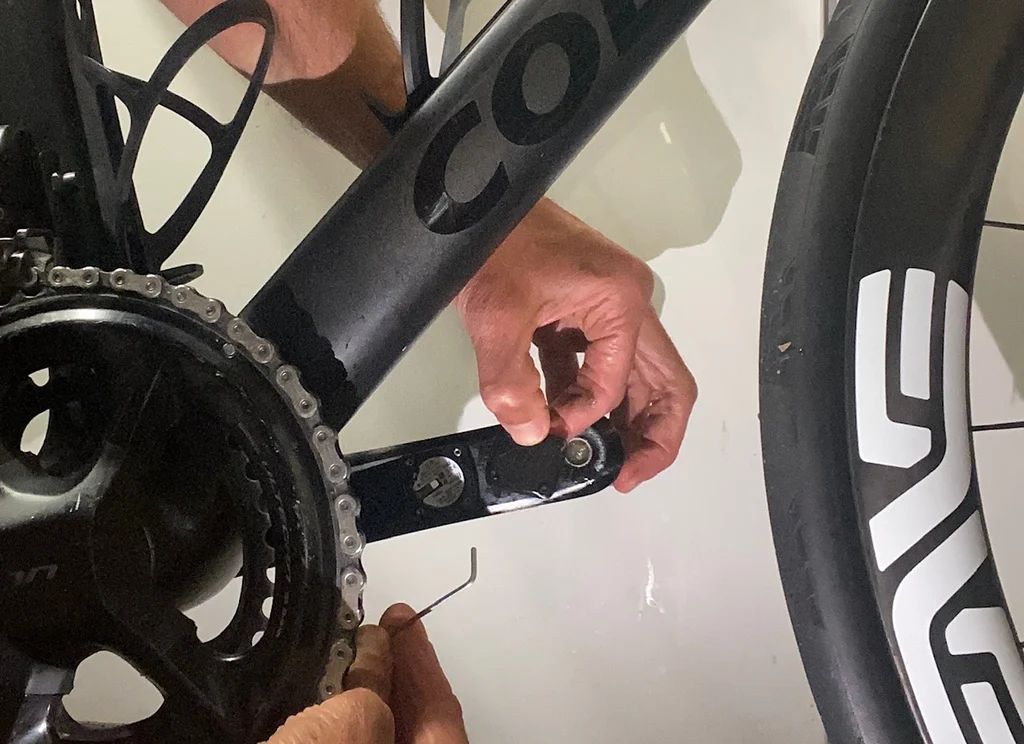
Open the sensor’s battery cover. Result: The bike can now be tracked directly from your iPhone, just like an AirTag, without any additional accessories. Simple, fast… and sometimes enough to give you a little more peace of mind. |
During training: the real change
The power meter isn’t meant to magically make a cyclist stronger. Above all, it makes mistakes more visible. It reveals starts that are too fast, intervals that are too long, “recovery” sessions that aren’t really recovery, and “easy” rides that actually involve pushing hard for two hours.
With an FTP of 270 watts, for example, the zones become concrete. Endurance is no longer just a feeling. The threshold is no longer a vague pain. The maximum power output (MPO) is no longer an ego contest. You know where you stand, what you’re working on, and—sometimes most importantly—what you need to avoid. A power meter like the 4iiii PRECISION 3+ makes this possible: it provides a framework for your effort without stifling the fun.
That may be its greatest strength. It doesn’t take over everything. It doesn’t turn the bike into a Formula 1 cockpit. It provides information—discreet, precise given its design, and reliable enough to build progress.
Verdict from 3bikes.fr
The 4iiii PRECISION 3+ Ride Ready Shimano 105 R7100 isn’t the most sophisticated power meter on the market. And that’s a good thing. It doesn’t aim to impress with a flood of data, but rather to make power measurement accessible, simple, and useful. For around €350, you get a lightweight, discreet, easy-to-install sensor that’s compatible with modern bike computers, boasts excellent battery life, and offers a claimed accuracy of ±1%.
Yes, you have to accept the single-leg measurement approach. Yes, it may be slightly optimistic or pessimistic depending on your left/right balance. Yes, a high-end dual-sided sensor will go further. But at this price point, that’s not really the point. The point is whether this 4iiii helps you train better. And the answer is yes.
It doesn’t provide absolute truth. It provides a benchmark. And sometimes, in cycling, that’s exactly what separates the rider who rides a lot from the one who truly makes progress.
SEE ALSO => Buy the 4iiii PRECISION 3+ power meter starting at €323
The 4iiii PRECISION 3+ RIDE READY SHIMANO 105 R7100 at a glance…Pros: Very affordable price for getting serious about power training, Minimal added weight: 8 g, Simple installation with the Ride Ready version, ANT+ and Bluetooth compatibility, Claimed accuracy of ±1%, Stable and repeatable data, Very good battery life, Easy-to-replace CR2032 battery, User-friendly 4iiii app for battery status, updates, and calibration, Apple Find My integration, Discreet design, 3-year warranty |
Share the post "4iiii PRECISION 3+ or the no-frills watt"