Share the post "Long-Term Test of the New Specialized Cotton TLR Tires"
With the new Cotton TLR, Specialized is reviving an old concept—the competition-grade cotton tire—and bringing it into the very contemporary world of tubeless tires and modern rims. Billed as the epitome of speed, this tubeless tire is generating as much enthusiasm as it is raising questions. Because behind its promises of performance and comfort, one question already dominates the discussion: Is this type of construction truly ready to meet the demands of versatile riding? Results after 2,000 km on spring roads. By Guillaume Judas – Photos: ©3bikes.fr
The name Cotton isn’t new to Specialized. It harkens back to a time when the brand had already explored the performance of cotton casings in competition, starting in 2012. At the time, these tires marked a turning point by offering handling similar to that of tubular tires, while eliminating their limitations. They even contributed to successes at the highest level, demonstrating that tubed tires could rival—or even surpass—traditional tubular setups. I can say this without hesitation: the Turbo Cotton (tubed) tire remains one of my favorites to this day, thanks to its performance, responsiveness, and comfort—even if it’s far from being the most durable on the market.
With this new Cotton TLR, Specialized isn’t trying to play the nostalgia card. The landscape has changed dramatically. Today’s peloton standards now require tubeless-compatible tires, hookless rims, lower pressures, and wider tire sections. The challenge, therefore, is no longer simply to replicate the feel on the road, but to adapt it to an entirely different technical environment. The Cotton TLR fits into this approach: preserving the flexibility and responsiveness of cotton while meeting the mechanical and safety requirements of modern cycling.
A tire designed for speed and modern compliance
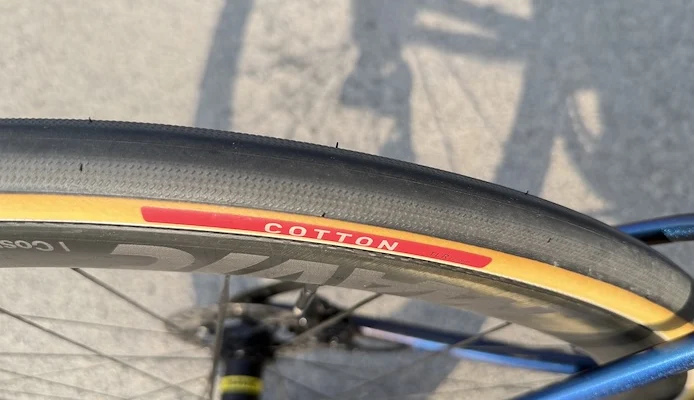
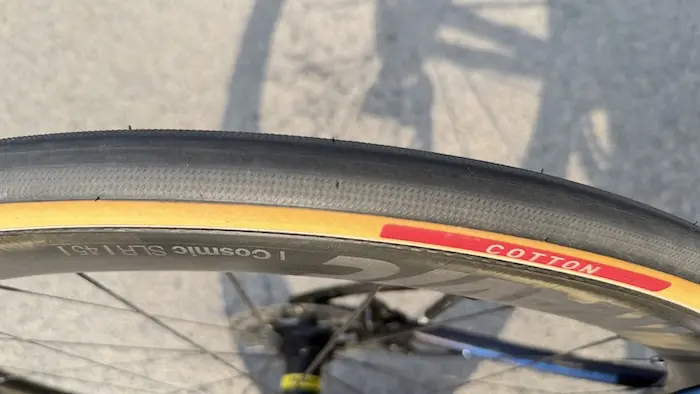
Beneath its apparent simplicity, the Cotton TLR is built on a sophisticated architecture. Specialized opted for a 320 TPI casing, constructed on a hybrid base combining polyester and cotton fibers. The polyester forms the load-bearing structure, delivering the stability and strength needed for tubeless riding, while the cotton keeps the flexibility that this type of tire is known for. The goal is to let the tire conform to road irregularities—particularly on rough or gritty surfaces—while maintaining constant contact with the ground.
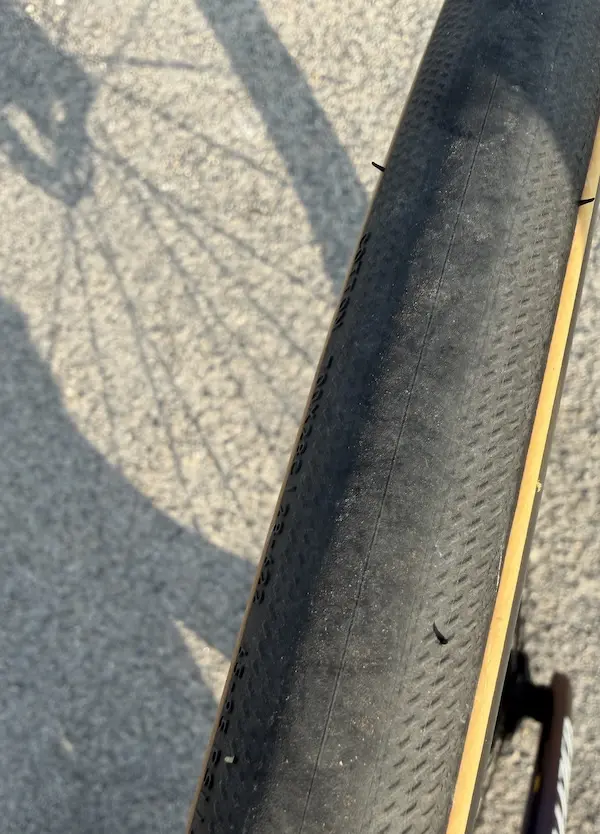
The tread relies on a dual-compound technology already proven by Specialized. The center of the tire uses the Gripton T2 compound, designed to reduce rolling resistance, while the shoulders feature Gripton T5 to ensure secure cornering. The aim is to strike a balance between efficiency on the straights and precision in the corners, with a clear focus on performance. But one of the most important aspects of this development is its tubeless design. Unlike previous generations of cotton tyres, which were often derived from more traditional constructions, the Cotton TLR was designed from the outset to operate without an inner tube. This entails stricter bead tolerances, improved sealing, and increased resistance to deformation at low pressure. In a context where riders are seeking to ride at lower pressures to gain comfort and traction, this aspect becomes central.
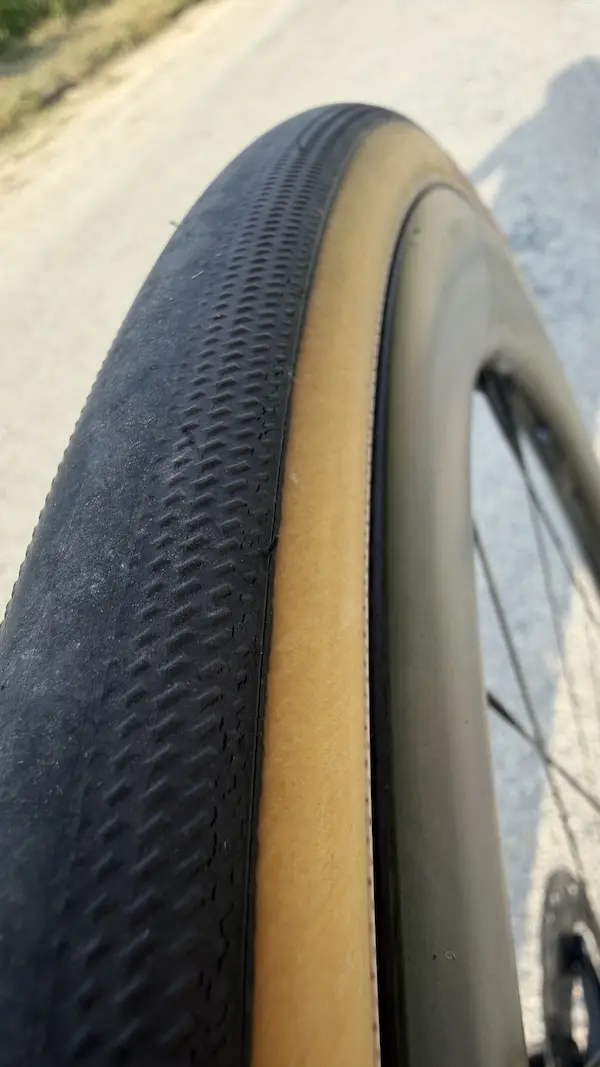
Initial weight readings also confirm a very race-oriented design, with figures that are quite respectable for this category. The advertised widths—28, 30, and 32 mm—are in line with current trends in the peloton. I weighed the two 700×28 test tires at 279 and 280 g, which is consistent with the manufacturer’s stated weight.
First Impressions
At this stage, the Cotton TLR clearly stands out as a tire designed for pure performance. Its very thin construction, advertised flexibility, and extreme lightness reflect a clear commitment to prioritizing performance and ride feel. On paper, everything points to a tire capable of effectively filtering out vibrations, maintaining a high level of efficiency, and offering a smooth ride—a quality particularly sought after on long rides. And even in the Classics on challenging roads, as we’ve seen pros like Remco Evenepoel (3rd in the Tour of Flanders and Liège–Bastogne–Liège, winner of the Amstel Gold Race) and Demi Vollering (winner of the Omloop Het Nieuwsblad, the Tour of Flanders, the Flèche Wallonne, and Liège–Bastogne–Liège) successfully use these tires this spring.
But this highly performance-oriented approach immediately raises a major question: that of durability. Cotton-casing tyres, even modernised ones, have historically been more susceptible to external damage, whether from cuts, abrasion, or repeated impacts. In fact, I personally didn’t experience a single flat tire over a little more than 2,000 km of testing. And no flats seem to have disrupted Vollering or Evenepoel’s performances in the Belgian Classics. In that sense, the Cotton TLR doesn’t strike me as any more fragile than the original Turbo Cotton. It is thin, to be sure. It’s not a winter tyre built for constant wet riding. But as a racing tyre, it feels far less vulnerable than highly specialised models like the Vittoria Corsa Pro Speed or the Continental GP TT.
Toward the long-term test
Beyond the initial technical observations and first impressions, the real question surrounding the Cotton TLR tires is their connection to the historic Turbo Cotton tires. Are they worthy successors in terms of pure performance? Without any real means of measurement, I can only offer a subjective comparison. In my opinion, the two tire models are very similar when riding at a brisk pace. Both match the best tires on the market, offering a smooth ride worthy of the highest-end models. The Cotton TLR tyres offer exceptional cornering grip, instilling confidence and safety as soon as the pace picks up, whether on dry or wet roads. From my very first rides, I felt like I was gripping the asphalt in the turns and was able to take my usual corners faster and faster. A real treat.
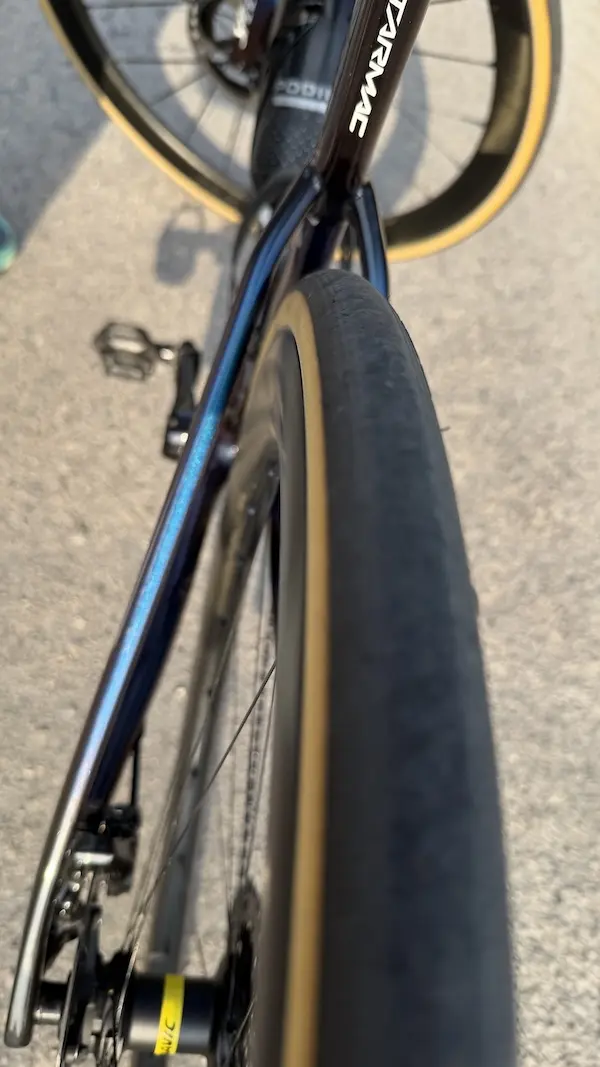
On smooth roads, the tires seem to glide over the tarmac, with a hissing sound reminiscent of the old-fashioned cotton tubular tires, but here with even better performance. On rough pavement, the tires seem to conform to the unevenness of the road surface and prevent the jarring bumps that hinder forward momentum. As a result, they offer a good balance between performance and comfort, without ever feeling like they’re collapsing under weight shifts, as is sometimes the case with certain tires when ridden underinflated. Ultimately, if I noticed a very slight difference compared to the Turbo Cotton tires, it was in terms of road feel and responsiveness—perhaps because the sidewalls are no longer 100% cotton. But overall, Specialized has successfully translated the performance of one of the most sought-after tube-type tires on the market to tubeless technology. A great success!
And what about long-term durability? As I explained above, I haven’t had a flat in 2,000 km. I also don’t feel like the tires are already at the end of their life, even though the tread is worn and has a few cuts. The Cotton TLRs aren’t as durable as all-around tires like the Continental GP 5000—far from it—but it’s clear that they perform quite well compared to other racing tires.
Conclusion after 2,000 km
At the end of this test, the Cotton TLR confirms that it’s not just a stylistic exercise centered around an iconic material, but rather a well-rounded offering in today’s road tire landscape. Specialized has struck a delicate balance here: preserving cotton’s unique DNA—characterized by flexibility, road feel, and performance—while adapting it to the demands of modern tubeless systems.
That said, it’s not perfect in every way. As is often the case with the most performance-oriented tires, certain compromises must be accepted—particularly in terms of durability or absolute resistance to the harshest conditions. But these limitations are consistent with the product’s positioning. The Cotton TLR is not intended to be a universal tire capable of handling all seasons and all terrains. It is aimed primarily at those who prioritize riding feel, speed, and handling precision. In this regard, the tire has largely succeeded. On the road, the tire impresses with lively, precise, and thoroughly enjoyable handling that echoes the best high-end rubber on the market. It remains to be seen how it will hold up over time and under more intensive use. Then there’s one final point that’s far from trivial: its price. At €99 per tire, it’s clearly positioned at the very top of the market—a price point that sets it aside for those for whom performance takes precedence over all other considerations.
SPECIALIZED COTTON TLR tires at a glance…Pros: efficiency, comfort, traction Cons: price, average durability Tread: Dual GRIPTION compound, T2/T5 – Casing: 320 TPI, polyester and cotton fibers – Sizes: available in 700×28, 700×30, 700×32 – Weight: 280 g for 700×28 – Price: €99 each – Contact: specialized.com |
Share the post "Long-Term Test of the New Specialized Cotton TLR Tires"