Share the post "Winspace T1550 Gen 2 Review: The Aero Bike That Breaks the Mold"
Long confined to a secondary role, carbon fiber production from China is now taking on a whole new dimension. With the T1550 Gen 2, the Chinese brand Winspace is now staking its claim as a leader in the aero segment, while offering a credible, cost-effective alternative. More than just an outsider, this model aims to compete head-to-head with established standards in terms of performance, integration, and build quality. On paper, the proposition is compelling. On the road, it remains to be seen whether it lives up to all its promises. By Guillaume Judas – Photos: ©vincentlyky.com
Founded in 2008 in Xiamen, Winspace has gradually broken free from the stereotypes associated with Chinese brands, which have long been perceived as manufacturers of low-cost knockoffs. Here, there are no opportunistic product lines or cloned designs: the brand develops its own frames, designs its molds in-house, and relies on advanced industrial processes, particularly in working with high-modulus Toray fibers.
This positioning is also reflected in a rigorous validation process. The frames are tested according to strict protocols, with a clear commitment to transparency regarding their mechanical performance and durability. UCI certification of several models, plus their use in competition—particularly at the highest level of women’s cycling—lend credibility to a brand seeking to establish itself in a market historically dominated by European and American players.
The range is clearly organised, with models prioritising lightness for climbing or versatility, such as the SLC3 or SLC5 (the brand’s new flagship), and others, like the M6, the T1600, or the T1550 Gen 2, are clearly designed for aerodynamic performance. The latter is positioned as a sporty aero bike designed to offer a balance between stiffness, efficiency, and a bit of comfort on long rides. It’s offered in a consistent size run (though limited to five) and comes in a wide variety of colours, letting riders break away from the standards often imposed by bigger brands.
 One of Winspace’s major selling points remains its value for money. While some premium brands charge high prices, Winspace offers frames with comparable technical specifications at a significantly lower cost. This strategy allows discerning cyclists to access advanced technologies without breaking the bank. The T1550 Gen 2 is priced at €1,799 for the frame kit and starts at €3,999 for a complete bike equipped with a Shimano 105 groupset and carbon wheels. These prices reflect the recent launch of Winspace France, but beyond the price point, the brand inspires confidence: a user-friendly website, responsive customer service, and a three-year warranty on frames and a two-year warranty on wheels.
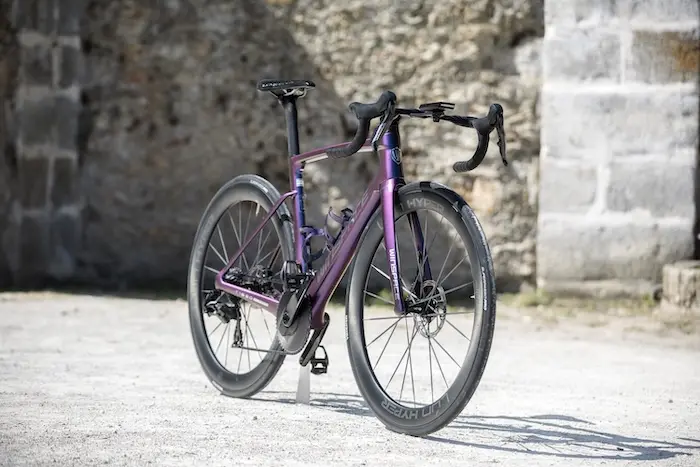
A frame designed with meticulous attention to detail
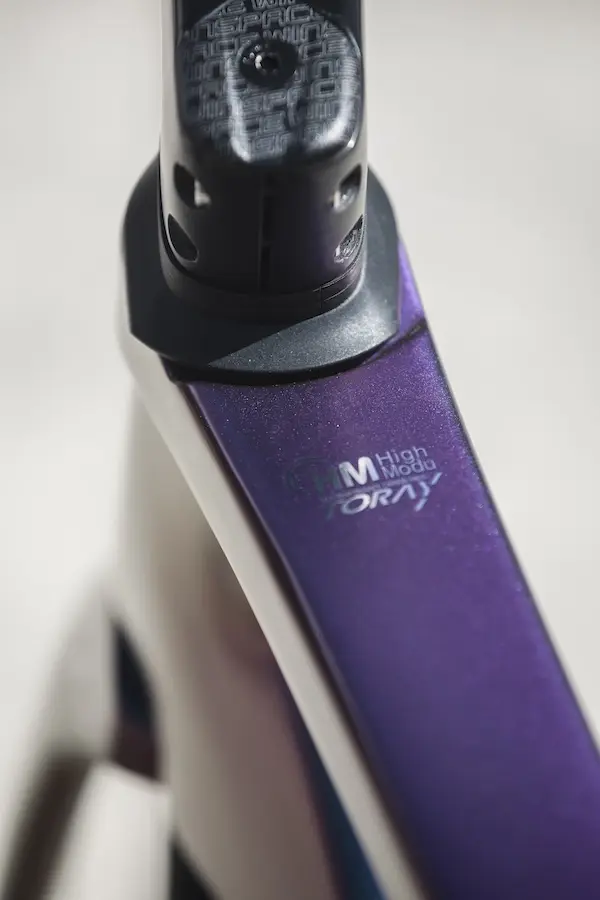
Beyond its aerodynamic focus, the T1550 Gen 2 stands out for its exceptionally well-executed frame design. Winspace uses a blend of Toray T1000 and T800 fibres, with a layup optimised for specific stress zones, to maximise the stiffness-to-weight ratio without compromising durability. The monocoque construction minimizes weak points and improves tolerance control. This is hardly surprising to anyone familiar with the technical specifications of major brands. In either case, however, it requires placing your trust in the manufacturer.
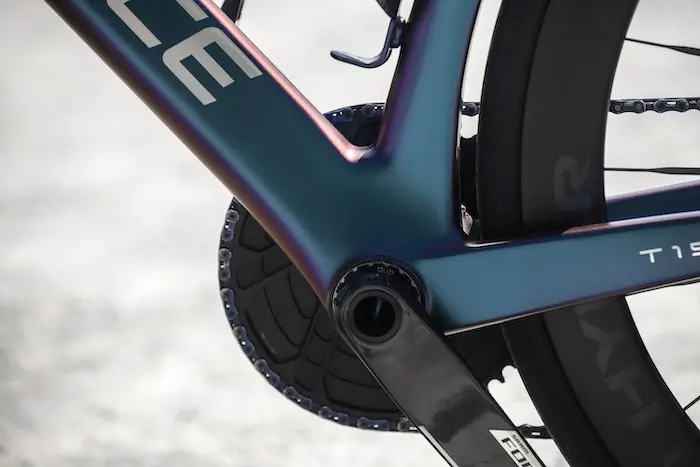
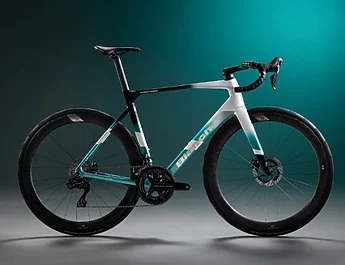
The tube profiles follow modern aerodynamic principles, with truncated cross-sections inspired by Kamm Tail standards. The massive down tube, combined with a seat tube that partially wraps around the rear wheel, is designed to reduce turbulence while increasing lateral stiffness. The head tube, which has been refined compared to the first generation, improves both aerodynamic efficiency and steering precision.
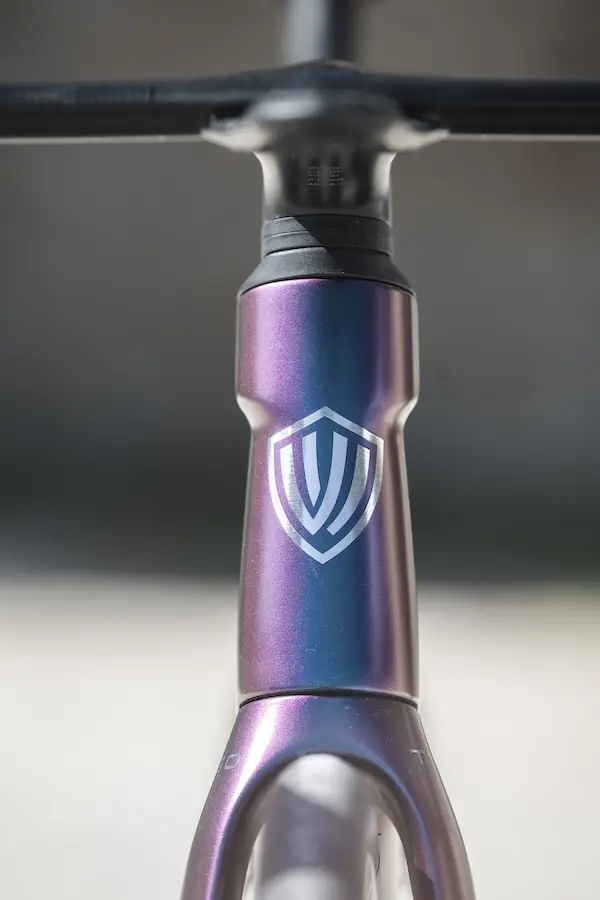 Integration is also at the heart of the design. Cable routing is fully internal via an ACR-compatible headset, which demands specific handlebars but delivers a clean, streamlined profile. This choice directly contributes to aerodynamic gains while reinforcing the bike’s visual identity. However, without independent data, it is difficult to accurately assess the actual performance gain on the road.
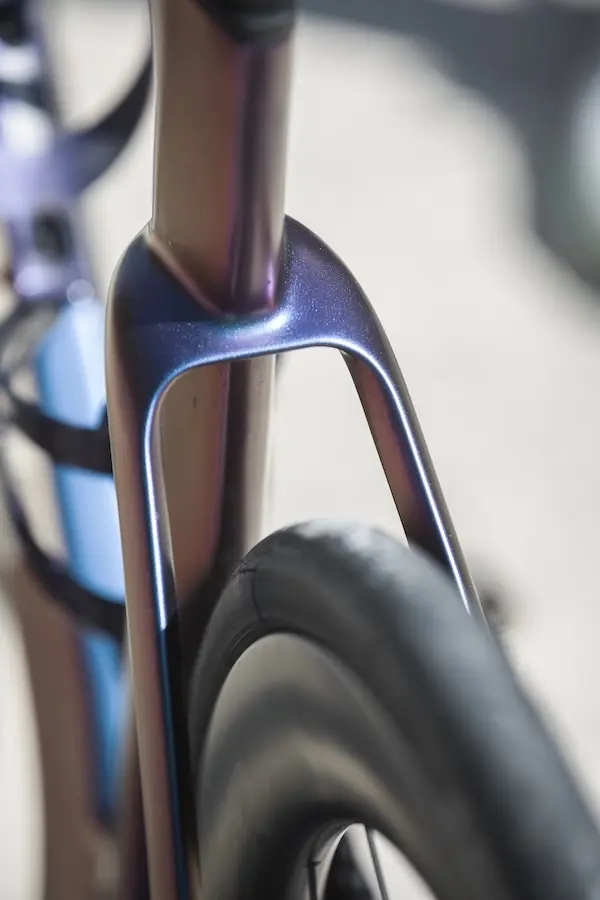 Winspace has also opted for a threaded T47 bottom bracket, a sensible compromise between stiffness and ease of maintenance, whereas Press Fit standards are sometimes criticized for their susceptibility to noise. The chainstays and seatstays have been redesigned to improve vibration damping, with the goal of making the bike more comfortable on long rides without compromising its competitive DNA.
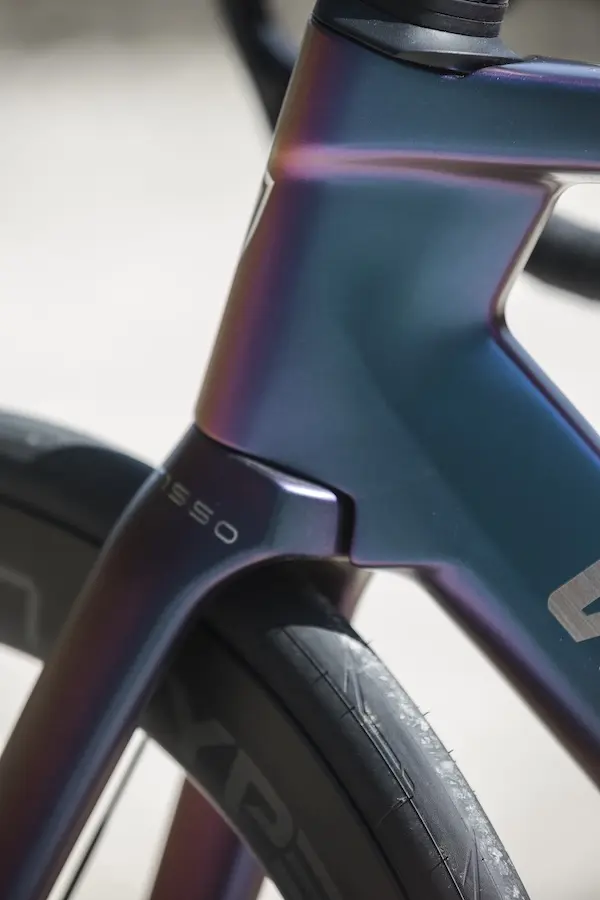
Finally, clearance for tyres up to 32 mm confirms its versatility, letting the bike handle rough roads or a wider range of uses beyond the pursuit of pure performance. This detail clearly illustrates the evolution of the market, where even aero bikes must now incorporate considerations for comfort and adaptability.
A Custom, Performance-Oriented Build
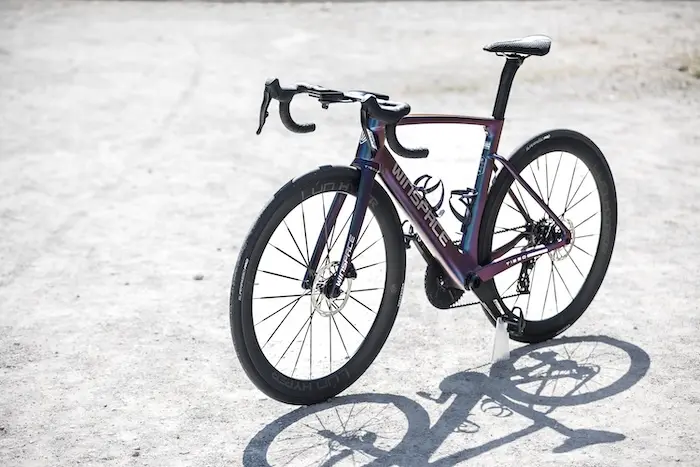
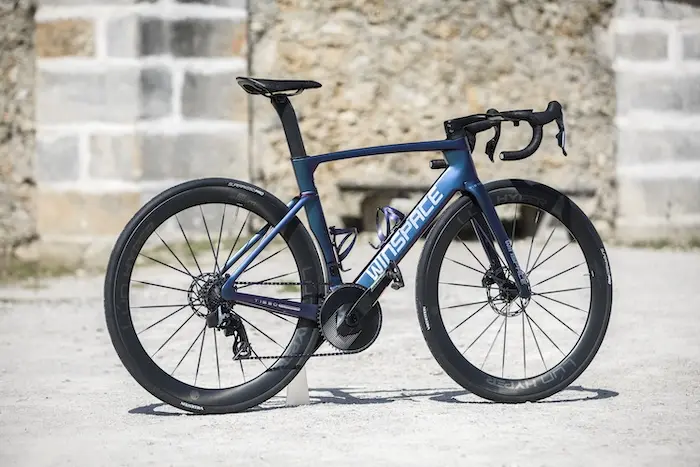
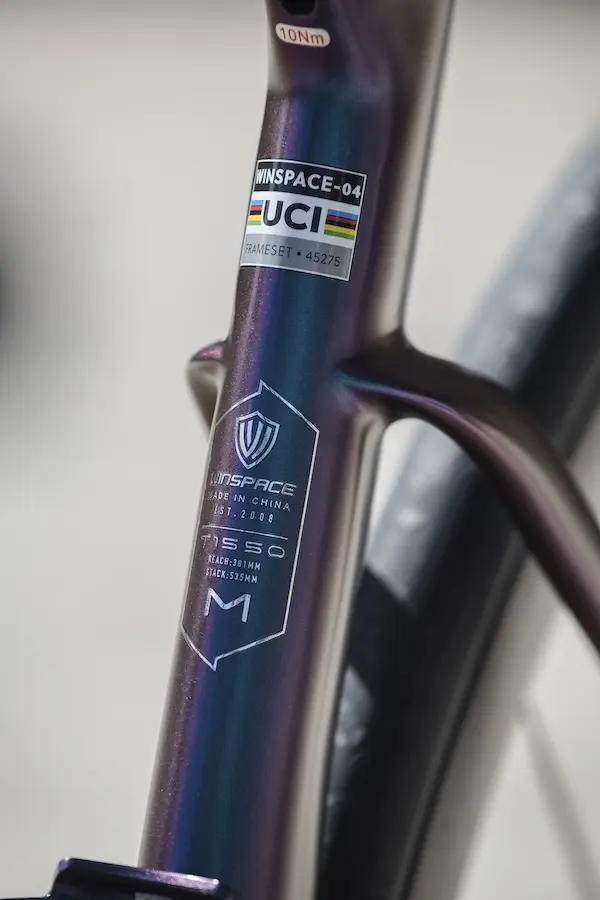
For this test we started with a T1550 Gen 2 frame kit, carefully selecting the paint finish—with its chameleon effects and colour variations depending on the light. The result is particularly striking. Beyond the aesthetic appeal, this choice demonstrates Winspace’s ability to offer distinctive finishes, whereas many competitors stick to more conventional color palettes. The verified weight of the frame—including paint, derailleur hangers, and bottle cage screws—is 1,060 g in size M, consistent with the 850 g advertised for an unpainted frame. The fork weighs 400 g with the steerer cut, and the seatpost tips the scales at 193 g. 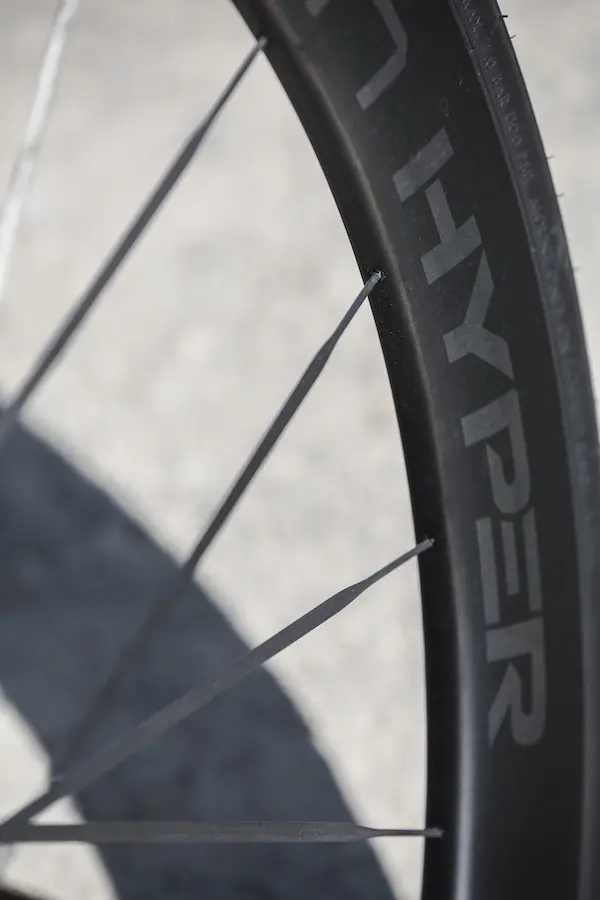
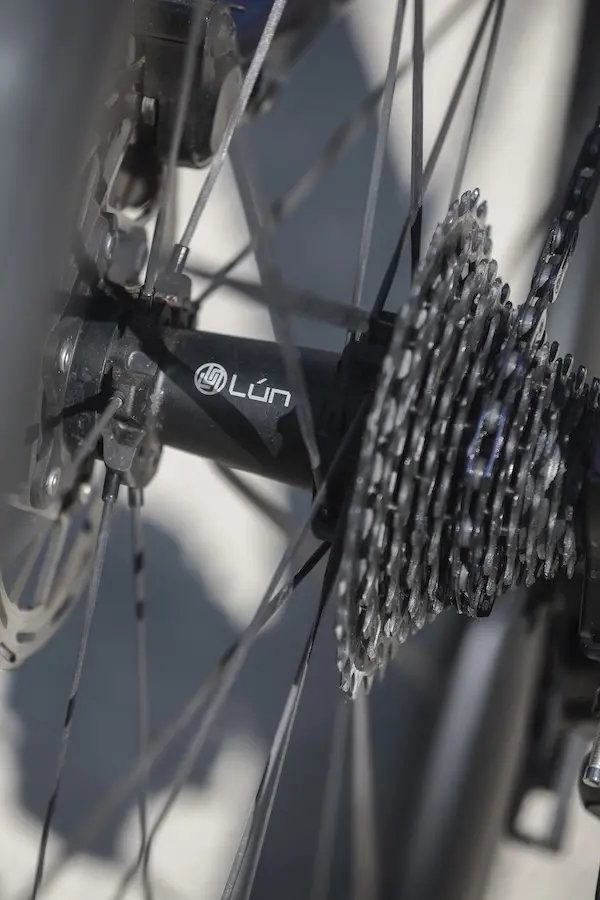 The build centers around a pair of wheels from the same ecosystem, the Lun HYPER 5, with 50-mm rims and profiled carbon spokes. A logical choice given their versatility and aerodynamic efficiency. This intermediate profile aims for a balance between high-speed efficiency and stable handling in a variety of conditions. They fit perfectly with the frame’s philosophy, which seeks to combine performance with ease of use. Verified weights are 599 g for the front and 684 g for the rear, for a total of 1,283 g (including rim tapes and tubeless valves).
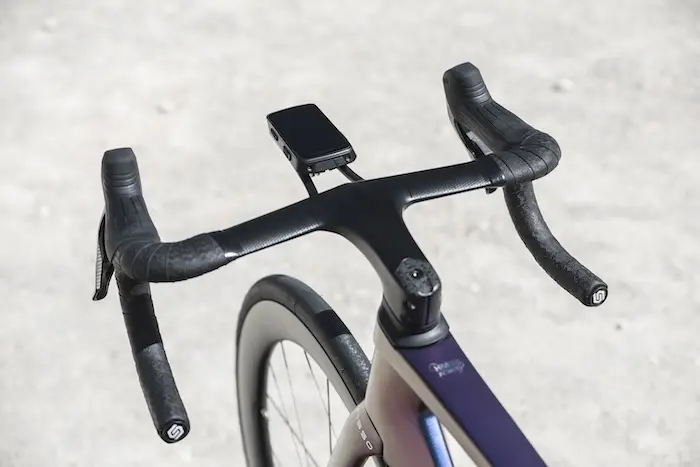
The cockpit features a fully integrated HYPER design. This choice enhances the bike’s overall aesthetic cohesion while contributing to aerodynamic performance by minimizing airflow disturbances at the front. Despite its unconventional shape, the ergonomics prove very impressive in use, offering a balance of sportiness and comfort. The weight is 334 g for the 400 × 105 mm size, plus 48 g for the computer mount.
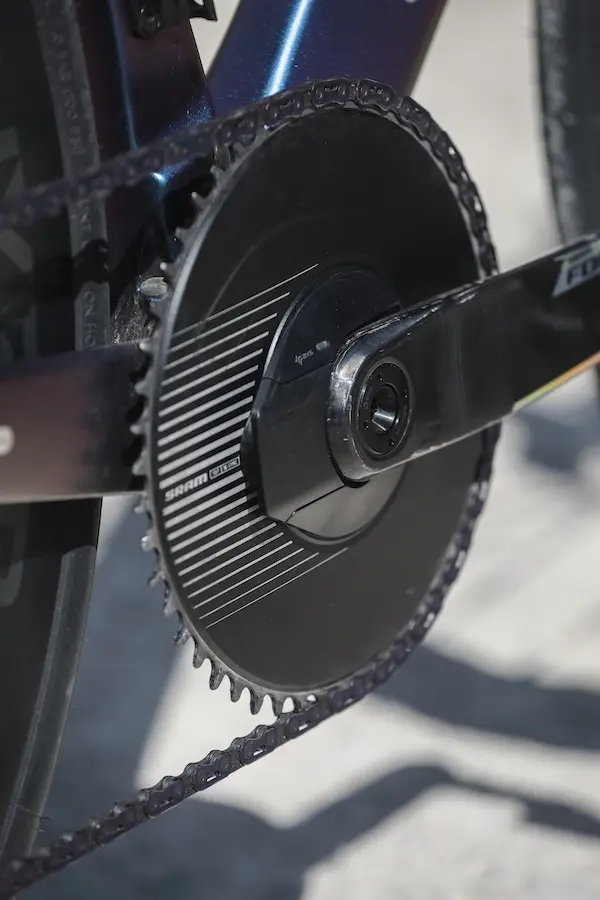
For the drivetrain, we opted for a SRAM Force 1x groupset. This choice was driven by a desire for simplicity and weight savings, while maintaining a gear range suitable for demanding athletic use. The result is a complete bike weighing 7.25 kg, equipped with Shimano Dura-Ace pedals, a Fizik Vento Argo R3 Adaptive saddle, Vredestein Sorpasso Pro tires, TPU tubes, and bottle cages. This represents exceptional value given the level of integration and the frame’s aerodynamic profile.
A very reasonable price
The pleasant surprise comes in the form of the pricing, which is particularly competitive here. When ordering through the official website—and taking into account the involvement of a French intermediary—the package including the frame, wheelset, and cockpit comes to €3,797 (€1,799 for the frame, €1,599 for the wheelset, and €399 for the cockpit). During promotional events like Black Friday, discounts of up to 20% were available.
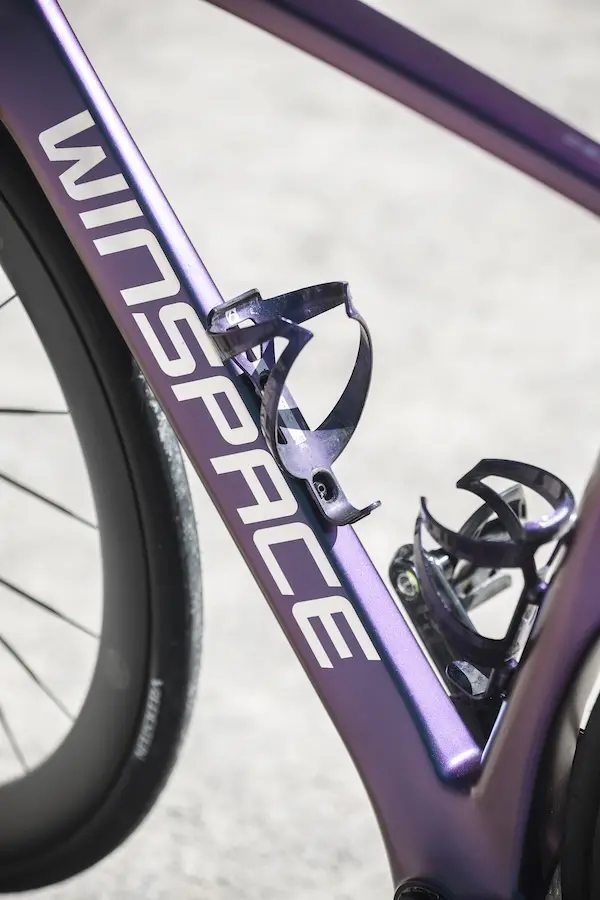
The SRAM Force AXS groupset is listed at around 2,400 €, but is often found for between 1,600 and 1,700 €. Add to that the essential accessories: saddle, tires, tubes, and bottle cages.
All in all, the budget stays under €6,000 for a bike ready to ride, and can drop to around €5,500 by shopping smart. This represents particularly aggressive pricing compared to the major brands.
A Decidedly Sporty Character
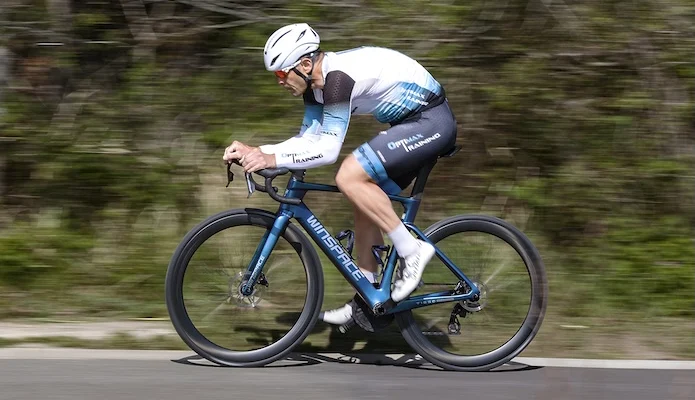
On the road, the T1550 Gen 2 makes its intentions clear from the very first few hundred meters. The frame transmits power with great efficiency. Every acceleration is crisp, almost instantaneous, delivering that highly sought-after sensation of a bike that doesn’t dampen the effort but transfers it fully. During short, intense bursts of effort—typical of dynamic rides or peloton racing—its performance proves particularly impressive. The frame is very stiff around the bottom bracket, which adds to its demanding nature. To start off in a high gear, you need to maintain good form with your hips firmly in place; otherwise, you risk running into its stiffness.
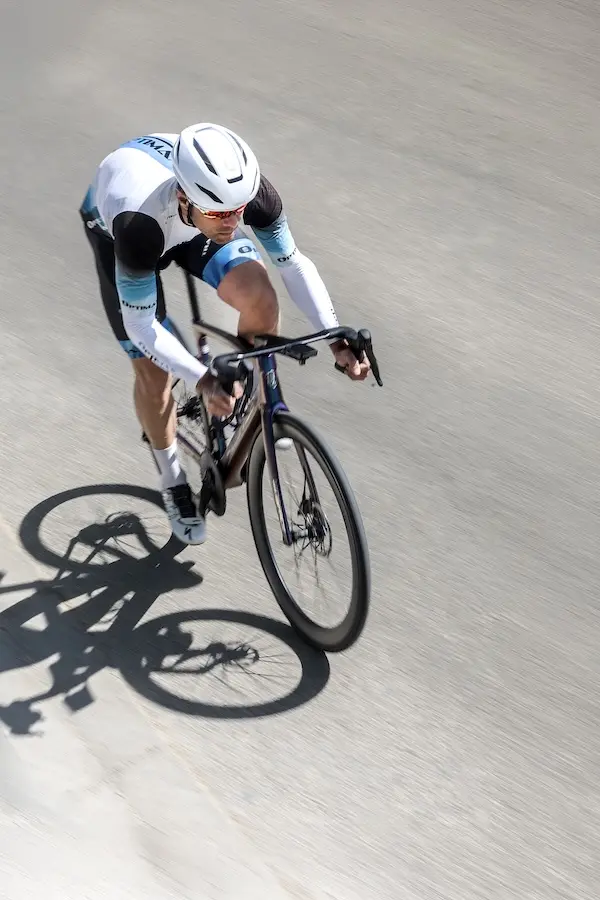
At high speeds, the bike confirms its aerodynamic design. Once up to speed, it maintains its momentum remarkably well and encourages you to keep up a fast pace. The work done on the tube profiles and the overall integration result in a feeling of constant glide, enhanced by the chosen component setup. On flat ground or gentle descents, the T1550 Gen 2 is in its element, with an efficiency that clearly places it among the top models in the aero segment—provided you keep pedalling. On descents and when coasting, in fact, we sometimes felt as though we were being slightly held back by a lack of smoothness in the freehub body compared to our riding companions.
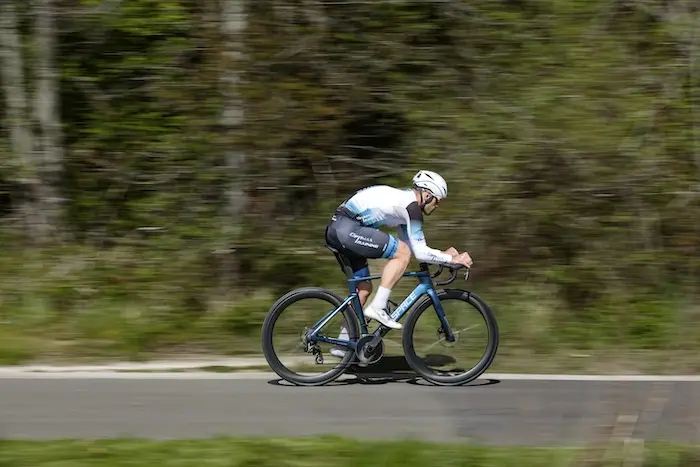
The precision of the front end is a strong point. The head tube and integrated cockpit offer direct, even sharp, handling that will particularly appeal to fans of responsive bikes. This responsiveness does, however, require a slight adjustment period. During the first few rides, the handling may feel a bit twitchy, especially at high speeds or in crosswinds. Once you get the hang of it, the bike becomes more predictable and precise—provided you’re willing to ride a demanding bike that requires commitment and attention from the rider. Nevertheless, over time, you’ll gain confidence and come to appreciate its highly sporty character more and more.
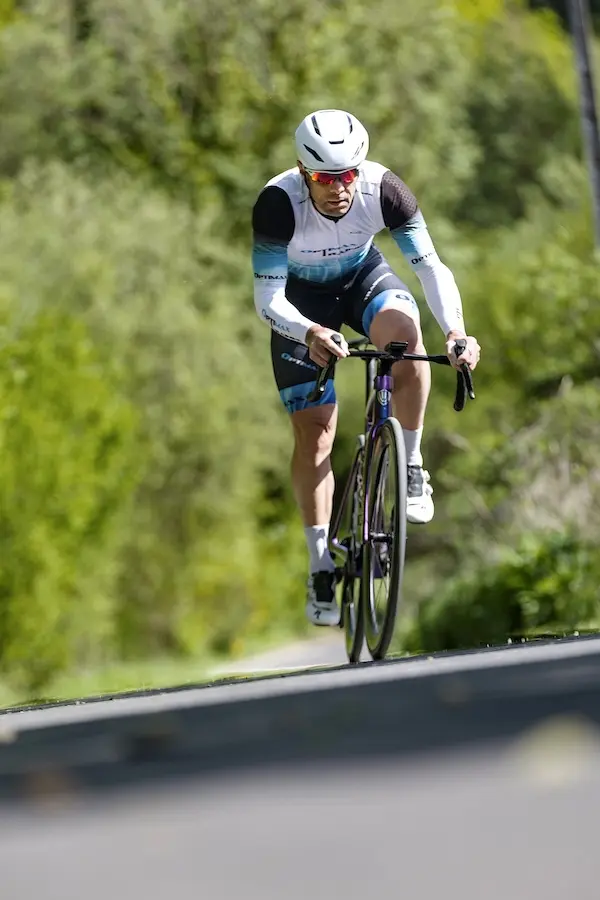 Without being overly harsh, the frame remains firm yet comfortable, especially on rough surfaces. However, the setup with rims featuring a 23 mm internal width and 28 mm-wide tyres offers an interesting compromise. Those planning longer rides may opt for 30 or even 32 mm-wide tyres, paired with lower tyre pressures to improve vibration damping. That said, this is still a bike designed first and foremost for speed, rather than for a smooth ride. Ultimately, the T1550 Gen 2 clearly falls into the category of competition bikes. It’s aimed at both amateur racers and Olympic-distance triathletes looking for a high-performance, modern bike with a particularly attractive price-to-performance ratio and a level of finish that’s on par with established market leaders.
A serious contender in the aero bike world
With the T1550 Gen 2, Winspace confirms its evolution. Far from historical stereotypes, the frame delivers a well-rounded performance across the board, in line with current standards in the aero segment. Stiff, fast, and efficient, it seeks a practical balance while remaining a true racing machine. The extensive integration and modern architecture make it a cohesive platform for demanding riders.
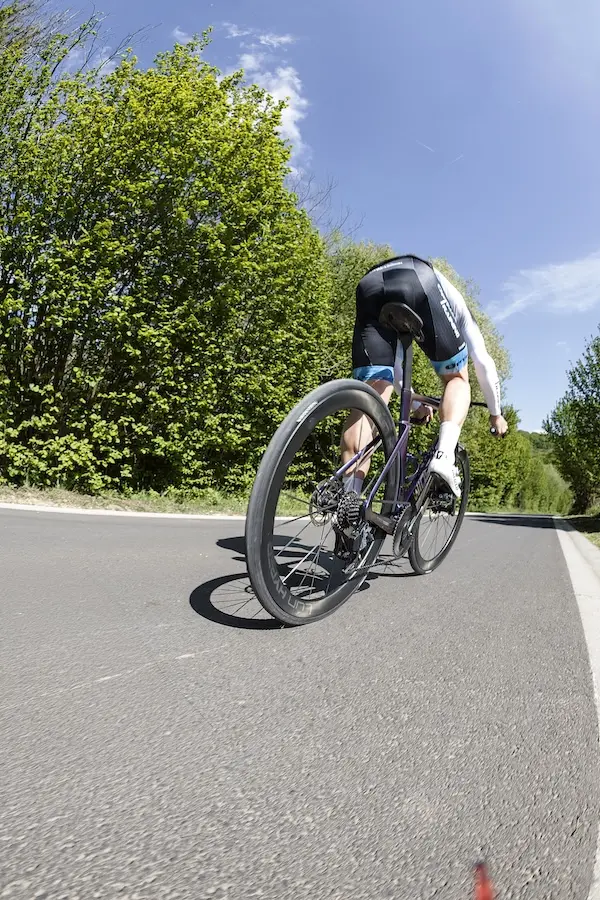
But it’s above all in terms of value for money that the T1550 Gen 2 stands out. At a comparable equipment level, it clearly shakes up the established hierarchy. This positioning will appeal to riders who prioritize actual performance over brand prestige. The Winspace T1550 Gen 2 thus stands out as a rational and confident choice for anyone looking for a modern, high-performance, and financially sound aero bike.
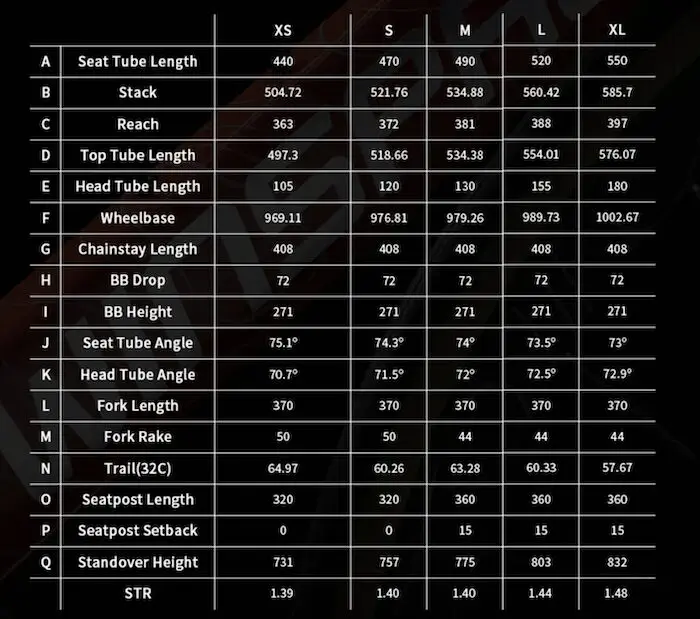
The WINSPACE T1550 GEN 2 at a glance…Pros: value for money, stiffness, integration, finish Cons: demanding bike, only 5 sizes Frame: T1000+T800 carbon fiber monocoque – Design: T-Tail – Bottom bracket: T47 – Headset: ACR type – Fork: monocoque carbon with wide clearance – Tire clearance: up to 32 mm – Number of sizes: 5 – Weight: 1,060 g (verified) for the frame only, including paint and hardware; 445 g for the fork (pivot uncut) – Price: €1,799 for the frame kit – Warranty: 3 years – Contact: winspace.fr |
Share the post "Winspace T1550 Gen 2 Review: The Aero Bike That Breaks the Mold"