Share the post "Maryline Beynette, seeing without seeking to be seen"
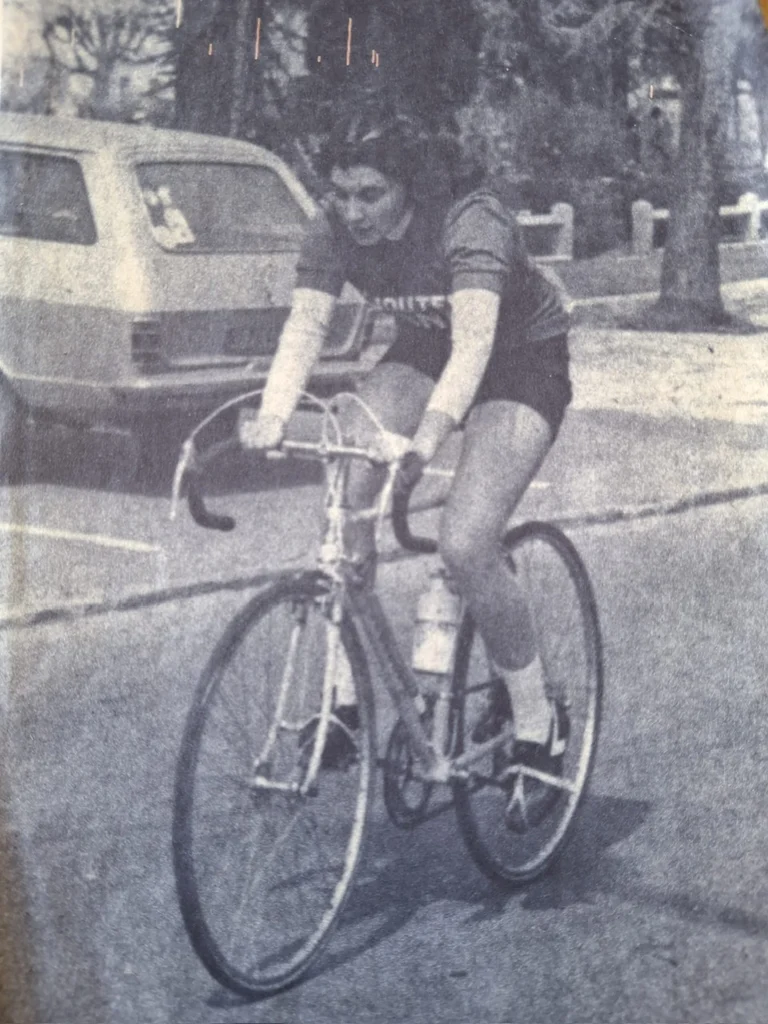
She’s there before everyone else. A discreet, almost faded silhouette, standing by a road in Val-d’Oise, exactly where something is about to happen. Not necessarily what one expects. Not always victory. But a gesture, a tension, a look. Something no one really sees… except her. For over sixty years, Maryline Beynette hasn’t just watched cycling: she observes what runs through it, what connects it, what transcends it. In this silent, almost invisible attention, she builds a memory that others forget to create. Maryline didn’t discover cycling. She was born into it. In 1964, into a family where her parents ran the Ermont-Eaubonne club, where cousins rode, where Sundays were not debated. They were lived. Cycling wasn’t an activity; it was a permanent backdrop, a common language. She tried racing, only for a few years, four licenses. Not physically strong enough, she says. But that was never the point. What matters is that she stayed. Because some passions aren’t practiced: they are inhabited.
By Jeff Tatard – Photos: DR
A presence even before the start
She’s there before everyone else. A discreet, almost faded silhouette, standing by a road in Val-d’Oise, exactly where something is about to happen. Not necessarily what one expects. Not always victory. But a gesture, a tension, a look. Something no one really sees… except her. For over sixty years, Maryline Beynette hasn’t just watched cycling: she observes what runs through it, what connects it, what transcends it. In this silent, almost invisible attention, she builds a memory that others forget to create.
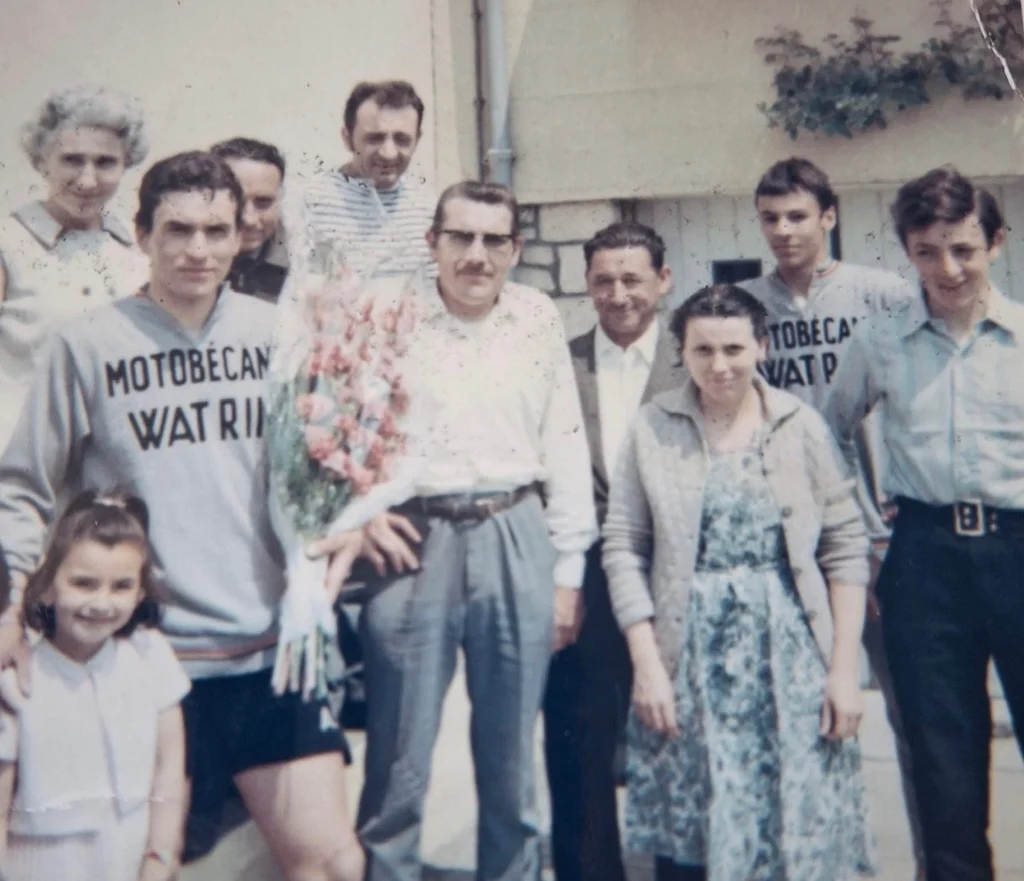
Maryline didn’t discover cycling. She was born into it. In 1964, into a family where her parents ran the Ermont-Eaubonne club, where cousins rode, where Sundays were not debated. They were lived. Cycling wasn’t an activity; it was a permanent backdrop, a common language. She tried racing, only for a few years, four licenses. Not physically strong enough, she says. But that was never the point. She stayed, and that’s what matters. Because some passions aren’t practiced: they are inhabited.
The first turning point
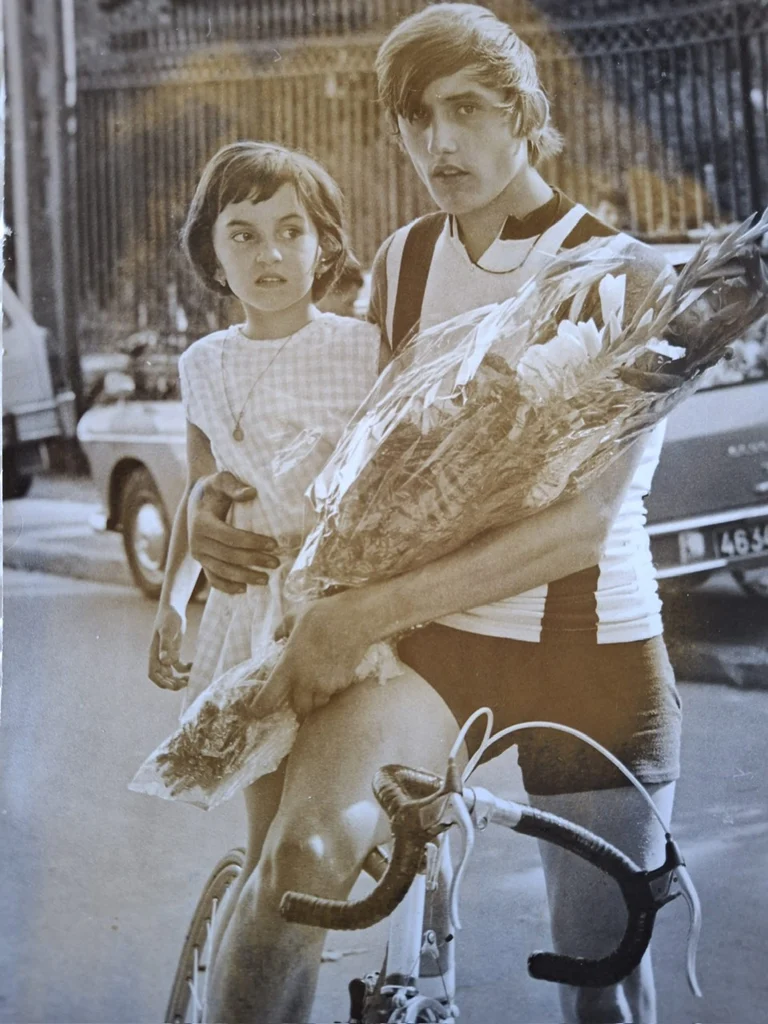
There are tiny moments that say it all. Her communion, for example. Officially, she was supposed to go to mass every Sunday. In reality, she and her father lied. Because on Sunday mornings, she was at the races. And in this simple, almost childish lie, lies an immense truth: cycling was already more important than anything else. It wasn’t just another passion. It was a center of gravity.
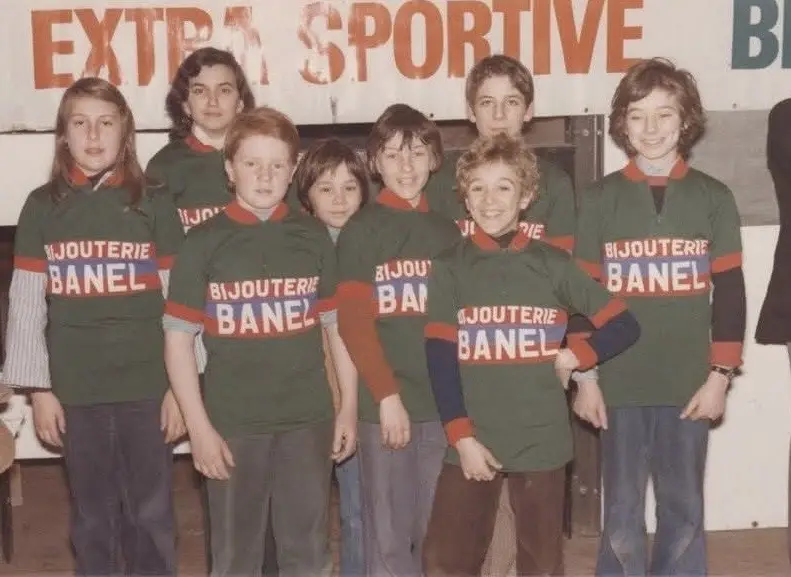
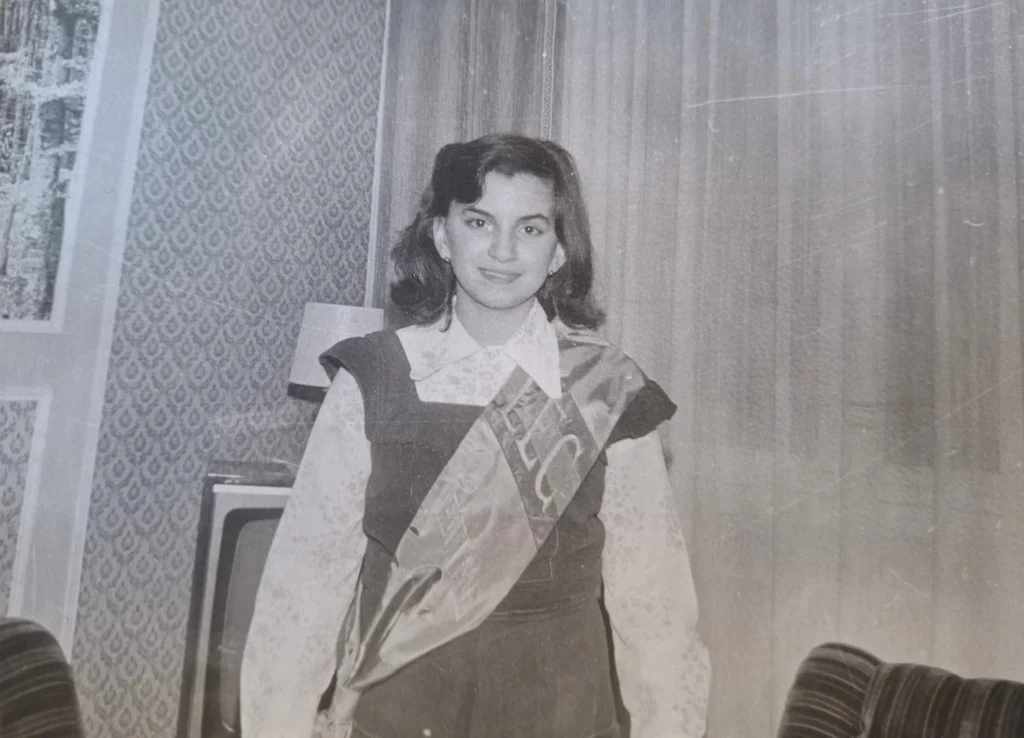
A photo. 1975. She’s 11 or 12, next to Gilles Hoffman. Nothing extraordinary on the surface. And yet. It’s carefree, but already the awareness of camaraderie. A friendship born there, still intact today. Every Sunday, they meet again. Cycling hasn’t separated them. It has kept them together. As if certain relationships need a common ground to last.
A passion that doesn’t erode
Time has changed nothing. Maryline can spend hours watching a race. Listening. Analyzing. She recognizes voices, looks, intuitions. She admires those who see what others don’t. Because deep down, that’s exactly what she does. Cycling has never left her. It has never even slowed her down. It has accompanied her, structured her, shaped her. It has become a way of looking at the world.
She didn’t build this perspective from books or training. She built it on the roadside, in silences, in waits, in repetitions. Sixty years of observing without ever tiring. Sixty years of understanding without needing to explain. And perhaps that’s where it all begins: in this ability to see without seeking to show.
Photographing, without deciding to become one
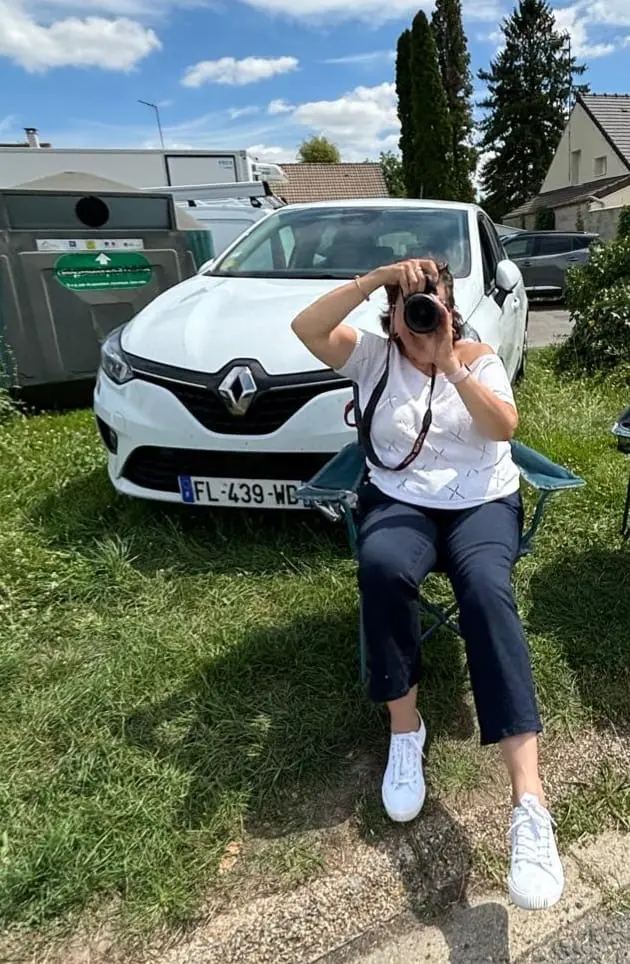
Maryline didn’t become a photographer. She started by keeping things. Cutting out articles, archiving, preserving traces. For her loved ones, for her friends, for those she cares about, including her recently deceased ex-husband Olivier Fontaine. Then came VCRs, the 90s, accumulated tapes, memories stacked without any particular intention. And finally photos, first analog, carefully stored, then digital. Facebook became an opening. Her albums expanded. And with them, her perspective became accessible.
This transition wasn’t driven by a desire for recognition. It happened as a continuity. Always the same intention: to make things last. To ensure that what matters doesn’t completely disappear. What was intimate became shared, without losing its sincerity. And in this discreet shift, Maryline became, without really intending to, a collective memory.
What she truly captures
She doesn’t photograph riders. She photographs moments. A race number pinned by a friend, fatigue on a face, a restrained joy, tension before the start. She captures the instant when something shifts, when an effort becomes visible, when an emotion surfaces. She is interested in what doesn’t last… and makes it lasting.
Because she understood one essential thing: a photo doesn’t just freeze time, it extends it. Pain lasts a second. In the photo, it remains. Joy too. And in this extension, something transforms. The instant becomes memory. The fleeting becomes a trace.
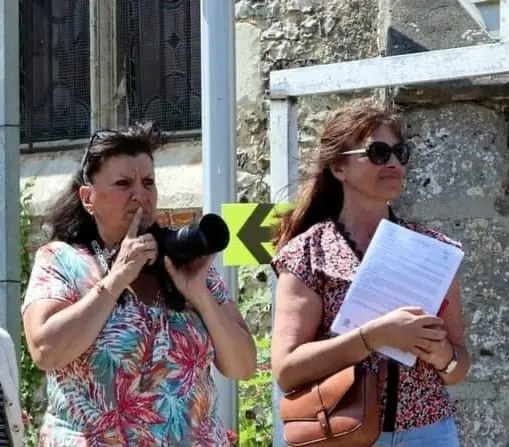
Seeing differently
What guides her are emotions. Not the big ones. The others. The discreet ones. Kindness, fear, anger, generosity. Everything that circulates between riders without being seen. She has always observed. She knows how to read what few know how to read. And sometimes, in her albums, there aren’t even any riders. A bird, a railway track, a flower. Because she knows that cycling is not just about those who ride.
She understands the context as much as the people. She knows that the environment tells as much as the effort. And this ability to connect the two gives her images a depth that one doesn’t immediately notice… but that one feels.
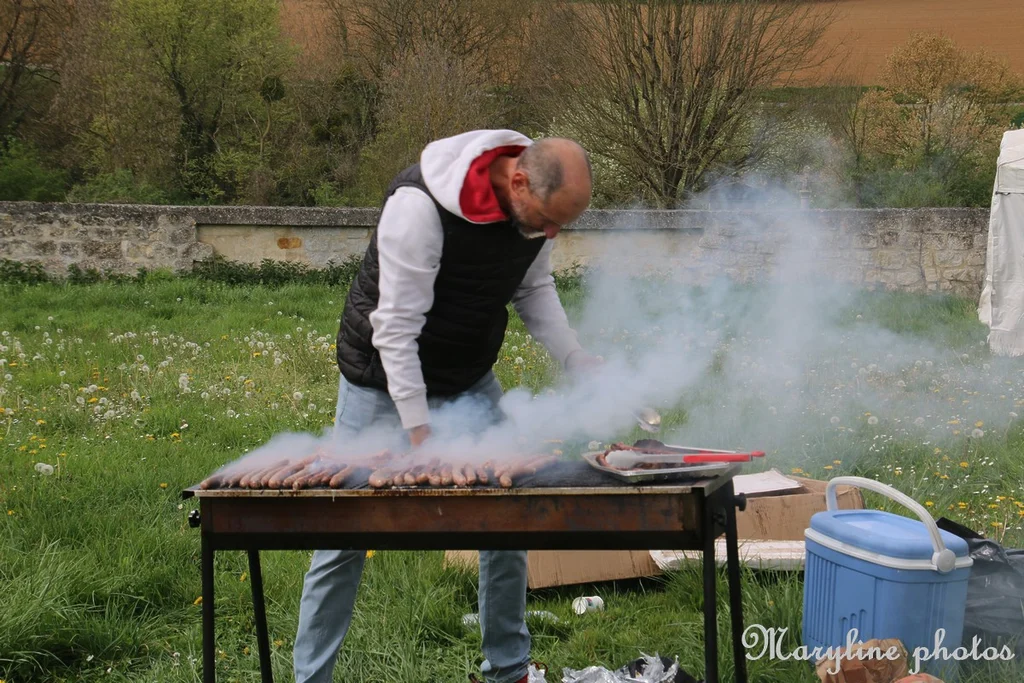
A presence that gives meaning to races
Why is she there every weekend? The answer is simple: her friends. She quotes them, names them, connects them. Each name is a story. Each presence is an attachment. She doesn’t come for the cycling. She comes for the people. And in this loyalty, something transcends the sport.
Because what she’s looking for, deep down, isn’t performance. It’s an atmosphere. A camaraderie. A way of being together. This atmosphere of shared starts, discussions, simple gestures. Something rustic, almost fragile, that sometimes tends to disappear… and that she continues to keep alive.
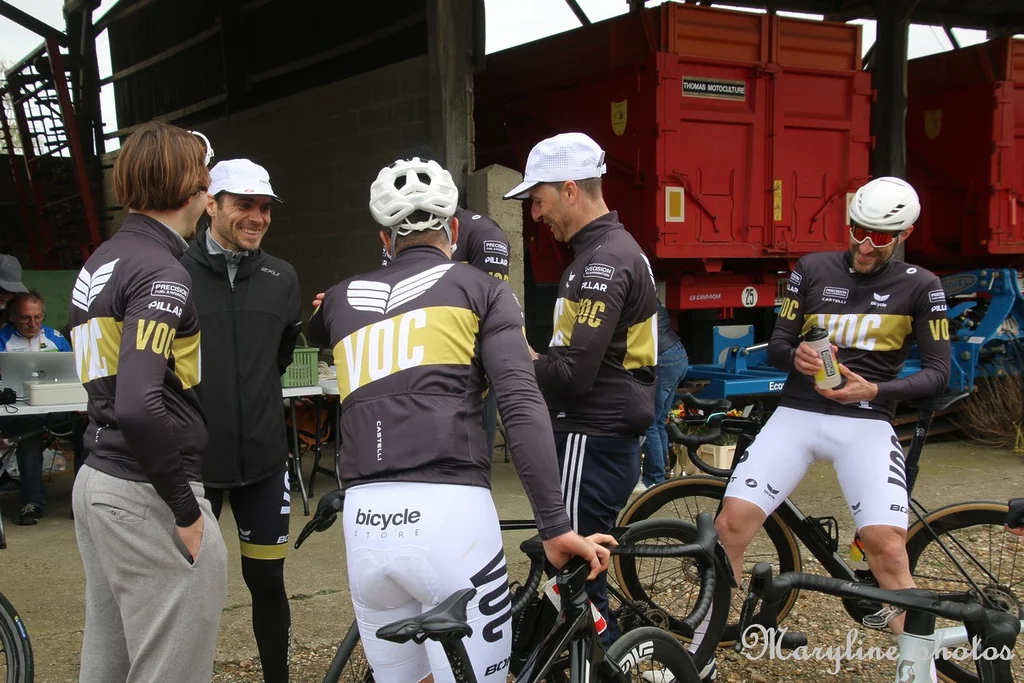
Making the invisible visible
Without her, many things would disappear. A victory without a photo. A moment without a trace. A gesture without memory. And suddenly, an obvious truth appears: performance without a witness eventually fades away. She gives these moments a lasting existence. She allows them to continue living beyond themselves.
When the riders go home, she begins. Transferring, sorting, publishing. Two to three hours of work. So that, the same evening, everyone can find themselves. Recognize themselves. Remember. It’s not a detail. It’s an extension. A second life given to what has just happened.
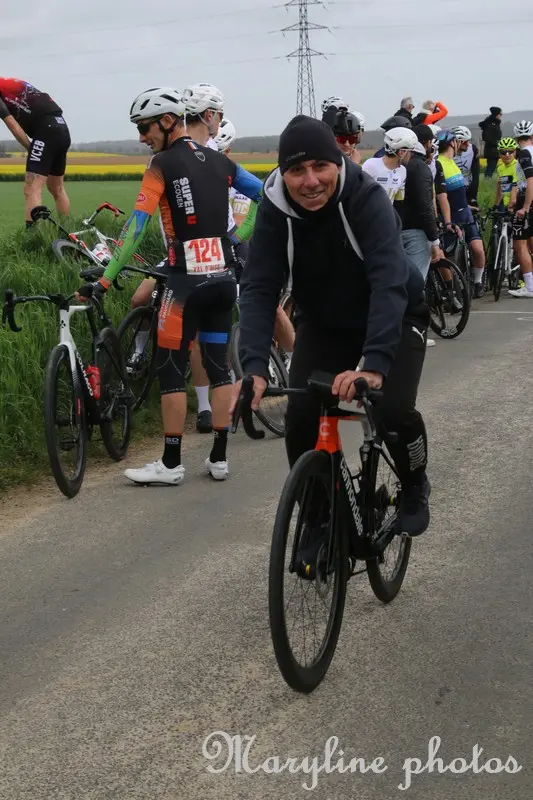
“A friend”
If she had to summarize her role, she would simply say: a friend. Nothing else. And yet. In this simplicity, there is everything. Being there without waiting, without seeking to exist other than through others. Being present without ever imposing herself.
But those who live these races know it. Without her, it wouldn’t be the same. Something would be missing. A dimension. A trace. A recognition.
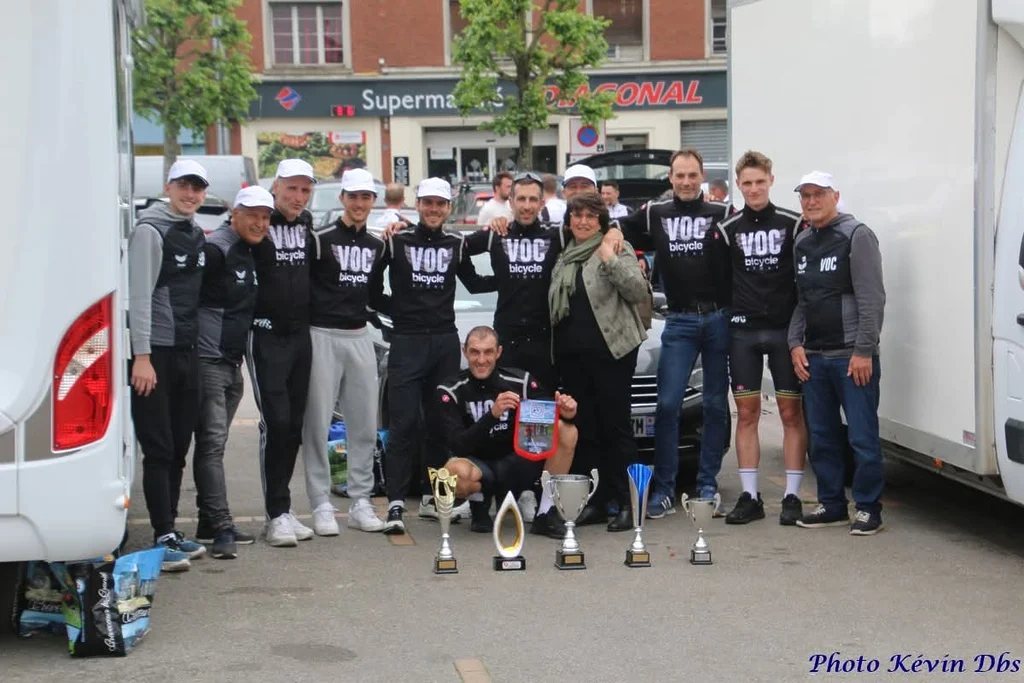
The fragile recognition of an indispensable gaze
What does a photo represent? A photo isn’t just a click. It’s time. Before, during, after. Choosing, waiting, observing, understanding, sorting. An invisible commitment that few truly measure. And sometimes, nothing. No credit. No name. Just an image circulating.
And there, something breaks. Not violently. Not loudly. But deeply. Because recognizing a photo is recognizing the person who made it possible.
What we forget too quickly
We forget the work. The attention. The intention. We forget that behind every image, there is someone who decided to be there. And that without this presence, there would be nothing to see. In a world where everything is shared, everything circulates, this obvious truth gets diluted.
And yet, it remains essential. Because without recognition, the trace loses part of its meaning.
Holding on, despite the fragilities
She went through difficult times. Criticism, comments, sometimes malice. It hurts. Naturally. But she came back. Because cycling was there. Because people were too.
In those moments, what we call “family” takes on another dimension. It’s no longer just a word. It’s support. A presence. A way to hold on when things falter.
The day she stepped in front of the lens
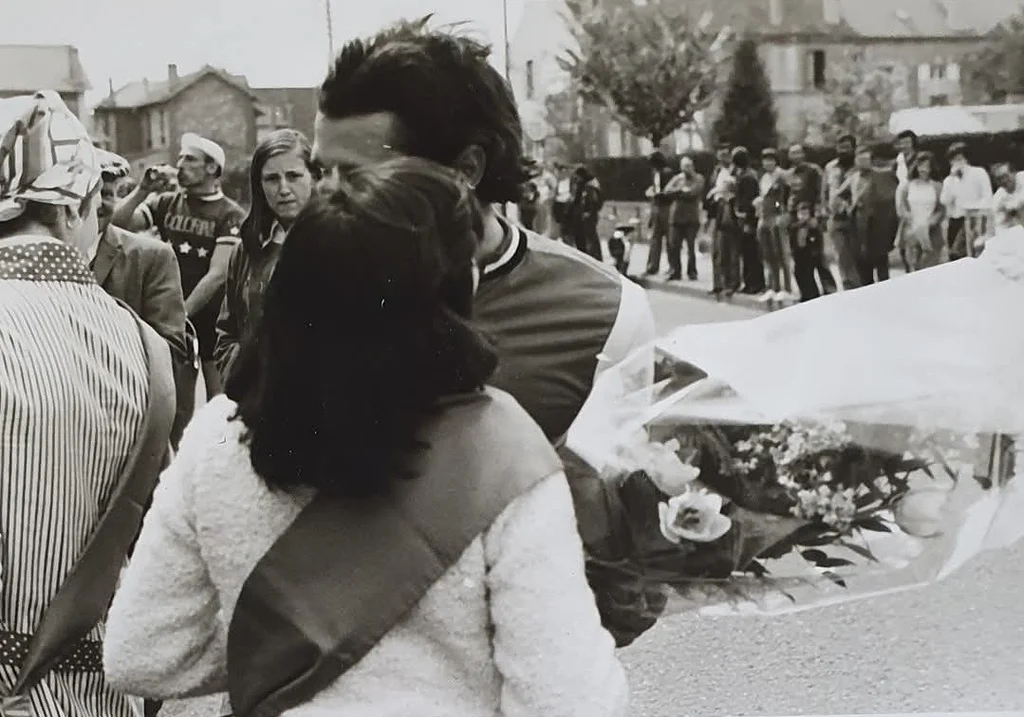
One day, Charles-Henri Fouyer wins. He receives his bouquet. And he gives it to her. To her. Because he knows. Because he understands. Then he goes further. He asks her to put down the camera. To be, for once, on the other side.
That moment says it all. It speaks of silent recognition. It says that sometimes, those who give light end up receiving it. And that light has a special value.
Live enough to leave a trace
She doesn’t see herself without cycling. It’s not a habit; it’s an imprint. Something so deeply rooted that there’s no longer a boundary between what she lives and what she is. Cycling permeates everything—relationships, family, years—but above all, it organizes her perspective. It taught her to wait, to observe, to feel without interrupting. To understand that the essential never lasts long… and that’s precisely why it matters. So, in hindsight, she wouldn’t try to explain. She would simply say: enjoy. Not as advice. As an obvious truth. Enjoy what is here, now, before it becomes a memory one tries to hold onto.
Because deep down, that’s exactly what she’s always done. She doesn’t photograph to show. She photographs to not lose. Each image is a way of saying: it existed. A gesture, a joy, a fatigue, a presence. Things that no one really notices at the moment, but which, later, take on an almost inexplicable value. And without ever theorizing it, she knows: her photos will do the work that time cannot, remembering with precision.
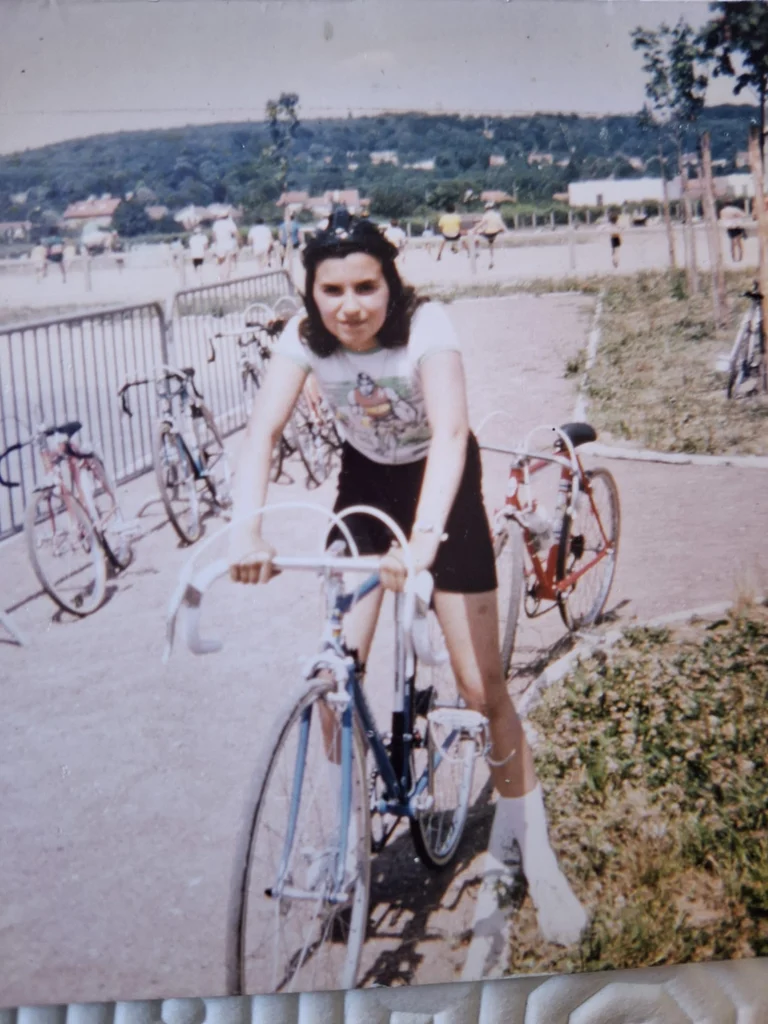
One day, inevitably, everything fades. The rankings, the stories, the voices. But sometimes an image remains. Just one. And in that image, someone recognizes themselves, or recognizes someone else. A detail. A look. An intact emotion. And suddenly, the past is not quite past anymore. It returns, not as a story, but as a sensation.
It is there, silently, that perhaps lies the most accurate part of what she builds. Not a work. Not a collection. A continuity. A way of extending others beyond themselves. And in this extension, almost despite herself, Maryline Beynette does something rare: she doesn’t freeze time; she offers it a second chance.
Maryline
If one had to summarize her in a single thing, it would be neither a photographer, nor a passionate person, nor even a memory of cycling. It would be someone who wants others to be happy. Someone who, quietly, without pretense, without ever truly saying it, chose to dedicate her life to making the moments of others a little more lasting than time itself.
Because what she does goes beyond photography. She doesn’t just capture images. She preserves what, without her, would disappear. A fleeting joy. A dignified fatigue. A silent complicity. She seizes these tiny fragments that the eye forgets but the heart recognizes. And in each of these fragments, she deposits something of herself, almost without realizing it.
So yes, one could say she is discreet. That she stays in the background. That she seeks neither the spotlight nor recognition. But that would be missing the essential. Because some presences don’t impose themselves: they take root. They become necessary without ever claiming it.
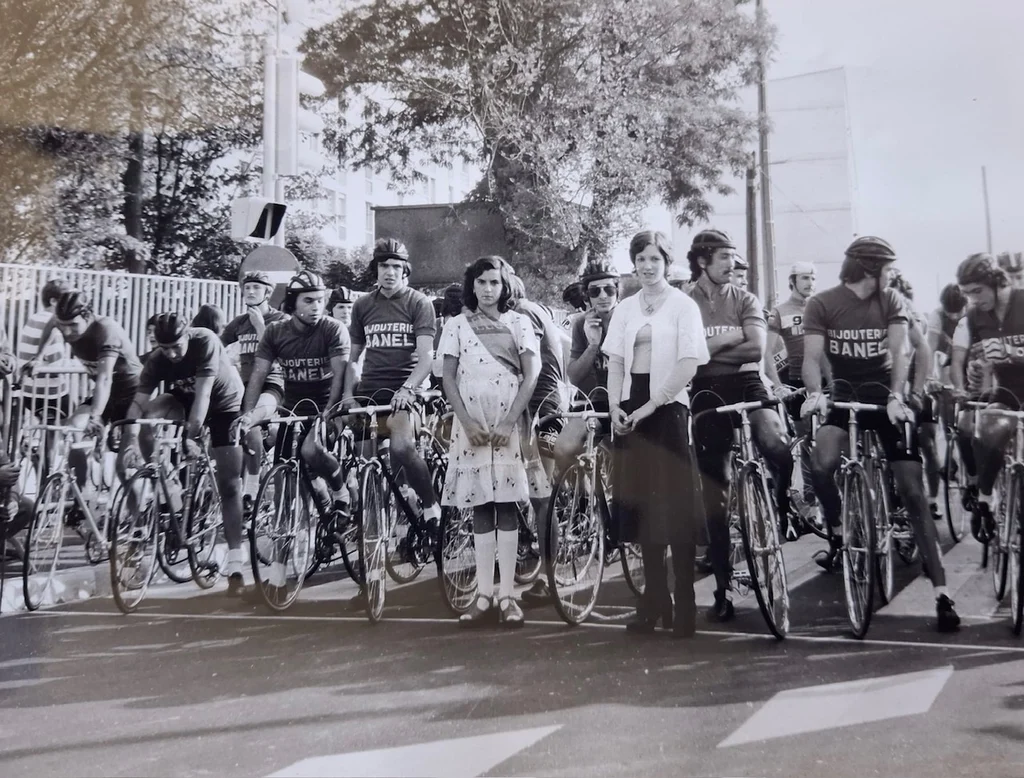
What we truly remember, deep down, isn’t just a presence on the roadside. It’s a loyalty. A way of being there when everyone else passes by. A way of looking without judging, of accompanying without interrupting, of giving without expecting. Thousands of images, yes. But above all, in each of them, an intention. A delicacy. A trace of humanity.
And then, there’s this idea, simple in appearance, but immense in what it tells: She doesn’t win any races. But without her, many wouldn’t exist. Because in the end, what remains? A few results, quickly forgotten. Rankings that fade. Names that pass.
And then an image remains. An image in which someone recognizes themselves, years later. An image that says: you were there. An image that proves that moment existed. And somewhere, silently, that proof bears a name: Maryline Beynette.
=> To better appreciate Maryline’s photos: Maryline Beynette
=> And here, if you want to discover all our other portraits: All our Portrait articles
Share the post "Maryline Beynette, seeing without seeking to be seen"