Share the post "Colnago Y1Rs Review: What if everything had already changed?"
By Jeff Tatard – Photos: DR
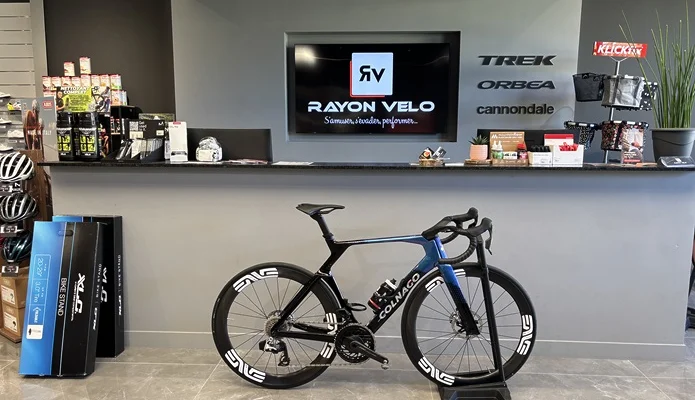
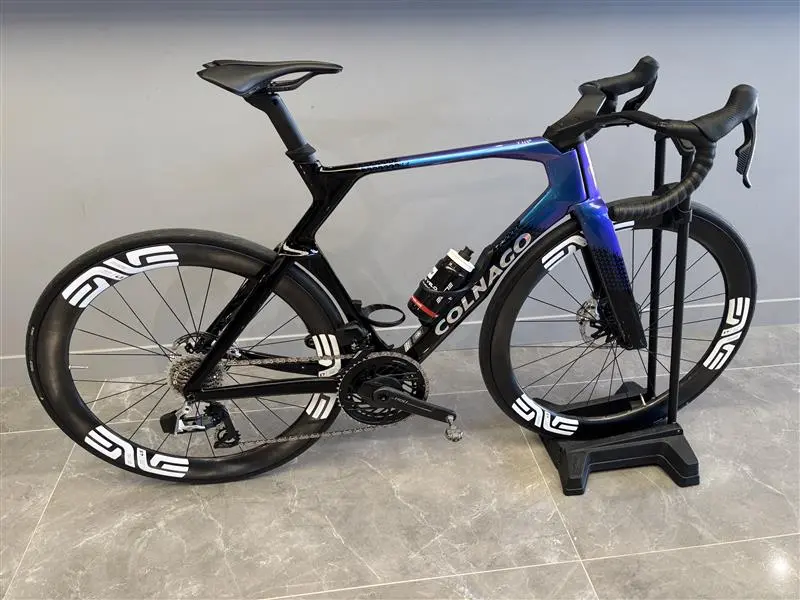
Thanks to the Rayon Vélo shop in Domont, Val-d’Oise, we’re able to bring you this test ride of the Colnago Y1RS, one of the most coveted bikes of the moment. From the Strade Bianche to the mountain passes of the Tour de France, via the cobblestones of the Tour of Flanders and Paris-Roubaix, and even the steep roads of Kigali during the World Championships, this bike has distinguished itself everywhere in the hands of Tadej Pogacar. It is the worthy heir to an iconic brand in the world of cycling, one that has always known how to blend a sense of classicism with innovative technical solutions, as evidenced by the Y1RS’s extraordinary design.
But it’s undoubtedly because 3bikes.fr doesn’t sound “Italian” enough that the brand—now under Emirati ownership and with a large portion of its lineup produced in Asia—chooses to communicate only with certain media outlets, of which we are clearly not a part. As if our readers didn’t deserve to know what this exceptional bike is capable of.
A year ago, when the V5RS was released, we were the first to bring you a test ride, once again thanks to Rayon Vélo—and not to the brand or the French importer. A test ride made all the more interesting by the fact that my own bike is already… a Colnago V4RS!
Let’s hope, at any rate, for the customers’ sake, that the brand’s customer service proves more effective in its communication than its press office. That said, we can now move on to exploring this bike—which, let’s say right away, is exceptional.
The End of Compromise
In the space of a year, we’ve ridden three Colnagos: the V4, the V5Rs… and now this Y1Rs. Three bikes, three visions, but above all, a trajectory that’s taking shape. Not a linear evolution. A shift. The V4, which we now know by heart, laid the foundation. The V5Rs expanded and refined it, until it reached a state of near-total balance. A bike capable of doing it all, without ever truly committing.
Back then, even at the top, the choice remained open. Between the V5 and the Y1, Tadej Pogacar still adapted based on terrain, routes, and how the bike felt. He balanced the options. He chose. Nothing was set in stone.
A year later, there’s no longer any doubt. The choice has been made. And it’s a radical one. The Y1Rs. Everywhere. Even where we least expected it. Even on the cobblestones of Paris-Roubaix, where we still thought certain limits would remain insurmountable. It’s no longer a matter of adaptation. It’s a statement of intent. A direction embraced with conviction.
A test ride that shouldn’t have happened
In this context, this test ride is unlike any other. No invitation. No setup. No script to follow. None of the trappings that usually accompany this kind of launch. Just an opportunity, seized at the right moment. And above all, the only thing that really matters: the road.
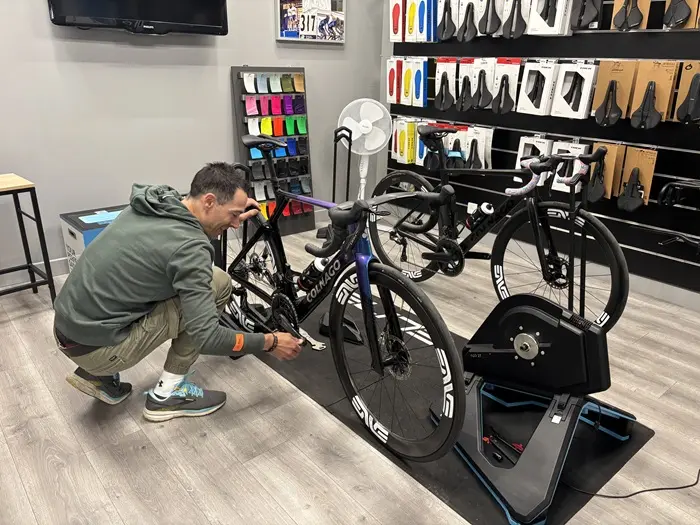
In the workshop: where it all begins
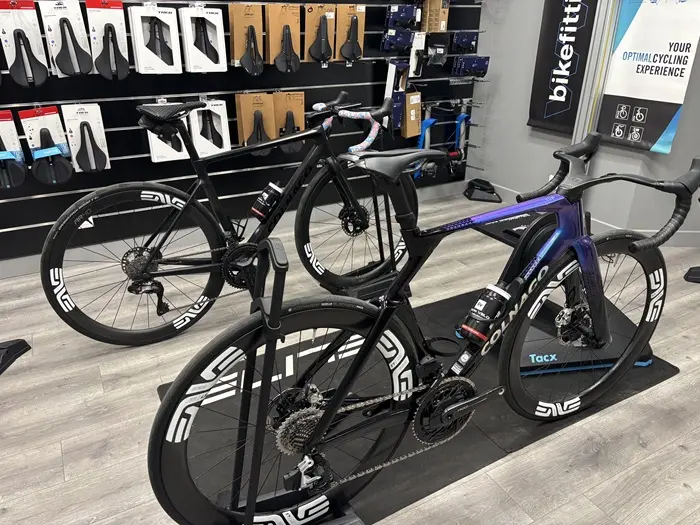
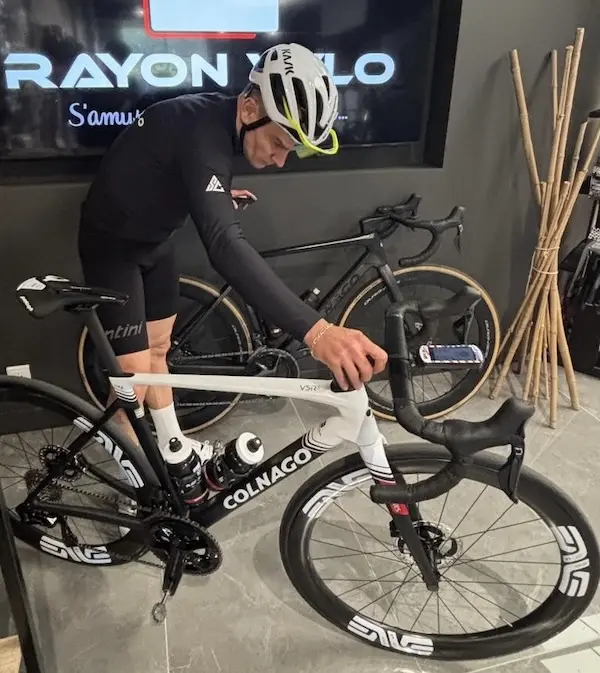
Even before riding, there’s that moment. The moment when the bike isn’t yet a promise, but a tangible object. In the workshop, the Colnago Y1Rs isn’t just sitting there. It’s being worked on, adjusted, and aligned with a precision that leaves nothing to chance. Millimeter-precise positioning, an integrated cockpit adjusted to the nearest degree, optimized pressures: here, nothing is left to guesswork.
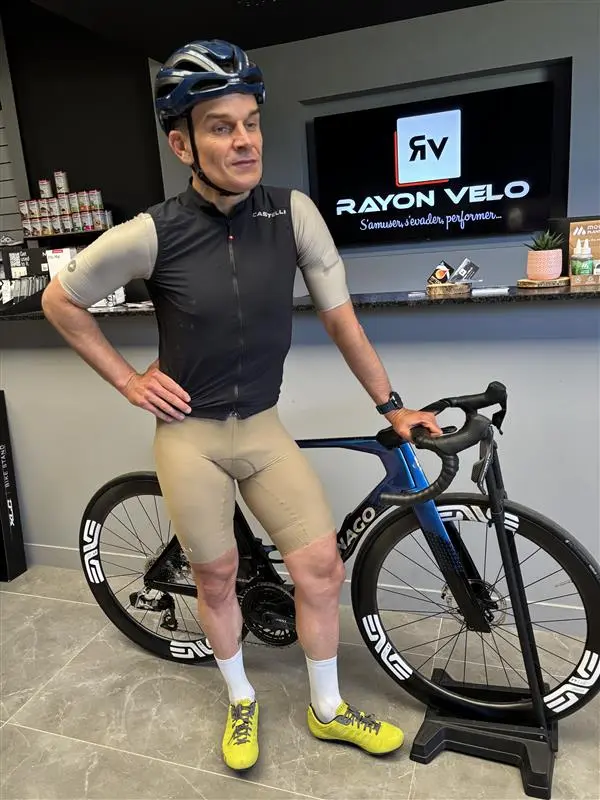
For this test ride, John fitted us with Speedplay pedals and set the saddle height at 72 cm. A precise setup, but already at the lower limit of what the frame allows without more extensive modifications. Lowering it any further would have required cutting the seatpost. With a bike of this caliber, you quickly realize that every millimeter counts… and that every cut is a commitment. Let’s put it simply: for a test ride, there are limits to what we can do.
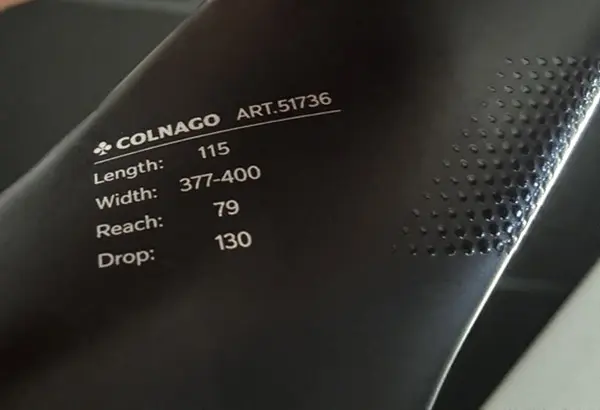
One detail immediately catches the eye: the choice of TPU inner tubes paired with 28 mm Hutchinson Blackbird Racing Lab tires. A choice that’s almost against the grain these days, when you’d expect tubeless tires to align with the modern bike’s design philosophy. We take note. We wonder. We’ll see how it goes on the road.
You don’t “prepare” this bike. You just ride it. And already, something stands out. A tension. A radicalism. A very clear impression that everything here has been designed for one thing only: to go fast.
Y1Rs: a bike that makes no compromises
The Colnago Y1Rs doesn’t seek to please. Nor does it seek to reassure. It commands respect. Right from the start. Without beating around the bush. Every line is taut, every surface optimized, as if nothing had been left to the slightest approximation. Nothing sticks out. Nothing really softens the look. This is a far cry from a consensus bike, designed to suit all terrains and all riding styles.
Here, everything is purpose-driven. Tube profiles, junctions, complete integration: everything converges toward a single idea. It’s not a collection of technical choices. It’s an intention. A clear, unapologetic, almost radical direction. It’s not a versatile bike. It’s a directional bike.
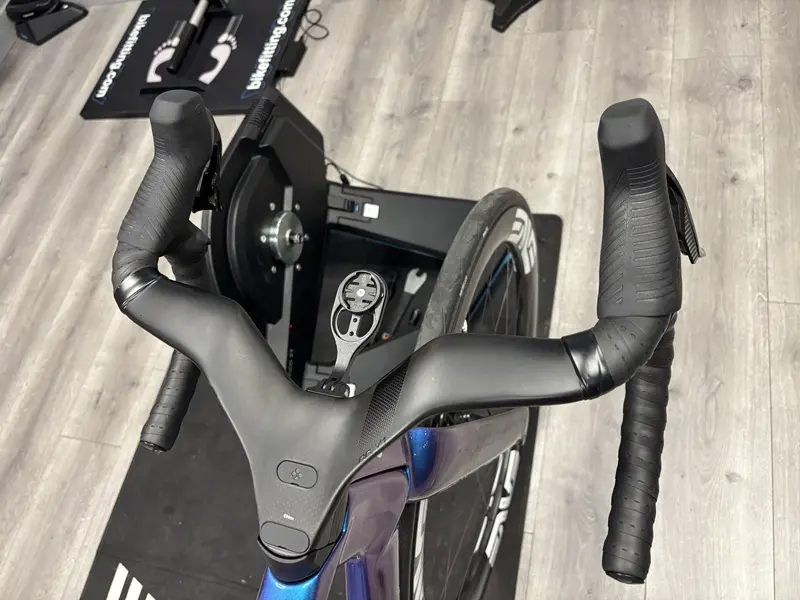
And that’s precisely where its appeal lies. Because while the V5Rs was still trying to reconcile, balance, and accommodate multiple worlds… the Y1Rs, on the other hand, makes a clean break. Clear-cut. No turning back.
First pedal stroke: immediacy
From the very first few meters, one thing becomes clear: everything happens immediately. No unwanted inertia, no lag, no gap between intention and response. You press down, and it reacts. Instantly. But beyond this responsiveness, there’s something else. It lasts. Speed doesn’t slip away; it doesn’t fluctuate; it settles in. It becomes almost a constant.
On flat terrain, the experience is disconcerting. You’re riding fast… without even trying to ride fast. It’s as if part of the effort vanishes along the way, absorbed and directly converted into forward motion. A form of silent efficiency—difficult to describe, but impossible to ignore.
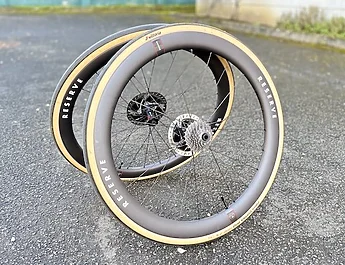
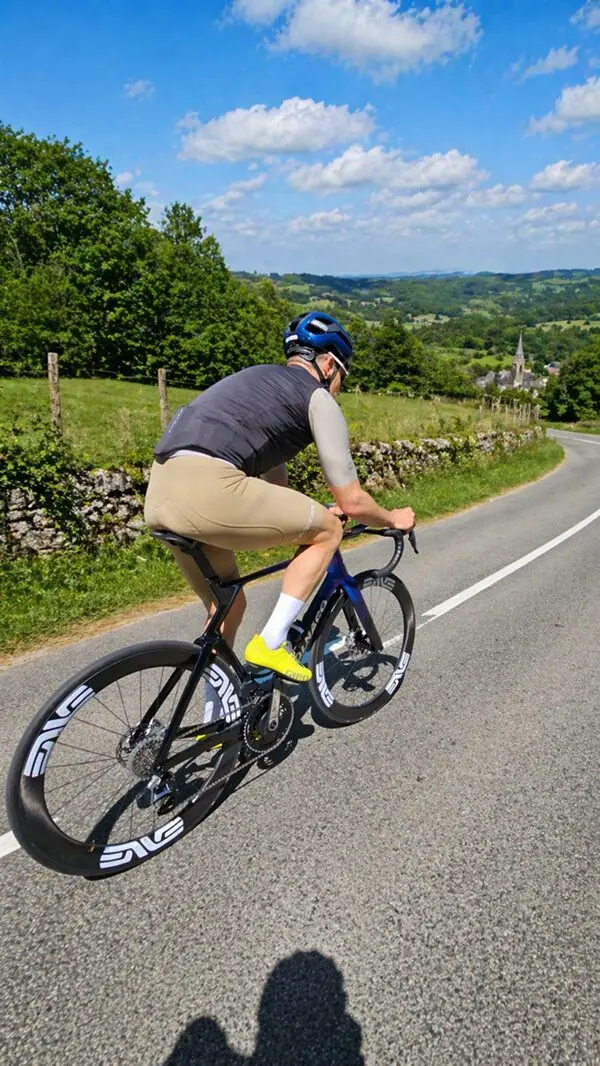
The test setup obviously plays a role in this. We’re using a setup very similar to what’s used at the highest level: SRAM Red AXS groupset, 10-33 cassette, 52/39 chainrings with a power meter, and ENVE SES 4.5 wheels. A cohesive, performance-oriented setup with no compromises.
And on a segment we know inside and out, the sensation is backed up by the numbers. At equivalent speeds, the difference is real: about 20 watts less compared to the V4 (270 W vs. 250 W). This isn’t just a feeling. It’s a fact. And it’s striking.
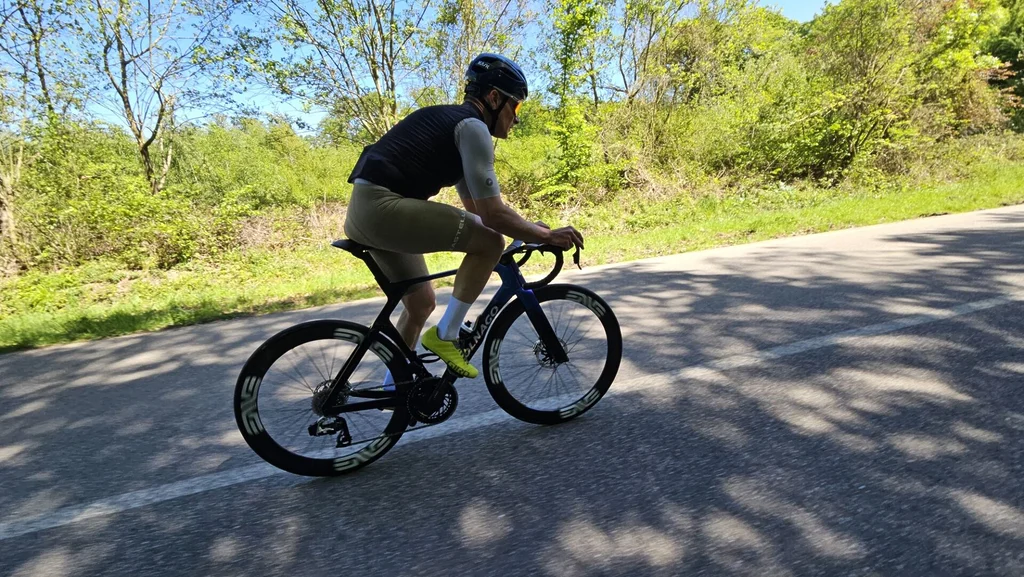
Aero, really?
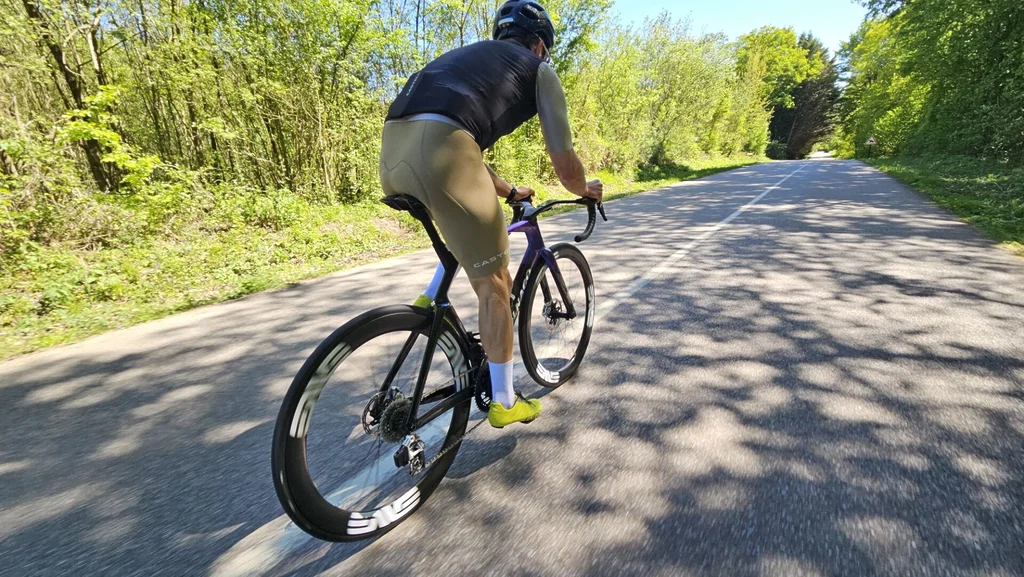
Here, aerodynamics isn’t just talked about—it’s experienced. On the road, in the real world, where everything is revealed. The wind doesn’t slow you down or create that jarring shift you sometimes feel when conditions change. It modulates your speed. It accompanies you. As if it were part of the equation, rather than working against it.
And above all, there’s that rather rare sensation: the faster you ride, the more the bike feels natural. More coherent. More obvious. As if everything had been designed, calibrated, and optimized for this precise pace—that of high, constant, confident speed. Not the kind you just brush against, but the one you settle into.
And when the road gets rough?
That’s when Tadej Pogacar’s choice really makes sense. Because it’s precisely under these conditions that doubt should arise… and yet it vanishes. The Colnago Y1Rs doesn’t filter out bumps like an endurance bike. It doesn’t try to smooth them out or make them less noticeable. But it holds its ground.
Precise front end, stable rear end, predictable handling: the bike doesn’t cheat the terrain. It reads it. It cuts through it. And most importantly, the speed doesn’t drop off. Where other bikes force a break, compel you to ease off, or accept a loss of rhythm… this one lets you keep going. To carry on. And that’s perhaps where it all comes down to. Not in comfort. But in the ability to never lose speed.
Handling: A Different Perspective
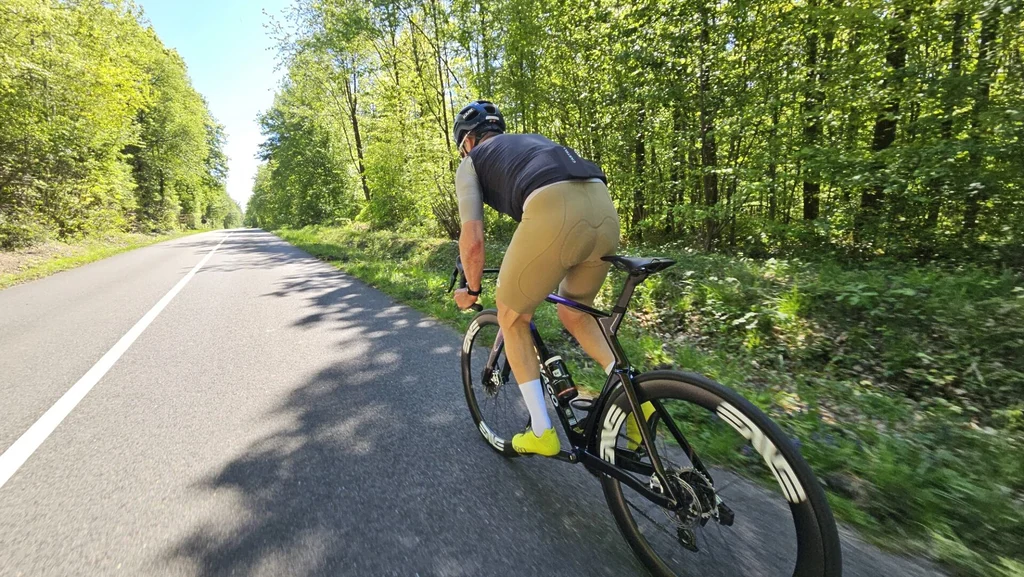
The Colnago Y1Rs doesn’t handle like a V4 or a V5. It takes some time to get used to. Not necessarily a long time, but it’s real. Right from the first few turns, you might be surprised by a certain sensation: it almost feels like you’re going straight. Not because of a lack of precision—quite the opposite—but because its trajectory logic is different. You have to understand the lines, anticipate them, almost memorize them. Once you’ve gotten the hang of it, everything becomes clearer. But this adjustment period exists, and it’s part of the bike’s character.
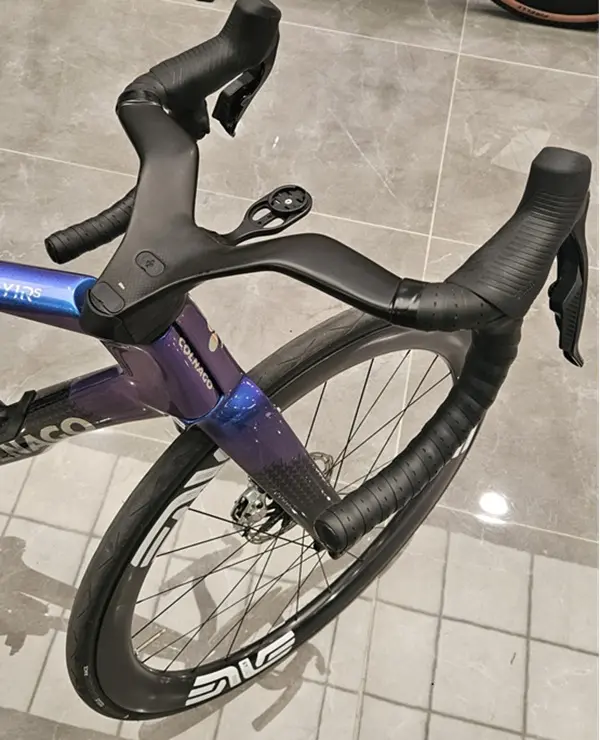
Some will appreciate the steering stop, which protects the frame and prevents contact in the event of a fall. It’s an undeniable safety feature. Others will see it as a constraint in everyday use, particularly for low-speed maneuvers or simply for storing the bike in a trunk. A minor detail? Perhaps. But it’s a detail that matters in real-world use. Because, yes, at its core, this is a bike that imposes its own logic—and one that requires the rider to adapt to it, rather than the other way around.
Seated: fast. Standing: different.
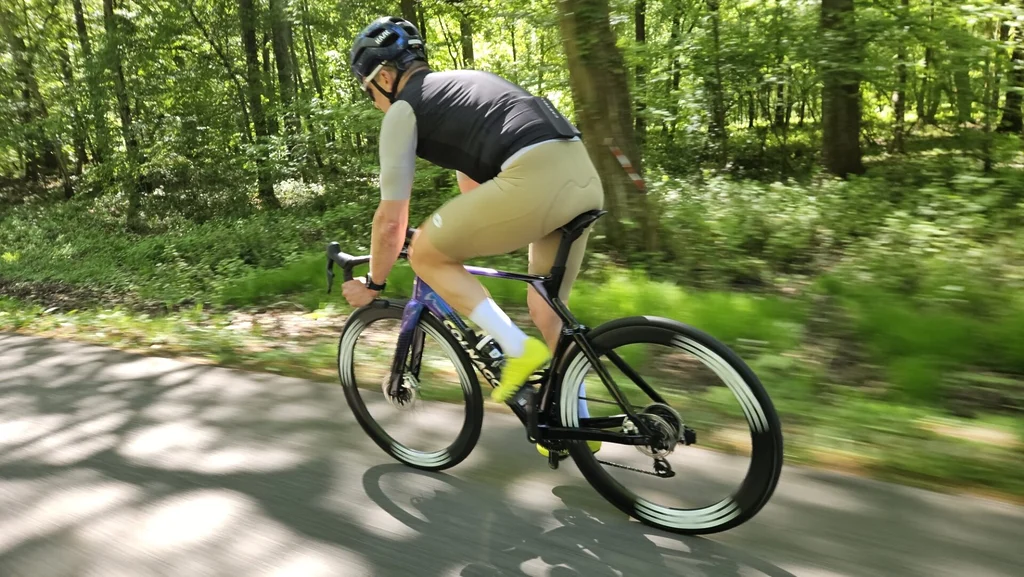
The conclusion is clear: the bike performs exceptionally well when seated. And even more so as speed increases. It’s in this position that it best delivers what it has to offer—where everything becomes fluid, efficient, almost second nature.
But as soon as you stand up, the feel changes. Less natural. Less fluid. As if the bike were stepping slightly outside its zone of excellence. Not a major drawback, but noticeable. Except in one specific case: short sprints, where it instantly regains all its responsiveness and ability to react. Ultimately, the message is simple. It’s a bike that encourages you to stay seated to be efficient. And in that configuration, it becomes formidable.
What This Bike Tells Us
The real question is no longer whether it’s a good bike. It lies elsewhere. It’s much deeper. What the Colnago Y1Rs represents is a shift. Not just a technical one. A cultural one. A shift toward a form of cycling that moves away from compromise. That stops seeking balance at all costs. That embraces specialization. To the very end. Without detours.
In this context, speed is no longer a reward for effort. It becomes the starting point. The framework around which everything is organized. It’s no longer something you achieve. It’s something you build from the very beginning.
The Verdict from 3bikes.fr
The Colnago Y1Rs isn’t a bike for everyone. And that’s precisely why it stands out. Demanding, radical, uncompromising—it doesn’t seek to charm. It doesn’t flatter. It reveals. But beyond what it is, it opens a door—to a world of cycling where speed defines everything. Where we no longer try to balance everything, to smooth things over, or to round things off. Where we make choices. And where we own them. So yes, the V5Rs remains a benchmark. A well-balanced machine, capable of doing it all. But here, Colnago has made a clear choice. And they fully stand by this direction.
And then there’s us. Eighteen months on a V4. A stint on the V5Rs. A path we thought was already clear. And now this Y1Rs comes along and turns everything upside down. Not just for the duration of a test ride. But in a deeper, more personal way. Because, deep down, it doesn’t just stop at being high-performance. It redefines what we actually expect from a bike.
And to be completely honest, we didn’t notice any significant difference between this tube-and-tire setup and what we’d expect from a tubeless setup. It’s as if, in this case, the frame and the platform take precedence over everything else. A minor detail? Perhaps. But a revealing one.
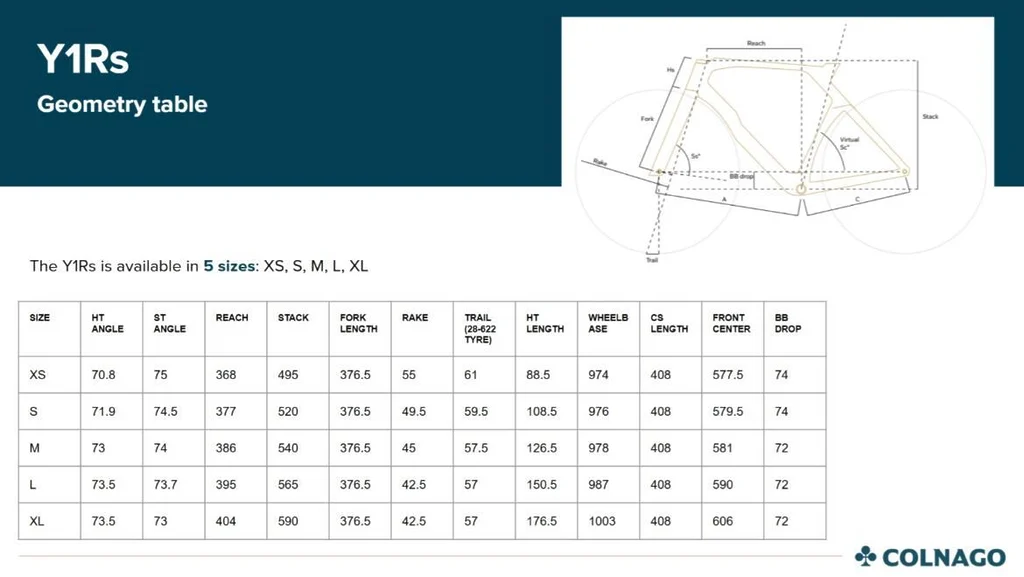
The Colnago Y1Rs in brief…The pros: exceptional efficiency, sustained sense of speed, remarkable efficiency while seated, stability at high intensity, strong and distinctive character Cons: Demanding; requires some time to adjust to the handling; feels less natural when riding out of the saddle; limited steering angle due to the head tube stop (may be a hindrance during certain maneuvers or when storing the bike) Frame: Colnago Y1Rs carbon – Fork: Colnago Y1Rs carbon – Drivetrain: SRAM Red AXS 12-speed – Cassette: 10-33 – Crankset: 52-39 with power meter – Wheelset: ENVE SES 4.5 (Innerdrive hubs) – Tires: Hutchinson Blackbird Racing Lab 28 mm (TPU inner tubes) – Saddle: Selle Italia SLR Carbon – Handlebar/stem: Colnago integrated handlebar/stem set – Seatpost: carbon, integrated design – Weight: 7.5 kg fully assembled (size 485, as tested) – Sizes: including 485 (size tested) – Price: €15,500
Contact: |
Share the post "Colnago Y1Rs Review: What if everything had already changed?"