Share the post "Zipp 202 NSW Test: The Ultimate Climbing Weapon (But Not Only)"
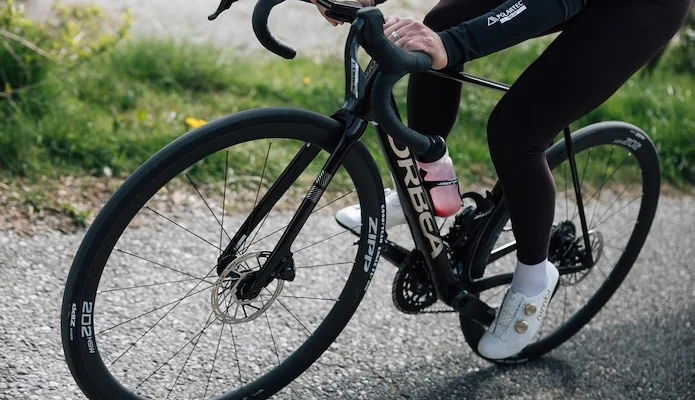
Among the very first to hit the road with these new Zipp 202 NSW, we discovered a pair of wheels that aims to redefine the standards of lightness in the mountains. Advertised as the lightest ever designed by the American brand at less than 1,100 g, they are not limited to climbs alone. Aerodynamics, stability, and technologies derived from the very high-end complete a particularly ambitious picture, verified on different terrain profiles.
By Guillaume Judas – Photos: ©Widen Production
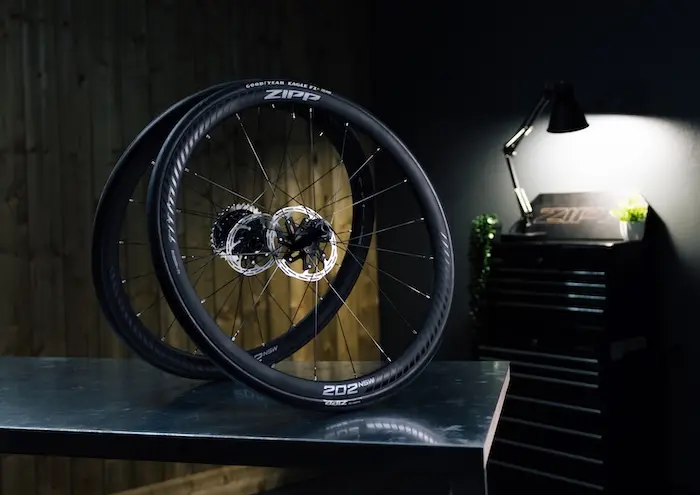
For several decades, Zipp has established itself as one of the essential references in the world of high-end carbon wheels. The American brand has built its identity around a permanent quest for performance, particularly through aerodynamic optimization and material innovations.
In this logic, the 202 designation refers to a long tradition of low rim depth wheels, originally designed for climbers and mountainous terrain. As for the NSW label, for Nest Speed Weaponry, it designates the pinnacle of the brand’s expertise, reserved for the most technologically advanced products, almost without compromise. On this subject, let’s immediately address what’s annoying: the price. At 3,800 € per pair, we are in the presence of an ultra-exclusive product, reserved for a very discerning clientele. A clientele that will have to accept, for this price, the absence of carbon spokes (while they are becoming widespread among competitors, at least at this price level) and an extremely discreet look, especially at the hubs. It’s expensive, very expensive, probably even too expensive. But let me say it right away, this is the only complaint I can make to criticize these wheels, which are otherwise quite exceptional.
The Return of an Icon
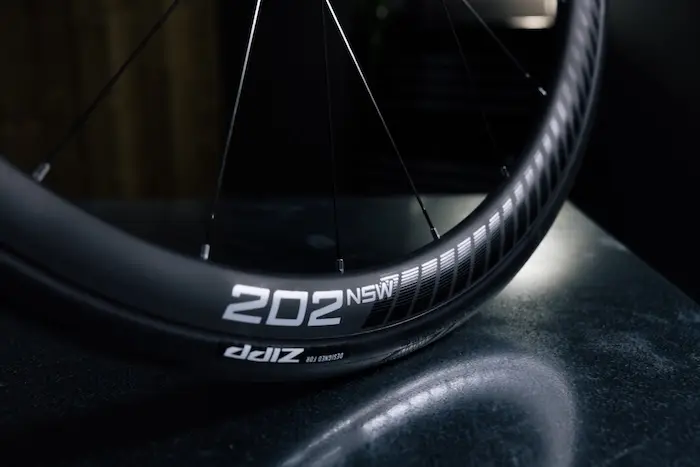
With these new 202 NSW, Zipp marks the return of an iconic model, bringing it into a new dimension. The objective is clear: to offer a wheel dedicated to steep gradients, capable of meeting the demands of the most meticulous climbers, while maintaining a certain versatility.
The key figure is unequivocal: 1,090 g per pair. A particularly low weight, which places these 202 NSW among the new benchmarks in the segment and reflects significant design and optimization work. A positioning reinforced by a coherent profile choice, with a rim depth of 35 mm, designed to offer the best compromise between lightness, efficiency, and stability.
To achieve this level of performance, Zipp has adopted the carbon layup developed for the 353 NSW. The latter incorporates an innovative biomimetic lamination, which relies on the use of carbon fibers with varied moduli, distributed according to mechanical stresses. Specifically, the outer circumference of the rim uses fibers oriented towards strength and durability, to better absorb road shocks and stresses. Inside, higher modulus fibers maintain optimal spoke tension despite stresses, thus ensuring rigidity and efficiency. This operation, inspired by the behavior of muscle tendons according to the brand, aims to optimize efficiency without sacrificing reliability.
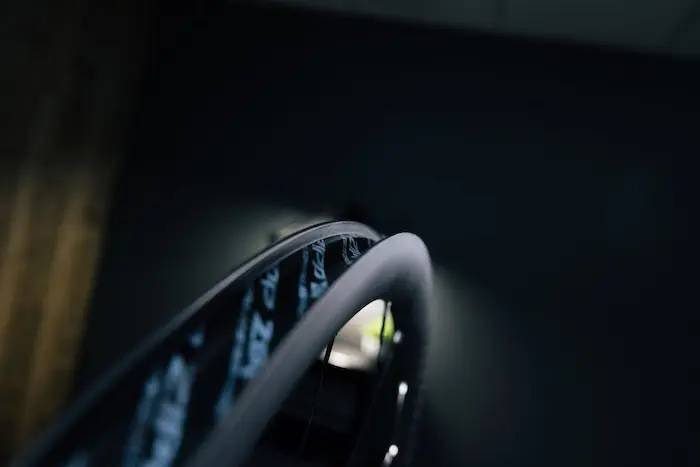
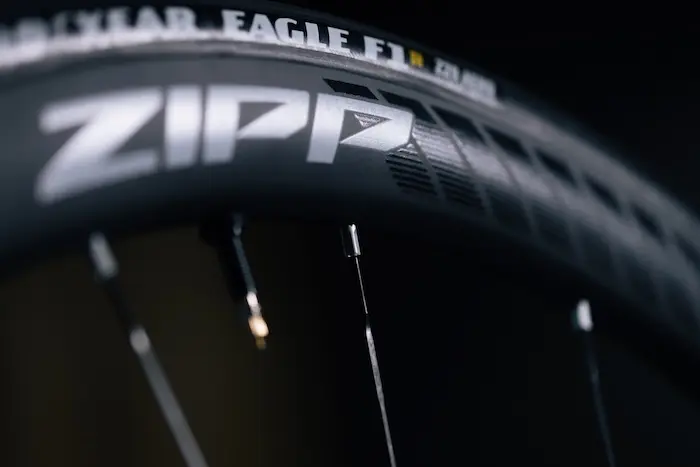
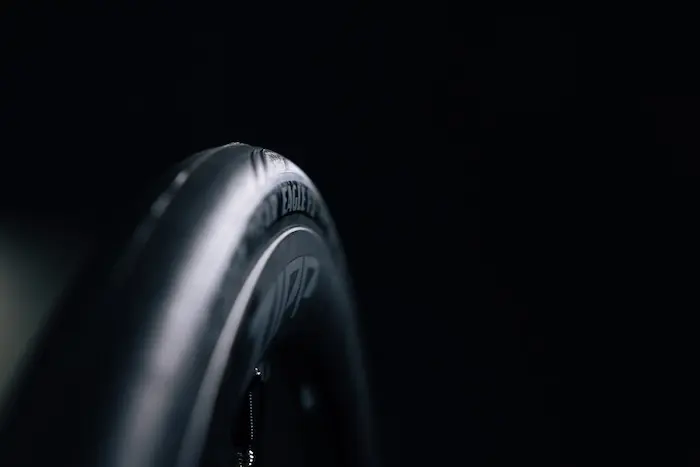
The internal width of 23 mm is in line with current standards and favors the use of wider tires at low pressure, here with a hookless rim design. Zipp states that this technical choice reduces rolling resistance and improves comfort, while optimizing overall efficiency over time. To go further with this concept, the brand developed a tire in collaboration with Goodyear, here the Eagle F1 Z29, perfectly adapted to the rim shape, with an optimally positioned casing and a correctly sized tread. The objective is twofold: to avoid casing deformation, which is detrimental to performance when using non-specific tires, and to optimize the connection between the tire sidewalls and the rim, for better aerodynamics.
High-End, Yet Discreet Details
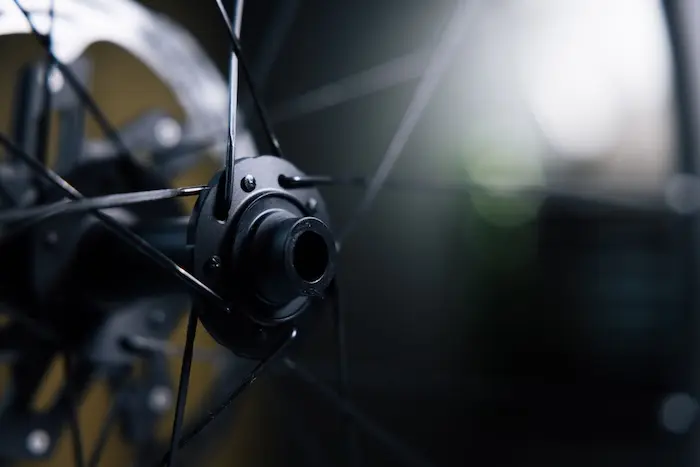
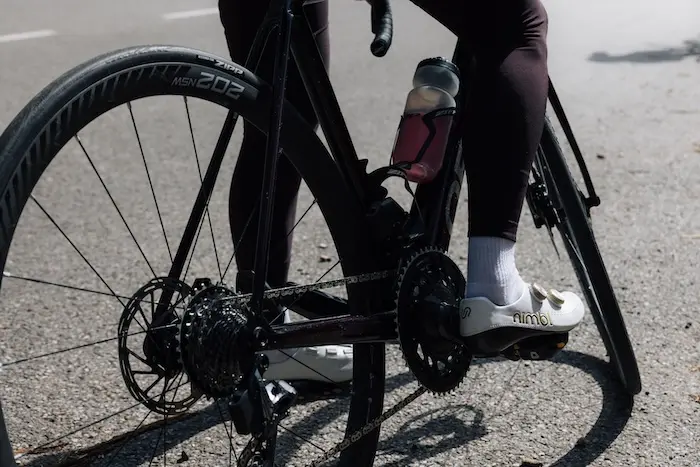
The Zipp 202 NSW are built with ZR1 SL hubs, designed in Germany and distinguished by the integration of corrosion-resistant ceramic bearings. With 66 points of engagement, the freehub body ensures excellent responsiveness, particularly noticeable during accelerations on climbs, but also in the city during training starts and returns. Light and smooth, they pose no problems in use, even after wet rides. They seem designed to last, which is obviously expected from a pair of high-end wheels. However, they lack aesthetic exclusivity for my taste. I would have liked the 202 NSW to offer slightly more flashy hubs at this price.
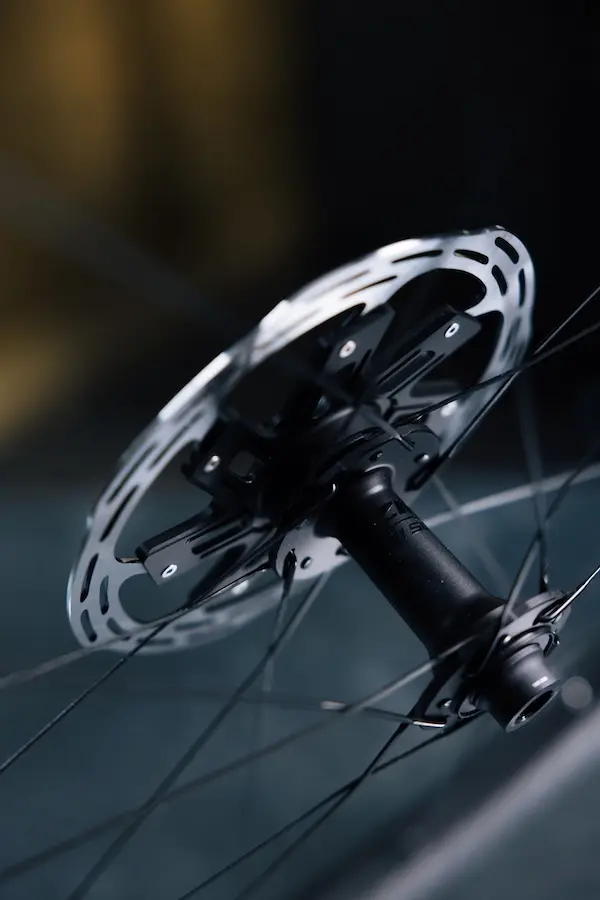
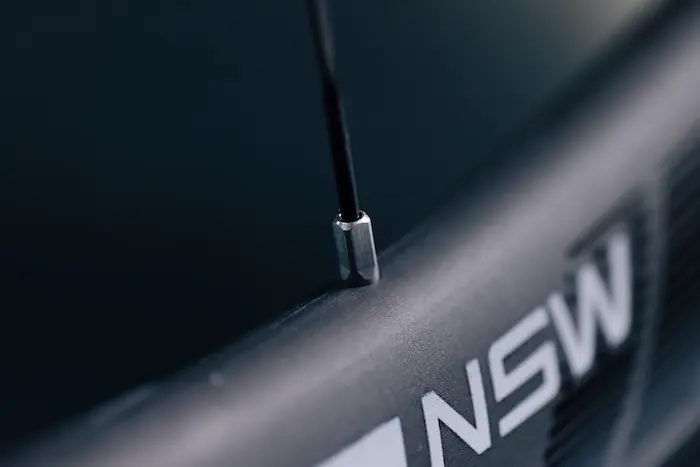
The Alpina Hyperlite spokes, 20 at the front and rear, laced 2-cross, also contribute to the overall balance between lightness, rigidity, and reliability. Zipp chose to keep steel spokes here, but they are ultra-light, reaching a claimed weight of 3.5 g per unit. This is equivalent, or almost, to the weight of a carbon spoke, with, according to the brand, greater ease of replacement in case of damage or breakage, especially when traveling for a race or training camp.
Zipp thus states that it did not want to design wheels that were solely exclusive and purely dedicated to climbs. Reliability, safety, and practicality were also at the heart of the project, as was a certain form of versatility, as I realized after several hundred kilometers on different types of terrain.
In the Mountains and on the Flats, with the Zipp 202 NSW
I was able to ride with two different bikes equipped with the 202 NSW. First during a ride with elevation in Savoie, at the time of the official press presentation of these new wheels from the American brand. A doubly demanding ride, given the dreadful weather conditions we encountered over the last 20 kilometers, but which already allowed me to evaluate their stability on descents and in strong gusts of wind. Then I was able to mount the 202s on my usual training bike and put them to the test for several weeks on the roads of the Paris region.
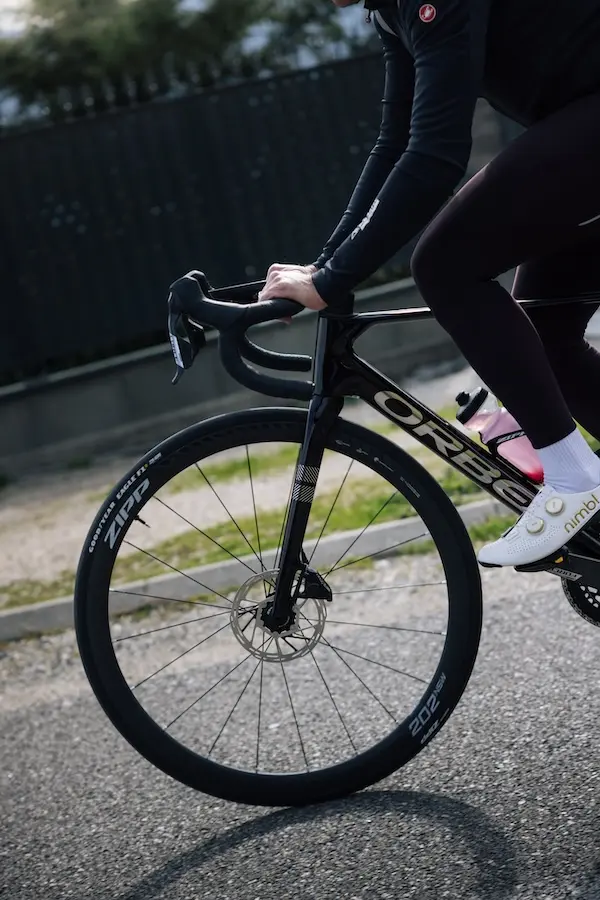
On my bike, my first surprise — even if it wasn’t really one in reality — concerned the weight gained. A net 300 g, going from my Roval Rapide CLX (first generation) to the Zipp 202 NSW, with the same cassette and the same rotors. That’s a lot, even if I’m talking about complete wheels here, with tubed tires on one side, and tubeless tires and sealant on the other.
An Surprisingly Consistent Performance on All Terrains
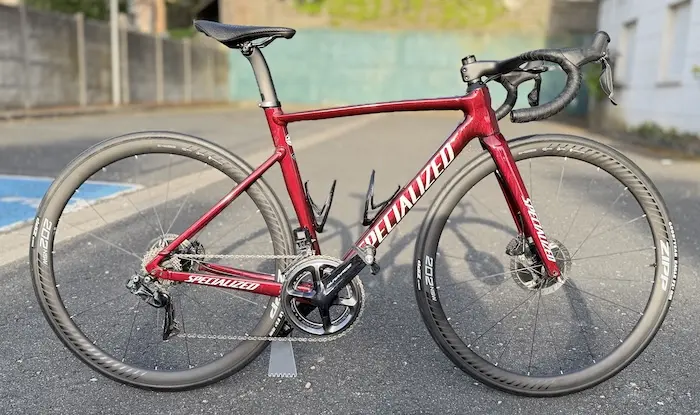
My second surprise concerned the behavior of the 202 NSW on simply rolling profiles, consisting of short climbs and false flats, numerous accelerations in the city before reaching flatter and open sections, but exposed to the wind. I actually expected more flexibility than with the Rovals, more responsiveness, but also less consistency under the pedal. Well, not at all. Not only is lateral stiffness not lacking, but it is actually quite present, perfectly in line, in any case, with that of the frame. During powerful accelerations with a big gear and severely pushing the bike, I feel no weakness, no sensation of shearing that would reveal any inconsistency in behavior between the frame and the wheels. In this sense, the 202 NSW present themselves very differently from lightweight wheels built exclusively with exotic materials that should not be abused, at the risk of causing breakage.
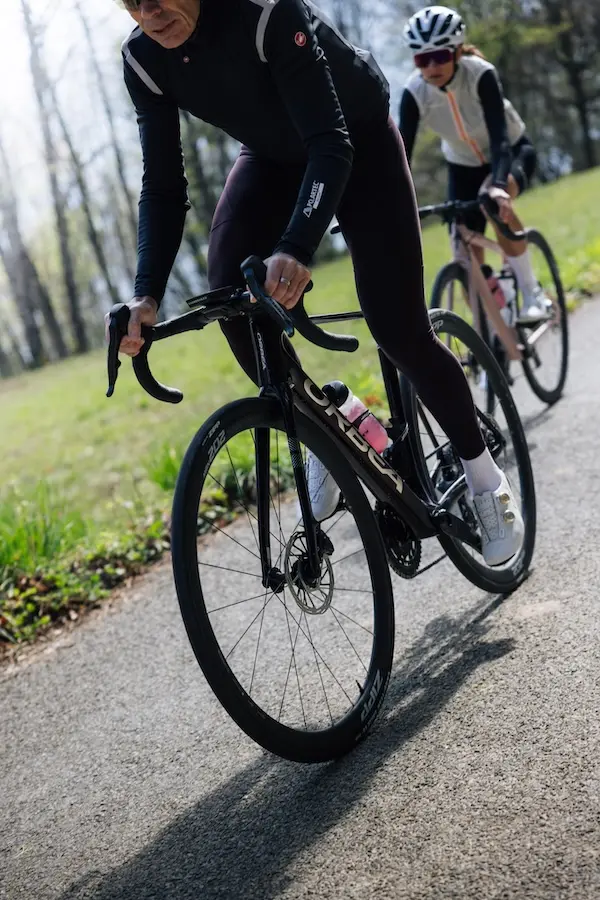
This is confirmed during sprint sessions, where I completely forget that I’m riding on wheels weighing less than 1,100 g. With each violent acceleration, the bike as a whole reacts promptly, but without faltering. I’m not even sure, moreover, that in terms of high-speed aerodynamics, the difference in efficiency with deeper wheels is truly significant. In any case, I cannot measure it myself.
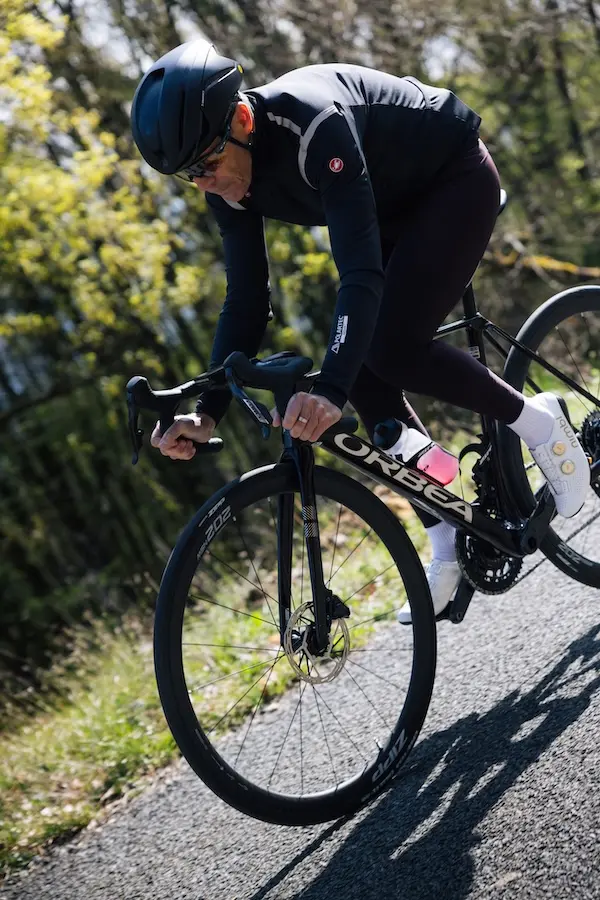
What is more noticeable, however, is a slight lack of inertia when riding at a steady pace above approximately 35 km/h, compared to deeper wheels. One feels a little less carried by the wheel profile, and it takes a bit more effort to maintain cruising speed. The sensations here are less exhilarating than with the Roval Rapide, for example.
However, this is counterbalanced by the very high stability of the Zipp 202 NSW when riding in crosswinds or on a fast descent. The wheels inspire confidence, allow for precise lines, delayed braking, and ultimately prove very comfortable, in the sense that they greatly limit all the small trajectory corrections that cost energy.
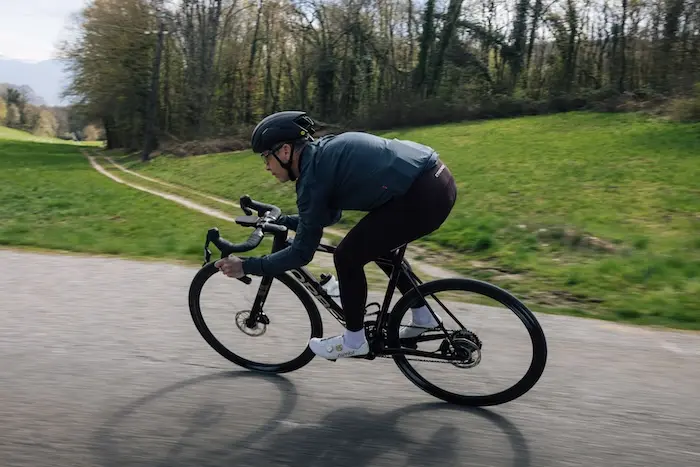
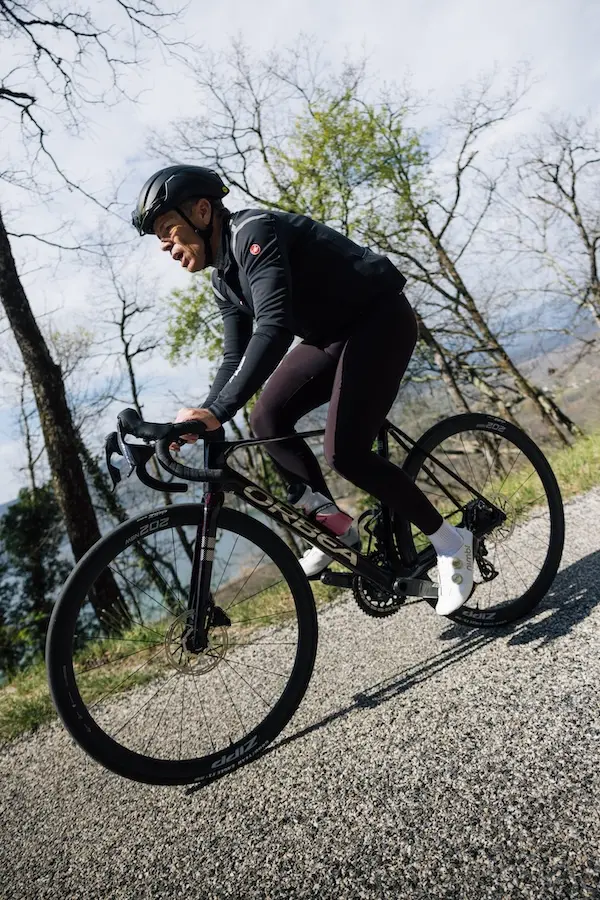
As one might expect, the combination of light weight and rigidity works wonders on climbs, especially on gradients beyond 7 to 8%. When riding seated and at a steady pace, the behavior of the 202 NSW is quite neutral, although very smooth and efficient. But with each move out of the saddle, one immediately feels the airy quality of the wheels, with a perceptible gain in speed. They confirm that these are climbing wheels, but capable of offering much more than what is usually expected from this type of equipment.
Finally, a last word on the combination with the Goodyear Eagle F1 tires specifically designed for these wheels. There are clearly better options on the market in terms of low rolling resistance, but I nevertheless appreciated the consistent behavior with the 202s, especially during accelerations out of the saddle. The tire architecture and sidewall shape, perfectly continuous with those of the rim, allowed me to ride, for once, with the (rather low) pressures recommended by Zipp, without feeling any collapse and while maintaining the wheels’ responsiveness. The experience was therefore quite good in that regard.
A Highly Accomplished Synthesis
With these new 202 NSW, Zipp does not merely revisit an iconic model: the brand succeeds in offering a modern interpretation, consistent with current high-end market demands. Extreme lightness, perfectly controlled rigidity, and overall stability across a wide variety of terrains make them a particularly accomplished pair of wheels, far exceeding their simple role as mountain specialists.
Of course, there remains the question of the very high price point, which reserves these wheels for a clearly informed clientele ready to invest in exceptional equipment. But strictly in terms of feel and performance, it’s hard to fault them fundamentally. The Zipp 202 NSW ultimately stand out as a very complete solution for anyone looking for a light, fast, and reassuring setup for an entire season.
The ZIPP 202 NSW wheels in brief…Pros: weight, lateral stiffness, stability, bearing smoothness Rim depth: 35 mm – Rim width: 23 mm internal – Hookless rims – Hubs: ZR1 SL – Bearings: hybrid ceramic – Freehub: 66 points of engagement – Spokes: 20 front and rear – Spoke type: Alpina Hyperlite – Max pressure: 5.0 bar/73 psi – Max system weight: 115 kg – Weight of wheelset: 1,090 g – Warranty: lifetime – Price: 3,800 € – Contact: https://www.sram.com/en/zipp |
Share the post "Zipp 202 NSW Test: The Ultimate Climbing Weapon (But Not Only)"