Share the post "BikeX, train your body rather than your watts"
There’s something quite fascinating about modern cycling. We’ve never had so much data. Power, heart rate, variability, load, TSS… it’s all there, constantly before our eyes. And yet, amidst this apparent precision, a certain blur remains. As if, by measuring everything, we’ve forgotten to look at the essentials. What our body is actually doing. What it consumes, what it produces, how it reacts. So we cling to benchmarks. FTP, for example. Practical, universal, reassuring. But is it truly accurate? Is it truly individual? Or is it simply an approximation that has become the norm over time? This is exactly where BikeX comes in. With an idea almost unsettling in its simplicity: what if we stopped training based on numbers… and started training based on ourselves?
By Jeff Tatard – Photos: All rights reserved
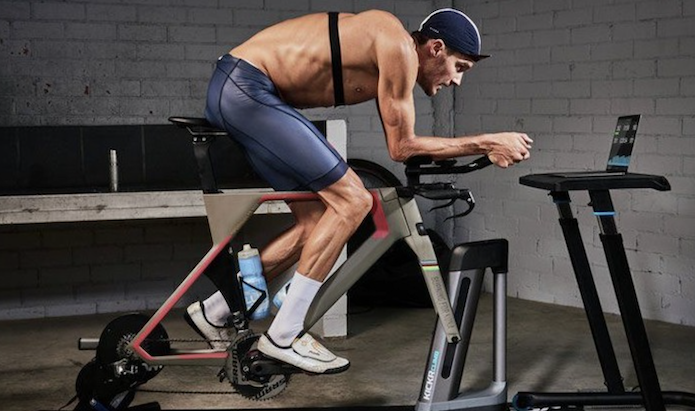
BikeX is a device that measures neither your power nor your heart rate. And that’s already a first step aside. What interests it is your breathing. More precisely, how you ventilate and the amount of CO₂ you produce during effort. The idea is not new in the scientific world. Laboratory tests have used this data for years to determine physiological thresholds, understand energy transitions, and refine training zones. But until now, all this remained confined to controlled, costly, often intimidating environments. BikeX attempts to bring this precision directly home, to your indoor trainer, with a simple incremental test.
Same watts, two different bodies
What this changes, on paper, is quite profound. Because FTP only measures one thing: performance at a given moment. Two athletes can show the same value and yet function in completely different ways. One can be very economical, the other much less so. One can quickly enter the red zone, the other can sustain effort for a long time. The number is identical, but the physiology is not. BikeX aims precisely to reconnect these two worlds. To say: this is what you’re doing… and this is how your body is experiencing it.
On paper, everyone is strong
Amidst this promise, there’s still a simple question. Does it really change anything once you’re on the bike? Because cycling has never lacked brilliant innovations on paper. And not all of them survive in the field. Training more “accurately” is appealing. But the zones still need to be reliable, reproducible, and above all, usable on a daily basis. Because a tool, however precise, is useless if it complicates more than it clarifies.
Key takeaways
|
Serious in substance, to be proven on the road
What works in BikeX’s favor is still the project’s credibility. We’re not talking about a gadget that came out of nowhere. Behind it, there’s a solid scientific basis, a professional version already in use, and a real desire to democratize an approach previously reserved for an elite. And that, in a sport where the gap between amateurs and professionals is precisely narrowing due to access to data, is not insignificant.
But there remains this small, almost inevitable discrepancy. That between the promise and the actual use. Because ultimately, the question is not whether BikeX is interesting. It is. The real question is whether it is indispensable. Will it transform training? Or simply refine it for those who are already looking to go very far in precision? Will the average user find a clear benefit, or additional complexity?
More technology… to return to oneself
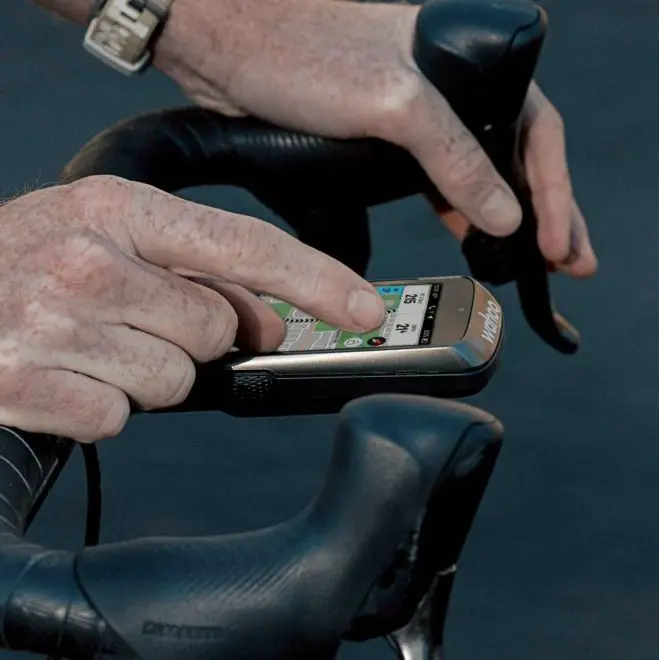
There’s also a form of irony in all this. We spent years simplifying training around a few key benchmarks. And now we’re returning to something finer, more subtle, almost more demanding. As if technology, ultimately, brings us back to a better understanding of the body… rather than to more control.
What it changes, when you ride
The 3bikes.fr verdict, at this stage, necessarily remains provisional. BikeX intrigues. BikeX questions. And that’s already a lot. But in cycling, we know better than anyone: it’s never the promise that counts, it’s what it becomes when confronted with reality. In the field, in the legs, in the sensations. A tool can be precise, innovative, even brilliant… if it doesn’t integrate simply into practice, it disappears.
BikeX opens an interesting door. That of training more aligned with real physiology. More personal, more refined. But between better understanding and better performance, there’s still a step. And it’s that step that will make all the difference.
Because ultimately, in this sport, truth is not measured. It is felt. And it is always verified by riding.
Share the post "BikeX, train your body rather than your watts"