Share the post "Riding after 60: our tips for staying in shape"
While they may sometimes lack that little extra to shine, seniors remain a model of serenity, balance, and mastery on the bike. Today, living long is no longer enough: we live better. It is no longer rare to see cyclists over 60 riding with ease, sometimes alongside their grandchildren, in training as well as in sportives, and even in competition in some cases. Where one once eased off, one now continues to be an active participant, driven by a lifestyle where sport and balanced nutrition go hand in hand. Despite some inevitable physical limitations, pleasure remains the essential driver, guaranteeing lasting well-being. Here are our tips for continuing to enjoy it for many years to come.
By Guillaume Judas – Photos: depositphotos.com
With years comes valuable mental strength. More perspective, less stress, better management of the unexpected: the experienced cyclist knows where they are going. This maturity is accompanied by useful experience, both for oneself and for others. Riding smoothly, avoiding mistakes, managing one’s effort.
But getting older also requires adaptation. Maximum capacities decrease, recovery becomes slower. However, endurance remains strong. Even better: the ability to sustain a moderate effort over time becomes a real advantage. Goals don’t disappear, they evolve. Finishing, lasting, enjoying oneself: these are challenges that are still just as stimulating.
Adapt without giving up
The key lies in intelligent training. It’s no longer about pushing without thinking, but about regulating. Intensity must follow recovery capacities, with gentle and constant progression. Heart rate becomes a more reliable indicator than speed, and regularity takes precedence over raw performance.
Maintaining pedaling fluidity, adapting gear ratios, listening to one’s sensations: these are all levers to continue progressing without putting oneself at risk. The body changes, but it remains capable of bringing you satisfaction, provided you respect its new rules.
Having more free time is an opportunity, provided a balance is maintained. Alternating activity and rest, avoiding excesses like long periods of inactivity: the body appreciates consistency.
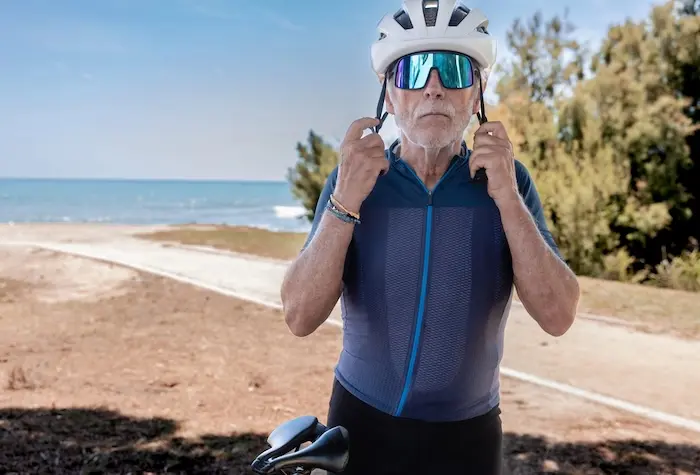
Gym strength training: a new lever to limit aging
Gym strength training is also a major asset for the senior cyclist. Contrary to popular belief, it does not aim to bulk up muscles, but to maintain the functional strength essential for pedaling and stability on the bike. By strengthening the legs, glutes, back, and core, it allows for better power transfer while reducing the risk of injury.
It also plays a key role in preventing age-related muscle mass loss, which helps maintain good endurance capacities and better efficiency on climbs. Two to three sessions per week, even light and targeted, are often enough to improve posture, fatigue resistance, and recovery, all while prolonging the pleasure of riding.
Practical advice
|
Pleasure above all
The difference is clear between someone who remains active and someone who gives up. The former projects themselves, sets goals, cultivates a positive dynamic. The latter suffers. Thinking “goal,” even a modest one, remains a tremendous source of energy.
Sport, beyond its physical benefits, acts as a true mental driver. It breaks routine, maintains desire, and becomes a valuable ally against the passage of time.
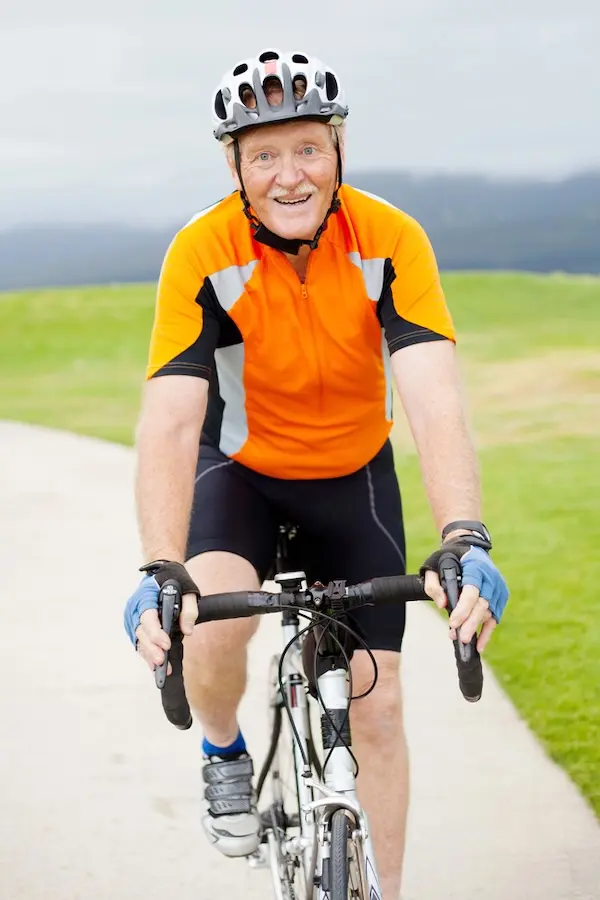
Rules to follow
With age, some principles become essential. Training regularly, without excess, is the foundation. Seeking well-being rather than performance at all costs allows for longevity. Conversely, overly intense efforts, with poor recovery, ultimately become counterproductive.
Recovery becomes a central element: knowing when to ease off, incorporating rest phases, listening to the body’s signals. Warm-up, often neglected, is essential. Since muscles are less flexible, it must be gradual and thorough before any significant effort.
Regarding diet, consistency is key: physical activity does not compensate for excesses. It’s better to prioritize balance over compensation.
Equipment must evolve with the cyclist. Adapting one’s position, settings, and gear ratios helps preserve comfort and avoid unnecessary strain. A well-adjusted bike prolongs enjoyment.
Finally, and most importantly, regular medical follow-up is also necessary. Continue to practice, yes. But with lucidity and caution.
After 60, cycling is not nostalgia: it is continuity. Provided one accepts to evolve, it remains a formidable playground, a source of freedom and health. A demanding, but deeply beneficial hobby.
Share the post "Riding after 60: our tips for staying in shape"