Share the post "120 € per tire: madness or stroke of genius?"
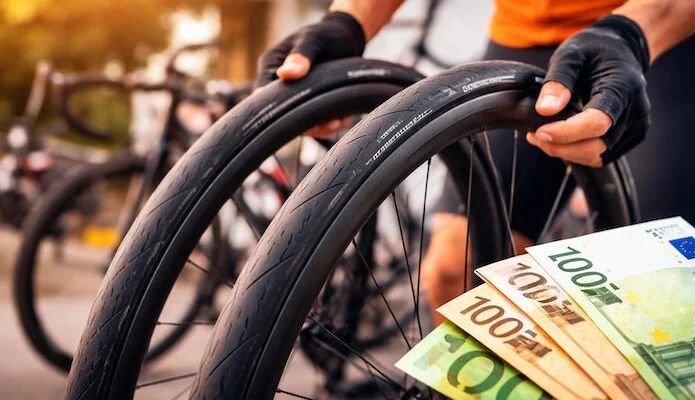
Spending more than €120 on two bike tires might seem excessive at first glance. However, behind this controversial choice lies an often underestimated performance lever, and most of the time considered the smartest investment to transform your bike. We explain why.
By Guillaume Judas – Photos: DR
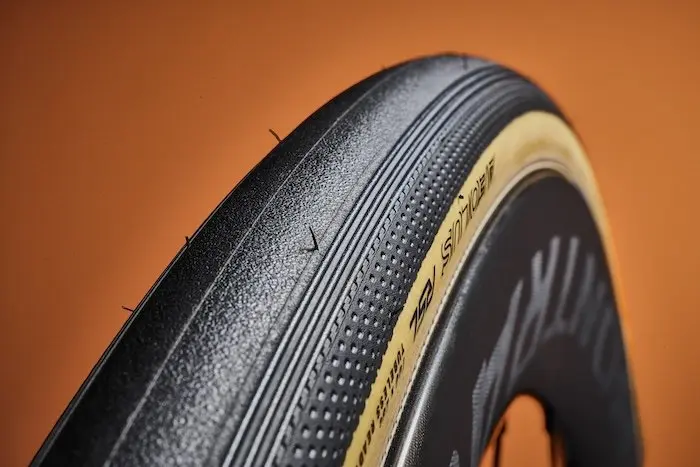
Spending between €120 and €180 for a pair of tires can seem difficult to justify. The object is discreet, quickly worn, and its function appears basic. Many see it as a disproportionate, almost absurd expense, especially when compared to the price of a car tire, often equivalent or even lower. This perception fuels legitimate suspicion: is the cyclist a victim of a trend or well-oiled marketing?
Invisible but very real gains
And yet, we are certain. After hundreds and hundreds of equipment tests in different configurations, we can affirm that changing tires can radically transform a bike’s behavior. The main argument is based on an immediate energy gain, which can reach up to 10 watts according to independent tests such as on bicyclerollingresistance.com thanks to better rolling resistance. This figure, which may seem abstract, takes on its full meaning when compared to the investments needed to obtain an equivalent benefit by other means. One would have to spend several thousand euros on aerodynamic wheels or drastically lighten their bike to hope for such a result. Here, the gain is accessible for a relatively modest sum.
The invisible enemy: the road itself
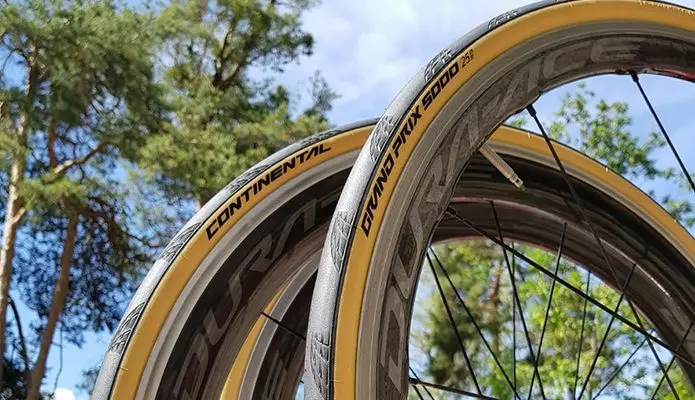
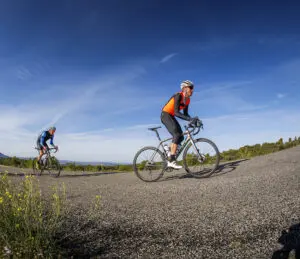
What distinguishes a high-end tire from a standard model is not visible to the naked eye, but is felt from the first pedal strokes. The key lies in the flexibility of the casing, which allows the tire to absorb road irregularities instead of being subjected to them. Where a rigid tire bounces and dissipates energy, a premium tire conforms to the asphalt and maintains speed. This ability to filter micro-vibrations not only reduces muscle fatigue but also improves the cyclist’s overall efficiency.
When comfort becomes a performance factor
The link between comfort and performance is often underestimated. However, a less shaken cyclist is a more relaxed cyclist, and therefore more efficient. By limiting vibrations and tension in the upper body, high-end tires allow for sustained effort for longer. This feeling of fluidity gives the impression of riding faster without expending more energy, which is a decisive advantage over time.
A question of safety above all
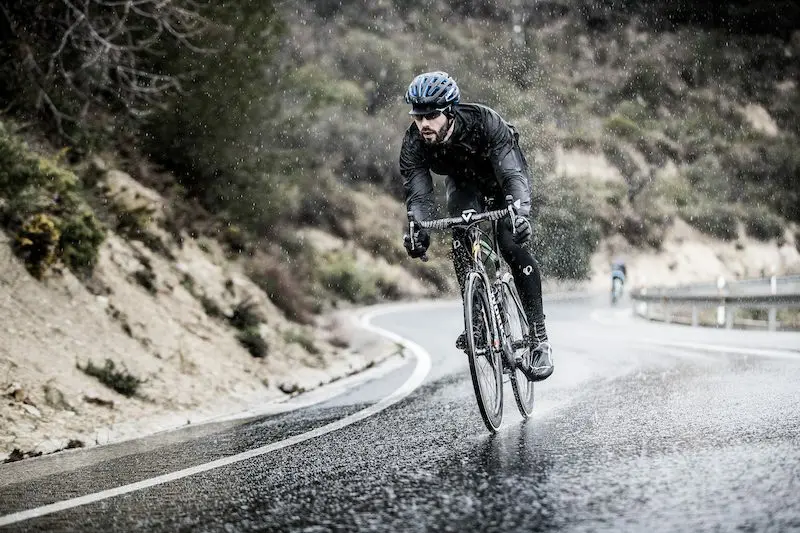
Beyond performance, tire quality plays a crucial role in safety. A more advanced rubber compound offers better grip, especially in corners or on wet roads. This ability to “grip” the asphalt radically changes the bike’s behavior, particularly in critical situations. The confidence it provides allows for more precise trajectories and reduces the risk of falling, which is priceless for many riders.
The case against high-end tires
Despite these arguments, criticisms persist and are not unfounded. The cost remains high, especially considering the sometimes limited lifespan of these tires. For an occasional cyclist, the gains may seem marginal and difficult to perceive. In this context, the investment may appear as a superfluous luxury, reserved for an elite or enthusiasts seeking sensations.
A more complex technology than it seems
Comparing a bike tire to a car tire is a common mistake. Behind its apparent simplicity, the bike tire is a concentrate of technology. It must reconcile lightness, resistance, grip, and performance in extremely reduced dimensions. It is designed to withstand significant stresses, especially at high speeds, while maximizing energy efficiency. This level of demand largely explains its price.
A strategic expense
Ultimately, everything depends on the cyclist’s profile. For occasional use, the benefit may seem limited. However, for a regular or demanding rider, the tire is undoubtedly the best possible investment. It is an immediate, tangible improvement that acts on speed, comfort, and safety simultaneously.
So spending €120 on a pair of tires may not be a whim, but a rational decision. In a world where every watt counts and every detail can make a difference, this choice stands out as one of the most cost-effective. What is almost invisible on the bike is sometimes what transforms it the most.
Share the post "120 € per tire: madness or stroke of genius?"