Share the post "Garmin Forerunner 570 Review: Resolutely Multisport, Tailored for Triathlon"
With the Forerunner 570, Garmin has updated its “mid-range” offering, geared towards running and especially multisport-triathlon. Unveiled a little less than a year ago, it follows the Forerunner 265 (from which it inherits its DNA) by adding more recent components from the Garmin ecosystem: an even brighter AMOLED screen, microphone and speaker for managing calls and voice commands from the wrist, precise multi-band GPS, adaptive training plans, custom multisport workouts, an evening report like a “briefing” before going to sleep, and battery life of up to 11 days in smartwatch mode. Positioned below the 970, the versatile 570 clearly targets athletes who want to train seriously (triathletes, cyclists who run, regular runners) without necessarily moving to the very high-end. Behind this appealing cocktail of features also lies a deliberate choice by Garmin: the absence of onboard mapping, a point that clearly distinguishes this model from competitors on the market. Offered at €549 and available in two case sizes (42 and 47 mm), we tested it in the field, on the bike, running, and in the pool, both in training and competition, to see if the 570 lives up to its promises and if its price positioning is justified against increasingly sharp competition.
By Pierre-Maxime BRANCHE – Photos: 3bikes.fr and Garmin
A Forerunner that changes numbers… but not philosophy
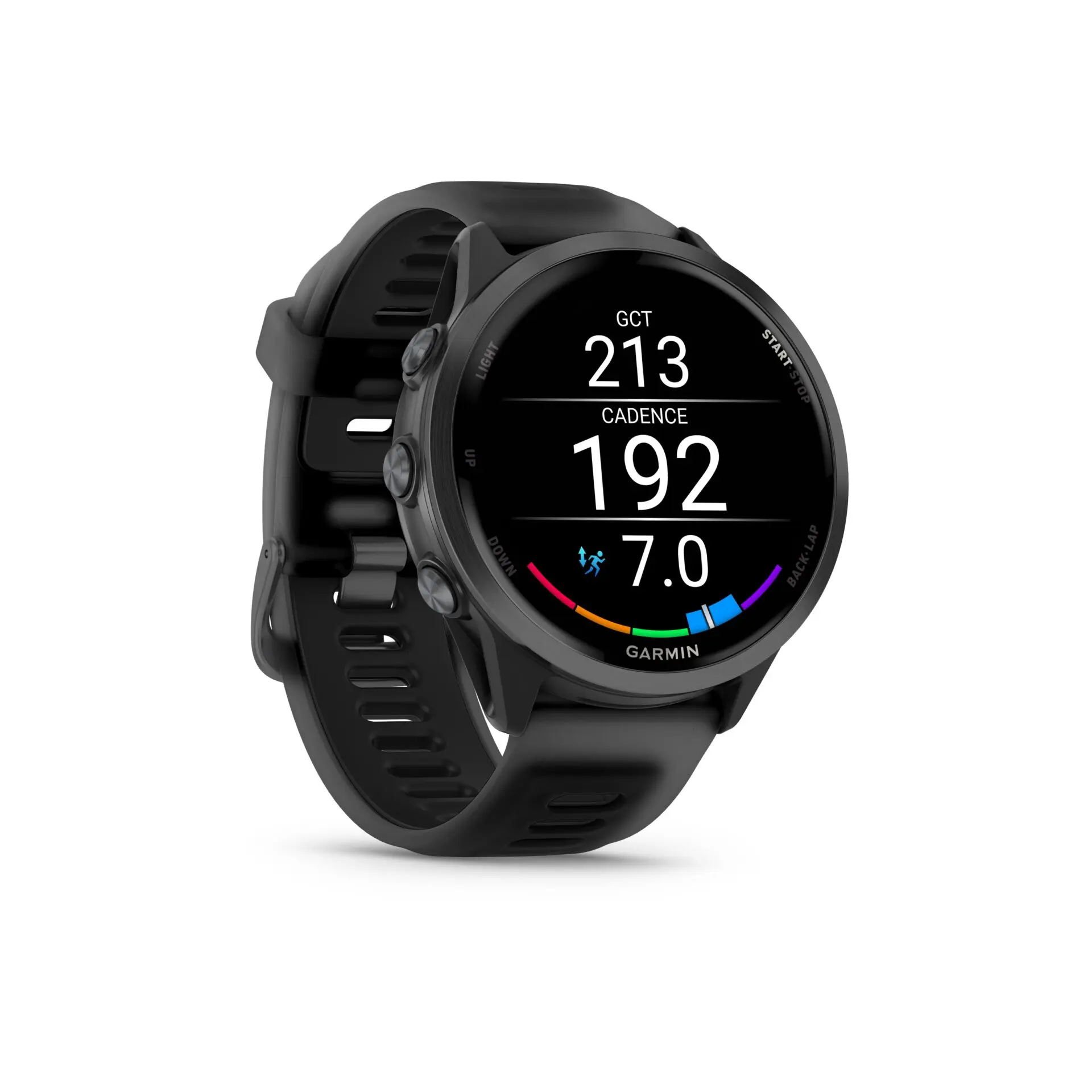
Behind this new name, the Forerunner 570 is not a new family of watches at Garmin. It is a direct continuation of the Forerunner 265, which it replaces in the catalog. The change in numbering primarily marks a harmonization of the range: no more AMOLED/MIP or with/without heart rate sensor variations, the 570 adopts a unique, more readable, more modern configuration.
Positioned in the middle of Garmin’s sports range, between the Forerunner 165 (entry-level) and the Forerunner 970 (high-end), the 570 is aimed at regular to avid athletes, whether they are runners, cyclists, triathletes, or multisport practitioners, looking for a comprehensive watch to train seriously, without moving to the most expensive models.
Design, case, and ergonomics: a real visual upgrade
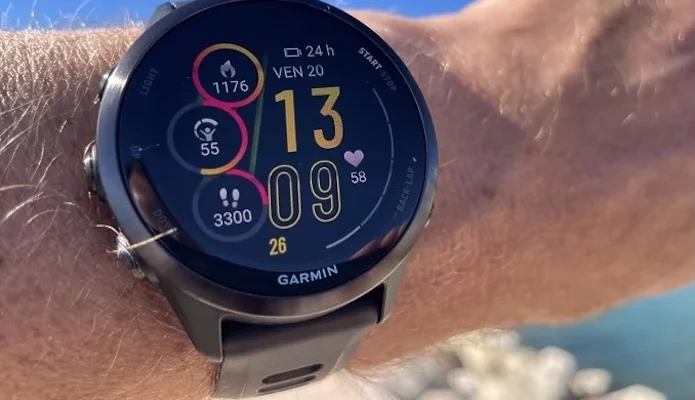
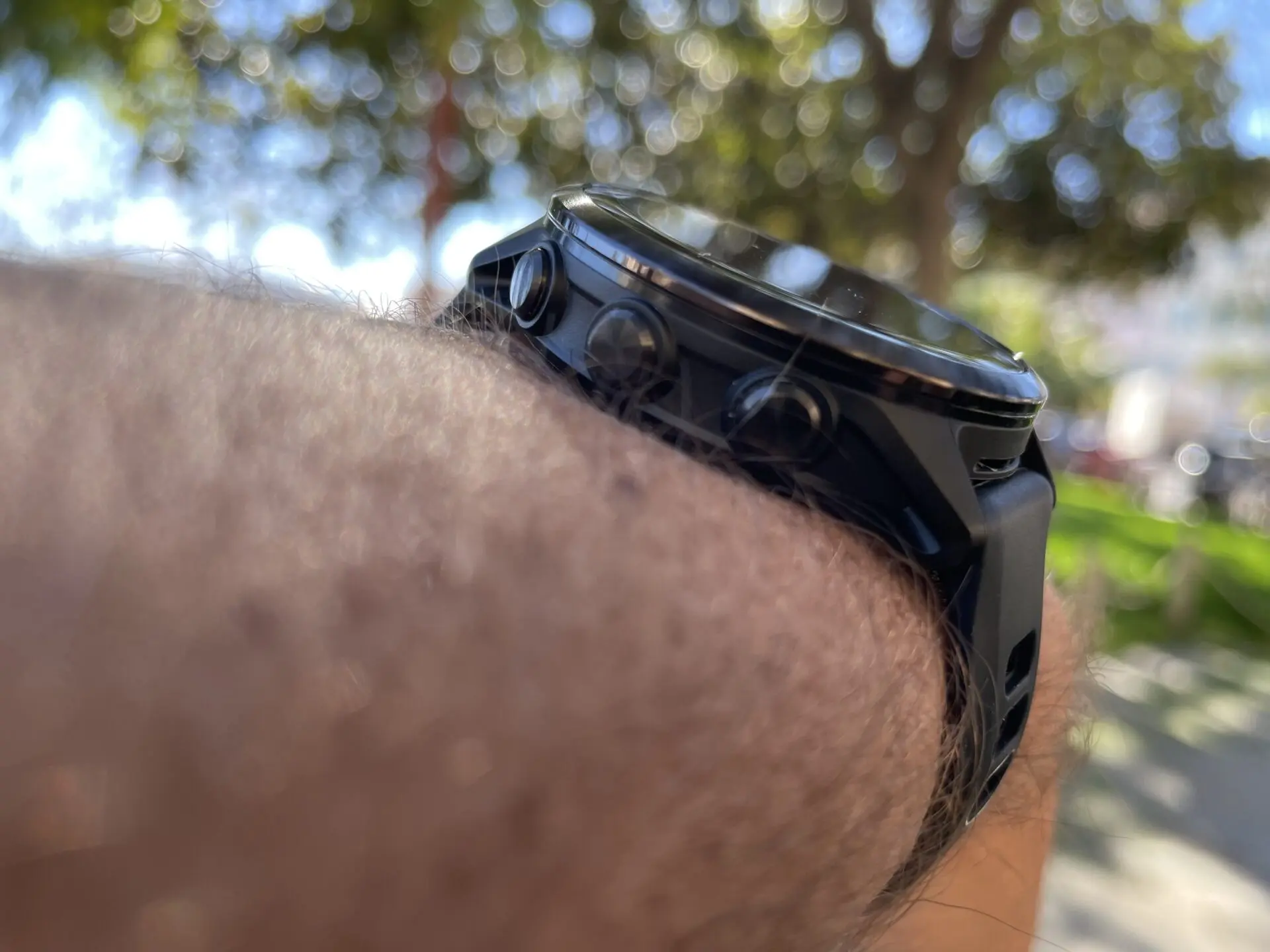
First visible change: the design. The Forerunner 570 abandons the very plastic look of the 265 to adopt an aluminum bezel, which immediately gives it a more “premium” appearance. The case is more refined, visually closer to a fenix or an Enduro than to older Forerunners. The watch is available in two sizes: 42 mm, more compact, and 47 mm, more readable and sport-oriented. In terms of weight, it remains very contained (around 42 g for the 42 mm and 50 g for the 47 mm), perfectly suited for intensive use, including long bike rides, triathlon sequences, or interval running sessions. The ergonomics remain faithful to Garmin’s DNA: a touchscreen, 5 physical buttons, allowing full use even in the rain, with gloves, or during intense effort. This choice is particularly relevant for cyclists and triathletes, who often switch between touch interaction and physical controls depending on the context.
An ultra-bright AMOLED screen, designed for the outdoors
Another major evolution on one of the most visible – and most used – elements of a sports watch: the screen. On the 47 mm model, the screen reaches 1.4 inches, a size comparable to that of a fenix 8 of the same diameter. The 42 mm model is not left behind with a 1.2-inch display, very well defined.
Indeed, the Forerunner 570 features the brightest AMOLED screen ever integrated by Garmin. And this is not just a marketing argument, as this evolution is immediately noticeable upon handling. The difference is clearly visible compared to previous generations. For outdoor athletes, this gain is far from anecdotal. Data fields are displayed with greater clarity, regardless of weather conditions, sports profile screens gain visual comfort, and navigation through widgets becomes smoother and more pleasant. A real plus in daily life as well as during effort, especially for triathletes and cyclists who regularly consult their watch in action.
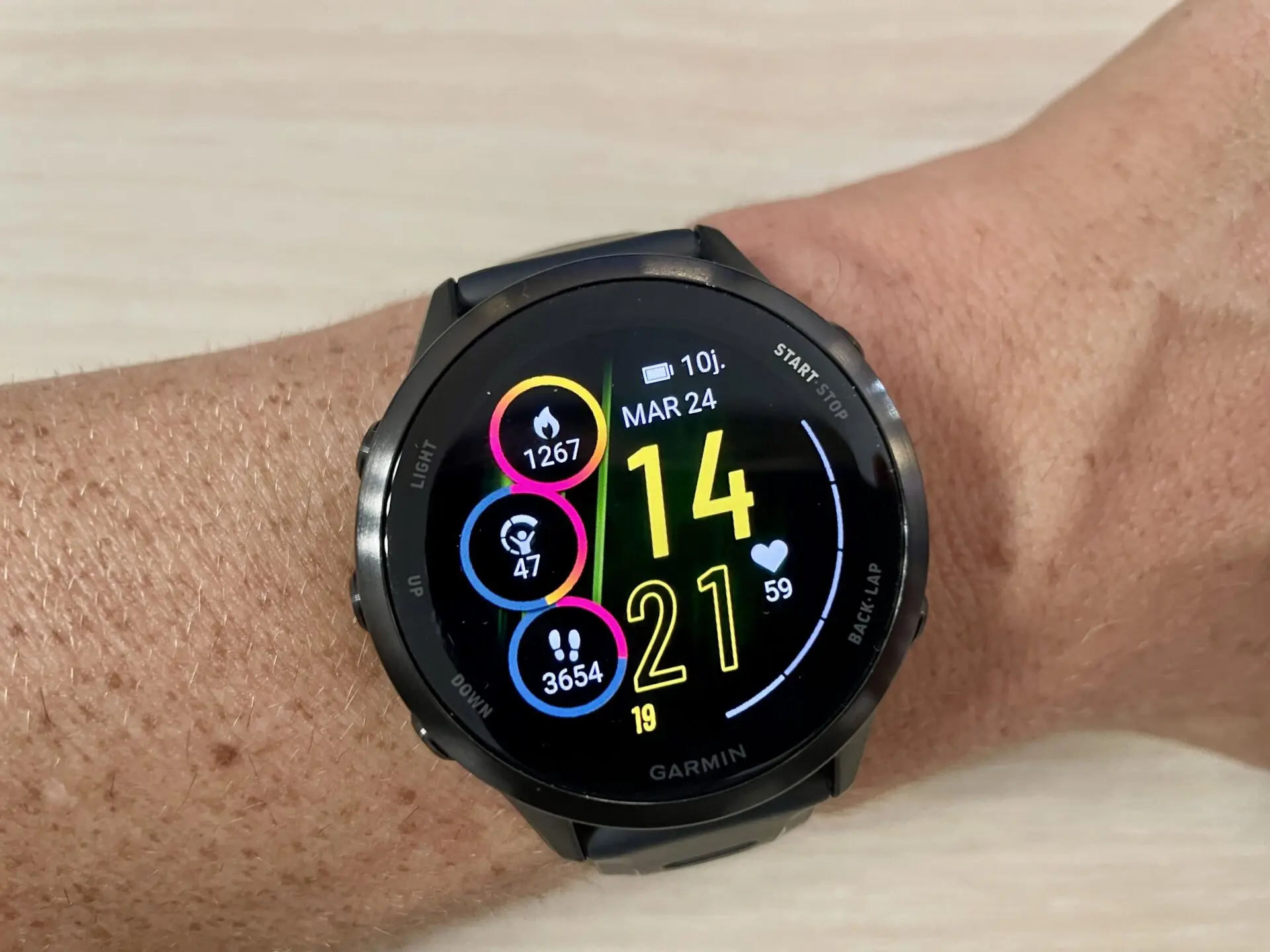
The interface also benefits from the new Garmin ergonomics, largely inspired by the latest fenix models: more readable menus, modernized widgets, subtle transparency effects. A welcome evolution, which makes navigation more intuitive without disrupting brand regulars.
However, this increase in brightness has a downside: battery life does not improve as quickly as the screen. Compared to the Forerunner 265, the Forerunner 570 shows slightly reduced endurance in certain usage modes, a compromise accepted by Garmin.
A resolutely multisport watch, designed for triathlon
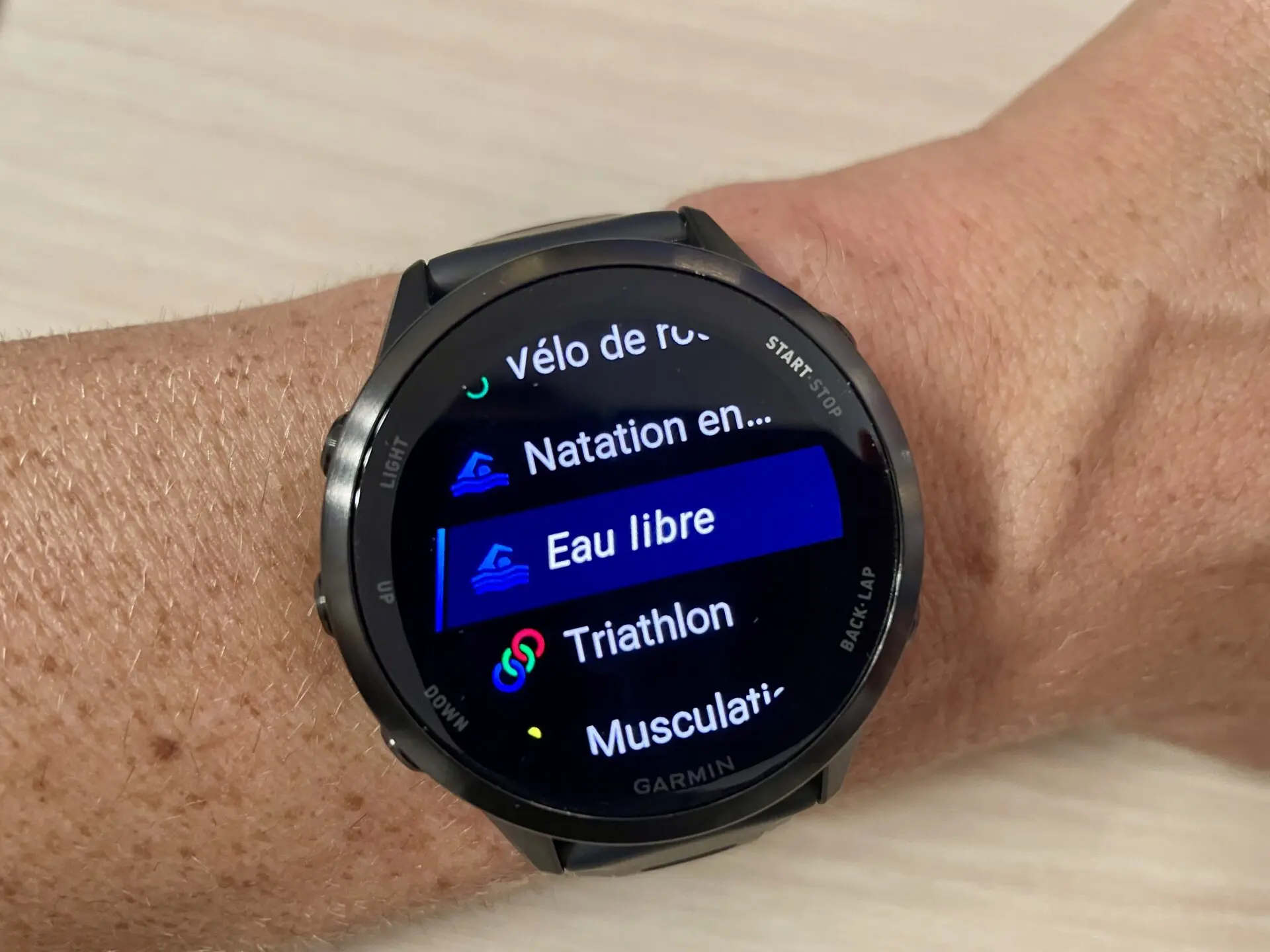
If there’s one area where the Forerunner 570 excels, it’s multisport. Garmin clearly designed this model for athletes who combine disciplines, especially for triathletes, whether beginners or experienced. The watch perfectly manages :
- triathlon, duathlon, swimrun, run & bike profiles,
- automatic transitions,
- loop events,
- pool and open water swimming,
- a wide range of cycling profiles (road, indoor trainer, mountain bike, cyclocross, gravel, e-bike, etc.).
The big new feature is also the ability to create custom multisport workouts directly from Garmin Connect : for example, a bike / run / bike sequence, ideal for working on transitions or simulating a race. A flexibility that is now expected from a triathlon-oriented watch… and that the Forerunner 570 delivers without compromise.
Training and progression: Garmin rolls out its expertise
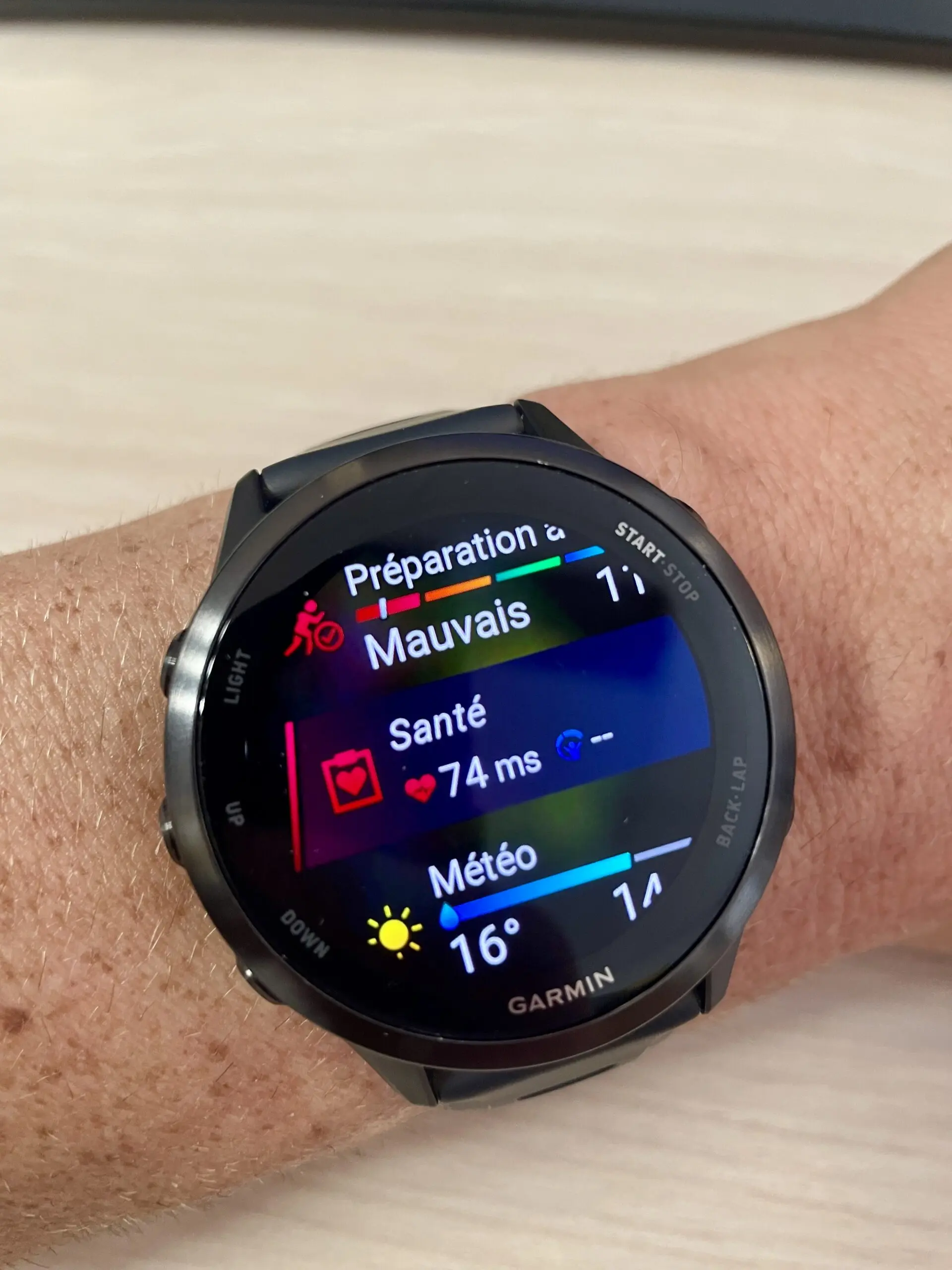
For training, the Forerunner 570 relies on everything that makes the Garmin ecosystem strong. It includes all the key indicators to structure your progression :
- VO₂max (running and cycling),
- training status and load,
- load balance,
- Training Effect,
- heat and altitude acclimatization,
- training readiness score.
The watch also offers daily workout suggestions, adjusted according to recovery and recent load, as well as Garmin Coach programs for running, cycling, strength training… and now triathlon.
The objective is clear: to offer a coherent framework for effective training, long-term progression, and avoiding overtraining, even without being an expert in exercise physiology.
Running: features designed for competition
For runners, Garmin adds several particularly interesting features for race situations :
- AutoLap by waypoint, based on the official course,
- suggested finish line, in case of forgotten stop,
- projected race time prediction,
- PacePro, to manage your pace according to the course profile.
The Forerunner 570 also integrates running dynamics, wrist-based power, and time predictions for classic distances. Some very advanced metrics remain reserved for the Forerunner 970, but the essentials are there for structured and coherent training.
Precise multi-band GPS… but without mapping
This watch relies on a latest-generation multi-band GPS, combined with SatIQ technology, a duo now well-known at Garmin. Concretely, the watch is capable of automatically choosing the most suitable GNSS mode based on the environment, adjusting the precision level in real-time to find the best compromise between positioning reliability and battery life.
In the field, this means that the Forerunner 570 uses dual frequency in complex areas – dense urban environments, undergrowth, steep valleys – then switches to less energy-intensive modes when reception conditions are more favorable. This operation is transparent for the user, particularly valuable during long bike rides, varied terrain training, or triathlon competitions where the reliability of the track and distances is essential.
This system allows the watch to offer precise route tracking, good pace stability, and consistent distances, without requiring adjustments before each outing. A real asset for athletes who want to focus on their effort, rather than on the technical parameters of their equipment.
Furthermore, barometric altimeter, compass, compatibility with all ANT+ and Bluetooth sensors (power meters, bike radars, indoor trainers, heart rate straps…): the Forerunner 570 ticks all the boxes.
However, Garmin makes a clear choice: no onboard mapping. Navigation is limited to track following, with directional alerts, but without a base map or route recalculation. A point that strongly distinguishes the 570 from some of the competition… and which will inevitably weigh on the final choice.
A complete smartwatch, for daily life and training
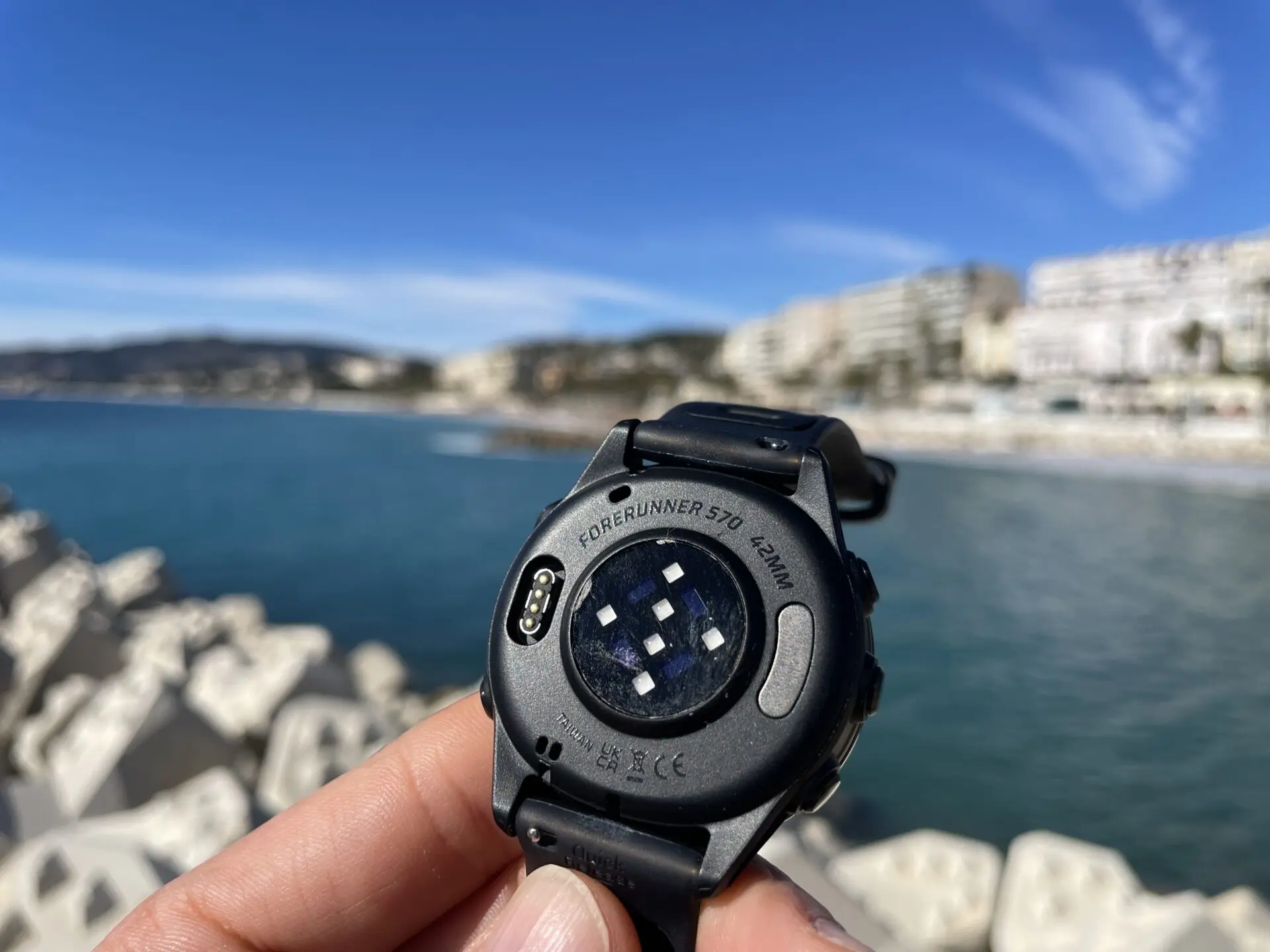
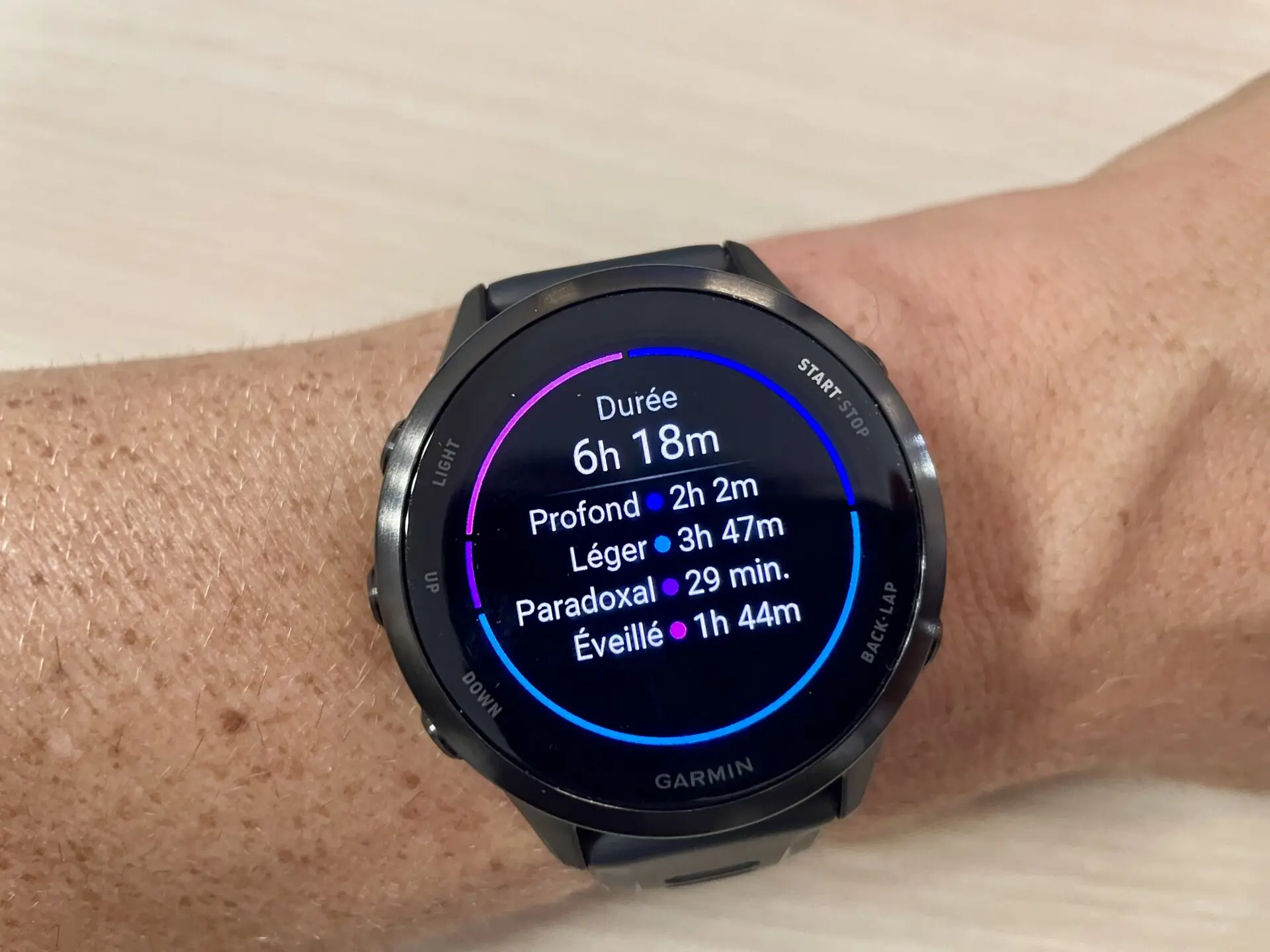
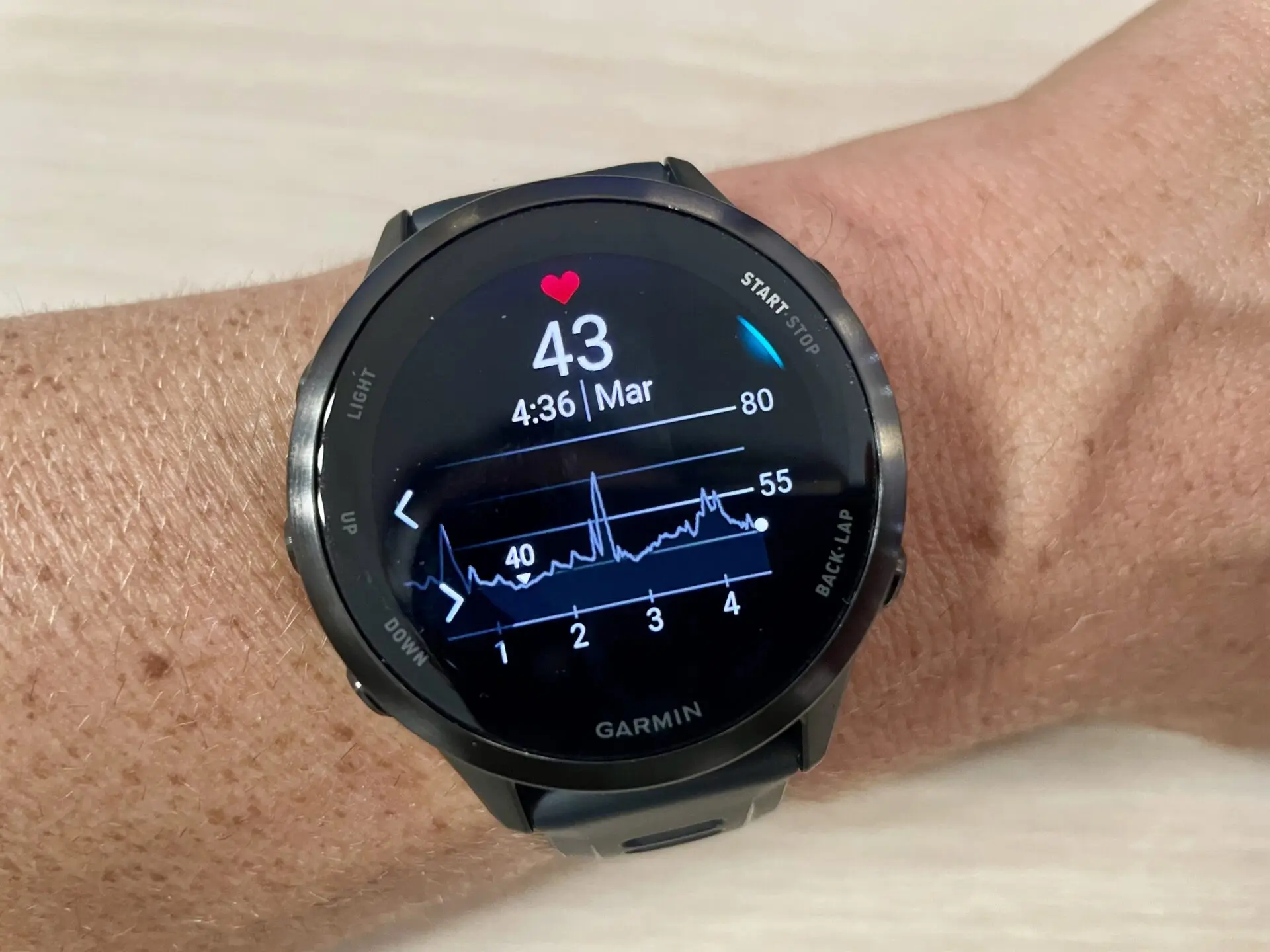
Finally, the Forerunner 570 is obviously not limited to sports. Thanks to the 5th generation Elevate heart rate sensor, it provides comprehensive health tracking: heart rate, HRV, Body Battery, advanced sleep, oxygen saturation, nocturnal skin temperature.
Garmin also adds an end-of-day report, complementing the morning report, with a useful summary before bedtime: recovery, next day’s workout, weather, upcoming events.
A major new feature of this generation: the integration of a microphone and a speaker, allowing calls to be made, certain voice commands to be used, and audio alerts to be received directly from the watch.
All of this is complemented by the brand’s classic features: offline music, Garmin Pay, notifications, LiveTrack, and safety features.
In the field…
We tested the Garmin Forerunner 570 in the 42 mm version. A compact format that immediately gives a first indication of the watch’s philosophy: it clearly sits at the boundary between a sports watch and a smartwatch oriented towards health and well-being.
On a rather average male wrist, the 42 mm case appears quite compact. Athletes with larger wrists will undoubtedly tend to prefer the 47 mm version, which gives more the impression of a true training watch. But this smaller format also has an obvious advantage: the watch is extremely light and is quickly forgotten on the wrist.
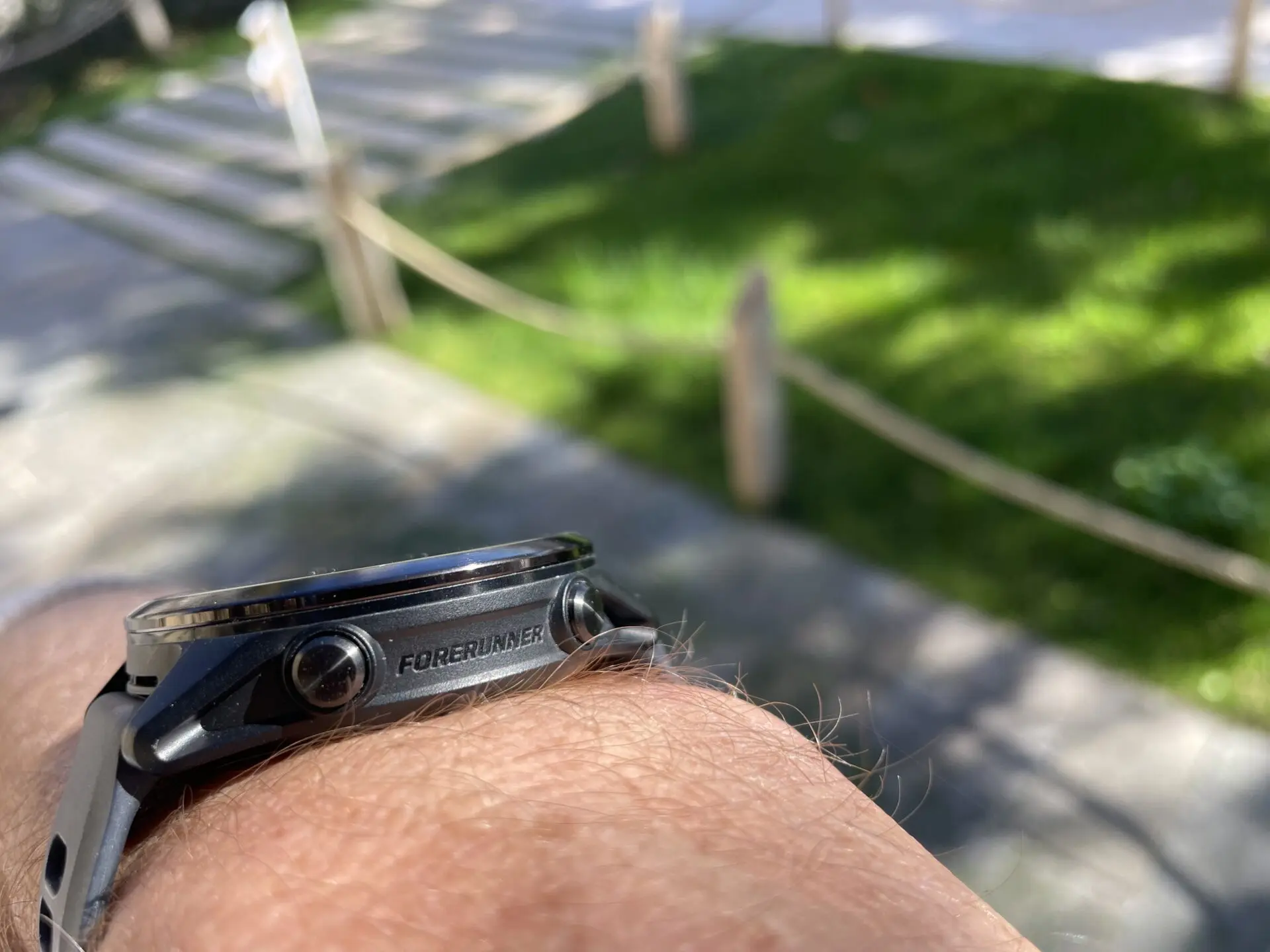
The case finish is successful. Garmin has clearly taken a step forward compared to the Forerunner 265. The aluminum bezel provides a more qualitative appearance, and certain details are particularly appreciated, such as the small “Forerunner” inscription engraved between the Start and Back buttons. A discreet detail, but one that contributes to this impression of an upgrade.
Strap and comfort: light but a bit short
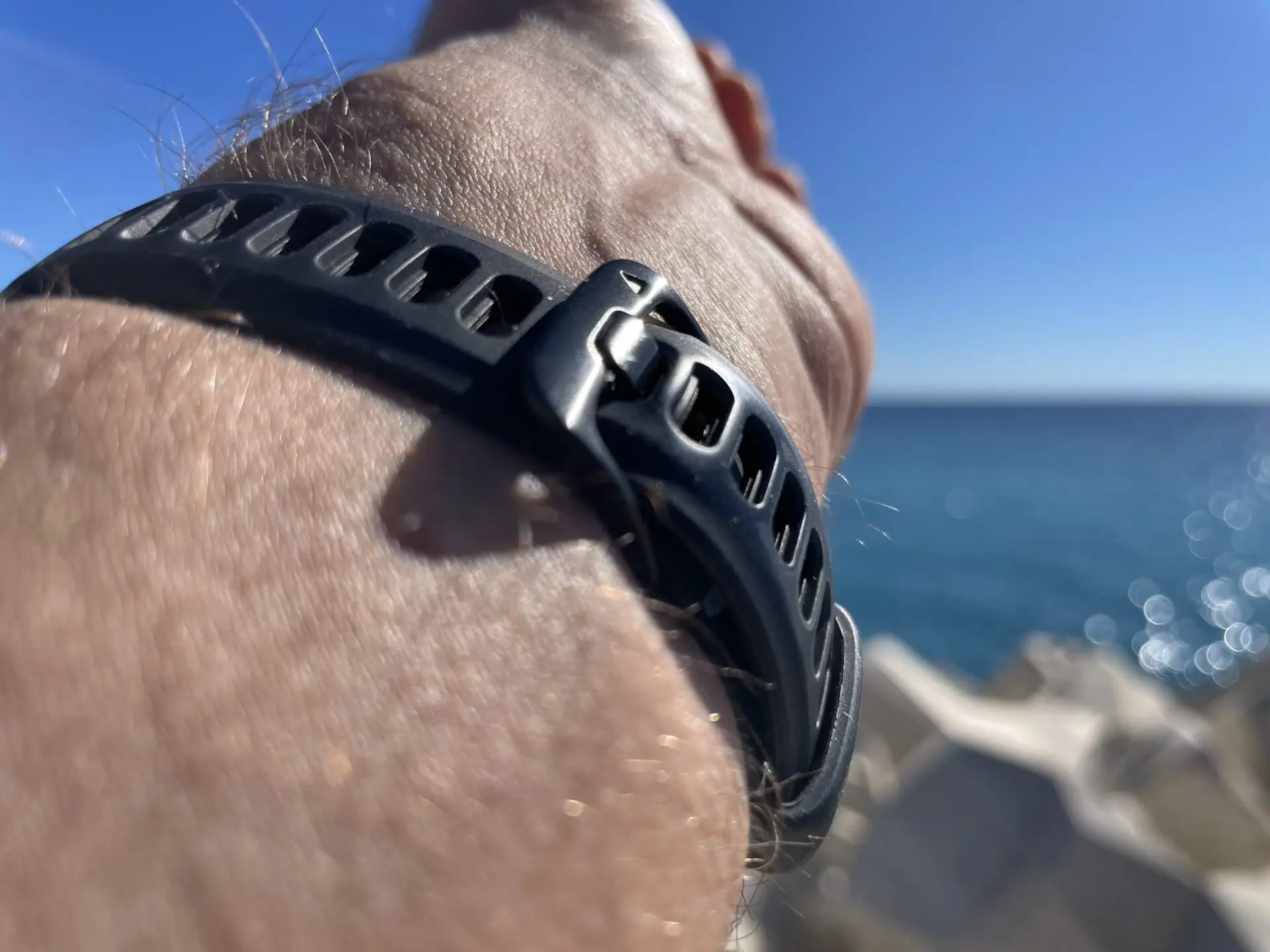
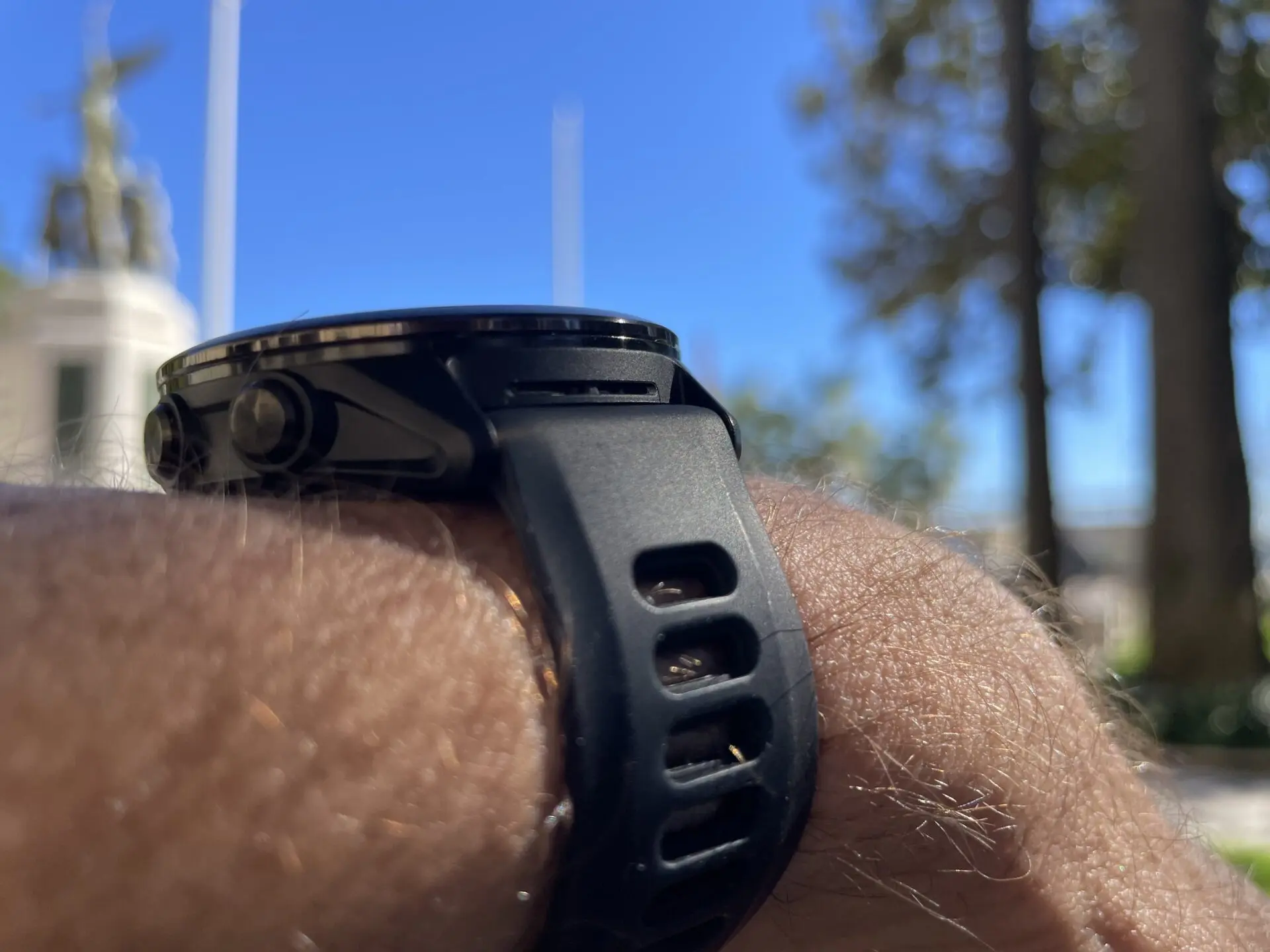
The silicone strap uses the Quick Release system, now well-known at Garmin. A small integrated lever allows the strap to be changed quickly and without tools, a practical point for those who like to adapt their watch between sports and daily use.
On the tested model, the width is 20 mm (compared to 22 mm on the 47 mm version). It is correct and ensures good wrist support. However, the length is a bit short. With a wrist that is far from massive, only six adjustment holes remain available. The strap also has only one retaining loop, which can sometimes leave the end protruding and “floating” slightly. A minor detail, but one worth mentioning for athletes accustomed to wearing their watch tightly during effort.
Another interesting point: when the watch is removed from the wrist, the screen automatically locks, and a unlock code must be entered to access the data. A valuable security feature to protect personal information.
A comprehensive but very accessible configuration
Setting up the Forerunner 570 is easy via Garmin Connect, with a fairly intuitive configuration. The watch quickly offers to set up all connected functions: music, Garmin Pay, security, LiveTrack, Wi-Fi connection, or voice assistant via smartphone.
Then comes the particularly rich health and wellness tracking section. The watch notably allows tracking daily steps, intensive activity minutes, floors climbed, stress level, and sends rest alerts and reminders to move.
Garmin offers its famous – and appreciated – morning report which gathers the day’s key data: sleep quality, Body Battery, recovery, heart rate variability, and training suggestion. This report is modifiable according to what you want to know. And the Forerunner 570 also adds an evening report, also customizable, which allows anticipating recovery and the next day’s session. An interesting tool to maintain a global view of your fitness.
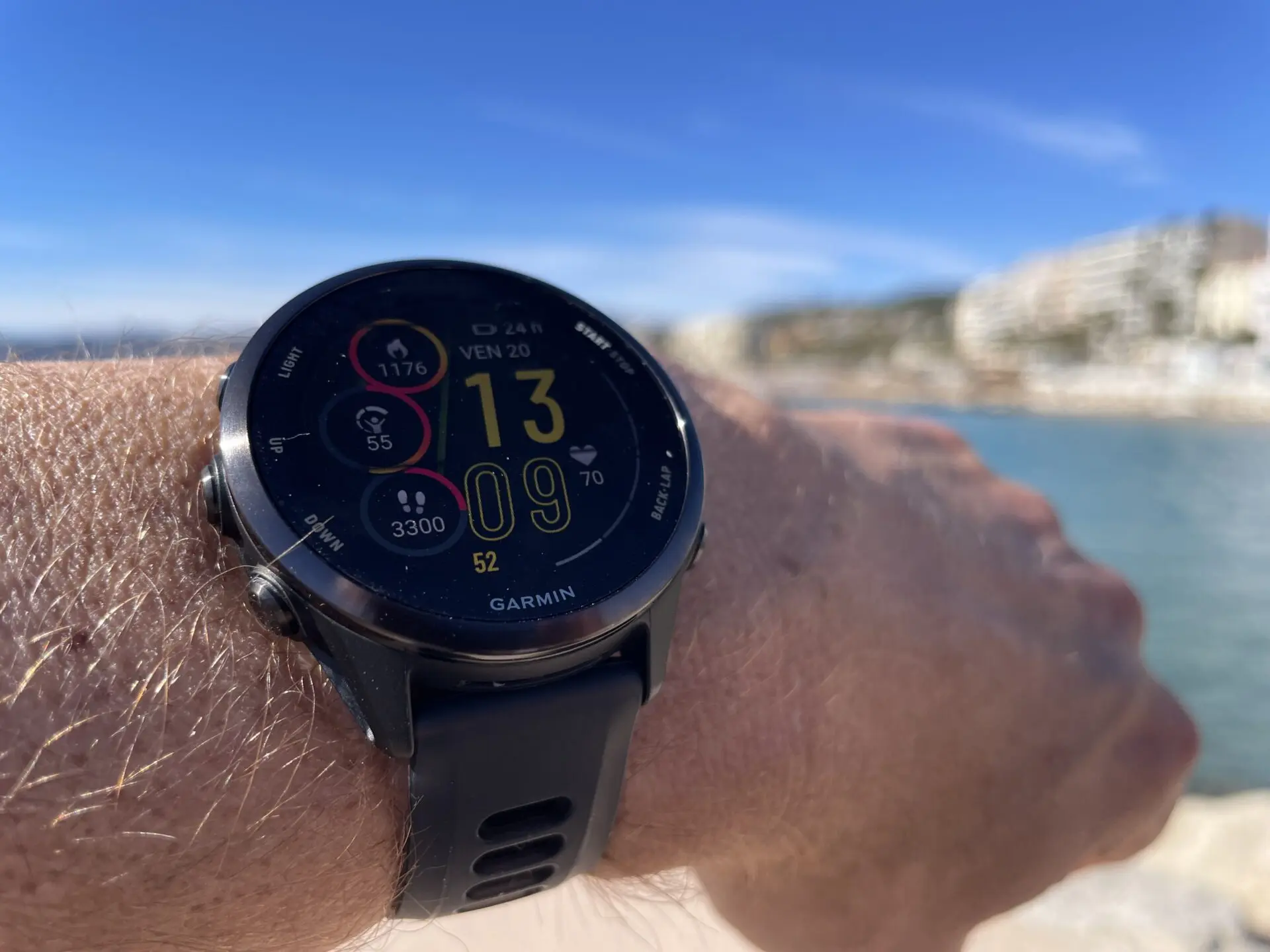
The customization possibilities are very numerous: screen brightness, text size (from 1 to 13), button sounds, weather alerts, or main dial configuration with different display styles.
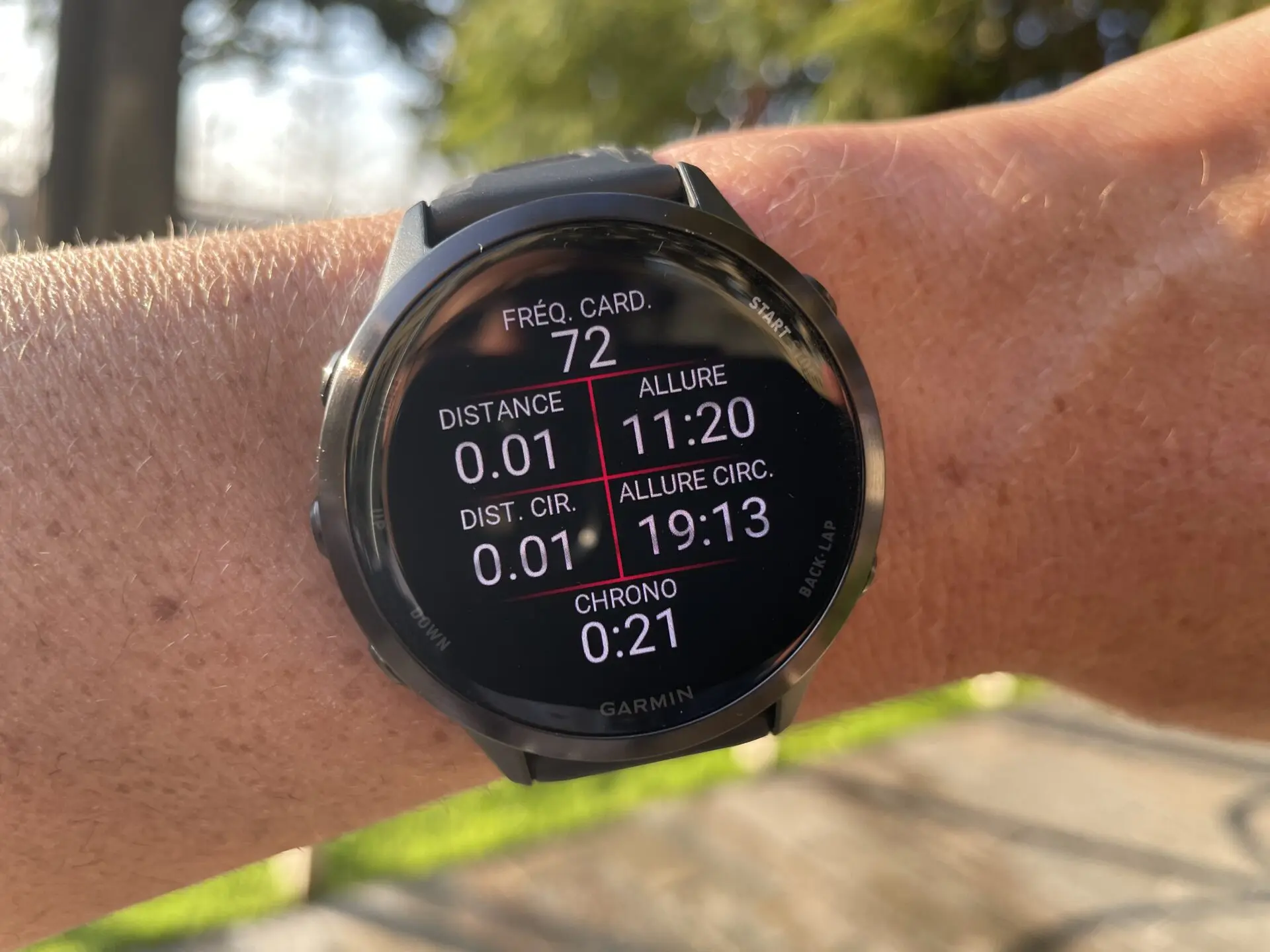
The interface also allows for very fine customization of activity screens, by choosing the displayed data, their layout, and their number (up to 8 possible fields). A strong point of Garmin, always highly appreciated by athletes who like to adapt their watch and especially their data to their training and racing habits.
Reliability and readability
The Forerunner 570 quickly confirms its multisport vocation. In swimming, particularly in an Olympic pool, the watch proves very reliable in counting lengths and measuring distances, with precise session tracking. Transitions between swimming phases and recovery periods are detected with good responsiveness, allowing for a coherent and usable training summary once the session is completed.
Use remains simple even in water: navigation between screens is easy, and main information remains accessible during effort. At the end of the activity, the watch also allows adding a voice comment, a function made possible by the integration of the microphone and speaker. An original option that can be useful for quickly noting a feeling or a session element to consider before forgetting it. In water, the sound emitted by the watch is slightly modified due to humidity in the microphone and speaker area. Nothing truly problematic, and a function allows for quick evacuation of remaining water.
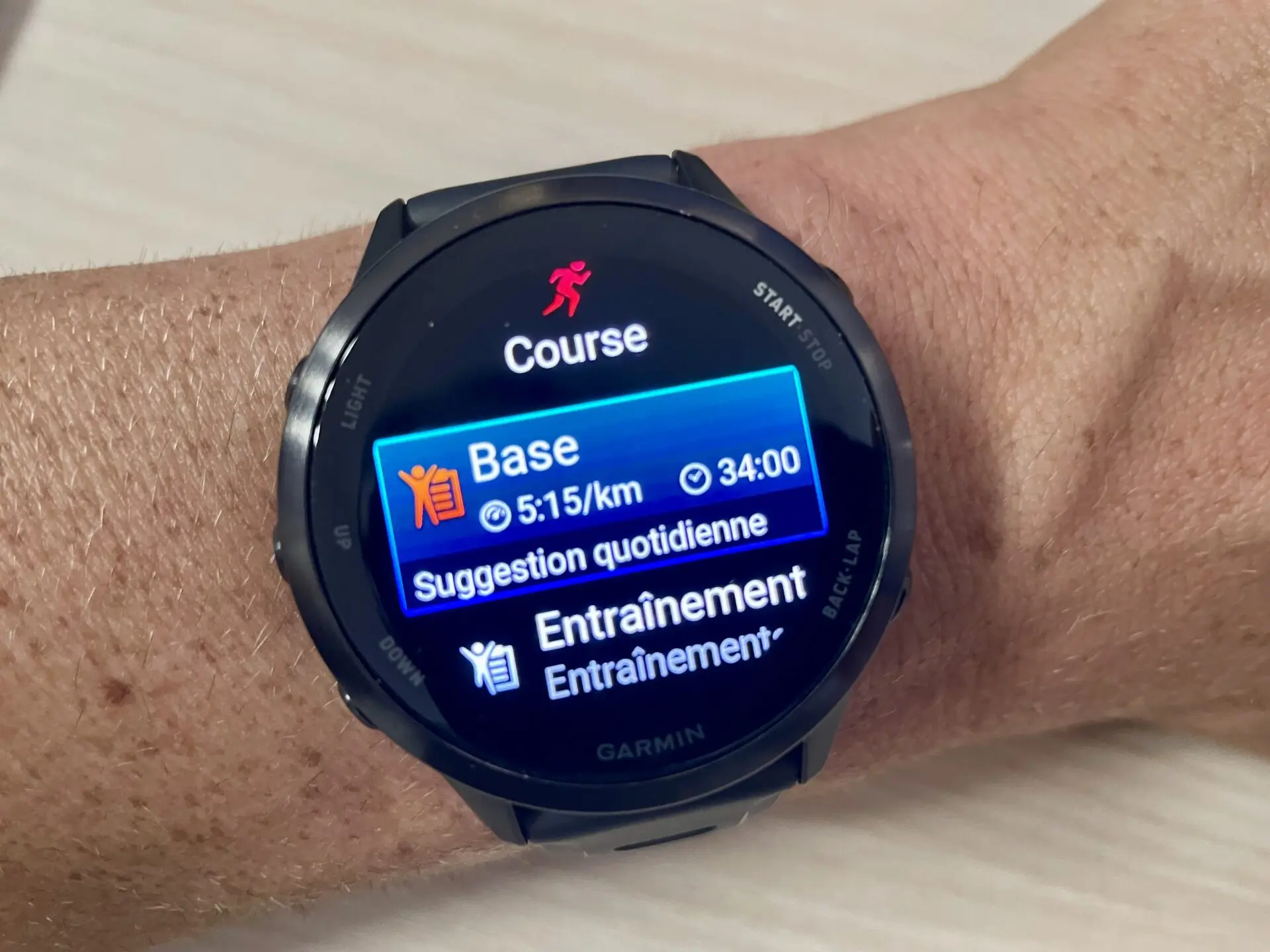
In running, the Forerunner 570 confirms the quality of its GNSS system. The recorded track is clean and consistent, and measured distances are reliable. Data readability remains excellent during effort thanks to the AMOLED screen’s contrasts and adjustable character size. Automatic laps programmed every kilometer work perfectly, while still allowing for manual laps if needed. As often with Garmin, activity screen customization is particularly well-developed: it’s very easy to create new data screens, choosing the number of displayed information, their layout, and the nature of the metrics presented. A valuable asset for adapting the display to different training sessions.
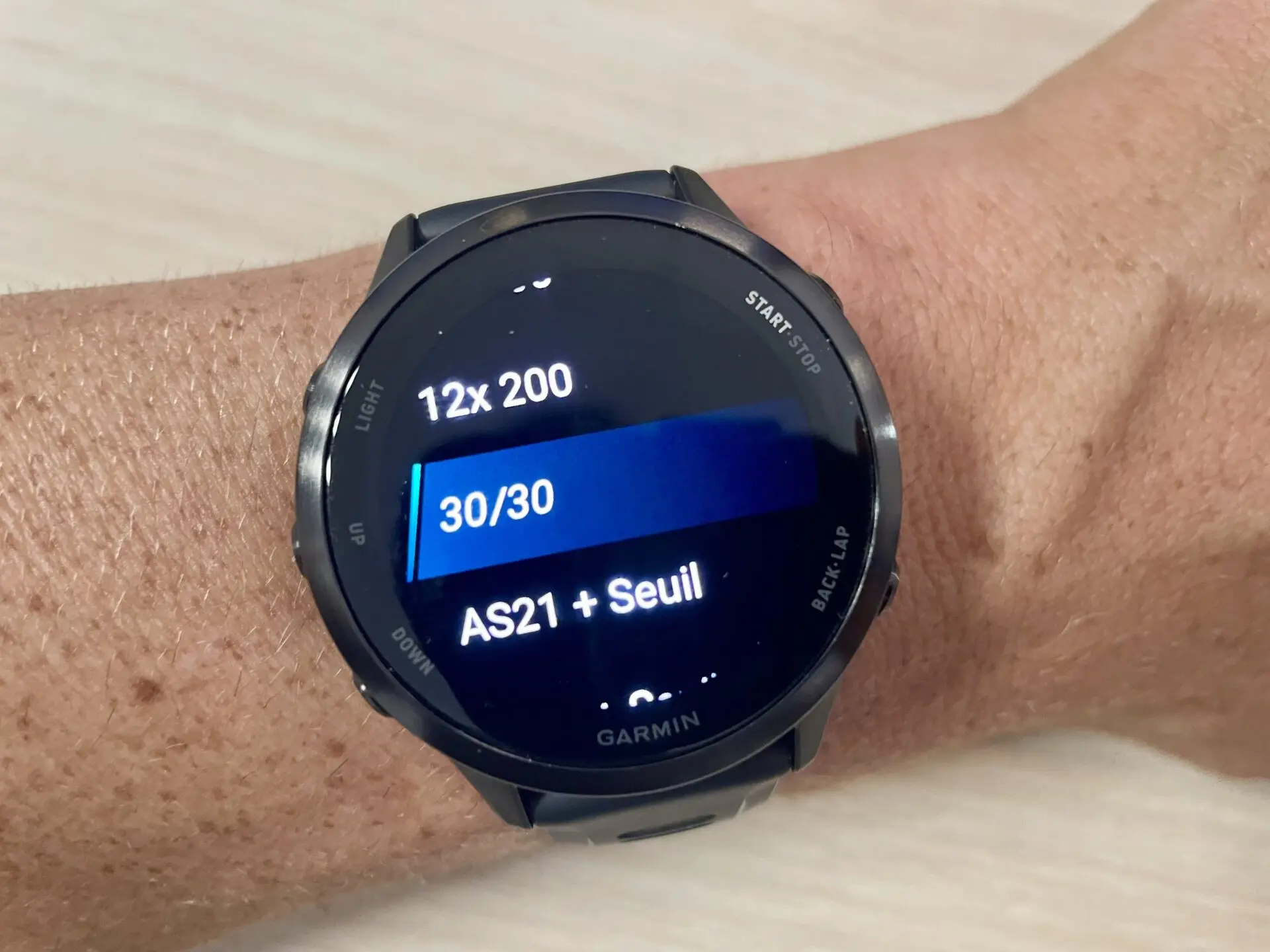
Workout planning via Garmin Connect remains one of the strengths of the Garmin ecosystem. Creating structured sessions is simple and intuitive.
During training, audible alerts and vibrations are perfectly perceptible, even with wind or in a noisy environment. When target paces are programmed, the screen clearly indicates whether you are in the zone, above, or below the target pace.
At the end of each session, the watch provides a detailed report, with the evolution of physical data and progression indicators.
Navigation: effective… but without mapping
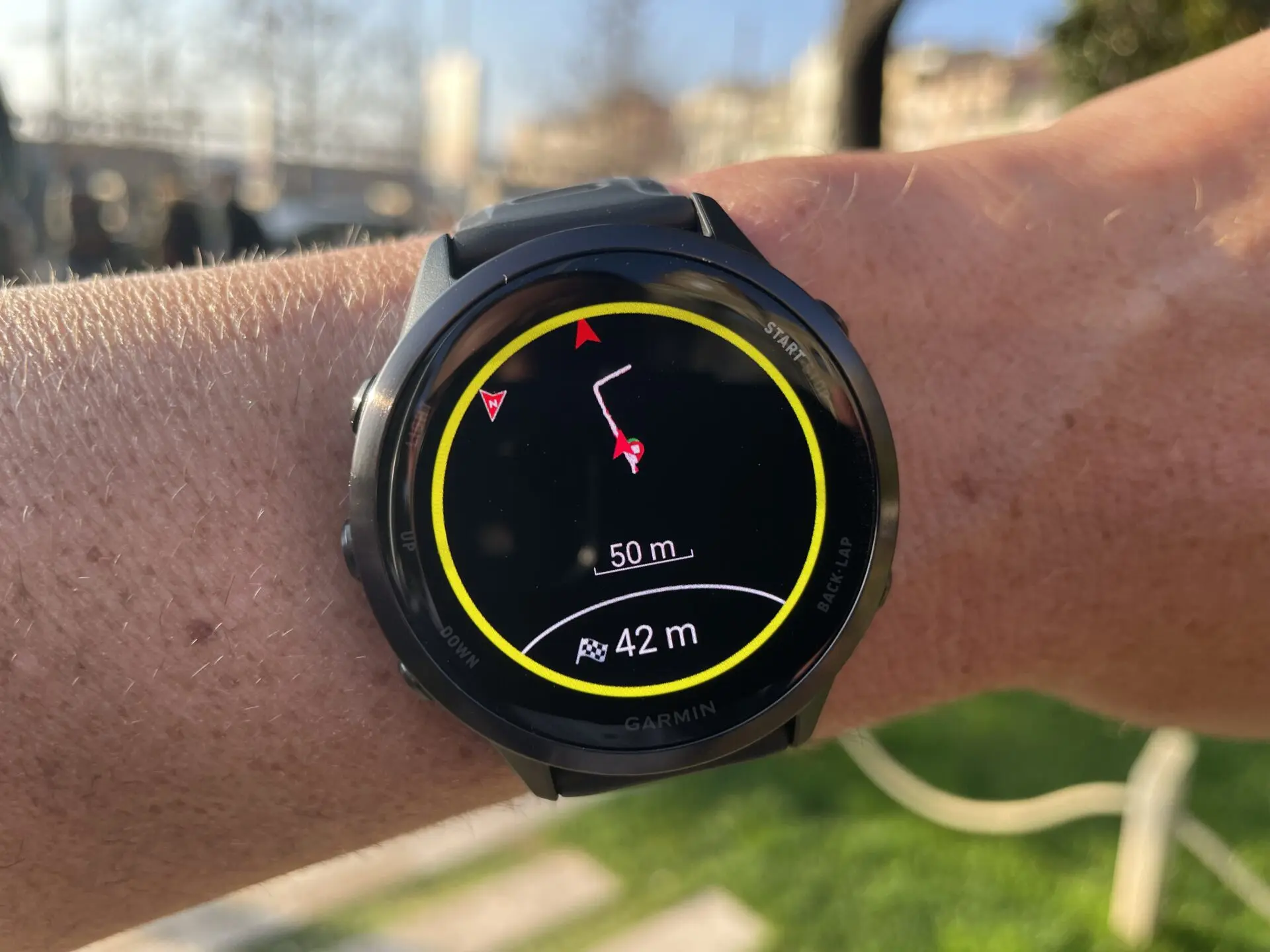
For navigation, the Forerunner 570 allows you to load and follow a route directly from Garmin Connect, with directional alerts and turn-by-turn indications. On the screen, the watch displays the track to follow, the remaining distance, as well as various useful data fields such as remaining elevation gain or estimated time to arrival.
For a bike outing, a running session on an unfamiliar course, or a course reconnaissance workout, these functions are largely sufficient to stay on the right route.
However, the watch does not offer onboard mapping. Navigation relies solely on track following, without a base map or automatic route “recalculation” in case of a wrong turn. A deliberate choice by Garmin, which always reserves these functions for its higher-end models.
In practice, this will suit athletes who follow a pre-planned route. However, those who enjoy exploration or more advanced navigation may regret the absence of integrated mapping.
GPS, precision, and advanced features
The Forerunner 570 relies on multi-band GPS with SatIQ technology, capable of automatically adapting signal precision to optimize battery life.
During effort, route tracking proved precise and stable, both on foot and on the bike. The watch also offers an interesting feature for runners: automatic recognition of athletics tracks. During a track test, it was detected after just a few strides, followed by very precise counting of distances and laps.
The PacePro function is also simple to set up. Simply import a GPX track or use a previous activity to create a pace strategy that takes elevation into account. A particularly useful tool for managing your speeds and aiming for, for example, a negative split.
Battery life: a point to monitor
On paper, Garmin announces up to 11 days of battery life in smartwatch mode. In practice, the observed results are more modest. With classic use – about one activity per day and no navigation – the watch charged on a Saturday evening was completely discharged by Thursday morning, meaning about 4 and a half days of battery life. A second test yielded similar results.
By activating the screen saver function, battery life significantly improves. In this mode, the watch lasted about nine days, with a rapid drop in the last percentages of battery.
Recharge time remains reasonable: about 1h20 to reach 100%.
Finally, the presence of the microphone and speaker allows testing call functions directly from the watch. The experience is quite convincing: the voice is a bit distant, but it is possible to hold a correct conversation without taking out your phone. In certain situations and conditions, however, you need to bring the watch closer to your ear to hear well.
A very complete watch
After several weeks of use, the Garmin Forerunner 570 appears as a very complete watch for training, faithful to what Garmin has been doing for several generations: a solid platform, rich in data, easy to customize, and perfectly integrated into the Garmin Connect ecosystem.
In the field, the watch proved precise, pleasant to use, and particularly versatile. Whether for swimming, running, or following structured workouts, it offers everything needed to support the progression of a runner or triathlete. The readability of the AMOLED screen, the richness of training data, and the numerous customization possibilities are real strengths.
The integration of multisport functions, Garmin Coach plans, and PacePro confirms that the Forerunner 570 is clearly aimed at athletes who want to structure their training, analyze their data, and prepare their goals with a reliable tool.
However, not everything is perfect. The 42 mm case tested here may seem a bit compact on some wrists, and the strap could gain a few millimeters in length to offer more adjustment margin. The very bright screen also comes at the cost of more limited battery life than one might have hoped, even if the power-saving mode partially compensates for this point.
Finally, the absence of onboard mapping probably remains the main limitation of this watch in this price range, whereas competitors offer this feature on comparable models.
Despite this, the Forerunner 570 remains an extremely effective training watch, capable of meeting the vast majority of needs for a triathlete, a demanding runner, and, a fortiori, less experienced or beginner athletes. It stands out as a logical evolution in the Garmin range, with a balanced approach between sports performance, health tracking, and connected features.
A watch that doesn’t necessarily try to do everything, but does the essentials very well: supporting athletes in their progression, session after session, day after day, sleep after sleep.
The GARMIN FORERUNNER 570 in brief… Pros : Screen, readability, GPS precision, richness of data and tracking, training tools, customization AMOLED color screen. Corning Gorilla 3 glass. Aluminum bezel. Multi-band GPS. Garmin Elevate wrist heart rate sensor. Oximeter and barometer. Silicone strap. Battery life up to 10 days. Advanced training tools Garmin Coach. Multi-profiles including triathlon. Health, wellness, and sleep tracking. Case size 42 or 47 mm. Weight: 42 g for 42 mm. Price: 549.99 euros. All features and contact: www.garmin.com |
=> SEE ALSO : All our TEST articles
=> SEE ALSO : All our TRIATHLON articles
Share the post "Garmin Forerunner 570 Review: Resolutely Multisport, Tailored for Triathlon"