Share the post "Big gear or strength training: how to develop max strength?"
Is multiplying very short sprints on a huge gear enough to develop a cyclist’s maximal strength? At a time when training is increasingly specific, the line between neuromuscular work on the bike and structural development in the gym has blurred. Yet, these two approaches, often presented as equivalent, respond to profoundly different physiological logics.
By Guillaume Judas – Photos: depositphotos.com
The fascination with big gears is not new. It refers to the image of the rider capable of wrenching their bike at a low cadence, with force, almost losing balance. With the arrival of power meters and fine analysis of the torque applied to the pedal, this approach has found scientific legitimacy. Very short sprint sessions, sometimes performed almost from a standstill, on an extreme gear, are often presented as specific maximal strength work.
Let’s admit it: the most experienced among us have used this training method for years, thinking it somehow replaced gym strength training. The idea was very appealing. However, it deserves to be examined.
What maximal strength really means
Maximal strength, in the strict physiological sense, corresponds to the neuromuscular system’s ability to produce the greatest possible voluntary force against high resistance.
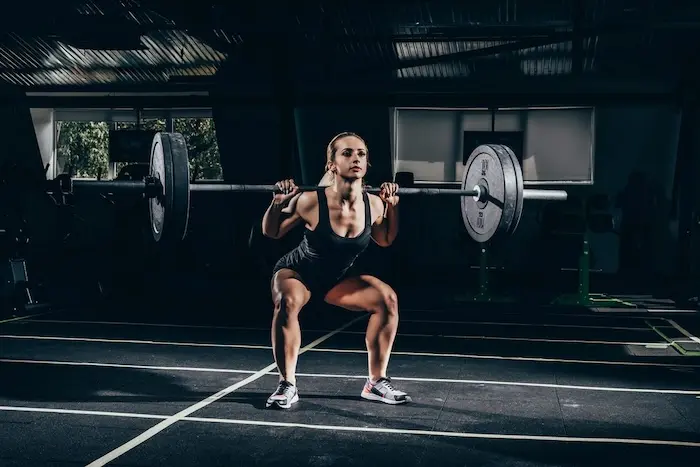
In strength training, this translates to loads greater than 80 or even 90% of maximal capacity for one repetition, on multi-joint movements like the squat or deadlift. The execution speed is relatively slow, not by choice, but because the load imposes it. The main stimulus is neural: increased recruitment of high-threshold motor units, improved synchronization, and elevation of the available strength ceiling.
A performance… and longevity multiplier
This work acts as a multiplier. If maximal strength increases, the percentage required for each pedal stroke mechanically decreases. The cyclist becomes more “economical” for the same power. For master athletes, this aspect is particularly important. The progressive decrease in fast-twitch fibers and muscle mass makes maintaining a high level of absolute strength crucial, both for performance and musculoskeletal health.
Sprints on a very big gear: a different mechanic
At first glance, very short sprints on a very big gear seem to pursue the same objective. The cyclist uses a very large gear, starts at a low cadence, and produces significant torque for six to eight seconds. The sensation is one of maximal constraint. However, the internal mechanics differ. On the bike, the contraction remains cyclic, joint speed never drops to zero, and resistance depends on the torque-speed specific to pedaling. The instantaneous force produced remains lower than that developed against a heavy free weight.

Specific explosiveness work
This type of sprint powerfully stresses the nervous system, but in a logic of force production speed rather than absolute maximal strength. It develops the ability to rapidly recruit fast-twitch fibers, improves the functional rigidity of pedaling, and optimizes torque transmission. This is specific explosiveness work, halfway between strength and power. These qualities are particularly relevant for accelerations, attacks, and preserving neuromuscular capacities with age.
Structural ceiling versus dynamic expression
The difference between the two approaches is therefore less quantitative than qualitative. Heavy strength training raises the structural ceiling, modifying the system’s maximal force production capacity. Sprints with a big gear exploit and refine this potential in a context specific to the cycling motion. One acts on fundamental capacity, the other on its dynamic expression.
The trap of a single approach
Confusing these two approaches can lead to an imbalance. A cyclist who only performs sprints with a very big gear on the bike maintains their nervous system responsiveness and explosiveness, but risks stagnating if their strength ceiling does not increase. Conversely, exclusively developing strength in the gym without specific work can limit the transfer to actual performance.
And like many practitioners, we ourselves were content to maintain strength solely through work on the bike. Over time, we realized that this was not enough and that gym supplementation becomes indispensable for anyone who wants to maintain a good level of performance.
Build strength, then learn to express it
The logical articulation is based on a simple hierarchy. Maximal strength built in the gym creates the foundation. Short sprints on a very big gear translate this foundation into specific capacity for rapid torque production. One without the other loses effectiveness. Together, they constitute a coherent continuum linking muscle structure to power expression.
The physiological rule that doesn’t change
In a world where specificity has become a dogma, it’s tempting to want to do everything on the bike. But physiology reminds us of a constant rule: the nature of the stimulus determines the nature of the adaptation. Under the same desire to work on muscular capacity, two different ambitions can be hidden. One builds strength. The other teaches how to unleash it.
Share the post "Big gear or strength training: how to develop max strength?"