Share the post "Peloton under tension: why are there always more crashes?"
The spectacular series of crashes observed during the Omloop Het Nieuwsblad this Saturday, February 28, the first Belgian semi-classic of the season, is not a mere mishap. For several weeks, even several months, the professional peloton seems to be caught in a dangerous spiral, where speed, tactical tension, and equipment evolution contribute to making races ever more nervous. Deciphering a worrying phenomenon.
By Guillaume Judas – Photos : depositphotos.com
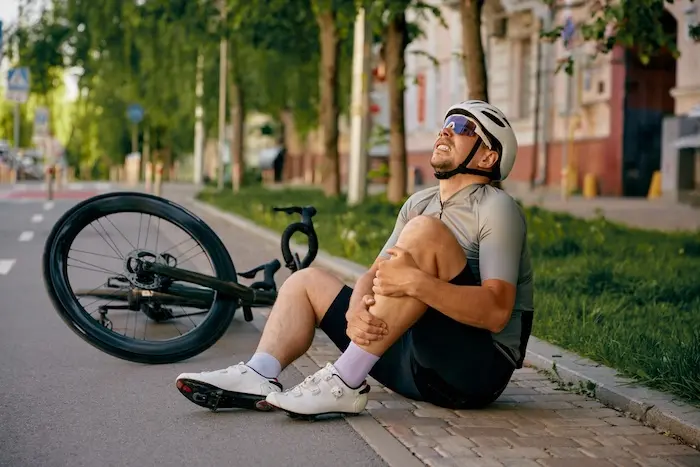
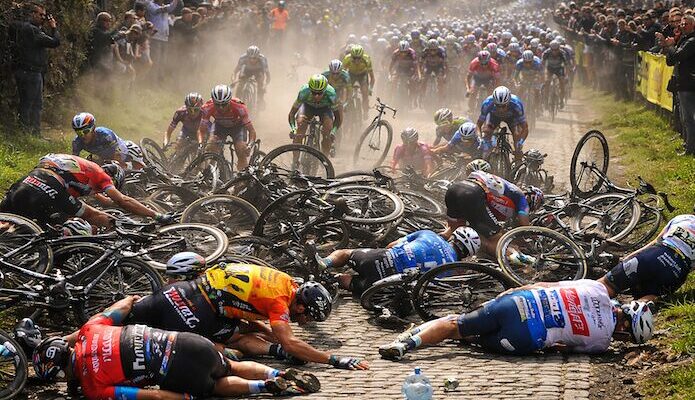
Two days after the Omloop Het Nieuwsblad, the images remain striking: riders on the ground, bikes dislocated, dazed looks on the roadside. The repetition of these scenes since the start of the season raises questions. The crash of Frenchman Damien Touzé, more seriously injured during the Tour of Oman, reminds us that behind the statistical normalization of incidents lie sporting careers, sometimes broken.
The primary explanation for these increasingly numerous and serious crashes lies in the intensification of the sporting stakes. The international calendar has become denser, UCI points more than ever determine access to major events and the economic survival of teams. Every place counts, every breakaway can redraw a hierarchy. In this context, every meter of asphalt becomes a territory to conquer. Riders are under constant tension, especially during the Flemish classics where positioning dictates sporting survival.
A peloton leveled up
Added to this increased pressure is a leveling up of the peloton. Performance gaps have narrowed. Scientific preparation, precise nutrition, power meters, video reconnaissance of courses: riders have never been so uniformly excellent. As a result, differences are made less by pedaling power than by positioning. Entering a cobbled sector or approaching a climb in tenth position rather than thirtieth can decide the final outcome. This permanent battle for the front positions of the peloton creates a dangerous funnel where the slightest deviation in trajectory is paid for dearly.
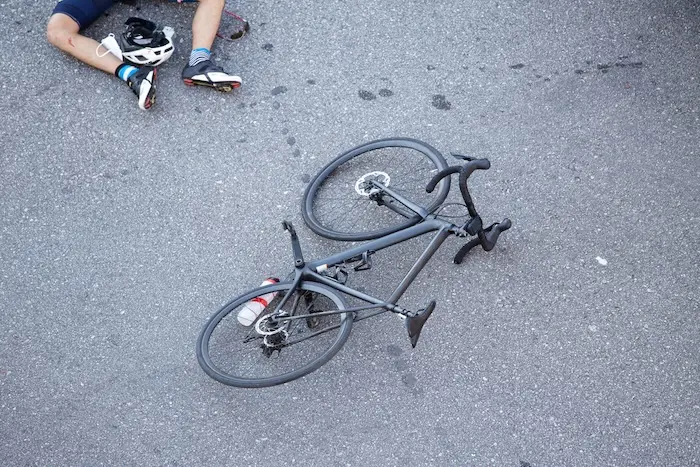
The battle for positioning and team strategies
Collective strategies further amplify this density. Team trains, once the preserve of sprinters, now extend to leaders in classics and stage races. Eight riders protecting a single man, seeking to lock down the front of the peloton, multiply lateral movements and changes of pace. Each acceleration causes a domino effect towards the rear, where riders, less well positioned, suffer jolts without sufficient visibility.
Narrow roads, wind, and treacherous terrain
The terrain, especially in Belgium, doesn’t help. Narrow roads, ubiquitous street furniture, traffic islands, successions of technical turns, and exposure to crosswinds form an explosive cocktail. In the Flemish plains, the echelons caused by gusts fragment the peloton. To avoid getting caught in a fan, riders fight for a few centimeters of asphalt. The road doesn’t widen, but the speed increases.
Speed, a major aggravating factor
Because speed is a central factor. Average hourly speeds have continuously climbed. Improvements in aerodynamics, tires, drivetrains, and physical preparation allow riders to go faster, for longer. However, at high speed, reaction time is drastically reduced. A wheel touching at 60 km/h does not have the same consequences as at 45. The margin of error contracts until it becomes almost non-existent.
Bikes that are ever more performant… and more demanding
Modern equipment, while more performant, also has drawbacks. Ultra-rigid carbon frames transmit power with remarkable efficiency but sometimes offer less tolerance in unstable situations. Aerodynamic bikes, optimized in wind tunnels, can be more sensitive to crosswinds. Their aggressive geometry, combined with integrated cockpits and deep-section rims, demands impeccable technical mastery.
Extreme positions and weakened outfits
The riders’ very position has evolved. Always lower on the machine, elbows tucked in, back horizontal to gain a few watts, they sacrifice some control and field of vision for air penetration. This posture, ideal for pure performance, limits the ability to maneuver quickly in case of an unforeseen obstacle or a cascade crash.
Outfits also contribute to this logic of marginal gains. Skinsuits and jerseys, designed like a second skin to optimize aerodynamics, are thinner, more fitted, sometimes more fragile. In the event of a crash, the protection they offer is minimal. The evolution towards ultra-light textiles raises the question of the balance between performance and safety.
What avenues to reverse the trend?
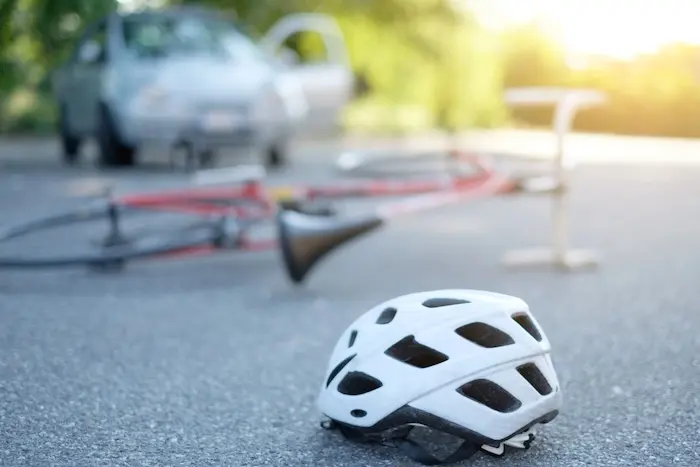
Given this observation, several avenues are emerging. Some teams and equipment manufacturers are working on integrating miniaturized airbags into outfits, capable of deploying in a fraction of a second during a crash. The idea, already explored in motorcycling, could limit the severity of injuries, particularly to the collarbones and hips.
D’autres voix plaident pour une régulation technique plus ferme, comme la limitation des braquets afin de plafonner les vitesses maximales dans certaines configurations, ou un encadrement plus strict des innovations aérodynamiques. The question of a reinforced disciplinary system is also gaining traction: the implementation of yellow or red cards to sanction dangerous behavior, similar to other team sports, could make riders more accountable.
A fundamental dilemma remains. Modern cycling has been built on the pursuit of performance and spectacle. Reducing speed or restricting technology might seem to go against this dynamic. However, the accumulation of crashes and the severity of certain injuries remind us that no progress can be made at the expense of athletes’ physical integrity. The warnings issued at the start of this 2026 season could well mark a turning point. Provided that all stakeholders (organizers, teams, riders, and governing bodies) agree to rethink a model that has reached a critical point of tension.
Share the post "Peloton under tension: why are there always more crashes?"