Share the post "Does the passion for cycling really cost a lot?"
Long perceived as a simple, almost popular pastime, cycling has in a few years become a multifaceted universe: high-level sport, ecological mode of transport, technological object, and sometimes a social marker. But behind the image of escape and freedom, a question often arises: does cycling really cost a lot? Between equipment, maintenance, and the quest for performance, the bill can quickly climb. An investigation into a passion with variable geometry.
By Guillaume Judas – Photos: depositphotos.com / All rights reserved
Cycling maintains a flattering reputation: that of an accessible sport, good for health, and not very restrictive. Compared to other disciplines requiring expensive subscriptions, licenses, or specific infrastructure, cycling seems relatively affordable. An entry-level bike, a helmet, and you can already set off on roads or bike paths.
In its utility or leisure version, the cost indeed remains moderate. A reliable bike for daily commutes or Sunday rides can represent a reasonable investment, often offset by savings made on transport or fuel. Furthermore, the rise of the second-hand market now allows equipping oneself at a lower cost, and public aid for purchasing an electric bike helps to democratize the practice. But this simple vision reflects only part of the reality.
When the Passion Intensifies
The shift often happens insidiously. You start with a few quiet rides, then you extend the distances. You sign up for a sportive, compare your performances, read specialized forums. Very quickly, cycling is no longer just a pastime: it becomes a demanding field.
At this stage, equipment takes center stage. Differences in weight, stiffness, aerodynamics, or drivetrain become serious subjects. Higher-end ranges promise better efficiency, smoother shifting, more precise braking. Moving from a standard model to a more performance-oriented bike can multiply the budget by three, four, or more.
The quest for lightness, in particular, is one of the most powerful drivers of price escalation. Carbon frames, aero wheels, high-end components come at a high cost, sometimes disproportionate to the actual gain for an amateur. Yet, the temptation is strong: in a sport where every gram symbolically counts, investing becomes a way to affirm one’s commitment.
Equipment, the Detail That Weighs Heavily
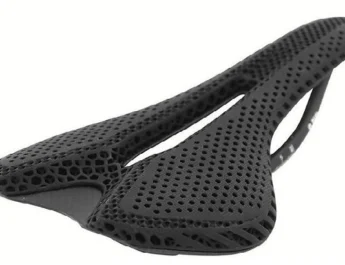
Beyond the bike itself, the bill gets heavier with accessories. A quality helmet, specific shoes, and adapted pedals form a first foundation. Then come technical clothing, designed for comfort and performance: ergonomic bib shorts, breathable jerseys, windproof jackets, gloves, glasses.

The technological dimension adds an extra layer. GPS bike computers, cadence sensors, power meters, and connected watches allow for precise analysis of each ride. For some, these tools have become indispensable, transforming the practice into a true personal laboratory. Added to this are safety and comfort elements: powerful lights, robust anti-theft devices, panniers, mounts, indoor trainer for winter.
Finally, with the pursuit of performance comes nutrition, energy gels and drinks. Some nutrition protocols during effort cost up to 10 € per ride, even more for a race. Taken in isolation, these purchases seem reasonable. Accumulated, they represent a significant budget.
Maintenance, an Underestimated Expense
A bike, especially when used regularly, requires rigorous maintenance. Chain, cassette, brake pads, tires: all wear parts to be replaced periodically. The more intensive the practice, the more recurring costs increase.
Enthusiasts who ride several thousand kilometers per year must budget annually to keep their steed in good condition. Those who are not mechanically inclined entrust their bike to a specialized workshop, which adds labor costs. The more high-end the equipment, the more expensive certain parts can be to replace. Performance has a price, and it requires maintenance.
The Price of the Starting Line
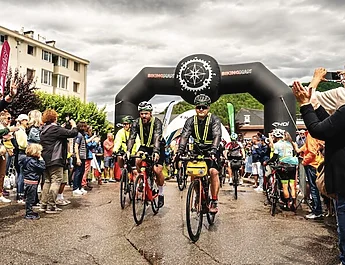
For those who take the plunge into amateur competition or major popular events, a new budgetary dimension appears. Registration fees for certain sportives, MTB marathons, or prestigious events can reach significant amounts, especially when they include logistical services, refreshments, or timed services.
To this are added travel expenses, sometimes over long distances. Transporting the bike by train or plane, fuel, tolls, renting a suitable vehicle: logistics can quickly drive up the bill. Accommodation is another major expense, especially when events take place over several days or in highly sought-after tourist regions. Hotels, gîtes, or seasonal rentals often display high rates during major cycling events.
The most legendary events sometimes require planning over several months, or even years, with cumulative costs that far exceed the simple entry fee. Participating then becomes a real project, combining budget, family organization, and professional availability. For some enthusiasts, this dimension is an integral part of the adventure. For others, it represents a very real barrier.
How much does it cost, concretely?The orders of magnitude vary greatly depending on the level of commitment, but a few benchmarks provide clarity.
|
The Electric Bike: Democratization or Inflation?
The electric assist bike has revolutionized the cycling market. It has opened up the practice to a wider audience, particularly for home-to-work commutes or for less athletic profiles. But it has also contributed to driving prices up. An electric bike represents a significant investment, even if public aid can lighten the bill. Added to this are the costs related to the battery, whose lifespan is limited, and to specific electronic components.

The paradox is this: the bicycle, a symbol of sobriety, can become a sophisticated technological object, whose price sometimes rivals that of a scooter.
A Passion More Expensive Than Other Sports?
Compared to disciplines like running, cycling appears more expensive. A pair of shoes is enough for running, while cycling requires a complete machine. However, compared to motor sports, golf, or skiing, the budget remains relatively measured.
Everything depends on the level of commitment. One can practice cycling for a few hundred euros or opt for budgets of several thousands, or even tens of thousands of euros for the most demanding. The passion for cycling has no fixed ceiling: it adapts to ambitions, available time, and financial means.
The central question is perhaps not that of the raw cost, but of the relationship between investment and satisfaction. Cycling offers a rare freedom: leaving when you want, exploring your environment, pushing yourself physically, sharing group rides. For many, the pleasure felt largely justifies the expenses incurred.
There is also a strong community dimension, made of mutual aid, advice, and conviviality. The passion for cycling is often experienced as a lifestyle, where money invested is not perceived as an expense, but as a commitment to a global experience.
So, does it really cost a lot?
The answer is nuanced. Cycling can be one of the most accessible sports there is. It can also become a demanding, almost elitist passion, if one pursues performance and cutting-edge equipment.
As often, it’s not the discipline that is expensive, but the way one chooses to practice it. Between a simple Sunday ride and the quest for marginal gains, there is a whole spectrum of possibilities. Cycling does not dictate its price: it reflects the ambitions of the person who rides it.
Share the post "Does the passion for cycling really cost a lot?"