
Share the post "10 Beginner Cycling Mistakes to Avoid"
Starting cycling as a sport is an excellent decision for both physical and mental health. However, many beginners make mistakes that slow their progress, cause discomfort or reduce motivation. Here are the most common pitfalls and how to avoid them in order to build a sustainable and effective cycling routine.
By Guillaume Judas – Photos: depositphotos.com/DR

Mistake #1: Ignoring Proper Bike Setup
Before thinking about performance, focus on position. A saddle that is too low unnecessarily overloads the quadriceps and stresses the knees. Too high, and it can cause hamstring strain and lower back pain. Incorrect saddle fore-aft positioning disrupts pedalling balance. Many beginners ride for months in an unsuitable position, assuming discomfort is normal. In reality, a properly adjusted bike improves comfort, power output and injury prevention.
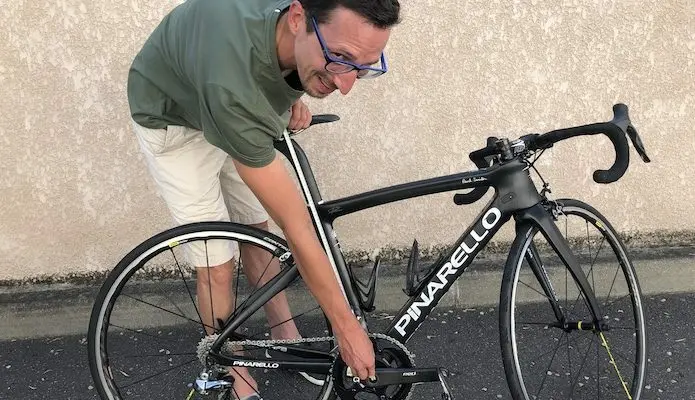
Beyond correct positioning, it is essential to choose not only the right bike size, but also a model suited to your riding style. There is no need to invest immediately in a top-of-the-range model. The differences between mid-range and high-end bikes are often only noticeable to experienced cyclists. A road bike is not suitable for gravel riding, and a gravel bike can quickly become limiting on the road. Seek advice from experienced riders or a professional when choosing equipment, and consider a bike fitting session early on to establish healthy habits.
Related article: Is a gravel bike really the solution for beginners?
Mistake #2: Underestimating Equipment
You do not need a premium bike to start cycling. However, some elements are essential. A good pair of bib shorts significantly improves comfort. A properly fitted helmet is non-negotiable for safety. Gloves reduce hand numbness, and proper lighting increases visibility, especially in urban environments. Inadequate equipment can turn an enjoyable ride into an unpleasant experience.
If you plan to ride year-round, you should also invest in appropriate clothing for different weather conditions. Riding in summer shorts at 5°C is not reasonable and can increase the risk of injury.
Related article: Choosing the right clothing for different conditions
Mistake #3: Starting Too Fast and Too Hard
Beginner enthusiasm often leads to overdoing it. First ride, first challenge, first long distance. The problem is that the body is not yet adapted to endurance effort. The result: excessive fatigue, discouraging soreness and sometimes persistent pain. Cycling is a sport of patience. Progress comes from consistency, not isolated efforts.
Focus first on frequency rather than duration or intensity. Three one-hour rides per week are more beneficial than a single three-hour ride. Choose a pace that feels sustainable and repeatable.
Mistake #4: Always Pushing Big Gears
Many beginners make the mistake of using gears that are too heavy and pedalling at low cadence. It may feel faster, but it overloads joints and tires muscles prematurely. Cycling is primarily about cadence and fluidity. Learning to spin smoothly, adapting gears to terrain and maintaining a comfortable rhythm protects your knees and improves endurance.
Related article: Why and how to improve cadence
Mistake #5: Repeating the Same Route
Sticking to the same flat and familiar route may feel reassuring, but it quickly limits progress. Varying terrain, adding elevation or adjusting intensity stimulates the cardiovascular and muscular systems differently. This diversity also maintains motivation. Over time, you will feel capable of going farther and climbing more easily.

Mistake #6: Neglecting Hydration and Nutrition
Even during a one-hour ride, your body loses fluids and expends energy. Many beginners ride without water or fuel, assuming the session is too short to require it. However, mild dehydration alone can reduce performance and increase fatigue. Drinking regularly and bringing a small energy source for longer rides helps maintain steady effort.
Related article: How to stay properly hydrated
Mistake #7: Comparing Yourself to Others
With tracking applications like Strava, it is tempting to compare average speeds and segments. For beginners, these comparisons can be discouraging. Every progression is personal. We all start with different backgrounds, ages and environments. What matters is gradual improvement and consistency.
Related article: Chasing KOMs or making real progress?
Mistake #8: Ignoring Recovery
Riding every day does not mean progressing faster. The body needs time to adapt. Muscles rebuild, cardiovascular capacity improves and coordination stabilises during rest phases. Ignoring recovery increases the risk of injury and frustrating stagnation.
Related article: Recover to improve
Mistake #9: Optimising Too Early
Power meters, ultra-structured training plans, detailed nutrition strategies… The cycling world is full of sophisticated tools. However, at the beginning, priorities are different: build endurance, develop technique and establish consistency. Trying to optimise everything from the first weeks can unnecessarily complicate your practice and reduce enjoyment.
Related article: Riding by feel – good or bad idea?
Mistake #10: Forgetting Safety Rules
Safety must never be secondary. In dense urban environments, vigilance is essential. Anticipation, visibility and respect for traffic rules are crucial. Riding with headphones or without proper lighting significantly increases risk. Safety is part of the sport. In rural areas, risks also exist: always ride on the right side and never more than two abreast in a group.

Becoming a Cyclist for the Long Term
Starting cycling requires patience and consistency. By avoiding these common mistakes, you can progress safely, reduce injuries and preserve enjoyment. In the long run, consistency matters more than intensity.
With steady commitment and reasonable caution, you may be surprised at how quickly you improve within your first year. Then it may be time to consider a more structured training plan if you wish.
Share the post "10 Beginner Cycling Mistakes to Avoid"