Share the post "“Generic” frames or counterfeits: stop fooling yourselves"
By playing with words, the bike market has ended up normalizing the unacceptable. On classified ad sites, “generic SL8 frames” and other “Dogma open-mold” frames are proliferating, as if they were intelligent and economically virtuous alternatives to branded models. In reality, these frames are anything but generic. They are pure and simple counterfeits, illegal, potentially dangerous, and sold with a casualness that has become almost normal.
By Guillaume Judas – Photos : depositphotos.com/Leboncoin, Facebook screenshots/DR
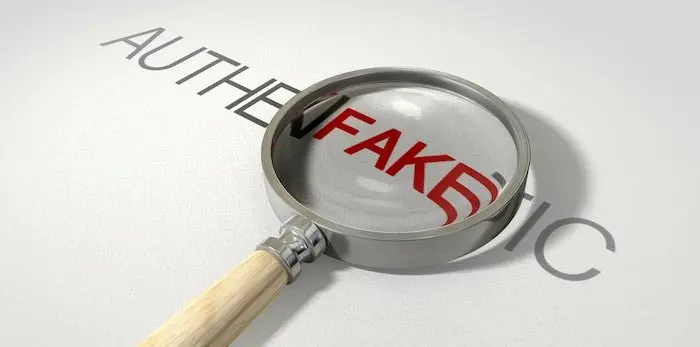
When vocabulary serves as a smokescreen
The term “generic” is today the preferred tool of a parallel market that refuses to acknowledge its true nature. In the minds of many buyers, a generic frame would be a product without a logo, manufactured in the same factories as major brands, and sold at a lower cost because it saves on marketing. This view may correspond to a marginal reality, but it is primarily used to disguise what clearly constitutes counterfeiting.
A generic frame, in the strict sense, comes from an open mold, sold without claiming to belong to a specific model, without copied graphics, and without intent to deceive. It is a serious model, which has also undergone structural stress tests. This type of frame is sold to individuals as well as to known or unknown brands, which then affix their name to the frame, but without intending to deceive the customer. Conversely, a frame that reproduces the exact shapes of a Tarmac SL8 or a Pinarello Dogma, imitating their lines, proportions, and sometimes even their markings, is not generic. It is a copy. And a copy, whether we like it or not, is a counterfeit as soon as it maintains deliberate confusion.
This semantic shift is not insignificant. It allows an illegal product to appear respectable, and transfers moral responsibility to the buyer, who is urged to tell the difference. However, the difference would still need to be honestly presented.

What a branded frame really hides
The difference between an official frame and an imitation is not limited to a logo affixed under the clear coat. A frame developed by a recognized brand is the result of years of design, stress calculations, fatigue tests, destructive tests, and normative validations. It benefits from continuous quality control, traceability, and a manufacturer’s warranty. It engages the responsibility of an identified company.
A counterfeit, on the other hand, has only one goal: to resemble. It copies the external appearance but ignores all the invisible work that guarantees a frame’s reliability. Independent analyses have shown that some copied frames exhibited inconsistent fiber layups, missing reinforcements, or inferior composite materials, sometimes mixed with fiberglass to reduce costs. To the naked eye, the deception can be convincing. Mechanically, it can be disastrous.
A safety problem before it’s an image problem
Reducing the issue of counterfeiting to a mere defense of brand interests is an intellectual shortcut. The primary impact of these practices is not financial; it is physical. A frame is the central structural element of a bicycle. It absorbs pedaling, braking, torsion, and impact stresses. When it fails, it’s not an aesthetic defect; it’s a fall, sometimes at high speed.
Knowingly buying a copy is not getting a good deal. It is accepting a mechanical risk that one does not control, without warranty, without recourse, and without clearly identifiable responsibility in case of a problem. The price argument ceases to be relevant when safety is at stake.
What French and European law actually saysIn both French and European law, counterfeiting is not a gray area. The Intellectual Property Code prohibits the reproduction, imitation, or commercialization of a product that incorporates the protected characteristics of a model without authorization. This applies to both trademarks and industrial designs, which precisely protect the shapes and design of bicycle frames. The sale of a frame copying the appearance of an identified model, even without an explicit logo or with partial markings, can be qualified as counterfeiting if there is a risk of confusion for the buyer. In France, this offense is punishable by penalties of up to three years imprisonment and a €300,000 fine, amounts that may be increased in cases of organized or repeated sales. At the European level, regulations concerning the enforcement of intellectual property rights allow customs to seize and destroy counterfeit products, including when they are sold between individuals via classified ad platforms. Private individual status does not constitute automatic protection. Reselling a counterfeit frame can lead to civil and, in some cases, criminal penalties. Calling a frame “generic SL8” or “Dogma open-mold” has no legal value. It is the facts, not the vocabulary used in the ad, that determine the offense. => To learn more if you are a victim of a malicious seller, professional or private |
The persistent myth of “the same factory”
One of the most frequently advanced arguments to justify buying copied frames is the claim that they come from the same factories as the originals. This assertion is, in most cases, false or deliberately misleading. A factory can produce for several clients, but that does not mean that all products follow the same specifications, the same quality controls, or the same validations.
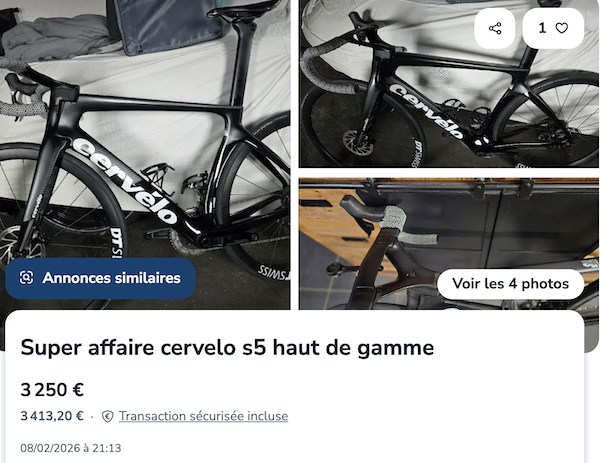
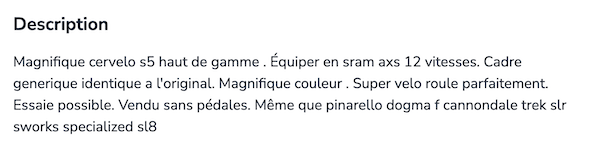
An unmarked OEM frame, sold without reference to a specific model, can exist legally. A frame that copies a protected design, even if produced in a similar industrial zone, remains a counterfeit. The terms “OEM”, “AAA”, or “1:1” widely used on forums and in ads have no technical or legal recognition. They essentially serve to reassure the buyer while circumventing reality.
How to avoid being trapped by a classified adThe first precaution is to analyze the seller’s discourse. A frame presented as “generic,” “replica,” “SL8 type,” or “Dogma inspired” is already a warning sign. When a specific model is mentioned while denying any counterfeiting, the contradiction is revealing. A savvy buyer will demand a clear and verifiable serial number from the brand concerned. The absence of a number, a partially erased number, or a refusal to provide it should lead to immediately abandoning the purchase. Major brands today have services capable of confirming a frame’s authenticity. Manufacturing details are also crucial. Joints, dropouts, cable routing, and the quality of internal finishes often betray copies. Finally, an abnormally low price, coupled with the absence of an invoice, warranty, or clear history, is not an opportunity but an indicator of risk. When in doubt, abstaining remains the only reasonable decision. |
Stop lying to ourselves
The success of counterfeit frames relies on a widely shared hypocrisy. Sellers know what they are selling but prefer to play on ambiguity. Buyers often know what they are buying but prefer to believe a more comfortable story. Everyone pretends, until the day a frame breaks, an ad is reported, or a customs seizure reminds us that reality always catches up with fiction.
It’s time to call things by their name. A generic frame is not a counterfeit. But a counterfeit is never generic. Continuing to maintain this confusion is to normalize an illegal, dangerous, and deeply disrespectful practice of the engineering work that advances modern cycling.
Share the post "“Generic” frames or counterfeits: stop fooling yourselves"