Share the post "First Ride Review: New Giro Eclipse Pro Helmet"
With the Eclipse Pro, Giro turns the page on the Eclipse Spherical and unveils its new high-end aerodynamic road helmet. Designed for top-level competition, as well as for all practices where one seeks to save watts, this new model aims to offer the best possible balance between aerodynamics, ventilation, and comfort. All while retaining the revolutionary Mips Spherical safety system. Just as the Giro Eclipse Pro is barely hitting stores, we’ve already had the chance to conduct a first test of it at the end of this winter.
By Guillaume Judas – Photos: ©Giro/David Powell
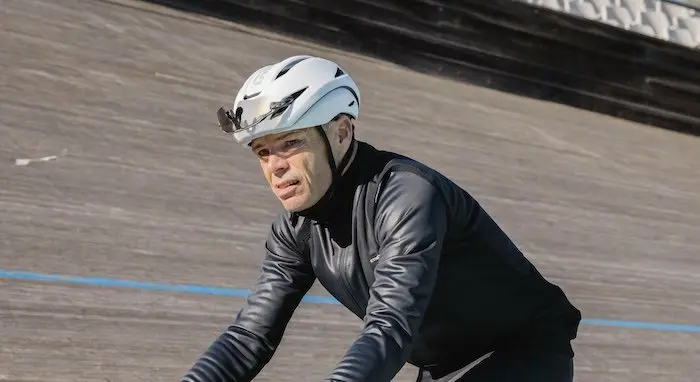
According to Giro, the Eclipse Pro would be 17% faster than its predecessor, the Eclipse Spherical, making it the most effective road helmet against the clock ever produced by the brand. A strong promise, which is not solely based on the reduction of aerodynamic drag, but on a global approach to the performance one can expect from a helmet.
A new aerodynamic benchmark?
The Eclipse Pro becomes the new flagship helmet of the Giro road range. Its development was carried out entirely within the brand’s R&D center, combining advanced CFD analyses, iterative modeling using miniature models, and numerous wind tunnel tests.
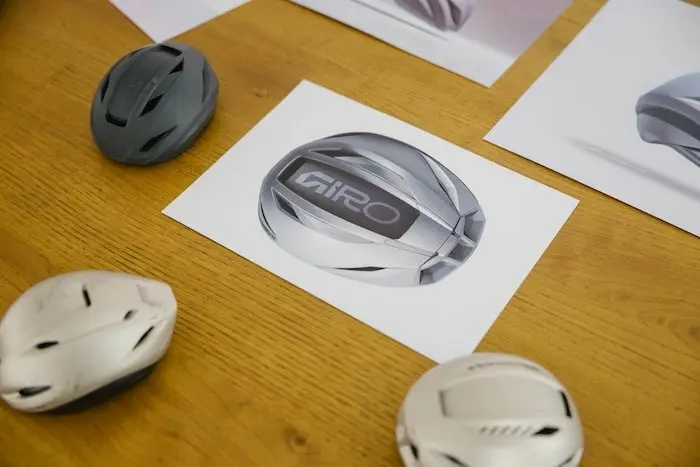
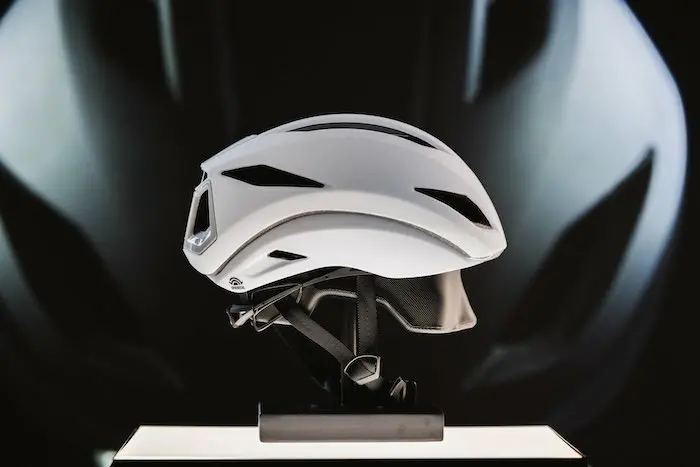
The final silhouette is more refined than that of the Eclipse Spherical. The goal is to optimize airflow in critical transition zones, while ensuring excellent stability in real-world conditions, especially in crosswinds. Giro thus claims to have achieved a more efficient shape, without a noticeable increase in volume or weight. This new profile would also improve high-speed stability, a key point for fast group rides and races exposed to changing winds or decisive changes in direction in terms of strategy.
17% Faster: A True Evolution
Giro remains discreet about the precise figures for watts saved, but insists that it’s not just a marginal gain. The Eclipse Pro would represent a clear advance in aerodynamic efficiency compared to the Eclipse Spherical. Nevertheless, and still according to Giro, this improvement would not come at the expense of versatility.
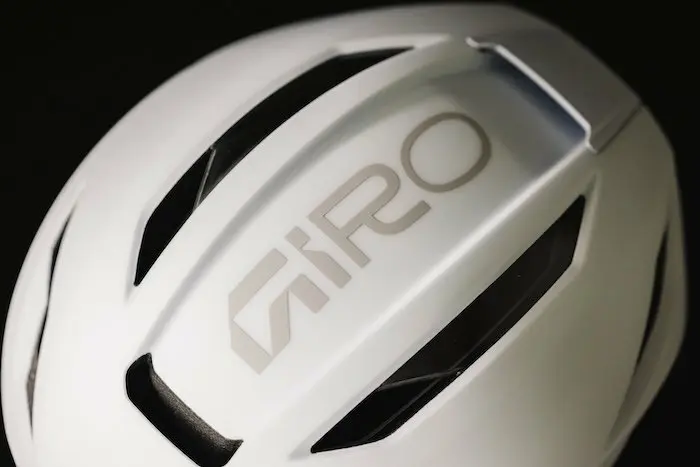
Thanks to a more ventilated design, the Eclipse Pro is intended for high-level road races as well as gravel, or even fast cross-country MTB. This is undoubtedly also one of the Eclipse Pro’s strengths. The helmet features 15 vents and a completely redesigned internal airflow system. Deep frontal air intakes direct air towards the forehead and eyebrows, then channel it through structured internal ducts that distribute the flow over the entire scalp.

The goal is to maintain effective ventilation during climbs and prolonged efforts, without compromising aerodynamic gains. On paper, the balance seems very promising.
At the Forefront of Safety
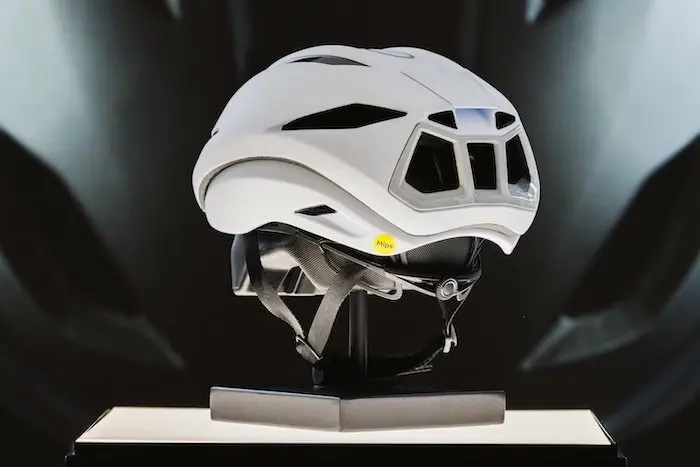
But the Giro Eclipse Pro also means retaining the internal Mips Spherical protection system. This evolution of the renowned Mips system, already present on other Giro and Bell helmets, is based on an internal structure with two movable layers, designed to allow slight movement between the helmet and the head during oblique impacts. This technology aims to reduce rotational forces transmitted to the brain, thereby decreasing the risk of concussion, while remaining discreet, comfortable, and perfectly ventilated.
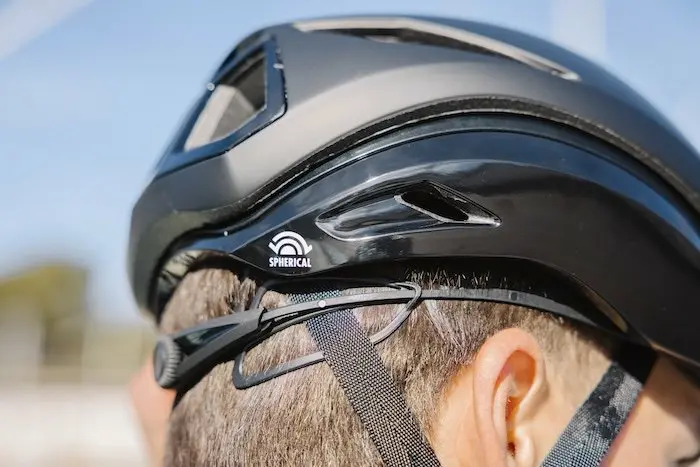
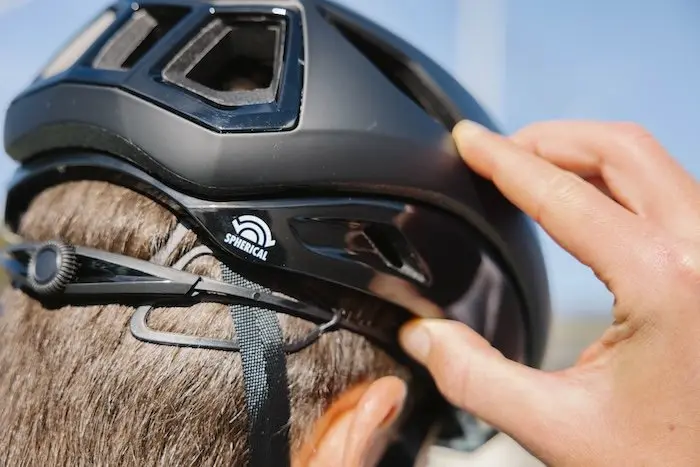
One can thus observe that the lower part of the helmet is slightly detached from the upper part, allowing a movement of 10 to 15 mm in all directions. Obviously, all of this is completely imperceptible once the helmet is worn. And above all, there is no significant weight gain, since the Eclipse Pro weighs 289 g in size M, which remains reasonable for an aerodynamic helmet. Adjustment is handled by the Roc Loc 5.5 Air system, known for its precision, lightness, and compact profile.
Curiously, with this Giro Eclipse Pro, I had to opt for a size M, whereas for all other helmets I’ve tested so far, I consistently rode in S. It had certainly been several years since I had worn a Giro helmet, but I had always ridden in S with this brand. Here, I’m really at the limit in S, even with very short hair. The M thus proves to be significantly more comfortable, especially when wearing a skullcap or a cap underneath, as I systematically do in the middle of winter.
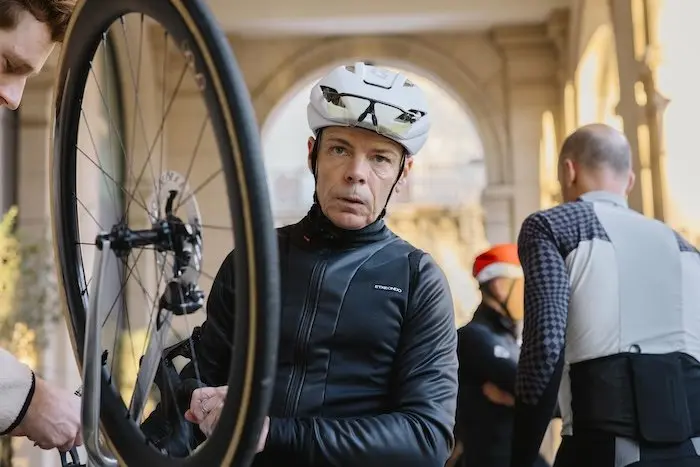
A question of shape, perhaps, because I also notice that the side parts extend a little lower near the ears than on some competing models. I didn’t encounter any particular problem with Oakley Radar EV glasses, but the space allocated for the arms just above the ears remains quite limited nonetheless.
Already Victorious at the Highest Level
If the Eclipse Pro seems familiar to you, it’s no coincidence. Before its official presentation, it was already worn by many athletes, often disguised under team-specific decorations. The helmet’s track record is already impressive and covers a wide range of disciplines starting from summer 2025, including Pauline Ferrand-Prévot at the Tour de France Femmes avec Zwift, Wout van Aert on the last stage of the Tour de France passing through Montmartre, Jonas Vingegaard at the Vuelta, and Kate Courtney, UCI Cross-Country MTB World Champion.
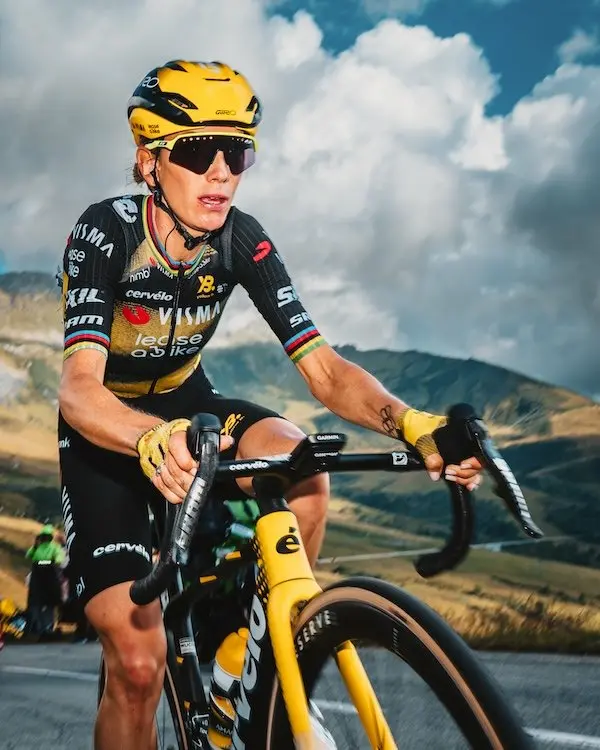
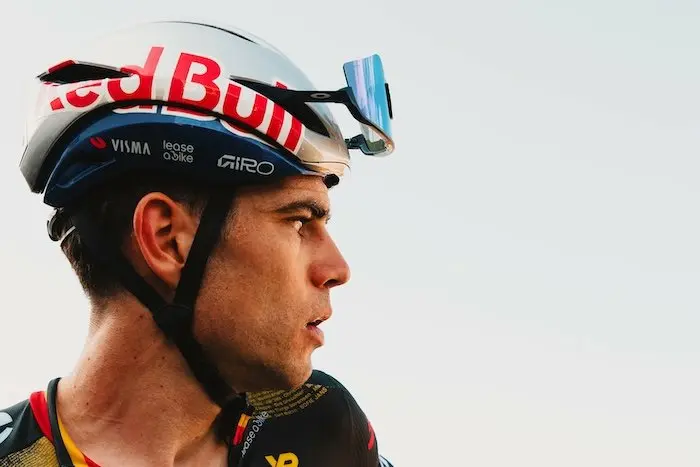
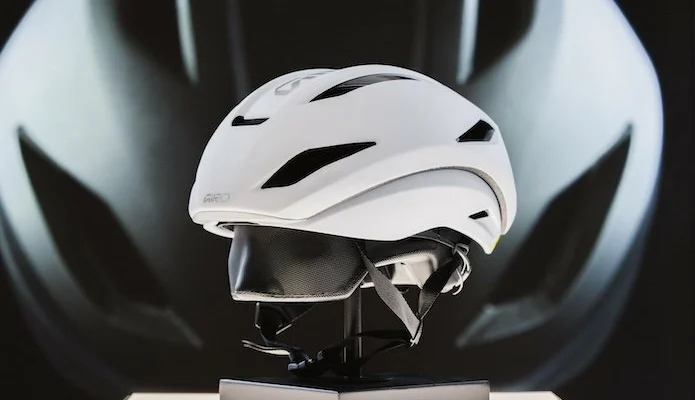
Compared to the Eclipse Spherical, the central part of the helmet is flatter, with a slightly concave section. It integrates vents at the ends, only one of which actually serves as an air intake. The large side vents located on the helmet’s ‘shoulders’ are partially covered by the shell, with a small opening at the front.
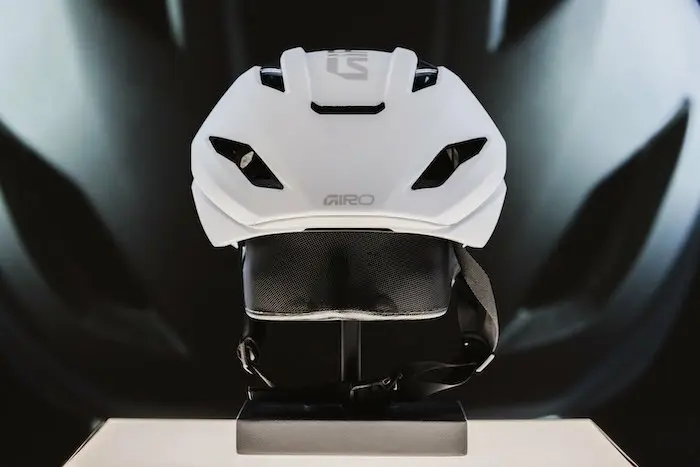
At the front of the helmet, the direct frontal vents have disappeared, while the side openings near the temples are retained, though slightly reduced. At the rear, the change is more pronounced: the shape is more angular and the three large rear openings look more like air extractors than simple cutouts. Small additional vents frame the Spherical system.

However, in terms of aesthetics, opinions are widely divided. There are those who love its futuristic look, and others who regret its massive appearance on the sides, even if the rear part seems to be unanimously approved. The choice of color also plays an important role: a solid white tends to visually ‘enlarge’ the helmet, whereas a Team color (or even better, Wout van Aert’s Red Bull) looks much better. In short, I can’t say I’m a total fan of this helmet, but I imagine it’s also a matter of getting used to it.
On the Road with the Giro Eclipse Pro
Putting on the Eclipse Pro for the first time, I was first surprised by the internal hoop that allows the helmet’s tightness to be adjusted. It encircles the head like a headband and seems to offer a good range of adjustment. As I wrote above, I usually only wear helmets in size S, but on this model, it’s too tight. I’ve therefore always been used to very rarely using this type of tightening, as S-sized helmets generally sit naturally on my head. Nevertheless, once the surprise passed, I must admit that I was never bothered by this adjustment again.
Since the helmet is, consequently, a bit large for my small face, wearing glasses is also not the most practical, because the front part comes down quite low on my forehead, as does the part that goes behind the ears. But I noticed, by looking at some of my riding companions equipped with the same helmet, that they didn’t all have the same problem. I think these minor practical and aesthetic complaints mainly stem from this sizing issue. And I also don’t know if the helmet’s volume has anything to do with it, but throughout the test, I felt a slightly different wind noise in my ears compared to the helmet I’m currently riding with. But that’s a totally subjective observation.
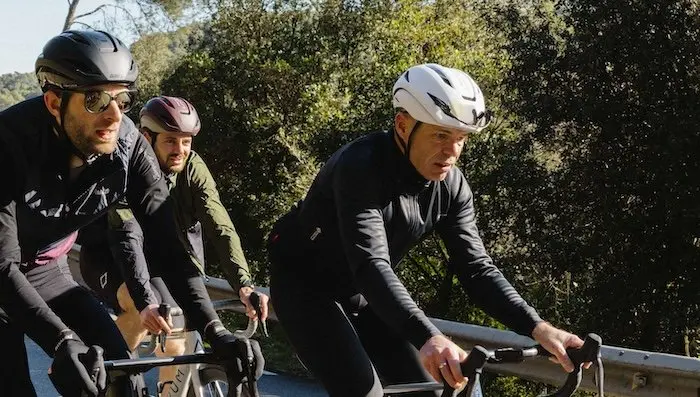
To conclude with the criticisms, I’ll add that the openings provided for inserting glasses arms when one wishes to place them on top of the helmet are well-positioned, but they do not hold the arms sufficiently, which can sometimes be prone to slipping.
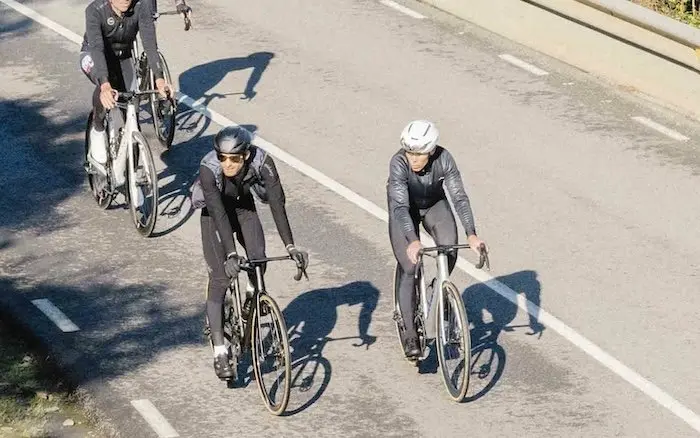
For the rest, the fit is comfortable, the straps and supports under the ears do not generate any particular pressure points. And most importantly, they are easy to adjust. I rode a total of three times with this helmet before publishing this article: a first ride under the Barcelona sun with other journalists, then two other rides of more than four hours in the Paris region, in windier and cooler conditions, and even in the rain. I experienced no discomfort accumulating hours on the road, whether bare-headed under the helmet in Catalonia or with a skullcap in Northern France.
Obviously, it is impossible, on the road, to judge the aerodynamic advantage provided by the Giro Eclipse Pro. I can only affirm that its weight is imperceptible while riding and that its comfort is such that I almost forget it once it’s on my head, if it didn’t slightly descend into my field of vision with that slightly low frontal part.
Regarding ventilation, finally, I haven’t been able to fully judge it in the conditions where I’ve tested the helmet so far. I could only observe that it performs less well on this point than the MET Trenta 3K Carbon, which, for its part, seems to literally draw cool air onto the head, to the point of sometimes being cold in winter. This is not the case in similar conditions with the Eclipse Pro, but it still seems to do the job correctly. And above all, the more ‘streamlined’ internal part, thanks to the absence of a classic Mips cage like on most of its competitors, can only promote optimal air circulation over the head.
An Excellent Compromise
On paper as well as during this first field test, the Giro Eclipse Pro is announced as a serious and accomplished evolution. Faster, better ventilated, and just as refined in terms of safety as its predecessor, it seems to hit the mark in its quest for the ideal compromise between aerodynamic performance and real comfort. As for its official retail price of 329 €, it is in the average range of the competition, even if one cannot help but highlight here the high level of finish and the integration of the Mips Spherical system, above what is done elsewhere. Finally, there remains the question of aesthetics, which is personal to everyone, and which will also largely depend on the chosen color.
The GIRO ECLIPSE PRO in brief…Pros: Mips Spherical system, comfortable tightening, aerodynamics, ventilation, comfort, finish Shell: In-Mold, Spherical technology with Mips, Aura II Arch, NanoBead EPS – Vents: 15 – Occipital retention: Roc Loc 5.5 Air – Pads: DryCore anti-sweat brow pad, Ionic+ antimicrobial – Certifications: CE EN 1078, CPSC 1203, AS/NZS 2063 – Colors: Matte Black, Matte White, Matte Flame Red ,Matte Dark Maroon, Matte Sky Blue, Matte Dark Sage, Matte Stone, Matte Black / Frequency Orange – Sizes: S, M, L – Weight: 289 g in size M – Price: 329 € – Contact: giro.com |
Share the post "First Ride Review: New Giro Eclipse Pro Helmet"