Share the post "After 50, cycling will weaken you if that’s all you do"
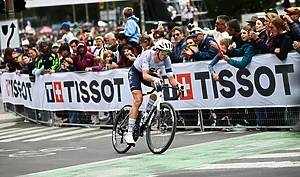
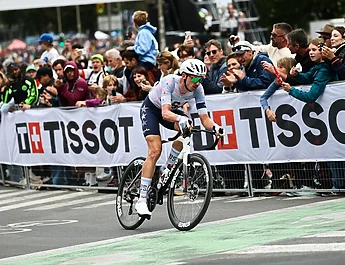
You ride a lot. You ride well. You still have watts, visible veins on your thighs, and that reassuring feeling of being “in shape”. However, past 45 or 50 years old, if you only cycle, your body follows an invisible trajectory that very few cyclists know: you slowly but surely lose what makes you strong. It was by discovering and then dissecting a video from the Japan D+ channel on YouTube, which addressed this topic in a raw but surprisingly accurate way, that the idea for this article came to us. Because it shed light on a blind spot in master cycling that is almost never talked about.
By Jeff Tatard – Photos: All rights reserved
The Unexpected Realization
Sometimes there are strange realizations. Not a scientific study, not a book, not a discussion between coaches. A video. A somewhat confusing, sometimes approximate video, but with a central idea accurate enough to make one think. It posed a simple question: what happens to a cyclist’s structure with age when they only cycle?
You have muscle definition, good endurance, an honorable FTP… and yet, physiologically, your muscles disappear.
| This video from the Japan D+ channel that we took the time to dissect is viewable here: Cycling Destroys Your MUSCLES: The Invisible Danger After 50 |
The Sport That Builds the Heart, But Not the Structure
Cycling magnificently develops the cardiovascular system, maintains endurance, and spares the joints. But it’s a supported sport, without impact, without heavy mechanical stress. With age, this becomes a silent problem: sarcopenia, the natural loss of muscle mass linked to aging.
And this loss doesn’t affect just any fibers.
What Science Shows (and What No One Says in Race Parking Lots)
Sarcopenia primarily attacks fast-twitch fibers, type II fibers, those that produce strength, stabilize the body, and protect its structure. The body is an economy machine: what you don’t use, it eliminates.
On the bike, you heavily engage your heart and lungs, but very little real mechanical strength. Producing 700 watts in a sprint has biologically nothing to do with lifting heavy. The signal sent to the body is not the same.

The Master Cyclist’s Misunderstanding
You think that because you climb, sprint, and do FTP sessions, you maintain your musculature. In reality, you maintain your engine, not your chassis. And the more you only cycle as you age, the more you accelerate the disappearance of the fibers that make you strong.
This is exactly what Aurélien Broussal explained to us during a previous discussion with 3bikes: cyclists overestimate the importance of mileage volume. And even worse, as they age, when their performance declines, they increase volume to compensate, which only accelerates the loss of performance. At this age, the body no longer needs volume, but strengthening.
Two Opposing Messages Sent to the Body
Cycling says: be economical, last long, lighten up.
Strength training says: stay powerful, stay dense, stay structured.
With age, the second message becomes essential.
The Blind Spot No One Ever Talks About: Bones
Studies show that master cyclists often have lower than average bone density. Cycling protects the joints, but does not sufficiently stimulate the skeleton. We build an engine in a chassis that, in turn, weakens.
The Fear of Weight… and the Error in Reasoning
Many fear weight gain associated with strength training. However, the benefit is not the size of the muscle, but its efficiency. Cyclists who incorporate heavy strength training improve their pedaling economy by 5 to 8%. A strong muscle transfers power better and consumes less parasitic energy. You don’t strengthen yourself to sprint harder, but to arrive fresher at the foot of the last climb.
3bikes Editorial Advice
|

What Needs to Be Worked Is Not the Muscle, But the Nervous System
Forget the long sets seen in the gym. The goal is not hypertrophy, but maximal fiber recruitment. Heavy loads, few repetitions, long recoveries: it’s neurological signal work.
The Three Movements That Change Everything
Squats for pure pushing power, deadlifts for the posterior chain and back protection, lunges to correct imbalances that your power meter might already be showing.
Cycling Forges Endurance. Strength Forges Longevity
What this video awkwardly but accurately expressed is that cycling makes you enduring, but strength training makes you unbreakable. From a certain age, the question is no longer just performance, but the ability to last.
Riding long is good. Riding long while staying strong is better.
https://www.tiktok.com/@3bikes.fr/video/7599981714592566550
=> And if you want to know more about the school of excellence in sports coaching, visit Aurélien Broussal-Derval’s website
Share the post "After 50, cycling will weaken you if that’s all you do"