Share the post "Polygon Helios A8 Di2 Review: A Wonderful Surprise!"
To be honest, we’ve only recently become familiar with the Polygon brand, even though it’s already well-established in the Australian, American, and South American markets… With its Helios A model featuring Ultegra Di2, we’re discovering a racing beast that offers unbeatable value for the money.
By Bruno Cavelier* – Photos: Michèle Calvi * Article published in Cyclo Coach Magazine No. 95 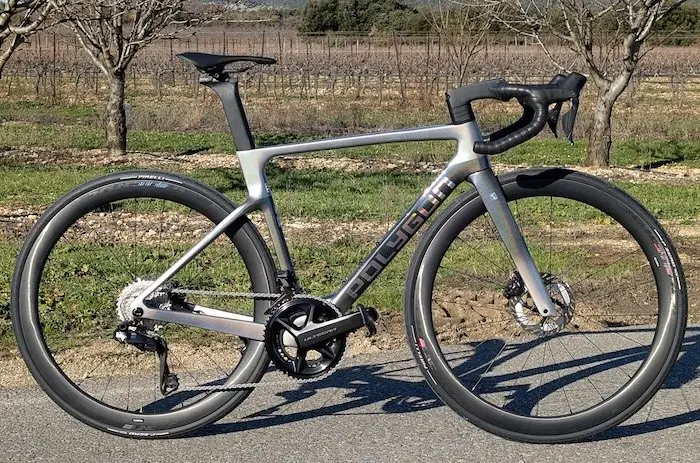
Polygon Bikes has been designing, building, and assembling bicycles for over 25 years. This Indonesian brand collaborates with amateur and professional cyclists to develop its bikes, and since 2022 it has been the sponsor of the Malaysian team Terengganu Polygon, one of Asia’s top Pro Teams. The riders on this team ride the Helios A model, which remains a benchmark for us whenever a frame model is used at the very highest level.
Another mark of quality for this Asian brand is that it is a direct offshoot of the PT Insera Sena industrial group, which already manufactures frames for a highly renowned brand that has been a fixture on the World Tour for ages. For the sake of discretion, we prefer not to disclose the name of this brand, given the significant price discrepancy between its catalog and that of its subcontractor for two models with identical specifications…
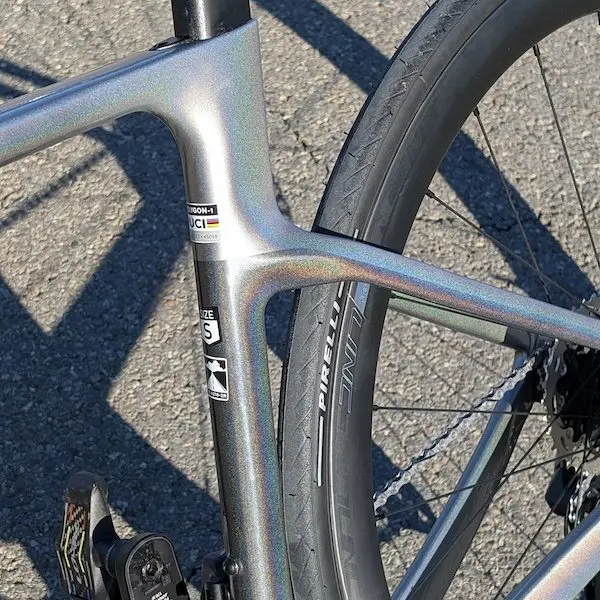
In any case, upon examining our Polygon bike, we can’t help but notice that its finish and appearance are on par with those of the leading brands. It remains to be seen how this Ultegra Di2 version—priced at €4,799 and known as the Helios A8—performs in real-world use. Yes, you read that right! It’s worth noting that this bike is equipped with stunning tubeless-compatible wheels featuring 45-mm-high carbon rims, which, in theory, don’t need to be replaced even for intensive competitive use.
 Polygon offers its Helios A models in several versions: the A0 with SRAM AXS and a power meter for €7,299, the A9 with Shimano Dura-Ace for €6,399 or €7,299 with a power meter, and the A7 with 105 Di2 for €3,999. The bike comes with all the essential accessories: a computer mount and various mounts compatible with all brands, saddle-clamp hooks for fitting standard or carbon saddle rails, and, of course, the Di2 charger.
A High-End Frame
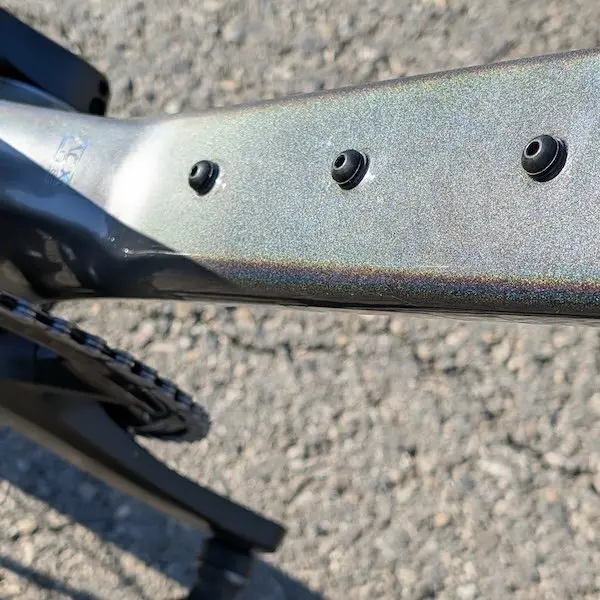
The frame of this new model has evolved to offer greater versatility, while remaining resolutely aerodynamic with a design that reduces the air drag it creates by 24%. The weight has also been reduced to 800 g. In terms of stiffness, the designers relied on a simple yet uncompromising approach: reinforcing the bottom bracket shell and the right rear chainstay to instantly transfer pedaling power to the rear wheel. Visually, the bottom bracket shell’s imposing volume confirms this design philosophy. The down tube is also impressively large, with a very distinctive shape: you’ll either love it or hate it, but it gives this frame a real personality. 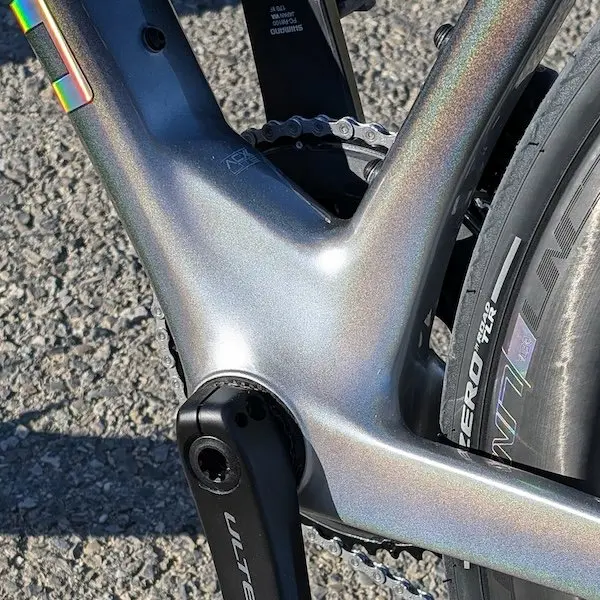 It’s a sleek, race-oriented frame, notably featuring a short head tube, and one that also prioritizes adjustability. The wheel clearance is generous, accommodating tire widths up to 34 mm depending on your intended use; if you’re competing in the Paris-Roubaix sportive, it’s definitely doable! The aero seatpost is equipped with an easily adjustable clamp, even when the saddle is already in place: two screws allow you to slide it back and forth without having to touch it if your saddle has cutouts. This lets you fine-tune your position down to the millimeter. An included accessory lets you swap the aero post for a standard 27.2 mm round seatpost. You’ll also spot three bottle-cage mounts on the imposing down tube. This lets you mount one in a lowered position to improve aerodynamics and lower the centre of gravity, which helps with cornering. However, in this case, it’s impossible to mount a second bottle cage on the seat tube. An access panel under the bottom bracket lets you reach the Di2 battery, which is no longer housed inside the seatpost.
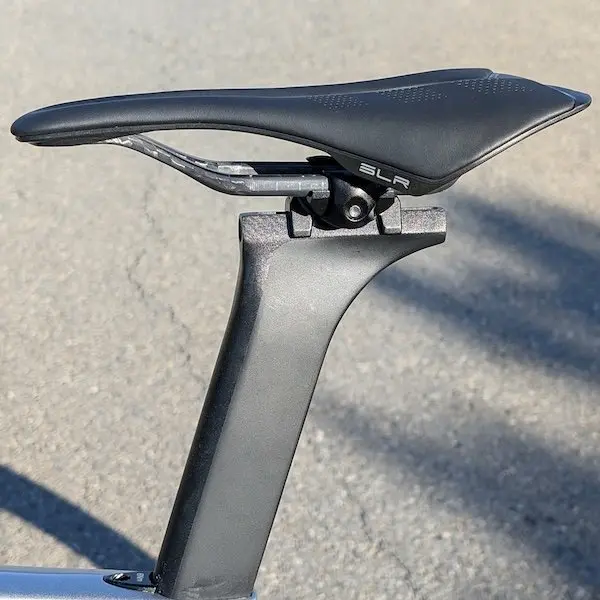
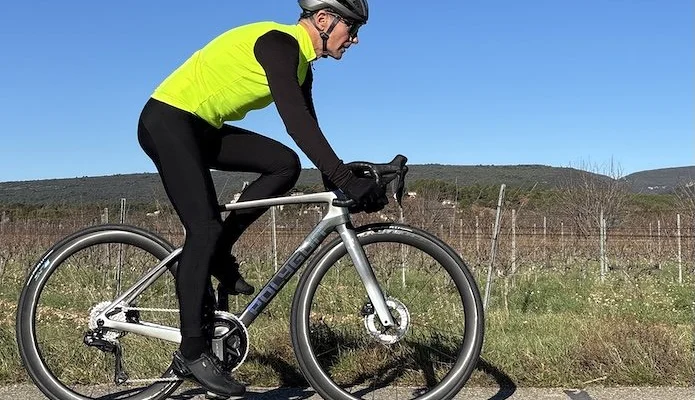
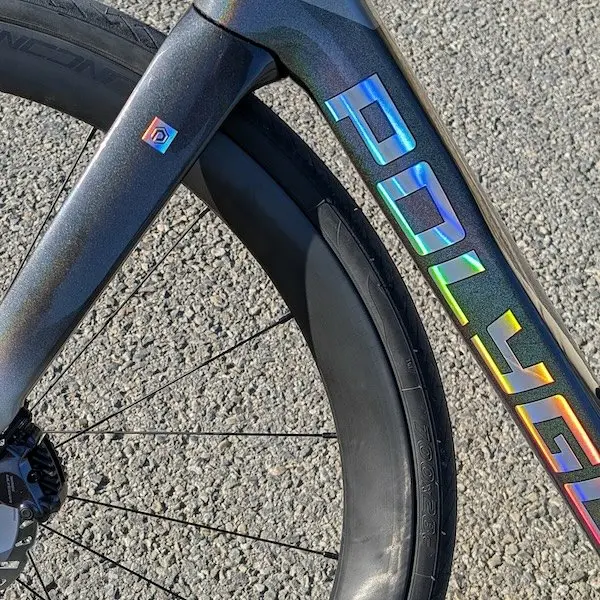
Each model—A0, A9, A8, and A7—comes in its own color options. Ours features a predominantly gray metallic finish with a holographic brand logo that plays beautifully with the light.
Flawless equipment
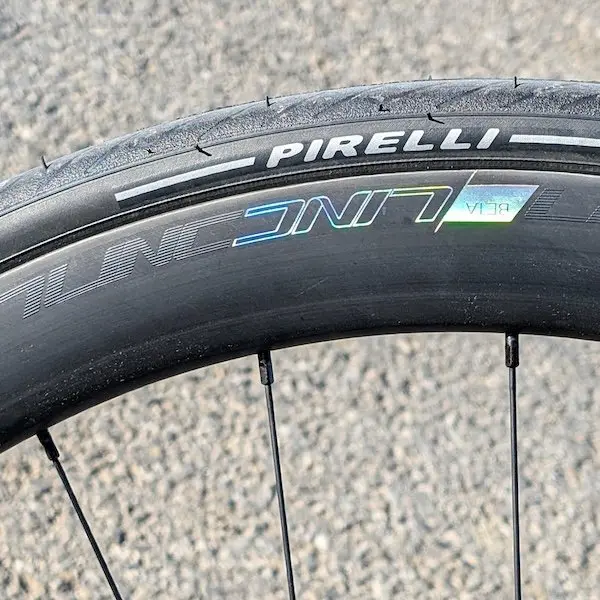
Polygon produces its own brand of components under the Linc label. While we chose to replace the saddle—which wasn’t suited to our body type and, moreover, seemed to us to be of a lower quality than the rest of the bike—everything else is top-notch! Starting with the Linc Beta Caron wheelset, featuring 45-mm-high rims that are the ideal width for 28-mm-wide tyres: the tyres form a nice U-shape on them without any ballooning effect.
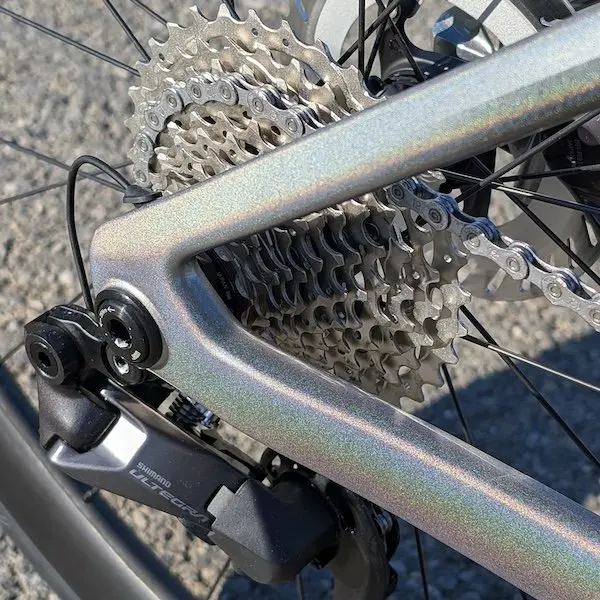
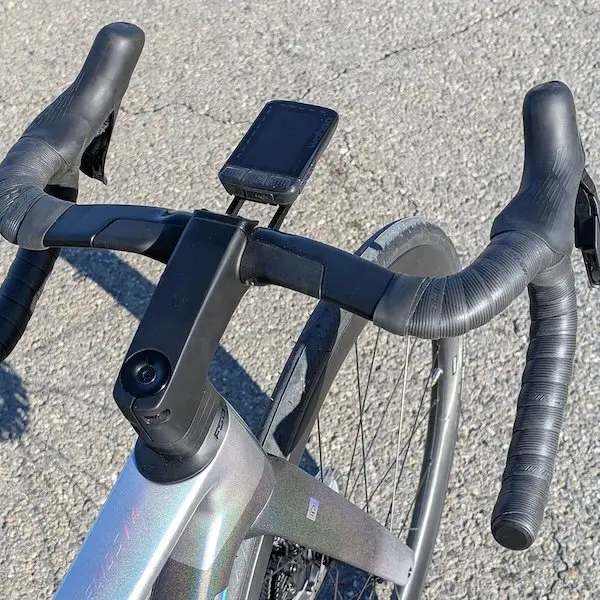
As for the aero seatpost, we’ve already mentioned its unique design, which prioritizes ease of adjustment—a feature that gives the upper section a distinctive shape, which may not appeal to everyone. The carbon handlebar-stem combo allows for fully integrated cables and provides excellent ergonomics, particularly thanks to the very flat upper section, which also enhances aerodynamics. As for the drivetrain, you already know that we consider the Shimano Ultegra Di2 groupset to be the best value on the market. Now it’s time to hit the road… 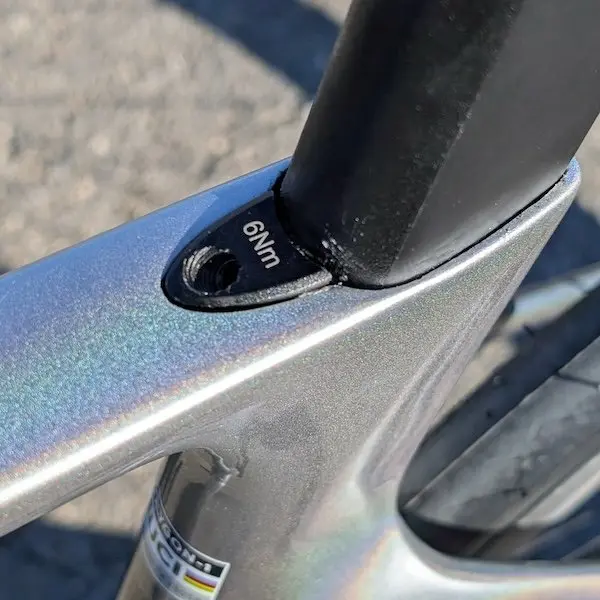
On the Road with the Polygon Helios A8 Di2
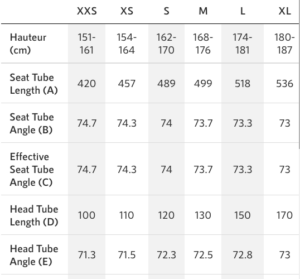
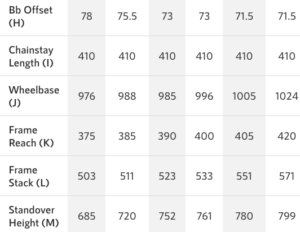
In size S, the bike is equipped with 170 mm cranks and a 110 mm stem—one centimeter longer than what we usually use. However, it comes with spacer rings, which we don’t have on our personal Cinelli Pressure. Let’s just say one thing balances out the other. The brand’s website offers a tool to calculate frame size based on your own height. We tested it by entering 173 cm—our height—and it suggested a size M frame, which would be much too large for us. So be wary of this tool and stick to your usual criteria when making your choice.
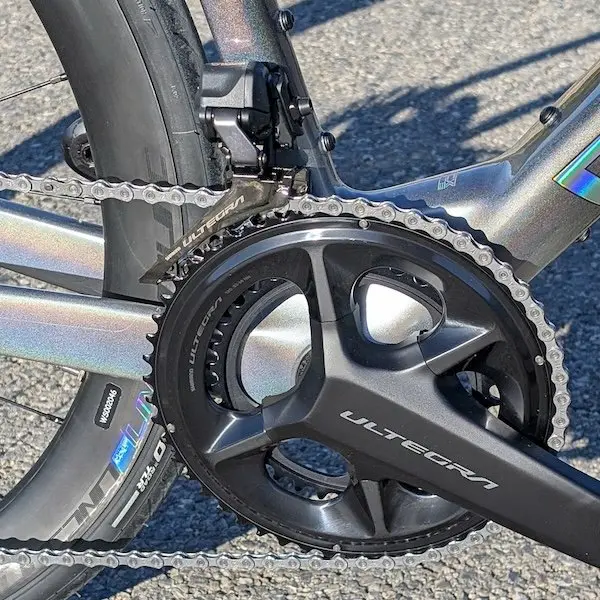 Once the bike is adjusted to our measurements, all that’s left is to hop on. It immediately feels very comfortable and, indeed, gives a sense of lightness. Setting off on our usual route—which is fairly fast-paced in the first section—we get used to the handlebars positioned a bit higher, gripping them firmly at the bottom, accelerating, and shifting down through the gears: the stiffness really makes a difference! It feels like we’re on rails; the curves flow one after another with disconcerting ease. The wheelset lives up to the frame’s standards with Pirelli tyres inflated to 5 bars. Where we live, the road surfaces are far from perfect… We expected more jolts, but that’s not the case. The bike filters out road imperfections, and you don’t feel any vibrations—pure bliss!
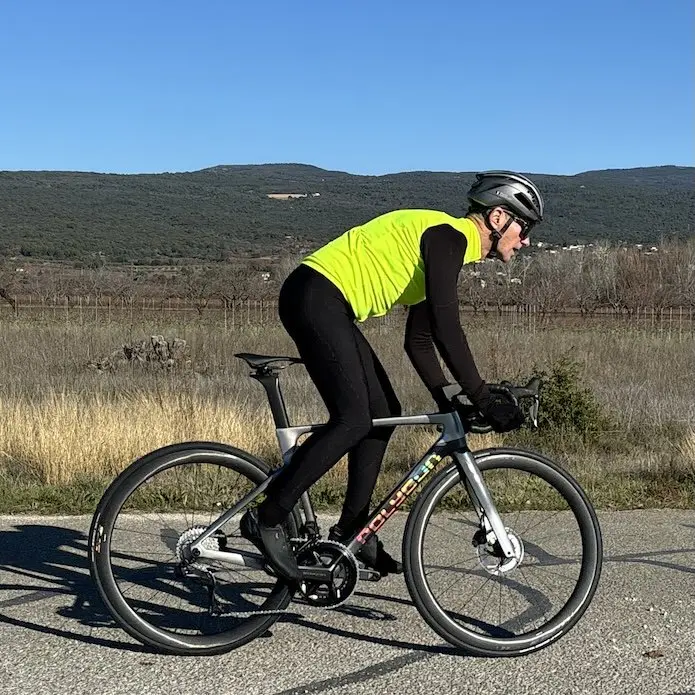
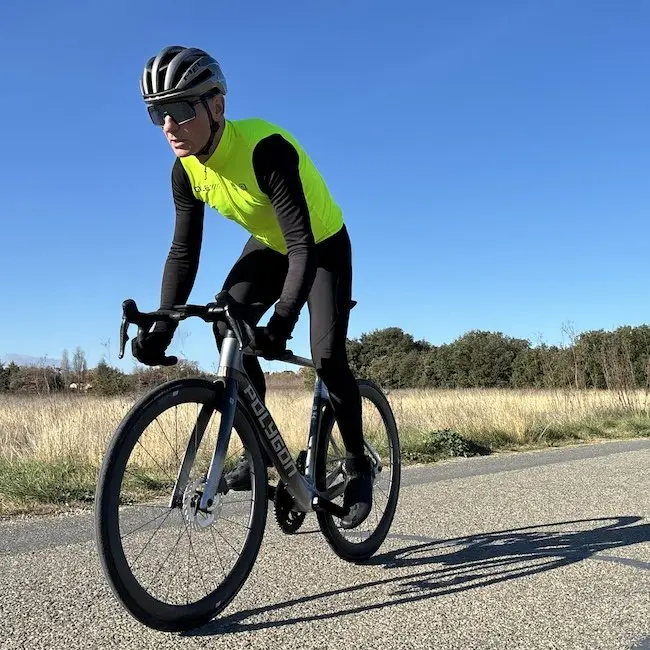 We’re approaching the roughest part of our route, with a series of short bumps followed by a five-kilometer mini-climb averaging around 7%. On the flat we’d been eagerly awaiting this moment: how would such a stiff frame perform when we had to regularly stand on the pedals and rock our hips a bit? It’s clear that this frame isn’t a pure climber, and we’ll certainly be able to test that on nicer days, when the time comes to tackle Mont Ventoux or plan a trip to the mountains. But on our short climbs, it proved much more manageable than we’d imagined, handling with ease—even during sprints out of the saddle—likely due to its light weight. That said, we’re currently in the middle of cyclocross season, so we’re in decent shape. In our opinion, this bike is best suited for sufficiently trained competitive riders, but it’s best avoided for recreational use due to its race-oriented characteristics: geometry, stiffness, and even its wheelset, which feature slightly tall rims. On descents it feels secure, hugging the road through every corner with just a slight tilt of the shoulders, and no unwanted vibrations disrupt the ride at very high speeds.
Conclusion
At this price point, this bike is downright impressive—whether for its race-inspired look, its aesthetics, its build quality, its components, or its handling on the road. Today, we all know that high-end frame models from well-known brands are manufactured in Asia… If these factories start offering their own brands, there’s no reason to think their technological capabilities are any less advanced than what they produce for others. Polygon fits right into this trend. If you’re looking for performance, this bike could be a cost-effective option for a race-ready machine—without having to change a thing, except perhaps the saddle, which we felt was a step below the rest of the components, and possibly switching to Pirelli P Zero Race tires instead of the P Zero Road tires.
The POLYGON HELIOS A8 Di2 at a glance…Pros: value for money, build quality, weight, components, aerodynamics Cons: saddle Frame: ACX PERFORMANCE – Fork: ACX PERFORMANCE – Shifters: SHIMANO ULTEGRA Di2 2×12 – Calipers: SHIMANO ULTEGRA – Rotors: SHIMANO ULTEGRA – Crankset: SHIMANO ULTEGRA 52-36 – Cassette: SHIMANO ULTEGRA 11-34 – Derailleurs: SHIMANO ULTEGRA Di2 – Saddle: LINC FLUX2 – Seatpost: CARBON AERO – Handlebar: LINC CARBON – Stem: LINC CARBON – Wheelset: LINC BETA CARBON DISC (45 mm) TUBELESS – Tyres: PIRELLI PZERO ROAD TLR 700x28C – Sizes: 7 (XXXS to XL) – Weight: 8.1 kg – Price: €4,799 – Contact: polygonbikes.com |
Share the post "Polygon Helios A8 Di2 Review: A Wonderful Surprise!"