Share the post "The only indicator left when everything else evaporates"
We live in a wonderful era. Wonderful… and completely absurd. Never has the cyclist had so many numbers. Power, cadence, heart rate variability, estimated VO2max, FTP, TSS, IF, NP, right/left balance, pedaling efficiency, quadrant power, estimated jump height, muscle saturation, local deoxygenation, pedal contact time, vertical oscillation, climbing power, sprint power, threshold power, out of the saddle power, power in the rain, power after coffee… We could almost measure the power of power. And yet, never has the cyclist seemed so lost. Because by wanting to measure everything, we end up no longer knowing what truly matters. So let’s imagine a radical world. A world where everything disappears. No more sensors. No more Garmin. No more Strava. No more Excel files. No more curves. No more colored zones. No more “training load”. No more “peaks”. A world where only one possible indicator would remain to define the cyclist. Which one to choose?
By Jeff Tatard – Photos: All rights reserved
The temptation of power
Spontaneously, many would say: average power. Or better: FTP. After all, FTP has become a kind of modern Holy Grail:
- It ranks cyclists,
- It determines training plans,
- It structures groups,
- It fuels comparisons,
- It feeds egos.
But FTP is a seductive illusion. It is terribly precise… and profoundly incomplete. Two cyclists can have the same FTP and be worlds apart: one unable to sustain high intensity for 10 minutes, the other capable of riding flat out for an hour. FTP measures a capacity, not a cyclist.
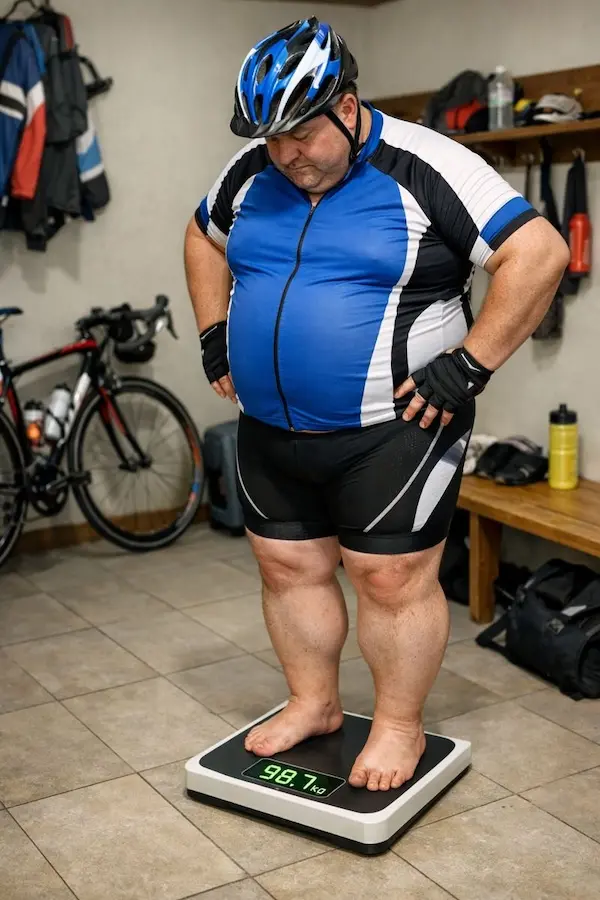
The temptation of weight
Others would lean towards weight. Especially in a country that loves mountain passes. But weight alone says nothing. A light climber can be fragile, inconsistent, or inefficient. A heavier cyclist can be incredibly performant, enduring, and tactically formidable. Weight measures a body, not a rider.
The temptation of VO2max
Very scientific, very noble, very physiological. But VO2max is a ceiling, not a performance. A rider can have an enormous VO2max and be a very bad cyclist… because they don’t know how to manage effort, suffer, anticipate, or simply endure. VO2max measures potential, not reality.
So what?
If we had to keep just one indicator, one true marker of the cyclist, it would have to be:
- Simple
- Universal
- Revealing
- Profoundly human
- And impossible to cheat
Not cold data. Not an abstract number. It would need an indicator that tells the cyclist’s rawest truth. And that indicator exists.
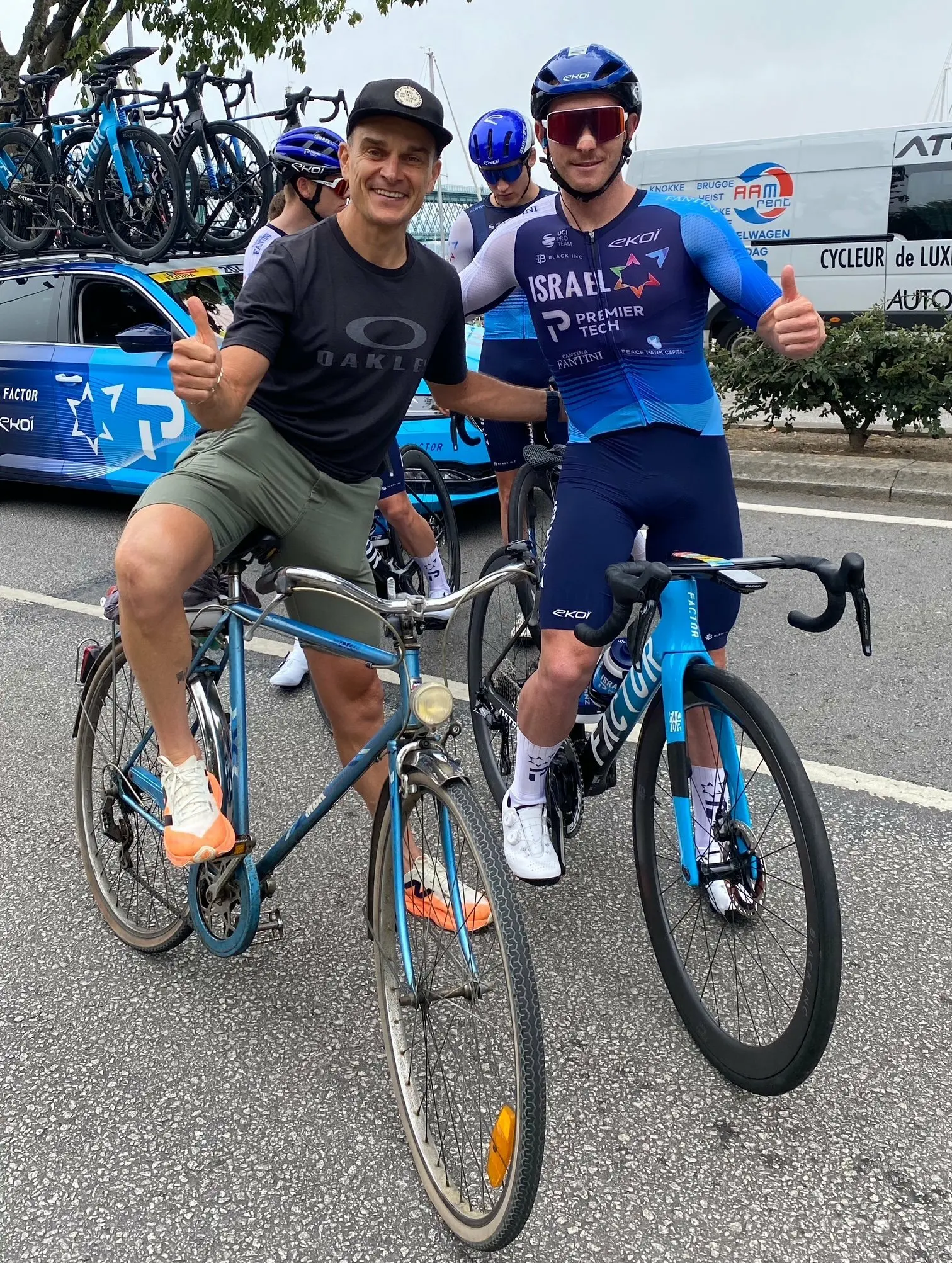
The only indicator that matters: your average speed on your usual route
Not on a mythical climb. Not on a Strava segment. Not on a 20-minute test. But on YOUR route. The one you know by heart. The one where you know when the wind turns. The one where you know every climb, every turn, every false flat. Your everyday route. Because there, everything is revealed.
Your physical condition? Yes.
Your fatigue? Yes.
Your motivation? Yes.
Your effort management? Yes.
Your mental strength? Yes.
Your technique? Yes.
Your sense of rhythm? Yes.
On your usual route, you can’t cheat. You know when you’re strong. You know when you’re tired. You know when you’re improving. You know when you’re regressing. And most importantly: you feel all of this without a screen.
Why it’s smarter than any sensorThe average speed on your usual route is a global indicator. It integrates:
It’s “living” data, not a laboratory metric. It tells a story. Your story. |
The magnificent paradox
In a world where measurement borders on excess, the best indicator is not the most sophisticated. It’s the simplest. Not a curve. Not an algorithm. Not a formula. Just: “Today, on my route, I was faster.” And that, no sensor can ever steal from you.
Conclusion (very 3bikes)
Modern cycling has given us extraordinary tools. But it has sometimes made us forget the essential: cycling is not an exact science. It’s a sensation, a rhythm, a breath, an intimate relationship with the road.
And if only one number were to remain, it would perhaps be the most humble: your average speed on your usual route. Because there, beyond watts, algorithms, and graphs, there remains a cyclist, a bike, a road… and the simple truth of effort.
=> To go further: how quantification became a cultural value between mastery, performance, and constant comparison.
Share the post "The only indicator left when everything else evaporates"