Share the post "Céline Hutsebaut, accuracy as a legacy"
Thursday, January 8, 2026, there is no set. No workshop to describe, no light to locate, no gestures to observe. There is a phone. A voice. And that strange, almost paradoxical feeling that distance sometimes makes things truer. When you don’t see, you listen better. When you’re not face-to-face, perhaps you allow yourself more sincerity. Céline Hutsebaut speaks calmly. She seeks neither effect nor staging.
By Jeff Tatard – Photos: Céline Hutsebaut
The sentences arrive with precision, as if each had been weighed before being delivered. And very quickly, we understand that this conversation will not be a classic interview. It will be something else. A narrative. A crossing.
We are here to talk about the cessation of a professional MTB team on December 31, 2025. But very quickly, it becomes clear that what Céline recounts largely transcends the notion of a sports structure. She speaks of lineage, responsibility, cycles. She speaks of what remains when you’ve given everything. And above all, she speaks with a rare emotional intelligence, that of people who have lived a lot without ever hardening.
A Name, a History, a Silent Responsibility
When asked about the name, this name deeply linked to French MTB, Céline does not evade. She begins with what naturally comes to mind: pride.
« It is first and foremost a pride, without hesitation. »
An almost childlike pride, she says, « with stars in her eyes ». Because this name is not just a succession of results or jerseys. It is a fabric of human relationships. Decades of bonds woven around cycling. She evokes the club’s hundred years, the archives she keeps, the phone calls from ninety-year-old men who wanted to come, simply because they remembered her grandfather.
Here, we already touch on something essential: for the Hutsebauts, cycling has never been just a sport. It’s a common language. A meeting point between generations.
But Céline doesn’t stop at pride. She also talks about what happens when you realize you are the fourth generation. When you realize that the chain could, one day, be broken.
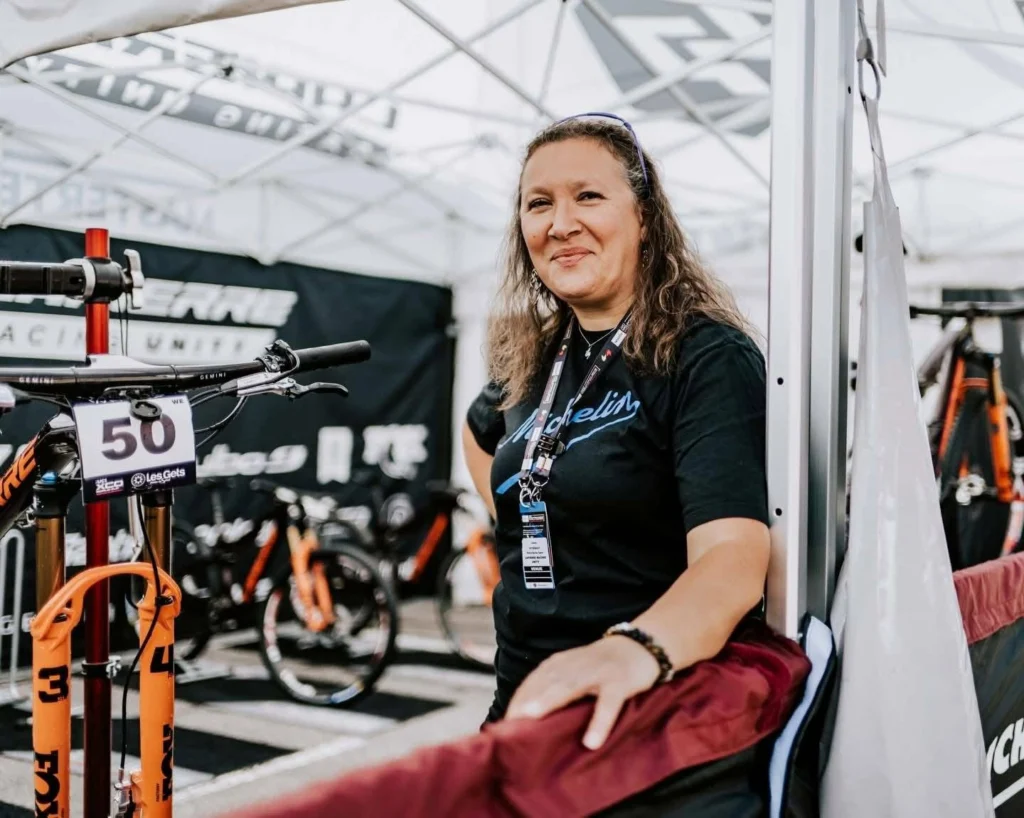
« I never experienced it as a burden, but as a responsibility. »
And sometimes, this responsibility turns into guilt. That of asking oneself: « if it stops with me, have I failed? Will it be “my fault”? » This guilt is not rational, but it is profoundly human. It arises in those who feel they are custodians of a story greater than themselves.
What freed her, Céline recounts with great gentleness. Discussions with her family. Her father, her uncles, her aunts. They all tell her the same thing: « if one day it has to stop, it’s already extraordinary that it lasted so long. Nothing to regret. Nothing to fix. »
Then there is this crucial conversation with her mother and sister. Because the team’s project is not the work of one man alone. It was born from a couple.
« Without mom, dad would never have been able to set up everything he did. »
This sentence returns as a foundation. It says a lot about how Céline views the world: always with gratitude, never with appropriation.
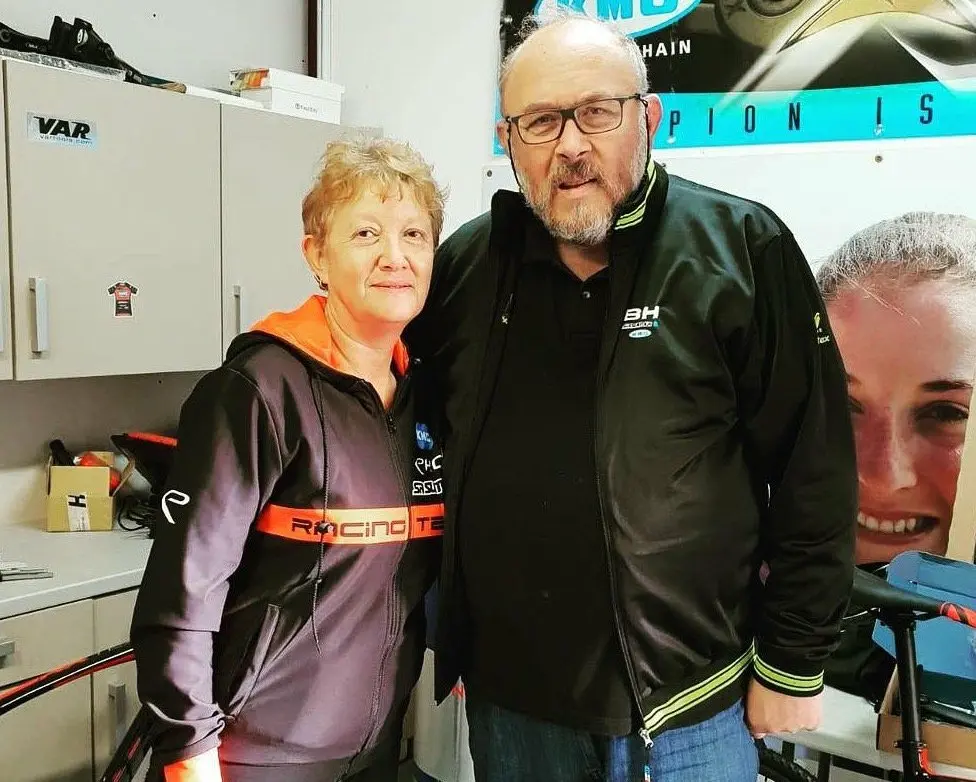
The Father, Transmission, and the Big Dive
The father. Always him. Present in every sentence, even when his name is not spoken. Céline speaks of him with respect, but without excessive sacralization. She describes him as someone who had a vision, but above all, an openness.
At the end of 2020, after the Covid season, when he was already tired and had difficulty moving, Céline handled the trips to the World Cups, even managing two rounds and a World Championship. Upon her return, he offered her to take over the company.
Her answer was immediate: no.
« I told him: Dad, do you realize who you are, everything you’ve done? For me, it’s not possible. »
And then, the father’s answer said everything about the man he was:
« But you’re not going to do what I did. You’re going to do what you want to do. »
This sentence is a gift. An inheritance in itself. It removes the burden of comparison. It allows for invention.
Céline quickly identifies what she lacks: negotiation with partners. Logistics, human resources management, travel organization, she knows. It’s her daily life at the French Cycling Federation. But commercial relations, negotiation, that’s another world.
Her father introduced her to it. He presented her to the partners. He passed on the codes. Then, six months later, he passed away.
« It was a great void. A big dive into the unknown. »
The metaphor often returns: being thrown into the deep end. Not drowning. Holding on. Continuing. Céline speaks of this period without pathos, but one feels the silent violence of the moment. The loss of a father. And, simultaneously, taking full control of a very high-level professional structure.
Her pride, today, lies in a simple sentence:
« I succeeded because he had given me the right tools. »
She maintains extremely rigorous financial management. She continues to offer athletes and staff a very high-level experience. She becomes a full-fledged business leader.
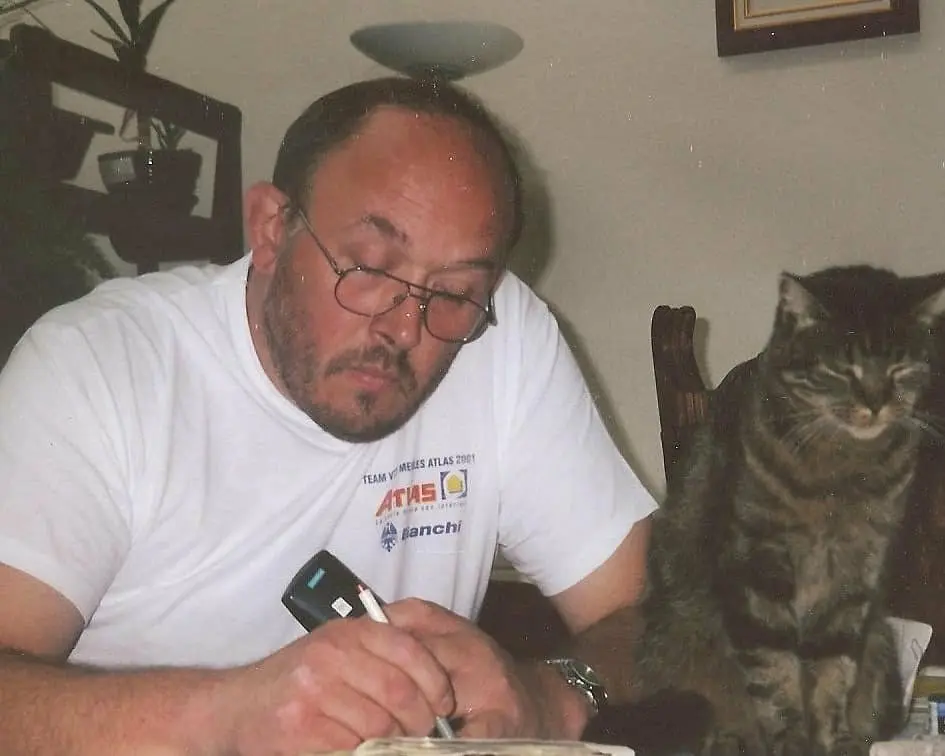
Family as Management DNA
What runs through her entire discourse is this notion of “family”. Not as a marketing slogan. As a lived reality.
« When you’re on the team, you’re in a big family. »
This means feeling comfortable. Feeling respected. Being considered a human being before being a performer. Céline insists on this point: taking the human aspect into account in parallel with the sporting aspect.
This is what attracts certain athletes. Those who seek this environment. Those who know that sustainable performance is not built on fear.
She often recalls this instruction passed down by her father and grandfather, which she never forgot:
« You never say anything to an athlete at the finish line of a race. »
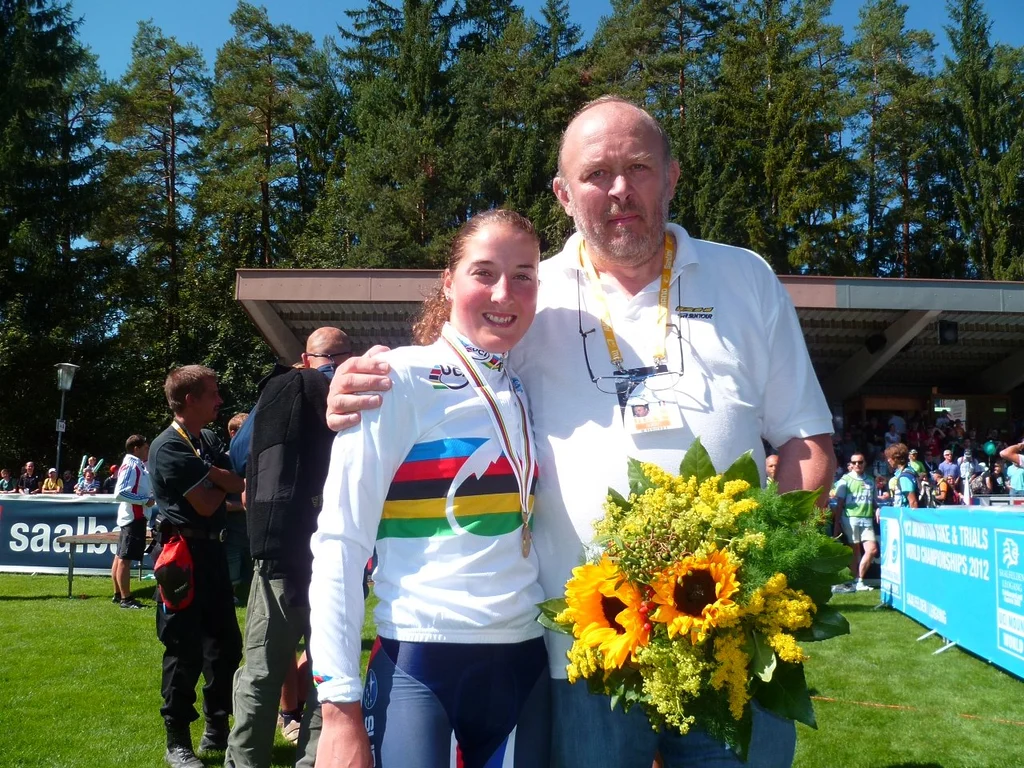
This sentence is almost philosophical. It speaks of respect for emotional timing. It also says that nothing solid is built in the brutality of the moment.
Céline admits that she, too, had to find her own voice. To move beyond the constant question: « what would he have done? » She talks about that first year when she was still finding her feet. Then about the decision to seek support. Mental coach. Life coach.
« I needed to break free from this virtual dependency pattern to truly take my place. »
She also talks about her burnout at the end of 2018. About the help she received. About this conviction now deeply rooted:
« In life, we are all the same. If we get help, it’s to get better. »
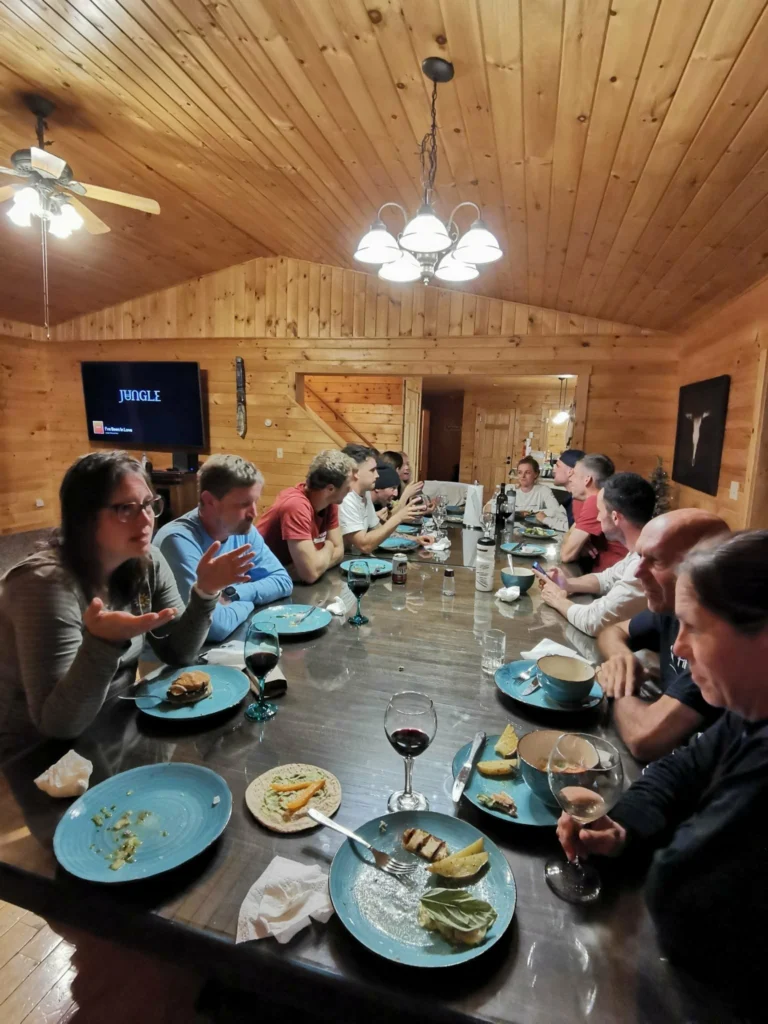
An Extraordinary Adventure, Always in Motion
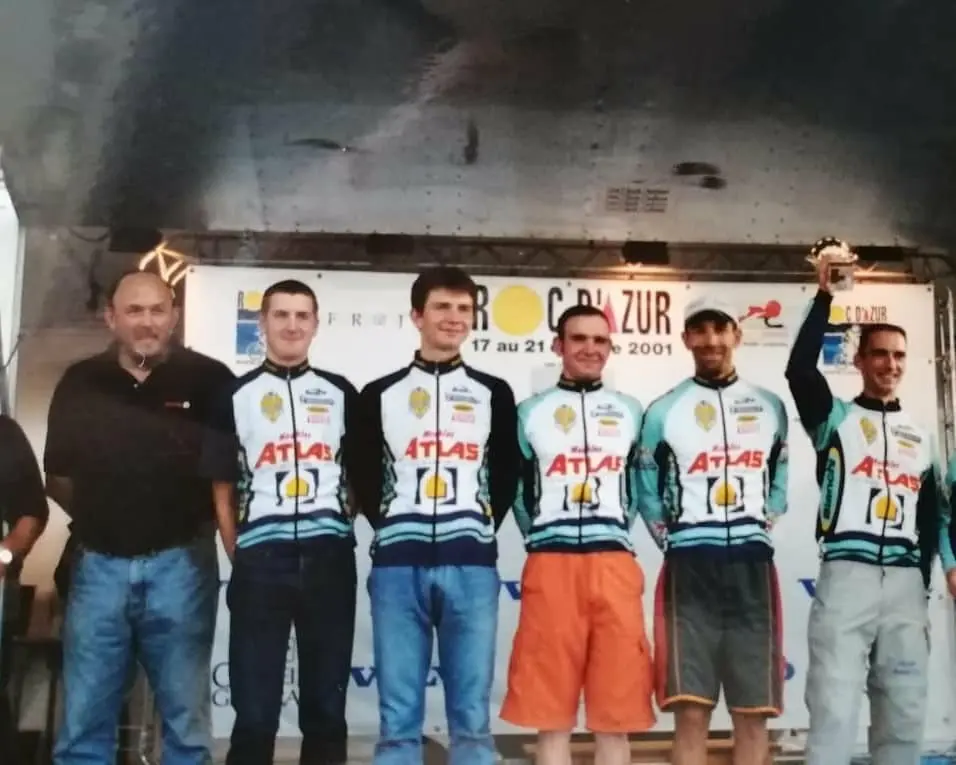
When she tells the team’s story to someone who knows nothing about MTB, Céline returns to the essentials: an intact passion for cycling, and a desire to lead a team. Road cycling had put her off, that “basket of crabs”. Then MTB arrived, in the early 90s. An obvious choice.
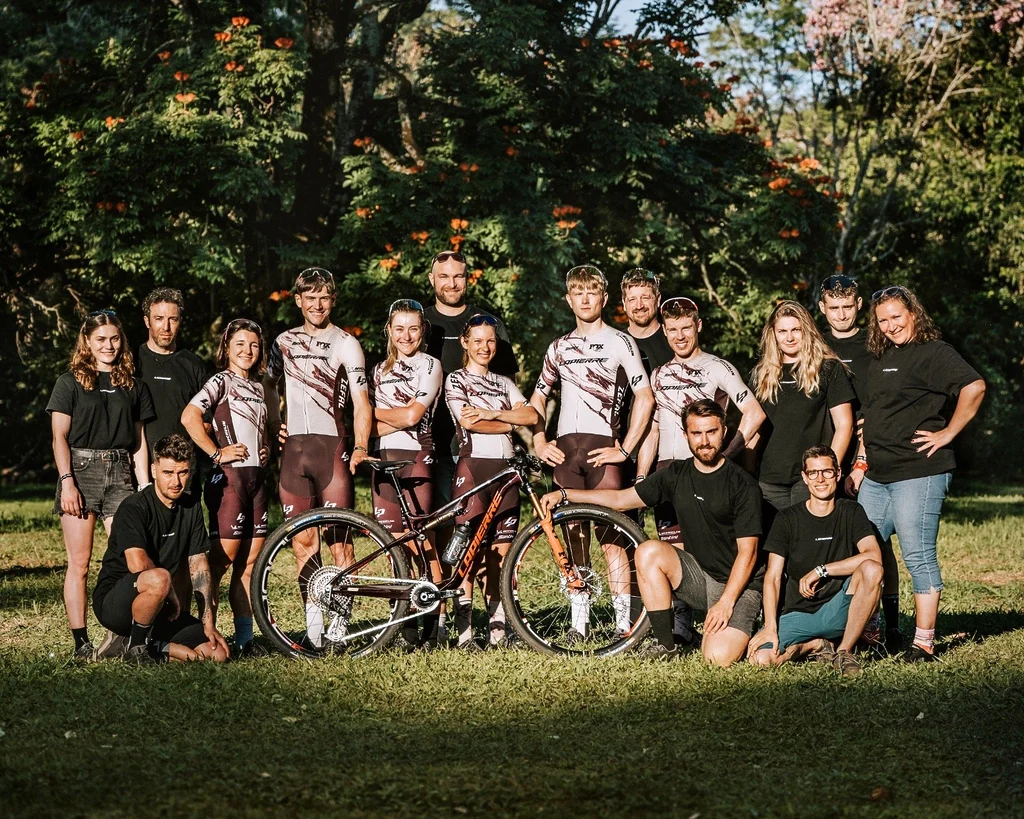
Step by step, year after year, the project grew. It spans all eras of modern MTB. 26-inch bikes. 27.5. 29-inch. Technical, material, cultural evolutions. Several generations of athletes. Always among the best of their time.
She cites Maxime Marotte, Victor Koretzky, Jordan Sarou, Julie Bresset Perrine Clauzel, and many others. Names that, today, are part of the sport’s history.
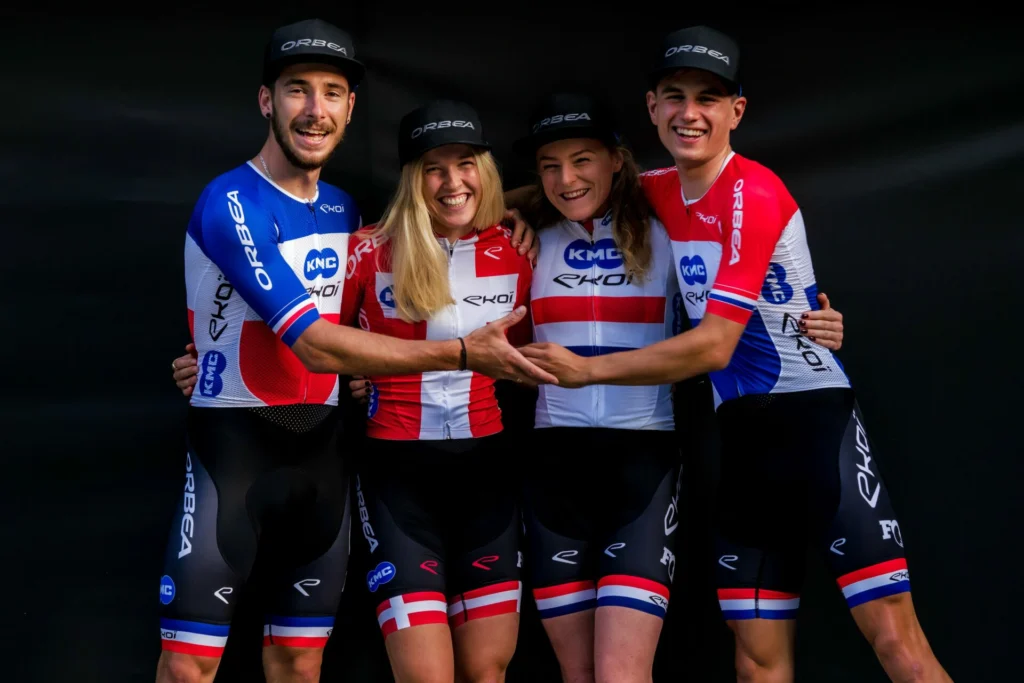
The uniqueness of the project lies in a key point: it’s a private team. This imposes a permanent constraint.
« We are obliged to always be at the forefront of development. »
Testing prototype frames. Tires. Wheels. Suspensions. The link with research and development is constant. The team’s DNA is this: contributing to the evolution of equipment, not just using it.
She explains that not all riders are capable of providing product feedback. It’s a skill in itself. Those who enjoy it find a unique field of expression in this structure.
She also evokes her father’s philosophy: offering a chance. Putting what you have on the table. “You take it, or you don’t.” Without promises. Without blackmail. This openness allowed some athletes, sometimes with nothing, to experience extraordinary seasons.
The Champions, the Palmarès, and What It Really Feels Like
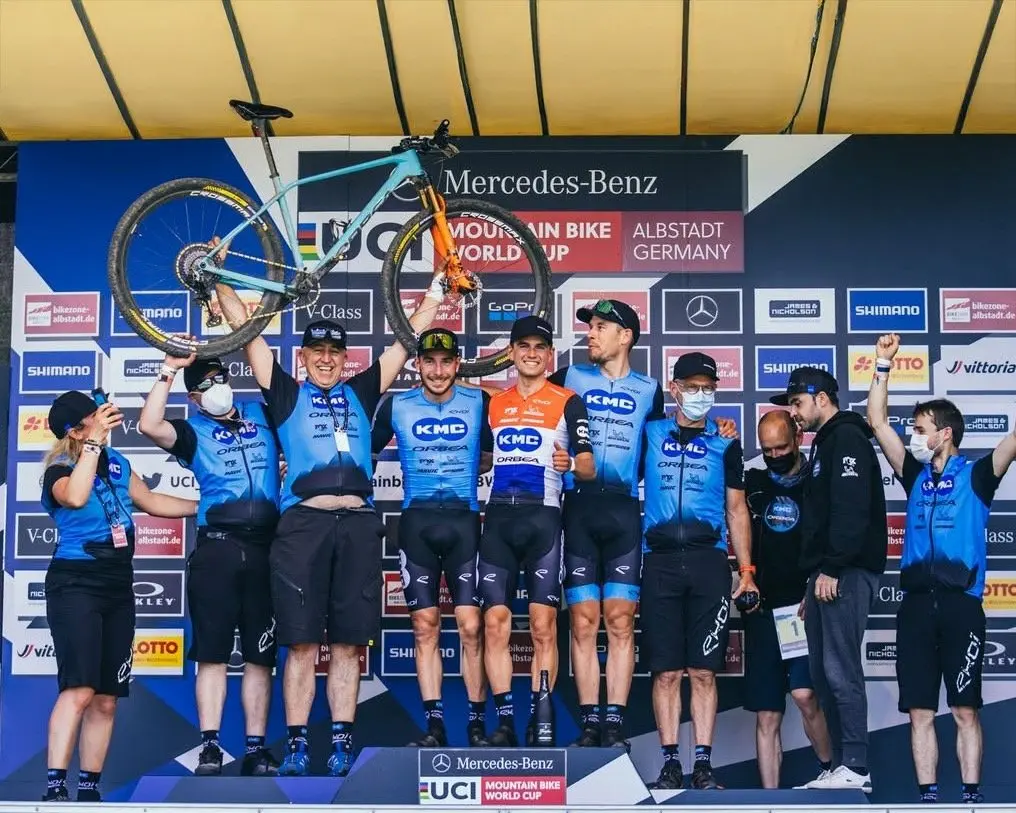
When Céline looks at the team’s track record, she speaks of satisfaction. But above all, of recognition for a job well done.
« You give the keys, you make everything available, and then the alchemy has to happen. Sometimes it works. Sometimes it doesn’t. That’s life. »
She insists on one thing: what we remember are the good times. And there have been many.
Then she talks about the testimonials received in recent years. Messages written by very great male and female champions. Words she didn’t expect. And which allowed her to realize the impact she had had on their careers, but also on their lives.
Victor Koretzky, Faith, and Tears
And then there’s this moment. The one where her voice becomes slower. More laden.
She evokes the 2021 season. Extraordinary. Her father is still there. There had been difficult years for Victor. Periods of doubt. Injuries. Seasons where nothing came.
But her father, she says, never stopped believing in him.
« He always believed in him. Always. Always. »
She remembers those repeated, almost stubborn phrases: « I’m sure he’s going to do it. »
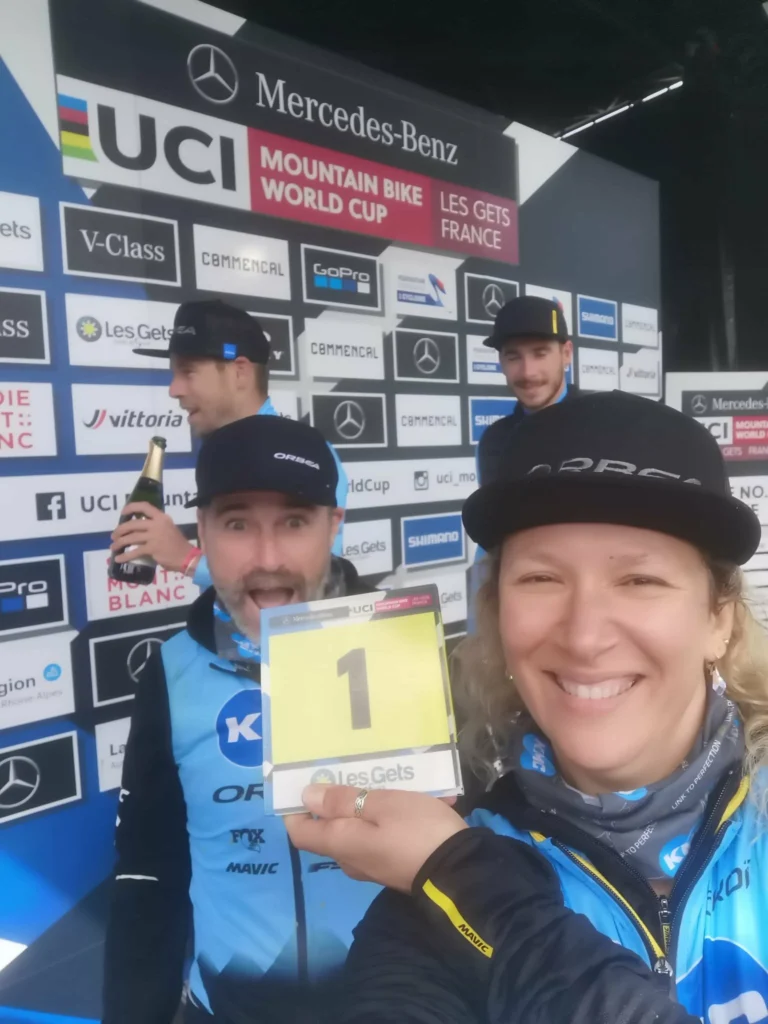
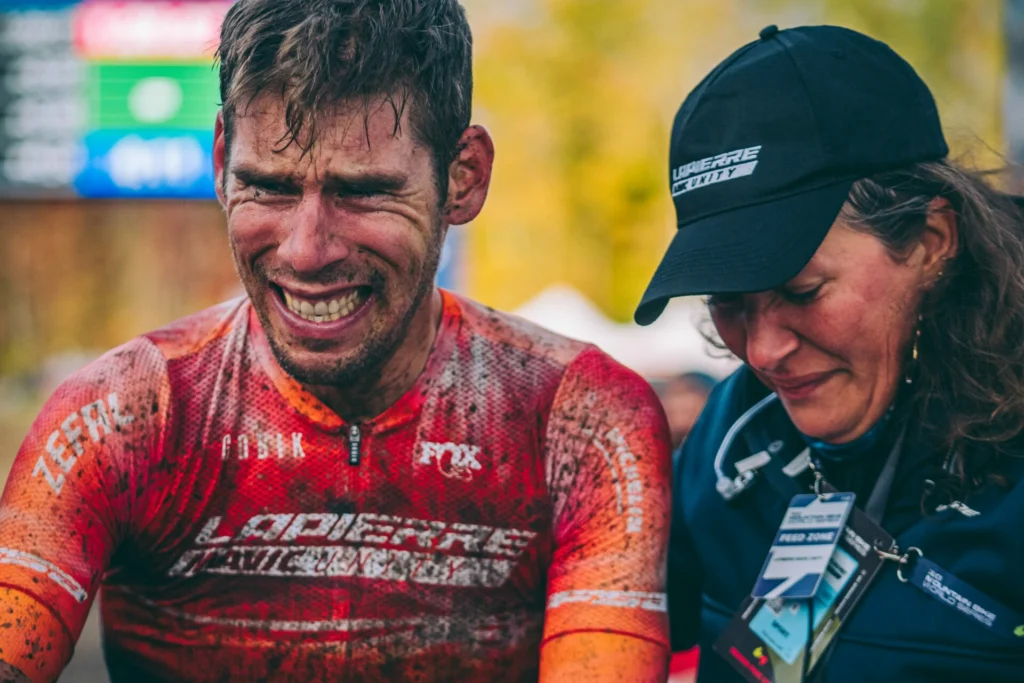
And then one day, Victor wins a World Cup. The victory he was missing. The victory France was missing. The first elite men’s victory since Absalon. The one no one really expected anymore.
At that moment, as she explains it to us, Céline cries.
No raw joy. No explosion. Full tears. Tears laden with everything that preceded it. The invisible work. Patience. Faith. And the absence of the father, whose conviction finally finds its answer.
« For me, it was his big moment. »
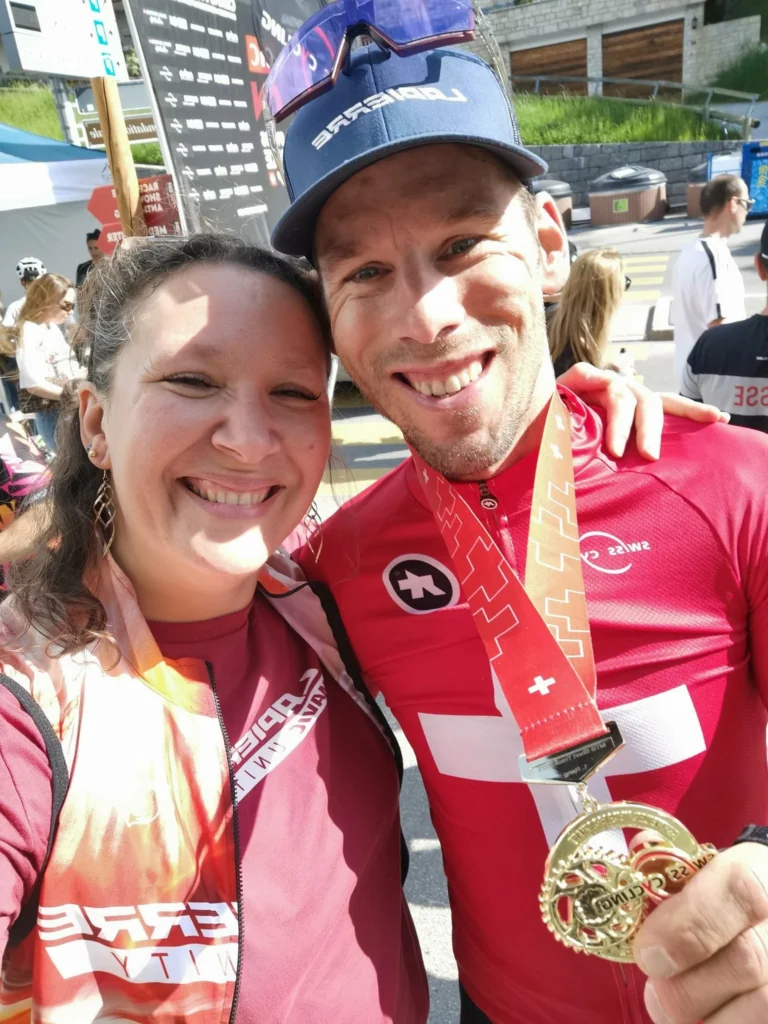
She also cites Thomas Litscher, the Swiss short-track champion’s jersey. An immense performance when you know the exceptional level that exists in Switzerland, the density of riders, the MTB culture, and the almost brutal difficulty of winning a national title there. That jersey is never won by chance. Thomas is an extraordinary athlete, capable of great highs and lows, rare intensities, and acknowledged vulnerabilities. That day, an entire trajectory aligned. And for Céline, this moment remains etched as a strong, sincere, fully lived memory.
Brands, Partnerships, Loyalty
The team has gone through many collaborations. In order: Bianchi, Lapierre (already, in 2003), Gitane, BH, Orbea, and then Lapierre. Many years with BH specifically, until the lack of development made the bikes uncompetitive. Then new chapters.
Céline also talks about SR Suntour, Michelin, thirteen years together, KMC. She insists that each partnership evolves. Needs change. At first, you need to be visible. Then, develop. Then, internationalize.
« The important thing is to understand your partner’s needs. »
She explains the shift taken from 2020 towards video, permanent communication, storytelling. Showing life around the competition. Ensuring visibility on networks even when results are not there.
The End of the Cycle: Grief, Clarity, Acceptance
When the end becomes inevitable, Céline refuses to give up without trying everything. She talks to countless brands. To non-cycling partners. She searches everywhere.
Always with one rule: transparency with the athletes.
« I told them: find something else, I have no guarantees. »
The last ‘no’ arrived on November 14, at 8 PM. The day before the UCI deadline.
« I wanted to be able to tell myself: no regrets. »
Then comes the guilt. And this primitive fear: « will they still love me? »
The discussion with her mother and sister is liberating. Saying the words aloud removes the burden. The support is immediate.
At that moment in the exchange, we allow ourselves to put words to what we often go through unknowingly. We thus evoke this well-known model in management and psychiatry: this curve called the grief curve where emotions do not arise randomly but succeed each other, almost always in the same order. First, shock, when reality hits too hard to be understood. Then denial, that survival reflex that makes us believe everything can still be fixed. Then comes anger, sometimes directed at others, sometimes at oneself. Then sadness, deeper, more silent. And finally, acceptance, which erases nothing but allows one to continue. Sometimes even forgiveness, when one manages to no longer judge oneself.
Céline listens attentively. And where others would stop at the pattern, she shifts the focus. For her, each emotion is not a weakness to fight, but information to process. Raw data that says something about us, the moment, the stakes. Nothing to repress. Nothing to dramatize.
It is at this precise point that she evokes Novak Djokovic. Not the smooth champion, but the man who understood that the difference is not in the absence of pain, because no one escapes it, but in the time one allows it. « He goes through the same emotions as others », but he doesn’t stay there. He learned to recognize shock, to let denial pass, to go through anger and sadness without getting bogged down, to reach acceptance more quickly.
Céline has deeply integrated this approach. Like an inner hygiene. Welcoming what comes. Understanding it. Then moving forward. Because ultimately, true strength is not never falling, but knowing when it is right to get back up.
« The faster you accept, the faster you can move on. »
Transmission, Women, Future
When she talks about legacy, Céline doesn’t talk about trophies. She talks about meaning.
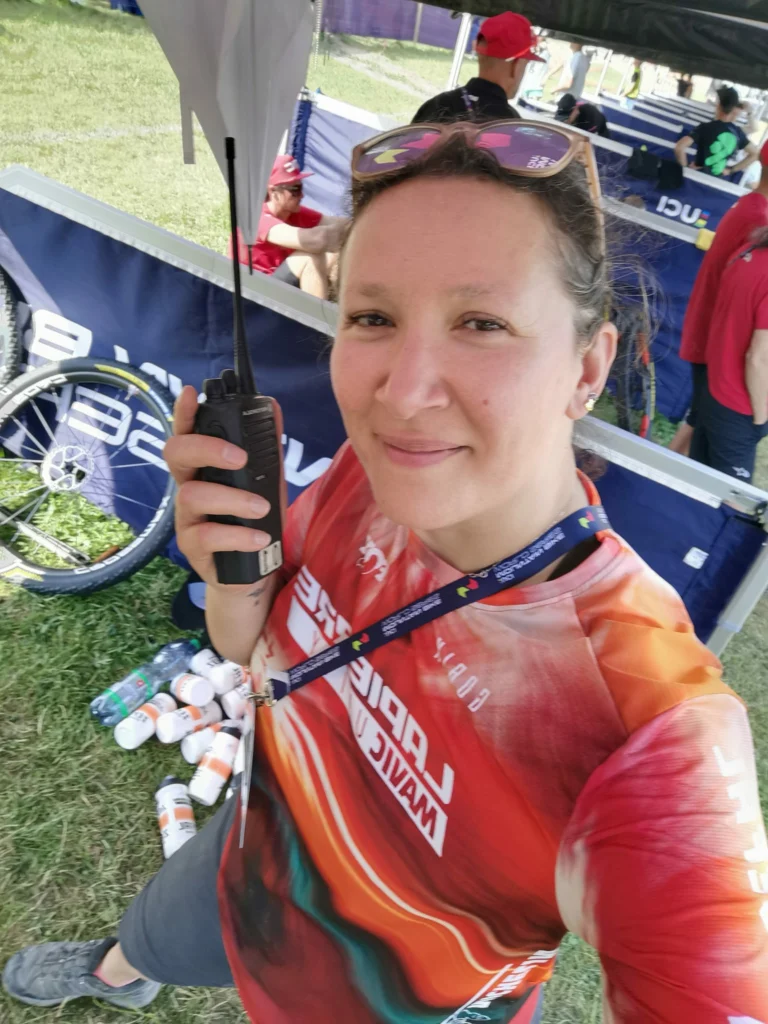
She talks about being the only female business leader to manage a pro MTB team from A to Z. She says she never asked herself the question because she was a woman. She did what she liked. Then she realized.
So she transmits. To women: “go for it”. To men: “make room”.
Not as a fight. As an obvious truth.
What Remains
At the end of the call, one thing is clear: the team has stopped. But the imprint is there.
In the athletes.
In the careers.
In the developed products.
In the human connections.
In those tears shed on a World Cup day, when Victor Koretzky won, and everything made sense.
Céline Hutsebaut is not just a manager.
She is a guardian of fairness.
And in a sport that moves fast, very fast, that fairness is perhaps the most precious legacy.
=> To better understand the high-level environment in which the team evolved: UCI – MTB World Series
=> And here, if you want to discover all our other portraits: All our Portrait articles
Share the post "Céline Hutsebaut, accuracy as a legacy"