Share the post "The bike crisis is not just about sales"
For two years, the observation has been stark: shops are closing, stocks are sitting idle, margins are evaporating. We talk about a bike crisis as we would a sudden accident. In reality, it’s less of a crash than a poorly anticipated landing.
By Jeff Tatard – Photo : @jefftatard
And among the reasons rarely spoken aloud, there is one that is unsettling: the electric bike, post-Covid, has profoundly altered the market’s mechanics.
The electric bike paradox: it sells well… and resells poorly
During the Covid period, electric bikes sold massively. Too massively not to leave a mark.
But today, we observe a simple and relentless phenomenon: electric bike buyers keep their bikes longer.
Where a road, gravel, or mountain biker renews their machine every 2 to 4 years out of passion, technological evolution, or change in practice, the e-bike user adopts a different logic:
- utility or leisure use
- investment perceived as durable
- functional rather than passionate attachment
Result: less turnover, fewer resales, less cash reinjected into new purchases.
Without a fluid second-hand market, new sales suffocate
In cycling, the new and second-hand markets are inseparable.
You don’t buy a new bike until you’ve sold the old one.
This isn’t an ideological stance; it’s a cash flow reality.
When the second-hand market works…
When the second-hand market slows down…
And that is precisely what is happening today. |
The false myth of “volume as a savior”
Faced with the crisis, many believed it was necessary to sell more. More references. More accessible bikes. More volume. A classic mistake.
In reality, we observe that the shops doing best are those positioned in the high-end market.
Why? Because selling one bike for €10,000 is often more rational than selling five for €2,000.
Five times more bikes means:
- five times more time
- five times more explanations
- five times more after-sales service
- five times more management
- and rarely five times more net margin
The high-end, on the other hand, concentrates:
- value
- margin
- expertise
- relationship
And paradoxically, less human wear and tear for the salesperson.
Cash flow: the sinews of war (too rarely discussed)
Another key point, often overlooked: those who resist best are those with cash flow.
Why? Because cash flow allows for:
- buying in volume
- negotiating better conditions
- absorbing cycles
- and ultimately… offering fairer prices to the customer
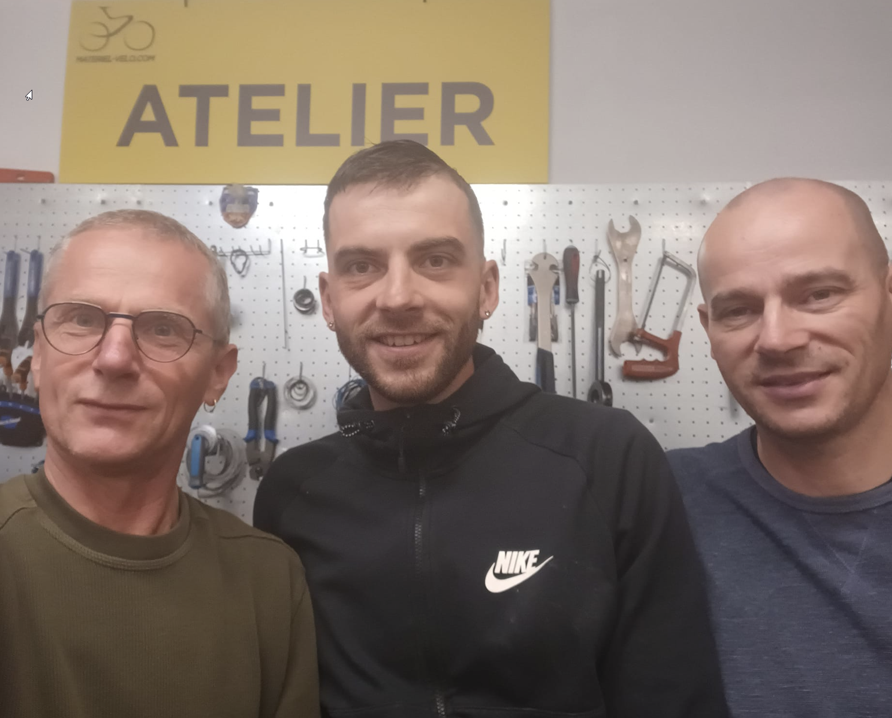
This is a reality that David, the owner of Matériel Vélo in Herblay (95), rightly reminded us of during a recent exchange that opened our eyes.
In a tight market, the final price is not just a question of margin, but of the ability to buy intelligently upstream. Those who can advance the money buy better. Those who buy better sell fairer. And those who sell fairer keep their customers.
A crisis of model more than a crisis of passion
What is happening in cycling today is not a disaffection. People are riding. The paths are full. The practice is there. But the economic model, for its part, must reinvent itself:
- less dependent on volume
- smarter in turnover
- clearer in positioning
- financially stronger
Cycling remains a wonderful sport and object. But like any cyclical industry, it demands one essential thing: understanding that selling is not just about moving inventory, it’s about organizing time, value, and trust.
The current crisis does not condemn cycling. It condemns fragile models.
And it reminds us of a simple, but often forgotten truth: in cycling as elsewhere, it’s not always those who sell the most who fare best, but those who sell most intelligently.
=> And if you want to know more about what our bike really says about us
Share the post "The bike crisis is not just about sales"