Share the post "Cold and cycling: should you really go out when your body says no?"
A scratchy throat, a runny nose, and a training plan that calls for a two-hour ride. A classic dilemma for amateur athletes and the most dedicated alike: ride no matter what or skip it? The answer is neither dogmatic nor heroic; it’s physiological.
By Guillaume Judas – Photos : depositphotos.com / DR
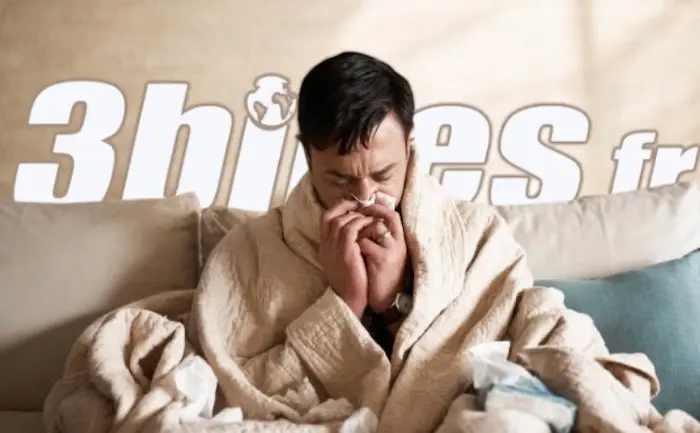
You wake up with that familiar feeling. Nothing dramatic, but enough to make you doubt. A slight throat irritation, a slightly stuffy nose, your mind still clear. On paper, today’s training is there, well-scheduled, ready to be checked off. In reality, your body is sending signals. And these signals deserve to be listened to.
Specialists agree on a simple rule. When symptoms remain localized above the neck (stuffy nose, irritated throat, sneezing) gentle physical activity can sometimes do more good than harm. A very easy ride, in Zone 2, without seeking performance or watts, can stimulate blood circulation, improve general sensations, and even help you feel a little better. Provided, of course, that you remain attentive to the slightest sign of deterioration.
The picture changes radically as soon as symptoms move below the neck. Cough, fever, body aches, muscle pain, unusual fatigue, or chills are clear warning signs. In this case, there’s no debate: training must wait. Your immune system is already mobilized to fight the infection, and imposing additional stress on it is like pulling on a rope that is already far too taut.
Knowing How to Adapt
Science confirms what many athletes have sometimes learned the hard way. In a review published in June 2001, David C. Nieman examines how exercise influences immune function and the risk of upper respiratory tract infections: moderate physical activity is associated with a lower number of colds in active individuals, while periods of prolonged and intensive effort can increase the risk of infections and more severe symptoms after exercise. This is sometimes referred to as the “open window” hypothesis of immune vulnerability after sustained exercise.
Faced with this dilemma, the right reflex is therefore not to blindly follow your plan, but to adapt it. Drastically reducing intensity, listening to your sensations during the session, staying well hydrated, and above all, accepting to interrupt the effort at the slightest doubt are choices of responsible athletes, not admissions of weakness. And when uncertainty persists, rest always remains the safest option.
In a sports culture where consistency is often glorified, it’s good to remember a simple truth: a rest day is not a regression. It’s sometimes exactly what your body needs to come back stronger, healthier, and ready to go again.

How to Moderate Training Based on Symptoms?
Here is a training plan adapted according to the level of symptoms, designed for endurance sports such as cycling, running, or triathlon, and especially to limit the risk of relapse.
- Absent or almost non-existent symptoms
You generally feel in good shape, possibly with slight fatigue but no clear signs of infection. In this case, training can be maintained normally. However, it remains relevant to monitor unusual sensations, such as an abnormally high heart rate or fatigue that appears faster than usual. If these signs emerge, it’s better to cut the session short rather than push yourself.
- Mild symptoms localized above the neck
Runny nose, slightly irritated throat, sneezing, without fever or muscle pain. Training is possible, but adapted. Opt for a short and easy session, strictly in fundamental endurance, without intensity variations or threshold work. The ideal duration is between 30 and 60 minutes maximum. The goal is not to “do volume,” but to move while remaining comfortable, with easy breathing and a very low perceived effort. If symptoms worsen during the session, you must stop immediately.
- Moderate symptoms
Marked fatigue, headaches, onset of body aches, general feeling of weakness, even without overt fever. At this stage, structured training is no longer appropriate. Rest is recommended, or at most a very gentle activity like a short walk, only if it improves the general feeling. Any sustained cardiovascular session would risk prolonging the infection and delaying recovery.
- Severe or generalized symptoms
Fever, chills, significant muscle pain, deep cough, chest discomfort, or flu-like symptoms. Here, the rule is simple: complete cessation of training. The body is already mobilizing a lot of energy to defend itself, and exercise represents dangerous additional stress. The return to sport should only occur after the complete disappearance of fever for at least 24 to 48 hours, resuming very gradually.

Resuming After Illness
Even when symptoms have disappeared, caution remains essential. The first session should be short and easy, with no performance objective. Sensations can be misleading in the first few days, and delayed fatigue is common. A gradual return over several sessions helps limit the risk of relapse and regain a normal level more sustainably.
In summary, the right plan is not one that blindly follows the calendar, but one that adapts to your actual condition. Training builds fitness only when it respects the body. Sometimes, easing off is the smartest decision to continue progressing in the long term.
Share the post "Cold and cycling: should you really go out when your body says no?"